

How to Grow Your Own Loofah at Home: The Complete Guide for Gardeners and Buyers
Your Journey to Growing Natural Loofahs Begins Here
Did you know that over 85 percent of people believe loofahs come from the ocean? In reality, the natural loofah is a vegetable from the cucumber family that you can cultivate right in your backyard. Learning how to grow your own loofah at home has become one of the most rewarding gardening projects for sustainability enthusiasts, and it also offers valuable insight for business professionals sourcing these remarkable products.
Whether you are a spa owner researching the origins of your inventory, a retailer wanting to understand product quality at the source, or a home gardener eager to harvest your own natural bath sponges, this guide delivers everything you need. Egexo, with over 25 years of loofah cultivation expertise in Egypt, brings you professional growing techniques that produce the highest quality fibers in the world.
By the end of this article, you will understand the complete growth cycle, optimal growing conditions, harvesting techniques, and processing methods. For business buyers, this knowledge translates directly into smarter purchasing decisions and quality evaluation skills. For home growers, you will gain the confidence to produce spa-quality loofahs from your own garden.
Ready to explore wholesale options while you plan your garden? Browse our complete loofah product collection to see what professionally cultivated Egyptian loofahs look like at their finest.
Understanding the Loofah Plant: What Makes It Special
The loofah plant, scientifically known as Luffa aegyptiaca or Luffa cylindrica, belongs to the Cucurbitaceae family alongside cucumbers, melons, and squash. This tropical vine produces the fibrous interior we recognize as natural bath sponges, kitchen scrubbers, and exfoliation products used worldwide.
The Botanical Profile of Luffa
Native to South Asia and Africa, the loofah thrives in warm climates with long growing seasons. Egyptian loofah has earned recognition as the finest quality available globally due to the optimal growing conditions found along the Nile Delta. The combination of mineral-rich soil, consistent sunlight, and traditional cultivation expertise produces fibers that are denser, more durable, and naturally whiter than those grown elsewhere.
The plant produces large yellow flowers that attract pollinators, followed by cylindrical fruits that can reach up to 60 centimeters in length when mature. Inside these fruits develops the intricate network of cellulose fibers that, when properly processed, become the exfoliating sponges prized by consumers and commercial buyers alike.
Why Growing Location Matters for Quality
Professional loofah buyers understand that growing conditions directly impact fiber quality. The same Luffa aegyptiaca seeds planted in different climates produce dramatically different results.
| Growing Factor | Egyptian Loofah | Other Regions |
|---|---|---|
| Fiber Density | High density, tight weave | Variable, often loose |
| Natural Color | Bright white to cream | Often brown or gray |
| Durability | 4 to 6 months typical use | 2 to 3 months typical use |
| Texture | Firm yet flexible | Can be brittle or too soft |
| Processing Ease | Cleans to white naturally | May require bleaching |
Understanding these differences helps home growers set realistic expectations and helps wholesale buyers recognize quality indicators when sourcing products. Learn more about what distinguishes premium fibers in our loofah quality standards documentation.
How to Grow Your Own Loofah at Home: Step by Step Process
Growing your own loofah at home requires patience and attention to detail, but the reward of harvesting your own natural sponges makes the effort worthwhile. This section breaks down the entire cultivation process into manageable stages.
Stage 1: Selecting and Starting Seeds
Begin with high-quality Luffa aegyptiaca or Luffa cylindrica seeds from a reputable supplier. Fresh seeds germinate more reliably than older stock. Soak seeds in warm water for 24 to 48 hours before planting to soften the hard outer coating and improve germination rates.
Start seeds indoors 4 to 6 weeks before your last expected frost date if you live in a cooler climate. Use biodegradable pots to minimize root disturbance during transplanting. Plant seeds one inch deep in quality potting mix and maintain soil temperature between 70 and 85 degrees Fahrenheit for optimal germination.
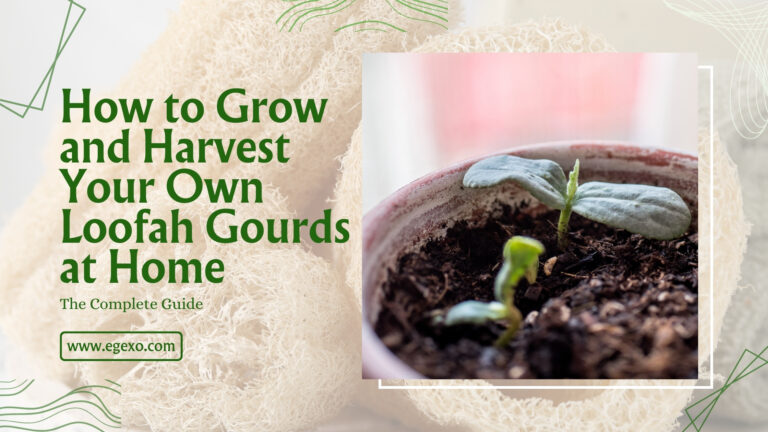
Germination typically occurs within 7 to 14 days under proper conditions. Keep soil consistently moist but not waterlogged during this critical phase.
Stage 2: Preparing the Growing Site
Loofah vines are vigorous growers that require substantial space and support structures. Select a location that receives full sun for at least 6 to 8 hours daily. Southern exposure works best in northern hemisphere locations.
Prepare soil by incorporating generous amounts of compost and aged manure. Loofahs are heavy feeders that perform best in rich, well-draining soil with a pH between 6.0 and 6.8. Install a sturdy trellis or fence structure capable of supporting substantial vine weight before transplanting.
Stage 3: Transplanting and Early Care
Transplant seedlings outdoors after all frost danger has passed and soil temperatures consistently exceed 60 degrees Fahrenheit. Space plants 6 to 8 feet apart to accommodate their spreading growth habit. Water deeply after transplanting and apply organic mulch around the base to retain moisture and suppress weeds.
During the first month, focus on establishing strong root systems by maintaining consistent moisture. Avoid overhead watering to prevent fungal issues. Side dress with balanced fertilizer every 3 to 4 weeks throughout the growing season.
Stage 4: Training and Maintenance
As vines begin to grow, gently guide them onto your support structure. Regular training produces straighter fruits and better air circulation, reducing disease pressure. Remove any flowers that appear during the first 6 to 8 weeks to encourage stronger vegetative growth.
| Growth Stage | Timeline | Key Actions |
|---|---|---|
| Germination | Days 1 to 14 | Maintain warmth and moisture |
| Seedling Development | Weeks 2 to 6 | Provide bright light, begin fertilizing |
| Vine Establishment | Weeks 6 to 10 | Train onto support, remove early flowers |
| Flowering Phase | Weeks 10 to 14 | Assist pollination if needed |
| Fruit Development | Weeks 14 to 22 | Monitor for pests, maintain nutrition |
| Maturation | Weeks 22 to 26 | Reduce water, watch for harvest signs |
Professional growers at Egexo use similar techniques refined over generations. Discover our complete farm to export process to understand how these principles scale to commercial production.
Optimal Growing Conditions for Quality Loofah Fibers
Successful loofah cultivation depends on replicating the warm, sunny conditions where these plants naturally thrive. Understanding the specific environmental requirements helps both backyard gardeners and commercial quality assessors evaluate growing conditions.
Climate and Temperature Requirements
Loofah plants require a minimum growing season of 150 to 200 frost-free days to produce mature fruits. Ideal daytime temperatures range from 75 to 95 degrees Fahrenheit, with nighttime temperatures staying above 60 degrees. Extended periods below 50 degrees can damage plants and reduce fruit quality.
Gardeners in cooler climates can extend their season using black plastic mulch to warm soil, row covers for early season protection, and greenhouse or high tunnel growing for maximum season extension.
Water and Humidity Management
Consistent moisture promotes healthy vine growth and fruit development, but excessive water causes root rot and fungal diseases. Provide 1 to 2 inches of water weekly during active growth, adjusting based on rainfall and soil conditions. Reduce watering as fruits approach maturity to concentrate fiber development.
Egyptian growing regions benefit from controlled irrigation and naturally low humidity during the harvest season. These conditions produce the bright, clean fibers that distinguish premium Egyptian loofah in the wholesale market.
Soil Nutrition for Dense Fibers
Fiber density and quality correlate directly with soil nutrition and plant health. Beyond initial soil preparation, ongoing fertilization supports continuous fruit production throughout the growing season.
| Nutrient | Role in Loofah Growth | Application Timing |
|---|---|---|
| Nitrogen | Vine and leaf development | Early to mid season |
| Phosphorus | Root strength and flowering | Transplant and flowering |
| Potassium | Fruit development and fiber quality | Mid to late season |
| Calcium | Cell wall strength | Throughout season |
| Magnesium | Chlorophyll production | As needed |
Heavy feeders like loofah benefit from regular compost tea applications and balanced organic fertilizers. Avoid excessive nitrogen late in the season, which promotes leaf growth at the expense of fruit maturation.
Harvesting Your Homegrown Loofahs: Timing and Techniques
Knowing exactly when and how to harvest determines the final quality of your homegrown loofahs. Harvest too early, and fibers remain weak and immature. Wait too long, and fibers can become overly coarse or develop mold issues.
Recognizing Harvest Readiness
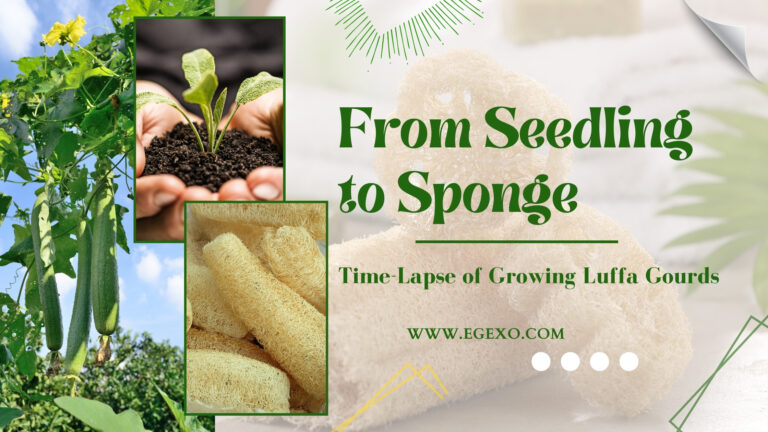
Mature loofah fruits display several distinct indicators that signal harvest readiness. The skin transitions from green to yellow or brown. The fruit feels noticeably lighter as the interior dries and separates from the outer skin. Shaking a mature fruit produces a rattling sound from loose seeds inside.
Most fruits require 150 to 200 days from planting to reach full maturity. In warm climates like Egypt, experienced growers observe these signs carefully to harvest at peak quality. This expertise, developed over 25 years at Egexo, ensures every wholesale loofah meets strict quality benchmarks.
Harvesting Methods
Cut mature fruits from the vine using clean pruning shears, leaving a short stem attached. Handle fruits gently to avoid damaging the delicate fiber structure inside. Harvest on dry days when possible to reduce moisture content and processing complications.
For the highest quality results, allow fruits to dry partially on the vine before harvest. This natural drying concentrates fibers and makes processing easier. However, do not leave fruits exposed to frost or extended wet weather, which degrades quality.
Processing Fresh Loofahs at Home
Transform your harvested fruits into usable sponges through these processing steps:
- Soak dried fruits in water for several hours to loosen the outer skin
- Peel away the outer layer by hand or using gentle scraping
- Squeeze and rinse repeatedly to remove seeds and pulp
- Soak in a mild bleach solution of one part bleach to ten parts water for lighter color
- Rinse thoroughly in clean water
- Dry completely in sun or warm, ventilated area
Home processing produces excellent results for personal use. Commercial operations like Egexo employ refined techniques that achieve consistent color, density, and hygiene standards required for wholesale distribution.
Interested in comparing your homegrown results with professionally processed loofahs? Order samples to evaluate the difference between home and commercial quality.
Quality Evaluation: What Separates Premium from Standard Loofahs
Whether you grow your own loofahs or source them for business purposes, understanding quality indicators helps you recognize exceptional products. This knowledge serves home gardeners assessing their harvest and professional buyers evaluating wholesale suppliers.
Visual Quality Indicators
Premium loofahs display consistent characteristics that indicate proper growing conditions, harvest timing, and processing methods.
| Quality Factor | Premium Grade | Standard Grade | Reject Grade |
|---|---|---|---|
| Color | Bright white to light cream | Light tan to medium brown | Dark brown or black spots |
| Fiber Uniformity | Consistent density throughout | Some variation acceptable | Thin spots or holes |
| Shape | Cylindrical, intact structure | Minor imperfections | Crushed or damaged |
| Cleanliness | No seeds, minimal pulp residue | Few seeds, slight residue | Significant debris |
| Flexibility | Firm but bends without breaking | Slightly stiff or soft | Brittle or mushy |
Egyptian loofahs consistently grade at premium levels due to ideal growing conditions and generations of cultivation expertise. Egexo maintains strict quality standards that ensure every product meets international buyer expectations.
Tactile and Structural Assessment
Beyond visual inspection, physical evaluation reveals important quality characteristics. Premium fibers feel springy and resilient when compressed, returning quickly to their original shape. The fiber network should appear dense and interwoven without large gaps or thin sections.
Rub the surface across your palm to assess texture. Quality loofahs provide effective exfoliation without feeling harsh or scratchy. The texture should feel consistent across the entire surface without rough or overly smooth patches.
Quality Checklist for Buyers and Growers
Use this evaluation checklist whether assessing your home harvest or evaluating wholesale suppliers:
| Criterion | What to Check | Pass Indicator |
|---|---|---|
| Fiber Density | Squeeze and release | Springs back within 2 seconds |
| Color Consistency | Visual inspection entire surface | No dark spots or discoloration |
| Structural Integrity | Gentle bend test | Bends without cracking |
| Cleanliness | Internal and external inspection | No seeds, pulp, or debris |
| Odor | Close smell test | Neutral, clean scent |
| Size Consistency | Measure dimensions | Within specified range |
Professional buyers source loofahs that consistently pass all criteria. Explore our body loofah collection to see examples of products meeting premium quality standards.
Business Applications: From Home Growing to Commercial Understanding
Understanding how to grow your own loofah at home provides valuable context for business professionals involved in the loofah supply chain. This knowledge helps retailers, spa owners, and importers make informed sourcing decisions and communicate product value to customers.
Quality Appreciation for Retail Buyers
Retailers who understand loofah cultivation can better evaluate wholesale suppliers and explain product quality to customers. Knowledge of growing conditions, processing methods, and quality indicators distinguishes informed buyers from those purchasing blindly on price alone.
When evaluating suppliers, ask about growing region, harvest methods, and processing techniques. Premium suppliers like Egexo provide transparent information about their farm to export process because quality production withstands scrutiny.
Private Label and Custom Product Opportunities
Businesses interested in branded loofah products benefit from understanding the raw material. Knowledge of fiber characteristics helps specify product requirements and evaluate samples accurately. Egexo offers comprehensive private label manufacturing services that transform premium Egyptian loofahs into custom branded products.
For unique product concepts, our custom product design team collaborates with businesses to develop specialized loofah items tailored to specific market needs.
Understanding Value and Pricing
Growing knowledge reveals why quality loofahs command premium prices. The extended growing season, labor-intensive harvesting, careful processing, and quality sorting all contribute to final product value. Cheap loofahs often come from rushed harvests, inadequate processing, or inferior growing conditions.
For comprehensive product and pricing information, request a wholesale quotation or download our product catalog.
Growing Loofahs vs Buying Wholesale: A Practical Comparison
Both home growing and commercial purchasing have distinct advantages depending on your needs, scale, and objectives. This comparison helps individuals and businesses determine the best approach.
| Factor | Home Growing | Wholesale Purchasing |
|---|---|---|
| Initial Investment | Seeds, soil, trellis materials | Minimum order quantities |
| Time to Product | 5 to 7 months growing season | Immediate upon delivery |
| Quality Control | Variable based on conditions | Consistent with quality suppliers |
| Quantity | Limited by garden space | Scalable to business needs |
| Customization | Natural variations | Specific sizes, grades, shapes |
| Labor Required | Ongoing cultivation and processing | Minimal, ready to use or sell |
| Cost per Unit | Low if successful | Competitive at volume |
| Learning Value | High, hands-on experience | Moderate, product knowledge |
Home growing suits individuals seeking sustainable hobbies, educational experiences, or small quantities for personal use. Commercial purchasing serves businesses requiring consistent supply, specific quality grades, and reliable inventory management.
Many successful retailers combine both approaches, growing loofahs at home for personal understanding while sourcing wholesale products for their business. This dual perspective enhances product knowledge and customer communication.
Visit Loofah Guide for additional consumer education resources or Wholesale Loofah for business-focused sourcing information.
Common Growing Problems and Solutions
Even experienced gardeners encounter challenges when growing loofahs. Understanding common problems and solutions helps maximize your harvest success.
Pest and Disease Management
Loofah vines attract similar pests as other cucurbits. Cucumber beetles, squash bugs, and aphids can damage plants and spread diseases. Monitor plants regularly and remove pests by hand when populations are small. Encourage beneficial insects like ladybugs and lacewings that prey on common pests.
Fungal diseases including powdery mildew and downy mildew affect loofah vines, especially in humid conditions. Improve air circulation through proper spacing and trellising. Apply organic fungicides preventatively during humid weather. Remove and destroy infected plant material promptly.
Pollination Challenges
Loofah plants produce separate male and female flowers that require pollinator activity for fruit set. In areas with low pollinator populations, hand pollination ensures better fruit production. Identify female flowers by the small fruit visible at the flower base. Transfer pollen from male flowers using a small brush or by removing petals and touching flower centers directly.
Fruit Development Issues
Fruits that start developing but abort before maturity often indicate pollination problems, nutrient deficiency, or water stress. Ensure consistent moisture and nutrition throughout fruit development. Avoid excessive nitrogen which promotes vine growth over fruit production.
Expert Insight from Egexo
With over 25 years cultivating premium Egyptian loofahs, our farming teams have refined techniques that consistently produce world-class fibers. The most important lesson we share with home growers is patience. Loofah quality depends on allowing fruits to fully mature on the vine before harvest.
Many first-time growers harvest too early, eager to see results after months of care. Immature fruits produce weak, thin fibers that disappoint compared to properly matured specimens. Wait for clear maturity signs: dried, lightweight fruits with loose seeds rattling inside.
Additionally, post-harvest processing significantly impacts final quality. Thorough seed and pulp removal, complete drying, and proper storage prevent mold and maintain fiber integrity. These same principles guide our commercial operations, scaled to produce thousands of premium loofahs while maintaining artisan attention to detail.
For those interested in experiencing the difference professional cultivation makes, explore our raw loofah scrubbers category to see commercially grown Egyptian loofahs at their finest.
Frequently Asked Questions
Q1: How long does it take to grow a loofah from seed to harvest?
A: Growing a loofah from seed to harvest typically requires 150 to 200 days depending on climate and growing conditions. Start seeds indoors 4 to 6 weeks before your last frost date for the longest possible growing season. Warmer climates with extended summers produce the best results. Egyptian growing regions achieve optimal maturity due to their long, warm seasons and consistent sunshine throughout the development period.
Q2: Can I grow loofahs in containers or do they require garden space?
A: Loofahs can grow in large containers of at least 20 gallons, but they perform best planted directly in garden soil where roots can spread freely. Container growing limits vine size and fruit production compared to ground planting. If growing in containers, provide sturdy trellising and expect smaller harvests. Successful container growing requires consistent watering and regular fertilization to compensate for restricted root space.
Q3: What quality standards should wholesale buyers look for when sourcing loofahs?
A: Wholesale buyers should evaluate fiber density, color consistency, structural integrity, cleanliness, and size uniformity. Premium suppliers like Egexo maintain documented quality standards covering all these factors. Request samples before placing bulk orders and verify supplier certifications. Egyptian loofahs typically exceed quality standards due to optimal growing conditions and established cultivation expertise. Review our complete quality standards documentation for detailed specifications.
Q4: Are homegrown loofahs as good as commercially produced ones?
A: Homegrown loofahs can achieve excellent quality with proper growing conditions, harvest timing, and processing. However, commercial operations in optimal climates like Egypt consistently produce superior fiber density and uniformity. Professional processing also achieves cleaner, brighter results than typical home methods. Many growers enjoy the educational experience of home cultivation while purchasing commercial products for everyday use or resale.
Q5: What minimum order quantities should new wholesale buyers expect?
A: Minimum order quantities vary by supplier and product type. Egexo works with businesses at various scales, from small retailers placing initial orders to large distributors requiring container shipments. Contact our team to request a quotation tailored to your specific needs. Sample orders are available for quality evaluation before committing to larger purchases through our sample request program.
Q6: How do I process and prepare homegrown loofahs for use?
A: Process homegrown loofahs by soaking dried fruits in water for several hours, peeling the outer skin, squeezing out seeds and pulp, optionally bleaching in diluted solution, rinsing thoroughly, and drying completely. The entire process takes 2 to 3 days including drying time. Proper processing removes all organic material that could harbor bacteria and produces clean, ready-to-use sponges suitable for bathing or kitchen use.
Q7: Why are Egyptian loofahs considered the best quality worldwide?
A: Egyptian loofahs benefit from ideal growing conditions including consistent sunshine, mineral-rich Nile Delta soil, controlled irrigation, and low humidity during harvest season. Combined with generations of cultivation expertise, these factors produce fibers that are denser, whiter, and more durable than loofahs grown elsewhere. Egexo has refined these advantages over 25 years to become the premier source for wholesale loofah products globally.
Conclusion
Learning how to grow your own loofah at home connects you directly to one of nature’s most versatile sustainable products. From selecting quality seeds through harvest and processing, each stage offers opportunities to develop expertise that serves both personal gardening goals and professional product knowledge.
The journey from seed to usable sponge requires patience, proper conditions, and attention to detail. Home growers gain appreciation for the craftsmanship behind premium commercial products, while business professionals develop evaluation skills that inform smarter purchasing decisions.
Egyptian loofahs remain the global standard for quality due to ideal growing conditions and generations of refined cultivation expertise. Whether you grow your own or source professionally, understanding the complete production process elevates your relationship with this remarkable natural product.
Key Takeaways:
- Loofah cultivation requires 150 to 200 frost-free days with consistent warmth and full sun exposure
- Quality depends on growing conditions, harvest timing, and proper processing techniques
- Egyptian loofahs achieve superior density and durability due to optimal climate and expertise
- Both home growers and commercial buyers benefit from understanding cultivation fundamentals
- Professional suppliers like Egexo maintain quality standards that ensure consistent product excellence
Ready to experience Egyptian loofah quality?
For Wholesale Buyers: Request a quote or download our catalog to explore our complete product range.
For Individual Orders: Shop our collection or order samples to compare professionally grown Egyptian loofahs with your homegrown harvest.