

Why Loofahs Need to Be Replaced or Washed in the Washing Machine Even After Daily Rinsing
Understanding Why Daily Rinsing Falls Short
Here is a fact that surprises most people. A single loofah can harbor over 10 billion bacteria after just one week of typical bathroom use. This staggering number explains precisely why loofahs need to be replaced or washed in the washing machine regardless of how thoroughly you rinse them after each shower.
The warm, moist environment of your bathroom creates an ideal breeding ground for microorganisms. When you rinse your loofah with soap and water, you remove visible debris and some surface bacteria. However, this simple cleaning method cannot penetrate the complex fiber structure where most bacteria colonize and multiply. Scientific studies from dermatology research institutions have confirmed that standard rinsing eliminates less than 30 percent of bacterial colonies present in natural fiber bath products.
For individual consumers, this knowledge transforms how you approach bathroom hygiene. For spa owners, hotel managers, retailers, and wholesale distributors, understanding loofah hygiene becomes essential for product recommendations, customer education, and maintaining professional standards. Businesses that source from quality suppliers like Egexo can provide customers with products that respond better to proper cleaning methods due to superior fiber density and processing standards.
This comprehensive guide explores the science behind loofah contamination, explains effective cleaning protocols including machine washing techniques, and provides clear timelines for replacement. Whether you purchase loofahs for personal use or stock them for commercial distribution, this information will help you maximize product lifespan while maintaining optimal hygiene standards.
The Science Behind Bacterial Growth in Loofahs
How Bacteria Colonize Natural Fibers
Natural loofahs, derived from the Luffa aegyptiaca plant cultivated extensively in Egypt, possess a unique cellular structure that makes them exceptional exfoliating tools. This same porous structure, however, creates countless microscopic spaces where bacteria establish colonies. The interconnected fiber network of a quality loofah contains thousands of tiny chambers that trap moisture, dead skin cells, and organic matter.
When you use your loofah during bathing, you deposit approximately 1 to 2 grams of dead skin cells into its fibers. These skin cells, combined with body oils, soap residue, and bathroom humidity, create a nutrient rich environment. Bacteria including Pseudomonas, Klebsiella, Enterococcus, and various fungal species thrive in these conditions.
Research published in the Journal of Clinical Microbiology found that bacterial counts in used loofahs doubled every 24 hours under typical bathroom conditions. This exponential growth explains why loofahs need to be replaced or washed in the washing machine on regular schedules rather than relying solely on post use rinsing.
Why Soap and Water Rinsing Cannot Penetrate Deep Fibers
The surface tension of water prevents thorough penetration into the loofah core. When you rinse your loofah under running water, even with soap, the water primarily flows around and over the external fibers. The internal chambers where bacteria concentrate receive minimal exposure to your cleaning efforts.
Consider the structure of Egyptian loofah, widely regarded as the highest quality variety available. The dense fiber matrix that makes Egyptian body loofahs superior for exfoliation also means these internal spaces require more aggressive cleaning methods to sanitize properly. This is not a flaw but rather an inherent characteristic of effective natural loofahs.
For wholesale buyers evaluating products from suppliers, understanding this relationship between fiber density and cleaning requirements helps inform customer education materials. Quality loofahs from established suppliers like Egexo, with over 25 years of cultivation expertise, maintain their structural integrity through repeated deep cleaning cycles while lower quality alternatives may deteriorate rapidly.
Effective Methods to Clean Your Loofah Thoroughly
Machine Washing Protocols for Natural Loofahs
Washing your loofah in a washing machine provides the agitation, water penetration, and temperature control necessary for deep sanitization. This method proves far more effective than manual cleaning and extends product lifespan when performed correctly.
Machine Washing Guidelines
Place your natural loofah inside a mesh laundry bag or pillowcase to prevent fiber damage during the wash cycle. Select a gentle or delicate cycle with warm water between 30 and 40 degrees Celsius. Hot water above 50 degrees Celsius may damage natural fibers and reduce product longevity. Use a mild, bleach free detergent in small quantities.
For commercial operations managing loofah inventory, establishing standardized cleaning protocols ensures consistent product quality. Spas and wellness centers can extend their loofah stock lifespan by 40 to 60 percent through proper machine washing schedules. This translates directly to improved profit margins and reduced reorder frequency.
After machine washing, remove the loofah promptly and allow it to air dry completely in a well ventilated area. Never store a damp loofah in enclosed spaces. Complete drying between uses represents the single most important factor in preventing bacterial regrowth.
Alternative Deep Cleaning Methods
While machine washing offers the most thorough results, several alternative methods provide effective sanitization between wash cycles.
Microwave Sanitization
Saturate your wet loofah completely and microwave on high for 30 to 60 seconds. The heat kills most bacteria and fungi. Exercise caution when removing the loofah as it will be extremely hot. This method works only for natural plant loofahs without any metal components.
Diluted Bleach Solution
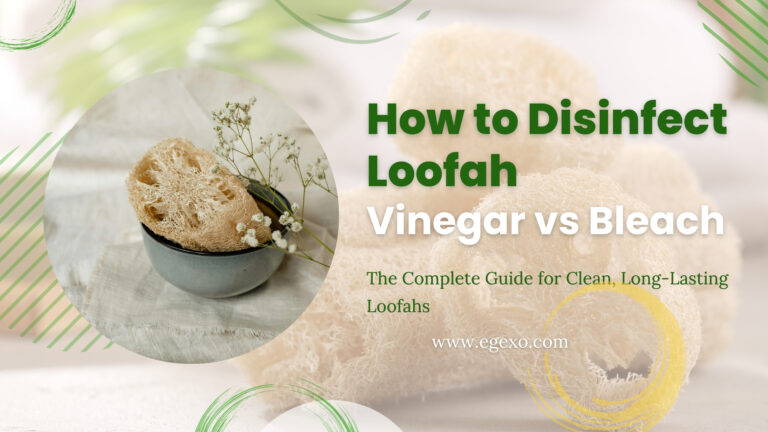
Soak your loofah in a solution of one part household bleach to ten parts water for five minutes. Rinse thoroughly afterward. This method should be used sparingly as frequent bleach exposure degrades natural fibers over time.
White Vinegar Soak
Submerge your loofah in undiluted white vinegar for 15 to 20 minutes weekly. Vinegar provides antimicrobial properties without the harshness of bleach. This method proves particularly suitable for raw loofah scrubbers that may be more sensitive to chemical exposure.
Cleaning Method Comparison Table
| Cleaning Method | Bacteria Elimination Rate | Fiber Impact | Frequency Recommended | Best For |
|---|---|---|---|---|
| Daily Soap Rinse | 25 to 35 percent | Minimal | After every use | Surface debris removal |
| Machine Wash Warm | 90 to 95 percent | Low to moderate | Weekly | Deep sanitization |
| Microwave 60 seconds | 85 to 92 percent | Low | Every 3 to 4 days | Quick sanitization |
| Bleach Soak 5 minutes | 95 to 99 percent | Moderate to high | Monthly maximum | Heavy contamination |
| Vinegar Soak 20 minutes | 75 to 85 percent | Very low | Weekly | Gentle maintenance |
| Boiling Water 3 minutes | 88 to 94 percent | Moderate | Bi weekly | Natural sanitization |
This comparison demonstrates why relying exclusively on daily rinsing leaves significant bacterial populations intact. Combining daily rinsing with weekly machine washing or alternative deep cleaning methods provides optimal hygiene outcomes.
When to Replace Your Loofah Completely
Replacement Timeline Based on Loofah Type
Even with perfect cleaning protocols, all loofahs eventually require replacement. The timeline varies based on loofah type, usage frequency, storage conditions, and initial product quality. Understanding these factors helps consumers budget appropriately and assists wholesale buyers in forecasting inventory needs.
Natural Plant Loofahs
High quality Egyptian loofahs maintained with proper cleaning should last 3 to 4 weeks with daily use. Premium grade products sourced from established suppliers may extend to 6 weeks. Signs indicating replacement include persistent odor despite cleaning, visible discoloration, fiber breakdown, and decreased exfoliation effectiveness.
Synthetic Mesh Loofahs
Plastic based loofahs typically last 6 to 8 weeks but harbor bacteria in their knotted construction. While they dry faster than natural alternatives, their petroleum based materials contribute to environmental concerns that increasingly influence consumer purchasing decisions.
For businesses stocking both natural and synthetic options, understanding these replacement timelines informs purchasing strategies and customer education. Many retailers find that customers transitioning from synthetic to natural body loofahs appreciate guidance on proper care to maximize their investment in sustainable products.
Signs Your Loofah Needs Immediate Replacement
Certain conditions warrant immediate replacement regardless of age. Any visible mold growth, black or green spots, or musty odors that persist after thorough cleaning indicate the loofah has become unsafe for use. Skin irritation or breakouts following loofah use may also signal bacterial contamination requiring immediate product disposal.
For spa and hospitality operations, establishing clear replacement protocols protects customer health and business reputation. Many professional establishments using products from quality wholesale suppliers implement 2 week maximum use policies regardless of apparent condition. This conservative approach prioritizes guest safety while demonstrating commitment to hygiene standards.
Loofah Lifespan Comparison by Quality Grade
| Quality Grade | Typical Source | Average Lifespan | Cleaning Tolerance | Wholesale Price Range |
|---|---|---|---|---|
| Premium Grade A | Egyptian Nile Valley | 4 to 6 weeks | Excellent | Higher investment, best value |
| Standard Grade B | Various regions | 3 to 4 weeks | Good | Mid range pricing |
| Economy Grade C | Mixed sources | 2 to 3 weeks | Moderate | Lower upfront cost |
| Synthetic Mesh | Manufactured | 6 to 8 weeks | High | Variable |
| Organic Certified | Select farms | 4 to 6 weeks | Excellent | Premium tier |
Wholesale buyers evaluating supplier options should consider total cost of ownership rather than unit price alone. Premium Egyptian loofahs from suppliers like Egexo, despite higher per unit costs, often deliver superior value through extended lifespan and customer satisfaction. Request a quote to compare pricing across quality grades.
Storage and Drying Best Practices
Optimal Storage Conditions for Maximum Longevity
Where and how you store your loofah between uses significantly impacts bacterial growth rates and product lifespan. The goal is achieving complete drying within 4 to 6 hours after each use.
Remove your loofah from the shower or bathtub area immediately after use. Hanging it near the showerhead or leaving it on a wet shelf maintains the humid conditions bacteria require for rapid multiplication. Instead, hang your loofah in a well ventilated area outside the bathroom when possible. A hook near a window or in a laundry room provides superior air circulation.
If bathroom storage is unavoidable, position your loofah away from direct shower spray and ensure adequate ventilation. Small exhaust fans or leaving doors open after bathing helps reduce ambient humidity. These simple adjustments can extend loofah lifespan by 30 to 50 percent while dramatically reducing bacterial counts between uses.
Professional Storage Recommendations for Commercial Settings
Spas, gyms, and hospitality businesses face unique storage challenges when providing loofahs for client use. Best practices include individual sealed packaging for guest loofahs, dedicated drying areas with ventilation for reusable staff products, and clear labeling systems to track product age.
Private label loofah programs allow businesses to package products with custom care instructions that reinforce proper storage protocols. This approach elevates brand perception while ensuring customers understand why loofahs need to be replaced or washed in the washing machine on appropriate schedules.
Loofah Care Checklist
| Daily Tasks | Weekly Tasks | Monthly Tasks |
|---|---|---|
| Rinse thoroughly with soap after each use | Machine wash on gentle cycle or deep clean with vinegar | Evaluate overall condition and replace if needed |
| Shake excess water before hanging | Inspect for discoloration or unusual odors | Review storage setup and improve ventilation if necessary |
| Hang in well ventilated area to dry | Allow complete 24 hour drying period after deep cleaning | Consider upgrading to higher quality grade |
| Store away from direct humidity | Rotate between two loofahs for optimal drying time | Stock replacement inventory |
| Check for visible debris or residue | Sanitize storage hooks or containers | Clean bathroom ventilation systems |
This maintenance schedule applies equally to individual consumers and commercial operations. Consistency in following these protocols determines whether your loofah lasts its full potential lifespan or requires premature replacement.
The Egyptian Loofah Advantage
Why Quality Matters for Cleaning and Longevity
Not all loofahs respond equally to cleaning and maintenance efforts. The genetic variety, growing conditions, harvesting timing, and processing methods all influence how well a loofah withstands repeated sanitization cycles.
Egyptian loofahs, particularly those cultivated in the Nile Valley region, benefit from ideal growing conditions that produce dense, resilient fiber structures. Egexo has refined cultivation techniques over 25 years to maximize these natural advantages. The result is loofahs that maintain structural integrity through dozens of wash cycles while inferior products from other regions may deteriorate after just a few deep cleanings.
For wholesale buyers, this quality differential translates to better customer satisfaction and fewer complaints. Retailers stocking premium Egyptian loofahs can confidently recommend aggressive cleaning protocols knowing the products will perform as expected. This confidence enables better customer education and ultimately builds brand loyalty.
The farm to export process employed by quality suppliers ensures consistency across shipments. When your business depends on product reliability, partnering with suppliers who control the entire production chain from seed to shipping eliminates variables that compromise quality.
Sustainability and Hygiene Working Together
Modern consumers increasingly seek products that align with environmental values without compromising hygiene standards. Natural Egyptian loofahs satisfy both requirements when properly maintained.
Unlike synthetic alternatives that persist in landfills for centuries, natural loofahs biodegrade completely within weeks of disposal. This environmental benefit becomes even more compelling when proper care extends each loofah lifespan to its full potential. A consumer replacing their natural loofah every 4 weeks generates far less waste than one disposing of poorly maintained loofahs every 2 weeks.
For businesses positioning themselves in the sustainability market, loofah products offer an accessible entry point. Custom product design services enable brands to create eco friendly bath collections that appeal to environmentally conscious consumers. Educational content explaining why loofahs need to be replaced or washed in the washing machine supports these sustainability messages by emphasizing proper care over frequent disposal.
Industry Quality Standards for Loofah Products
| Quality Metric | Premium Standard | Acceptable Range | Below Standard |
|---|---|---|---|
| Fiber Density | Above 85 percent | 70 to 85 percent | Below 70 percent |
| Seed Content | Less than 2 percent | 2 to 5 percent | Above 5 percent |
| Moisture at Packaging | 8 to 12 percent | 12 to 15 percent | Above 15 percent |
| Color Uniformity | Consistent natural tan | Minor variations | Significant spotting |
| Structural Integrity Post Wash | Maintains 90 percent plus | Maintains 75 to 90 percent | Below 75 percent retention |
| Minimum Order Quantity | Varies by supplier | Typically 500 to 1000 units | May require higher volumes |
Understanding these specifications helps wholesale buyers evaluate potential suppliers effectively. Egexo quality standards exceed premium benchmarks across all metrics, ensuring products perform reliably through proper care cycles. Request samples to verify quality before committing to bulk orders.
Frequently Asked Questions
Q1: How often should loofahs be replaced even with proper washing?
A: Natural loofahs should be replaced every 3 to 4 weeks with daily use, even when following proper cleaning protocols including weekly machine washing. Premium Egyptian loofahs from quality suppliers may last up to 6 weeks. The replacement timeline accounts for cumulative fiber degradation and bacterial colonization that cleaning cannot fully reverse. Always replace immediately if you notice persistent odors, visible discoloration, or decreased exfoliation effectiveness regardless of age.
Q2: Can wholesale buyers request specific loofah sizes for commercial applications?
A: Yes, established wholesale suppliers like Egexo offer customization options including specific dimensions, shapes, and packaging configurations. Minimum order quantities typically range from 500 to 2000 units depending on customization requirements. Commercial buyers serving spas, hotels, or retail markets should explore private label manufacturing options that include custom sizing to meet specific business needs while maintaining consistent quality standards.
Q3: Why does my loofah smell even after I wash it with soap?
A: Persistent odors indicate bacterial colonies have established deep within the fiber structure where surface washing cannot reach. This situation confirms why loofahs need to be replaced or washed in the washing machine rather than relying on manual rinsing alone. Try machine washing on warm with mild detergent. If odors persist after thorough machine washing and complete drying, the loofah requires immediate replacement as bacterial contamination has progressed beyond remediation.
Q4: What water temperature works best for machine washing loofahs?
A: Optimal machine washing temperature for natural loofahs falls between 30 and 40 degrees Celsius. This range provides sufficient heat to kill most bacteria while protecting delicate plant fibers from heat damage. Water above 50 degrees Celsius may cause fiber brittleness and premature deterioration. Always use gentle cycle settings and place loofahs in mesh bags to prevent excessive agitation damage during the wash cycle.
Q5: How do spa and hotel businesses maintain loofah hygiene standards?
A: Professional establishments implement multi layer protocols including individual packaging for guest use items, maximum use policies of 2 weeks for reusable products, dedicated drying areas with proper ventilation, and regular staff training on proper care procedures. Many businesses source from certified suppliers who provide documentation supporting hygiene claims. Commercial buyers should request quality certifications and consider private label options that include printed care instructions.
Q6: Are natural loofahs more hygienic than synthetic alternatives?
A: When properly maintained, natural Egyptian loofahs offer comparable hygiene to synthetic options while providing superior exfoliation and environmental benefits. The key difference lies in maintenance requirements. Natural loofahs require more diligent care including complete drying between uses and regular deep cleaning. Synthetic loofahs dry faster but trap bacteria in their knotted construction and contribute to plastic pollution. Quality natural loofahs from reputable suppliers represent the best balance of performance, hygiene, and sustainability.
Q7: What minimum order quantities should retailers expect for wholesale loofah purchases?
A: Minimum order quantities vary by supplier and product type. Standard body loofahs typically start at 500 to 1000 units for initial orders. Specialized products like kitchen loofahs or pet grooming items may have different minimums. Established suppliers often offer flexible MOQ arrangements for new business relationships, especially when buyers demonstrate growth potential. Request detailed pricing across quantity tiers to identify the most cost effective ordering strategy for your business needs.
Expert Insight from Egexo
With over 25 years cultivating premium Egyptian loofahs in the Nile Valley, our team has observed firsthand how proper care dramatically impacts product performance and customer satisfaction. The question of why loofahs need to be replaced or washed in the washing machine despite daily rinsing comes down to understanding natural fiber biology.
Every loofah we produce contains thousands of microscopic chambers that make it exceptionally effective for exfoliation. These same chambers require thorough cleaning methods to remain hygienic. We recommend our wholesale partners and end consumers view machine washing not as an inconvenience but as an investment in product longevity. A properly maintained Egyptian loofah outperforms and outlasts alternatives by significant margins.
For businesses building loofah product lines, customer education creates competitive advantage. Brands that help customers understand proper care build loyalty and reduce complaints. Our team provides educational resources and packaging options that support these efforts. Quality products deserve quality care, and informed customers become repeat customers.
Conclusion
Understanding why loofahs need to be replaced or washed in the washing machine despite daily rinsing empowers both consumers and businesses to maximize product value while maintaining optimal hygiene standards. The science is clear. Simple soap and water rinsing removes only surface contamination while bacteria multiply within the complex fiber structure of natural loofahs.
Effective loofah maintenance combines daily rinsing with weekly deep cleaning through machine washing or alternative sanitization methods. Proper storage in well ventilated areas ensures complete drying between uses, significantly slowing bacterial growth. Even with perfect care, replacement schedules of 3 to 6 weeks depending on quality grade ensure continued hygiene and exfoliation performance.
For wholesale buyers, these care requirements inform customer education strategies and influence supplier selection decisions. Premium Egyptian loofahs from established sources like Egexo withstand repeated cleaning cycles while maintaining structural integrity, delivering better value despite higher unit costs. For individual consumers, investing in quality products and following proper care protocols maximizes both hygiene and economy.
Key Takeaways
- Daily soap rinsing eliminates only 25 to 35 percent of loofah bacteria while machine washing removes 90 to 95 percent
- Natural loofahs require replacement every 3 to 6 weeks depending on quality and care
- Complete drying between uses is the most important factor in preventing bacterial growth
- Premium Egyptian loofahs tolerate aggressive cleaning methods better than economy alternatives
- Proper care education benefits both consumers and businesses selling loofah products
Ready to experience Egyptian loofah quality?
For Wholesale Buyers: Request a quote or download our complete product catalog
For Individual Orders: Shop our collection or order samples