

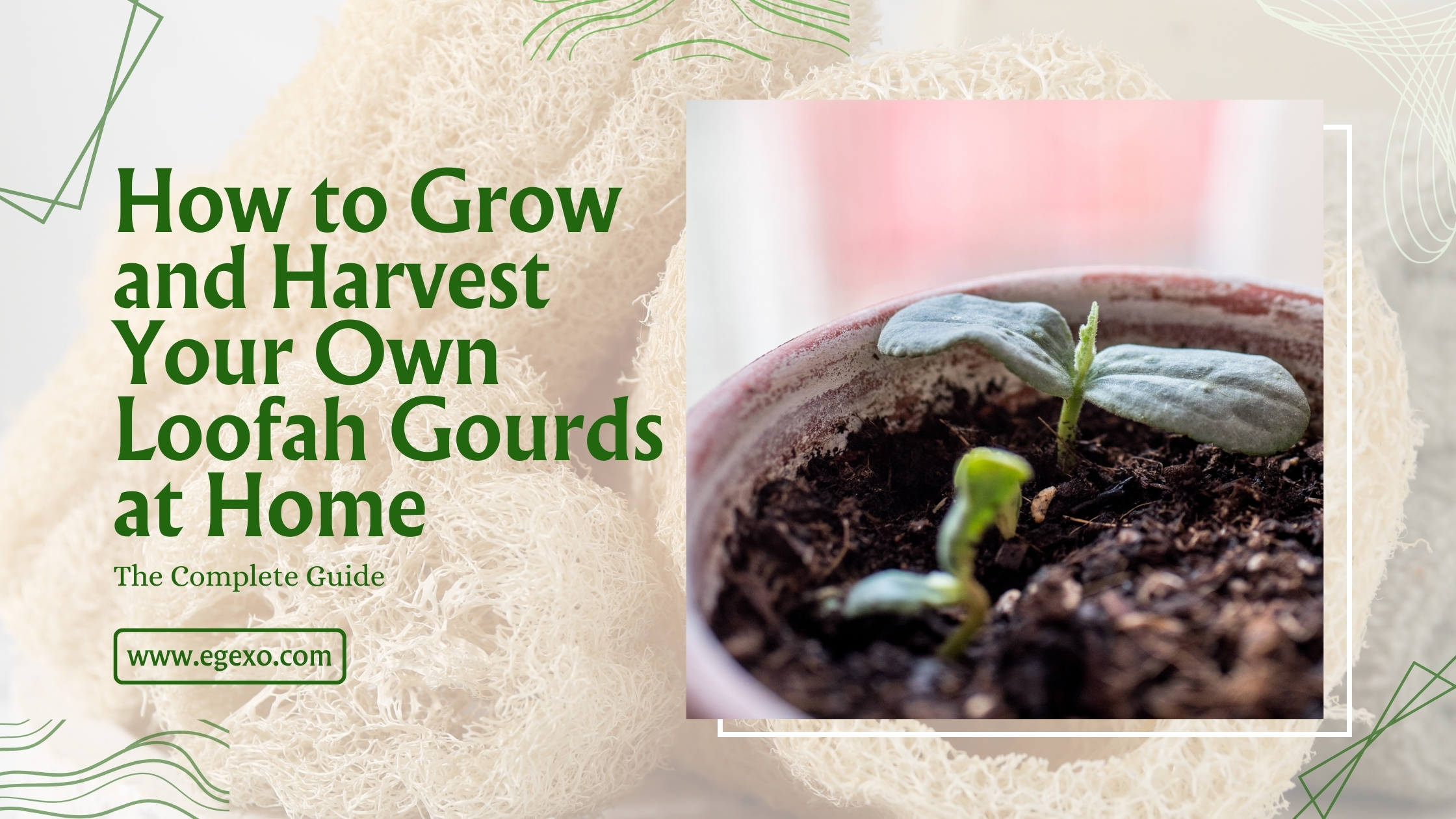
How to Grow and Harvest Your Own Loofah Gourds at Home: The Complete Guide
Why Growing Your Own Loofah Changes Everything
Did you know that the loofah sponge sitting in your bathroom is actually a vegetable from the cucumber family? This remarkable plant, scientifically known as Luffa aegyptiaca or Luffa cylindrica, has been cultivated for over 4,000 years, with Egyptian loofah remaining the global gold standard for quality and durability. Whether you want to grow and harvest your loofah for personal use or you are exploring the wholesale market for premium natural sponges, understanding the cultivation process gives you an invaluable edge.
The global natural loofah market has experienced 23 percent growth over the past five years as consumers and businesses increasingly reject synthetic alternatives. For individual gardeners, growing loofah at home means access to fresh, chemical-free sponges while reducing plastic waste. For wholesale buyers and spa owners, understanding cultivation helps you evaluate supplier quality and recognize what separates premium Egyptian loofah from inferior products.
In this comprehensive guide, you will discover exactly how to grow loofah from seed to harvest, the optimal conditions for maximum yield, professional harvesting techniques, and how to process your gourds into usable sponges. We draw on over 25 years of loofah cultivation expertise from the Nile Delta region, where Egexo has perfected the farm to export process that delivers the finest natural loofahs worldwide.
By the end of this article, you will have everything needed to successfully harvest your loofah gourds at home or make informed purchasing decisions for your business.
Understanding the Loofah Plant: Biology and Varieties
Before you begin to grow and harvest your loofah, understanding what makes this plant unique will set you up for success. The loofah gourd belongs to the Cucurbitaceae family, making it a close relative of cucumbers, squash, and melons. However, unlike its edible cousins, mature loofah develops a dense fibrous network inside its skin that becomes the sponge material we use.
The Two Main Loofah Species
Luffa aegyptiaca represents the premier variety, originating from the Nile Valley where ideal growing conditions produce superior fiber quality. This species grows longer gourds with finer, more uniform fiber patterns. Egyptian farmers have cultivated this variety for millennia, developing techniques that maximize fiber density and flexibility.
Luffa acutangula, commonly called ridged loofah or Chinese okra, features prominent ridges along its length. While edible when young, this variety produces coarser fibers less suitable for body care applications. Most commercial loofahs come from Luffa aegyptiaca due to its superior texture.
Why Origin Matters for Quality
The growing environment dramatically impacts loofah quality. The Nile Delta provides unique conditions including mineral-rich alluvial soil, consistent temperatures between 25 and 30 degrees Celsius, and optimal humidity levels. These factors combine to produce loofahs with the following characteristics.
| Quality Factor | Egyptian Loofah | Standard Commercial |
|---|---|---|
| Fiber Density | 85 to 95 percent | 60 to 75 percent |
| Average Length | 35 to 60 cm | 20 to 40 cm |
| Color Consistency | Uniform golden | Variable tan to brown |
| Flexibility Rating | High elasticity | Moderate to stiff |
| Lifespan with Proper Care | 3 to 6 months | 4 to 8 weeks |
| Fiber Uniformity | Consistent throughout | Irregular patterns |
For businesses sourcing wholesale loofah, these quality differences directly impact customer satisfaction and repeat purchases. Egexo maintains strict quality standards that ensure every batch meets premium specifications. Understanding these distinctions helps you appreciate why not all loofahs perform equally, whether you grow your own or source from suppliers.
Getting Started: Seeds, Soil, and Climate Requirements
Successfully growing loofah requires attention to specific environmental factors. This section covers everything needed to establish healthy plants that will produce abundant, high-quality gourds.
Selecting Quality Loofah Seeds
Your harvest begins with seed selection. Look for seeds from reputable sources that specify the Luffa aegyptiaca variety. Seeds should appear plump, dark brown to black in color, and free from cracks or damage. Fresh seeds germinate within 7 to 14 days, while older seeds may take longer or fail entirely.
For those interested in comparing homegrown results to commercial standards, ordering samples from professional growers provides an excellent benchmark.
Climate Considerations
Loofah plants require a long growing season of 150 to 200 frost-free days. This requirement limits outdoor cultivation in many northern regions but makes loofahs ideal for zones 7 through 11 in the United States and similar climates worldwide.
| Climate Zone | Growing Method | Expected Season Length | Success Rate |
|---|---|---|---|
| Zones 9 to 11 | Direct outdoor sowing | 180 to 200 days | High |
| Zones 7 to 8 | Start indoors, transplant | 150 to 180 days | Moderate to High |
| Zones 5 to 6 | Greenhouse or indoor start | 120 to 150 days | Moderate |
| Zones 3 to 4 | Greenhouse required | Limited outdoor time | Low to Moderate |
In Egypt’s Nile Delta, the naturally extended warm season allows loofahs to fully mature on the vine, producing denser fibers than plants harvested prematurely in shorter growing seasons.
Soil Preparation for Optimal Growth
Loofah plants thrive in well-draining, nutrient-rich soil with a pH between 6.0 and 6.8. Before planting, amend your garden bed with generous amounts of compost or aged manure. The following soil preparation checklist ensures ideal conditions.
Soil Preparation Checklist
| Task | Timing | Purpose |
|---|---|---|
| Test soil pH | 4 to 6 weeks before planting | Determine amendment needs |
| Add comite or sulfur | 3 to 4 weeks before planting | Adjust pH if necessary |
| Incorporate 3 to 4 inches of compost | 2 to 3 weeks before planting | Improve nutrition and drainage |
| Install trellis or support structure | Before planting | Provide climbing surface |
| Create raised rows if drainage is poor | Before planting | Prevent root rot |
| Apply balanced fertilizer | At planting time | Support initial growth |
Professional growers in Egypt prepare fields months in advance, allowing soil amendments to fully integrate. This patience pays dividends in fiber quality that distinguishes premium raw loofah scrubbers from hastily grown alternatives.
Planting and Growing Your Loofah Vines
With preparations complete, the actual planting process begins. This phase requires attention to spacing, support structures, and ongoing care to maximize your harvest.
Starting Seeds Indoors
In regions with shorter growing seasons, starting seeds indoors 4 to 6 weeks before the last frost date gives plants a critical head start. Use biodegradable pots to minimize transplant shock, as loofah seedlings develop sensitive root systems.
Soak seeds in warm water for 24 hours before planting to soften the hard seed coat and improve germination rates. Plant seeds one inch deep in moist seed-starting mix, maintaining soil temperature between 21 and 27 degrees Celsius. Germination typically occurs within 7 to 14 days under optimal conditions.
Direct Sowing Outdoors
Gardeners in warm climates can sow directly outdoors once soil temperatures consistently exceed 18 degrees Celsius. Plant seeds in hills or rows with 6 to 8 feet between plants. Loofah vines grow aggressively and need substantial space to spread.
Building Support Structures
Loofah vines can reach 15 to 30 feet in length, making sturdy support structures essential. Growing vertically offers several advantages including straighter gourds, better air circulation to prevent disease, and easier harvesting. Effective support options include the following.
Support Structure Comparison
| Structure Type | Cost Level | Durability | Best For |
|---|---|---|---|
| Wooden trellis | Moderate | 3 to 5 years | Small gardens |
| Metal cattle panels | Higher | 10 plus years | Permanent installations |
| Chain link fence | Variable | Long term | Boundary plantings |
| Sturdy arbor | Higher | Long term | Decorative growing |
| Rope or twine system | Low | Single season | Temporary setups |
Commercial loofah farms in Egypt use permanent trellising systems that allow vines to hang freely, producing the uniformly straight gourds prized by bath and body loofah manufacturers worldwide.
Ongoing Care Throughout the Growing Season
Consistent watering ranks as the most critical factor during active growth. Loofah plants need 1 to 2 inches of water weekly, with increased amounts during flowering and fruit development. Inconsistent watering leads to misshapen gourds and poor fiber development.
Feed plants every 3 to 4 weeks with a balanced fertilizer, switching to a phosphorus-heavy formula once flowering begins to encourage fruit set. Monitor for common pests including cucumber beetles, squash bugs, and aphids. Organic pest management methods work well for loofahs destined for body care use.
Male flowers appear first on loofah vines, followed by female flowers identifiable by a small swelling at their base. In areas with limited pollinator activity, hand pollination improves fruit set significantly. Transfer pollen from male flowers to females using a small brush during morning hours when pollen is most viable.
When and How to Harvest Your Loofah Gourds at Home
The harvesting phase determines whether your months of effort produce premium sponges or disappointing results. Timing and technique both matter tremendously when you harvest your loofah gourds at home.
Identifying Harvest Readiness
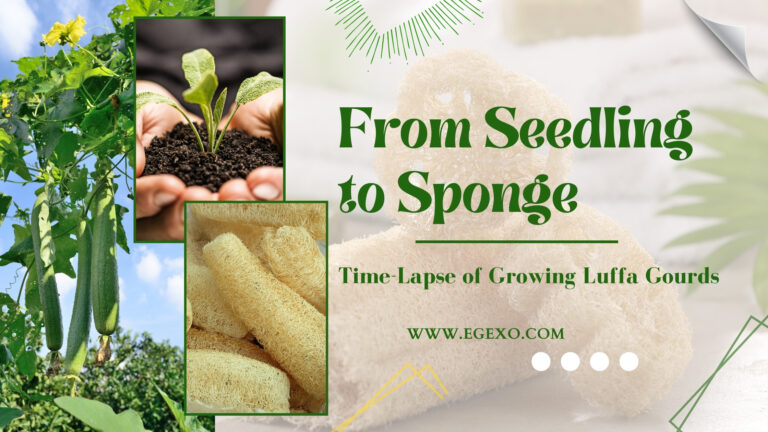
Mature loofah gourds signal readiness through several indicators. The skin transitions from green to yellow or brown, and the gourd feels notably lighter as internal moisture evaporates. Shaking a mature gourd produces a rattling sound from loose seeds inside.
Harvest Readiness Indicators
| Indicator | Not Ready | Almost Ready | Harvest Now |
|---|---|---|---|
| Skin Color | Dark green | Yellow green | Yellow to brown |
| Weight | Heavy | Moderate | Light |
| Skin Texture | Smooth, firm | Beginning to wrinkle | Dry, papery |
| Sound When Shaken | None | Slight movement | Clear seed rattle |
| Stem Condition | Green, pliable | Yellowing | Brown, drying |
Professional growers with Egexo’s 25 plus years of experience have refined harvest timing to maximize fiber quality. Harvesting too early produces weak, mushy fibers while waiting too long in wet conditions risks mold and fiber degradation.
Harvesting Techniques
Cut gourds from the vine using clean pruning shears, leaving 2 to 3 inches of stem attached. Handle carefully to avoid bruising the internal fibers. If frost threatens before full maturity, harvest all remaining gourds and allow them to continue drying indoors in a warm, well-ventilated area.
For extended harvests, begin picking mature gourds while leaving younger ones to continue developing. This successive harvesting maximizes total yield from each vine.
Processing Fresh Harvested Loofahs
After harvesting, proper processing transforms your gourds into usable sponges. The following steps outline the complete process.
Step by Step Processing Guide
| Step | Action | Duration | Tips |
|---|---|---|---|
| 1 | Peel outer skin | 5 to 10 minutes per gourd | Soak briefly if skin resists |
| 2 | Remove seeds | 2 to 5 minutes | Save viable seeds for next year |
| 3 | Rinse thoroughly | 5 to 10 minutes | Remove all pulp and plant matter |
| 4 | Soak in water | 24 to 48 hours | Changes water 2 to 3 times |
| 5 | Bleach solution optional | 30 to 60 minutes | 10 percent bleach improves color |
| 6 | Final rinse | 10 to 15 minutes | Remove all bleach residue |
| 7 | Dry completely | 3 to 7 days | Full sun or warm dry area |
Commercial processing facilities use controlled environments and standardized procedures to produce consistent results across thousands of loofahs. This professional approach explains why suppliers like Egexo deliver uniform quality that home growers rarely achieve at scale.
For businesses evaluating loofah sources, understanding this processing complexity helps explain quality variations between suppliers. Custom product design services can transform premium raw materials into finished products meeting exact specifications.
Comparing Homegrown vs Commercial Loofah Quality
Understanding how your homegrown loofahs compare to commercial products helps set realistic expectations and informs purchasing decisions for larger needs.
Quality Factors Affected by Growing Conditions
Several variables influence final product quality regardless of technique.
Quality Comparison: Homegrown vs Professional
| Factor | Typical Homegrown | Professional Egyptian |
|---|---|---|
| Fiber Consistency | Variable | Highly uniform |
| Color | Range from off white to brown | Consistent golden |
| Size Uniformity | Mixed sizes | Graded by size |
| Processing Quality | May retain seeds or pulp | Completely clean |
| Suitable for Retail | Personal use primarily | Retail and wholesale ready |
| Shelf Appeal | Rustic, handmade look | Professional appearance |
Home cultivation provides excellent results for personal use and makes a rewarding gardening project. However, businesses requiring consistent quality, uniform sizing, and professional appearance benefit from sourcing through established suppliers. Egexo’s product catalog showcases the range of professionally cultivated and processed options available.
Cost Analysis for Different Needs
Consider the following when deciding between growing your own or purchasing.
| Consideration | Grow Your Own | Purchase Wholesale |
|---|---|---|
| Initial Investment | Seeds, soil, trellis materials | Sample order minimum |
| Time Requirement | 150 to 200 days plus processing | Immediate availability |
| Skill Level | Moderate gardening experience | No specialized knowledge |
| Consistency | Variable by season | Consistent supply |
| Scale Capability | Limited by garden space | Unlimited scaling |
| Best For | Hobbyists, small personal use | Businesses, retailers, spas |
For wholesale buyers serving spa clients or retail customers, partnering with experienced suppliers ensures reliable inventory without agricultural risks. Request a quotation to compare costs against your current sourcing.
Uses for Your Harvested Loofahs
Once you successfully grow and harvest your loofah crop, numerous applications await both personal and commercial use.
Body Care Applications
The primary use for loofah sponges remains body exfoliation. The natural fiber structure provides gentle yet effective dead skin removal, improving circulation and leaving skin smooth. For detailed guidance on body care applications, offers comprehensive consumer resources.
Kitchen and Household Cleaning
Loofah makes excellent scrubbing tools for dishes, countertops, and general cleaning. The fibers effectively remove stuck food and grime without scratching most surfaces. Kitchen loofahs represent a growing market segment as consumers seek plastic-free cleaning alternatives.
Pet Grooming and Spa Services
The gentle abrasive quality of loofah works wonderfully for pet grooming, helping remove loose fur and distribute natural oils. Professional groomers and pet spa services increasingly incorporate natural loofahs into their offerings.
Craft and Decorative Uses
Creative applications for loofah include soap embedding, craft projects, and decorative displays. Some growers sell directly to crafters who incorporate loofah into handmade products.
Commercial Product Development
Businesses can transform raw loofah into numerous products through private label manufacturing. From branded spa products to retail bath accessories, professional manufacturing unlocks market opportunities unavailable to individual growers.
Troubleshooting Common Loofah Growing Problems
Even experienced gardeners encounter challenges when growing loofahs. This section addresses frequent issues and their solutions.
Poor Germination Rates
If seeds fail to sprout within 21 days, the cause is typically old seeds, soil temperatures below 18 degrees Celsius, or overwatering causing rot. Solution includes using fresh seeds, providing bottom heat, and maintaining moist but not saturated soil.
Flowers But No Fruit
This common frustration usually indicates pollination failure. Increase pollinator attraction by planting companion flowers nearby, or hand pollinate female flowers in early morning hours. Ensure both male and female flowers are present, as male flowers appear several days before females.
Gourds Rotting Before Maturity
Excess moisture from overhead watering or prolonged rain causes premature rot. Water at soil level, improve drainage, and consider protective covers during extended wet periods. Growing on sturdy trellises improves air circulation significantly.
Fiber Quality Disappointment
Weak or mushy fibers result from harvesting too early, inadequate drying, or poor growing conditions. Allow gourds to fully mature on the vine when possible, and ensure complete drying before storage. Climate limitations may prevent achieving fiber density comparable to Egyptian grown loofahs.
Expert Insight from Egexo
Drawing from over 25 years cultivating loofahs in Egypt’s Nile Delta, we have learned that patience determines success more than any other factor. Rush the growing season and you sacrifice fiber density. Harvest before full maturity and sponges fall apart within weeks. Skip proper processing and customers receive inferior products.
The same principles apply whether you grow three loofahs in your backyard or we cultivate thousands across our farms. Quality requires time, attention, and respect for the natural growing cycle. When evaluating any loofah, whether homegrown or commercially sourced, examine the fiber density, flexibility, and uniformity. These characteristics reveal the care taken during cultivation and processing.
For wholesale buyers evaluating suppliers, we encourage visiting our Why Choose Egexo page to understand how our cultivation heritage translates into superior products for your business.
Frequently Asked Questions
How long does it take to grow and harvest loofah gourds at home?
Growing loofah from seed to harvest requires 150 to 200 days of frost-free weather. In warm climates like USDA zones 9 through 11, you can direct sow outdoors once soil temperatures reach 18 degrees Celsius. Cooler regions require starting seeds indoors 4 to 6 weeks before transplanting to achieve adequate maturity before frost.
Can I grow loofah in containers or pots?
Yes, loofah grows successfully in large containers of at least 15 to 20 gallons capacity. Ensure excellent drainage, use quality potting mix enriched with compost, and provide sturdy vertical support for the vigorous vines. Container growing works particularly well for gardeners with limited space or poor soil conditions.
What makes Egyptian loofah superior to other varieties?
Egyptian loofah benefits from ideal growing conditions in the Nile Delta including mineral-rich alluvial soil, consistent warm temperatures, and centuries of refined cultivation techniques. These factors produce loofahs with 85 to 95 percent fiber density compared to 60 to 75 percent in standard commercial varieties, resulting in longer-lasting, more effective sponges.
How do wholesale buyers evaluate loofah quality?
Professional buyers assess loofah quality through fiber density, color consistency, size uniformity, and flexibility. Premium suppliers like Egexo provide samples for evaluation before bulk orders and maintain documented quality standards. The quality standards page outlines specific grading criteria used in professional evaluation.
How should I store harvested loofahs for maximum lifespan?
Store fully dried loofahs in a cool, dry location with good air circulation. Avoid plastic bags or sealed containers that trap moisture and promote mold growth. Properly stored loofahs maintain quality for 12 months or longer. For active use, allow complete drying between uses and replace when fibers begin breaking down.
What minimum order quantities do wholesale loofah suppliers typically require?
Minimum order quantities vary by supplier and product type. Egexo offers flexible MOQ arrangements for new wholesale customers, with options for sample orders to evaluate quality before committing to larger purchases. Contact our team through the quotation request page for specific MOQ information based on your needs.
Are homegrown loofahs safe for sensitive skin?
Properly processed homegrown loofahs are safe for most skin types. Ensure complete removal of all plant matter and pulp during processing, and allow thorough drying before first use. For sensitive skin, choose loofahs with finer fiber patterns and use gentle pressure during exfoliation. Commercially processed loofahs undergo additional quality control ensuring consistent safety.
Conclusion
Growing and harvesting your own loofah gourds at home offers a rewarding experience that connects you directly to one of nature’s most useful plants. From selecting quality seeds through processing your final harvest, each step contributes to the end result. Understanding proper cultivation techniques, optimal harvest timing, and processing methods separates successful growers from those disappointed by poor results.
For personal use, homegrown loofahs provide sustainable, plastic-free body care and cleaning tools while reducing environmental impact. For business applications requiring consistent quality and reliable supply, professional sourcing remains the practical choice.
Key Takeaways
- Loofah requires 150 to 200 frost-free days and strong vertical support for optimal growth
- Egyptian loofah varieties produce superior fiber density of 85 to 95 percent
- Harvest timing critically impacts fiber quality and sponge durability
- Proper processing and complete drying prevent mold and extend lifespan
- Professional suppliers offer consistent quality impossible to replicate at home garden scale
Ready to Explore Premium Egyptian Loofah?
For Wholesale Buyers: Request a bulk quotation or download our complete product catalog to discover our full range.
For Individual Orders: Shop our collection or request samples to experience Egyptian loofah quality firsthand.
For additional wholesale resources, visit WholesaleLoofah.com.