

How to Prepare a Loofah for Kitchen Use: Complete Guide for Eco-Friendly Cleaning
Every year, households worldwide discard over 400 million plastic sponges, contributing to the growing environmental crisis choking our oceans and landfills. Learning how to prepare a loofah for kitchen use represents one of the simplest yet most impactful switches you can make toward sustainable living. Natural loofahs, particularly Egyptian loofahs cultivated in the Nile Valley, offer superior scrubbing power, biodegradability, and cost-effectiveness that synthetic alternatives simply cannot match.
Whether you operate a chain of eco-conscious retail stores seeking the next bestselling product or you are a homeowner tired of constantly replacing worn-out kitchen sponges, understanding proper loofah preparation transforms this humble plant fiber into a powerful cleaning tool. Egyptian loofahs have been used for centuries, and modern preparation techniques have refined the process to deliver optimal performance in any kitchen environment.
This comprehensive guide walks you through every step needed to prepare a loofah for kitchen use, from initial softening to ongoing maintenance. You will discover why industry professionals and sustainability advocates consistently choose Egyptian loofahs from Egexo, a supplier with over 25 years of cultivation experience. By the end of this guide, you will possess the knowledge to properly prepare loofahs for personal use or for resale to customers demanding premium natural cleaning products.
Businesses interested in stocking kitchen loofahs can request free samples to evaluate quality before committing to larger orders.
What Makes Egyptian Loofahs Ideal for Kitchen Applications
The Science Behind Loofah Fiber Structure
Egyptian loofahs develop under optimal growing conditions found exclusively in the Nile Delta region. The combination of mineral-rich soil, consistent temperatures between 25 and 30 degrees Celsius, and traditional harvesting methods produces fibers with unique characteristics. These fibers feature a natural lattice structure containing microscopic channels that trap food particles and grease while allowing water to flow through freely.
Research conducted on natural cleaning materials indicates that properly prepared loofah fibers remove up to 98 percent of surface bacteria when used correctly. This performance rivals synthetic antibacterial sponges without the environmental drawbacks or chemical residues that concern health-conscious consumers.
The cellular composition of Egyptian loofah fibers provides natural abrasiveness that adjusts based on moisture content. Dry loofahs offer more aggressive scrubbing for baked-on residue, while wet loofahs become gentler for delicate surfaces. This versatility makes kitchen loofahs suitable for everything from cast iron pans to fine china.
Why Egyptian Loofahs Outperform Other Varieties
Egyptian loofahs consistently rank as the highest quality natural scrubbers available globally. The extended growing season in Egypt, spanning 180 to 200 days, allows fibers to fully mature and develop maximum density. Shorter growing seasons in other regions produce loofahs with thinner walls and less durable fiber networks.
Quality assessments from Egexo’s quality standards demonstrate that Egyptian loofahs maintain structural integrity up to 40 percent longer than loofahs sourced from other countries. For retailers and distributors, this translates directly to fewer customer complaints and stronger repeat purchase rates.
The following table compares Egyptian loofahs with common alternatives for kitchen use:
| Characteristic | Egyptian Loofah | Asian Loofah | Synthetic Sponge | Plastic Scrubber |
|---|---|---|---|---|
| Average Lifespan | 8 to 12 weeks | 4 to 6 weeks | 2 to 4 weeks | 3 to 5 weeks |
| Biodegradability | 100 percent | 100 percent | 0 percent | 0 percent |
| Fiber Density | High | Medium | N/A | N/A |
| Bacteria Resistance | Natural | Natural | Chemical treatment | None |
| Scrubbing Power | Excellent | Good | Fair | Good |
| Environmental Impact | Positive | Neutral | Negative | Negative |
| Drying Speed | Fast | Moderate | Slow | Fast |
Step by Step Process to Prepare a Loofah for Kitchen Use
Step 1: Selecting the Right Loofah Grade
Before you prepare a loofah for kitchen use, selecting the appropriate grade ensures optimal results. Kitchen applications require loofahs with medium to tight fiber density that can withstand repeated exposure to hot water, dish soap, and food residue without rapid degradation.
Egexo offers multiple grades specifically suited for kitchen applications through their kitchen loofah collection. Grade A loofahs feature the tightest fiber weave and work best for heavy-duty scrubbing. Grade B loofahs provide excellent all-purpose performance at a lower price point, making them popular among cost-conscious retailers.
Wholesale buyers should consider the following grade selection criteria:
| Grade | Fiber Density | Best Kitchen Use | Typical MOQ | Wholesale Appeal |
|---|---|---|---|---|
| Premium A | Very High | Heavy scrubbing, commercial kitchens | 500 units | High margin, specialty stores |
| Grade A | High | Daily household use | 300 units | Best seller, broad appeal |
| Grade B | Medium High | Light cleaning, delicate dishes | 200 units | Value positioning |
| Grade C | Medium | Craft projects, decorative | 100 units | Niche markets |
Step 2: Initial Cleaning and Debris Removal
Raw loofahs arrive with natural plant material, seeds, and surface debris that must be removed before kitchen use. Begin by shaking the loofah vigorously to dislodge loose seeds and dried membrane fragments. Many suppliers, including Egexo, pre-process loofahs to remove most debris, but a thorough inspection remains important.
Examine the loofah interior through both open ends. Use a long brush or compressed air to remove any remaining seeds lodged in the fiber network. Seeds left inside can harbor bacteria and create unpleasant odors during use.
For businesses preparing loofahs for resale, establishing a quality control checkpoint at this stage ensures consistent product quality. The farm to export process at Egexo includes multiple cleaning stages, significantly reducing preparation time for downstream handlers.
Step 3: Softening the Loofah Fibers
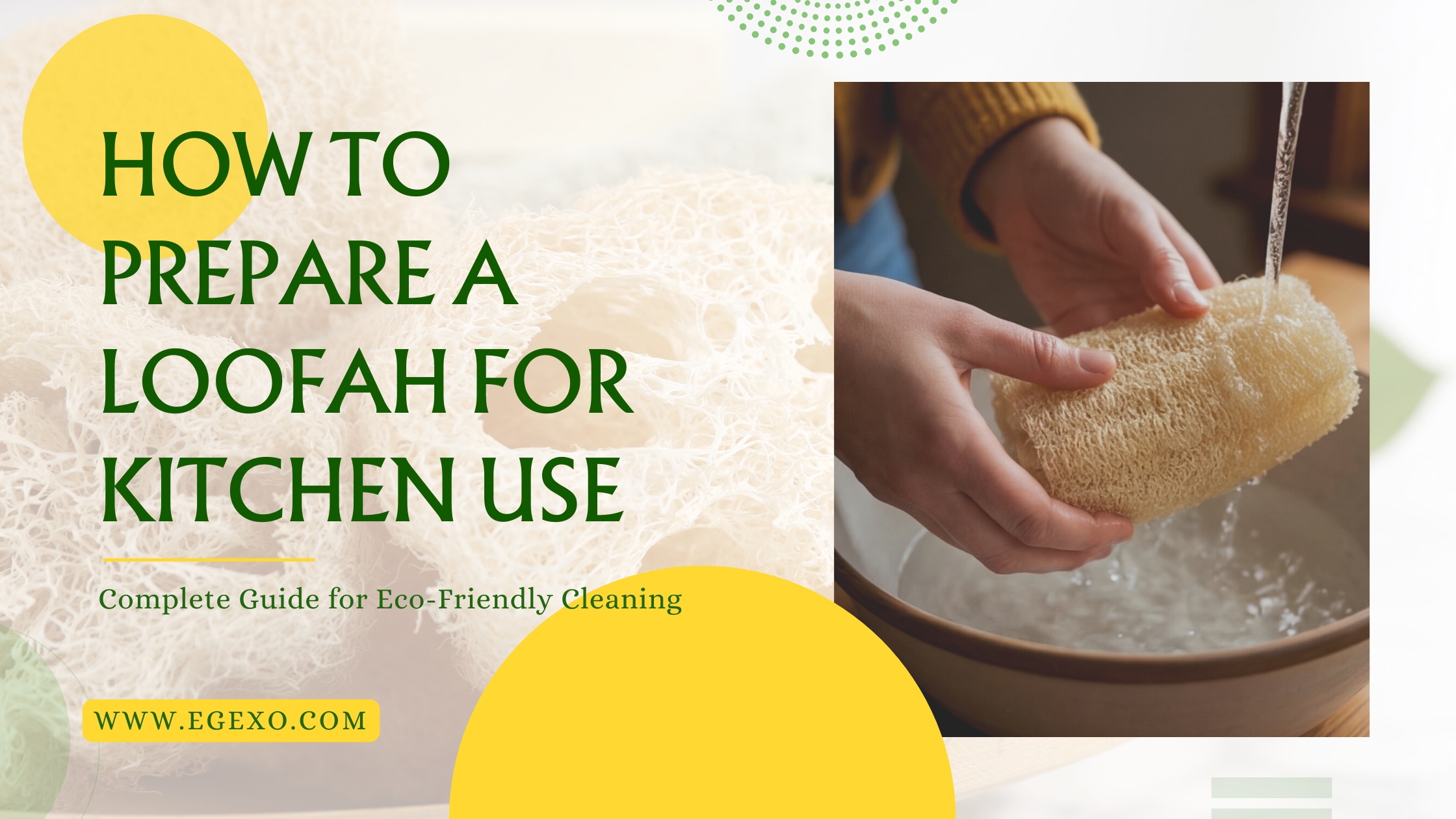
The most critical step when you prepare a loofah for kitchen use involves properly softening the fibers. Dry loofahs are too rigid for effective cleaning and may scratch delicate surfaces. Several softening methods exist, each with specific advantages.
Hot Water Soak Method
Submerge the loofah in hot water between 60 and 70 degrees Celsius for 15 to 20 minutes. The heat causes fiber expansion and breaks down the rigid pectin bonds that give dry loofahs their stiffness. This method works well for preparing single loofahs for immediate use.
Overnight Cold Soak Method
Place the loofah in room temperature water for 8 to 12 hours. This gentler approach preserves fiber integrity better than hot water and works well when preparing multiple loofahs simultaneously. Add two tablespoons of white vinegar per liter of water to inhibit bacterial growth during the extended soak.
Boiling Method for Deep Sanitization
Boil the loofah for 5 to 10 minutes in plain water. This method provides the most thorough sanitization and fastest softening but may reduce overall lifespan by approximately 10 to 15 percent. Reserve this method for loofahs intended for high-hygiene environments like commercial kitchens.
| Softening Method | Time Required | Best For | Lifespan Impact | Sanitization Level |
|---|---|---|---|---|
| Hot Water Soak | 15 to 20 minutes | Quick preparation | Minimal | Good |
| Cold Water Soak | 8 to 12 hours | Batch preparation | None | Moderate |
| Boiling | 5 to 10 minutes | Commercial use | 10 to 15 percent reduction | Excellent |
| Steam Treatment | 10 to 15 minutes | Industrial processing | 5 percent reduction | Excellent |
Step 4: Shaping and Sizing for Kitchen Tasks
After softening, the loofah becomes pliable enough to cut and shape for specific kitchen tasks. Many users prefer cutting loofahs into smaller sections that fit comfortably in the hand and dry more quickly between uses.
Use sharp scissors or a serrated knife to cut softened loofahs. A standard 30-centimeter loofah typically yields three to four kitchen-sized pieces of 7 to 10 centimeters each. Cut pieces dry faster, reducing bacterial growth opportunities, and allow different sections to be designated for different cleaning tasks.
Retailers offering pre-cut kitchen loofahs can command premium prices for the added convenience. Egexo provides custom product design services for businesses wanting unique shapes or sizes that differentiate their product offerings.
Step 5: Initial Conditioning with Dish Soap
Before first use, condition the prepared loofah with dish soap to optimize its cleaning performance. Apply a generous amount of dish soap to the wet loofah and work it through the fiber network by squeezing repeatedly. This process accomplishes several objectives simultaneously.
The soap penetrates deep into the fiber structure where it will later help lift grease and food particles. Conditioning also neutralizes any residual plant compounds that might affect the taste or smell of dishes during initial uses. Finally, the mechanical action of squeezing further softens fibers and increases flexibility.
Rinse the loofah thoroughly after conditioning and squeeze out excess water. The loofah is now ready for kitchen use.
Essential Maintenance Practices for Kitchen Loofahs
Daily Care Routine
Proper daily maintenance dramatically extends loofah lifespan and maintains hygienic conditions. After each use, rinse the loofah thoroughly under hot running water to remove all food particles and soap residue. Squeeze firmly to expel water from the fiber network.
Store the loofah in a location with good air circulation. Avoid enclosed spaces like under-sink cabinets where moisture accumulates. A loofah hook near a window or above the sink allows rapid drying that inhibits bacterial and mold growth.
Weekly Deep Cleaning Protocol
Even with proper daily care, kitchen loofahs benefit from weekly deep cleaning to remove accumulated oils and prevent odor development. The following checklist ensures thorough maintenance:
Weekly Kitchen Loofah Maintenance Checklist
| Task | Method | Duration | Purpose |
|---|---|---|---|
| Visual Inspection | Check for damage, discoloration | 2 minutes | Identify replacement needs |
| Hot Water Rinse | Run under hottest tap water | 3 minutes | Loosen embedded particles |
| Sanitization Soak | Diluted bleach or vinegar solution | 10 minutes | Kill bacteria and mold |
| Thorough Rinse | Clean running water | 2 minutes | Remove sanitizer residue |
| Complete Drying | Air dry in ventilated area | 4 to 6 hours | Prevent moisture retention |
| Storage Check | Ensure storage area is dry | 1 minute | Maintain between uses |
For the sanitization soak, use either one tablespoon of bleach per liter of water or undiluted white vinegar. Both methods effectively eliminate bacteria, though vinegar represents the more eco-friendly option.
Knowing When to Replace Your Kitchen Loofah
Kitchen loofahs from quality suppliers like Egexo typically last 8 to 12 weeks with proper care. Several indicators signal replacement time has arrived. Persistent odors that survive deep cleaning suggest bacterial colonization within the fiber structure. Visible mold or dark spots indicate fungal growth requiring immediate disposal.
Physical degradation also signals replacement needs. When fibers begin separating, creating a stringy texture, the loofah has reached end of life. Similarly, if the loofah no longer springs back to shape after squeezing, the structural integrity has been compromised.
Businesses stocking kitchen loofahs should educate customers on these replacement indicators. Providing this guidance builds trust and ensures positive user experiences that drive repeat purchases. Additional care information is available through resources at Loofah Guide.
Benefits of Switching to Natural Kitchen Loofahs
Environmental Advantages
The environmental case for natural kitchen loofahs is compelling. A single household using natural loofahs instead of plastic sponges prevents approximately 24 to 36 synthetic sponges from entering landfills annually. Multiplied across thousands of customers, retailers offering kitchen loofahs contribute meaningfully to plastic reduction efforts.
Natural loofahs biodegrade completely within 30 to 60 days when composted. The plant fibers break down into nutrient-rich organic matter that enriches soil rather than persisting for centuries like plastic alternatives. This circular lifecycle aligns with growing consumer demand for genuinely sustainable products.
Economic Benefits for Households and Businesses
Despite higher unit costs, kitchen loofahs deliver superior long-term value. A quality Egyptian loofah lasting 10 weeks costs approximately the same as three synthetic sponges lasting the same period combined. For cost-conscious households, this represents meaningful annual savings.
Wholesale buyers benefit from strong profit margins on natural loofahs. The perceived premium value allows retailers to achieve 40 to 60 percent margins while still offering customers genuine value. Wholesale Loofah provides additional resources for businesses exploring this market opportunity.
Health and Safety Considerations
Natural loofahs avoid the chemical concerns associated with synthetic alternatives. Many plastic sponges contain antimicrobial treatments that release triclosan or similar compounds during use. These chemicals wash into waterways and have been linked to hormone disruption in aquatic organisms.
Properly maintained natural loofahs provide effective cleaning without chemical additives. The open fiber structure dries rapidly, naturally inhibiting bacterial growth through moisture reduction rather than chemical intervention.
Wholesale Considerations for Kitchen Loofah Buyers
Understanding Quality Grading Systems
Professional buyers must understand quality grading to make informed purchasing decisions. Egexo employs a comprehensive grading system based on fiber density, surface uniformity, length, and structural integrity. Higher grades command premium prices but deliver measurably better performance and customer satisfaction.
Request detailed grade specifications from suppliers before ordering. Reputable suppliers provide this information readily. Request a quotation from Egexo to receive comprehensive grade information alongside competitive pricing.
Minimum Order Quantities and Logistics
Kitchen loofah MOQs vary significantly between suppliers and grades. Egexo offers flexible MOQs starting from 100 units for initial orders, allowing new retailers to test market response before committing to larger quantities. Established distributors typically order 1,000 to 5,000 units to optimize shipping costs and maintain adequate inventory.
Shipping costs represent a significant factor in landed pricing. Egyptian loofahs benefit from Egypt’s strategic location offering efficient shipping routes to Europe, North America, and Asia. Typical transit times range from 10 to 21 days depending on destination and shipping method.
Private Labeling Opportunities
Retailers seeking brand differentiation should explore private labeling options. Private label loofah manufacturing allows businesses to sell kitchen loofahs under their own brand while leveraging Egexo’s cultivation expertise and quality control infrastructure.
Private label programs typically require minimum orders of 500 units and include custom packaging design, branding application, and quality certification. This approach builds brand equity while maintaining competitive pricing.
Common Mistakes When Preparing Kitchen Loofahs
Insufficient Softening Time
The most frequent mistake involves inadequate softening before first use. Dry loofah fibers can scratch non-stick coatings, damage delicate dishware, and provide uncomfortable user experience. Always allow minimum recommended softening time based on chosen method.
Poor Storage Practices
Storing wet loofahs in enclosed spaces virtually guarantees rapid bacterial growth and unpleasant odors. Even the highest quality Egyptian loofahs will deteriorate quickly under poor storage conditions. Invest in proper storage solutions that promote air circulation and rapid drying.
Using Damaged Loofahs Too Long
Economic considerations sometimes lead users to continue using degraded loofahs past their effective lifespan. Damaged loofahs with separated fibers can harbor bacteria in hard-to-clean crevices and actually spread contamination rather than remove it. Replace loofahs promptly when degradation signs appear.
Improper Sanitization Chemical Concentrations
Using overly concentrated bleach solutions for sanitization damages loofah fibers and shortens useful life. Conversely, overly dilute solutions fail to effectively eliminate bacteria. Follow recommended dilution ratios precisely for optimal results.
Expert Insight from Egexo
Professional Tip from Our Cultivation Team
With over 25 years of Egyptian loofah cultivation experience, our team has learned that the most critical factor in kitchen loofah performance is fiber maturity at harvest. Loofahs harvested too early produce fibers that soften excessively and wear quickly. Loofahs harvested too late develop overly rigid fibers that resist softening and may feel harsh during use. Our expert harvesters evaluate each loofah individually, selecting only those at optimal maturity for processing. This attention to harvest timing is why Egexo kitchen loofahs consistently outperform competitors in durability and cleaning effectiveness. When you prepare a loofah for kitchen use from our selection, you start with the finest raw material available anywhere in the world.
Browse our complete kitchen loofah selection in the product catalog or visit our online shop to place an order.
Frequently Asked Questions
Q1: How long does it take to prepare a loofah for kitchen use?
A: Preparing a loofah for kitchen use typically requires 20 minutes to 12 hours depending on the softening method chosen. The hot water soak method takes approximately 20 minutes total including cleaning and conditioning. The overnight cold soak method requires 8 to 12 hours but can be done passively while you sleep. Most users find the hot water method most convenient for immediate needs while the cold soak works well for batch preparation.
Q2: Can I use the same loofah for dishes and countertops?
A: Using separate loofahs for different cleaning tasks is recommended for optimal hygiene. Dish loofahs contact food residue and grease that can transfer to countertops, while counter loofahs may pick up household bacteria that should not contact eating surfaces. Cut a single loofah into multiple pieces and designate each for specific tasks. This approach also extends useful life since different sections receive varying wear.
Q3: What minimum order quantity should retailers expect for kitchen loofahs?
A: Kitchen loofah minimum order quantities typically range from 100 to 500 units depending on supplier and grade selected. Egexo offers MOQs starting at 100 units for new customers testing market demand, with better per-unit pricing available at higher quantities. Most successful retailers begin with 200 to 300 units across multiple grades to determine which products resonate best with their customer base before scaling orders.
Q4: How do I remove persistent odors from my kitchen loofah?
A: Persistent odors in kitchen loofahs usually indicate bacterial buildup requiring thorough sanitization. Soak the loofah in undiluted white vinegar for 30 minutes, then rinse thoroughly and allow to dry completely in a well-ventilated area. If odors persist after vinegar treatment, the loofah should be replaced. Prevent future odors by ensuring complete drying between uses and performing weekly sanitization soaks.
Q5: Are Egyptian loofahs safe for non-stick cookware?
A: Properly softened Egyptian loofahs are safe for non-stick cookware when used correctly. The key is ensuring adequate softening time before use and maintaining gentle pressure while cleaning. Avoid using dry or partially softened loofahs on non-stick surfaces. For extra delicate coatings, select Grade B loofahs with slightly less fiber density for gentler cleaning action.
Q6: What profit margins can retailers expect on kitchen loofahs?
A: Kitchen loofahs typically generate retail margins between 40 and 60 percent depending on positioning and sourcing. Premium Egyptian loofahs from quality suppliers like Egexo command higher retail prices due to recognized superior quality, enabling stronger margins than generic alternatives. Private label programs can further enhance margins by building brand equity and reducing price comparison shopping.
Q7: How should I store kitchen loofahs before selling them?
A: Store kitchen loofah inventory in cool, dry conditions away from direct sunlight. Ideal storage temperature ranges from 15 to 25 degrees Celsius with relative humidity below 60 percent. Properly stored loofahs maintain quality for 18 to 24 months before sale. Avoid sealed plastic packaging for long-term storage as trapped moisture can promote mold growth.
Conclusion
Learning how to prepare a loofah for kitchen use opens the door to sustainable cleaning practices that benefit both households and the environment. The five-step preparation process of selecting, cleaning, softening, shaping, and conditioning transforms raw Egyptian loofahs into effective, long-lasting kitchen tools that outperform synthetic alternatives in every meaningful measure.
Egyptian loofahs from Egexo represent the gold standard in natural cleaning products, backed by over 25 years of cultivation expertise and rigorous quality control standards. Whether you seek a single loofah for your home kitchen or thousands of units for your retail operation, proper preparation ensures maximum performance and customer satisfaction.
Key Takeaways:
- Egyptian loofahs last 8 to 12 weeks compared to 2 to 4 weeks for synthetic sponges
- Proper softening is the most critical preparation step for kitchen performance
- Weekly sanitization and proper storage dramatically extend loofah lifespan
- Kitchen loofahs offer retailers 40 to 60 percent profit margins
- Natural loofahs provide effective cleaning without chemical antimicrobial treatments
Ready to experience Egyptian loofah quality?
- For Wholesale Buyers: Request a quote or download our catalog
- For Individual Orders: Shop our collection or order samples