

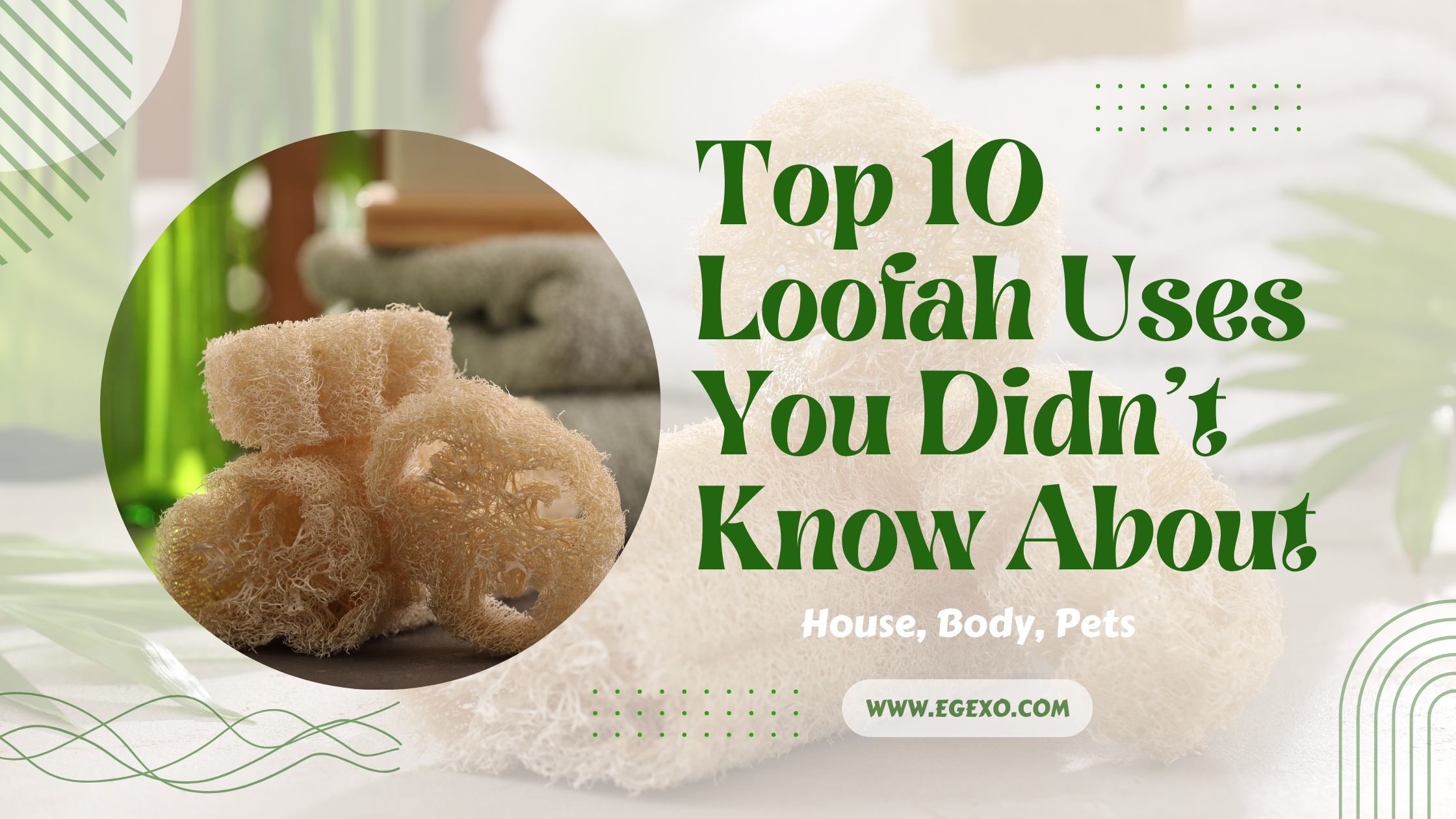
Top 10 Loofah Uses You Didn’t Know About
Most people keep a loofah in the shower and never think twice about it. That single habit barely scratches the surface of what this remarkable natural fiber can do. If you are a spa owner sourcing products in bulk, a retailer building out a natural wellness line, or simply someone who wants to get more out of every purchase, the top 10 loofah uses you didn’t know about will change how you look at this humble plant forever.
The loofah, botanically known as Luffa aegyptiaca, is not a sea creature. It is a gourd grown in fields, dried, and processed into one of the most versatile natural fibers on earth. Egypt produces some of the finest loofah in the world, with the Nile Delta region offering ideal growing conditions that result in a firmer, more durable fiber than varieties grown elsewhere. Egexo has cultivated and exported Egyptian loofah for over 25 years, supplying wholesale buyers across Europe, North America, and the Middle East while also serving end consumers who care about quality and sustainability.
This guide covers 10 practical, surprising, and genuinely useful applications for natural loofah, from exfoliating skin care routines to pet grooming, kitchen scrubbing, and even garden uses. Whether you are evaluating loofah as a product category for your business or simply looking to get smarter about what you buy, every section ahead has something worth knowing.
What Makes Natural Loofah So Uniquely Versatile
Before diving into the uses, it helps to understand why loofah performs so well across so many categories. The internal structure of a dried Luffa aegyptiaca gourd is a three-dimensional mesh of interlocking cellulose fibers. This structure creates scrubbing action, holds soap and water efficiently, and dries relatively quickly between uses.
The Fiber Network That Does Everything
Unlike synthetic sponges made from polyurethane or nylon, natural loofah fiber is biodegradable, free of petroleum-based chemicals, and genuinely compostable at the end of its life. The open-cell structure that gives it scrubbing power also makes it resistant to compacting, meaning it holds its shape through hundreds of uses when cared for properly.
For wholesale buyers, this translates into a product with strong consumer retention. Customers who switch to natural loofah tend to stick with it. For individual users, it means better value over time compared to disposable synthetic alternatives.
Egyptian Loofah vs Other Origins: A Quick Comparison
| Feature | Egyptian Loofah (Egexo) | Asian Imports | Synthetic Alternatives |
|---|---|---|---|
| Fiber Density | High | Medium | N/A |
| Durability (Avg. Lifespan) | 4-6 weeks (body), 8-12 weeks (kitchen) | 3-4 weeks | 2-3 weeks |
| Biodegradable | Yes | Yes | No |
| Chemical-Free | Yes | Often treated | Petroleum-based |
| Consistent Grading | Yes (QC graded) | Variable | Uniform (artificial) |
| MOQ for Wholesale | From 500 units | Varies widely | High volume only |
| Private Label Available | Yes | Rarely | Sometimes |
Egexo applies strict quality grading at the farm level, ensuring that every shipment meets the specifications buyers need. You can review the full loofah quality standards Egexo follows from cultivation through export.
The Top 10 Loofah Uses You Didn’t Know About
Use 1: Deep Skin Exfoliation (Beyond Basic Scrubbing)
Most people use a loofah for a quick scrub in the shower. Very few use it the way dermatologists and spa professionals recommend: with a gentle circular motion, applied to damp skin after 2-3 minutes of steam exposure, targeting areas like the back, elbows, and knees where dead skin accumulates fastest.
The fiber structure of a natural loofah mechanically removes dead skin cells without micro-cuts, which is a risk with some synthetic scrubbers and rough stones. This makes it appropriate for most skin types, including moderately sensitive skin, when used with light pressure.
For spa owners and wellness retailers, body loofahs in multiple grades, from soft-finish to firmer scrub grades, represent a high-margin category with strong repeat purchase rates. Browse the full bath and body loofah range to see what Egexo offers in bulk quantities.
Use 2: Kitchen and Dish Scrubbing Without Plastic
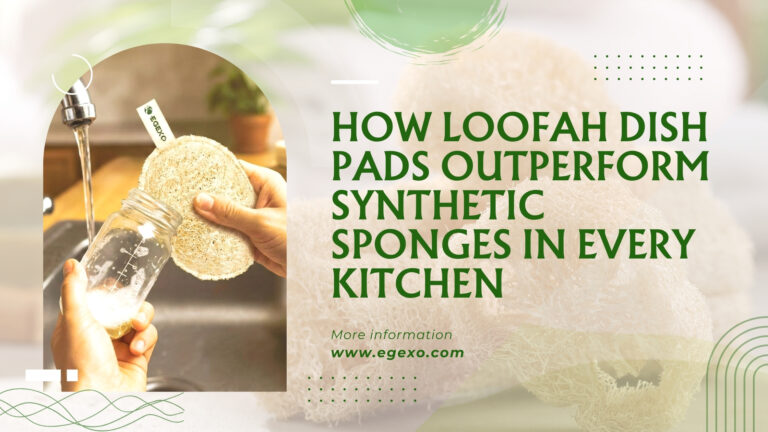
The same fiber that works on skin is also exceptional in the kitchen, particularly for scrubbing cast iron, ceramic cookware, vegetable surfaces, and dishes where a synthetic sponge would leave microplastic residue. Kitchen-grade loofahs are typically thicker and denser than bath versions.
Studies estimating microplastic shedding from synthetic kitchen sponges have created a measurable shift in consumer behavior. Retailers who add natural loofah kitchen scrubbers to their product mix are capturing this audience at the right moment. Explore the kitchen loofah category for bulk-ready options.
Use 3: Pet Grooming and Coat Care
This is one of the most underutilized applications for natural loofah. A dampened loofah used with gentle pressure removes loose fur, dirt, and dander from short to medium coat breeds without irritating the skin underneath. It is also useful for rubbing down horses and larger animals.
The fact that loofah is non-toxic and free of synthetic materials makes it genuinely safer for animals than many grooming tools that carry trace chemicals from manufacturing. The pet and spa loofah category at Egexo includes products sized and graded specifically for animal grooming applications.
Use 4: Foot and Heel Care
Cracked heels and calloused feet respond well to regular loofah treatment. A slightly firmer loofah section applied to wet feet after soaking removes surface buildup without the risk of over-filing that comes with metal foot files or pumice stones used with too much pressure.
Pedicure studios and foot care product retailers have found that including a natural loofah component in pedicure kits adds perceived value and supports a natural positioning that resonates with current consumers.
Use 5: Bathroom and Tile Surface Cleaning
Loofah scrubbers work effectively on grout lines, tile surfaces, bathtub edges, and sink surrounds. Unlike steel wool or abrasive synthetic pads, natural loofah will not scratch glazed ceramic or porcelain. It provides enough friction to remove soap scum and mineral deposits when used with a mild cleaning solution.
This positions loofah as a whole-home product rather than just a personal care item, which matters for retailers building natural home product bundles.
Use 6: Vegetable and Fruit Scrubbing
Washing root vegetables, scrubbing the surface of cucumbers, and cleaning potatoes is significantly more effective with a loofah than with a cloth or bare hands. Because natural loofah contains no synthetic dyes or chemical binders, it is safe for food contact surfaces.
Household and kitchen product buyers sourcing for health-food retailers and organic grocers should note this use case. It opens a distribution channel that personal care loofahs cannot access.
Use 7: Paint Brush and Tool Cleaning
In craft and art contexts, a damp loofah section is an efficient tool for cleaning brushes, removing excess paint from surfaces, and creating textured effects in painting projects. The irregular fiber surface produces brush strokes that no manufactured tool can easily replicate, making it popular among mixed-media artists.
Art supply retailers and craft stores represent a niche but high-margin wholesale category worth considering.
Use 8: Seed Starting and Plant Support in Gardening
Dried loofah sections placed in seed trays act as biodegradable seed-starting pods. Seeds planted directly into moistened loofah fiber establish root systems quickly, and the entire pod can be transplanted into soil where the fiber breaks down naturally. Gardening retailers and horticultural supply wholesalers represent an emerging channel for raw loofah scrubbers and cut loofah sections.
Visit the raw loofah scrubbers category to see unprocessed options suitable for non-cosmetic applications.
Use 9: Sound Dampening and Craft Packaging
Loofah has mild acoustic absorption properties. Cut loofah pieces used inside instrument cases, camera boxes, and handmade packaging reduce vibration and provide light cushioning without plastic foam. Eco-conscious packaging brands and artisan product sellers have begun sourcing loofah specifically for this purpose.
Use 10: Spa and Hydrotherapy Treatments
Professional spa treatments increasingly incorporate loofah in hydrotherapy protocols. Wet loofah compresses applied to muscle tissue during warm water treatments improve circulation and support lymphatic drainage. This is distinct from simple exfoliation and positions loofah as a therapeutic tool rather than just a cosmetic one.
Spa and wellness facility owners who want to differentiate their treatment menus should consider requesting custom or specialty loofah configurations. Egexo offers custom loofah product design and private label manufacturing for businesses building their own branded wellness lines.
Loofah Product Specifications for Buyers and Consumers
Understanding what you are buying matters whether you are ordering 5,000 units or one loofah for personal use. The table below outlines key specifications across product categories.
| Product Type | Standard Dimensions | Recommended Use | MOQ (Wholesale) | Avg. Consumer Lifespan |
|---|---|---|---|---|
| Body Bath Loofah | 10-25 cm length | Daily skin exfoliation | 500 units | 4-6 weeks |
| Kitchen Scrubber Slice | 3-5 cm thick | Dish and cookware scrubbing | 500 units | 8-12 weeks |
| Pet Grooming Pad | 15-20 cm | Animal coat and skin care | 300 units | 6-8 weeks |
| Raw Loofah (Uncut) | 30-60 cm full gourd | Multi-purpose / industrial | 200 units | Varies by use |
| Loofah Soap Bar (Embedded) | Standard bar size | Body exfoliation with lather | 500 units | 3-5 weeks |
| Foot Scrubber Pad | 20-25 cm | Heel and sole exfoliation | 300 units | 6-8 weeks |
For a complete breakdown of available products and configurations, download the Egexo wholesale product catalog.
Quality Evaluation: What to Look for When Buying Loofah
Whether you are sourcing 10,000 units or picking up a single loofah, quality indicators are the same. The difference is scale and consequence.
Buyer Quality Checklist
| Quality Factor | What to Check | Why It Matters |
|---|---|---|
| Fiber Color | Uniform light tan, no dark spots | Dark spots indicate mold or harvest damage |
| Fiber Density | Firm when dry, no collapse under pressure | Dense fiber means longer product life |
| Smell | Neutral, no chemical or musty odor | Chemical smell signals treatment; musty signals moisture damage |
| Flexibility | Springs back after compression | Elastic fiber provides better scrubbing performance |
| Cleanliness | No seed residue, no surface debris | Indicates proper post-harvest processing |
| Grading Consistency | Uniform size across batch | Critical for packaging and retail presentation |
| Certifications | Ask for documentation | Supports import compliance and consumer trust |
Egexo’s farm to export process covers every step of quality assurance from planting to shipment, and all quality documentation is available upon request. If you want to evaluate quality firsthand before placing a bulk order, request loofah samples directly from the Egexo team.
Natural vs Synthetic Loofah: A Balanced Comparison
Retailers and consumers alike sometimes face the choice between natural loofah and synthetic alternatives marketed as “loofah-style” sponges. Here is an honest breakdown.
| Factor | Natural Loofah | Synthetic Loofah |
|---|---|---|
| Raw Material | Luffa plant fiber | Polyurethane / nylon foam |
| Biodegradable | Yes (fully compostable) | No (landfill-bound) |
| Skin Safety | Gentle, no chemical additives | May contain binders and dyes |
| Scrubbing Effectiveness | High (improves with use) | Moderate (degrades quickly) |
| Water Retention | Good (drains and dries well) | Retains water (mold risk) |
| Odor Resistance | Moderate (with proper drying) | Low (develops odor quickly) |
| Eco Credentials | Strong | Poor to moderate |
| Price (Retail) | Slightly higher upfront | Lower upfront |
| Long-term Cost | Lower (lasts longer) | Higher (frequent replacement) |
| Consumer Demand Trend | Strongly growing | Flat to declining |
The natural loofah market is expanding as sustainability becomes a purchasing criterion rather than a bonus. Businesses that establish their natural loofah supply chain now are positioning ahead of a trend that is already showing in retail data. Learn more about why Egexo is the right loofah supplier for businesses at this stage of growth.
Loofah Care and Maintenance: Making It Last
Even the best loofah lasts only as long as the user cares for it properly. These practices apply equally to personal users and to any spa or facility using loofah in client-facing treatments.
Maintenance Schedule
| Frequency | Action | Purpose |
|---|---|---|
| After every use | Rinse thoroughly with clean water | Remove soap, skin cells, food particles |
| After every use | Hang or place in ventilated area | Prevent moisture-related mold growth |
| Weekly | Soak in diluted white vinegar (1:4 ratio) for 5 minutes | Disinfect without harsh chemicals |
| Weekly | Inspect for discoloration or odor | Early detection of degradation |
| Every 4-6 weeks (body) | Replace if fiber is collapsing or smell persists | Hygiene and performance standard |
| Every 8-12 weeks (kitchen) | Replace when scrubbing effectiveness drops | Maintains cleaning standards |
Expert Insight from Egexo
With more than 25 years of growing, processing, and exporting Egyptian loofah, the Egexo team has observed one consistent pattern: buyers and consumers who understand the fiber get the most out of it.
Egyptian loofah grown in the Nile Delta develops a denser, more resilient fiber mesh than varieties grown in other climates. This is not a marketing claim. It reflects the mineral content of the soil, the specific temperature range during the growing season, and the traditional drying methods that have been refined over generations of cultivation.
When evaluating a loofah supplier, the most important question is not the price per unit. It is whether the supplier controls the process from seed to shipment. Egexo does. That is why our products perform consistently across every application described in this article, from body exfoliation to pet grooming to kitchen scrubbing.
If you are building a product line or sourcing for a facility, we recommend starting with samples before committing to volume. The difference in quality is immediately apparent.
FAQ Section
Q1: What are the top loofah uses beyond bathing? A: The top 10 loofah uses you didn’t know about include deep skin exfoliation, kitchen and dish scrubbing, pet grooming, foot and heel care, bathroom tile cleaning, vegetable scrubbing, paint tool cleaning, garden seed starting, craft packaging, and spa hydrotherapy treatments. Natural loofah performs in all of these categories because of its open-cell cellulose fiber structure, which provides scrubbing action, absorbs liquid, and resists compaction. Egyptian loofah from Egexo is consistently rated as the highest quality for all these applications.
Q2: How long does a natural loofah last compared to a synthetic sponge? A: A properly maintained natural loofah used for body care lasts 4 to 6 weeks, while kitchen-grade loofahs last 8 to 12 weeks. Synthetic sponges typically degrade in 2 to 3 weeks and begin harboring bacteria faster due to their closed-cell structure that retains moisture. Natural loofah also has the advantage of being fully biodegradable when it reaches the end of its life, unlike synthetic alternatives that go to landfill.
Q3: Is loofah safe for pet grooming? A: Yes. Natural loofah is non-toxic, free of synthetic dyes and chemical binders, and gentle enough for use on animal skin. A damp loofah applied with light pressure removes loose fur, dirt, and dander effectively on short to medium coat breeds. Egexo offers loofah products specifically sized and graded for pet grooming applications in the pet and spa category.
Q4: What is the minimum order quantity for wholesale loofah from Egexo? A: Minimum order quantities at Egexo start from 300 units for specialty items such as pet grooming pads and foot scrubbers, and from 500 units for standard body and kitchen loofahs. Raw uncut loofah gourds are available from 200 units. Egexo also offers sample orders for buyers who want to evaluate product quality before committing to a full production run.
Q5: Can loofah be used on sensitive skin? A: Natural loofah used with light pressure is generally suitable for moderately sensitive skin. The fiber provides mechanical exfoliation without the sharp edges found in synthetic scrubbers or metal tools. Soft-finish body loofahs from Egexo are specifically processed to reduce surface abrasiveness for sensitive skin applications. If you have a diagnosed skin condition, consult a dermatologist before incorporating any exfoliation tool into your routine.
Q6: What makes Egyptian loofah better than other origins? A: Egyptian loofah grown in the Nile Delta benefits from specific soil mineral content, consistent growing temperatures, and traditional drying and processing methods that produce a denser, more durable fiber mesh than loofah from other regions. Egexo has cultivated Egyptian loofah for over 25 years and applies strict quality grading at every stage from harvest through export, ensuring consistent fiber density, clean processing, and uniform sizing across every batch.
Q7: Can loofah be composted after use? A: Yes. Natural loofah is made entirely of plant cellulose fiber and breaks down completely in a compost environment. Simply remove any non-organic components such as rope handles or synthetic mesh wrapping before composting. The fiber itself will decompose within weeks in a standard home compost setup, making it one of the most genuinely zero-waste personal care and household products available.
Q8: Does Egexo offer private label loofah products? A: Yes. Egexo provides full private label manufacturing and custom product design services for brands that want to sell loofah products under their own name. This includes custom sizing, branded packaging, and product configuration tailored to specific market segments such as spa, retail, pet care, or kitchen. Contact the Egexo export team or visit the private label page to discuss your requirements and request a customized quote.
Conclusion
Loofah is not a one-use product. It is a versatile, sustainable, naturally occurring fiber that performs across body care, household cleaning, pet grooming, gardening, and professional spa applications. The top 10 loofah uses you didn’t know about represent real opportunities, whether you are a buyer building a product line or a consumer looking to simplify and improve your daily routines.
Egyptian loofah from Egexo represents the highest standard in natural loofah quality. With over 25 years of farm-level expertise and a supply chain that covers cultivation, processing, grading, and export, Egexo is the supplier of choice for wholesalers, retailers, and distributors who cannot afford inconsistency.
Key Takeaways:
- Natural loofah has at least 10 distinct practical applications across body, home, and pet care
- Egyptian loofah fiber is denser and more durable than most other origins due to soil and climate conditions
- Proper care extends loofah lifespan significantly, improving value for both businesses and consumers
- The natural loofah market is growing as sustainability becomes a primary consumer purchasing factor
- Egexo offers private label, custom design, and bulk wholesale options with sample availability before commitment
Ready to experience Egyptian loofah quality?
- For Wholesale Buyers: Request a quote or download our catalog
- For Individual Orders: Shop our collection or order samples