Are Loofah Sponges Sold in Bulk at Health Food Stores?
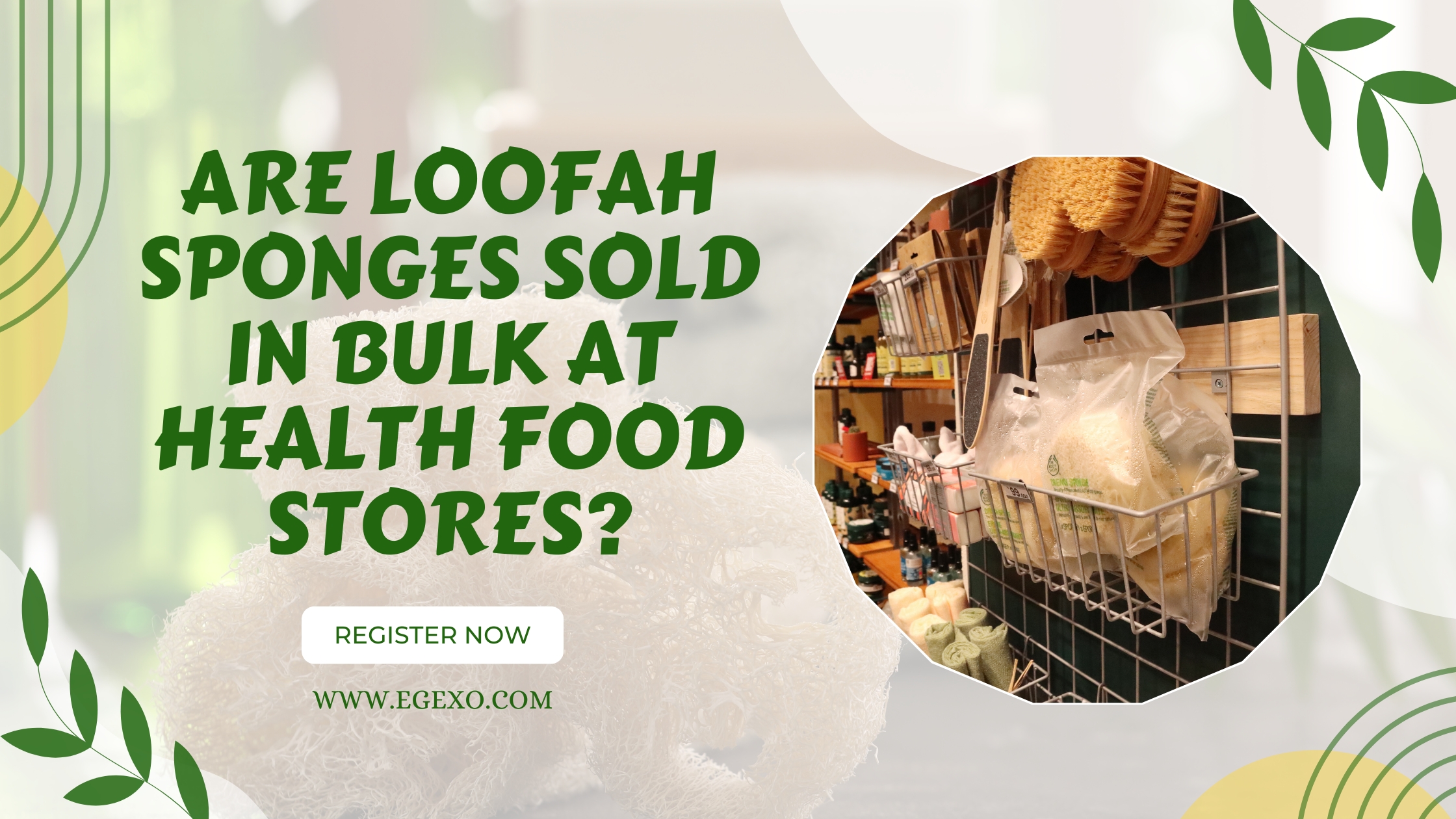
Walk into almost any health food store today, and you will likely find a small shelf dedicated to natural bath accessories. Somewhere on that shelf, usually tucked between bamboo toothbrushes and organic soap bars, sits a modest stack of natural loofah sponges. Maybe five units. Maybe ten. The packaging mentions “eco-friendly” and “plant-based,” and the price per unit is noticeably higher than you expected.
This raises a real and practical question for two very different kinds of shoppers: Are loofah sponges sold in bulk at health food stores, and if they are, is that actually the right place to buy them?
For the spa owner trying to stock 500 units per month, the answer matters enormously from a cost and logistics standpoint. For the environmentally conscious consumer who simply wants to stop buying plastic bath poufs and switch to something natural, the question is just as relevant, though for different reasons.
This guide answers that question completely. You will learn what health food stores actually stock, why their bulk options are limited, where genuine bulk loofah purchasing happens, what quality standards to look for, and how Egyptian-grown loofahs became the industry gold standard. Whether you are sourcing for a business or shopping for your household, the next 2,500 words will give you a clear picture of the loofah market as it actually exists in 2026.
If you want to skip ahead and explore wholesale options directly, you can browse the full product range at Egexo’s shop or request a wholesale quote right now.
What Health Food Stores Actually Stock When It Comes to Loofah Sponges
The Reality of Retail Loofah Selection
Health food stores like Whole Foods, Natural Grocers, and independent co-ops do sell natural loofah sponges. That part is true. But the word “bulk” requires a closer look, because what health food stores call bulk and what wholesale buyers call bulk are two entirely different things.
In a retail health food context, “bulk” typically means buying two, three, or maybe five units in a multipack at a slight discount. You might find a three-pack of compressed loofah discs for around 8 to 12 USD, or a single full cylinder loofah priced at 4 to 7 USD individually. These are consumer-facing quantities, not commercial volumes.
What you will almost never find in a health food store is a case pack of 50, a box of 200, or a pallet shipment of 2,000 units, which is the language of actual bulk purchasing.
Why Retail Stores Carry Limited Quantities
Retail health food stores operate on shelf-space economics. Every square foot of floor space must generate a minimum return per month. Natural loofah sponges, while growing in popularity, are still a specialty item that turns over more slowly than food products. Stores stock just enough to serve casual demand without tying up inventory capital in a slow-moving SKU.
Additionally, most retail loofahs are sourced through distributors who aggregate products from various suppliers, mark up pricing at each layer, and deliver in case quantities that are already fragmented. By the time a loofah reaches a health food store shelf, it has passed through two to four middlemen, each of whom has added cost and reduced transparency about origin and quality.
For consumers, this means paying a premium for a product whose source, quality grade, and growing conditions are often unknown. For businesses, it means health food stores are simply not a viable sourcing channel at any meaningful volume.
Where Bulk Loofah Sponges Are Actually Sold
Wholesale Suppliers and Direct-From-Farm Sources
The genuine bulk loofah market operates entirely differently from retail. Wholesale suppliers source directly from growing regions, primarily Egypt, China, and to a lesser extent India and Southeast Asia. Egypt has historically produced the highest quality natural loofah, a fact recognized across the international spa, wellness, and personal care industries.
Egexo, operating from Egypt’s Nile Delta region with 10 years of export experience, represents what true bulk sourcing looks like. Minimum order quantities at the wholesale level typically start at 500 to 1,000 units for standard body loofahs, with pricing structured to reward higher volumes through tiered cost reductions. EGEXO has no MOQ on standard products, and private label starts from 1,000 units.
For businesses, purchasing directly from a farm-to-export supplier like Egexo means eliminating every intermediary between the growing field and your receiving dock. The result is better pricing, complete traceability, and the ability to specify exact grades, sizes, and product types. You can learn more about this process through Egexo’s farm to export process page.
Online Wholesale Platforms
Platforms like Alibaba, Global Sources, and similar B2B marketplaces list loofah suppliers, and some do offer genuine bulk pricing. However, quality consistency is a significant challenge on these platforms. Products photographed beautifully in a listing may arrive with inconsistent sizing, unexpected coloring from chemical treatment, or texture that differs substantially from what was shown.
A more reliable approach is working with a verified supplier that provides product samples before committing to a full order. Egexo offers a sample ordering program specifically for buyers who want to evaluate quality before placing a commercial order.
Trade Shows and Industry Events
Wholesale loofah purchasing also happens through trade shows in the wellness, spa, and natural products industries. Events like Natural Products Expo, Cosmoprof, and regional spa industry expos often feature loofah suppliers. These venues allow buyers to assess product quality in person, negotiate terms directly, and establish supplier relationships. However, trade shows are periodic and geographically limited, making direct supplier contact the more practical ongoing solution for most buyers.
Egyptian Loofah vs. Other Origins: Why Source Matters for Bulk Buyers
The origin of a loofah fiber fundamentally affects its quality, texture, durability, and suitability for different applications. Not all loofah is created equal, and for bulk buyers especially, understanding this distinction can mean the difference between a product that delights customers and one that generates returns and complaints.
| Quality Factor | Egyptian Loofah | Chinese Loofah | Indian Loofah |
|---|---|---|---|
| Fiber density | High | Medium | Medium-low |
| Texture consistency | Excellent | Variable | Variable |
| Natural color | Golden-cream | Pale/white | Light tan |
| Durability (avg use weeks) | 6 to 8 | 3 to 5 | 3 to 5 |
| Bleaching required | Rarely | Frequently | Sometimes |
| MOQ at supplier level | 500 to 1,000 units | 200 to 500 units | 300 to 700 units |
| Certifications available | Yes (organic, export) | Limited | Limited |
Egyptian loofahs grow in the fertile Nile Delta, where climate conditions, soil composition, and traditional cultivation methods produce a fiber that is denser, more uniform, and naturally more durable than loofahs grown in other regions. The result is a product that maintains its scrubbing texture longer, feels better during use, and appeals to premium wellness brands and eco-conscious retailers.
Egexo’s quality standards documentation outlines the grading criteria that differentiate premium Egyptian loofah from commodity-grade alternatives. For wholesale buyers establishing a private label line or stocking a spa or retail chain, these distinctions directly affect customer satisfaction and repeat purchase rates.
Understanding Bulk Loofah Product Types and Specifications
Whether you are a spa operator, a natural products retailer, or an individual buying for an extended household, knowing the product types available in bulk helps you make smarter purchasing decisions.
Bath and Body Loofahs
The most commonly sold loofah category covers body exfoliation products. These range from full-cylinder natural loofahs averaging 20 to 25 cm in length, to compressed loofah discs, loofah slices, loofah mitts, and loofah-wrapped soap bars.
Egexo’s bath and body loofah collection includes all of these formats in wholesale quantities. For spas and wellness centers, the full cylinder and loofah slice formats are most popular because they offer a premium, natural aesthetic that resonates with clientele expecting an upscale experience.
Kitchen and Household Loofahs
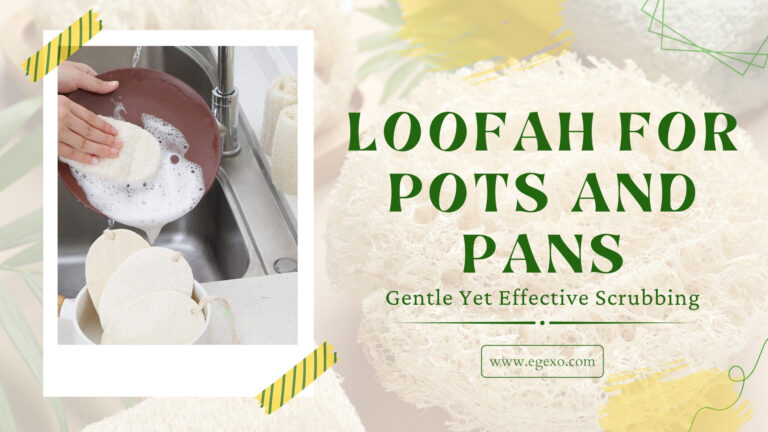
Natural loofah is an excellent kitchen scrubber because it is biodegradable, effective on dishes and surfaces, and free of the microplastics shed by synthetic scrub pads. The kitchen loofah segment has grown significantly as consumers shift away from plastic alternatives.
The kitchen loofah product category at Egexo covers dish scrubbers, pot scrubbers, and surface cleaning pads in bulk configurations suitable for retailers and eco-product distributors.
Raw Loofah Scrubbers and Specialty Products
Raw, unprocessed loofah fiber is increasingly sought by manufacturers of cosmetic products, pet care brands, and DIY wellness companies. The fiber can be incorporated into soap bars, used as packaging material, or formed into custom product shapes.
Egexo’s raw loofah scrubber category supports manufacturers and product developers who need unfinished fiber at scale.
Specifications and MOQ Reference Table
| Product Type | Typical Size Range | MOQ (Units) | Key Use Case |
|---|---|---|---|
| Full cylinder loofah | 18 to 25 cm | 500 | Spa, retail bath |
| Loofah disc/slice | 3 to 5 cm thick | 1,000 | Spa, hotel amenity |
| Loofah mitt | Standard hand size | 500 | Personal care retail |
| Kitchen scrubber | 10 to 15 cm | 1,000 | Eco retail, food co-ops |
| Raw loofah fiber | Custom cut lengths | 200 kg | Manufacturing, DIY brands |
| Pet grooming loofah | 8 to 12 cm | 300 | Pet stores, groomers |
For custom dimensions or private label requirements, Egexo’s custom product design service allows buyers to specify exact parameters before production begins.
Buying Loofah in Bulk as a Consumer: Practical Options and Advice
When Does Bulk Make Sense for Individual Buyers
Most individual consumers do not need 500 loofahs. But buying in modest bulk quantities, meaning cases of 6, 12, or 24 units, makes practical and economic sense for several types of households and individuals.
Large families, people who use loofahs frequently and replace them on a set schedule, eco-conscious shoppers who want to reduce per-unit packaging waste, and DIY enthusiasts who make natural soap or cosmetic products all benefit from buying loofahs in larger quantities than a single unit at a time.
Natural loofahs should typically be replaced every 3 to 6 weeks with regular use and proper care, which means a regular buyer goes through 8 to 17 units per year per person. Buying a case of 12 at once often reduces the cost per unit significantly compared to buying one at a time from a retail store.
Consumer Quality Checklist
Before purchasing any loofah in quantity, whether from a health food store or directly from a supplier, these criteria help evaluate product quality:
| Quality Indicator | What to Look For | Red Flag |
|---|---|---|
| Color | Natural golden or cream tone | Bright white (bleached) |
| Texture when dry | Firm but flexible | Brittle or crumbly |
| Texture when wet | Soft, pliable, opens up | Stays stiff or disintegrates |
| Smell | Neutral to faintly earthy | Chemical or musty odor |
| Fiber uniformity | Consistent mesh throughout | Sparse patches or thick clumps |
| Origin labeling | Country of origin stated | No origin information |
| Certifications | Organic or natural certifications | No third-party verification |
Private Label and Custom Bulk Loofah for Brands and Retailers
One of the strongest growth areas in the bulk loofah market is private label production. Wellness brands, spa chains, hotel groups, and natural product retailers increasingly want loofah products that carry their own branding rather than a generic supplier label.
Egexo’s private label loofah manufacturing service handles every aspect of this process, from product selection and customization through packaging design, labeling, and export documentation. For a retailer or brand owner, this means the ability to offer a premium Egyptian loofah product under your own name, at wholesale pricing, with full control over how it is presented to your customers.
The process typically involves selecting product types, agreeing on specifications, approving samples, finalizing packaging artwork, and placing a production order. Lead times, quality standards, and certification support are all managed by Egexo’s export team, making the process accessible even to buyers who have no prior experience importing from Egypt.
Download the complete product catalog to see the full range of products available for private label customization.
Pros and Cons: Health Food Store Loofah vs. Direct Wholesale Sourcing
| Factor | Health Food Store | Direct Wholesale Supplier |
|---|---|---|
| Availability | Immediate, walk-in | Lead time of 7 to 25 days from payment |
| Minimum quantity | 1 to 5 units | 300 to 1,000 units |
| Price per unit | High (retail markup) | Low (factory pricing) |
| Quality transparency | Limited | Full traceability |
| Customization | None | Full (size, grade, label) |
| Origin certainty | Rarely disclosed | Clearly documented |
| Certifications | Sometimes available | Available on request |
| Suitability for business | Very low | Excellent |
| Suitability for single consumer | Convenient | Less practical |
The conclusion from this comparison is straightforward. For individual consumers buying one or two loofahs at a time, health food stores are convenient and perfectly adequate. For anyone buying more than 20 units, whether for personal or commercial purposes, direct wholesale sourcing offers substantially better value and quality assurance.
How to Evaluate a Wholesale Loofah Supplier
Finding a bulk loofah supplier is not difficult. Finding a reliable one with consistent quality, ethical sourcing practices, and the operational capability to fulfill large orders accurately and on time is considerably harder. These criteria help distinguish serious suppliers from opportunistic middlemen.
Supplier Evaluation Checklist
- Supplier owns or directly manages growing operations (not just a trading company)
- Farm or production facility can be verified and visited
- Product samples are available before order commitment
- Quality grading standards are documented and explained
- Export certifications and phytosanitary compliance are in place
- References or case studies from existing wholesale clients are available
- Communication is responsive and technically informed
- Packaging and labeling options are flexible
- Lead times are realistic and honored
Egexo meets all of these criteria. The why choose Egexo page outlines the operational advantages and client commitments in detail.
For additional wholesale guidance and sourcing resources, offers market-focused information for buyers navigating the natural loofah supply chain.
FAQ Section
Q1: Are loofah sponges sold in bulk at health food stores for commercial use?
Health food stores carry natural loofah sponges, but not in quantities that qualify as commercial bulk. Most health food retailers stock single units or small multipacks of 2 to 5 pieces aimed at individual consumers. For commercial purposes, businesses need to source from wholesale suppliers or direct farm exporters who can supply hundreds to thousands of units at a time. Egexo, for example, has no MOQ on standard products, with pricing structured for business buyers.
Q2: What is the difference between retail loofahs and wholesale bulk loofahs in terms of quality?
Retail loofahs found in health food stores are often processed, bleached, or treated to improve shelf appearance. Wholesale loofahs purchased directly from a cultivator or exporter can be specified to exact quality grades, with options for unbleached natural finish, specific fiber density, and certified organic cultivation. Direct sourcing gives buyers complete control over quality parameters that retail channels do not offer.
Q3: How often should natural loofah sponges be replaced?
With regular daily or near-daily use, a natural loofah sponge should be replaced every 3 to 6 weeks. Signs that replacement is needed include a persistent musty smell even after drying, fiber breakdown, or a texture that has become too soft to exfoliate effectively. Buying in bulk makes it easier and more economical to replace on schedule without running out.
Q4: What is the minimum order quantity for bulk loofah at the wholesale level?
Minimum order quantities vary by supplier and product type. At Egexo, MOQs typically start at 500 units for standard body loofahs and 300 units for some specialty products. Larger orders receive progressively better per-unit pricing. Custom and private label orders may have different minimums depending on the scope of customization required.
Q5: Is Egyptian loofah really better than loofah from other countries?
Egyptian loofah consistently ranks above other origins in fiber density, texture uniformity, and durability. This is attributed to the growing conditions of the Nile Delta, traditional cultivation practices, and the specific loofah variety cultivated in Egypt. International spa brands, hotel chains, and premium wellness retailers preferentially source Egyptian loofah for products where quality consistency is critical.
Q6: Can individual consumers buy natural loofah in bulk quantities?
Yes. While most direct wholesale suppliers set MOQs that require business-level commitments, some suppliers offer consumer-friendly multi-packs or small case quantities. For consumers who use loofah regularly or want to reduce packaging waste and per-unit cost, buying a case of 10 to 24 units is a practical and economical approach. Contacting a supplier directly to inquire about small case options is often worth the effort.
Q7: What certifications should I look for when buying bulk loofah?
Look for organic cultivation certification, phytosanitary export certificates (especially for cross-border shipments), and quality grade documentation from the supplier. For environmentally focused buyers, confirmation that the loofah is grown without synthetic pesticides and processed without chemical bleaching is particularly important. Egexo provides relevant certifications and documentation for all export orders.
Q8: How do I start a private label loofah product line for my brand?
Starting a private label loofah line with Egexo involves selecting product types from the catalog, specifying quality grade and dimensions, reviewing sample products, approving packaging and labeling artwork, and placing a production order. The process is guided by Egexo’s export team from first contact to final shipment. Visit the private label service page or request a quote to begin.
Expert Insight from Egexo
After 10 years of growing, processing, and exporting natural loofah from the Nile Delta, one pattern holds true across every market we serve: buyers who start by sourcing from retail channels almost always transition to direct wholesale once they understand the quality and cost difference.
Health food stores serve an important retail function, but they are simply not built to supply the volume or consistency that a serious wellness brand, spa operation, or eco-product line requires. The fiber you get from a premium Egyptian loofah grown under controlled agricultural conditions, harvested at peak maturity, and processed without chemical treatment is genuinely different from what you find on a retail shelf.
If you are evaluating your loofah supply chain, start with samples. The quality speaks for itself.
Conclusion
The answer to whether loofah sponges are sold in bulk at health food stores is nuanced. They are sold there, but not in the quantities, at the pricing, or with the quality transparency that wholesale buyers and even committed individual consumers actually need. Health food stores serve casual single-unit buyers well. They are not equipped to serve anyone with genuine bulk requirements.
The loofah bulk market is served by wholesale suppliers and direct farm exporters, and Egyptian loofah, particularly from cultivators like Egexo with established export operations, represents the highest quality available at any volume.
Key Takeaways:
- Health food stores carry retail quantities, not commercial bulk volumes
- Genuine bulk loofah sourcing happens through wholesale suppliers and farm exporters
- Egyptian loofah is the premium standard due to superior fiber density and durability
- Direct wholesale sourcing offers better pricing, quality control, and customization options
- Consumers benefit from buying in modest bulk for cost savings and scheduling consistency
Ready to experience Egyptian loofah quality?
- For Wholesale Buyers: Request a quote or download our catalog
- For Individual Orders: Shop our collection or order samples