

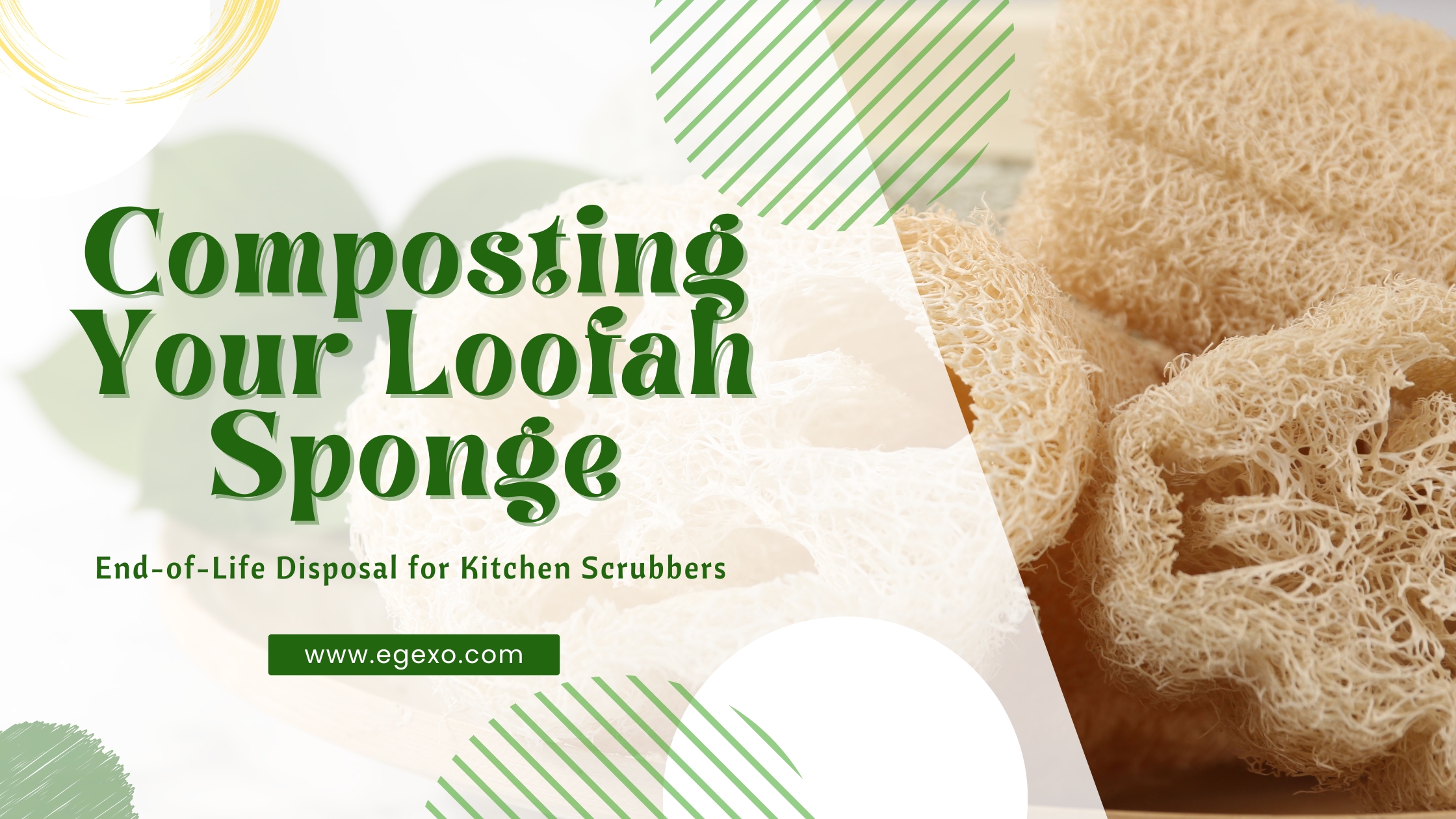
Composting Your Loofah Sponge: End-of-Life Disposal for Kitchen Scrubbers
Every year, an estimated 5.25 trillion pieces of plastic waste circulate through the world’s oceans. A significant portion of that total comes from single-use kitchen sponges that most households toss into the garbage every few weeks. Here is the good news. If you chose a natural loofah sponge for your kitchen duties, the end of its working life does not have to contribute to landfill waste. Composting your loofah sponge is one of the simplest ways to close the loop on sustainable living, and it works whether you maintain a backyard compost heap or a small apartment worm bin.
This guide walks through everything you need to know about the right way to dispose of your natural loofah kitchen scrubber once it has run its course. Individual consumers will find step-by-step instructions, timelines, and practical composting tips. Business owners, retailers, and wholesale buyers who stock natural loofahs will discover how a clear composting message strengthens product marketing, supports sustainability claims, and builds genuine brand trust with environmentally aware customers.
At Egexo, we have spent over 25 years cultivating premium Egyptian loofah on the fertile banks of the Nile. From our farms to your doorstep, every sponge we produce is grown, harvested, and processed without synthetic additives. That means when the time comes, our loofahs return to the earth just as cleanly as they left it. Egyptian loofah stands apart as the finest variety on the market thanks to its dense fiber structure, generous size, and fully organic growing conditions.
Whether you are a spa distributor looking to request a wholesale quote or a home cook wondering what to do with a worn-out kitchen scrubber, this article has you covered.
Why Composting Your Loofah Sponge Matters More Than You Think
The Hidden Cost of Synthetic Kitchen Sponges
A standard polyurethane kitchen sponge takes roughly 500 years to decompose in a landfill. The average household goes through between six and twelve synthetic sponges per year. Multiply that across the approximately 130 million households in the United States alone, and you arrive at hundreds of millions of plastic sponges entering waste streams annually.
Natural loofah sponges provide an alternative that is functional, affordable, and completely biodegradable. The plant known as Luffa aegyptiaca produces a fibrous fruit that, once dried and processed, creates a scrubbing tool that rivals or outperforms synthetic options for kitchen cleaning. When it wears out, it breaks down naturally.
What Makes Loofah Fully Compostable
Natural loofah is composed almost entirely of cellulose, hemicellulose, and lignin. These are the same organic compounds found in wood, leaves, and other plant matter that decompose naturally. Unlike sponges made from polyester foam or nylon mesh, a loofah sponge contains zero plastic. This makes it a straightforward addition to any compost system.
The cellulose fiber content in a high-quality Egyptian loofah typically ranges from 55 to 65 percent, with lignin making up another 15 to 20 percent. Both of these components are classified as brown or carbon-rich compost material, which plays an essential role in maintaining the correct carbon-to-nitrogen ratio in your compost pile.
Egexo maintains strict quality standards that ensure every loofah we ship is free from chemical bleaches, synthetic coatings, or plastic reinforcements. That purity is what guarantees true compostability.
When to Retire Your Kitchen Loofah Scrubber
Not every worn loofah is ready for the compost bin. Knowing when to replace your kitchen scrubber helps you maintain both hygiene and cleaning performance.
Signs Your Loofah Has Reached End of Life
A natural loofah kitchen scrubber typically lasts between three and six weeks with daily use. Several indicators tell you it is time for a replacement.
The fibers begin to separate and feel soft rather than firm. The sponge develops a persistent odor even after rinsing and drying. Visible discoloration appears that does not wash away. The scrubbing surface flattens and loses its textured grip.
When you notice two or more of these signs, your loofah is ready for its next chapter in the compost pile.
Lifespan Comparison of Kitchen Scrubbers
| Scrubber Type | Average Lifespan | Compostable | Decomposition Time |
|---|---|---|---|
| Natural Egyptian Loofah | 3 to 6 weeks | Yes, fully | 30 to 45 days in active compost |
| Synthetic Polyurethane Sponge | 2 to 4 weeks | No | 500+ years in landfill |
| Silicone Scrubber | 6 to 12 months | No | Does not biodegrade |
| Coconut Coir Brush | 2 to 4 months | Yes, partially | 60 to 90 days in active compost |
| Plastic Mesh Scrubber | 2 to 3 weeks | No | 400+ years in landfill |
This table makes a compelling point for retailers and distributors who stock natural products. Customers increasingly demand end-of-life transparency, and natural loofah gives you a story that no synthetic product can match. If you sell kitchen products and want to explore stocking Egyptian loofah, browse our kitchen loofah collection to see what is available for wholesale orders.
How to Compost Your Loofah Sponge Step by Step
Composting your loofah sponge requires minimal effort. Follow these steps to turn your used kitchen scrubber into nutrient-rich soil amendment.
Step 1: Prepare the Loofah
Rinse the used loofah thoroughly under warm water to remove any food debris, soap residue, or grease. You do not need to sterilize it. The microorganisms in your compost will handle breakdown naturally. If the loofah is large, cut it into smaller pieces roughly two to three inches across. Smaller pieces decompose faster because they offer more surface area for microbial activity.
Step 2: Identify Your Compost System
Natural loofah works in virtually every composting method. The timeline varies depending on which system you use.
| Composting Method | Time to Full Decomposition | Best For |
|---|---|---|
| Hot Compost Pile (active turning) | 30 to 45 days | Homeowners with garden space |
| Cold Compost Pile (passive) | 60 to 120 days | Low-maintenance composters |
| Vermicomposting (worm bin) | 45 to 60 days | Apartment dwellers |
| Bokashi Fermentation | 14 to 21 days (pre-compost) | Speed-focused composters |
| Municipal Green Bin | Varies by facility | Urban residents |
Step 3: Add to Your Compost Correctly
Loofah counts as a brown or carbon-rich material. For balanced composting, pair it with green or nitrogen-rich materials such as vegetable scraps, coffee grounds, or fresh grass clippings. A healthy compost pile maintains a carbon-to-nitrogen ratio of roughly 25 to 1 or 30 to 1. Adding one used loofah alongside your regular kitchen scraps keeps this ratio in a productive range.
Bury the loofah pieces in the center of your compost pile where heat and moisture are highest. Avoid placing them on the surface where they may dry out and slow the decomposition process.
Step 4: Maintain and Monitor
Turn your compost pile every week to ten days to ensure oxygen circulation. Keep the pile moist but not soggy. Within four to six weeks in an active hot compost system, the loofah fibers will break down completely into dark, crumbly humus that enriches your garden soil.
For a detailed look at how our loofahs are grown and processed from seed to finished product, visit our farm to export overview.
The Business Case for Compostable Kitchen Products
Why Retailers and Distributors Should Promote Compostability
Sustainability sells. A 2024 McKinsey and NielsenIQ study found that products making environmental claims grew 1.7 times faster than those that did not. For retailers and distributors stocking kitchen goods, offering a fully compostable scrubber opens the door to the eco-conscious consumer segment that now represents over 40 percent of global shoppers.
When you stock Egyptian loofah kitchen scrubbers from Egexo, you gain a product with a genuine end-of-life story. You can print composting instructions on packaging, include them on product pages, and use them in marketing campaigns. That is not greenwashing. That is a verified biological fact backed by the plant’s natural cellulose composition.
Businesses interested in private label loofah manufacturing can work with our team to design packaging that includes composting guidance, further strengthening your brand’s sustainability credentials.
Wholesale Sustainability Checklist for Loofah Buyers
| Evaluation Criteria | What to Look For | Egexo Standard |
|---|---|---|
| Raw Material Origin | Single-origin, traceable farm source | Nile Delta, Egypt, fully traceable |
| Chemical Treatment | No bleach, no synthetic coatings | Zero chemical processing |
| Compostability Certification | Verified biodegradable composition | 100 percent plant cellulose |
| Packaging Options | Recyclable or compostable packaging | Customizable eco-friendly packaging |
| Quality Grading | Consistent fiber density grading | Premium, A-Grade, and Standard tiers |
| MOQ Flexibility | Scalable order quantities | Starting from 500 pieces per SKU |
| Custom Branding | Private label and custom design | Full private label service available |
For buyers evaluating suppliers, this checklist covers the essentials. Egexo meets or exceeds every benchmark on this list. Learn more about why buyers choose Egexo as their long-term loofah supplier.
Composting Your Loofah Sponge vs Other Disposal Methods
Not everyone composts at home. Here is a comparison of common disposal options for used natural loofahs and how they stack up environmentally.
Disposal Method Pros and Cons
Composting at Home
This is the most environmentally responsible option. It produces zero waste, returns nutrients to the soil, and requires no special equipment. The only consideration is the four to six week timeline for full breakdown.
Municipal Green Waste Bin
Many cities accept natural plant materials in their green waste programs. Check your local guidelines, as some facilities process compost at industrial scale with faster turnaround. The loofah should be free from excessive soap or cleaning chemicals before placing it in the bin.
Landfill Disposal
While a natural loofah will eventually decompose in a landfill, the anaerobic conditions mean it produces methane during the process. Landfill decomposition also takes significantly longer, potentially six months to two years, compared to weeks in an active compost system. This should be a last resort.
Repurposing Before Composting
A kitchen loofah that is too worn for scrubbing dishes can still serve other purposes. Use it as a garden seed starter by filling the loofah with potting soil and seeds. Place it around the base of plants as a biodegradable moisture-retaining mulch. Cut it into small pieces and add it to potted plant soil for improved drainage.
These secondary uses extend the value of each loofah before it eventually enters the compost. For consumers who want to explore different loofah types for various household uses, our body loofah collection and raw loofah scrubbers offer versatile options.
How Egyptian Loofah Sets the Standard for Compostable Quality
Why Origin Matters for Compostability
Not all loofahs compost equally well. The fiber density, growing conditions, and processing methods all affect how cleanly and quickly a loofah breaks down. Egyptian loofah, grown in the mineral-rich soil along the Nile Delta, produces the densest and most uniform fiber structure of any loofah variety worldwide.
This density means two things. First, the loofah lasts longer during use, providing better value per unit. Second, the consistent cellulose structure decomposes evenly in compost, without leaving behind stubborn patches of unbroken fiber.
Egexo has refined its cultivation techniques over more than 25 years to produce loofah that performs exceptionally both in the kitchen and in the compost pile. Our growing practices avoid all synthetic fertilizers and pesticides, which means nothing harmful leaches into your compost or garden soil.
What Wholesale Buyers Should Know About Sourcing Compostable Loofah
If you distribute or retail natural cleaning products, your supply chain integrity matters. Customers who care about composting their sponge also care about how it was grown. Sourcing from a transparent, experienced supplier like Egexo gives you verifiable talking points.
Every order from Egexo can be traced from the specific farm plot to the finished product. We offer custom product design services that allow you to shape, size, and brand loofah products specifically for your market. For a full overview of available products and specifications, download our product catalog.
Common Mistakes When Composting Loofah Sponges
Even though composting a natural loofah is straightforward, a few errors can slow the process or reduce compost quality.
Mistake 1: Composting a Loofah with Synthetic Components
Some products sold as natural loofahs include stitched-on fabric strips, plastic hanging loops, or synthetic backing material. Before composting, remove any non-plant components. A genuine 100 percent natural loofah, like those from Egexo, contains nothing but plant fiber and can go directly into the compost.
Mistake 2: Not Cutting the Loofah Into Smaller Pieces
Tossing a whole loofah into the compost slows decomposition. The dense outer surface resists moisture penetration when left intact. Cutting or tearing it into two-inch sections dramatically speeds up the process.
Mistake 3: Adding Too Much Carbon at Once
If you replace multiple loofahs at the same time, such as a bath loofah and a kitchen loofah together, balance them with additional green material. Too much carbon-heavy material without nitrogen-rich counterparts stalls microbial activity.
Mistake 4: Composting a Loofah Soaked in Harsh Chemicals
Standard dish soap residue is fine and breaks down quickly. However, if you used the loofah with industrial degreasers, bleach, or strong chemical cleaners, rinse it thoroughly before composting. Harsh chemicals can kill beneficial composting organisms.
For more guidance on loofah care, maintenance, and sustainable use, visit Loofah Guide for consumer-focused resources or Wholesale Loofah for business-oriented information.
FAQ Section
Q1: Can you compost a loofah sponge in a regular backyard compost pile?
Yes, composting your loofah sponge works perfectly in a standard backyard compost pile. Natural loofah is made entirely from plant cellulose and lignin, which are the same organic compounds found in leaves and wood. Cut the loofah into smaller pieces, mix it with green materials like vegetable scraps, and bury it in the center of the pile. It will fully decompose in 30 to 45 days in an active hot compost system.
Q2: How long does it take for a loofah sponge to decompose in compost?
In an actively maintained hot compost pile, a natural loofah sponge breaks down in approximately 30 to 45 days. In a passive cold compost system, the timeline extends to 60 to 120 days. Vermicomposting with worms typically takes 45 to 60 days. Cutting the loofah into smaller pieces and maintaining proper moisture and aeration speeds up decomposition significantly.
Q3: Are all loofah sponges safe to compost?
Only 100 percent natural loofah sponges are safe for composting. Some products marketed as loofahs contain synthetic materials, plastic components, or chemical coatings. Egyptian loofah from suppliers like Egexo is grown and processed without synthetic additives, making it fully compostable. Always check that your loofah has no plastic backing, synthetic stitching, or chemical treatments before adding it to compost.
Q4: Can retailers use composting claims to market natural loofah products?
Absolutely. Retailers and distributors can promote the compostability of natural loofah as a genuine sustainability feature. Unlike greenwashing claims attached to partially recyclable plastics, a natural loofah is verifiably biodegradable. Egexo offers private label manufacturing services that allow businesses to include composting instructions and sustainability messaging directly on product packaging.
Q5: What is the minimum order quantity for wholesale kitchen loofahs from Egexo?
Egexo offers flexible wholesale ordering with minimum order quantities starting at 500 pieces per SKU for kitchen loofah products. Larger orders benefit from volume-based pricing tiers. Businesses can request free samples to evaluate quality before committing to a bulk purchase. Visit our sample request page or request a quotation for detailed pricing.
Q6: Does composting loofah add nutrients to garden soil?
Yes. As the loofah fibers decompose, they release carbon and trace minerals back into the soil. The resulting humus improves soil structure, moisture retention, and aeration. Loofah compost is particularly useful in garden beds and potted plants because the fibrous material creates air pockets that promote healthy root growth.
Q7: Can I put a loofah in a worm composting bin?
Worm bins work well for composting natural loofah. Cut the loofah into small pieces, roughly one to two inches, and soak them in water before adding them to the bin. Red wiggler worms will gradually consume the softened fibers over 45 to 60 days. This method is ideal for apartment residents who do not have outdoor compost space.
Q8: Why is Egyptian loofah considered the best quality for both use and composting?
Egyptian loofah, particularly from the Nile Delta region, benefits from mineral-rich soil, consistent warm climate, and centuries of cultivation expertise. These conditions produce loofahs with the highest cellulose density and most uniform fiber structure available globally. The dense fibers last longer during use and decompose more evenly in compost. Egexo, with over 25 years of farming experience, represents the top standard in Egyptian loofah quality.
Expert Insight from Egexo
From our farms in Egypt, we have watched the full cycle of loofah thousands of times, from planting seeds in the rich Nile Delta soil to watching spent sponges return to the earth as compost. One insight we always share with our wholesale partners is this: the same qualities that make a loofah great for scrubbing, dense cellulose fibers and a firm structural matrix, also make it an excellent carbon source for compost. When we grow loofah without chemical intervention, we are not just producing a better cleaning tool. We are ensuring that the product remains clean and beneficial from the first use in your kitchen to its final days in your garden. Businesses that stock our loofah can confidently tell their customers that the entire product lifecycle is natural, traceable, and responsible. That is not a marketing angle. It is agricultural truth built on more than two decades of experience.
Conclusion
Composting your loofah sponge is a small act that carries meaningful weight. Every natural loofah that enters a compost pile instead of a landfill represents one less piece of waste contributing to environmental decline. The process is simple, the timeline is short, and the result is nutrient-rich soil that feeds new growth.
For individual consumers, switching from synthetic sponges to natural loofah and composting them after use creates a zero-waste cleaning cycle that takes almost no extra effort. For retailers, distributors, and spa owners, the composting story adds a powerful dimension to product marketing that resonates with the growing segment of sustainability-minded buyers.
Egyptian loofah from Egexo offers the highest quality, longest-lasting, and most reliably compostable kitchen scrubber available on the global market. Backed by more than 25 years of cultivation expertise and fully transparent sourcing, it is a product you can trust from first scrub to final compost.
Key Takeaways:
- Natural loofah sponges are 100 percent compostable and break down in as little as 30 days in an active compost pile
- Cut used loofahs into small pieces and mix with green material for fastest decomposition
- Egyptian loofah from Egexo contains zero chemicals or synthetic components, ensuring clean compostability
- Retailers can leverage genuine composting claims to differentiate products and build consumer trust
- Every composted loofah replaces a synthetic sponge that would persist in landfills for centuries
Ready to experience Egyptian loofah quality?
- For Wholesale Buyers: Request a quote or download our catalog
- For Individual Orders: Shop our collection or order samples