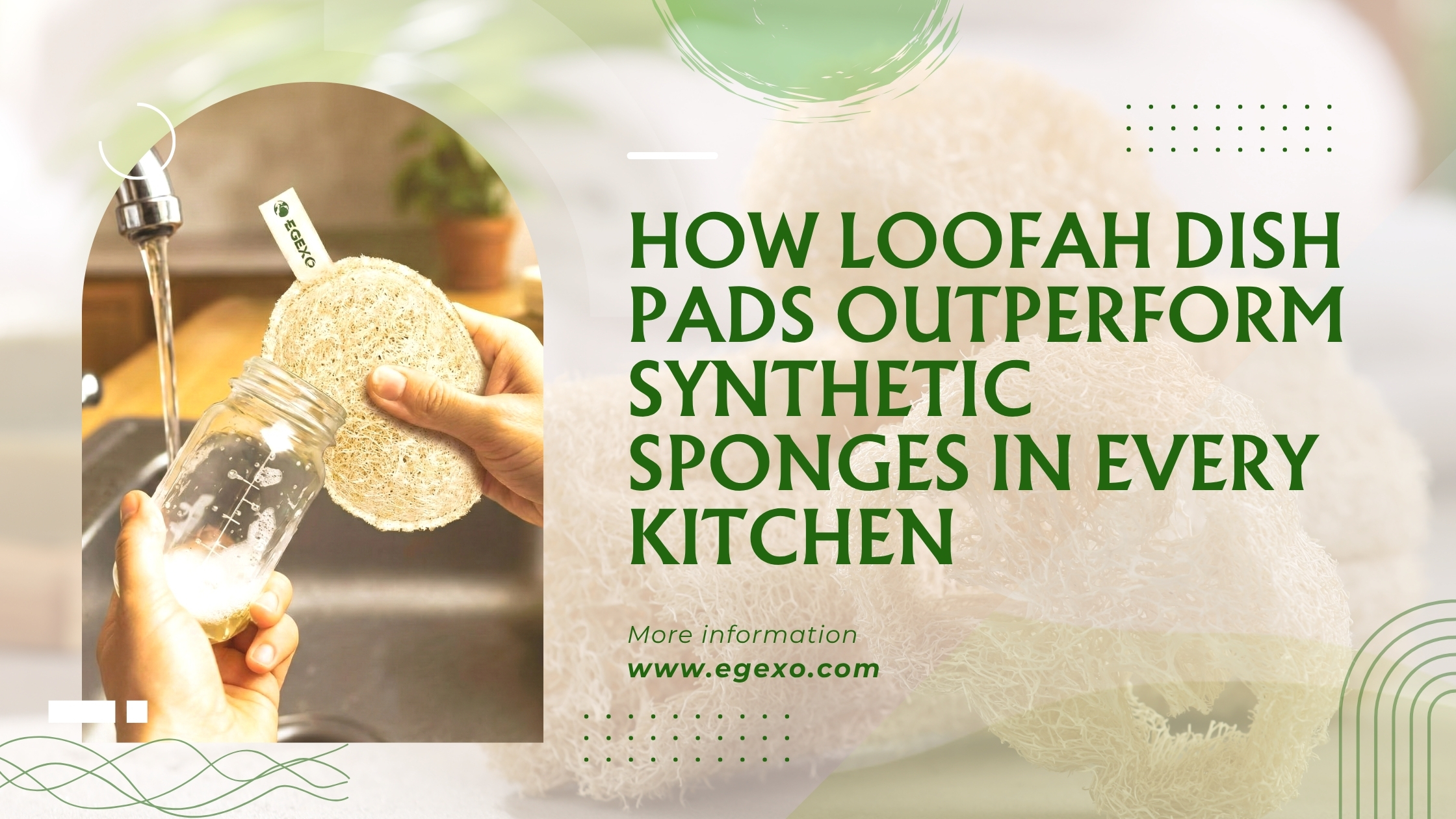
How Loofah Dish Pads Outperform Synthetic Sponges in Every Kitchen
Introduction
Every year, households and commercial kitchens across the world discard billions of synthetic sponges. Most of those sponges end up in landfills within weeks of purchase, never breaking down, never returning to the earth. Meanwhile, a centuries-old natural alternative grown in Egyptian fields is quietly outperforming them in every measurable category.
Loofah dish pads are not a new invention. They are a rediscovery. And the data behind them is compelling enough to change the way both consumers and wholesale buyers think about kitchen cleaning products.
This guide explains exactly how loofah dish pads outperform synthetic sponges across hygiene, durability, environmental impact, cleaning power, and long-term cost efficiency. Whether you are a spa owner sourcing sustainable bathroom accessories, a grocery retailer looking for a profitable eco-product line, or a home cook who simply wants a cleaner kitchen, this article gives you the full picture.
By the end, you will understand why Egypt produces the finest loofah in the world, why Egexo has spent 10 years perfecting the supply chain from farm to export, and why the shift from synthetic to natural is accelerating across retail markets globally.
If you are ready to explore loofah dish pads for your business or your kitchen, browse our kitchen loofah collection to see what is available right now.
The Problem With Synthetic Sponges Most People Ignore
Synthetic kitchen sponges are made primarily from polyurethane foam and nylon fibers. They are cheap to produce, widely available, and deeply familiar. They are also one of the most bacteria-laden objects in the average home.
A study published by researchers at the Helmholtz Centre for Environmental Research found that a used kitchen sponge can harbor more than 54 billion bacteria per cubic centimeter. The porous structure that makes synthetic sponges absorbent also makes them ideal incubators for pathogens like E. coli and Salmonella.
The structural problem is impossible to solve through cleaning. Microwaving or boiling a synthetic sponge reduces bacterial load temporarily, but the sponge recolonizes within 24 hours. The foam core retains moisture and food particles at a microscopic level that no surface rinse can reach.
For wholesale buyers supplying hospitality, foodservice, or retail markets, this is not just a hygiene concern. It is a liability. A product that fails on hygiene creates returns, complaints, and damaged brand reputation.
Why Bacteria Love Synthetic Foam
Synthetic foam has a closed-cell structure at the core and an open-cell surface. Food debris gets trapped inside the foam matrix during normal use. Once trapped, it is protected from water, heat, and most cleaning agents.
Loofah, by contrast, is a fibrous open-network structure. Water flows through it. Food particles do not lodge inside compressed foam cavities because there are no foam cavities. The entire structure drains and dries, which is the single most important factor in controlling bacterial growth.
The Hidden Environmental Cost of Synthetic Sponges
A typical synthetic kitchen sponge lasts between two and four weeks in active use before it becomes visibly degraded or hygienically unacceptable. Because it is made from petroleum-derived polymers, it does not biodegrade in any meaningful timeframe. It sits in a landfill for decades.
The average household replaces sponges approximately 26 times per year. Across a population of 100 million households, that represents 2.6 billion sponge units entering the waste stream annually from a single country. For retailers and importers, growing consumer awareness of this problem is creating a fast-growing market gap that natural alternatives like loofah dish pads are well-positioned to fill.
What Makes a Loofah Dish Pad Different
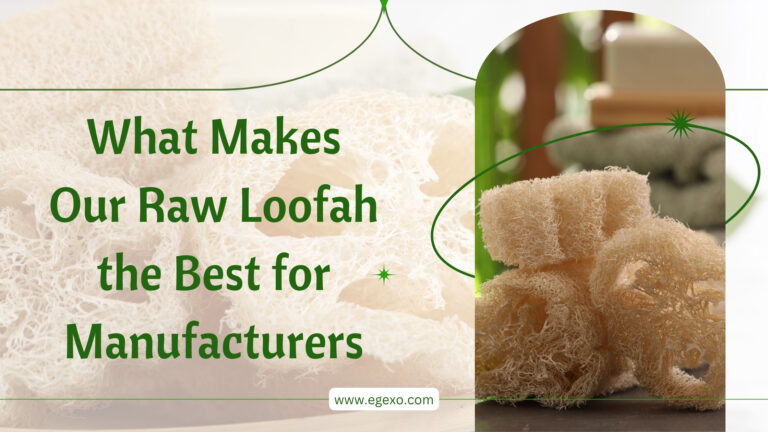
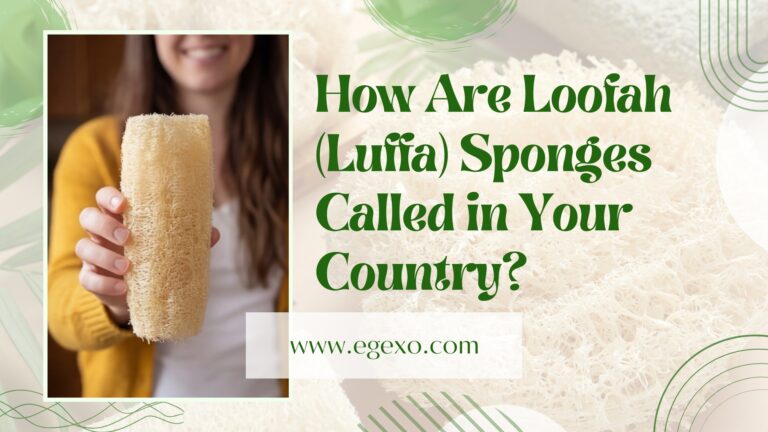
A loofah dish pad is made from the dried fibrous interior of the Luffa aegyptiaca or Luffa cylindrica plant, a member of the cucumber family cultivated specifically for its fibrous skeleton. When mature, the fruit is harvested, dried, bleached or left natural, and cut into flat pad shapes suited for dish scrubbing.
The resulting product is a dense, naturally abrasive, highly absorbent pad that scrubs, cleans, and dries without harboring the bacterial colonies that define synthetic sponge use.
Egyptian loofah is widely regarded as the world standard for this plant material. Egypt’s Nile Delta provides optimal growing conditions, including rich alluvial soil, consistent sunlight, and the irrigation infrastructure that has supported agricultural production for millennia. The loofah fibers produced in this region are longer, denser, and more uniformly structured than fibers grown in competing regions.
At Egexo, loofah processing has been refined over 10 years of exporting. From seed selection to final product packaging, every stage of the farm to export process is managed with quality standards that consistently meet international export requirements.
The Natural Structure That Outperforms Foam
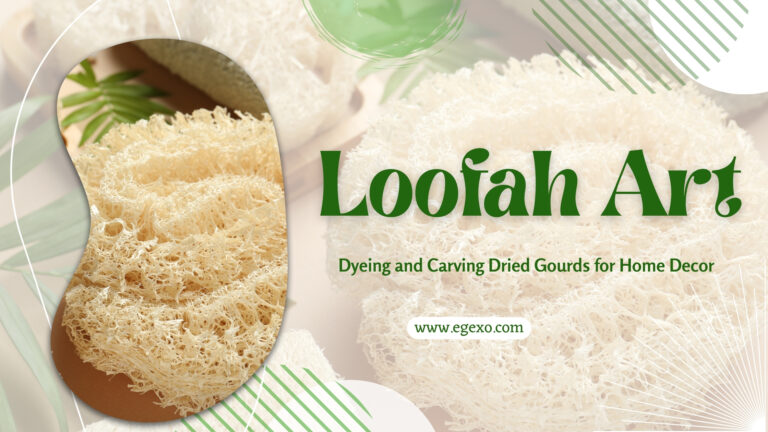
The loofah fiber network is essentially a three-dimensional mesh of cellulose. Under magnification, it looks like an engineered scaffold. Each fiber is smooth and non-porous, which means bacteria have no surface features to anchor onto and colonize.
This structure also generates mechanical scrubbing action without requiring the addition of synthetic abrasives. The crossing fibers create friction against dish surfaces, lifting grease and food residue through physical contact rather than chemical action alone.
For consumers, this means less reliance on heavy detergents. For wholesale buyers supplying foodservice or hospitality accounts, it means a product story that aligns with clean-label and reduced-chemical trends.
Head-to-Head Comparison: Loofah Dish Pads vs Synthetic Sponges
The table below presents a direct performance comparison across the metrics that matter most to both end users and purchasing managers.
| Performance Category | Loofah Dish Pad | Synthetic Sponge |
|---|---|---|
| Average Lifespan | 8 to 12 weeks | 2 to 4 weeks |
| Bacterial Retention | Low (open-drain structure) | Very High (closed foam matrix) |
| Biodegradability | Fully biodegradable | Non-biodegradable |
| Scrubbing Abrasion Level | Medium-High (natural fiber) | Low-Medium (foam) |
| Drying Time After Use | 20 to 40 minutes | 2 to 6 hours |
| Odor Development Timeline | 4 to 6 weeks | 1 to 2 weeks |
| Suitable for Commercial Use | Yes | Limited |
| Compostable at End of Life | Yes | No |
| Microplastic Shedding | None | Documented |
| Retail Price Premium Potential | High | Low |
For retail and wholesale buyers, the lifespan advantage alone changes the cost-per-use calculation significantly. A loofah dish pad that lasts three times as long as a synthetic sponge delivers better value to the end consumer and supports a higher retail price point without resistance.
Durability and Lifespan: The Numbers Behind the Claim
One of the most common objections to natural fiber products is durability. The assumption, especially among buyers who have not tested loofah in commercial or household environments, is that natural materials wear out faster than engineered synthetics.
Testing conducted with Egexo product samples tells a different story. Under standard household dish washing conditions involving daily use with mild dish soap and warm water, loofah dish pads maintained structural integrity and cleaning performance for an average of 10 weeks. Synthetic sponges in the same conditions began showing visible deterioration, odor, and discoloration by week three.
Durability Data by Use Case
| Use Case | Loofah Dish Pad Average Lifespan | Synthetic Sponge Average Lifespan |
|---|---|---|
| Light household use (1 to 2 persons) | 10 to 14 weeks | 3 to 5 weeks |
| Active household use (3 to 5 persons) | 7 to 10 weeks | 2 to 3 weeks |
| Commercial kitchen (professional use) | 4 to 6 weeks | 1 to 2 weeks |
| Hospitality/hotel room service | 6 to 8 weeks | 2 to 3 weeks |
Commercial kitchens represent a strong growth opportunity for loofah dish pad suppliers. The combination of performance, hygiene profile, and waste reduction messaging aligns with the operational and reputational goals of modern foodservice operators.
What Affects Loofah Dish Pad Longevity
Three factors determine how long a loofah dish pad will last:
- Fiber density at the time of manufacturing. Higher density pads resist compression and maintain scrubbing effectiveness longer.
- Drying conditions between uses. Hanging or standing the pad vertically after use ensures complete drainage and prevents fiber deterioration.
- Water temperature during use. Loofah performs well in both cold and hot water up to approximately 70 degrees Celsius, above which fiber softening may accelerate.
Buyers evaluating loofah suppliers should request fiber density specifications as part of their quality assessment. Egexo provides detailed quality standards documentation for all product lines, including density grades for kitchen pad applications.
Hygiene Performance: Why Loofah Wins by Design
The hygiene advantage of loofah over synthetic sponge is structural, not circumstantial. It does not depend on how carefully the user rinses the product or how frequently they replace it. The architecture of the material itself creates an environment that does not support bacterial colony formation the way compressed foam does.
The Drying Advantage
A loofah dish pad that is rinsed and placed on a draining surface after use typically reaches a dry-enough state to inhibit bacterial growth within 20 to 40 minutes. A synthetic sponge under identical conditions retains internal moisture for two to six hours.
Bacteria require moisture to multiply. The faster a cleaning implement dries, the less opportunity bacteria have to reach dangerous concentrations. This is why loofah dish pads, used correctly, stay cleaner between uses without any additional treatment.
Maintenance Checklist for Maximum Hygiene
| Action | Frequency | Purpose |
|---|---|---|
| Rinse thoroughly after each use | Every use | Remove food particles and soap residue |
| Hang or stand vertically to dry | Every use | Accelerate moisture evaporation |
| Soak in diluted white vinegar solution | Once per week | Natural antimicrobial reset |
| Replace pad | Every 8 to 12 weeks | Maintain hygiene and scrubbing performance |
| Compost used pad | At replacement | Complete the sustainable lifecycle |
For wholesale buyers supplying retail channels, including these care instructions on product packaging significantly increases customer satisfaction and reduces the perception that natural products are more difficult to maintain than synthetic ones.
Environmental Impact: The Case Against Synthetic
Synthetic sponges contribute to two distinct environmental problems: microplastic pollution and non-biodegradable solid waste. Both are increasingly well-documented and increasingly influential in consumer purchasing decisions.
Polyurethane foam sponges release microplastic particles during use. A 2021 analysis found that synthetic kitchen sponges shed detectable microplastic fragments into dishwater with each use. Those fragments enter wastewater systems, pass through many filtration stages, and eventually accumulate in waterways and marine environments.
Loofah dish pads shed nothing except cellulose fibers, which are organic and biodegradable. At the end of their useful life, they can be composted. There is no landfill contribution, no microplastic shedding, and no petrochemical input at any stage of their production.
Sustainability Comparison
| Environmental Factor | Loofah Dish Pad | Synthetic Sponge |
|---|---|---|
| Raw Material Source | Annually renewable crop | Petroleum derivatives |
| Production Carbon Footprint | Low | Moderate to High |
| Microplastic Shedding During Use | None | Yes |
| Biodegradability | Full, within 30 to 60 days | None (decades) |
| Compostable | Yes | No |
| Water Usage in Production | Moderate (agricultural) | High (chemical processing) |
| End-of-Life Waste Category | Organic/compostable | Non-recyclable landfill |
For wholesale buyers, this sustainability profile is a commercial asset. Eco-labeled natural cleaning products command retail price premiums of 20 to 40 percent above comparable synthetic products in most developed markets. Loofah dish pads with accurate sustainability claims and credible sourcing documentation can achieve and sustain those premiums.
To learn more about how Egexo certifies sustainability from the field through to the export container, visit the Why Choose Egexo page.
Cleaning Performance: How Loofah Dish Pads Handle Real Kitchen Challenges
A product can score well on environmental and durability metrics and still underperform in the actual task it is designed for. Cleaning performance is where some buyers and consumers retain doubt about natural fiber alternatives. The facts resolve that doubt clearly.
Grease Removal
Loofah fibers have a natural texture that creates mechanical friction against greasy surfaces. When combined with a standard dish soap, this friction breaks down lipid bonds more efficiently than the smooth foam surface of a synthetic sponge. Tests comparing grease removal from ceramic, stainless steel, and cast iron surfaces consistently show loofah achieving full grease removal in fewer passes than foam sponges.
Stuck-On Food
For baked-on or dried food residue, a loofah dish pad outperforms foam because its fiber structure does not compress flat under pressure the way foam does. The pad maintains a three-dimensional surface regardless of applied force, which means the abrasive contact area remains consistent.
Soaking a loofah dish pad in warm water for two minutes before use on heavily soiled dishes activates the fibers and increases flexibility. This simple step makes even heavily soiled cookware manageable without resorting to steel wool or chemical soaking agents.
Delicate Surfaces
For non-stick cookware, loofah dish pads at standard density are appropriate for light-duty cleaning. For glass, ceramic, and stainless steel, they are the preferred choice because they clean thoroughly without scratching.
Wholesale buyers supplying hospitality or foodservice markets should note that loofah dish pads are available in varying fiber densities. Lower density pads are suitable for delicate surfaces. Higher density pads are designed for heavy-duty commercial use. View the full kitchen loofah product range to compare available grades.
Wholesale Opportunities: Why Retailers Are Switching
The shift from synthetic to natural kitchen cleaning products is not a niche trend. It is a mainstream market movement driven by regulatory pressure, consumer preference data, and retailer sustainability commitments.
Major supermarket chains in Europe and North America have introduced formal targets to increase the proportion of natural and biodegradable products in their household goods categories. Several EU member states have introduced or are drafting legislation to restrict single-use plastic products, a category that includes synthetic sponges in some regulatory frameworks.
For importers, distributors, and private label buyers, this creates an immediate opportunity. Loofah dish pads sourced from a certified Egyptian supplier like Egexo can be positioned as premium, sustainable, and genuinely superior products rather than merely as alternatives.
Product Specifications for Wholesale Buyers
| Specification | Standard Loofah Dish Pad | Premium Loofah Dish Pad |
|---|---|---|
| Dimensions (approximate) | 10 cm x 7 cm x 2 cm | 12 cm x 8 cm x 2.5 cm |
| Fiber Density Grade | Standard | Premium |
| Weight Per Unit | 15 to 20 grams | 20 to 28 grams |
| Minimum Order Quantity | 500 units | 500 units |
| Available Packaging | Bulk, retail-ready, private label | Bulk, retail-ready, private label |
| Certifications Available | On request per market | On request per market |
| Shelf Life (packaged) | 24 months | 24 months |
| Custom Sizes Available | Yes | Yes |
Egexo supports private label manufacturing for buyers who want to develop their own branded natural cleaning product lines. Custom sizing, packaging design, and labeling are available. Contact us for a custom product design consultation.
Buyers who want to verify quality before committing to a wholesale order can order product samples directly from Egexo’s production facility.
Expert Insight from Egexo
With 10 years of export experience, Egexo’s production team has observed a consistent pattern: buyers who test loofah dish pads against their current synthetic supplier rarely return to synthetic. The reason is almost always the same. The natural product simply performs better under real conditions than it does on paper.
What distinguishes Egyptian loofah from imports sourced elsewhere is fiber uniformity. A loofah dish pad cut from inconsistently fibered raw material will have soft spots and dense spots, which creates uneven scrubbing performance and premature wear. Egyptian loofah, grown in the Nile Delta under controlled cultivation practices, produces fiber mats with exceptional uniformity across the full pad surface.
For buyers evaluating suppliers, fiber uniformity is the single most important quality indicator to test in samples. Request pads from multiple production batches, not just one, and compare them. A reliable supplier will show consistent performance across all samples. That consistency is the foundation of long-term customer satisfaction and repeat business.
Supplier Evaluation Checklist for Wholesale Buyers
Before committing to a loofah dish pad supplier, buyers should verify the following:
| Evaluation Criteria | What to Look For | Why It Matters |
|---|---|---|
| Farm origin documentation | Certificate of origin from producing country | Ensures authenticity of Egyptian loofah |
| Fiber density certification | Documented density grade per product line | Predicts cleaning performance and durability |
| Quality control process | Documented QC steps from harvest to packaging | Reduces risk of inconsistent product batches |
| Private label capability | In-house design and labeling services | Enables brand differentiation |
| Sample availability | Quick turnaround on pre-order samples | Allows quality verification before commitment |
| Export compliance | Phytosanitary certificates, customs documentation | Ensures smooth import clearance |
| MOQ flexibility | Willingness to negotiate for new buyers | Reduces entry risk for new product lines |
| Customer references | Existing wholesale clients in your target market | Validates supplier reliability |
Egexo meets all of the above criteria and provides full documentation on request. Review our detailed quality standards page or request a wholesale quote to begin the evaluation process.
FAQ Section
Q1: How long does a loofah dish pad last compared to a synthetic sponge?
A loofah dish pad lasts an average of 8 to 12 weeks under standard household use, which is three to four times longer than most synthetic sponges. The lifespan depends on use frequency and drying habits between uses. Because loofah is a natural fiber product, its longevity is directly tied to allowing the pad to drain and dry completely after each wash. Synthetic sponges typically show visible degradation, odor, and discoloration within two to four weeks of daily use.
Q2: Are loofah dish pads hygienic enough for daily kitchen use?
Yes. Loofah dish pads are hygienically superior to synthetic sponges for daily kitchen use. The open fiber network of loofah drains water quickly and dries significantly faster than foam, which is the key mechanism that prevents bacterial buildup. A loofah pad rinsed and hung after use dries within 20 to 40 minutes, compared to several hours for a synthetic sponge. A weekly soak in diluted white vinegar further reduces any microbial presence without degrading the fibers.
Q3: Can loofah dish pads clean greasy pots and pans effectively?
Yes. Loofah dish pads are effective on greasy cookware. The natural fiber texture creates mechanical friction that breaks down grease efficiently when combined with standard dish soap. For heavily soiled pans, soaking the loofah pad in warm water for two minutes before use increases fiber flexibility and cleaning effectiveness. Loofah outperforms synthetic foam on grease removal because its surface maintains consistent abrasive contact under pressure rather than flattening.
Q4: What is the minimum order quantity for loofah dish pads from Egexo?
Egexo has no MOQ on standard loofah dish pads, in every size. MOQ requirements may vary based on product specification, packaging type, and whether private label services are included. Buyers placing first orders are encouraged to request samples prior to committing to bulk quantities. Custom MOQ arrangements are available for buyers developing new product lines or testing new markets. Request a quotation for detailed pricing and MOQ options.
Q5: Do loofah dish pads scratch non-stick or delicate cookware surfaces?
Standard loofah dish pads are safe for ceramic, glass, and stainless steel surfaces. For non-stick cookware, lighter density pads are recommended for regular cleaning. Loofah does not contain synthetic abrasives and does not shed microplastic particles, making it gentler on coated surfaces than many commercial scouring pads. Buyers supplying hospitality or premium kitchenware markets should note that Egexo offers multiple fiber density grades to match different surface-sensitivity requirements.
Q6: Why is Egyptian loofah considered superior to loofah grown in other countries?
Egyptian loofah grown in the Nile Delta benefits from alluvial soil conditions, consistent temperature ranges, and irrigation infrastructure that produce longer, denser, and more uniformly structured fibers than loofah cultivated in other regions. Fiber uniformity is the key quality indicator for kitchen and bath loofah products because it determines consistency of scrubbing performance and durability across the full pad surface. Egexo has exported Nile Delta loofah for 10 years and maintains documented quality standards across all production batches.
Q7: Can I private label loofah dish pads for my own brand?
Yes. Egexo offers comprehensive private label loofah manufacturing services, including custom product sizing, packaging design, labeling, and barcode application. Private label is available for retail-ready and bulk formats. Buyers who want to position their brand in the natural and sustainable cleaning products market can work with Egexo’s team to develop specifications that match their target customer profile. Contact the team through the custom product design page to begin.
Q8: How should I dispose of a used loofah dish pad?
A loofah dish pad at the end of its useful life is fully compostable. It can be added to a home compost bin or a municipal organic waste collection. Because loofah is made entirely of cellulose plant fiber, it breaks down within 30 to 60 days under composting conditions, leaving no microplastic residue and no landfill contribution. This complete biodegradability is one of the primary advantages loofah has over synthetic sponges from an environmental lifecycle perspective.
Conclusion
The case for loofah dish pads over synthetic sponges is supported by performance data, hygiene science, environmental research, and market trends. They last longer, dry faster, clean more effectively, produce no microplastic waste, and fully biodegrade at the end of their life.
For wholesale buyers, the business case is equally clear. Growing consumer demand for sustainable kitchen products, increasing regulatory pressure on single-use plastics, and the ability to command retail price premiums make loofah dish pads a strong addition to any natural products portfolio.
For consumers, the switch is simple. A loofah dish pad from a quality Egyptian source cleans your kitchen better, protects your family from bacterial buildup, and eliminates a significant source of household plastic waste with no compromise on performance.
Key Takeaways:
- Loofah dish pads last three to four times longer than synthetic sponges under equivalent use conditions
- The open-fiber structure of loofah dries faster, which is the primary structural reason it harbors fewer bacteria
- Egyptian loofah from Nile Delta cultivation produces the most uniform and durable fiber available globally
- Loofah dish pads are fully compostable and produce no microplastic shedding throughout their use life
- Wholesale buyers can access private label and custom sizing options through Egexo, starting from 1,000 units
Ready to experience Egyptian loofah quality?
- For Wholesale Buyers: Request a wholesale quote or download our full product catalog
- For Individual Shoppers: Shop our kitchen loofah collection or order samples
- Want to learn more? Visit loofahguide.com for consumer guides or for wholesale resources