

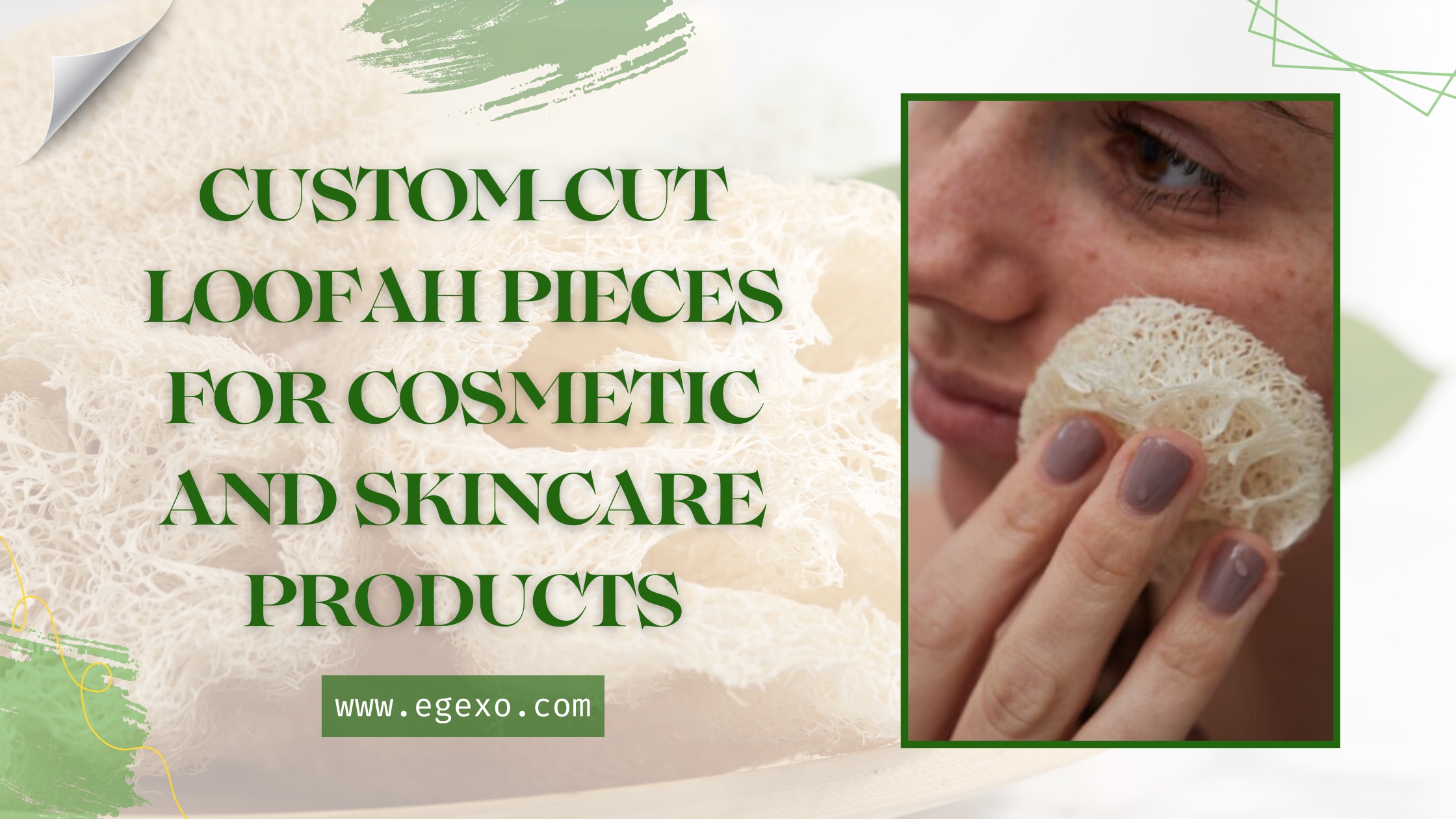
Custom-Cut Loofah Pieces for Cosmetic and Skincare Products
The global natural skincare market surpassed USD 14.2 billion in 2024, and one of its quietest yet most powerful ingredients is the loofah. Not the whole sponge sitting on your shower shelf, but precisely cut, dimensionally controlled loofah pieces engineered for insertion into soaps, scrub bars, facial pads, bath bombs, and cosmetic applicators. For manufacturers and formulators, custom-cut loofah pieces represent a scalable, sustainable raw material that adds functional exfoliation without synthetic microplastics. For consumers, they represent a product that actually works with their skin, not against it.
This guide covers everything from fiber structure and cut tolerances to bulk ordering standards and consumer product recommendations. Whether you are sourcing raw materials for a private-label skincare line or simply trying to understand what makes a loofah-embedded soap bar perform better than a standard exfoliating body wash, the information here is grounded in more than 25 years of Egyptian loofah cultivation and export experience at Egexo.
Egypt produces some of the world’s finest Luffa cylindrica, grown in the fertile Nile Delta region under climate conditions that produce a denser, more uniform fiber network than loofah grown elsewhere. That fiber quality is what makes Egyptian custom-cut loofah pieces the preferred choice for cosmetic manufacturers across Europe, North America, and Asia.
What Are Custom-Cut Loofah Pieces and Why Do They Matter
Custom-cut loofah pieces are sections of processed Luffa cylindrica sponge trimmed to specific dimensions, shapes, and thicknesses for integration into finished cosmetic and skincare products. Unlike whole loofahs sold for bath use, these cuts are engineered components: consistent in size, free of seeds and outer skin, bleached or unbleached according to brand specification, and sometimes further processed into slices, discs, cylinders, or irregular chunks depending on the application.
The word “custom” carries real weight here. A soap manufacturer embedding loofah into a 100-gram bar needs a different cut than a company producing loofah-topped facial cleansing pads. Thickness, density, porosity, and fiber orientation all vary by application, and a supplier that cannot deliver consistent dimensions across a production run creates costly downstream problems for formulators.
Why Loofah Fiber Works in Cosmetics
Loofah is a plant-derived cellulose fiber with a three-dimensional reticular structure, meaning the fibers form an interconnected lattice rather than a flat sheet. This structure creates gentle mechanical exfoliation, meaning it physically lifts dead skin cells without the sharp edges associated with walnut shell powder or synthetic scrub beads. Dermatologists increasingly recommend plant-fiber exfoliants as alternatives to microplastic scrubbers banned in the EU, US, and UK since 2017.
The porosity of loofah also holds and slowly releases soap lather, cleansing oils, and botanical extracts, which makes it ideal as a carrier component in leave-on and rinse-off cosmetic products.
Who Uses Custom-Cut Loofah Pieces
- Soap manufacturers producing loofah-embedded bar soaps
- Cosmetic brands formulating exfoliating cleansers and scrub bars
- Private-label skincare companies launching natural product lines
- Spa and hotel amenity suppliers sourcing custom bath accessories
- DIY soap makers purchasing smaller quantities for craft production
If you are exploring a natural exfoliant component for your next product launch, you can explore available formats in the raw loofah scrubbers category or speak directly with Egexo’s export team about custom specifications.
Egyptian Loofah vs Other Origins: Why the Source Matters
Not all loofah is created equal. The geographic origin of the raw plant directly affects fiber density, color consistency, and dimensional stability after processing. Egyptian loofah, grown primarily in the Nile Delta governorates, benefits from a specific combination of alluvial soil composition, temperature range, and irrigation water chemistry that produces consistently high-quality fiber.
| Quality Indicator | Egyptian Loofah (Egexo) | Asian-Origin Loofah | Synthetic Alternatives |
|---|---|---|---|
| Fiber Density (g/cm3) | 0.045 to 0.060 | 0.030 to 0.045 | Varies by material |
| Color Consistency | High (natural cream to beige) | Medium (variable yellowing) | High (artificial) |
| Biodegradability | 100% within 30-60 days | 100% | 0% (polyester) |
| Microplastic Risk | None | None | Significant |
| Dimensional Stability | High | Medium | High |
| Allergen Potential | Very low | Low to medium | Medium to high |
| Suitable for Cosmetics | Yes, all grades | Selective grades only | Limited applications |
Egyptian loofah consistently outperforms Asian-origin alternatives in fiber density and color consistency, both of which matter enormously when the loofah piece is a visible component of a finished cosmetic product. A loofah disc sitting atop a luxury soap bar or visible through a clear glycerin formulation needs to look as good as it performs.
Egexo has cultivated loofah in Egypt for over 25 years, supplying processed pieces to cosmetic manufacturers in more than 30 countries. The farm-to-export process ensures traceability from planting through processing, which increasingly matters to brands communicating supply chain transparency to end consumers.
Cut Types, Dimensions, and Specifications for Cosmetic Applications
One of the most common mistakes buyers make is ordering without specifying enough dimensional detail. The result is pieces that technically fit the product but underperform in texture, lather retention, or visual appeal. The table below covers the most common custom-cut loofah piece formats used in cosmetic manufacturing.
| Cut Type | Typical Dimensions | Primary Application | Texture Level |
|---|---|---|---|
| Loofah Disc | 5 to 10 cm diameter, 1 to 3 cm thick | Soap topping, facial pads | Medium |
| Loofah Slice | 5 to 15 cm length, 1 to 2 cm thick | Embedded bar soap | Medium to firm |
| Loofah Chunk | 3 to 6 cm irregular | Artisan soap, bath bombs | Firm |
| Loofah Cylinder | 4 to 8 cm diameter, 4 to 10 cm length | Whole-bar loofah soap | Medium |
| Loofah Strip | 2 to 5 cm wide, 10 to 30 cm length | Wrap soaps, spa products | Medium |
| Loofah Powder | Particle size under 2 mm | Scrub creams, masks | Fine |
| Mini Loofah Pad | 6 to 9 cm diameter | Facial applicators | Light to medium |
Thickness and Density Considerations
Thickness directly controls exfoliation intensity. A 1 cm loofah disc embedded in a soap bar delivers light daily exfoliation suitable for most skin types. A 3 cm thick cut provides firm scrubbing more appropriate for body exfoliation or foot care products. Cosmetic manufacturers targeting sensitive skin typically specify thinner cuts with lower fiber density, while professional spa product lines often opt for thicker, denser pieces.
Bleached vs Unbleached: Which Should You Choose
Bleaching loofah with food-grade hydrogen peroxide produces a whiter, more uniform appearance. Unbleached loofah retains its natural cream-to-beige color and is preferred by brands emphasizing minimal processing and natural aesthetics. From a performance standpoint, fiber strength is comparable between the two. The choice is largely driven by brand identity and target consumer expectations.
For detailed quality grading information and certifications, review Egexo’s loofah quality standards page before specifying your order requirements.
Bulk Ordering: MOQ, Specifications, and What to Expect
For B2B buyers, the purchasing process for custom-cut loofah pieces involves several steps beyond simply choosing a cut type. Understanding minimum order quantities, lead times, and packaging requirements upfront prevents misaligned expectations and delays.
| Specification | Standard Range | Custom Range |
|---|---|---|
| Minimum Order Quantity | 50 kg per cut type | Negotiable at 200 kg+ orders |
| Lead Time (standard cuts) | 2 to 4 weeks | 4 to 8 weeks |
| Lead Time (custom dimensions) | 4 to 6 weeks | 6 to 10 weeks |
| Moisture Content | Under 12% | Specified per order |
| Packaging Options | Bulk carton, vacuum bag, poly bag | Custom branded packaging |
| Certification Available | Phytosanitary, COA, MSDS | Organic on request |
| Bleaching Standard | Hydrogen peroxide, food grade | Unbleached available |
Supplier Evaluation Checklist for Wholesale Buyers
Before committing to a loofah piece supplier for cosmetic manufacturing, evaluate the following criteria:
- Traceability documentation from farm to processed piece
- Ability to provide consistent dimensional tolerances (plus or minus 3 mm)
- Quality control photographs and batch reports
- Compliance with destination country import regulations
- Export experience with your target market (EU, USA, GCC, etc.)
- Sample availability before bulk commitment
- Clear policy on rejected goods and claims
Egexo provides all of the above as standard, not as optional extras. You can request loofah samples before placing any bulk order to verify that specifications match your production requirements.
If you are ready to discuss volumes and pricing, submit a wholesale quotation request and an export specialist will respond within one business day.
Using Custom-Cut Loofah Pieces in Skincare Formulations
For cosmetic formulators and product developers, integrating loofah pieces into finished products requires understanding how the fiber interacts with soap bases, emulsifiers, and preservative systems.
Embedding Loofah in Soap Bars
The most common application is embedding a loofah slice or disc into a bar soap. The standard process involves pouring a portion of the soap base, placing the loofah piece while the base is still fluid, then pouring the remaining base over the top. Key formulation considerations include:
- Soap base temperature at pour: between 50 and 60 degrees Celsius prevents fiber discoloration
- Loofah moisture content: pieces with over 14% moisture may cause soap spoilage over time
- Fiber orientation: horizontal orientation distributes scrubbing surface evenly
- Portion ratio: a 100-gram bar typically accommodates a loofah piece of 15 to 25 grams
- Curing time: allow full cure (4 to 6 weeks for cold process, 24 hours for melt and pour) before packaging
Loofah in Scrub Creams and Exfoliating Masks
Finely processed loofah powder, with particle sizes under 2 mm, can be incorporated into rinse-off formulations at concentrations of 1 to 5% by weight. At these concentrations it acts as a mild physical exfoliant. The advantage over walnut shell powder is the fiber’s softness and its classification as a natural, non-angular material less likely to cause micro-tears in skin.
Loofah-Topped Facial Pads and Cleansing Tools
Mini loofah pads bonded to fabric or foam backing represent a growing product category in the cleansing tool segment. These require loofah pieces with very precise thickness tolerances (typically 8 to 12 mm) and surface uniformity. Egexo’s processing facility can produce these to specification with sample review prior to bulk production. Visit the custom loofah product design page to explore what is possible.
Sustainability, Consumer Values, and Brand Positioning
Seventy-three percent of global consumers in a 2024 Nielsen survey said they would pay a premium for products that are genuinely sustainable. Custom-cut loofah pieces tick every box in that conversation: plant-derived, compostable, grown without petrochemicals, and biodegradable within 30 to 60 days of disposal.
For brands, the loofah’s story is as marketable as its function. Packaging copy that references Egyptian Nile Delta cultivation, zero-waste processing, and plastic-free exfoliation resonates strongly with the eco-conscious consumer segment driving growth in the natural personal care market.
Environmental Comparison: Loofah vs Synthetic Exfoliants
| Attribute | Natural Loofah Pieces | Polyester Mesh | Plastic Scrub Beads |
|---|---|---|---|
| Biodegradability | 100% | 0% | 0% |
| Microplastic Release | None | Yes (per wash) | Yes (per wash) |
| Carbon Footprint | Low (plant crop) | High (petroleum) | High (petroleum) |
| Skin Safety | Allergen-rare | Moderate | Moderate to high |
| Regulatory Status | Unrestricted | Restricted in some markets | Banned in EU, US, UK |
| Consumer Perception | Strongly positive | Neutral to negative | Strongly negative |
Private Labeling Opportunities
If you are a retailer or brand looking to source custom-cut loofah pieces under your own label, Egexo offers a complete private label loofah manufacturing service. This includes custom dimensions, branded packaging design, and compliance documentation for your target market.
You can also browse the full product range in the Egexo shop or download the wholesale product catalog for complete specifications and available formats.
Consumer Guide: Choosing and Using Loofah-Based Skincare Products
If you are shopping for skincare products that contain loofah components rather than sourcing them in bulk, here is what to look for and how to get the most from your purchase.
How to Choose the Right Loofah Skincare Product
- For daily facial use: choose products with fine loofah powder or thin mini pads
- For body exfoliation: loofah-embedded soap bars with medium-density fiber work well 2 to 3 times per week
- For dry or mature skin: opt for thinner cuts paired with moisturizing soap bases
- For oily or acne-prone skin: firmer loofah in a non-comedogenic base 3 to 4 times weekly
Care and Hygiene for Loofah-Containing Products
Loofah fiber holds moisture, which means hygiene matters. For products that remain damp between uses:
- Allow the product to dry fully between uses
- Discard loofah-embedded products after 4 to 6 weeks of regular use
- Do not use on open wounds, sunburned skin, or broken skin
- Store in a well-ventilated area away from standing water
Consumer resources and guides are also available at Loofah Guide, a dedicated educational resource for understanding natural loofah products.
FAQ Section
Q1: What are custom-cut loofah pieces used for in cosmetics? Custom-cut loofah pieces are used as functional exfoliating components embedded in bar soaps, scrub creams, facial pads, bath bombs, and cleansing tools. They provide mechanical exfoliation through their natural cellulose fiber network. Cut dimensions are tailored by manufacturers to deliver specific texture levels, from light facial exfoliation to firm body scrubbing, depending on thickness and fiber density.
Q2: What is the minimum order quantity for custom-cut loofah pieces from Egexo? Egexo’s standard minimum order quantity for custom-cut loofah pieces is 50 kilograms per cut type. For custom dimensions or specialty processing such as unbleached organic-certified cuts, the practical minimum is 200 kilograms to justify tooling and process adjustments. Sample orders are available before bulk commitment to allow quality verification. Contact the export team through the quotation page for specific volume pricing.
Q3: How does Egyptian loofah compare to loofah from other countries? Egyptian loofah grown in the Nile Delta has higher fiber density (0.045 to 0.060 g/cm3) and better color consistency than most Asian-origin alternatives. This matters in cosmetics because visible loofah components in finished products need uniform appearance across production batches. Egexo’s 25+ years of cultivation experience also means tighter quality control and more reliable export documentation than smaller-scale suppliers.
Q4: Are custom-cut loofah pieces safe for facial skincare products? Yes, when the correct cut type is specified. For facial applications, loofah powder (under 2 mm particle size) or thin mini pads (8 to 12 mm thick) are appropriate. Thicker chunks or dense slices designed for body scrubbing are not recommended for facial use. Loofah is a plant-derived cellulose fiber with very low allergen potential, making it suitable for most skin types including sensitive skin when used at appropriate exfoliation intensities.
Q5: Can I get private-label loofah cosmetic components from Egexo? Yes. Egexo offers a complete private label manufacturing service for cosmetic loofah components. This includes custom cut dimensions, bleached or unbleached processing, branded packaging, phytosanitary and certificate of analysis documentation, and compliance support for EU, US, GCC, and other major markets. Custom product design consultation is available for new product development.
Q6: How often should consumers replace loofah-embedded skincare products? Loofah-embedded products used in wet environments such as shower soaps should typically be replaced every 4 to 6 weeks with regular daily use. The fiber itself degrades hygienically over time in moist conditions. Loofah-topped facial pads used once daily can last 3 to 4 weeks before the fiber becomes too compressed to provide effective exfoliation.
Q7: Is loofah in cosmetics considered biodegradable and eco-friendly? Yes. Loofah is 100% plant-derived from Luffa cylindrica, a member of the cucumber family. It biodegrades completely within 30 to 60 days of disposal under normal composting or landfill conditions. Unlike synthetic polyester exfoliants, it releases no microplastics during use. The European Union, United States, and United Kingdom have banned synthetic plastic scrub beads in rinse-off cosmetics, making natural loofah one of the most commercially significant alternatives currently available.
Q8: What certifications are available for bulk loofah piece orders? Standard export documentation from Egexo includes phytosanitary certificates, certificate of analysis, and material safety data sheets. Organic certification is available for specific grades upon request and requires advance notice due to segregated processing requirements. Additional certifications relevant to destination markets such as EU Ecocert standards can be discussed during the quotation process.
Expert Insight from Egexo
After more than 25 years cultivating and processing loofah in Egypt’s Nile Delta, one thing consistently surprises new cosmetic manufacturing clients: the difference that moisture content makes in finished product quality. Loofah pieces with moisture above 14% when embedded in soap bases significantly increase the risk of mold development during the soap curing period, even in well-preserved formulations.
Our processing facility dries all custom-cut loofah pieces to below 12% moisture content as a standard specification, and we provide moisture content certificates with every batch. For formulators troubleshooting soap bars with spotting or off-odor during curing, the loofah piece moisture is almost always the culprit when a different supplier is involved.
When you request samples from Egexo, ask specifically for moisture content data alongside the physical samples. That one number will tell you a great deal about a supplier’s processing standards.
Conclusion
Custom-cut loofah pieces represent a convergence of natural function, sustainable credentials, and manufacturing precision that few other cosmetic raw materials can match. From the dense fiber networks of Egyptian Luffa cylindrica to the precisely controlled dimensions that allow consistent integration into bar soaps, facial pads, and scrub formulations, these are engineered components that deserve more attention than they typically receive in cosmetic ingredient conversations.
For wholesale buyers, the sourcing decision comes down to three non-negotiables: dimensional consistency, documentation quality, and supplier experience. Egexo delivers all three from a facility with over 25 years of loofah cultivation and export history.
For consumers, understanding what goes into a loofah-based skincare product makes you a better shopper and a more effective user. The right cut for the right application, used at the right frequency, outperforms virtually any synthetic exfoliating alternative.
Key Takeaways:
- Egyptian loofah offers superior fiber density and color consistency for cosmetic applications
- Cut type, thickness, and moisture content are the three most critical specifications for buyers
- Loofah is fully biodegradable, microplastic-free, and increasingly preferred by regulators and consumers
- Egexo’s MOQ starts at 50 kg with sample orders available before bulk commitment
- Private label and custom design services are available for finished cosmetic product brands
Ready to experience Egyptian loofah quality?
- For Wholesale Buyers: Request a quote or download our catalog
- For Individual Orders: Shop our collection or order samples