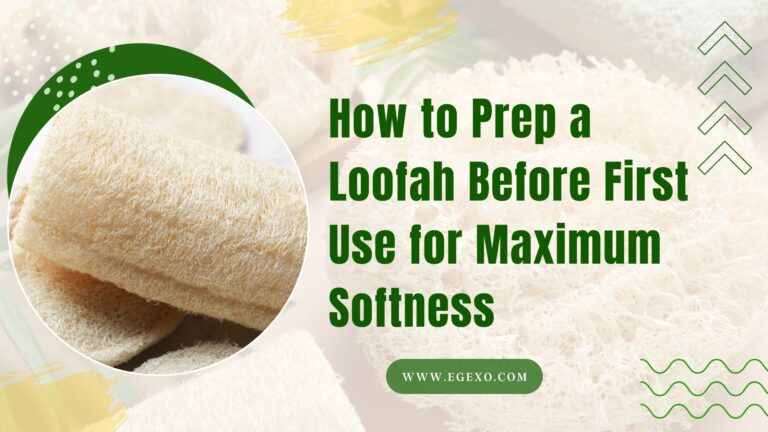
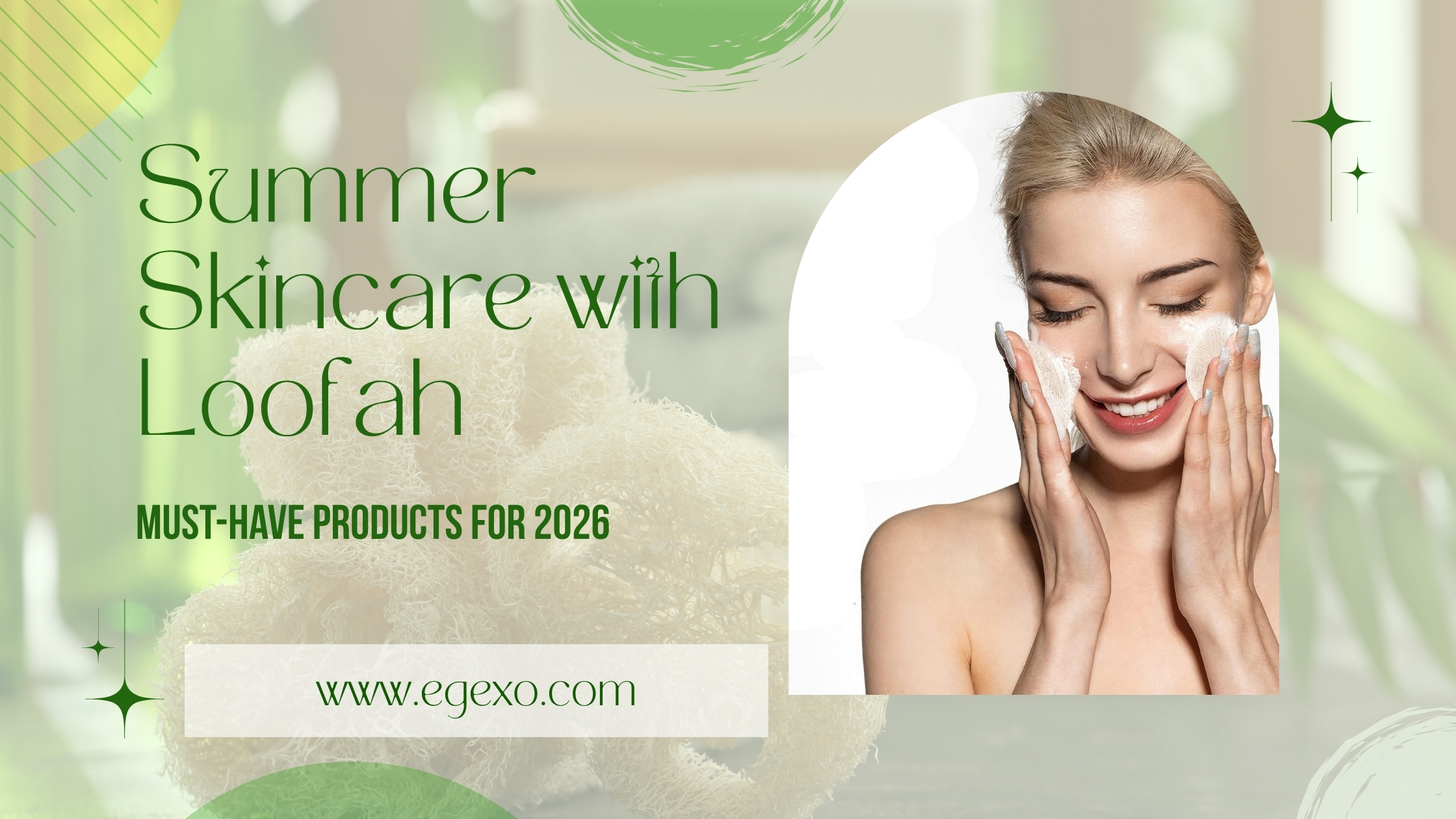
Summer Skincare with Loofah – Must-Have Products for 2026
Summer heat does something few people plan for. It pushes sebum production into overdrive, clogs pores with sunscreen and sweat residue, and leaves skin looking dull within days of the season starting. The global skincare market responded by growing past USD 180 billion in 2025, yet the single most effective tool for managing summer skin has existed for centuries: the natural loofah.
Summer skincare with loofah is not a trend. It is a proven practice rooted in the biology of skin renewal. The outer layer of skin, the stratum corneum, sheds millions of dead cells every day, and heat accelerates that process. Without regular exfoliation, those cells accumulate, trapping bacteria and blocking moisturizers from penetrating. A high-quality natural loofah clears that barrier in minutes.
This guide covers everything you need to know about using loofah for summer skincare, from choosing the right product for your skin type to understanding the quality differences that separate a premium Egyptian loofah from a generic import. Whether you are stocking a retail shelf, sourcing for a spa brand, or simply trying to build a smarter summer routine, you will find practical and specific information here.
Egexo has spent 10 years exporting Egyptian loofah, and this article draws directly on that experience to help you make better decisions.
Why Summer Is the Most Important Season for Loofah Exfoliation
Most people associate loofah use with basic bathing. That undersells what it actually does, especially in summer. During warmer months, the skin faces a unique combination of stressors: UV exposure accelerates cell turnover, sweat mixes with product residue and sits on the skin surface, and humidity creates the conditions for bacterial and fungal growth in hair follicles.
Clinical dermatology has long supported the role of mechanical exfoliation in managing these conditions. A 2023 review published in the Journal of Cosmetic Dermatology confirmed that consistent mechanical exfoliation two to three times per week improves topical absorption by up to 40 percent. That number matters when you consider how much people spend on serums and moisturizers that sit on dead skin layers and never reach the dermis.
What Happens to Skin in Summer Without Exfoliation
Without regular exfoliation during summer, a predictable sequence occurs. Dead cells accumulate on the surface. Pores enlarge visibly as they work harder to push sebum through blocked openings. Sunscreen, which is essential but occlusive by nature, compounds the problem by forming a film that traps everything underneath it. Within two to three weeks of consistent non-exfoliation, most skin types show increased breakouts, uneven texture, and hyperpigmentation from sun damage that never fully shed.
This is not a cosmetic complaint. Dermatologists classify it as impaired barrier function, a condition that makes skin more reactive to environmental stressors and less capable of holding moisture.
How Natural Loofah Addresses Summer Skin Challenges
The fibrous structure of a natural loofah, specifically Luffa aegyptiaca grown in the Nile Delta region, is uniquely suited to mechanical exfoliation. The interlocking cellulose fibers create a three-dimensional scrubbing surface that conforms to body contours without the jagged edges found in synthetic abrasives. The result is exfoliation that removes dead cells without damaging the living layers beneath.
Egyptian loofah, which Egexo has grown and exported for 10 years, is considered the gold standard in the global spa and skincare industry. The soil conditions and climate of the Nile Delta produce a fiber that is denser, more durable, and more consistently textured than loofah grown in other regions. Learn more about the process at the Egexo farm-to-export process page.
The Best Loofah Products for Summer Skincare in 2026
Not all loofahs perform equally in summer conditions. The following products represent the core range that dermatologists, spa professionals, and eco-conscious consumers reach for during the warmer months.
Natural Body Loofahs for Daily Use
The standard body loofah remains the most widely used product in the category. For summer, the ideal choice is a medium-density loofah with a length between 15 and 25 centimeters, which provides enough surface area to cover the back and legs efficiently without requiring excessive pressure.
Egexo’s bath and body loofah range includes bleached and unbleached options, rope-tied loofahs for hanging, and disc-cut slices that work well for targeted exfoliation on elbows and knees. Each product is tested against Egexo’s published quality standards to ensure consistent fiber density and no chemical contamination from processing.
For retailers and spa operators, these products carry strong margins and repeat-purchase behavior. Consumers who establish a loofah routine typically replace their loofah every four to six weeks, creating a predictable reorder cycle that supports consistent inventory planning.
Loofah Spa Accessories for Premium Skincare Lines
The spa segment has seen notable growth in demand for branded loofah accessories, including loofah mitts, back straps, and combination products that pair natural loofah with essential oil-infused soap. This category commands higher retail pricing and appeals to consumers who treat bathing as a wellness ritual rather than a basic hygiene task.
Egexo’s pet and spa grooming loofah products provide a base for private-label spa collections. Operators can order products with custom branding, packaging, and product formulations through Egexo’s private label manufacturing service. Minimum order quantities for private label products start at levels accessible to mid-sized spa brands and regional distributors.
Raw Loofah Scrubbers for Specialty Retailers
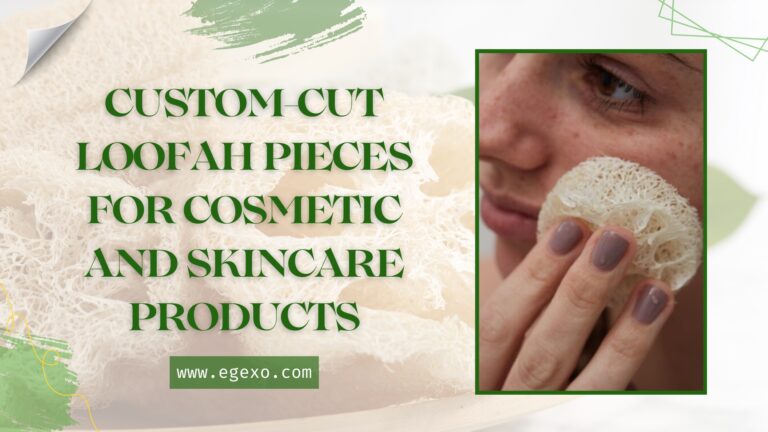
A growing segment within the natural skincare market involves consumers who purchase raw loofah material and cut it to their preferred dimensions, soak it with their own ingredient blends, or use it dry for a more intensive exfoliating experience. This market skews toward DIY enthusiasts, zero-waste shoppers, and natural beauty advocates.
Egexo’s raw loofah scrubbers are available in bulk for distributors supplying this segment. The raw format also appeals to artisan soap makers and bath product manufacturers who embed loofah sections into glycerin soap bars, a product that has seen consistent year-over-year growth in the handmade goods market.
Loofah Product Comparison: Choosing the Right Type for Summer
Different loofah formats serve different purposes. The table below helps both consumers and buyers evaluate the options based on practical criteria.
| Product Type | Best For | Scrub Intensity | Ideal Use Frequency | Avg. Lifespan | Best Skin Type |
|---|---|---|---|---|---|
| Full Natural Body Loofah | Full body exfoliation | Medium | 3 to 4 times per week | 4 to 6 weeks | Normal, oily, combination |
| Loofah Disc Slice | Targeted exfoliation (elbows, feet) | Medium-High | 2 to 3 times per week | 6 to 8 weeks | All types |
| Loofah Mitt | Gentle full body use | Low-Medium | Daily use | 4 to 6 weeks | Sensitive, dry |
| Raw Loofah (uncut) | DIY, soap embedding, custom cut | Variable | Depends on format | 8 to 12 weeks | All types |
| Loofah Back Strap | Hard-to-reach areas | Medium | 3 to 4 times per week | 4 to 6 weeks | Normal, oily |
Quality Standards That Separate Premium Loofah from Generic Imports
This is where the conversation becomes critical for wholesale buyers, but it is equally important for consumers who want to understand what they are paying for.
The loofah market is not regulated in most importing countries, which means a wide range in quality reaches retail shelves under identical-looking packaging. A loofah sold at a discount may have been harvested too early, bleached aggressively, or processed without proper drying, leading to mold, uneven fiber density, and a dramatically shorter useful life.
What Premium Egyptian Loofah Looks Like
Premium Egyptian loofah, such as what Egexo exports, meets a specific set of physical and chemical criteria. Fiber density should be consistent throughout the body of the loofah, with no soft spots indicating immature harvest. Color in unbleached products should be a uniform golden-brown. Bleached products should show no gray or off-white patches that indicate uneven chemical treatment.
Moisture content is a critical but often overlooked quality metric. Properly dried loofah should have a moisture content below 12 percent. Excess moisture creates conditions for microbial growth during shipping and storage. Egexo publishes its quality standards and testing protocols at the Egexo quality standards page, which buyers can reference when evaluating suppliers.
Quality Grading System
| Grade | Fiber Density | Color Uniformity | Moisture Content | Recommended Application |
|---|---|---|---|---|
| Export Grade A | High, consistent | Uniform | Below 10 percent | Premium spa and retail |
| Export Grade B | Medium-high | Minor variation acceptable | Below 12 percent | Standard retail and wholesale |
| Industrial Grade | Variable | Not assessed | Below 15 percent | Cleaning products, packaging |
| Raw Unprocessed | Not graded | Natural variation | Variable | DIY, manufacturing input |
Buyers sourcing for spa brands, premium retailers, or export markets should specify Export Grade A to ensure the product performs to consumer expectations. You can request a quote with grade specifications here.
How to Use Loofah for Summer Skincare: A Complete Routine
The effectiveness of a loofah depends as much on technique as it does on product quality. The following routine is drawn from dermatological guidance and the practical experience of spa professionals who use natural loofahs daily.
Step-by-Step Summer Loofah Skincare Routine
| Step | Action | Duration | Notes |
|---|---|---|---|
| 1 | Soak your loofah in warm water | 60 to 90 seconds | Softens fibers for gentler contact |
| 2 | Apply a small amount of liquid soap or body wash to the loofah | 10 seconds | Avoid bar soap, which can leave residue in fibers |
| 3 | Begin scrubbing at feet and ankles using circular motions | 30 to 45 seconds per zone | Work upward toward the heart to support circulation |
| 4 | Move to legs, focusing on knees and shins | 45 to 60 seconds | Apply slightly more pressure on rough patches |
| 5 | Scrub arms from wrists upward | 30 seconds per arm | Lighter pressure near the inner arm |
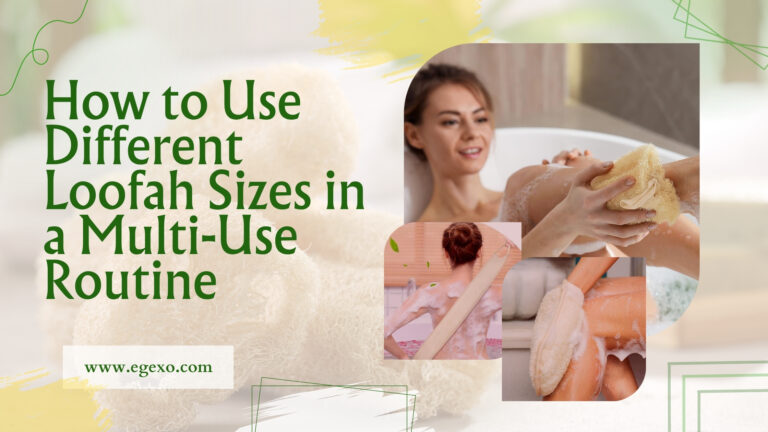
| 6 | Use back strap or ask a partner to cover the back | 45 to 60 seconds | Cover all zones evenly |
| 7 | Rinse thoroughly with warm water | 30 seconds | Ensure no soap residue remains |
| 8 | Rinse loofah completely and hang to dry | 10 to 15 seconds | Never leave in standing water |
| 9 | Apply body moisturizer within 3 minutes of toweling off | As needed | Moisturizer absorption is highest immediately post-exfoliation |
How Often Should You Use a Loofah in Summer
For most skin types, two to three times per week is the recommended frequency for body exfoliation during summer. Those with oily or combination skin can increase to four times weekly on areas prone to congestion. People with sensitive or reactive skin should limit use to once or twice per week and always use a softened loofah with minimal pressure.
Daily use is not recommended for any skin type, as it can strip the skin’s acid mantle and cause increased sensitivity, redness, and barrier disruption.
Wholesale Buying Guide: Loofah for Summer Retail and Spa Seasons
For spa owners, retailers, and distributors, the summer season is the highest-demand period for natural body care products. Planning inventory three to four months ahead of peak season is standard practice among experienced buyers in this category.
Minimum Order Quantities and Lead Times
| Product Category | MOQ (Units) | Lead Time | Packaging Options |
|---|---|---|---|
| Natural Body Loofahs | 500 units | 3 to 4 weeks | Bulk, poly-bag, retail-ready |
| Loofah Disc Slices | 1,000 units | 3 to 5 weeks | Bulk or individually wrapped |
| Loofah Mitts | 300 units | 4 to 5 weeks | Bulk or retail packaging |
| Raw Loofah (by weight) | 50 kg | 2 to 3 weeks | Carton, bale |
| Private Label Products | 300 units | 6 to 8 weeks | Custom per brand specification |
Supplier Evaluation Checklist for Wholesale Buyers
Before committing to any loofah supplier, B2B buyers should verify the following:
- Written documentation of cultivation origin (country, region, and farm where possible)
- Quality grading standards in written form with measurable specifications
- Moisture content testing results or lab certifications
- Minimum order flexibility for first trial orders
- Sample availability before bulk commitment
- Export documentation capacity (phytosanitary certificates, certificates of origin)
- References from existing wholesale accounts in your region
Egexo provides all of the above as standard practice. You can order samples before placing a wholesale commitment, which is a baseline expectation from any credible loofah supplier.
Natural vs Synthetic Loofahs: Why It Matters in Summer
The market includes both natural and synthetic (typically polyester mesh) loofahs. For summer skincare specifically, the differences between them are not cosmetic. They are functional.
| Factor | Natural Egyptian Loofah | Synthetic Polyester Loofah |
|---|---|---|
| Biodegradability | Fully biodegradable | Non-biodegradable, microplastic risk |
| Bacterial growth risk | Low when dried properly | High (polyester retains moisture) |
| Exfoliation texture | Irregular fiber, conforms to skin | Uniform mesh, less adaptive |
| Skin gentleness | Naturally gentle when wet | Can cause microtears on sensitive skin |
| Lifespan | 4 to 8 weeks | 4 to 6 weeks (degrades with use) |
| Allergenic potential | Very low | Moderate (dyes and synthetic fibers) |
| Summer suitability | Excellent | Moderate |
| Eco-consumer appeal | Very high | Very low |
The hygiene argument is particularly relevant in summer. Research has shown that the porous structure of synthetic loofahs, combined with warm and humid bathroom conditions, creates optimal conditions for bacterial colonization including Pseudomonas aeruginosa. Natural loofah, by contrast, dries faster due to its more open fiber structure, reducing that risk when proper maintenance is followed.
Expert Insight from Egexo
With 10 years of exporting loofah from the Nile Delta, Egexo’s agricultural team has observed a consistent pattern: the loofahs harvested in late summer, just before the first cooling of the season, carry the densest fiber structure of the year. This is not accidental. The extended growing season allows the cellulose network inside the gourd to fully mature, producing a product that maintains its structure through far more use cycles than early-harvest loofah.
For buyers selecting product for premium spa or skincare lines, specifying late-harvest Egyptian loofah is a meaningful quality distinction that translates directly into customer satisfaction and fewer returns. For consumers, it means the loofah you choose carries the accumulated work of an entire growing season in every scrub.
Egypt’s Nile Delta climate, with its specific combination of sandy soil, dry heat, and reliable irrigation, cannot be replicated elsewhere. It is why Egyptian loofah has held its position as the professional standard in global spa supply for decades, and why Egexo’s export clients return season after season.
Explore our full range at the Egexo wholesale shop or download the product catalog for complete specifications.
Sustainability and the Business Case for Natural Loofah
The shift toward sustainable personal care products has been one of the most consistent trends in retail and spa purchasing over the past five years. Natural loofah sits at the intersection of three consumer priorities that are growing simultaneously: plastic reduction, biodegradable packaging, and traceable agricultural sourcing.
A report by the Ellen MacArthur Foundation estimated that over 8 million tons of plastic enter the ocean annually. Synthetic bath products, including polyester loofahs and nylon body scrubbers, contribute to that figure through both product waste and microplastic shedding during use. Natural loofah produces neither.
For wholesale buyers, this sustainability story is a marketing asset that requires no invention. It is accurate, verifiable, and resonates with a consumer base that is actively making purchasing decisions based on environmental criteria. Carrying natural Egyptian loofah allows retailers and spa brands to make truthful sustainability claims without greenwashing risk.
Egexo’s custom loofah product design service allows brands to build this narrative into product packaging and marketing materials from the ground up. Learn more about why choosing Egexo positions your brand ahead of the sustainability curve.
FAQ Section
Q1: How often should I use a loofah for summer skincare?
For summer skincare with loofah, two to three times per week is the recommended frequency for most skin types. During summer, when sweat, sunscreen residue, and increased cell turnover create more buildup than in other seasons, consistent exfoliation makes a measurable difference in skin clarity and texture. Oily skin types can increase to four sessions weekly on congested areas. Sensitive skin types should limit use to once or twice per week with gentle pressure and a thoroughly softened loofah.
Q2: What makes Egyptian loofah better than other types?
Egyptian loofah, particularly varieties grown in the Nile Delta region where Egexo operates, is considered the global benchmark for quality because of the specific agricultural conditions that produce it. The sandy soil, dry climate, and regulated irrigation of the Nile Delta create a fiber structure that is denser, more consistent, and more durable than loofah grown in other regions. Egyptian loofah also has a lower bacterial retention risk than synthetic alternatives and is fully biodegradable, making it the preferred choice for premium spa and skincare applications worldwide.
Q3: How long does a natural loofah last?
A natural loofah used two to three times per week in summer conditions should last between four and six weeks before replacement is needed. Disc-cut slices, which have a more compact fiber structure, can last six to eight weeks. Lifespan depends significantly on how the loofah is maintained between uses: it should be rinsed thoroughly after each use, wrung out completely, and hung in a well-ventilated area. Loofahs left in wet environments degrade significantly faster and carry hygiene risks.
Q4: What minimum order quantities should wholesale buyers expect for Egyptian loofah?
Minimum order quantities vary by product type. Standard natural body loofahs typically carry a minimum order of 500 units, while raw loofah material can be ordered from as little as 50 kilograms. EGEXO has no MOQ on standard products, and private label starts from 1,000 units. Private label products generally require a minimum of 300 units due to the additional production steps involved in custom packaging and labeling. EGEXO’s private label starts from 1,000 units. Egexo offers sample orders prior to bulk commitment, which allows buyers to verify quality before placing larger volumes. Contact Egexo directly to request a tailored quote based on your specific volume requirements.
Q5: Is a natural loofah safe for sensitive skin in summer?
Yes, with appropriate technique. A natural loofah should always be soaked in warm water for at least 60 seconds before use to soften the fibers. For sensitive skin, the scrubbing motion should use light circular pressure rather than back-and-forth strokes, which generate more friction. Frequency should be limited to once or twice per week. The natural fiber structure of Egyptian loofah is adaptive, meaning it conforms to the skin surface rather than cutting across it, which is why it is preferred over synthetic scrubbers for people with reactive skin.
Q6: What certifications should wholesale buyers look for in a loofah supplier?
Wholesale buyers should look for suppliers who can provide phytosanitary certificates, certificates of agricultural origin, and moisture content test documentation. For buyers supplying organic-certified retailers, the supplier should be able to provide third-party documentation of cultivation practices. Egexo provides complete export documentation as standard and publishes its quality standards openly for buyer reference. Suppliers who cannot provide written quality specifications or who resist sample requests before bulk orders are a significant sourcing risk in this category.
Q7: Can loofah be used as part of an anti-acne summer skincare routine?
Loofah exfoliation can support anti-acne routines by clearing dead cells and product residue from the surface before they can block pores. However, it should not be used directly on active acne lesions, as mechanical friction can spread bacteria and worsen inflammation. The recommended approach is to use the loofah on non-affected areas of the body and face routines should use chemical exfoliants rather than physical ones when acne is present. A clean, properly dried loofah reduces the risk of introducing additional bacteria to the skin surface.
Q8: What is the environmental impact of switching from synthetic to natural loofah?
Replacing a single synthetic polyester loofah with a natural Egyptian loofah eliminates the contribution of one non-biodegradable item from the waste stream. More significantly, synthetic mesh loofahs shed microplastic particles during every use, which enter wastewater systems and ultimately reach marine environments. Natural loofahs produce no microplastic shedding and decompose fully when composted after use. For consumers making a switch across a household of three to four people, replacing synthetic products annually eliminates several hundred grams of plastic waste per year, a figure that scales meaningfully when applied to retail and spa operations.
Conclusion
Summer skincare with loofah is both a personal wellness practice and a significant business opportunity, and the two perspectives reinforce each other more than most people realize. When consumers understand the quality differences between Egyptian loofah and generic alternatives, they make better purchases. When buyers understand what their end customers need, they source better products. This alignment is what drives sustainable growth in the natural skincare category.
The key points from this guide are worth summarizing directly. Natural Egyptian loofah, particularly late-harvest Nile Delta varieties, offers a fiber structure that outperforms synthetic alternatives on every measurable dimension relevant to summer skincare: exfoliation quality, hygiene, durability, and environmental impact. Using a loofah two to three times per week, with proper technique and care, delivers clinically supported improvements in skin texture and product absorption. For wholesale buyers, this product category carries strong margins, consistent reorder behavior, and a growing sustainability narrative that requires no embellishment.
Key Takeaways:
- Summer skincare with loofah is most effective at two to three sessions per week, with technique mattering as much as product quality
- Egyptian loofah from the Nile Delta region is the professional standard in global spa supply for documented agricultural and structural reasons
- Natural loofah outperforms synthetic alternatives on hygiene, durability, and environmental impact
- Wholesale buyers should verify quality grading, moisture content standards, and export documentation before committing to a supplier
- Private label and custom design options are available for brands building a natural skincare collection
Ready to experience Egyptian loofah quality?
- For Wholesale Buyers: Request a quote or download our product catalog
- For Individual Shoppers: Shop our full collection or order samples first