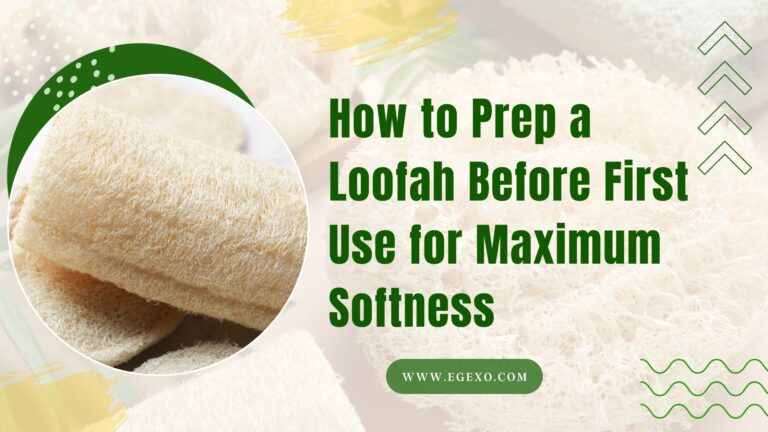
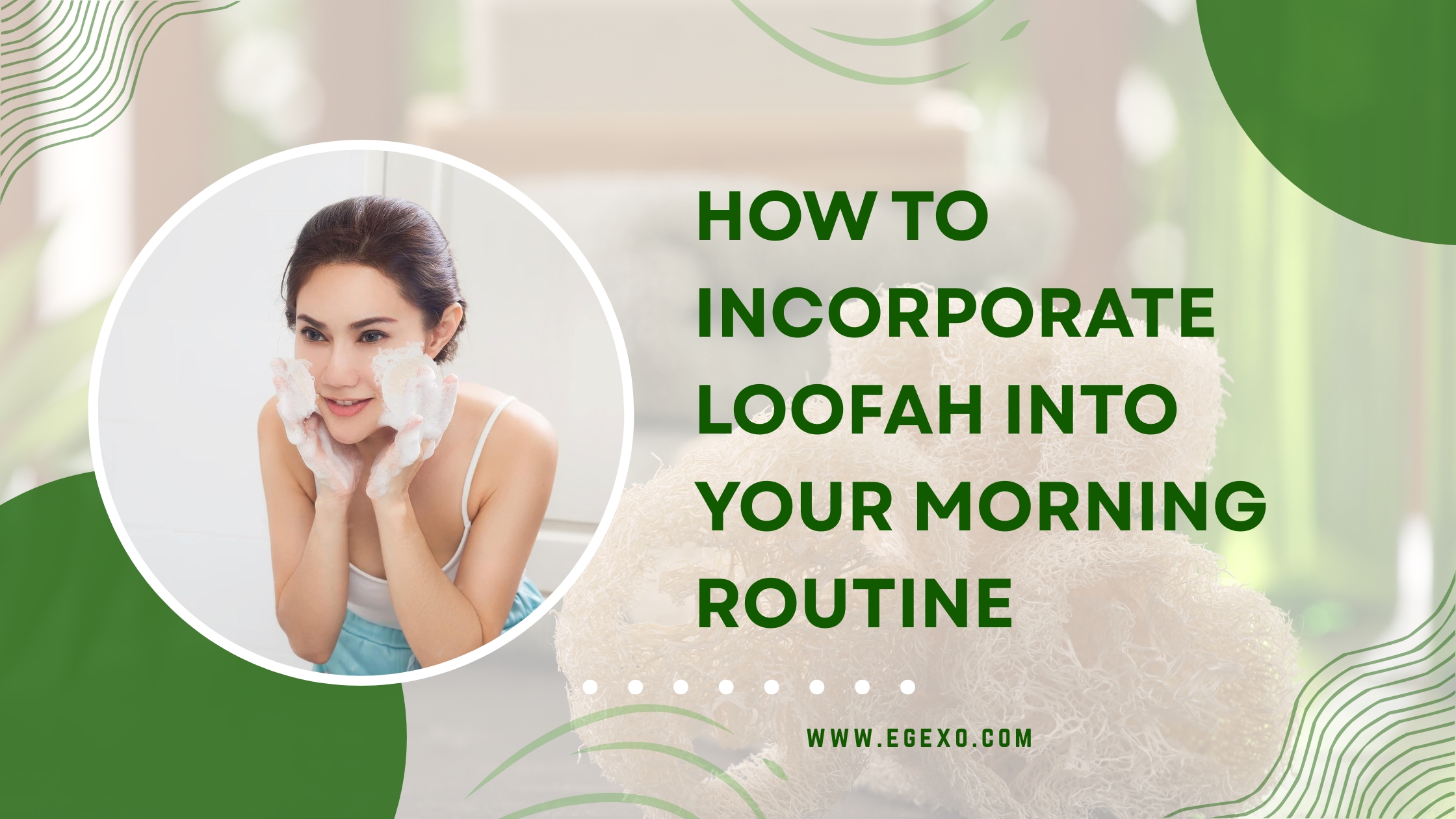
How to Incorporate Loofah into Your Morning Routine
Most people spend their mornings rushing through a shower without giving their skincare a second thought. But here is a fact worth considering: the skin is the largest organ in the human body, and it sheds roughly 30,000 to 40,000 dead skin cells every single hour. Without a proper exfoliation tool, that buildup accumulates on the surface, clogging pores and dulling the complexion over time.
Learning how to incorporate loofah into your morning routine is one of the simplest upgrades you can make to your daily hygiene, and the results show up quickly. Regular exfoliation improves circulation, encourages cell turnover, and leaves skin noticeably smoother within the first week of consistent use.
This guide covers everything you need to know, whether you are a first-time loofah user looking to build healthier habits, or a spa owner, retailer, or wholesale buyer researching which loofah products deliver the best customer satisfaction. You will find practical how-to steps, quality benchmarks, product comparisons, and sourcing insights all in one place.
At Egexo, we have spent 10 years exporting premium Egyptian loofahs from the Nile Delta region. That depth of experience shapes every recommendation in this article.
Why the Loofah Deserves a Place in Every Morning Routine
The loofah is not a new invention. It has been used in Egyptian households for centuries and has long been recognized across the Middle East and Asia as a fundamental bathing tool. What makes it relevant today is how well it aligns with two major trends: the demand for natural personal care products and the global push toward sustainable, biodegradable alternatives to plastic.
A natural loofah is the dried fibrous interior of the Luffa cylindrica plant, a gourd grown in warm climates. Egypt produces some of the world’s highest-quality loofah fiber due to its ideal growing conditions, long cultivation history, and skilled harvesting practices. When properly processed, Egyptian loofah offers a firm yet flexible texture that synthetic sponges cannot replicate.
For consumers, this means a more effective cleanse. For wholesale buyers, it means a product with strong market demand, low return rates, and high customer loyalty.
The Science Behind Exfoliation and Skin Health
Exfoliation removes the outer layer of dead cells that sit on the skin’s surface. When this layer builds up, it leads to dull skin tone, rough texture, and in some cases, clogged pores that contribute to breakouts. Physical exfoliation using a natural loofah stimulates blood flow to the surface, which encourages faster regeneration of healthy skin cells.
Dermatologists generally recommend exfoliating two to four times per week for most skin types. For people with oily or combination skin, a daily light exfoliation during the morning shower can be beneficial. Those with sensitive or dry skin benefit from exfoliating every two to three days with a softer loofah grade.
This flexibility in frequency and intensity is one reason why the natural loofah remains the preferred tool across such a wide range of users. You can adjust pressure, soak time, and product pairing to suit individual needs.
Why Morning is the Optimal Time for Loofah Use
Most skincare professionals agree that morning is the ideal time to exfoliate with a loofah. During sleep, the body undergoes repair cycles, and by morning the skin has accumulated a fresh layer of dead cells and surface oils. Exfoliating in the morning clears this layer before it has a chance to mix with sweat and environmental pollutants throughout the day.
Morning exfoliation also prepares the skin to absorb moisturizers and body lotions more effectively, since there is no dead cell barrier blocking penetration. For people who apply sunscreen or body oils after showering, this matters significantly.
How to Incorporate Loofah into Your Morning Routine: A Step-by-Step Guide
Knowing the theory is useful, but the real value comes from practical application. Here is a complete, easy-to-follow process for building loofah use into your daily morning shower.
Step-by-Step Morning Loofah Routine
| Step | Action | Duration | Notes |
|---|---|---|---|
| 1 | Wet the loofah thoroughly | 1 to 2 minutes | Let warm water soften the fibers |
| 2 | Apply body wash or soap to the loofah | 30 seconds | Use a mild, pH-balanced cleanser |
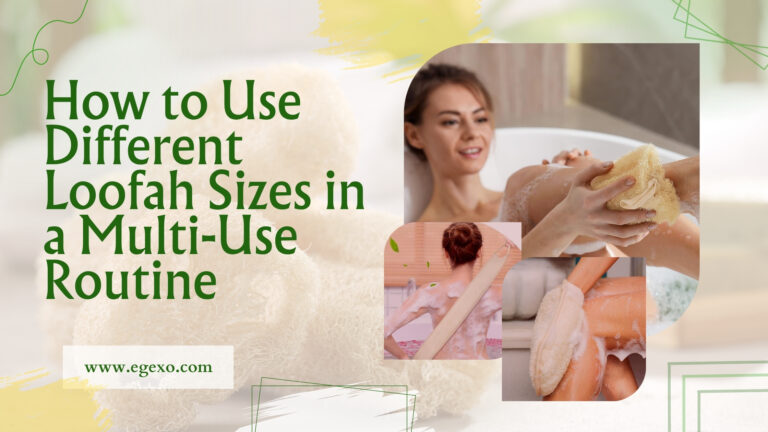
| 3 | Exfoliate in circular motions | 3 to 5 minutes | Start from feet, move upward |
| 4 | Focus on rough areas | 1 to 2 minutes | Elbows, knees, heels |
| 5 | Rinse loofah and skin thoroughly | 1 minute | Remove all soap residue |
| 6 | Squeeze out excess water | 30 seconds | Do not wring aggressively |
| 7 | Hang loofah in an airy spot | Post-shower | Prevents bacterial growth |
Following this sequence consistently is the key to seeing results. Users who exfoliate in random patterns or skip the drying step often report less satisfaction because bacteria accumulate in a damp loofah, reducing its effectiveness and lifespan.
Choosing the Right Loofah for Your Skin Type
Not all loofahs are the same, and choosing the right grade makes a significant difference in the experience. The Bath and Body Loofah collection at Egexo includes multiple grades suited to different skin needs.
| Skin Type | Recommended Loofah Grade | Texture Description | Exfoliation Frequency |
|---|---|---|---|
| Normal | Medium | Firm with moderate flexibility | 3 to 4 times per week |
| Oily or Combination | Medium-Firm | Slightly coarser fiber | Daily or every other day |
| Dry | Soft | Fine fiber, gentle on surface | Every 2 to 3 days |
| Sensitive | Extra Soft | Minimally processed, very pliable | 2 times per week |
| Mature | Soft to Medium | Gentle but effective | 2 to 3 times per week |
Pairing Loofah with the Right Products
The loofah works best when paired with complementary products. Here is what to consider:
- Use a creamy or gel-based body wash rather than bar soap, as bar soap can leave residue in the loofah fibers
- Apply a moisturizing body lotion or oil immediately after patting the skin dry, while pores are still open from the warm water
- Avoid using the loofah on freshly shaved skin or on areas with active breakouts, cuts, or inflammation
- If you use a body scrub, alternate days between the scrub and the loofah rather than using both simultaneously
Natural Loofah vs. Synthetic Alternatives: What the Data Shows
One of the most common questions both consumers and buyers ask is how natural loofah compares to synthetic sponges, plastic poufs, or silicone scrubbers. The comparison below draws on product performance data and consumer preference research.
Comparison Table: Natural Loofah vs. Synthetic Alternatives
| Feature | Natural Egyptian Loofah | Plastic Loofah Pouf | Silicone Scrubber | Synthetic Sponge |
|---|---|---|---|---|
| Material | 100 percent plant fiber | Polyester or nylon | Food-grade silicone | Synthetic foam |
| Exfoliation Level | Medium to Firm | Light to Medium | Light | Light |
| Biodegradable | Yes, fully | No | No | No |
| Average Lifespan | 4 to 6 weeks per item | 2 to 4 weeks | 6 to 12 months | 2 to 3 weeks |
| Bacteria Risk | Low with proper drying | High, traps moisture | Very Low | Very High |
| Environmental Impact | Minimal | High | Moderate | Very High |
| Skin Stimulation | High, improves circulation | Low | Minimal | Low |
| Consumer Price Range | 3 to 15 USD retail | 2 to 8 USD retail | 5 to 20 USD retail | 1 to 5 USD retail |
| Wholesale Appeal | Very High | Moderate | Moderate | Low |
The data tells a clear story. Natural loofahs outperform synthetic alternatives in nearly every meaningful category except silicone’s lifespan advantage. For wholesale buyers, the growing consumer demand for biodegradable products makes natural loofah a strategically strong product to carry. Market research from the global personal care sector indicates that demand for natural exfoliators grew by approximately 18 percent between 2022 and 2025.
Loofah Hygiene and Maintenance: What Most People Get Wrong
The biggest reason people have negative experiences with loofahs is improper care rather than product quality. A well-maintained natural loofah is hygienic, effective, and long-lasting. A neglected one becomes a breeding ground for mold and bacteria.
Loofah Maintenance Checklist
| Maintenance Task | Frequency | Method |
|---|---|---|
| Rinse thoroughly after use | Every use | Run under clean water until water runs clear |
| Squeeze out moisture | Every use | Press firmly, do not twist |
| Hang to dry | Every use | Hang in ventilated area away from shower spray |
| Deep clean with diluted vinegar | Weekly | Soak in solution of 1 part white vinegar, 4 parts water for 5 minutes |
| Full replacement | Every 4 to 6 weeks | Discard when texture becomes slimy or smell develops |
Signs That Your Loofah Needs Replacing
- Persistent musty or sour odor even after cleaning
- Discoloration or dark spots indicating mold
- Breakdown of fiber structure causing the loofah to fall apart
- Reduced scrubbing effectiveness even with firm pressure
Following this maintenance schedule extends the usable life of the loofah by up to 50 percent compared to users who skip the drying and rinsing steps.
For Wholesale Buyers: Sourcing Premium Egyptian Loofahs at Scale
Understanding how to use loofah effectively is valuable knowledge for buyers as much as consumers. When your customers understand the correct way to use and maintain the product, their satisfaction levels rise, return rates drop, and repeat purchases increase.
But quality also starts at the source. Egyptian loofahs are widely recognized as the global benchmark for natural loofah fiber. The Nile Delta’s climate produces Luffa cylindrica plants with longer, denser fiber networks than those grown in other regions. This translates directly into superior texture and durability in the finished product.
Egexo’s farm-to-export process ensures that every loofah passes through controlled cultivation, hand harvesting, fiber cleaning, and quality grading before it reaches the export stage.
Loofah Product Specifications for Wholesale Buyers
| Product Type | Standard Dimensions | MOQ | Quality Grade | Common Use |
|---|---|---|---|---|
| Natural Bath Loofah | 15 to 25 cm length | 500 units | Grade A and Grade B | Personal bathing |
| Loofah Slices | 3 to 5 cm thickness | 1,000 units | Grade A | Spa treatments, retail |
| Loofah Sheets | 30 x 20 cm flat | 500 units | Grade A | Exfoliation pads, cut-to-order |
| Kitchen Loofah Scrubber | 12 to 18 cm | 1,000 units | Grade B | Dish scrubbing |
| Mini Loofah | 8 to 10 cm | 2,000 units | Grade A | Travel kits, gift sets |
| Loofah on Stick | Custom length | 300 units | Grade A | Back scrubbers |
For buyers interested in custom branding, Egexo offers private label loofah manufacturing and custom loofah product design services that allow your brand to stand out on retail shelves without building manufacturing capacity from scratch.
To evaluate product quality before committing to a full order, we recommend taking advantage of the sample ordering program.
Quality Standards Wholesale Buyers Should Require
When evaluating any supplier, these are the non-negotiable quality indicators for premium natural loofah:
- Uniform fiber density throughout the loofah body
- No chemical bleaching unless specifically requested for white-grade products
- Moisture content below 12 percent at time of packaging
- No visible mold, discoloration, or pest damage
- Consistent sizing within declared tolerance ranges
- Secure packaging that prevents compression damage during shipping
Egexo’s full quality standards documentation outlines each of these criteria with testing protocols and grading definitions.
For a complete overview of available products and specifications, download the Egexo product catalog or request a wholesale quote.
Building a Loofah Routine That Lasts: Long-Term Results and Habits
Consistency is the defining factor between people who see real benefits from loofah use and those who give up after a few weeks. The results are not always immediate, but within four to six weeks of regular use, most people notice meaningfully smoother skin texture, reduced ingrown hairs, and improved tone.
Expected Results Timeline
| Week | Expected Results |
|---|---|
| Week 1 | Skin feels cleaner and slightly smoother immediately after showering |
| Week 2 | Dead cell buildup noticeably reduced, skin tone begins to even out |
| Week 3 to 4 | Improved moisturizer absorption, reduced dryness in rough areas |
| Week 5 to 6 | Visible improvement in skin texture, reduced appearance of ingrown hairs |
| Week 8 and beyond | Long-term maintenance of smooth, healthy skin tone |
Adjusting the Routine Across Seasons
Skin needs change with the seasons, and your loofah routine should adapt accordingly.
During winter months, skin tends to be drier due to lower humidity and indoor heating. Reduce exfoliation frequency slightly and switch to a softer loofah grade if irritation develops. Increase the richness of your post-shower moisturizer.
During summer, increased sweating and sun exposure make regular exfoliation more important. Sticking to a consistent routine and replacing your loofah more frequently during hot months helps maintain hygiene standards.
Loofah Beyond the Shower: Additional Morning Uses
Most people limit their loofah use to the shower, but the versatility of natural loofah extends further. In the kitchen, a kitchen loofah scrubber provides effective, plastic-free dishwashing without scratching surfaces. Some wellness practitioners use loofah slices as part of dry brushing routines before the shower, stimulating lymphatic flow.
For spa businesses and wellness centers, the loofah is frequently incorporated into full-body exfoliation treatments. The Pet and Spa Loofah range at Egexo includes spa-grade products designed for professional use environments.
For a broader educational perspective on loofah applications, Loofah Guide offers extensive consumer-focused resources. For wholesale purchasing guides and bulk sourcing strategies, Wholesale Loofah provides valuable market insights.
FAQ Section
Q1: How often should I use a loofah in my morning routine?
A: For most skin types, using a loofah three to four times per week is ideal. Oily or combination skin can tolerate daily use with a medium-grade loofah. Sensitive or dry skin types should limit use to two or three times per week with a softer loofah grade. Consistent use of loofah in your morning routine is more effective than irregular exfoliation regardless of frequency.
Q2: How long does a natural loofah last compared to a synthetic one?
A: A properly maintained natural Egyptian loofah lasts approximately four to six weeks with daily use. Synthetic plastic poufs typically last two to four weeks before becoming hygiene risks due to trapped moisture. Natural loofahs also biodegrade after disposal, whereas synthetic alternatives contribute to plastic waste. Replacing your loofah every four to six weeks is standard practice for maintaining hygiene.
Q3: What is the minimum order quantity for wholesale loofah buyers purchasing from Egypt?
A: Minimum order quantities vary by product type. Standard natural bath loofahs typically have an MOQ of 500 units. EGEXO has no MOQ on standard products, and private label starts from 1,000 units. Loofah slices and kitchen scrubbers usually require 1,000 units as a minimum. Egexo accommodates custom MOQ discussions for first-time buyers and offers sample orders to verify quality before full purchasing commitments are made.
Q4: Why is Egyptian loofah considered superior to loofahs from other countries?
A: Egyptian loofah is recognized as the global quality benchmark due to the Nile Delta’s ideal growing conditions, long cultivation history, and skilled processing techniques. The fiber density is higher, the texture is more consistent, and the processing methods preserve natural fiber integrity better than mass-production alternatives from other regions. Egexo has 10 years of experience in Egyptian loofah export.
Q5: Can I use a loofah on my face?
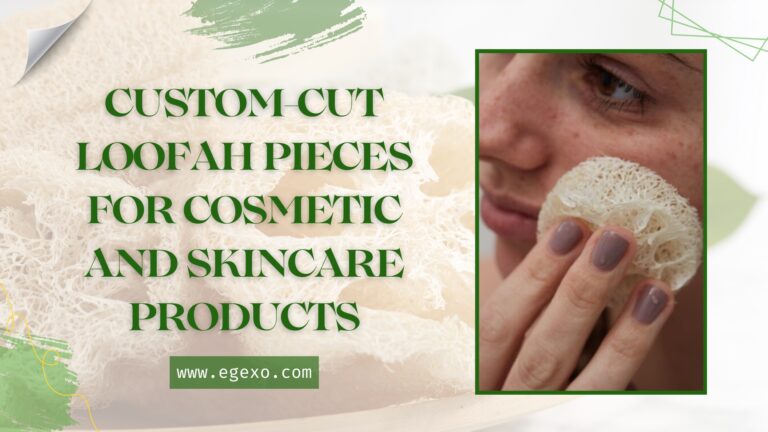
A: Using a standard body loofah on the face is generally not recommended because facial skin is more delicate than body skin. However, specially designed fine-fiber loofah pads or very soft loofah grades can be used on the face with gentle pressure. For facial exfoliation, consult skincare guidelines for your specific skin type before introducing any new exfoliation tool.
Q6: How should I store my loofah between uses?
A: After each use, rinse the loofah thoroughly, squeeze out excess water firmly, and hang it in a well-ventilated area outside the shower spray zone. Avoid leaving it on the shower floor or in a closed dish where moisture accumulates. Weekly deep cleaning with diluted white vinegar significantly extends both the hygiene and lifespan of the loofah.
Q7: What certifications should wholesale buyers look for when sourcing natural loofahs?
A: Wholesale buyers should look for suppliers who can provide documentation of quality grading standards, moisture content testing, and phytosanitary certificates for international export. Organic certification is increasingly requested by European and North American retailers. Egexo’s quality standards page outlines all certifications and documentation available for export orders.
Q8: Is incorporating loofah into a morning routine suitable for children?
A: Children can benefit from gentle loofah exfoliation, but it is important to use an extra-soft or fine-grade loofah for young skin. Avoid exfoliating on sensitive areas or skin with active irritation. Starting with once-a-week use and monitoring skin response is the safest approach for children under twelve.
Expert Insight from Egexo
With 10 years of exporting loofah from Egypt’s Nile Delta, our team has observed one consistent pattern: the consumers and buyers who get the most value from natural loofah are those who understand what they are working with. A Grade A Egyptian loofah is a precision agricultural product, not simply a sponge. The fiber density, harvest timing, and drying method all influence the final texture and performance. When you incorporate a properly sourced, correctly maintained loofah into your morning routine, you are using one of the most effective natural exfoliation tools available anywhere in the world. That is not marketing language. It is the result of 10 years of quality observation, field experience, and direct customer feedback across more than 40 global markets.
Conclusion
Knowing how to incorporate loofah into your morning routine transforms a routine shower into an active skincare practice. The steps are straightforward, the investment is minimal, and the results, when consistent, are genuinely noticeable. From smoother skin and better product absorption to reduced ingrown hairs and improved circulation, the daily use of a quality natural loofah delivers a measurable return.
For wholesale buyers, the opportunity is equally clear. Consumer demand for natural, biodegradable personal care products continues to grow. Egyptian loofah sits at the intersection of quality, sustainability, and value, making it one of the strongest natural personal care products to carry in any retail or spa setting.
Key Takeaways:
- Exfoliate two to four times per week using circular upward motions for best results
- Always hang your loofah to dry after use and replace it every four to six weeks
- Egyptian loofah outperforms synthetic alternatives in exfoliation quality, biodegradability, and consumer satisfaction
- Grade selection matters: match loofah firmness to your skin type
- Wholesale buyers should prioritize Grade A certified Egyptian loofah with documented quality standards
Ready to experience Egyptian loofah quality?
- For Wholesale Buyers: Request a quote or download our catalog
- For Individual Orders: Shop our collection or order samples