

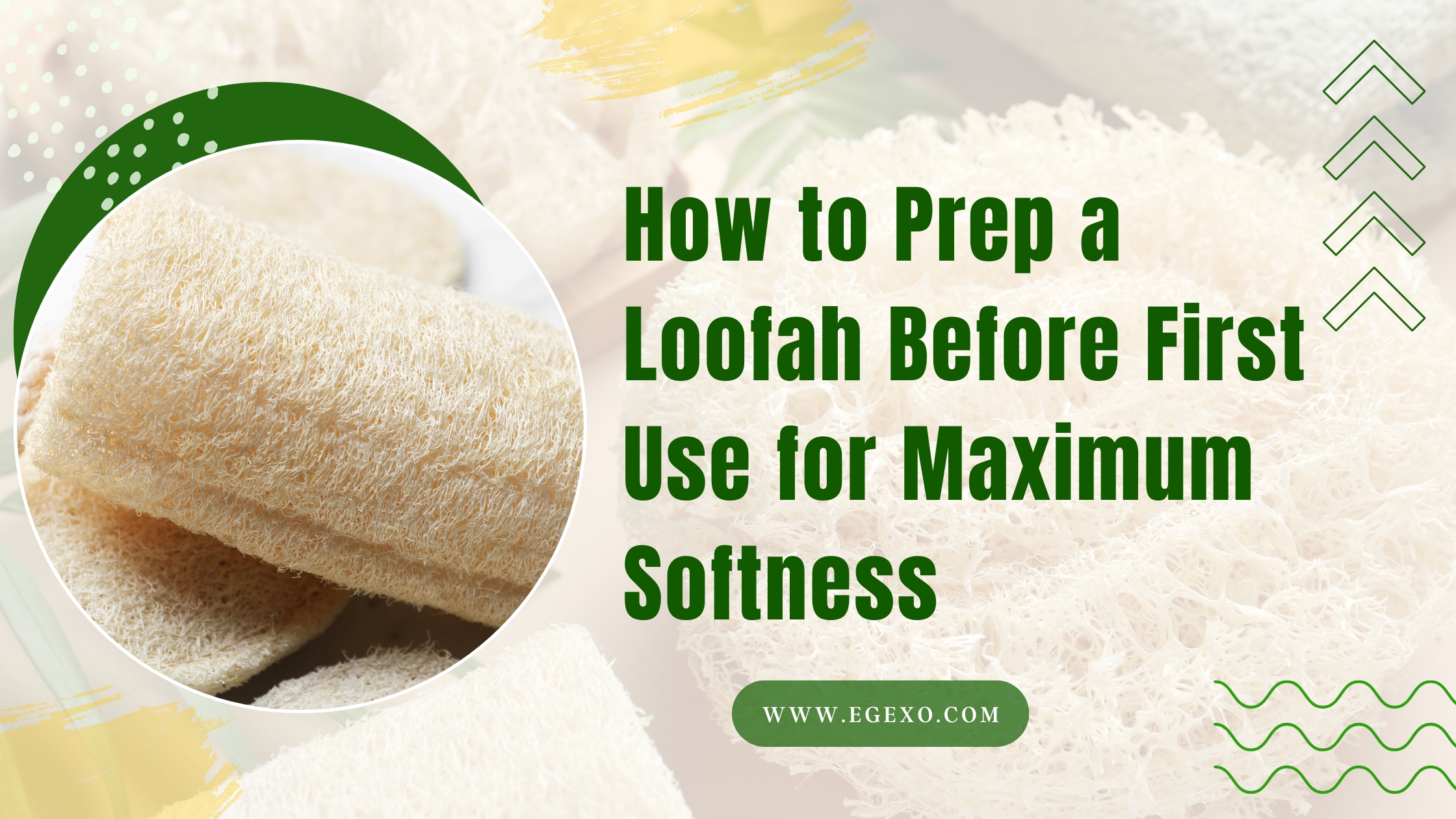
How to Prep a Loofah Before First Use for Maximum Softness
Most people tear open a natural loofah, step into the shower, and immediately wonder why it feels like sandpaper. That first scrubbing experience often turns people away from one of nature’s most effective bath tools, which is a shame, because a properly prepared loofah is one of the softest, most satisfying bathing experiences available. Knowing how to prep a loofah before first use for maximum softness is the single most important step between a scratchy disappointment and a spa-quality exfoliating session.
Natural loofahs, particularly those grown and processed in Egypt, are dried fibrous plant material. They are firm, compact, and slightly rough straight out of the packaging. That is by design. The drying process preserves the structure for storage and shipping, but it also means the fibers need time to rehydrate and relax before they are ready to use on skin.
This guide covers the exact preparation process, the science behind why it works, how loofah quality at the source determines softness potential, and what both individual consumers and wholesale buyers need to know about selecting the right loofah from the start. Whether you are a spa owner sourcing in bulk, a retailer building a product line, or simply someone who wants to get the most out of a natural loofah, this article gives you everything you need.
If you want to explore premium Egyptian loofahs before reading further, you can browse the Egexo bath and body loofah collection and see the quality standard that makes preparation this effective.
Why Preparation Matters More Than Most People Realize
A loofah is not a synthetic sponge. It is the dried vascular skeleton of the Luffa aegyptiaca plant, a member of the cucumber family. The fibrous network that makes it such an effective exfoliator is the same structure that traps air during the drying phase. When water rehydrates those fibers, they expand, soften, and become flexible, transforming the texture from firm and scratchy to smooth and pliable.
Skipping preparation does not just make the first session uncomfortable. It can actually abrade skin more aggressively than intended, potentially causing micro-irritation, particularly for people with sensitive skin. For spa operators and skincare retailers, this matters enormously. A customer who has a bad first experience with a loofah rarely comes back to purchase a second one.
The Plant Biology Behind the Softness
The Luffa plant develops a fibrous mesh inside its fruit as it matures. Egyptian farmers who supply Egexo allow the fruit to reach full maturity on the vine before harvesting, which produces a finer, denser fiber network compared to prematurely harvested loofahs. That fiber quality directly determines how soft the loofah becomes after preparation.
Egyptian soil composition, particularly in the Nile Delta region, contributes mineral content that supports robust Luffa growth. Egexo has cultivated and exported Egyptian loofahs for over 25 years, and the consistent quality of that agricultural environment is a core reason why Egyptian loofahs are widely recognized as the highest standard in global loofah supply.
What Happens Without Proper Preparation
Without soaking, the compressed dry fibers stay rigid. The loofah scratches rather than exfoliates, can pull at skin unevenly, and dries out faster between uses because the fiber structure never fully opened. Preparation is not optional for quality results. It is part of the product’s design.
Step-by-Step: How to Prep a Loofah Before First Use for Maximum Softness
The process is simple, but the details matter. Follow these steps exactly and your loofah will deliver a noticeably softer, more effective experience from the very first use.
Step 1 — Rinse Under Warm Running Water
Hold the loofah under warm water for 60 to 90 seconds. Do not use hot water at this stage. Warm water begins the rehydration process gradually, which allows the fibers to expand evenly without any thermal shock that can cause uneven softening.
Turn the loofah over and rotate it so all surfaces receive equal water contact. This matters especially for whole natural loofahs, which tend to be denser in the center.
Step 2 — Soak in Warm Water for 5 to 10 Minutes
Place the loofah in a bowl of warm water and let it soak fully submerged for a minimum of 5 minutes. For maximum softness, 10 minutes is ideal. You will visibly see the loofah expand and shift from its compressed dry form.
Some experienced users add a few drops of gentle liquid soap or a small amount of castile soap to the soaking water. This helps pre-load the loofah with mild cleansing agents and further loosens the fibers.
Step 3 — Gently Squeeze and Knead the Fibers
After soaking, remove the loofah and gently squeeze out excess water while kneading the body of the loofah with your fingers. This manual manipulation helps break up any remaining rigid areas and ensures the entire fiber network has softened evenly.
Do not wring the loofah forcefully. Twisting can stress the fiber connections and reduce durability over time, which matters both for individual consumers and for wholesale buyers who want to demonstrate long product lifespan to their customers.
Step 4 — Do a Texture Test
Before using the loofah on your skin, run it gently along the inside of your wrist or forearm. If it still feels scratchy, return it to the soak for another 3 to 5 minutes. If it feels smooth and pliable with a slight gentle drag, it is ready.
This test is also useful for spa professionals evaluating loofah quality from a new supplier. A well-grown, properly processed loofah should reach a smooth and comfortable texture within 10 minutes of soaking.
Step 5 — Apply Your Cleanser and Begin Use
With the loofah fully prepared, apply your body wash or soap directly to the loofah surface and begin use with light circular motions. The prepared fibers will lather effectively and exfoliate evenly without pulling or irritating skin.
Preparation Process at a Glance
| Step | Action | Duration | Purpose |
|---|---|---|---|
| 1 | Rinse under warm water | 60 to 90 seconds | Begin even rehydration |
| 2 | Soak fully submerged | 5 to 10 minutes | Full fiber expansion |
| 3 | Squeeze and knead | 1 to 2 minutes | Break rigid fiber clusters |
| 4 | Texture test | 30 seconds | Confirm softness readiness |
| 5 | Apply cleanser and use | As desired | Begin exfoliation |
How Loofah Quality at the Source Affects Maximum Softness
No preparation technique can compensate for a low-quality loofah. The softness potential of any natural loofah is determined before it reaches the consumer, specifically during cultivation, harvest timing, and post-harvest processing.
The Egyptian Loofah Advantage
Egyptian loofahs, particularly those grown under controlled agricultural practices in the Nile Delta, consistently outperform loofahs from other regions in fiber uniformity and post-hydration softness. The combination of soil mineral content, irrigation water quality, and climate conditions produces a Luffa fiber that hydrates more evenly and achieves greater pliability than varieties from Southeast Asia or other growing regions.
Egexo sources directly from dedicated loofah farms and manages the entire process from cultivation through export, which ensures fiber quality is maintained at every stage. This vertical integration is one of the primary reasons Egyptian loofahs sourced through Egexo consistently meet international spa and retail quality standards.
Grade Classification and What It Means for Softness
Not all natural loofahs are graded equally. Commercial loofah supply uses quality grades that reflect fiber density, uniformity, and processing standards. Higher grades produce noticeably softer post-preparation results.
| Quality Grade | Fiber Density | Post-Soak Softness | Best Application | Typical MOQ |
|---|---|---|---|---|
| Premium Grade A | High and uniform | Excellent, spa-ready | Luxury spa, boutique retail | 500 units |
| Grade B Standard | Good, minor variation | Very good, suitable for most uses | Mid-range retail, wellness stores | 1,000 units |
| Grade C Commercial | Variable | Moderate, may need longer soak | Mass retail, promotional | 2,000 units |
| Raw Unprocessed | Dense and firm | Depends on buyer processing | Industrial, custom manufacturing | 5,000 units |
Spa owners and retailers who want to understand Egexo’s full quality classification system can review the loofah quality standards page before placing any wholesale order.
Natural Loofah vs Synthetic Sponge: Why Preparation Protocol Differs
Understanding why natural loofahs require preparation while synthetic alternatives do not requires a brief comparison of material properties.
| Feature | Natural Egyptian Loofah | Synthetic Sponge | Synthetic Loofah Puff |
|---|---|---|---|
| Material source | Plant fiber (Luffa aegyptiaca) | Polyurethane or nylon | Polyester mesh |
| Preparation required | Yes, 5 to 10 minute soak | No | No |
| Post-prep softness | Naturally adjustable | Fixed hardness | Fixed texture |
| Exfoliation effectiveness | High, variable by pressure | Low to moderate | Moderate |
| Biodegradability | Fully biodegradable | Non-biodegradable | Non-biodegradable |
| Bacterial resistance | Good when dried properly | Low, harbors bacteria | Moderate |
| Average lifespan | 3 to 4 weeks with care | 2 to 3 months | 4 to 8 weeks |
| Eco-consumer appeal | Very high | Very low | Low |
| Recommended soak before use | Yes | No | No |
The preparation requirement for natural loofahs is not a drawback. It is actually a signal of material authenticity. A loofah that softens significantly after soaking is a loofah with genuine plant fiber density, which is the very property that makes it effective for exfoliation.
Maintenance After the First Use: Keeping Your Loofah Soft Longer
Preparation is a one-time process, but maintenance determines how long your loofah stays soft and hygienic through its useful life.
Drying Between Uses
After each shower, rinse the loofah thoroughly and hang it in a well-ventilated area away from the shower floor. Moisture trapped in the fibers creates an environment where bacteria and mold can develop within 24 to 48 hours. Proper drying preserves both hygiene and fiber softness.
Many spa operators who sell loofahs to clients recommend providing a loofah hanger or mesh bag as part of the product package. This add-on increases perceived value and reduces customer complaints about loofah degradation. If you are a retailer interested in bundled loofah products, the Egexo custom product design service can create branded packages that include hanging accessories.
Weekly Deep Cleaning
Once per week, soak the loofah in a solution of one part white vinegar to four parts warm water for approximately 5 minutes. This neutralizes any bacterial buildup and helps the fibers retain their flexibility. After vinegar soaking, rinse thoroughly with clean water and allow to dry completely.
When to Replace
| Usage Frequency | Expected Lifespan | Signs of Replacement Needed |
|---|---|---|
| Daily use | 3 to 4 weeks | Persistent odor, fiber breakdown, texture change |
| 3 to 4 times per week | 5 to 6 weeks | Same indicators, timeline extended |
| 1 to 2 times per week | Up to 8 weeks | Odor or significant softening beyond normal |
| Spa single-use | One session only | Dispose after client use |
What Wholesale Buyers Need to Know About Loofah Preparation Standards
For spa owners, wellness retailers, and wholesale distributors, understanding loofah preparation is not just consumer education. It is a product quality benchmark.
Using Preparation Response as a Quality Test
When evaluating a new loofah supplier, conduct a soak test on sample units. A high-quality loofah should show visible expansion within 2 minutes of submersion and reach comfortable skin-safe softness within 8 to 10 minutes. Any loofah that remains primarily rigid after a 10-minute warm water soak has been harvested prematurely, processed incorrectly, or stored in conditions that degraded fiber quality.
This test is one of the fastest and most reliable quality checks available without laboratory equipment. Egexo encourages all prospective wholesale buyers to order loofah samples before committing to a bulk order so they can conduct this test firsthand.
Including Preparation Instructions in Your Product Packaging
Retailers and spa owners who include preparation instructions with their loofah products consistently report higher customer satisfaction and lower return rates. When customers understand that the loofah needs preparation, they approach the first use correctly and experience the softness the product is capable of delivering.
Egexo’s private label loofah manufacturing service allows wholesale buyers to create branded packaging that includes custom preparation instructions aligned with your brand voice and customer communication style.
Bulk Ordering Specifications
| Product Type | Available Sizes | MOQ | Packaging Options |
|---|---|---|---|
| Premium Bath Loofah | 10 cm to 40 cm | 500 units | Individual wrap, bulk carton |
| Kitchen Loofah Pads | 10 x 10 cm, 15 x 10 cm | 1,000 units | Bulk bag, retail pack |
| Raw Loofah Scrubbers | Variable | 5,000 units | Bulk bale |
| Spa Treatment Loofahs | Custom cut | 500 units | Custom packaging |
For a full overview of available products and configurations, download the Egexo wholesale product catalog or request a direct quotation.
Common Mistakes That Reduce Loofah Softness
Even with good intentions, a few common errors during preparation and use reduce the softness and lifespan of a natural loofah.
Using Boiling or Very Hot Water
Very hot water can damage delicate loofah fibers, causing them to become brittle after drying rather than remaining soft and flexible. Always use warm water, not hot.
Skipping the Soak Entirely
Some users rinse briefly and then use the loofah immediately. While this provides minimal benefit, it is not sufficient. A full soak is necessary for the fiber network to fully rehydrate and expand.
Storing in a Humid Enclosed Space
Leaving a loofah on the shower floor or in an enclosed soap dish traps moisture and accelerates bacterial growth. Proper airflow after use is as important as proper preparation before first use.
Using Harsh Detergents for Cleaning
Strong chemical detergents break down the natural fiber bonds in a loofah and cause premature degradation. Stick to mild soaps or natural vinegar solutions for any cleaning beyond rinsing.
Expert Insight from Egexo
At Egexo, we have been cultivating and processing Egyptian loofahs for more than 25 years. In that time, one of the most consistent observations from our international wholesale clients, including spa operators across Europe, North America, and the Gulf region, is that end-customer satisfaction correlates directly with two factors: loofah grade quality and preparation education.
A premium Grade A Egyptian loofah that reaches a customer without preparation guidance will often underperform in the first session. The same loofah, properly prepared with a 10-minute warm water soak, delivers a spa-grade experience that generates repeat purchases.
This is why we consider preparation education to be a core part of the value we provide, not just the loofah itself. If you are a retailer or spa operator sourcing from Egexo, we are happy to provide packaging-ready preparation guides as part of your private label program. Explore our quality standards at Why Choose Egexo and see how we support your business beyond the product itself.
FAQ Section
Q1: How long should I soak a loofah before first use?
A: To prep a loofah before first use for maximum softness, soak it fully submerged in warm water for 5 to 10 minutes. A minimum of 5 minutes is required to begin fiber expansion, but 10 minutes produces noticeably better softness. After soaking, gently knead the loofah and conduct a texture test on your inner wrist before use. Loofahs that feel scratchy after 10 minutes should soak for an additional 3 to 5 minutes.
Q2: Why does a natural loofah feel rough when it is dry?
A: Natural loofahs are the dried vascular skeleton of the Luffa plant. The drying process that preserves them for storage and shipping compresses the fibrous structure. When exposed to water during preparation, those fibers rehydrate, expand, and soften. A rough dry texture is actually a sign of authentic plant fiber density, not a defect. Loofahs that are soft when dry often contain lower fiber density and provide less effective exfoliation.
Q3: Can I use hot water to speed up the soaking process?
A: It is not recommended. Very hot water can damage natural loofah fibers and cause brittleness after drying. Warm water, roughly 38 to 42 degrees Celsius, is the most effective temperature for even rehydration without fiber damage. If you are in a hurry, knead the loofah gently during a warm soak rather than increasing water temperature.
Q4: How do I evaluate loofah quality as a wholesale buyer?
A: Conduct a soak test on samples before placing bulk orders. A high-quality natural loofah should visibly expand within 2 minutes of submersion and reach comfortable softness within 8 to 10 minutes of soaking in warm water. Loofahs that remain rigid after 10 minutes were likely harvested prematurely or stored improperly. Egexo recommends ordering samples before any bulk commitment. You can request loofah samples here.
Q5: How long does a properly prepared natural loofah last?
A: With daily use, a properly prepared and maintained natural loofah lasts approximately 3 to 4 weeks. With use 3 to 4 times per week, expect 5 to 6 weeks of useful life. Proper maintenance includes thorough rinsing after each use, air drying in a ventilated space, and weekly vinegar soaks to prevent bacterial growth. Replacing the loofah when persistent odor develops or fiber integrity declines is essential for hygiene.
Q6: What makes Egyptian loofahs better than those from other countries?
A: Egyptian loofahs, especially those grown in the Nile Delta region, benefit from mineral-rich soil, consistent climate conditions, and decades of agricultural expertise. These factors produce a finer, denser fiber network that achieves greater post-hydration softness compared to varieties from Southeast Asia or other growing regions. Egexo has cultivated Egyptian loofahs for over 25 years and maintains direct farm-to-export control over quality at every stage.
Q7: Should spa owners provide loofahs as single-use or multi-use items?
A: For hygiene reasons, most professional spa operators offer natural loofahs as single-use items per client session. Natural loofahs harbor bacteria more easily when they remain moist and are used by multiple people. However, for retail sale or personal spa kits, multi-use loofahs with proper maintenance guidance are standard practice. Spa operators who want both options can explore Egexo’s full bath and body range for suitable products in both categories.
Q8: Does preparation technique differ for loofah pieces versus whole loofahs?
A: The preparation process is the same for both, but timing may vary. Whole cylindrical loofahs are denser and may benefit from the full 10-minute soak, while loofah slices or pads, which have more surface area exposed, often reach optimal softness in 5 to 7 minutes. The kneading step is especially important for whole loofahs to ensure the center fibers receive adequate manual manipulation alongside the rehydration process.
Conclusion
Knowing how to prep a loofah before first use for maximum softness transforms a common misunderstanding into a reliable ritual. Natural loofahs are not defective because they are firm when dry. They are preserved plant material designed to rehydrate and bloom into a soft, effective exfoliating tool with the right preparation. A 10-minute warm water soak, gentle kneading, and a simple texture test are all it takes.
For individual consumers, this preparation step is the difference between a product you never use again and one that becomes a daily skincare essential. For wholesale buyers, understanding preparation standards helps you evaluate supplier quality, educate your customers, and reduce product returns.
Egyptian loofahs, particularly those sourced from Egexo, offer the highest fiber quality available in global loofah supply. That quality advantage is most fully realized when the product reaches an informed consumer who knows how to prepare it correctly.
Key Takeaways:
- Soak your loofah in warm water for 5 to 10 minutes before the first use
- Knead the fibers gently after soaking to ensure even softness throughout
- Quality at the source determines maximum softness potential; choose Egyptian Grade A
- Maintain your loofah with proper drying and weekly vinegar soaks to extend its life
- Wholesale buyers can use the soak test as a fast, reliable quality evaluation tool
Ready to experience Egyptian loofah quality?
- For Wholesale Buyers: Request a wholesale quote or download our product catalog
- For Individual Orders: Shop our loofah collection or order samples first