

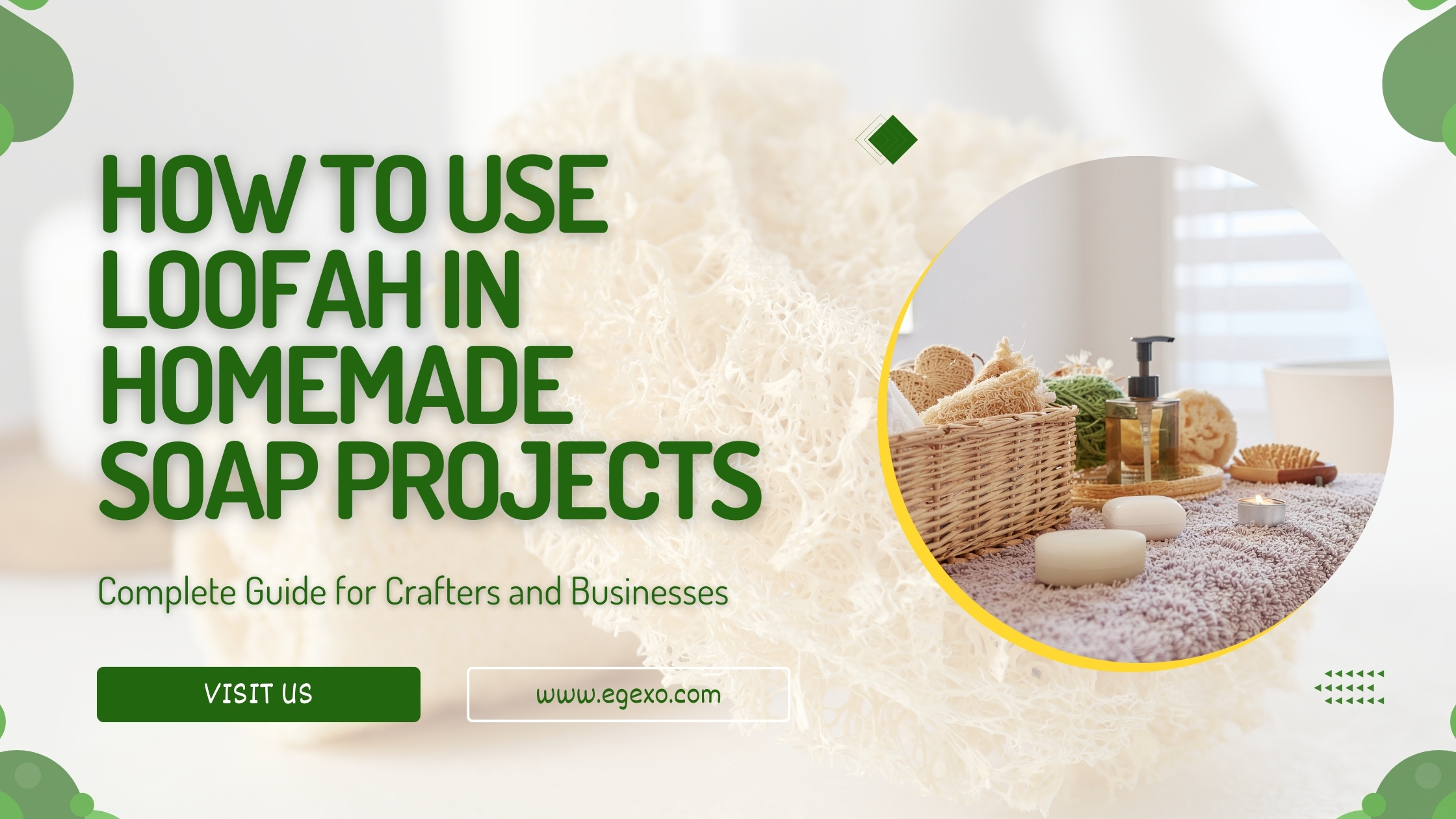
How to Use Loofah in Homemade Soap Projects: Complete Guide for Crafters and Businesses
Over 73 percent of handmade soap businesses report that loofah embedded soaps generate higher profit margins than standard bars, according to recent craft industry surveys. This explains why understanding how to use loofah in homemade soap projects has become essential knowledge for both weekend crafters and professional soapmakers building product lines in 2026.
Natural loofah, derived from the Luffa aegyptiaca plant, transforms ordinary soap bars into dual purpose skincare tools that cleanse and exfoliate simultaneously. The marriage of exfoliating fiber and cleansing soap creates products that consumers actively seek out at farmers markets, boutique shops, and online marketplaces worldwide.
Whether you are a DIY enthusiast creating gifts for friends and family or a business owner developing a wholesale soap line, mastering loofah soap techniques opens doors to creative possibilities and commercial opportunities. Egyptian loofah stands as the gold standard in this craft due to its superior fiber density and consistent quality, characteristics that directly impact the final product appearance and performance.
This comprehensive guide covers everything from selecting the right loofah grade for your project to scaling production for wholesale distribution. You will learn preparation methods that professionals use, discover troubleshooting solutions for common problems, and gain insights into sourcing premium materials that elevate your finished products above competitors.
For those ready to source premium Egyptian loofah for their soap projects, Egexo offers bulk purchasing options with quality guarantees backed by over 25 years of cultivation expertise.
Understanding Loofah Types for Soap Making Success
Selecting appropriate loofah material represents the foundation of any successful soap project. Not all loofah performs equally when embedded in soap bases, and understanding these differences prevents costly mistakes and disappointing results.
Natural Loofah Grades and Their Applications
Egyptian loofah producers classify their products using standardized grading systems that reflect fiber quality, color consistency, and structural integrity. Grade A loofah features uniform cream to light tan coloring with dense, evenly distributed fibers that maintain shape during the soap pouring process. This premium grade commands higher prices but delivers consistent results that justify the investment for both personal projects and commercial production.
Grade B loofah may contain minor color variations or slightly less uniform fiber patterns. These pieces work well for practice batches or products marketed at lower price points. Many crafters find Grade B sufficient for personal use while reserving Grade A for sellable inventory.
The Egexo quality standards page provides detailed specifications for each grade, helping buyers make informed decisions based on their specific project requirements and budget constraints.
Whole Loofah Versus Pre Cut Slices
Whole loofah gourds offer maximum flexibility for custom cutting but require additional preparation time. Crafters working on unique mold shapes or unusual soap dimensions benefit from whole loofahs that they can cut to precise specifications.
Pre sliced loofah discs streamline production significantly. Standard cuts of 1 inch, 1.5 inch, and 2 inch thicknesses fit common soap mold dimensions without additional cutting. Businesses processing large batch quantities often prefer pre cut options to reduce labor costs and maintain consistency across units.
| Loofah Format | Best For | Preparation Time | Cost Efficiency | Customization Level |
|---|---|---|---|---|
| Whole Gourd | Custom shapes and sizes | High | Moderate | Maximum |
| Pre Cut Discs | Standard soap molds | Low | High for volume | Limited |
| Loofah Strips | Layered soap designs | Moderate | Moderate | Good |
| Loofah Pieces | Embedded chunk soaps | Low | High | Minimal |
Commercial soapmakers processing 500 or more units monthly typically save 15 to 20 hours of labor monthly by purchasing pre cut loofah products rather than processing whole gourds themselves.
Preparing Loofah for Soap Embedding
Proper preparation ensures your loofah integrates seamlessly with soap base and delivers the exfoliating experience customers expect. Skipping or rushing these steps creates problems that become apparent only after the soap cures.
Cleaning and Sanitizing Raw Loofah
Even premium grade loofah requires thorough cleaning before use in cosmetic products. Begin by soaking loofah pieces in warm water for 30 to 45 minutes to soften fibers and release any remaining plant material or dust particles.
After the initial soak, prepare a sanitizing solution using one tablespoon of hydrogen peroxide per quart of warm water. Submerge loofah pieces for 15 to 20 minutes, agitating occasionally to ensure solution reaches all fiber surfaces. This step eliminates bacteria and mold spores that could compromise product safety or cause discoloration over time.
Rinse thoroughly with clean water at least three times to remove all traces of sanitizing solution. Residual hydrogen peroxide can interfere with certain soap colorants and fragrances.
Professional soap makers operating under cosmetic regulations document their sanitization procedures to demonstrate compliance with safety standards. This documentation proves especially important for businesses pursuing retail partnerships or wholesale distribution agreements.
Drying Methods That Preserve Fiber Quality
Proper drying prevents mold growth and ensures loofah maintains optimal texture for soap embedding. Two primary methods work effectively depending on your production scale and timeline.
Air drying remains the gentlest option and works well for small batch producers. Arrange cleaned loofah pieces on clean towels or drying racks in a well ventilated area away from direct sunlight. Direct sun exposure can cause yellowing and fiber brittleness. Allow 24 to 48 hours for complete drying depending on humidity levels.
Oven drying accelerates the process for time sensitive production schedules. Set oven temperature to 170 degrees Fahrenheit or the lowest available setting. Place loofah pieces on parchment lined baking sheets and dry for 2 to 3 hours, checking frequently and rotating pieces for even drying. Temperatures exceeding 200 degrees Fahrenheit damage fiber structure and create brittle, scratchy texture.
Drying Readiness Checklist
| Indicator | Ready | Not Ready |
|---|---|---|
| Fiber flexibility | Slightly stiff but pliable | Soft and damp or completely rigid |
| Color | Uniform light tan | Dark spots or discoloration |
| Weight | Noticeably lighter than wet | Still heavy |
| Smell | Neutral or slightly earthy | Musty or sour |
| Squeeze test | Springs back slowly | Stays compressed or crumbles |
Businesses maintaining consistent production schedules benefit from establishing rotating inventory systems where cleaned and dried loofah remains ready for immediate use while new batches undergo preparation.
Melt and Pour Loofah Soap Techniques
Melt and pour soap bases provide the most accessible entry point for crafters new to loofah soap making. This method requires no handling of raw lye and produces professional results with minimal equipment investment.
Selecting Compatible Soap Bases
Not all melt and pour bases bond equally well with loofah fibers. Clear glycerin bases showcase the natural loofah texture beautifully and create visually striking products that photograph well for online sales. However, these bases tend toward softer finished products that wear more quickly.
Goat milk bases add creamy richness and skin nourishing properties while providing sufficient opacity to hide minor imperfections in loofah placement. These bases appeal to customers seeking moisturizing benefits alongside exfoliation.
Shea butter enriched bases create harder, longer lasting bars that justify premium pricing. The added butters also help prevent the scratchy sensation some users experience with basic glycerin bases.
| Base Type | Hardness | Transparency | Price Point | Best Applications |
|---|---|---|---|---|
| Clear Glycerin | Soft | High | Budget | Display products, gifts |
| Goat Milk | Medium | Opaque | Mid range | Spa products, retail |
| Shea Butter | Hard | Semi opaque | Premium | Boutique, wholesale |
| Olive Oil | Medium Hard | Opaque | Premium | Natural product lines |
| Hemp Seed | Medium | Semi opaque | Premium | Specialty markets |
Wholesale buyers developing product lines should request samples of different bases combined with Egyptian loofah to evaluate customer preferences before committing to large batch production.
Step by Step Embedding Process
Successful loofah embedding requires attention to temperature control and timing. Follow this process to achieve consistent professional results.
First, prepare your mold by lightly coating interior surfaces with mold release spray. Place dry loofah slices into molds, ensuring pieces fit snugly without excessive compression that would prevent soap penetration.
Cut soap base into uniform cubes approximately one inch in size for even melting. Larger pieces create hot spots that cause scorching while smaller pieces may burn before larger chunks melt completely.
Melt base in microwave using 30 second intervals, stirring between each session. Alternatively, use a double boiler setup for greater temperature control. Target temperature ranges between 120 and 140 degrees Fahrenheit for most bases.
Once melted, allow base to cool slightly until a thin skin begins forming on the surface. This indicates temperature has dropped to the optimal 110 to 115 degree range for pouring. Pouring too hot causes loofah fibers to shift and float while pouring too cool creates visible layers and poor adhesion.
Pour slowly into mold, starting at one edge and allowing soap to flow naturally around and through loofah fibers. Pouring directly onto the center creates air pockets that weaken the final product.
Allow soap to cool completely at room temperature before unmolding. Rushing this step by refrigerating causes thermal shock that can crack finished bars or create separation between soap and loofah layers.
Cold Process Loofah Soap Methods
Cold process soapmaking offers greater formulation control and produces bars with superior longevity compared to melt and pour alternatives. This method requires handling sodium hydroxide and following strict safety protocols.
Formulating Recipes for Loofah Integration
Cold process recipes intended for loofah embedding benefit from modifications that promote fiber adhesion and prevent excessive hardening that creates scratchy final products.
Increase the proportion of conditioning oils like olive, sweet almond, or avocado to 40 to 50 percent of total oils. These softer oils create a gentler lather that complements rather than overwhelms the exfoliating action of embedded loofah.
Reduce coconut oil percentage to 15 to 20 percent maximum. While coconut oil contributes to hardness and bubbly lather, excessive amounts create bars that feel overly stripping when combined with mechanical exfoliation.
Superfat percentages of 6 to 8 percent leave additional moisturizing oils in the finished product, preventing the dryness sometimes associated with exfoliating products.
Timing the Loofah Addition
Unlike melt and pour methods where loofah enters the mold first, cold process soapmaking requires precise timing for loofah incorporation.
Prepare loofah slices and position them within reach before beginning the soapmaking process. Once saponification begins, timing becomes critical.
Bring soap batter to light trace, the stage where drizzled soap leaves faint trails on the surface before sinking back in. Heavy trace batter will not flow properly around loofah fibers, creating air pockets and weak spots.
Pour approximately one third of the batter into prepared molds to create a base layer. Position loofah slices on this layer, pressing gently to seat them in the batter.
Pour remaining batter over and around loofah pieces, using a spatula to guide batter into all spaces between fibers. Tap molds firmly against work surface to release trapped air bubbles.
Proceed with normal insulation and curing procedures. Cold process loofah soaps require the standard 4 to 6 week cure time before use or sale.
Commercial Production Considerations
Scaling loofah soap production from hobby to business introduces considerations beyond basic crafting techniques. Understanding these factors positions producers for sustainable growth and profitability.
Calculating Material Requirements
Accurate material forecasting prevents production delays and helps maintain consistent profit margins. The following calculations provide starting points for production planning.
A standard 4 ounce loofah soap bar requires approximately 0.5 ounces of dried loofah material. Production runs of 100 bars therefore require roughly 50 ounces or just over 3 pounds of prepared loofah.
Account for 10 to 15 percent material waste during cutting and preparation. Orders should reflect this buffer to prevent mid production shortages.
| Monthly Production Volume | Loofah Required | Recommended Order Size | Reorder Frequency |
|---|---|---|---|
| 100 bars | 3.5 pounds | 5 pounds | Monthly |
| 500 bars | 17.5 pounds | 25 pounds | Monthly |
| 1000 bars | 35 pounds | 50 pounds | Monthly |
| 5000 bars | 175 pounds | 200 pounds | Monthly |
Businesses processing 1000 or more units monthly qualify for wholesale pricing that significantly impacts per unit costs. Request a custom quotation to receive pricing based on your specific volume requirements.
Quality Control Protocols
Consistent quality builds customer trust and reduces costly returns or complaints. Implement these quality checkpoints throughout your production process.
Incoming Material Inspection
Examine loofah shipments immediately upon arrival. Check for consistent coloring, fiber density, and absence of mold or unusual odors. Document any concerns and communicate with suppliers promptly to resolve issues.
Pre Production Verification
Before each production run, verify that prepared loofah meets moisture content requirements. Loofah retaining excessive moisture creates mold problems in finished products that may not become apparent for weeks after production.
Finished Product Evaluation
Inspect each completed bar for secure loofah embedding, absence of air pockets, and consistent appearance. Set aside any bars failing inspection for personal use or deeply discounted sale rather than including them in premium inventory.
Establishing relationships with suppliers who maintain rigorous quality standards reduces incoming material problems and simplifies quality control procedures.
Sourcing Premium Loofah for Soap Projects
Material quality directly determines finished product quality. Understanding sourcing options helps both hobbyists and commercial producers secure appropriate materials for their needs.
Why Egyptian Loofah Excels for Soap Making
Egyptian loofah has earned its reputation as the premium choice for cosmetic applications through generations of cultivation refinement. The Nile Delta region provides ideal growing conditions including rich alluvial soil, consistent warm temperatures, and controlled irrigation that produces loofahs with characteristics specifically suited for soap embedding.
Fiber density in Egyptian loofah typically measures 15 to 20 percent higher than alternatives grown in other regions. This density translates to better soap adhesion and more effective exfoliation that customers notice and appreciate.
Color consistency remains more uniform in Egyptian varieties due to standardized processing methods developed over decades. Consistent appearance matters especially for commercial producers maintaining brand standards across production batches.
Egexo has cultivated and processed loofah for over 25 years, developing expertise that ensures consistent quality across orders of any size. The farm to export process maintains traceability and quality control from seed to shipment.
Evaluating Potential Suppliers
Whether purchasing for personal projects or commercial production, evaluating suppliers thoroughly prevents disappointments and ensures reliable material supply.
Supplier Evaluation Checklist
| Criteria | Questions to Ask | Red Flags |
|---|---|---|
| Experience | Years in business? | New companies without track record |
| Quality Standards | Grading system used? | No clear grading or inconsistent descriptions |
| Sample Availability | Can you order samples? | Refuses sample requests |
| Minimum Orders | MOQ requirements? | Unreasonably high minimums for new customers |
| Communication | Response time? | Slow or vague responses |
| Documentation | Certificates available? | Cannot provide quality documentation |
| References | Customer testimonials? | No verifiable references |
Request samples before committing to large orders. Reputable suppliers welcome sample requests as opportunities to demonstrate quality. Order loofah samples to evaluate material quality against your specific requirements before making bulk purchasing decisions.
Bulk Purchasing Strategies
Strategic purchasing reduces per unit costs while ensuring consistent supply. Consider these approaches based on your production scale.
Small scale producers benefit from purchasing 3 to 6 month supplies during promotional periods. Storage requirements remain manageable while capturing volume discounts.
Medium scale operations should establish regular ordering schedules that balance inventory costs against stockout risks. Monthly orders typically provide optimal balance for businesses producing 500 to 2000 units monthly.
Large scale commercial producers may benefit from annual contracts that lock in pricing and guarantee supply priority during high demand periods. Discuss custom arrangements with supplier representatives to structure agreements meeting your specific needs.
Creative Loofah Soap Variations
Once you master basic embedding techniques, exploring creative variations differentiates your products and commands premium pricing.
Layered and Gradient Designs
Create visual interest by pouring multiple colored layers around embedded loofah. Begin with lighter colors on bottom layers and progress to deeper shades, creating gradient effects that highlight the natural loofah texture at the center.
Allow each layer to develop a light skin before adding subsequent layers. This prevents colors from bleeding together while maintaining good adhesion between layers.
Shaped and Themed Products
Custom molds allow creation of themed loofah soaps for seasonal markets or specific customer demographics. Beach themed shapes work well for summer markets and resort gift shops. Botanical shapes appeal to natural product consumers.
The natural texture of loofah complements rustic and natural aesthetic themes particularly well. Consider packaging designs that showcase rather than hide the embedded loofah visible through clear wrapping.
Specialty Ingredient Combinations
Pair loofah with complementary exfoliating ingredients for enhanced product performance. Finely ground oatmeal adds gentle additional exfoliation while contributing soothing properties. Coffee grounds provide more aggressive exfoliation for customers preferring intensive treatments.
Essential oil selections should complement the natural earthiness of loofah. Eucalyptus, peppermint, and tea tree create invigorating combinations while lavender and chamomile offer relaxing alternatives.
Businesses developing signature product lines benefit from private label manufacturing options that allow custom formulations while maintaining consistent quality.
Troubleshooting Common Problems
Even experienced soapmakers encounter occasional challenges with loofah embedding. These solutions address the most frequently reported issues.
Loofah Floating or Shifting
Problem: Loofah pieces rise to the surface or move during pour.
Causes: Soap temperature too high, loofah not adequately saturated, batter too thin.
Solutions: Allow melt and pour base to cool to 110 to 115 degrees before pouring. Pre saturate loofah by dipping briefly in melted soap base before positioning in mold. For cold process, work at medium trace rather than light trace.
Poor Adhesion Between Soap and Loofah
Problem: Loofah separates from surrounding soap during use or handling.
Causes: Loofah fibers coated with oils or residues, soap cooled too quickly, inadequate batter penetration into fibers.
Solutions: Ensure thorough cleaning removes all oils and residues. Allow gradual cooling at room temperature rather than refrigerating. Pour slowly and tap molds to work batter into all fiber spaces.
Discoloration or Browning
Problem: Loofah develops brown or dark spots after embedding.
Causes: Loofah not completely dry before use, contamination during preparation, excessive pouring temperature.
Solutions: Verify loofah is completely dry using squeeze test before use. Follow sanitization procedures precisely. Check thermometer accuracy and recalibrate if necessary.
Scratchy or Harsh Texture
Problem: Finished soap feels overly abrasive.
Causes: Loofah fiber too coarse for application, soap formula too stripping, loofah damaged during drying.
Solutions: Select finer grade loofah for facial products. Increase superfat percentage in cold process formulas. Reduce oven drying temperature and check more frequently.
Expert Insight from Egexo
After 25 years of supplying loofah to soapmakers worldwide, we have observed that the most successful producers share a common approach. They invest in premium grade Egyptian loofah and maintain consistent preparation protocols rather than cutting corners on either materials or process.
The quality difference between standard and premium loofah may seem minor when examining raw materials, but this difference compounds through the production process and becomes dramatically apparent in finished products. Customers may not consciously identify why one loofah soap feels superior to another, but they recognize quality through their purchasing decisions and brand loyalty.
We recommend new soapmakers begin with smaller quantities of Grade A loofah to establish their techniques before scaling production. Once you have refined your process, our wholesale options provide the consistent quality supply needed for commercial success.
For businesses developing product lines, our team can provide guidance on selecting loofah formats and grades optimized for your specific applications. Contact our export team to discuss your project requirements.
Frequently Asked Questions
What size loofah slices work best for standard soap molds?
Loofah slices measuring 1 to 1.5 inches thick work optimally for most rectangular soap molds producing 4 to 5 ounce bars. This thickness allows adequate soap penetration through fibers while providing sufficient exfoliating surface area. Thinner slices may not offer enough texture while thicker cuts can dominate the soap bar and reduce overall usability.
Can I reuse loofah trimmings from cutting custom shapes?
Yes, loofah trimmings make excellent additions to soap recipes when chopped into small pieces. These fragments create textured soaps with distributed exfoliating particles rather than centralized loofah layers. Trimmings work especially well in rustic or natural product lines where visible texture enhances rather than detracts from aesthetic appeal.
How long do loofah embedded soaps last compared to regular bars?
Loofah embedded soaps typically last 20 to 30 percent longer than standard bars of equal weight because the loofah structure slows dissolution. However, loofahs require proper drainage between uses to prevent the embedded fiber from remaining wet and harboring bacteria. Recommend customers use soap dishes with drainage holes.
What minimum order quantities should soap businesses expect from wholesale loofah suppliers?
Minimum order quantities vary significantly between suppliers. Egexo offers flexible minimums starting at 10 kilograms for new customers, allowing businesses to test quality before larger commitments. Established wholesale relationships may require higher minimums in exchange for volume pricing, typically 25 to 100 kilograms depending on product format.
Is Egyptian loofah worth the higher cost compared to alternatives from other regions?
Egyptian loofah consistently demonstrates superior fiber density, color uniformity, and structural integrity compared to alternatives. These characteristics translate directly to better finished products, fewer production problems, and higher customer satisfaction. For commercial producers especially, the quality premium paid for Egyptian loofah returns through reduced waste and stronger brand reputation.
How should I store prepared loofah between production batches?
Store cleaned and dried loofah in airtight containers away from humidity and direct light. Properly dried loofah maintains quality for 12 months or longer under appropriate storage conditions. Include silica gel packets in storage containers as additional moisture protection. Label containers with preparation dates and rotate stock to use oldest materials first.
Can loofah soaps be safely used on sensitive skin?
Natural loofah offers gentler exfoliation than synthetic alternatives and suits most skin types when embedded in moisturizing soap bases. However, individuals with extremely sensitive skin or certain skin conditions should test products on small areas before full use. Soapmakers targeting sensitive skin markets should select finer loofah grades and increase superfat percentages in their formulations.
Conclusion
Mastering how to use loofah in homemade soap projects opens creative and commercial opportunities for crafters at every level. The techniques covered in this guide provide the foundation for producing professional quality loofah soaps whether you are creating gifts for loved ones or building a profitable product line.
Success in loofah soapmaking depends on three critical factors: quality materials, proper preparation, and attention to technique during embedding. Cutting corners on any element compromises final results and customer satisfaction.
Egyptian loofah remains the premier choice for soapmakers serious about quality, offering fiber characteristics that simply cannot be replicated by alternatives grown in other regions. The investment in premium materials pays dividends through superior finished products and fewer production challenges.
Key Takeaways
- Select loofah grades appropriate for your specific application and budget
- Follow thorough cleaning and sanitization protocols before embedding
- Control temperature precisely during melt and pour processes
- Allow adequate cure time for cold process loofah soaps
- Establish reliable supply relationships with quality focused suppliers
Ready to start or scale your loofah soap production?
For Wholesale Buyers: Request a custom quotation or download our complete product catalog to explore our full range of loofah formats and grades.
For Individual Crafters: Shop our loofah collection or order samples to experience Egyptian loofah quality firsthand before your next project.