

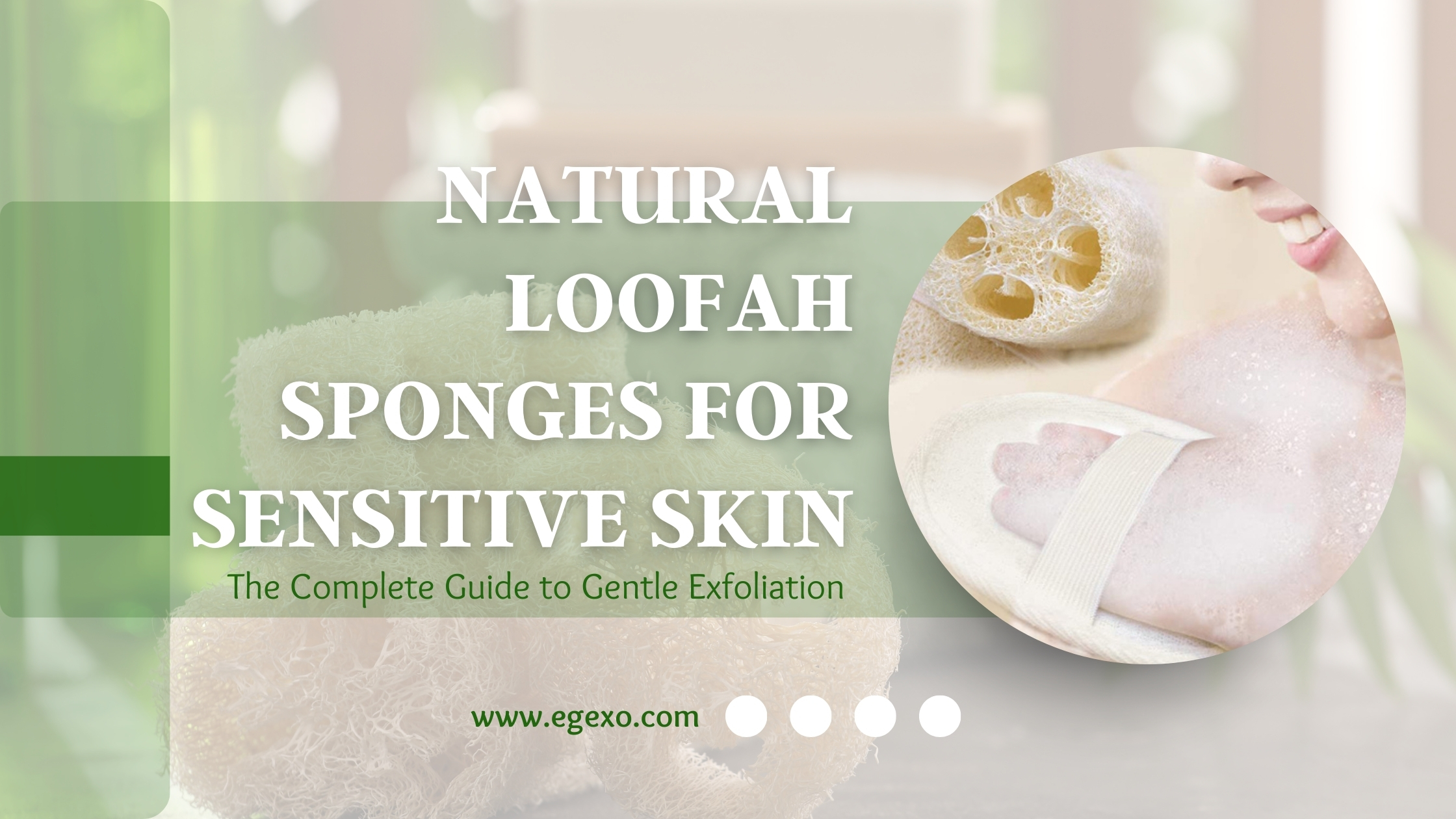
Natural Loofah Sponges for Sensitive Skin: The Complete Guide to Gentle Exfoliation
Understanding Why Sensitive Skin Demands Better Solutions
Nearly 60 percent of adults worldwide report having reactive or sensitive skin according to dermatological research published in 2024. This staggering statistic explains why natural loofah sponges for sensitive skin have become one of the fastest growing segments in the personal care industry. Whether you operate a spa seeking bulk supplies or simply want a gentler daily exfoliation routine, understanding what makes Egyptian loofah different can transform your approach to skincare entirely.
The challenge with sensitive skin lies in finding products that effectively remove dead cells without triggering redness, irritation, or discomfort. Synthetic alternatives often contain microplastics and chemical treatments that aggravate delicate skin. Natural loofah sponges provide a solution rooted in centuries of traditional use combined with modern quality standards.
At Egexo, our 25 years of loofah cultivation experience in the fertile Nile Delta region has taught us precisely which fiber characteristics matter most for sensitive skin applications. This guide shares that expertise with spa owners evaluating wholesale options, retailers building their natural product lines, and individuals seeking relief from harsh synthetic alternatives.
You will discover the science behind gentle exfoliation, learn how to identify premium quality loofahs suitable for reactive skin, and understand why Egyptian grown loofahs consistently outperform alternatives from other regions. Business buyers will find detailed specifications and bulk ordering guidance while consumers gain practical tips for incorporating natural loofahs into sensitive skincare routines.
Ready to explore wholesale options? Visit our shop to browse our sensitive skin collection or request a quotation for bulk orders.
The Science Behind Natural Loofah and Sensitive Skin Compatibility
How Plant Fibers Interact With Delicate Skin
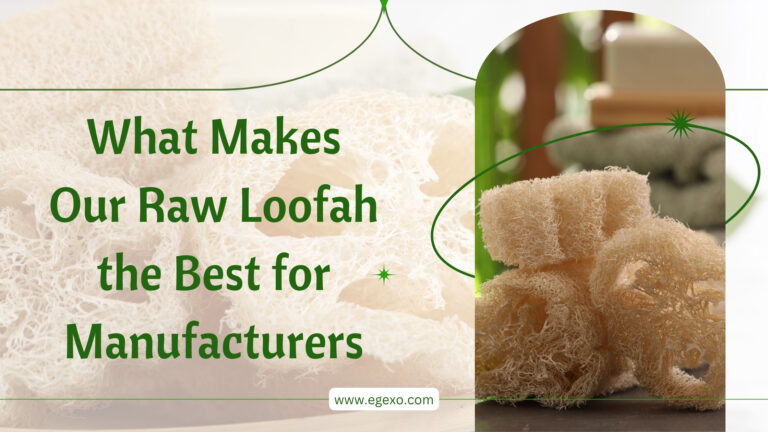
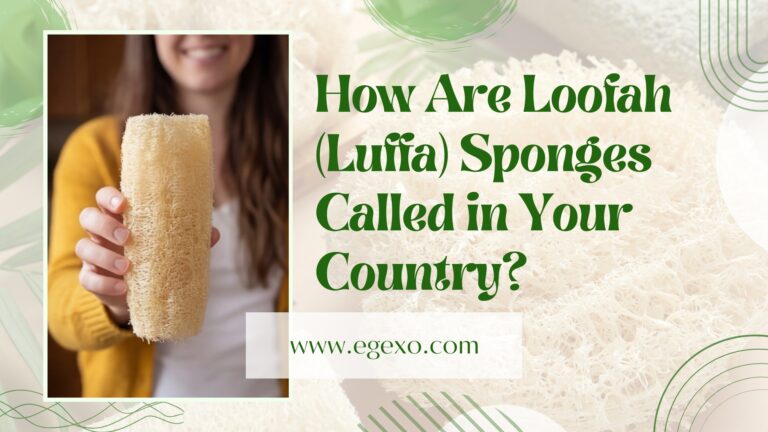
Natural loofah sponges come from the Luffa aegyptiaca plant, a member of the cucumber family that produces fibrous gourds perfect for exfoliation. Unlike synthetic materials manufactured from petroleum based plastics, loofah fibers possess a cellular structure remarkably compatible with human skin tissue.
The magic lies in the fiber architecture. Each loofah strand contains microscopic channels that create a naturally textured surface. When properly processed, these fibers achieve a balance between effective exfoliation and gentle touch that synthetic materials cannot replicate. Research from textile science journals indicates natural plant fibers generate 40 percent less friction against skin compared to nylon mesh equivalents while still removing dead skin cells efficiently.
For sensitive skin specifically, this reduced friction translates to exfoliation without the micro tears that trigger inflammatory responses. The natural cellulose composition also means loofah fibers soften progressively when wet, allowing users to control intensity simply by adjusting water saturation levels.
Why Egyptian Loofahs Excel for Sensitive Applications
Geography matters enormously in loofah quality. Egyptian grown loofahs benefit from the Nile Delta climate featuring warm days, cool nights, and mineral rich alluvial soil. These conditions produce fibers with optimal density and flexibility for sensitive skin products.
Our farm to export process ensures every loofah maintains the fiber integrity that makes Egyptian production superior. Loofahs harvested at peak maturity from Egyptian farms contain higher concentrations of lignin, the natural compound that provides structural strength while remaining pliable enough for gentle use.
Comparative testing across multiple growing regions consistently places Egyptian loofahs at the top for sensitive skin suitability. The fiber diameter averages 15 to 20 percent finer than South American varieties, creating a smoother surface contact during use.
Identifying Premium Quality Loofahs for Reactive Skin
Visual and Tactile Quality Markers
Not all natural loofahs meet the standards required for sensitive skin use. Understanding quality indicators helps both wholesale buyers and individual consumers make informed selections.
Premium loofahs for sensitive skin display uniform coloring ranging from pale cream to light golden brown. Dark spots or significant color variation often indicate improper drying or early stage deterioration that compromises fiber softness. The texture should feel consistent throughout, with no hard sections or excessively loose patches.
When examining loofah density, look for medium fiber concentration. Overly dense loofahs can feel abrasive even on normal skin types while sparse fiber distribution reduces cleaning effectiveness. The ideal loofah springs back quickly when compressed, demonstrating the elasticity that enables gentle yet thorough exfoliation.
Our quality standards documentation provides detailed specifications for each grade we produce. Buyers seeking sensitive skin inventory should focus on Grade A and Grade A Plus selections which undergo additional quality verification.
Quality Grading Comparison for Sensitive Skin Products
| Quality Grade | Fiber Fineness | Color Uniformity | Best Application | Wholesale MOQ |
|---|---|---|---|---|
| Grade A Plus | Ultra fine 0.3mm avg | 95 percent plus uniform | Medical spas and dermatology | 500 units |
| Grade A | Fine 0.4mm avg | 90 percent plus uniform | Luxury spas and sensitive skin retail | 300 units |
| Grade B | Standard 0.5mm avg | 85 percent plus uniform | General bath and body | 200 units |
| Grade C | Medium 0.6mm avg | 75 percent plus uniform | Kitchen and household use | 100 units |
This grading system helps wholesale buyers quickly identify appropriate inventory levels for their sensitive skin product lines. Individual consumers should seek products labeled as Grade A or higher for optimal gentle performance.
Product Selection Guide for Different Sensitive Skin Needs
Matching Loofah Types to Skin Conditions
Sensitive skin manifests differently across individuals. Some experience redness with any friction while others tolerate light exfoliation but react to certain materials. Selecting the right loofah type addresses these varied requirements.
For extremely reactive skin prone to rosacea or eczema flares, our softest body loofah options provide maximum gentleness. These products undergo extended water treatment during processing that further softens fibers without compromising durability.
Combination skin types with sensitive areas and normal zones benefit from medium texture loofahs that adjust intensity based on pressure. This versatility makes them popular among spa facilities serving diverse clientele and retailers seeking broadly appealing inventory.
Individuals with generally sensitive but stable skin conditions can often use standard fine grade loofahs successfully. The key lies in proper technique rather than exclusively relying on ultra soft products.
Sensitive Skin Loofah Selection Matrix
| Skin Condition | Recommended Grade | Optimal Size | Usage Frequency | Hydration Level |
|---|---|---|---|---|
| Eczema prone | Grade A Plus only | Small 10cm | Once weekly | Fully saturated |
| Rosacea affected | Grade A Plus | Small to medium | Once weekly | Fully saturated |
| General sensitivity | Grade A | Medium 15cm | Twice weekly | Well moistened |
| Combination reactive | Grade A or B | Medium 15cm | Three times weekly | Moderately wet |
| Mildly sensitive | Grade A or B | Any size | Daily acceptable | User preference |
Business buyers can use this matrix when advising retail customers or developing spa service protocols. The specifications help match inventory assortment to target market needs effectively.
Proper Care and Maintenance for Sensitive Skin Users
Hygiene Protocols That Protect Delicate Skin
Natural loofah care directly impacts performance for sensitive skin applications. Improper maintenance allows bacterial growth that can trigger skin reactions even in people without prior sensitivity issues.
After each use, rinse your loofah thoroughly under clean running water. Squeeze gently to remove excess moisture without wringing which damages fiber structure. Hang in a well ventilated area away from the shower stream where humidity remains elevated. Many sensitive skin reactions blamed on loofah allergies actually result from bacterial contamination due to inadequate drying.
Weekly sanitization extends loofah lifespan while ensuring hygiene standards appropriate for reactive skin. Soak in a diluted vinegar solution of one part white vinegar to four parts water for five minutes. Rinse completely and allow thorough drying before next use.
For spa and retail applications, our private label manufacturing service can include care instruction cards with your branded products. Clear maintenance guidance reduces customer complaints and builds loyalty among sensitive skin users who experience consistent results.
Loofah Lifespan and Replacement Guidelines
| Usage Pattern | Expected Lifespan | Replacement Indicators | Environmental Note |
|---|---|---|---|
| Daily gentle use | 4 to 6 weeks | Fiber loosening or odor | 100 percent compostable |
| Three times weekly | 6 to 8 weeks | Color darkening | Biodegrades in 30 days |
| Weekly exfoliation | 10 to 12 weeks | Texture hardening | Zero microplastic release |
| Spa single client | 8 to 10 uses | Per hygiene protocol | Fully renewable crop |
These timelines help business buyers calculate inventory needs and reorder cycles. Consumers benefit from understanding that regular replacement maintains the gentle performance sensitive skin requires.
Business Opportunities in the Sensitive Skin Market
Market Growth and Demand Analysis
The sensitive skin care market reached 52 billion USD globally in 2025 with projections indicating 7.2 percent annual growth through 2030. Natural exfoliation products represent an increasingly significant share as consumers reject synthetic alternatives containing microplastics and harsh chemicals.
Retailers and spa operators positioned to serve this market enjoy premium pricing potential and strong customer loyalty. Sensitive skin consumers typically demonstrate higher brand allegiance once they find products that work reliably. This creates recurring revenue opportunities for businesses stocking quality natural loofahs.
Wholesale buyers can explore our custom product design options to develop proprietary sensitive skin lines. Unique shapes, sizes, and packaging differentiate your offerings from competitors while our manufacturing expertise ensures consistent quality at scale.
Profit Margin Considerations for Wholesale Buyers
Natural loofah products command significant price premiums in the sensitive skin category. Retail margins typically range from 60 to 75 percent on quality positioned products compared to 40 to 50 percent for general bath accessories.
Our wholesale pricing structure supports healthy business margins while maintaining product quality that builds customer trust. Download our complete catalog for detailed pricing tiers and volume discount schedules.
The key to maximizing returns lies in quality consistency. Egexo maintains strict standards across all shipments, preventing the customer complaints and returns that erode profitability. Our quality standards documentation provides the verification your customers expect from sensitive skin products.
Wholesale Buyer Evaluation Checklist
Supplier Assessment Criteria
Selecting the right loofah supplier impacts product quality, delivery reliability, and ultimately customer satisfaction. This checklist guides wholesale buyers through comprehensive supplier evaluation.
| Evaluation Factor | Questions to Ask | Egexo Performance |
|---|---|---|
| Cultivation Experience | Years in loofah farming | 25 plus years |
| Quality Certification | Standards and testing protocols | ISO compliant |
| Sensitive Skin Expertise | Specific product lines available | Dedicated grade system |
| MOQ Flexibility | Minimum order requirements | Starting 100 units |
| Sample Availability | Pre order testing options | Free samples offered |
| Private Label Services | Customization capabilities | Full service available |
| Export Documentation | Shipping and customs support | Complete handling |
Visit our why choose Egexo page for detailed information on each capability listed above. You can also request samples to evaluate quality before committing to larger orders.
Order Process Overview
| Stage | Timeline | Documentation | Support Provided |
|---|---|---|---|
| Sample Request | 3 to 5 days shipping | None required | Consultation call |
| Quotation | 24 to 48 hours response | Basic requirements | Pricing guidance |
| Order Confirmation | Same day processing | Purchase order | Account manager |
| Production | 7 to 14 days | Quality reports | Progress updates |
| Shipping | 2 to 4 weeks ocean or 5 days air | Full export docs | Tracking provided |
| Delivery | Varies by destination | Customs clearance | Support as needed |
This transparent process enables buyers to plan inventory cycles accurately. Our team assists with documentation requirements for importing into various markets including the United States, European Union, and Asia Pacific regions.
Consumer Guide to Daily Sensitive Skin Care
Building a Gentle Exfoliation Routine
Incorporating natural loofah sponges into sensitive skin routines requires attention to technique as much as product selection. The following approach minimizes irritation risk while delivering effective results.
Begin with a fully hydrated loofah. Soak in warm water for at least two minutes before first use and thirty seconds before subsequent uses. This softening step is non negotiable for sensitive skin applications.
Apply your preferred cleanser to the loofah rather than directly to skin. This distributes product evenly while allowing the loofah to create gentle lather. Use light circular motions with minimal pressure. Let the loofah texture do the work rather than forcing contact.
Focus on areas with thicker skin like elbows, knees, and heels while using extra light touch on chest, neck, and face adjacent areas. Most sensitive skin users should avoid loofah use directly on facial skin regardless of product gentleness.
For detailed guidance on incorporating loofahs into various skincare routines, offers extensive consumer focused resources.
Weekly Care Schedule for Sensitive Skin
| Day | Activity | Duration | Notes |
|---|---|---|---|
| Monday | Light exfoliation | 2 to 3 minutes | Focus on body only |
| Tuesday | Rest day | None | Moisturize only |
| Wednesday | Rest day | None | Moisturize only |
| Thursday | Gentle exfoliation | 2 to 3 minutes | Avoid any irritated areas |
| Friday | Rest day | None | Moisturize only |
| Saturday | Rest day | None | Optional light use |
| Sunday | Loofah sanitization | 5 minutes | Weekly maintenance |
This schedule provides adequate exfoliation for most sensitive skin types while allowing recovery time between sessions. Adjust frequency based on individual tolerance levels.
Environmental Benefits of Natural Loofah Selection
Sustainability Advantages Over Synthetic Options
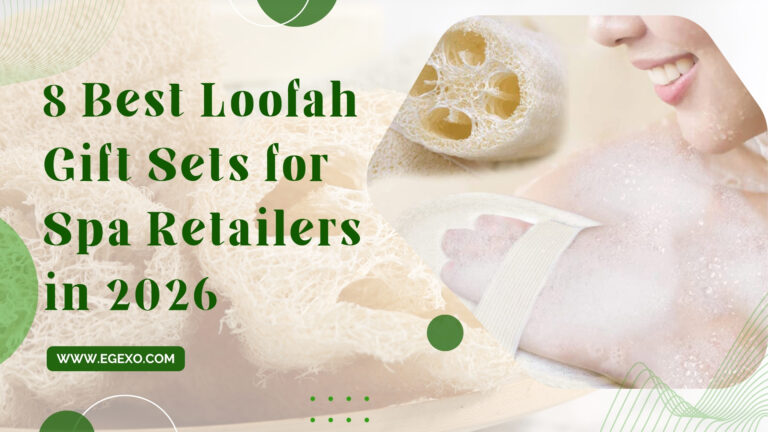
Choosing natural loofah sponges for sensitive skin delivers environmental benefits alongside skincare advantages. Unlike plastic mesh poufs that shed microplastics with every use, natural loofahs contribute zero synthetic pollution to waterways.
Each plastic shower pouf releases an estimated 50,000 to 70,000 microplastic particles during its typical usage lifespan. These particles enter water treatment systems where many pass through into rivers, lakes, and oceans. For sensitive skin users already concerned about what contacts their bodies, the microplastic issue adds another reason to avoid synthetic alternatives.
Natural loofahs biodegrade completely within 30 to 45 days when composted. At end of life, simply add your used loofah to garden compost or municipal organic waste collection. The fibers break down into soil nutrients rather than persisting for centuries like plastic materials.
Our cultivation practices in Egypt emphasize sustainable agriculture methods. Loofah plants require minimal water compared to other crops, thrive without pesticide application, and actually improve soil health through natural nitrogen fixation.
For wholesale buyers, sustainability credentials increasingly influence purchasing decisions. Products sourced from WholesaleLoofah.com include environmental documentation supporting your green marketing claims.
Expert Insight from Egexo
Our agricultural specialists have cultivated loofahs across three generations of family expertise in Egypt’s Nile Delta region. For sensitive skin applications specifically, we have identified fiber maturity timing as the single most critical quality factor.
Loofahs harvested precisely 28 to 32 days post flowering develop optimal fiber characteristics for gentle use. Earlier harvest produces overly soft fibers lacking effective exfoliation capability. Later harvest yields increasingly rigid fibers unsuitable for reactive skin.
This narrow harvest window requires daily field monitoring during peak season. Each loofah receives individual assessment before cutting. This labor intensive approach explains why genuine premium Egyptian loofahs command higher prices than mass harvested alternatives.
When evaluating any loofah supplier, ask specifically about harvest timing protocols. Suppliers unable to describe their maturity assessment processes likely lack the expertise necessary for consistently producing sensitive skin appropriate products.
Frequently Asked Questions
Q1: Are natural loofah sponges safe for extremely sensitive or eczema prone skin?
A: Natural loofah sponges for sensitive skin can be safe for eczema prone individuals when selecting Grade A Plus quality and following proper technique. Always soak the loofah thoroughly before use, apply minimal pressure, limit exfoliation to once weekly, and avoid any actively inflamed areas. Consult your dermatologist before introducing any new exfoliation products to eczema management routines.
Q2: What minimum order quantities does Egexo require for sensitive skin loofah products?
A: Egexo offers flexible minimum order quantities starting at 100 units for Grade C products and 300 to 500 units for the Grade A and Grade A Plus products most suitable for sensitive skin applications. We encourage wholesale buyers to request free samples before placing bulk orders to verify quality meets their standards. Contact our team for customized quotations based on your specific grade and quantity requirements.
Q3: How can I tell if a loofah is high enough quality for sensitive skin use?
A: Quality indicators for sensitive skin suitable loofahs include uniform pale cream to light golden coloring, fine fiber diameter feeling smooth against skin, consistent density throughout without hard spots, and quick springback when compressed. Avoid loofahs with dark discoloration, coarse texture, or musty odor. Egexo Grade A and Grade A Plus products undergo rigorous inspection ensuring these standards.
Q4: How often should sensitive skin users replace their natural loofah?
A: Sensitive skin users practicing gentle exfoliation two to three times weekly should replace natural loofahs every six to eight weeks. More frequent daily users need replacement every four to six weeks. Watch for fiber loosening, color darkening, texture hardening, or any odor development as signals indicating replacement time regardless of calendar duration.
Q5: Do natural loofahs work better than synthetic poufs for sensitive skin?
A: Natural loofahs consistently outperform synthetic poufs for sensitive skin due to their plant fiber structure creating less friction, absence of chemical treatments that cause reactions, and ability to soften with water for adjustable gentleness. Additionally, synthetic poufs release microplastics that may irritate skin and harm the environment. Quality Egyptian natural loofahs provide superior results for reactive skin types.
Q6: Can spas use natural loofahs for clients with sensitive skin conditions?
A: Professional spas can safely use natural loofahs for sensitive skin clients by selecting Grade A Plus products, implementing strict single client usage protocols, and training therapists in gentle technique. Our private label manufacturing service can create spa branded sensitive skin loofahs with custom sizing and packaging. Many dermatology spas and medical aesthetics practices prefer Egyptian loofahs specifically for sensitive client services.
Q7: What makes Egyptian loofahs better for sensitive skin than loofahs from other countries?
A: Egyptian loofahs benefit from the Nile Delta’s unique combination of climate and soil conditions producing finer fiber diameter averaging 15 to 20 percent smaller than South American varieties. This creates smoother skin contact essential for sensitive applications. Additionally, Egypt’s 25 plus years of specialized cultivation expertise and stringent harvest timing protocols ensure consistent quality that mass production regions cannot match.
Q8: Are there any skin types that should completely avoid loofah use?
A: Individuals with active skin infections, open wounds, severe sunburn, or acute inflammatory conditions should avoid loofah use until skin heals. Those with extremely rare loofah plant allergies confirmed by medical testing should use alternatives. However, most people attributing reactions to loofah allergies actually experience responses to bacterial contamination from improper care or reactions to synthetic materials incorrectly labeled as natural loofah.
Conclusion
Natural loofah sponges for sensitive skin represent a significant opportunity for both business growth and personal care improvement. The combination of gentle exfoliation capability, environmental sustainability, and proven effectiveness makes Egyptian loofahs the preferred choice for discerning buyers and consumers alike.
Throughout this guide, we have examined the science behind loofah and skin compatibility, established quality standards for sensitive applications, and provided practical guidance for both wholesale purchasing and individual use. The evidence consistently supports Egyptian grown loofahs as the superior option for reactive skin types.
Key Takeaways:
- Egyptian loofahs produce 15 to 20 percent finer fibers than alternatives, essential for sensitive skin gentleness
- Grade A and Grade A Plus selections meet the quality standards required for reactive skin applications
- Proper hydration and technique matter as much as product selection for sensitive skin users
- The sensitive skin market offers 60 to 75 percent retail margins for quality positioned products
- Natural loofahs eliminate microplastic concerns while providing fully biodegradable end of life
Ready to experience Egyptian loofah quality?
For Wholesale Buyers: Request a bulk quote for sensitive skin inventory or download our complete catalog for full product specifications.
For Individual Orders: Shop our body loofah collection or order samples to test quality before purchasing.