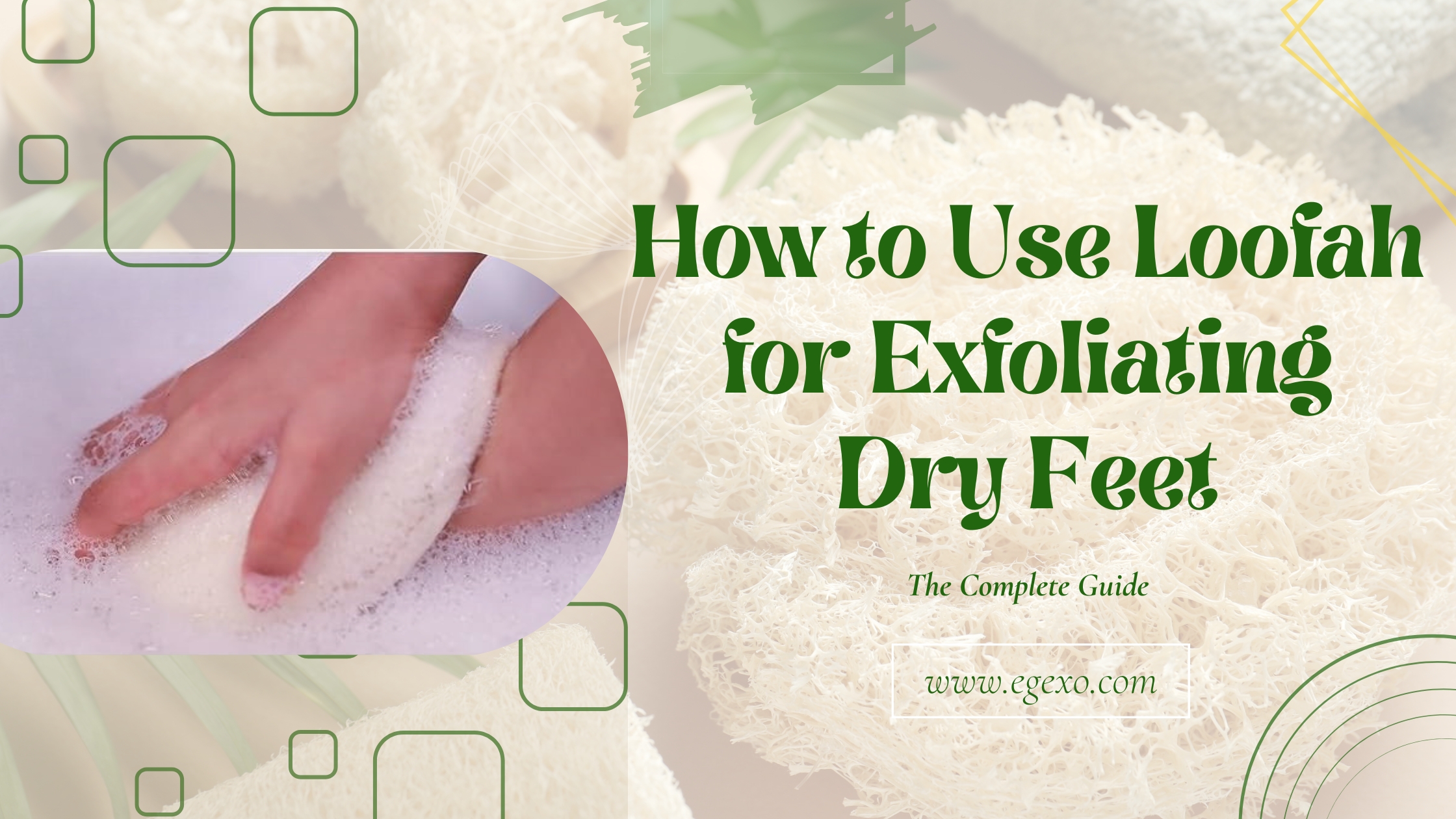
How to Use Loofah for Exfoliating Dry Feet: The Complete Guide
Cracked heels and rough, dry feet affect an estimated 20% of adults worldwide, yet most people reach for expensive creams and chemical peels before considering the most effective and natural solution sitting right on their bathroom shelf: the loofah. Knowing how to use loofah for exfoliating dry feet correctly can transform hardened skin into soft, healthy tissue in as few as two to three sessions per week, without synthetic ingredients and without spending a small fortune.
For spa owners, wellness retailers, and distributors, this growing consumer awareness translates directly into demand. The global loofah and natural bath products market is on an upward trajectory, with natural exfoliation tools seeing double-digit growth in the premium wellness segment since 2022. Whether you are an individual seeking relief from stubborn calluses or a business owner sourcing the right product for your clients, this guide covers everything you need to know.
Egexo has exported Egyptian loofah for 10 years, supplying wholesale buyers across Europe, North America, Asia, and the Middle East. That experience informs every recommendation in this article. You will learn the science behind loofah exfoliation, the correct technique for feet specifically, how to choose the right loofah grade, and what quality markers matter most when purchasing in bulk.
Why Dry Feet Happen and How Loofah Exfoliation Helps
Before diving into technique, it helps to understand what you are actually treating. The skin on the soles and heels of the feet is among the thickest on the entire body, sometimes reaching 1.4mm compared to 0.5mm on facial skin. Without regular exfoliation, dead skin cells accumulate faster than the body sheds them naturally, forming the hard, dry patches that become painful cracks over time.
The Science Behind Mechanical Exfoliation
Loofah exfoliation works through a process called mechanical or physical exfoliation. The fibrous structure of a natural loofah, derived from the Luffa cylindrica or Luffa acutangula plant, creates thousands of micro-abrasive contact points. When moved across skin, these fibers physically dislodge the uppermost layer of dead keratinocytes without the chemical disruption that acids or enzymes cause.
Studies on skin barrier function confirm that regular mechanical exfoliation improves skin hydration by up to 30% by removing the dry cell layer that blocks moisturizer absorption. For feet specifically, this means that lotion or oil applied after exfoliation penetrates significantly deeper, extending its effectiveness.
Why Egyptian Loofah Is the Gold Standard
Not all loofahs perform equally. Egyptian loofah, grown in the fertile Nile Delta region where Egexo operates its farms, is recognized globally for a fiber density and cell structure that creates consistent, even exfoliation without causing micro-tears. Varieties grown in other regions often produce either overly stiff fibers that abrade too aggressively or loose, soft fibers that provide no real mechanical action.
Egexo’s loofah farm to export process involves careful harvesting at peak maturity, ensuring fiber tensile strength falls within the optimal range for exfoliation use. For spa buyers and product developers, this consistency directly affects the client experience and product review scores.
How to Use Loofah for Exfoliating Dry Feet: Step-by-Step
This is the process that makes the real difference. Many people use loofah incorrectly on their feet, achieving only surface-level results or, worse, causing irritation. Follow these steps for maximum effectiveness.
Preparation: Setting Up for Success
Step 1: Soak feet for 10 to 15 minutes. Warm water softens the keratin in dry skin, making it far easier to remove. Add a tablespoon of Epsom salt to the water to further soften tough calluses. The water temperature should be warm but comfortable, around 38 to 40 degrees Celsius.
Step 2: Wet the loofah thoroughly. A dry loofah is too abrasive for feet and can cause small scratches. Saturating the loofah fibers causes them to expand slightly, increasing surface contact and distributing pressure more evenly.
Step 3: Apply a small amount of soap or foot scrub. A natural soap activates the loofah’s lather-producing capacity and adds a lubricating layer that further reduces the risk of over-abrasion.
The Exfoliation Process
| Step | Action | Duration | Key Notes |
|---|---|---|---|
| 1 | Soak feet in warm water | 10 to 15 minutes | Water temp 38 to 40 Celsius |
| 2 | Wet loofah fully | 1 to 2 minutes | Fibers should be fully expanded |
| 3 | Apply soap or scrub | 30 seconds | Natural soap preferred |
| 4 | Scrub heels in circular motion | 2 to 3 minutes per heel | Medium pressure only |
| 5 | Scrub ball and arch of foot | 1 to 2 minutes per area | Lighter pressure on arch |
| 6 | Rinse feet thoroughly | 1 minute | Remove all residue |
| 7 | Pat dry and apply moisturizer | 2 minutes | Within 60 seconds of drying |
| 8 | Rinse loofah and hang to dry | 1 minute | Hang in ventilated area |
Step 4: Use circular motions on the heel. The heel accumulates the most hardened skin. Apply medium pressure using circular, overlapping motions. Avoid scrubbing back and forth, which can create uneven abrasion. Spend 2 to 3 minutes on each heel, checking skin softness periodically.
Step 5: Lighter strokes on the ball and arch. These areas are more sensitive. Use the same circular technique but reduce pressure by roughly half. The arch in particular has less protective skin thickness and should never be scrubbed aggressively.
Step 6: Rinse, dry, and moisturize immediately. This step is as important as the scrubbing itself. After rinsing, pat feet dry with a clean towel and apply a moisturizer or foot cream within 60 seconds. The pores and newly exposed skin cells are maximally receptive at this moment, and delayed application significantly reduces moisture retention.
Choosing the Right Loofah for Foot Exfoliation
Not every loofah product is suited for foot use. The feet require a different balance of firmness and surface area than the body or face. Understanding these distinctions is important whether you are buying a single product for personal use or evaluating a product line for your spa or retail business.
Loofah Types and Their Foot Exfoliation Performance
| Loofah Type | Fiber Density | Best Use | Suitable for Feet | Durability |
|---|---|---|---|---|
| Natural Egyptian Loofah Sponge | High | Full body and feet | Yes, optimal choice | 4 to 6 weeks |
| Natural Loofah Pad (flat cut) | Medium-High | Targeted areas | Yes, ideal for heels | 3 to 5 weeks |
| Raw Loofah Scrubber (unprocessed) | Very High | Heavy callus removal | Yes, for experienced users | 6 to 8 weeks |
| Loofah-on-a-Stick | Medium | Reaching difficult areas | Yes, especially top of foot | 3 to 4 weeks |
| Synthetic Loofah (nylon mesh) | Low | Lathering, light exfoliation | No, insufficient abrasion | 2 to 3 months |
| Mixed Loofah-Pumice Tool | Very High | Severe calluses | With care, short sessions | 6 to 12 weeks |
For most users, the natural Egyptian loofah sponge or flat loofah pad delivers the best results. Our bath and body loofah collection includes several formats specifically suited for foot care, available for both individual purchase and bulk wholesale orders.
Spa operators and pedicure professionals frequently prefer our raw loofah scrubbers for clients with severe calluses, as the higher fiber density allows for more aggressive but still controlled exfoliation in a professional setting.
Quality Indicators to Look For
A high-quality loofah for foot exfoliation should meet specific standards. Here is what buyers at both the individual and wholesale level should evaluate:
Checklist: Evaluating Loofah Quality for Foot Use
| Quality Indicator | What to Look For | Why It Matters |
|---|---|---|
| Fiber color | Light tan to golden, consistent throughout | Bleaching or over-processing weakens fibers |
| Fiber density | Tightly packed, minimal gaps when dry | Loose fibers reduce exfoliation effectiveness |
| Smell | Neutral, no chemical or musty odor | Odor indicates poor drying or chemical treatment |
| Flexibility | Firm but compressible when wet | Too rigid causes abrasion; too soft reduces effect |
| Shedding | Minimal fiber loss during use | Excessive shedding indicates poor quality processing |
| Shape retention | Returns to shape after wetting and drying | Good indicator of fiber tensile strength |
| Certifications | Natural, chemical-free, export-certified | Critical for spa, retail, and export compliance |
Egexo maintains rigorous quality standards at every stage from farm to shipment, which is part of why our products are trusted by importers in over 40 countries. If you are evaluating suppliers for a wholesale relationship, these same criteria should form your baseline for any sample assessment.
You can order samples to evaluate quality before committing to bulk orders.
How Often Should You Use Loofah on Your Feet
Frequency is one of the most common mistakes people make with foot exfoliation. More is not better. Over-exfoliating strips the skin of its natural oils and disrupts the protective barrier, leading to sensitivity, redness, and even increased dryness over time.
Recommended Exfoliation Schedule
| Skin Type / Condition | Recommended Frequency | Session Duration | Notes |
|---|---|---|---|
| Normal skin, mild dryness | 2 times per week | 5 to 7 minutes | Standard maintenance |
| Moderate calluses or roughness | 3 times per week | 7 to 10 minutes | Reduce after improvement |
| Severe cracked heels | 3 to 4 times per week initially | 10 to 12 minutes | Reduce to 2x after 3 weeks |
| Sensitive or thin skin | 1 time per week | 4 to 5 minutes | Use wet loofah with light pressure only |
| Diabetic or compromised skin | Consult a podiatrist first | N/A | Medical guidance required |
Note for spa professionals: When using loofah exfoliation as part of a pedicure service, a single thorough session per appointment is sufficient. Over-treatment during a single session is a common error that leads to client discomfort and negative reviews.
Caring for Your Loofah After Each Use
A loofah used on feet is in direct contact with dead skin cells, soap residue, and moisture, making proper hygiene maintenance critical. Poor loofah care is one of the primary reasons people develop skin infections they then incorrectly attribute to the product itself.
Loofah Maintenance Protocol
Rinse the loofah thoroughly under running water after every use. Squeeze out excess water without wringing, as aggressive twisting damages the fiber structure. Hang the loofah in a well-ventilated area away from the shower’s steam zone. A dedicated hook near an open window or outside the bathroom entirely is ideal.
Every week, soak the loofah in a solution of one part white vinegar to four parts water for 5 minutes, then rinse thoroughly. This kills bacterial accumulation without using harsh chemicals that degrade the fibers.
Replace your loofah every 4 to 6 weeks for regular use. For professional spa use, single-use or per-client replacement is the industry standard and often required by health codes. Our wholesale pricing tiers make this economically practical for spa businesses.
For wholesale buyers and spa operators, our private label loofah manufacturing service allows you to brand loofah products with care instructions pre-printed, reducing client misuse and increasing perceived product value.
Loofah vs Other Foot Exfoliation Tools
Consumers and spa professionals have many exfoliation tools available. Understanding how loofah compares helps both audiences make informed decisions.
Pros and Cons Comparison: Foot Exfoliation Methods
| Tool | Effectiveness | Cost | Environmental Impact | Skin Compatibility | Ease of Use |
|---|---|---|---|---|---|
| Natural Egyptian Loofah | High | Low to Medium | Excellent (100% biodegradable) | All skin types with correct use | Easy |
| Pumice Stone | Very High for calluses | Low | Good (natural mineral) | Can be harsh on sensitive skin | Moderate |
| Chemical Foot Peel | High, delayed results | High | Poor (chemical waste) | Not for sensitive or broken skin | Easy but risky |
| Electric Callus Remover | Very High | High | Poor (electronic waste) | Risk of over-removal | Learning curve |
| Synthetic Foot Scrubber | Low to Medium | Low | Poor (plastic/nylon) | Generally safe | Easy |
| Metal Foot File | Very High | Medium | Good | Harsh, risk of cuts | Requires skill |
The natural loofah stands out for combining meaningful exfoliation effectiveness with environmental sustainability, skin compatibility, and low cost. For eco-conscious brands and retailers, this positions loofah products as the premium-yet-accessible choice in the foot care category.
Read more about why natural loofah outperforms synthetic alternatives at loofahguide.com and explore wholesale purchasing options at .
Wholesale Opportunities in Loofah Foot Care Products
The foot care segment represents a significant and underserved opportunity for spa product distributors and wellness retailers. Consumers are increasingly moving away from single-use synthetic products toward natural, sustainable alternatives, and loofah products sit at the center of this trend.
Wholesale Specifications: Foot Care Loofah Products
| Product | Dimensions | MOQ | Grade Options | Common Markets |
|---|---|---|---|---|
| Natural Loofah Sponge (round) | 10 to 14 cm diameter | 500 units | Grade A, Grade B | Spas, hotels, retailers |
| Flat Loofah Pad | 12 x 8 cm | 1,000 units | Grade A | Pedicure salons, pharmacies |
| Raw Loofah Scrubber | 15 to 25 cm length | 200 units | Premium, Standard | Professional spa, export |
| Loofah-on-a-Stick | 30 to 40 cm total | 300 units | Grade A | Retail, gift sets |
| Custom Size/Shape | Per spec | 500 units | Customizable | Private label, branded products |
Egexo ships internationally with full export documentation, and our team provides dedicated support for new import partners. Visit our shop to see the full range, or request a wholesale quotation to discuss your specific requirements.
For businesses looking to create a differentiated product line, our custom loofah product design service allows you to develop foot-specific products with unique shapes, sizes, and packaging that carry your brand identity.
Download our complete wholesale product catalog for full specifications, pricing tiers, and export terms.
FAQ Section
Q1: How do I use loofah for exfoliating dry feet correctly?
To use loofah for exfoliating dry feet, start by soaking your feet in warm water for 10 to 15 minutes to soften the skin. Wet the loofah thoroughly, apply a small amount of natural soap, and scrub the heels and soles using circular motions with moderate pressure. Spend 2 to 3 minutes on each heel and 1 to 2 minutes on the ball of the foot. Rinse completely, pat dry, and apply a moisturizer immediately. This process, repeated 2 to 3 times per week, produces visible results within 2 weeks.
Q2: Can I use a loofah on cracked heels?
Yes, a natural loofah is safe and effective for cracked heels when used on softened skin. Always soak the feet for at least 10 minutes beforehand and use a wet loofah to reduce abrasion intensity. For very deep cracks that are bleeding or inflamed, wait until the skin has healed before using any exfoliation tool. For moderate cracking, three sessions per week for two to three weeks typically produces significant improvement.
Q3: How often should I replace my foot loofah?
A natural loofah used regularly on feet should be replaced every 4 to 6 weeks. Signs it needs replacing include persistent odor even after cleaning, visible discoloration, fiber breakdown, or reduced firmness. For spa and professional use, replacing loofahs between clients or after each use is the recommended hygiene standard. Egexo’s wholesale pricing makes per-client replacement cost-effective for professional settings.
Q4: What is the difference between Egyptian loofah and other types?
Egyptian loofah, particularly from the Nile Delta region where Egexo operates, is characterized by higher fiber density, superior tensile strength, and more consistent cell structure compared to loofahs grown in other regions. This translates to more even exfoliation, longer product lifespan, and reduced risk of skin irritation. It is widely considered the highest-quality loofah variety available commercially, which is why it commands premium positioning in international markets.
Q5: What MOQ does Egexo offer for wholesale loofah foot care products?
Egexo has no MOQ on standard products, including raw loofah scrubbers and standard loofah sponges. Custom and private label orders have their own MOQ thresholds depending on specifications. Contact the Egexo export team through the quotation request page for a tailored quote based on your product mix and target market.
Q6: Is loofah safe for diabetic feet?
Diabetic individuals often have reduced sensation in their feet and compromised skin healing capacity. While a natural loofah is gentler than many alternatives, anyone with diabetes should consult a podiatrist or healthcare provider before using any mechanical exfoliation tool on their feet. The risk of unnoticed abrasion that becomes infected is a genuine concern. Professional medical advice should always precede any foot care routine change for diabetic patients.
Q7: How should I store and clean a loofah after using it on feet?
After each use, rinse the loofah under clean running water, gently squeeze out excess moisture, and hang it in a well-ventilated area to dry completely between uses. Never leave it sitting in a pool of water. Once weekly, soak it in a one-to-four vinegar-water solution for five minutes to reduce bacteria. Avoid sharing loofahs between users. Replace every 4 to 6 weeks under normal use conditions.
Q8: Can wholesale buyers get custom loofah products for foot spa packages?
Yes. Egexo’s custom product design service and private label manufacturing allow spa suppliers, retailers, and distributors to create branded foot spa loofah kits with custom dimensions, packaging, and labeling. These are popular among spa chains and gift product brands looking for a differentiated, sustainable product line.
Expert Insight from Egexo
With over 25 years of cultivating and processing loofah in Egypt’s Nile Delta, our team has observed a consistent pattern: the results consumers and spa professionals see from loofah foot exfoliation are almost entirely determined by product quality and technique, not product price. A dense, properly harvested Egyptian loofah used with the right soaking preparation outperforms expensive synthetic tools in both effectiveness and gentleness. The fiber structure unique to Luffa cylindrica grown in Egyptian soil creates a naturally calibrated abrasive surface that conforms to the contours of the foot. We built our quality standards around this understanding, which is why our products are chosen by spa brands and wellness retailers across more than 40 countries. Whether you are building a product line or simply caring for your own feet, the material quality you start with determines the outcome you achieve.
Conclusion
Learning how to use loofah for exfoliating dry feet is one of the most practical and cost-effective additions to any personal or professional foot care routine. The process is simple: soak, scrub with proper circular technique, rinse, and moisturize immediately. The natural loofah, particularly Egyptian varieties, provides the ideal balance of firmness and adaptability to tackle everything from mild roughness to persistent calluses.
For consumers, consistent use two to three times per week produces measurable softening within two weeks. For spa professionals and wellness retailers, natural loofah foot care products represent a growing market demand that aligns with the broader shift toward sustainable, biodegradable beauty tools.
Key Takeaways:
- Soak feet 10 to 15 minutes before every loofah exfoliation session
- Use circular motions with medium pressure on heels, lighter on arches
- Apply moisturizer within 60 seconds of drying for maximum absorption
- Replace loofahs every 4 to 6 weeks or between spa clients
- Egyptian loofah delivers superior results due to fiber density and consistency
Ready to experience Egyptian loofah quality?
- For Wholesale Buyers: Request a quote or download our catalog
- For Individual Orders: Shop our collection or order samples