Loofah vs Plastic Bath Puff: Which Exfoliating Sponge Is More Eco-Friendly?
Every year, billions of plastic bath puffs are discarded into landfills and waterways, each one taking up to 500 years to break down. Meanwhile, the natural loofah, a plant-based exfoliating sponge cultivated for centuries, biodegrades completely within 30 to 60 days. For eco-conscious consumers and forward-thinking wholesale buyers alike, the debate of loofah vs plastic bath puff has never been more relevant, or more consequential.
Whether you are a spa owner sourcing sustainable bath products in bulk, a retailer building an eco-friendly product line, or simply someone who wants to make smarter choices in the shower, this guide covers everything you need to know. You will find comparison data, environmental impact analysis, quality specifications, business considerations, and actionable guidance all in one place.
At Egexo, we have spent 10 years processing and exporting premium Egyptian loofah to buyers across four continents. That experience gives us a uniquely grounded perspective on what separates a genuinely sustainable product from a marketing claim. This article reflects that knowledge, and we have structured it to serve both individual shoppers and bulk importers with equal depth.
For wholesale buyers ready to explore Egypt’s finest loofah supply: request a wholesale quote or browse our bath and body loofah collection.
What Exactly Are We Comparing? Loofah vs Plastic Bath Puff Defined
Before diving into environmental data and buyer considerations, it is worth being precise about what each product is, because the differences run far deeper than appearances suggest.
The Natural Loofah: A Cucumber Family Overachiever
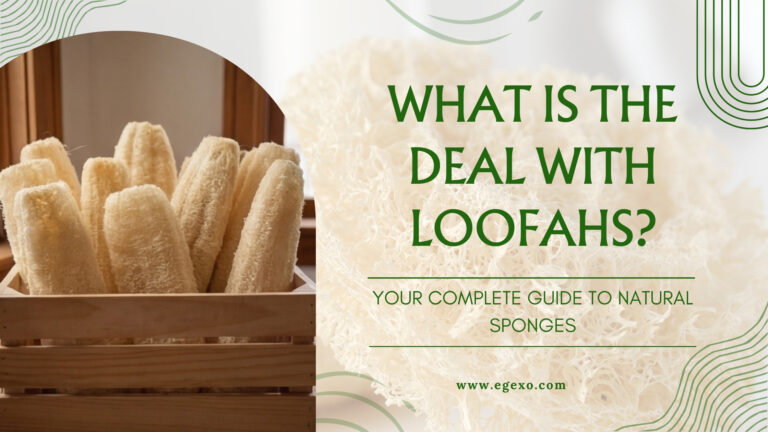
The natural loofah is the fibrous interior of the Luffa cylindrica or Luffa acutangula plant, a member of the cucumber and gourd family. When the fruit matures and dries, its interior becomes a dense, interlocking network of plant cellulose fibers that provides effective mechanical exfoliation without any synthetic processing.
Egypt is globally recognized as producing the highest quality loofah fiber, due to the Nile Delta’s rich alluvial soil, warm growing seasons, and centuries of agricultural expertise. Egyptian loofah is characterized by its firm yet flexible fiber structure, consistent pore distribution, and superior durability compared to loofahs grown in other regions.
The fiber is naturally:
- Biodegradable within 30 to 60 days in composting conditions
- Free of synthetic chemicals and petroleum derivatives
- Hypoallergenic when unbleached and untreated
- Compostable after its useful life ends
You can learn more about how Egyptian loofah goes from seed to export at Egexo’s Farm to Export process page.
The Plastic Bath Puff: Convenience at a Cost
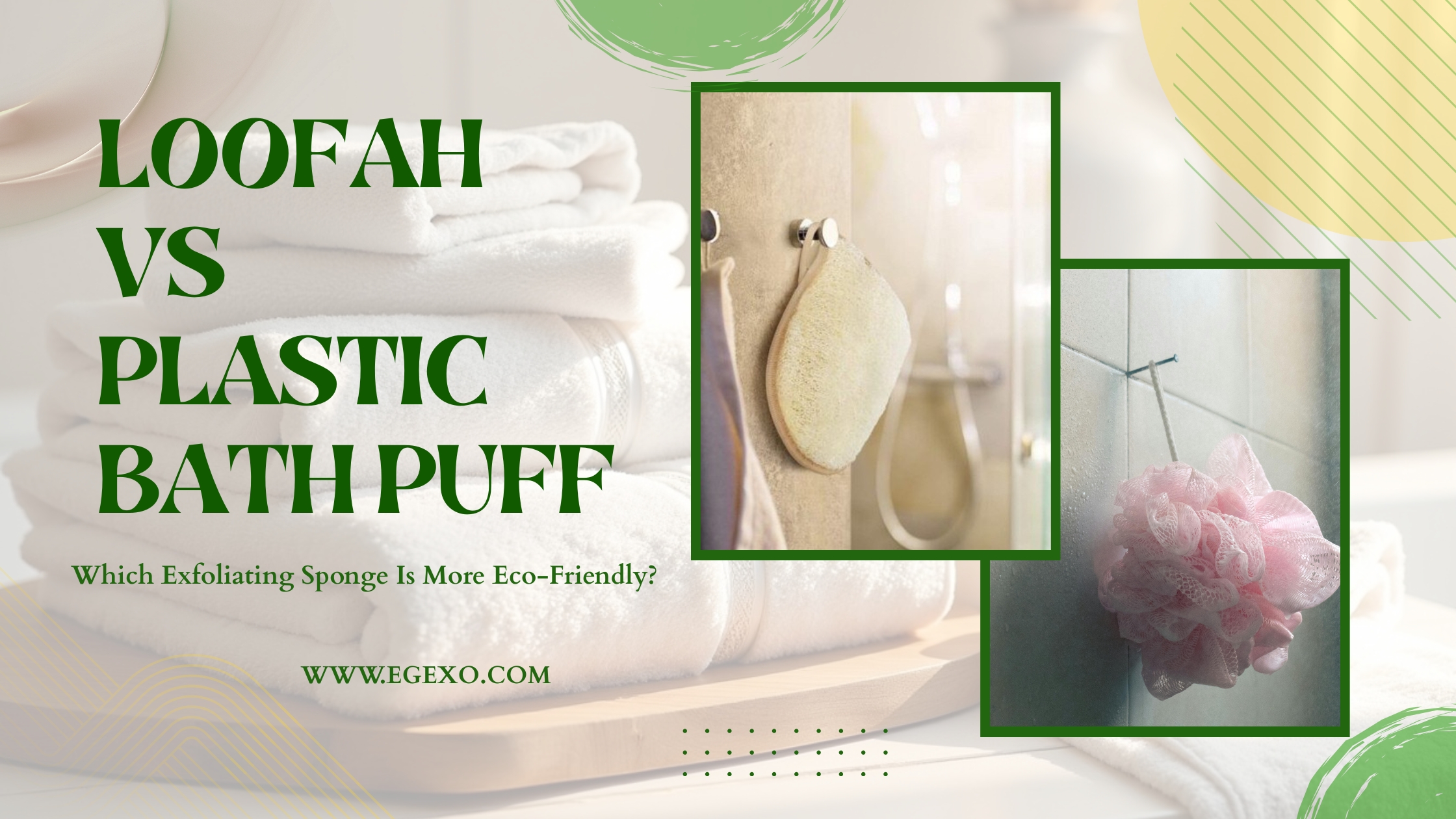
The plastic bath puff, also commonly called a shower pouf or mesh sponge, is manufactured from polyethylene or nylon mesh netting that is gathered and tied into a fluffy, ball-shaped exfoliating tool. It was introduced commercially in the late 1970s and became a bathroom staple largely due to its low retail cost and its ability to lather soap quickly.
However, the convenience comes with a significant environmental liability. Plastic bath puffs are made from petroleum-derived synthetic polymers. They shed microplastic fibers during use, they are nearly impossible to recycle through standard municipal recycling programs, and they persist in the environment for centuries after disposal.
Environmental Impact: The Data Behind the Debate
This is where the loofah vs plastic bath puff comparison becomes most compelling, and most clear-cut.
Decomposition and Plastic Persistence
| Environmental Factor | Natural Loofah | Plastic Bath Puff |
|---|---|---|
| Decomposition time | 30 to 60 days | 400 to 500 years |
| Microplastic shedding | None | Yes, per wash cycle |
| Recyclable | Compostable | Not accepted in standard recycling |
| Carbon footprint (production) | Low, agricultural | High, petroleum-based |
| End-of-life disposal | Compost or landfill biodegrades | Landfill, ocean, or incineration |
| Biodegradable materials | 100 percent natural fiber | 0 percent biodegradable |
Studies published by environmental research institutions confirm that a single plastic bath puff can shed thousands of microplastic fibers per wash. Those fibers pass through wastewater treatment systems and enter rivers, oceans, and ultimately the food chain. A 2021 report estimated that synthetic bath and personal care products contribute significantly to the estimated 8 million metric tons of plastic entering oceans annually.
Natural loofah produces zero microplastic pollution. When its useful life ends, it can be composted in a backyard bin or placed in general waste where it will biodegrade completely within weeks rather than centuries.
Water and Agricultural Footprint
The cultivation of loofah requires relatively modest water inputs compared to other fiber crops. In the Nile Delta region, Egexo’s loofah farms benefit from natural irrigation systems and traditional agricultural knowledge that minimize water waste. The crop requires no synthetic fertilizers to produce a high-quality fiber harvest.
By contrast, the production of polyethylene mesh for bath puffs requires the refining of petroleum, the manufacturing of polymer granules, the extrusion of synthetic fibers, and the assembly of the final product, each stage adding energy consumption and emissions to the supply chain.
Skin Benefits: What Dermatologists and Users Actually Prefer
Sustainability matters, but so does performance. The loofah vs plastic bath puff comparison extends meaningfully into skin health territory.
Exfoliation Quality: Natural vs Synthetic
| Skin Benefit | Natural Loofah | Plastic Bath Puff |
|---|---|---|
| Exfoliation type | Mechanical, natural fiber | Mechanical, synthetic mesh |
| Gentleness | Adjustable, softer when wet | Consistent, can be abrasive |
| Circulation stimulation | Yes, firm fiber promotes blood flow | Minimal |
| Bacterial growth risk | Moderate (requires regular drying) | High (dense mesh traps moisture) |
| Suitability for sensitive skin | Yes, especially fine-grade loofah | Varies; synthetic can irritate |
| Lather production | Good with bar soap or liquid | Excellent with liquid soap |
| Recommended replacement frequency | Every 3 to 4 weeks | Every 4 to 6 weeks |
Dermatologists frequently note that loofahs, particularly natural plant-based varieties with consistent fiber distribution, provide controlled exfoliation that supports cell turnover without the micro-tears associated with overly aggressive mechanical scrubbing.
For spas and wellness businesses evaluating product lines, the ability to offer a genuinely skin-safe, natural exfoliating option is also a differentiator in premium market positioning.
Hygiene Management: A Practical Consideration
One area where plastic puffs have historically held an advantage is in the perception of hygiene. However, research and practical experience both show that both product types require regular replacement and proper drying between uses.
Plastic mesh, due to its dense layered structure, actually creates more anaerobic zones where bacteria thrive than a natural loofah that is hung to dry properly. A 2017 study published in the Journal of Clinical Microbiology found that bath poufs harbor significantly higher concentrations of bacteria than natural alternatives when both are stored in the shower without drying.
Hygiene Best Practices Checklist:
| Step | Natural Loofah | Plastic Bath Puff |
|---|---|---|
| After each use | Rinse thoroughly, wring out | Rinse and shake out |
| Drying storage | Hang outside the shower to air dry | Hang to air dry |
| Weekly cleaning | Soak in diluted white vinegar for 5 minutes | Machine wash on gentle cycle |
| Replacement timing | Every 3 to 4 weeks | Every 4 to 6 weeks |
| Signs of replacement | Discoloration, odor, fiber breakdown | Tears, persistent odor, color loss |
For businesses sourcing products for spa or hospitality use, natural loofah is also easier to incorporate into a zero-waste or sustainability certification program, which is increasingly important for hotel and wellness brands.
Wholesale Perspective: Why Businesses Are Switching to Natural Loofah
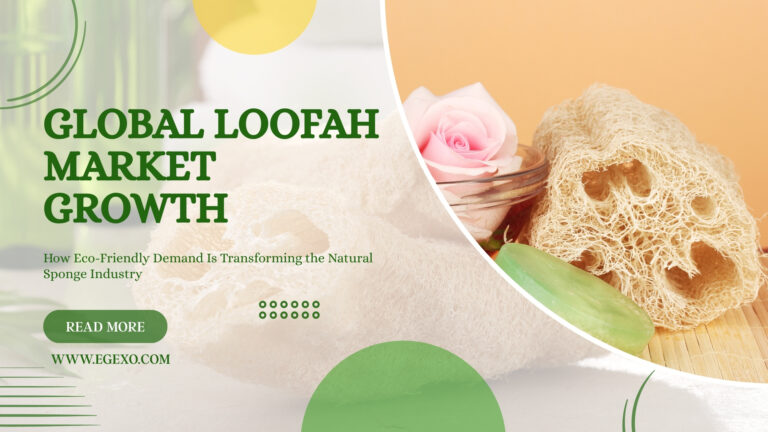
The global shift toward sustainable consumer goods is not just a consumer preference. It is reshaping wholesale purchasing decisions, retail shelf allocations, and private label product strategies across beauty, wellness, and personal care.
Market Trends Supporting Natural Loofah
The natural personal care tools market, which includes loofah sponges, is projected to grow at a compound annual growth rate of 6.8 percent through 2028, driven primarily by consumer demand for sustainable, biodegradable alternatives to synthetic products. Retailers in the European Union, North America, and Australia in particular are under increasing regulatory and consumer pressure to reduce single-use plastic in personal care categories.
For wholesale buyers, this creates a concrete opportunity. Stocking natural loofah products today positions a business ahead of likely regulatory changes and shifting consumer expectations rather than scrambling to adapt reactively.
Egexo’s Wholesale Specifications
With 10 years of export experience, Egexo offers Egyptian loofah across multiple grades and product forms suited to different business needs.
| Specification | Detail |
|---|---|
| Origin | Nile Delta, Egypt |
| Fiber type | Luffa cylindrica (Egyptian variety) |
| Available grades | Premium, Standard, Economy |
| Product forms | Whole loofah, sliced rounds, halves, custom shapes |
| MOQ (Minimum Order Quantity) | From 500 units per SKU (varies by product type) |
| Custom sizing | Available from 8 cm to 30 cm length |
| Private label options | Yes, full packaging and branding available |
| Lead time | 15 to 30 days depending on order volume |
| Certifications | Available upon request for specific markets |
| Shipping formats | Bulk, retail-ready, vacuum compressed |
Businesses interested in evaluating quality before committing to a bulk order can order loofah samples directly through the Egexo website.
For custom product development, including branded loofah gift sets, spa bundles, or retail packaging, Egexo offers private label loofah manufacturing and custom product design services.
Supplier Evaluation Checklist for Loofah Buyers
Before selecting a loofah wholesale supplier, buyers should verify the following:
| Criteria | What to Look For | Egexo Status |
|---|---|---|
| Farm origin verification | Direct farm or verified sourcing | Yes, own farms in Nile Delta |
| Quality grading consistency | Defined grade standards with documentation | Yes, view quality standards |
| Export experience | Established international logistics | 25 years, 4 continents |
| Sample availability | Samples available before bulk commitment | Yes |
| Private label capability | In-house design and packaging | Yes |
| Custom sizing and processing | Ability to tailor product specifications | Yes |
| Minimum order flexibility | Accessible MOQs for smaller businesses | From 500 units |
| Communication and support | Responsive export team | Yes |
Explore the full range of available products in the Egexo wholesale product catalog.
Cost Comparison: Natural Loofah vs Plastic Bath Puff Over Time
One common misconception is that plastic bath puffs are the more economical choice. When you calculate the true cost over time, accounting for replacement frequency, environmental compliance costs for businesses, and consumer willingness to pay a premium for sustainable products, the calculus shifts significantly.
Consumer Cost Perspective
A high-quality natural loofah, used correctly and replaced every three to four weeks, delivers full exfoliating performance for its entire useful life. A plastic bath puff of equivalent retail value typically shows degradation in texture and hygiene quality before its replacement date arrives.
Consumers who switch to natural loofah from premium sustainable brands often report spending the same or less annually while generating dramatically less plastic waste.
Business ROI Perspective
For retailers and spa operators, natural loofah products command higher price points and stronger margins than commodity plastic puffs. The sustainability narrative adds perceived value. Premium loofah bundles, gift sets, and spa kits sell at margins that plastic puffs simply cannot support at the same volume.
Additionally, wholesale loofah pricing from a direct-source Egyptian supplier like Egexo is highly competitive due to the elimination of intermediary margins.
For a customized pricing discussion, request a wholesale quotation and our export team will respond within one business day.
Choosing the Right Loofah Product for Your Needs
Whether you are shopping for personal use or sourcing inventory, understanding the different loofah forms available helps you match the right product to the right application.
Product Types Available from Egexo
Whole Loofah (Full Cylinder Form) Best for: Spa treatments, full-body exfoliation, wholesale customization Length: Typically 20 to 30 cm Ideal buyer: Spas, wellness centers, private label brands
Loofah Slices and Rounds Best for: Retail packs, bath gift sets, face and targeted body exfoliation Thickness: Typically 2 to 5 cm Ideal buyer: Retailers, beauty brands, gift set assemblers
Raw Loofah Scrubbers Best for: DIY enthusiasts, crafters, natural soap makers embedding loofah in soap bars Browse the raw loofah scrubbers collection
Pet and Spa Grooming Loofah Best for: Pet groomers, veterinary product lines, luxury pet care brands Browse the pet and spa loofah collection
For comprehensive product specs and photos, the Egexo product catalog covers the full range.
Why Egyptian Loofah Sets the Global Standard
Not all loofah is created equal. Geography, soil quality, growing season length, and post-harvest processing all affect the density, flexibility, and durability of the finished fiber. Egyptian loofah, cultivated in the mineral-rich soil of the Nile Delta with optimal growing conditions, consistently outperforms loofah sourced from other regions across every performance metric that matters to buyers and consumers.
| Quality Metric | Egyptian Loofah (Egexo) | Generic Asian-Sourced Loofah |
|---|---|---|
| Fiber density | High, uniform distribution | Variable, often inconsistent |
| Durability | 3 to 5 weeks of active use | 2 to 3 weeks typical |
| Flexibility when wet | Excellent, adapts to body contours | Often stiff or rough |
| Bleaching/treatment | Available natural or lightly processed | Often heavily bleached |
| Color consistency in batches | High | Low to moderate |
| Grade availability | Premium, Standard, Economy | Usually single undifferentiated grade |
Learn more about why Egexo is the preferred loofah supplier for wholesalers across Europe, North America, Asia, and the Gulf region.
Expert Insight from Egexo
After 25 years of growing and processing loofah in Egypt’s Nile Delta, one thing has become clear to our team: the quality of a loofah is determined long before it reaches the processing facility. Soil mineral content, harvest timing, and drying method all shape the fiber structure in ways that are nearly impossible to correct after the fact.
When buyers evaluate loofah samples, we always recommend testing the fiber when wet, not dry. A high-quality Egyptian loofah should soften noticeably when saturated, maintain structural integrity without fraying, and return to shape after use. A loofah that disintegrates or develops a musty odor within the first two weeks of use is almost always the result of premature harvest or poor post-harvest drying.
For wholesale buyers assessing suppliers, the willingness to provide samples before an order is a signal of quality confidence. Egexo provides samples to qualified buyers, because we know the product speaks for itself. The sample cost is credited to your first order of $1,000 or more, placed within 60 days.
Review our loofah quality standards documentation for full grading criteria.
FAQ Section
Q1: Is a natural loofah better for the environment than a plastic bath puff? A: Yes, by every measurable environmental metric. A natural loofah biodegrades within 30 to 60 days, produces zero microplastic pollution, and is made from a renewable agricultural crop. A plastic bath puff takes 400 to 500 years to decompose, sheds microplastics into waterways during every use, and is made from petroleum. For anyone prioritizing sustainability in their personal care routine, the loofah vs plastic bath puff comparison resolves clearly in favor of natural loofah.
Q2: How long does a natural loofah last compared to a plastic bath puff? A: A well-maintained natural loofah typically lasts three to four weeks with daily use before it should be replaced for hygiene reasons. A plastic bath puff typically lasts four to six weeks before showing visible degradation. However, the natural loofah can be composted at end-of-life, while the plastic puff must be discarded as non-recyclable waste. Considering the full lifecycle, natural loofah is the more responsible choice.
Q3: What is the minimum order quantity for Egyptian loofah from Egexo? A: Egexo has no MOQ on standard products; custom and private label orders start from 1,000 units. Buyers interested in private label or custom sizing can discuss requirements directly with the Egexo export team. We recommend starting with a sample order to verify quality and specifications before committing to a large volume.
Q4: Can plastic bath puffs cause skin irritation? A: Plastic bath puffs made from polyethylene or nylon mesh can cause irritation in individuals with sensitive skin, particularly as the mesh ages and individual fibers become frayed. Natural loofah, especially finer-grade products, provides gentler mechanical exfoliation that is more compatible with sensitive skin types. For consumers with eczema, rosacea, or other skin sensitivities, dermatologists generally recommend natural exfoliating tools over synthetic alternatives.
Q5: Do natural loofahs harbor more bacteria than plastic bath puffs? A: This is a common misconception. Research, including a 2017 study in the Journal of Clinical Microbiology, found that dense synthetic bath puffs actually harbor higher concentrations of bacteria than natural alternatives when both are used and stored in humid shower environments. The key hygiene factor for both product types is drying: loofahs should be hung outside the shower to air dry between uses and replaced every three to four weeks.
Q6: Can I get private label loofah products from Egexo? A: Yes. Egexo offers comprehensive private label loofah manufacturing services, including custom sizing, branding, packaging design, and retail-ready presentation. This service is available for spas, beauty brands, retailers, and distributors looking to bring their own branded natural bath product line to market. The process covers everything from product design through export-ready fulfillment. Learn more at the private label loofah manufacturing page.
Q7: What makes Egyptian loofah better than loofah from other countries? A: Egyptian loofah grown in the Nile Delta benefits from uniquely rich alluvial soil, optimal warm climate, and harvesting traditions refined over generations. The result is a fiber with higher density, better durability, and more consistent quality than loofah sourced from other regions. Egexo’s 10 years of export experience also means that quality control, grading, and post-harvest processing meet standards that many commodity suppliers cannot match.
Q8: Are there loofah products available for kitchen use or pet grooming? A: Yes. Beyond bath and body loofahs, Egexo offers a range of specialty loofah products. Kitchen loofahs are popular eco-friendly alternatives to synthetic dish scrubbers. Pet grooming loofahs are increasingly used by professional pet groomers and specialty pet care brands. Browse the full range at egexo.com/shop.
Conclusion
The loofah vs plastic bath puff debate is not a close call when examined honestly. Natural loofah biodegrades in weeks, produces zero microplastic pollution, delivers effective and skin-safe exfoliation, and supports a sustainable agricultural supply chain. Plastic bath puffs persist in the environment for centuries, shed harmful microfibers, and carry the full carbon cost of petroleum manufacturing.
For eco-conscious consumers, switching to a natural loofah is one of the most impactful and accessible changes you can make in your daily routine. For wholesale buyers and retailers, stocking natural Egyptian loofah positions your business ahead of sustainability regulations and consumer expectations, while offering superior margins and a compelling product story.
Egyptian loofah, particularly from Egexo’s Nile Delta farms, represents the best of what this category can offer: consistent quality, traceable sourcing, and 10 years of export expertise serving global buyers.
Key Takeaways:
- Natural loofah biodegrades in 30 to 60 days; plastic bath puffs take 400 to 500 years
- Plastic puffs shed microplastics into waterways during every use
- Egyptian loofah outperforms both alternative loofah sources and synthetic puffs on durability and skin compatibility
- Wholesale buyers can source premium Egyptian loofah directly from Egexo with MOQs from 500 units
- Private label, custom sizing, and retail-ready packaging are all available through Egexo
Ready to experience Egyptian loofah quality?
- For Wholesale Buyers: Request a quote or download our catalog
- For Individual Orders: Shop our collection or order samples