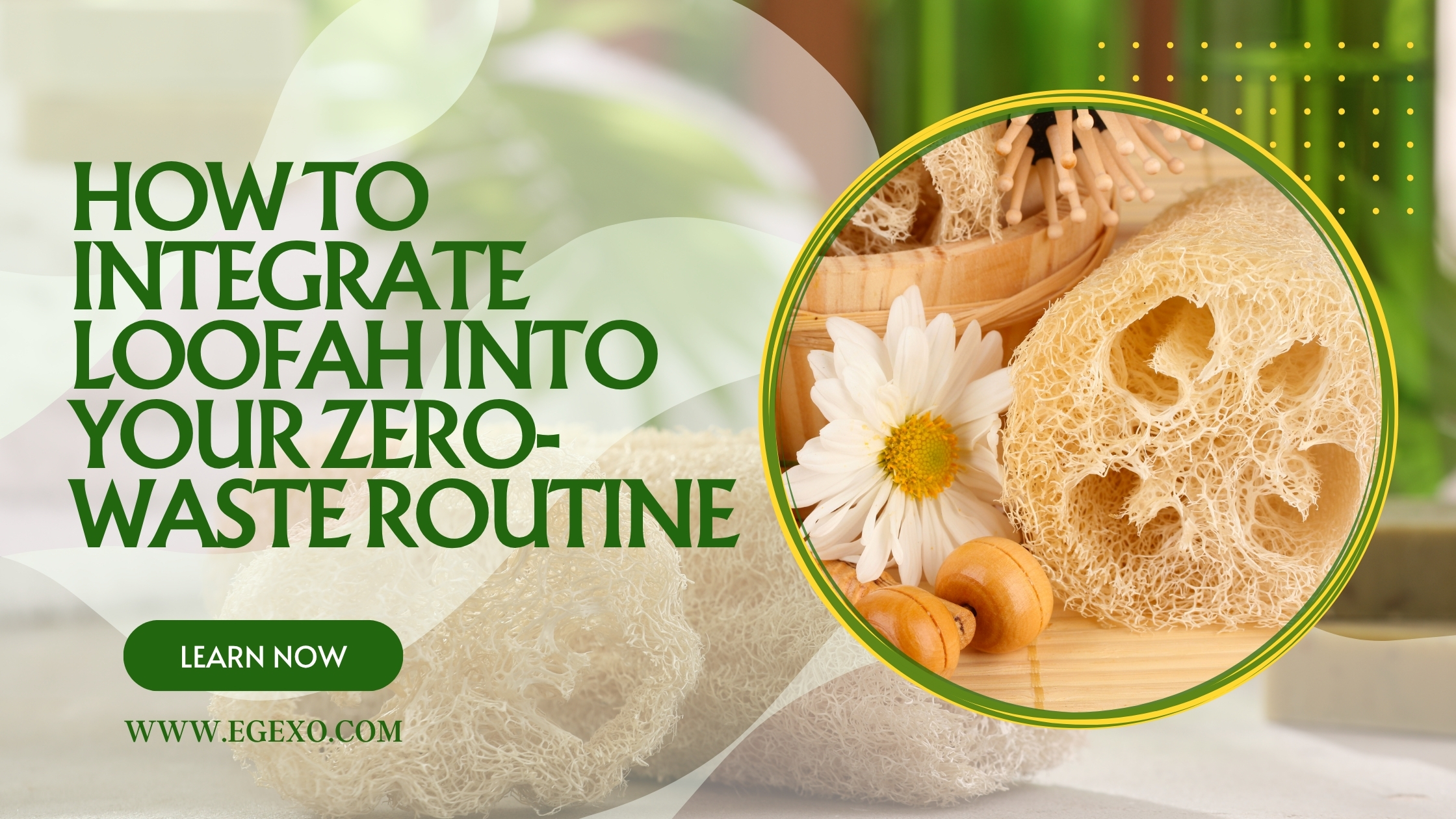
How to Integrate Loofah into Your Zero-Waste Routine
Every year, households around the world discard billions of plastic bath sponges and synthetic scrubbers. Most of them take over 400 years to break down in a landfill. Meanwhile, one of the most effective, biodegradable, and versatile cleaning tools on the planet has been growing quietly in Egyptian fields for centuries. Natural loofah, harvested from the Luffa cylindrica plant, is not just a bathroom product. It is a full-scale lifestyle upgrade for anyone serious about reducing waste.
If you have been looking for practical ways to integrate loofah into your zero-waste routine, this guide delivers exactly that. Whether you are a spa owner sourcing bulk natural exfoliants, a retailer exploring sustainable product lines, or an individual consumer making smarter daily choices, the information here is built for you.
By the end of this article, you will understand the environmental case for natural loofah, how to use it across every area of your home, how to evaluate quality when purchasing, and how Egyptian-grown loofah stands apart from alternatives available globally.
For wholesale buyers ready to act now, explore the Egexo product catalog or request a bulk quote directly from Egypt’s most trusted loofah supplier.
Why Natural Loofah Belongs in a Zero-Waste Lifestyle
The zero-waste movement is growing fast. According to market research data published in 2024, the global zero-waste packaging market is projected to exceed USD 2.1 billion by 2028, reflecting a broad consumer shift away from single-use plastics. Natural loofah sits at the center of this shift, offering complete biodegradability in 30 to 45 days under composting conditions, compared to the centuries-long decomposition timeline of synthetic alternatives.
The Environmental Math Behind Loofah
A single household that replaces two plastic bath sponges per month with natural loofah eliminates approximately 24 synthetic products from waste streams annually. Scaled to a retailer carrying loofah for 500 customers, that number becomes 12,000 plastic sponges per year that never reach a landfill.
For spa operators and wellness brands, the math becomes a marketing advantage. Guests increasingly expect sustainable amenity options. Hotels and spas that document their switch to natural loofah report measurable improvements in guest satisfaction scores tied to eco-consciousness, according to sustainability-focused hospitality surveys.
Natural loofah is grown without synthetic inputs in its highest-quality form, requires no petroleum-based manufacturing, and returns to soil as organic matter at the end of its life. No other mass-market exfoliating product matches this profile.
Loofah as a Renewable Agricultural Resource
Luffa cylindrica plants are annual vines that produce mature fruit ready for harvest in approximately 90 to 120 days. Egyptian farmers in the Nile Delta region, where Egexo has sourced and exported loofah for 10 years, work with growing conditions that naturally favor dense, fibrous loofah development. The warm climate, fertile soil, and managed irrigation systems produce loofah with superior fiber density compared to crops grown in less controlled environments.
Each plant yields multiple fruits per season, and the agricultural footprint per unit of usable loofah is minimal. After harvest, plant matter returns to the field as compost. The entire production cycle reinforces the zero-waste philosophy that consumers and brands are committed to.
How to Integrate Loofah into Your Zero-Waste Routine: Room by Room
Learning how to integrate loofah into your zero-waste routine is easier than most people expect. The key is understanding that loofah is not limited to the shower. Its fibrous structure, natural durability, and varying densities make it useful across multiple areas of daily life.
The Bathroom: Where Most People Start
The bathroom is the obvious starting point. Natural loofah body scrubbers replace plastic bath sponges entirely. A quality Egyptian loofah provides gentle exfoliation that removes dead skin cells, stimulates circulation, and leaves skin smoother without chemical additives.
For consumers, the practical routine looks like this:
- Wet the loofah thoroughly before use. Dry loofah fibers are stiffer and less comfortable against skin.
- Apply your preferred soap or body wash directly to the loofah.
- Scrub in circular motions, applying light pressure on sensitive areas and firmer pressure on rough patches like elbows and heels.
- Rinse the loofah completely after each use.
- Hang it in a well-ventilated area to dry. Never leave it sitting in pooled water.
- Replace it every four to six weeks under regular use.
For spa operators sourcing bath loofahs at scale, consistency of size, density, and appearance across large orders is essential. Egexo’s bath and body loofah category offers graded options with standardized specifications for spa-ready presentation.
The Kitchen: Loofah as a Cleaning Powerhouse
Kitchen loofah is one of the most underutilized zero-waste swaps available. Natural loofah’s abrasive texture makes it highly effective for scrubbing pots, pans, cutting boards, and vegetable surfaces. Unlike steel wool, it will not scratch non-stick coatings when used properly. Unlike plastic scrubbers, it does not shed microplastics into your water supply.
Retailers and zero-waste shops that stock kitchen loofahs alongside their cleaning product lines report strong cross-selling performance. Consumers who adopt loofah in one room naturally explore its uses elsewhere once they understand the material’s versatility.
A basic kitchen loofah maintenance routine includes rinsing thoroughly after each use, running it through a dishwasher cycle two to three times per week to sanitize, and replacing it every three to four weeks due to heavier use and exposure to food residue.
Beyond the Obvious: Unconventional Loofah Applications
Raw loofah scrubbers have applications that extend beyond personal care and kitchen cleaning. Interior designers and craft suppliers use sections of raw loofah for packaging padding, replacing bubble wrap. Garden stores sell dried loofah pieces as compostable pot scrubbers for plant care. Pet owners use appropriately sized loofah sections for grooming applications.
For buyers interested in the full range of applications, Egexo’s raw loofah scrubbers and pet and spa grooming products cover these specialized needs.
Evaluating Loofah Quality: What Separates Good from Great
Not all loofah is equal. The market includes products ranging from premium Egyptian-grown fiber with consistent density and clean processing to low-grade material with irregular texture, chemical bleaching, or moisture damage from poor storage. Understanding quality indicators helps both wholesale buyers and individual consumers make better purchasing decisions.
Key Quality Indicators for Natural Loofah
| Quality Factor | Premium Grade | Standard Grade | Low Grade |
|---|---|---|---|
| Fiber Density | Dense, uniform, no gaps | Moderate density, minor gaps | Loose, uneven, breaks easily |
| Color | Natural tan to light brown | Some variation acceptable | Bleached white or dark spots |
| Odor | Neutral, earthy | Faint natural scent | Chemical or musty smell |
| Moisture Level | Below 12 percent | 12 to 18 percent | Above 18 percent |
| Surface Texture | Smooth exterior skin removed cleanly | Minor skin remnants | Significant skin left on |
| Seed Removal | Complete | Mostly complete | Incomplete |
| Flexibility | Bends without cracking | Slight resistance | Brittle, cracks under pressure |
Egyptian loofah from Egexo undergoes multi-stage quality control that begins at harvest and continues through processing, grading, and packaging. The full process is documented on the farm to export process page, which gives buyers full transparency into how product quality is maintained from field to shipment.
Loofah Specifications for Wholesale Buyers
| Product Type | Standard Length | Diameter Range | MOQ | Available Grades |
|---|---|---|---|---|
| Body Bath Loofah | 15 to 40 cm | 8 to 14 cm | 500 units | A, B, Export |
| Kitchen Loofah Slice | 3 to 5 cm thickness | 10 to 14 cm | 1,000 units | A, B |
| Raw Loofah (Full) | 30 to 60 cm | 10 to 16 cm | 200 kg | A, Export |
| Pet Grooming Loofah | 10 to 20 cm | 6 to 10 cm | 500 units | A |
| Mini Loofah Pad | 8 to 12 cm | 8 to 12 cm | 1,000 units | A, B |
Buyers evaluating suppliers should always request samples before committing to large orders. Egexo’s sample request process allows importers and distributors to evaluate product quality against their specific standards before placing bulk orders.
Building a Complete Zero-Waste Loofah System
Moving from occasional loofah use to a full zero-waste loofah system requires a structured approach. The following checklist covers all essential steps for both individual consumers setting up sustainable routines and businesses building sustainable product offerings.
Zero-Waste Loofah Integration Checklist
| Action Item | Consumer | Business |
|---|---|---|
| Audit current plastic cleaning products in use | Replace bath sponges first, then kitchen scrubbers | Inventory current amenity and cleaning supply sources |
| Identify loofah products needed | Body loofah, kitchen loofah, facial loofah pad | Bath amenities, spa kits, retail shelf products |
| Establish a replacement schedule | Every 4 to 6 weeks per loofah | Plan reorder cycles based on average unit usage |
| Set up proper drying and storage | Hanging ventilated storage in each use area | Display units that allow product to breathe and stay dry |
| Compost used loofahs | Home compost bin, cut loofah into smaller pieces first | Partner with commercial composting services |
| Educate household members or staff | Share care instructions, hang in visible location | Train staff on product benefits to communicate to guests |
| Evaluate product performance regularly | Track skin improvement, product durability | Track guest feedback, repeat purchase data |
| Source quality product consistently | Shop verified suppliers with transparent sourcing | Establish supplier relationship with quality guarantees |
For businesses ready to build a branded loofah product line, Egexo offers private label loofah manufacturing that allows brands to sell premium Egyptian loofah under their own name with custom packaging and labeling.
Why Egyptian Loofah Outperforms Global Alternatives
The origin of loofah matters more than most buyers realize. Loofah is grown commercially across several countries including China, India, Brazil, and Egypt. Each growing region produces fiber with distinct characteristics shaped by climate, soil chemistry, and agricultural practices.
Regional Loofah Comparison
| Origin | Fiber Density | Consistency | Processing Standards | Export Track Record |
|---|---|---|---|---|
| Egypt (Nile Delta) | Excellent | Very High | International standards, traceable | Strong, established |
| China | Variable | Moderate | Varies by producer | High volume, variable quality |
| India | Moderate | Moderate | Inconsistent documentation | Growing |
| Brazil | Moderate to Good | Moderate | Improving | Limited global reach |
Egyptian loofah benefits from the unique agricultural conditions of the Nile Delta, where soil mineral content and consistent growing temperatures produce fiber with above-average density and elasticity. Egexo has cultivated relationships with Nile Delta farming communities for over 25 years, ensuring a stable supply of premium fiber with the kind of consistency that international buyers require.
The quality standards page details the certifications and testing protocols that Egexo applies to every batch, giving importers the documentation they need for customs compliance and retail quality assurance.
For businesses evaluating suppliers, the why choose Egexo page outlines specific advantages including export experience, custom capabilities, and flexible order structures.
Loofah Care and Longevity: Making Every Product Last
A common mistake among first-time loofah users is treating natural loofah the same way they treated plastic sponges. Natural loofah requires slightly different care, but the habits are easy to build and extend product life significantly.
Loofah Maintenance Schedule
| Frequency | Action | Reason |
|---|---|---|
| After every use | Rinse thoroughly, wring, hang to dry | Prevents bacterial growth, extends fiber life |
| Every 2 to 3 days | Soak in diluted white vinegar solution for 5 minutes | Natural sanitization without chemicals |
| Weekly (Kitchen) | Dishwasher cycle, top rack | Deep sanitization for food contact surfaces |
| Every 2 to 3 weeks | Sun dry for 2 to 3 hours | UV exposure kills remaining bacteria naturally |
| Every 4 to 6 weeks (Bath) | Replace with fresh loofah | Optimal hygiene, compost the used one |
| Every 3 to 4 weeks (Kitchen) | Replace with fresh loofah | More frequent replacement due to heavier use |
Following this schedule maximizes the usable life of each loofah, reducing cost per use and ensuring hygienic performance throughout the product’s life cycle. Used loofahs should be composted rather than thrown in general waste to complete the zero-waste cycle.
The Business Case for Stocking Natural Loofah
For spa owners, wellness retailers, importers, and eco-product distributors, natural loofah represents one of the strongest opportunities in the sustainable personal care category. Consumer demand for plastic-free alternatives is not a passing trend. It is a structural market shift driven by regulation, social media influence, and changing purchase behavior among millennial and Gen Z buyers.
Profitability Factors for Loofah Retail
Loofah carries high perceived value relative to its production cost, especially when positioned as a premium natural wellness product. Retail markup on quality natural loofah typically ranges from 200 to 400 percent above wholesale cost, depending on packaging, branding, and distribution channel.
Private label options amplify this further. A spa or wellness brand that sells Egyptian loofah under its own label commands premium pricing justified by quality positioning and brand trust. Egexo’s custom loofah product design service allows businesses to create differentiated products that cannot be directly price-compared to generic alternatives.
The Egexo shop provides a starting point for buyers exploring the full product range before initiating wholesale discussions.
Expert Insight from Egexo
With 10 years of export experience, Egexo has observed one consistent pattern among buyers who achieve the strongest results with natural loofah products: they invest time in understanding the material before they invest in inventory.
The most successful spa operators and retailers request samples, test products in their actual use environments, and work with our team to identify the right grade and size for their specific application. A spa offering loofah as part of a premium bathing experience needs different specifications than a zero-waste retailer selling kitchen scrubbers.
Egyptian loofah grown in the Nile Delta produces a fiber profile that is genuinely difficult to replicate elsewhere. The density, elasticity, and natural color consistency of our premium grade products reflect decades of agricultural refinement. When you source from Egexo, you are not buying a commodity. You are accessing a carefully managed supply chain built on deep agricultural knowledge and rigorous quality control at every stage.
We encourage all buyers to explore our loofah farm to export process and reach out to our team for a consultation tailored to your business needs.
Frequently Asked Questions
Q1: How long does a natural loofah last under regular daily use?
A natural loofah used as a bath scrubber and properly cared for typically lasts four to six weeks before replacement is recommended. Kitchen loofahs, due to exposure to food debris and more aggressive scrubbing, should be replaced every three to four weeks. Proper care, including thorough rinsing and hanging to dry after each use, significantly extends usable life and maintains hygiene throughout the product’s lifespan.
Q2: Is natural loofah safe for all skin types?
Natural loofah is generally suitable for most skin types when used correctly. For sensitive skin, a softer, finer-grade loofah is preferable, and light pressure should be used during exfoliation. People with active skin conditions such as eczema or psoriasis should consult a dermatologist before use. Egyptian loofah from Egexo is available in multiple grades, allowing consumers to select the texture best suited to their skin sensitivity.
Q3: What is the minimum order quantity for wholesale loofah purchases from Egexo?
Minimum order quantities vary by product type. Body bath loofahs typically start at 500 units, kitchen loofah slices at 1,000 units, and raw loofah by weight starting at 200 kilograms. Egexo works with importers, distributors, and spa operators of various sizes to find order structures that match business needs. Buyers are encouraged to request a detailed quote to discuss their specific requirements.
Q4: How do I compost a used loofah to complete the zero-waste cycle?
To compost a used loofah, cut it into small pieces approximately 2 to 3 centimeters in size. This increases surface area and speeds up decomposition. Add the pieces to a home compost bin or pile with other organic material. Natural loofah fully breaks down in 30 to 45 days under active composting conditions. Do not compost loofahs that have been treated with synthetic fragrances or dyes, as these may introduce unwanted chemicals into compost.
Q5: Can loofah replace all plastic cleaning tools in a home?
Natural loofah can replace most plastic bath sponges and kitchen scrubbers in a typical household. It is effective for body exfoliation, dish scrubbing, vegetable washing, and general surface cleaning. For tasks requiring very fine abrasion or chemical resistance, other natural alternatives may be more appropriate. However, for the vast majority of daily cleaning and personal care tasks, loofah is a highly effective and completely natural replacement for plastic tools.
Q6: What certifications should wholesale buyers look for when sourcing loofah?
Wholesale buyers should prioritize suppliers that offer phytosanitary certificates for agricultural product export, documented quality grading systems, moisture content testing results, and compliance with importing country regulations. Egexo provides full export documentation and maintains transparent quality standards. Review the Egexo quality standards page for detailed information on certifications and testing protocols applicable to each product category.
Q7: Does Egexo offer custom packaging for private label loofah products?
Yes. Egexo’s private label manufacturing service allows brands to sell premium Egyptian loofah under their own name with custom packaging, labeling, and product configuration. This service is available to spa brands, wellness retailers, distributors, and importers looking to create differentiated product lines without managing their own manufacturing infrastructure.
Q8: How does Egyptian loofah compare to loofah grown in other countries?
Egyptian loofah grown in the Nile Delta is widely recognized among industry professionals for superior fiber density, consistent sizing, and clean processing. The unique agricultural conditions of the region, including mineral-rich soil and stable growing temperatures, produce loofah with above-average elasticity and durability. Compared to high-volume production from other regions, Egyptian loofah maintains more consistent quality standards across large orders, making it the preferred choice for premium spa and wellness applications.
Conclusion
The case for integrating loofah into a zero-waste routine is built on evidence, not trend. Natural loofah biodegrades completely, outperforms plastic in daily use applications, and connects consumers to an agricultural tradition that has shaped Egyptian farming for generations. For businesses, it represents a durable category with strong consumer demand and excellent margin potential.
The path from intention to action is straightforward. Replace one plastic product at a time. Start with the bath, move to the kitchen, and explore the broader applications that make loofah one of the most versatile natural materials available today. Source from a supplier with transparent standards, consistent quality, and the agricultural depth to deliver reliably at scale.
Key Takeaways:
- Natural loofah biodegrades in 30 to 45 days, versus 400-plus years for synthetic sponges
- Egyptian Nile Delta loofah produces superior fiber density due to unique agricultural conditions
- Loofah is effective in bathrooms, kitchens, pet grooming, and craft applications
- Proper care extends loofah life to four to six weeks per unit
- Wholesale buyers benefit from Egexo’s 25-plus years of export experience and full quality documentation
Ready to experience Egyptian loofah quality?
- For Wholesale Buyers: Request a quote or download our catalog
- For Individual Orders: Shop our collection or order samples