

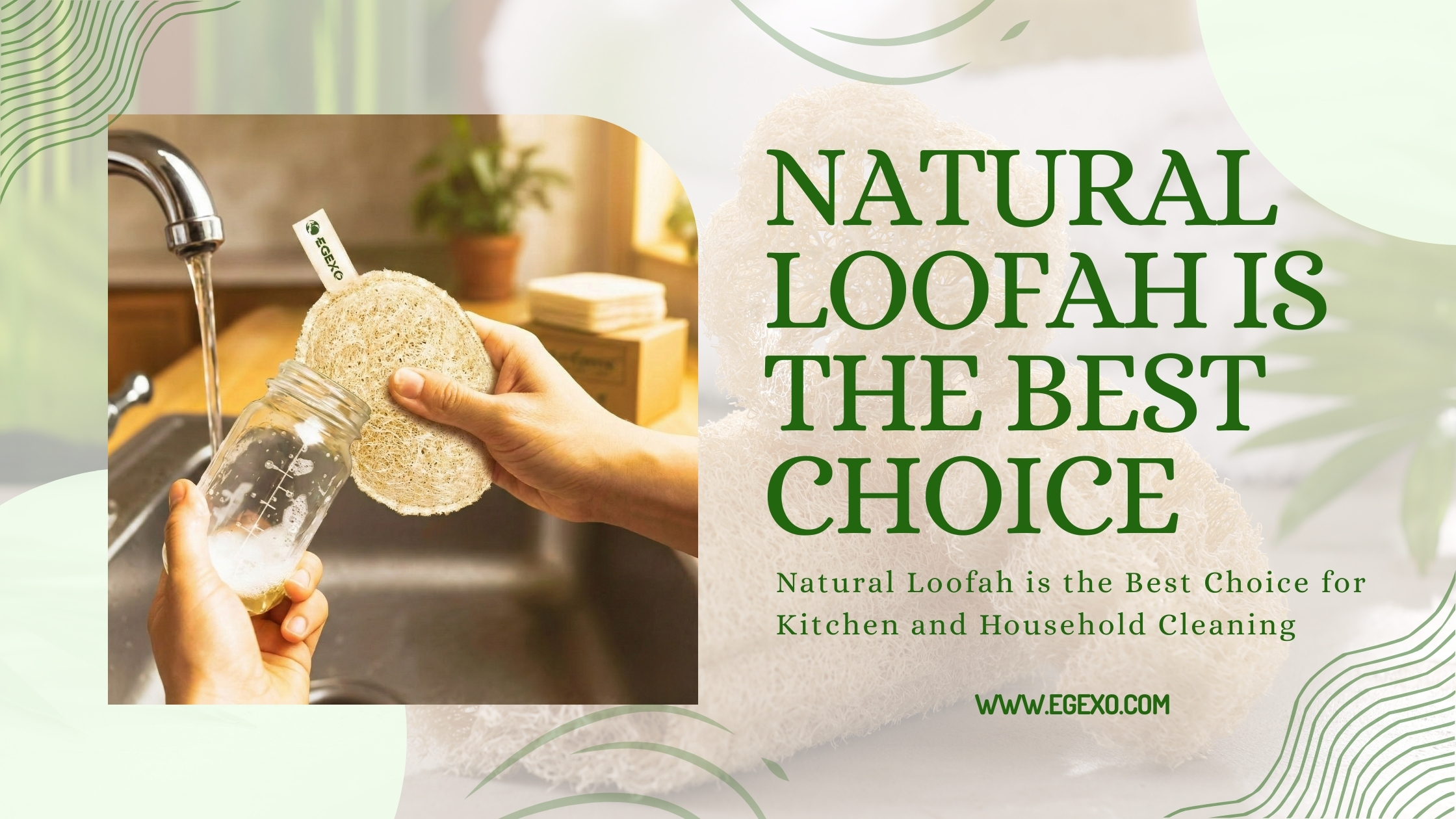
Natural Loofah is the Best Choice for Kitchen and Household Cleaning
Every year, more than 400 billion plastic sponges enter landfills worldwide, taking centuries to break down. Meanwhile, a single natural loofah sponge grown on an Egyptian farm biodegrades within weeks of being discarded. That contrast alone explains why a growing number of households, restaurants, hotel chains, and eco-friendly retailers are making the switch. Natural loofah is the best choice for kitchen and household cleaning because it combines powerful scrubbing performance, zero-waste sustainability, and a cost profile that works for families and businesses alike.
Whether you are a spa owner sourcing bulk cleaning supplies, a distributor looking for a high-margin product line, or simply someone who wants a greener kitchen, this guide covers everything you need to know. You will learn how natural loofah outperforms synthetic alternatives, how to evaluate quality grades, which sizes work best for different cleaning tasks, and why Egyptian loofah, especially from a trusted supplier with over 25 years of cultivation experience like Egexo, has earned its reputation as the global benchmark.
By the end, you will have a clear action plan, whether that means placing a wholesale order or picking up your first kitchen loofah today.
If you are ready to explore product options right now, browse the Egexo kitchen loofah collection or request a wholesale quote.
Why Natural Loofah is the Best Choice for Kitchen and Household Cleaning
The Science Behind Loofah Fiber Performance
Natural loofah comes from the mature fruit of the Luffa aegyptiaca plant, a member of the gourd family cultivated primarily in Egypt’s Nile Delta region. When the fruit is harvested, peeled, and dried, the result is a dense network of cellulose fibers. These fibers have a unique open-cell structure that gives them three properties synthetic sponges cannot match simultaneously: abrasive scrubbing power, high water absorption, and rapid drying.
Research on plant-based cellulose materials shows that loofah fibers can absorb up to 29 times their dry weight in water, significantly more than most polyurethane foam sponges. That absorption means better cleaning with less detergent. The open fiber matrix also promotes faster air drying, which reduces bacterial buildup between uses.
For kitchens, this matters immensely. Damp synthetic sponges become breeding grounds for bacteria within 24 to 48 hours. Natural loofah’s breathability and quick-dry capacity make it a more hygienic choice right out of the box.
Environmental Impact That Consumers and Businesses Care About
Sustainability is no longer a niche selling point. A 2024 survey by McKinsey found that 78 percent of consumers consider environmental impact when making household purchases. For retailers and distributors, stocking eco-friendly products is now a revenue strategy, not just a values statement.
Natural loofah is 100 percent plant-based, compostable, and grown without heavy industrial processing. One loofah vine can produce 8 to 12 usable fruits per growing season, making it a remarkably efficient crop. At end of life, a used loofah can be composted in a home garden within 30 days.
Compare that to a plastic sponge, which sheds microplastics into waterways with every wash cycle and persists in the environment for 200 to 500 years. The choice becomes clear for anyone, whether a conscious consumer or a brand manager building an eco-product line.
How Natural Loofah Compares to Synthetic Cleaning Products
Understanding the differences between natural loofah and common synthetic alternatives helps both shoppers and wholesale buyers make confident decisions. The table below provides a side-by-side comparison based on key performance and business metrics.
Natural Loofah vs Synthetic Sponge Comparison
| Feature | Natural Egyptian Loofah | Polyurethane Foam Sponge | Plastic Mesh Scrubber |
|---|---|---|---|
| Material Origin | Plant-based cellulose | Petroleum-derived foam | Nylon or polyester |
| Biodegradable | Yes, within 30 days | No, 200+ years to decompose | No, 200+ years to decompose |
| Scrubbing Strength | High, firm natural fiber | Low to medium | Medium to high |
| Water Absorption | Up to 29x dry weight | 15 to 20x dry weight | Minimal absorption |
| Drying Speed | Fast, open fiber structure | Slow, retains moisture | Moderate |
| Bacterial Resistance | High due to rapid drying | Low, harbors bacteria quickly | Moderate |
| Microplastic Shedding | None | Yes, with every use | Yes, with every use |
| Average Lifespan | 3 to 5 weeks heavy kitchen use | 2 to 4 weeks | 3 to 6 weeks |
| Safe on Non-Stick Pans | Yes, when cut to soft grade | Varies by type | No, scratches coatings |
| Wholesale Margin Potential | High, premium eco product | Low, commodity pricing | Low to moderate |
| Consumer Trend Alignment | Strong upward trend | Declining preference | Stable but flat |
This comparison shows why natural loofah is the best choice for kitchen and household cleaning across nearly every category that matters, from raw cleaning performance to long-term environmental responsibility.
For wholesale buyers evaluating product lines, natural loofah commands a premium price point with lower material costs, creating attractive margins. Download the full Egexo product catalog for detailed specifications and bulk pricing tiers.
Household Applications Where Natural Loofah Excels
Natural loofah is not just a kitchen sponge. Its versatile fiber structure makes it effective across a wide range of cleaning tasks throughout the home. Understanding these applications matters for consumers looking to maximize value and for retailers building multi-use product bundles.
Kitchen Cleaning
This is where natural loofah truly shines. The firm yet flexible fibers cut through grease on pots and pans without scratching ceramic, glass, or stainless steel surfaces. Cut a full loofah into smaller sections for everyday dishwashing, or use a larger piece for scrubbing baking sheets and oven racks. Many users report that loofah handles baked-on food residue better than standard sponges because the fibers maintain their structure under pressure instead of compressing flat.
For restaurants and commercial kitchens, bulk kitchen loofah orders offer a cost-effective and health-code-friendly alternative. Because each piece is inexpensive in bulk, kitchens can replace them frequently, maintaining strict hygiene standards without budget strain.
Bathroom and Tile Surfaces
Loofah works exceptionally well on tile grout, shower glass, and porcelain fixtures. The natural abrasiveness removes soap scum and mineral deposits without the chemical harshness of spray cleaners. Cutting a loofah into a flat pad shape gives users a comfortable grip for scrubbing vertical surfaces.
Countertops and General Surfaces
For lighter daily wiping, a thinner slice of loofah dampened with water handles countertops, appliance exteriors, and tabletops efficiently. It picks up crumbs and spills without leaving lint or fiber residue behind, a common complaint with synthetic cloths.
Outdoor and Garden Use
Gardeners use loofah to clean terracotta pots, garden tools, and muddy boots. The fibers are tough enough to remove caked soil but gentle enough to preserve tool finishes. After use, a worn-out loofah can be composted directly into garden beds, returning nutrients to the soil.
Quality Grades and Specifications for Egyptian Loofah
Not all loofah is created equal. Egyptian loofah, particularly from the Nile Delta growing region, is widely recognized as the highest quality in the global market. The warm climate, mineral-rich soil, and generations of farming expertise produce fibers that are denser, more uniform, and longer-lasting than loofah grown in other regions.
Understanding Loofah Quality Grades
Egexo, with over 25 years of loofah cultivation and export experience, uses a grading system that helps both retail consumers and bulk buyers select the right product for their needs. Below is a breakdown of the standard quality tiers.
| Grade | Fiber Density | Color | Best Use | Typical Buyer |
|---|---|---|---|---|
| Premium A | Very high, tight weave | Light cream to white | Body care, spa, retail display | Spa owners, luxury retailers |
| Grade B | High, consistent | Cream to light tan | Kitchen cleaning, household use | Retailers, household consumers |
| Grade C | Medium, slight variation | Tan to light brown | Heavy-duty scrubbing, industrial | Bulk buyers, cleaning companies |
| Utility Grade | Variable | Mixed | Garden use, pet care, crafts | Craft suppliers, pet product brands |
For kitchen and household cleaning, Grade B offers the ideal balance of performance and value. The fiber density is strong enough for daily scrubbing while remaining gentle on most surfaces. Retailers stocking household cleaning products should focus on this grade for the widest consumer appeal.
To learn more about how Egexo maintains these standards from harvest to shipment, visit the quality standards page or explore the farm to export process.
Size and Dimension Guide for Cleaning Applications
| Application | Recommended Size | Recommended Thickness | Notes |
|---|---|---|---|
| Daily dishwashing | 8 to 10 cm length | 2 to 3 cm | Comfortable hand grip |
| Heavy pot scrubbing | 12 to 15 cm length | 3 to 4 cm | Extra surface area for large cookware |
| Countertop wiping | 10 to 12 cm flat cut | 1 to 2 cm | Thin pad for smooth surfaces |
| Bathroom tiles | 10 to 12 cm length | 2 to 3 cm | Medium density for grout cleaning |
| Outdoor tools | 15+ cm length | 3 to 5 cm | Full-size piece for rugged cleaning |
Businesses interested in custom sizes for private label products can work directly with Egexo’s custom product design team to develop dimensions specific to their market.
How to Evaluate a Loofah Supplier for Wholesale Purchasing
For distributors, retailers, and hospitality businesses sourcing natural loofah at scale, choosing the right supplier is as important as choosing the right product. The following checklist covers the essential criteria that experienced buyers use when evaluating wholesale loofah partners.
Wholesale Buyer Evaluation Checklist
| Criteria | What to Look For | Egexo Standard |
|---|---|---|
| Cultivation Experience | 10+ years in loofah farming | 25+ years of hands-on experience |
| Quality Grading System | Clear, documented grade tiers | 4-tier grading with visual guides |
| Minimum Order Quantity | Flexible MOQs for new buyers | Starts as low as 500 pieces for trial orders |
| Sample Availability | Free or low-cost sample program | Free samples available on request |
| Private Label Options | Custom branding and packaging | Full private label manufacturing |
| Export Documentation | Phytosanitary certificates, COO | Complete documentation provided |
| Communication Speed | Response within 24 to 48 hours | Dedicated account managers |
| Traceability | Farm-to-product tracking | Full supply chain transparency |
| Product Range | Multiple product types | Kitchen, bath, body, pet, raw, and custom |
Wholesale buyers who work with Egexo gain access to a vertically integrated supply chain. From the farm fields of Egypt’s Nile Delta to packed shipments ready for port, every step is managed in-house. This level of control is why Egexo is recognized as one of the most reliable Egyptian loofah suppliers in the global market.
Request a quotation to receive pricing based on your volume, grade preferences, and destination country.
Care and Maintenance Tips to Extend Your Loofah Lifespan
Getting the most out of a natural loofah is simple, but a few habits can significantly extend its useful life. These tips apply whether you are using a single kitchen loofah at home or managing loofah inventory for a hotel housekeeping department.
Step-by-Step Loofah Care Process
Step 1: Rinse thoroughly after every use. Squeeze out food particles and excess water. Hold the loofah under running water for 10 to 15 seconds while pressing firmly.
Step 2: Shake out excess water. A quick shake removes trapped moisture from the inner fibers, speeding up drying time.
Step 3: Store in a ventilated area. Hang the loofah on a hook or place it on an open dish rack where air circulates freely. Avoid closed containers or sealed drawers.
Step 4: Deep clean weekly. Soak the loofah in a solution of one tablespoon of white vinegar per cup of warm water for 10 minutes. This naturally disinfects the fibers without harsh chemicals.
Step 5: Replace on schedule. For heavy kitchen use, replace every 3 to 5 weeks. For lighter household tasks, a single loofah can last 6 to 8 weeks.
Step 6: Compost the old loofah. When it has reached end of life, tear or cut the loofah into small pieces and add it to your compost bin. It breaks down fully within 30 days.
Following these steps keeps your loofah hygienic, effective, and odor-free throughout its lifespan. For additional care advice and product guides, visit Loofah Guide for consumer-focused resources or Wholesale Loofah for bulk care and storage recommendations.
The Business Case for Stocking Natural Loofah Products
The market for sustainable household goods is growing rapidly. Industry analysts valued the global eco-friendly cleaning products market at approximately 41.2 billion USD in 2024, with projected compound annual growth of 7.4 percent through 2030. Natural loofah sits squarely in this growth category.
Retailers who add natural loofah to their product mix benefit from higher margins than conventional sponges. The perceived value of a natural, plant-based product allows for premium pricing, while wholesale costs from a direct supplier like Egexo remain competitive.
For businesses considering private label opportunities, Egexo offers complete private label manufacturing including custom packaging, branding, and product design. This means a retailer or brand can launch a branded loofah product line without investing in cultivation or manufacturing infrastructure.
The product is also remarkably versatile for cross-selling. A kitchen loofah pairs naturally with body loofahs, raw loofah scrubbers, and pet grooming loofahs, creating multi-item bundles that increase average order value.
Visit the Egexo shop to explore the full product range.
Expert Insight from Egexo
With over 25 years of cultivating, processing, and exporting Egyptian loofah, the Egexo team has seen firsthand what sets a great cleaning loofah apart from an average one. The single most important quality factor for kitchen use is fiber density. A well-grown loofah with tightly packed fibers scrubs more effectively, dries faster, and resists premature breakdown. This density comes from optimal growing conditions, specifically the mineral-rich Nile Delta soil, consistent sunlight exposure, and precise harvest timing at full maturity. When evaluating loofah for household cleaning, press the dry loofah between your fingers. It should feel firm and springy, not soft or crumbly. This simple test tells you more about cleaning performance than any label ever could. Egexo applies this standard to every piece that leaves the facility, which is why our Grade B kitchen loofah has become the preferred choice for cleaning product brands across North America, Europe, and Asia.
Frequently Asked Questions
Q1: Why is natural loofah better than a synthetic sponge for kitchen cleaning?
Natural loofah is the best choice for kitchen and household cleaning because its plant-based cellulose fibers provide strong scrubbing power without scratching surfaces. Loofah absorbs up to 29 times its dry weight in water, dries faster than synthetic foam, and naturally resists bacterial buildup. Unlike plastic sponges, loofah is fully biodegradable and produces zero microplastics during use.
Q2: How long does a natural loofah last when used for daily kitchen cleaning?
With proper care including rinsing, air drying, and weekly vinegar soaks, a natural kitchen loofah typically lasts 3 to 5 weeks under daily heavy use. For lighter household cleaning tasks such as countertop wiping or bathroom surfaces, the same loofah can perform well for 6 to 8 weeks before needing replacement.
Q3: What is the minimum order quantity for wholesale loofah from Egexo?
Egexo offers flexible minimum order quantities starting as low as 500 pieces for first-time buyers and trial orders. Larger bulk orders receive tiered pricing benefits. Contact Egexo directly through their quotation page at egexo.com to receive a customized pricing proposal based on volume, grade selection, and shipping destination.
Q4: Is Egyptian loofah better than loofah from other countries?
Egyptian loofah, especially from the Nile Delta region, is widely regarded as the highest quality in the world. The combination of mineral-rich alluvial soil, warm consistent climate, and generations of farming expertise produces fibers with superior density, uniformity, and durability. Egexo sources exclusively from this region and applies strict quality grading at every stage.
Q5: Can I use natural loofah on non-stick cookware?
Yes, natural loofah is safe for non-stick pans and coated cookware. The cellulose fibers are firm enough to remove food residue but not hard enough to scratch non-stick coatings. For extra caution, choose a slightly softer grade loofah or soak it briefly before scrubbing delicate surfaces.
Q6: Does Egexo offer private label loofah manufacturing?
Egexo provides full private label services including custom product design, branded packaging, and manufacturing to exact specifications. This service is ideal for retailers, hospitality brands, and eco-product companies that want to launch their own loofah product line. Visit egexo.com/private-label-loofah-manufacturing for complete details.
Q7: How should I store natural loofah to prevent mold or odor?
Always store natural loofah in a well-ventilated area where air can circulate around it. Hang it on a hook or place it on an open rack. Avoid sealing it in plastic bags or closed containers. A weekly soak in diluted white vinegar keeps fibers fresh and odor-free throughout the loofah lifespan.
Q8: Is natural loofah cost-effective compared to buying synthetic sponges?
A natural loofah typically costs slightly more per unit than a basic plastic sponge, but its superior durability and cleaning performance often make it more economical over time. For wholesale buyers, the premium positioning of natural loofah allows for higher retail margins compared to commodity synthetic sponges, making it a smarter business investment as well.
Conclusion
Natural loofah has earned its place as the superior cleaning tool for kitchens and households around the world. It outperforms synthetic sponges in scrubbing power, hygiene, sustainability, and versatility. For eco-conscious consumers, switching to natural loofah is one of the simplest ways to reduce plastic waste at home. For businesses, it represents a high-margin product opportunity in a fast-growing market segment worth tens of billions of dollars globally.
Egyptian loofah from the Nile Delta region sets the quality standard, and Egexo’s 25-plus years of cultivation expertise ensure that every piece meets strict fiber density, uniformity, and durability benchmarks. Whether you need a single kitchen loofah or a container-load shipment for your retail chain, the path forward starts with choosing the right grade and the right supplier.
Key Takeaways:
- Natural loofah is the best choice for kitchen and household cleaning due to its fiber structure, absorbency, and rapid drying properties
- Egyptian loofah from the Nile Delta is the global quality benchmark for cleaning and body care products
- Proper care extends loofah lifespan to 3 to 8 weeks depending on usage intensity
- Wholesale buyers benefit from flexible MOQs, private label options, and premium retail margins
- Composting used loofahs closes the sustainability loop completely
Ready to experience Egyptian loofah quality?
- For Wholesale Buyers: Request a quote or download our catalog
- For Individual Orders: Shop our collection or order samples