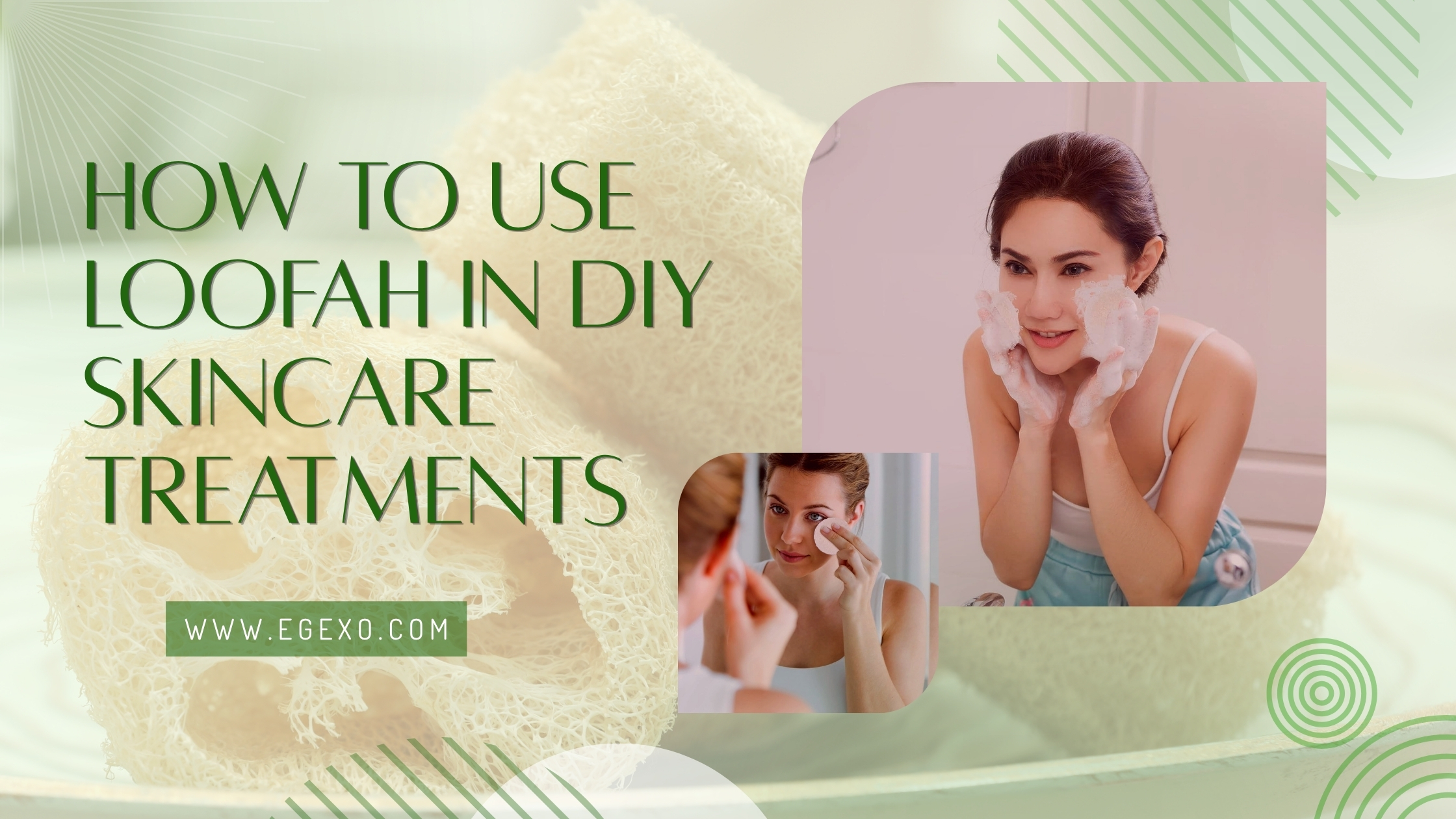
How to Use Loofah in DIY Skincare Treatments
Why the Loofah Is the Most Underrated DIY Skincare Tool
The global DIY skincare market crossed USD 12.5 billion in 2024 and continues to grow as consumers seek effective, affordable, and natural alternatives to professional treatments. In the middle of this movement sits one of the oldest and most effective skincare tools ever used: the natural loofah.
Knowing how to use loofah in DIY skincare treatments gives you access to a level of skin renewal that most people associate only with professional spa visits. A natural loofah made from the Luffa aegyptiaca plant provides mechanical exfoliation that lifts dead cells, unclogs pores, stimulates circulation, and prepares skin to absorb serums and moisturizers at a dramatically higher rate.
This guide is for two groups of people. For individual consumers and skincare enthusiasts, it is a practical, step-by-step resource for building loofah-based DIY treatments into your daily and weekly routine. For spa owners, wellness brands, and wholesale buyers, it is a window into the consumer behaviors and product expectations driving demand for premium natural loofah in 2026.
At Egexo, we have exported Egyptian loofah for 10 years. Our position at the intersection of agriculture, manufacturing, and export gives us a perspective on this topic that goes beyond what most skincare guides offer. We know what high-quality loofah looks like before it ever reaches a bathroom shelf, and we know how to help consumers and businesses make the most of it.
By the end of this article, you will know exactly which DIY treatments work best with natural loofah, how to select the right loofah grade for your skin type, and where to source the highest quality Egyptian loofah for personal or commercial use.
What Makes Natural Loofah the Best Tool for DIY Skincare
Before diving into specific treatments, it helps to understand why natural loofah produces better results than most of the alternatives people reach for in DIY skincare routines.
The Science of Mechanical Exfoliation
The skin renews itself on a cycle of approximately 28 to 30 days in younger adults, slowing to 45 to 60 days in people over 50. During this cycle, dead cells accumulate on the surface of the stratum corneum, the outermost skin layer. When dead cells pile up, skin looks dull, pores appear larger, and active ingredients in skincare products struggle to penetrate effectively.
Mechanical exfoliation physically removes these cells. The interlocking fiber mesh of a natural loofah creates hundreds of contact surfaces with the skin simultaneously, making it one of the most efficient mechanical exfoliants available without being abrasive enough to damage the skin barrier when used correctly.
A 2022 study on mechanical exfoliation published in a peer-reviewed dermatology journal found that regular mechanical exfoliation improved skin smoothness scores by up to 37 percent over six weeks compared to non-exfoliating cleansing routines.
Why Loofah Outperforms Synthetic Alternatives in DIY Treatments
| Feature | Natural Loofah | Synthetic Scrub Brush | Chemical Exfoliant | Plastic Mesh Puff |
|---|---|---|---|---|
| Exfoliation type | Mechanical, fiber-based | Mechanical, bristle-based | Chemical (AHA/BHA) | Mechanical, synthetic |
| Skin contact surfaces | High (interlocking mesh) | Moderate (parallel bristles) | Full surface chemical contact | Moderate |
| Risk of over-exfoliation | Low with correct use | Moderate | High with daily use | Low |
| Biodegradable | Yes, 100 percent | Partially (handle) | Not applicable | No |
| Suitable for DIY body treatments | Excellent | Good | Good for face, not body | Moderate |
| Compatible with DIY scrub recipes | Excellent | Limited | Not applicable | Poor |
| Hygiene between uses | Good with proper care | Good | Not applicable | Poor (bacteria-prone) |
The natural loofah is the only tool that excels at DIY body treatments, integrates with homemade scrub recipes, and leaves zero environmental residue. For wellness brands building DIY-inspired product lines, this is a compelling combination that justifies premium retail positioning.
You can explore the full range of bath and body loofahs available from Egexo to find the grade and size that best suits DIY skincare applications.
How to Use Loofah in DIY Skincare Treatments: The Core Techniques
Understanding the techniques that produce the best results is essential before attempting any specific treatment. The approach you take with a natural loofah makes a significant difference in outcomes.
Technique 1: Dry Brushing
Dry brushing with a loofah before a shower stimulates the lymphatic system, which runs just beneath the skin and plays a key role in immune function and fluid regulation. Using a dry natural loofah on dry skin in long, upward strokes from the feet toward the heart moves lymphatic fluid toward the lymph nodes, supporting detoxification.
Dry brushing is best performed 2 to 3 times per week, always before showering. Use very light pressure, especially over the chest, abdomen, and inner arms. The result after 4 to 6 weeks of consistent practice is noticeably smoother, more even-toned skin.
Technique 2: Wet Exfoliation with a DIY Scrub
This is the most common loofah technique and the foundation of most DIY skincare treatments. The process involves loading a damp loofah with a homemade scrub mixture and working it across the body in circular motions.
The loofah does two things simultaneously: the fibrous texture physically lifts dead cells, while the scrub ingredients provide additional exfoliation, nourishment, or treatment benefits depending on the recipe. This combination produces results that neither the loofah alone nor the scrub alone could achieve.
Technique 3: Targeted Spot Treatment
A natural loofah can be cut into smaller sections for targeted application on specific body areas such as the elbows, knees, heels, and shoulders. These areas tend to accumulate dead skin faster than other parts of the body due to pressure and friction.
Raw loofah scrubbers from Egexo are available in bulk for businesses that want to create pre-cut loofah treatment pads as part of a branded DIY skincare kit. This is a growing product category in the spa retail market.
6 DIY Skincare Treatment Recipes Using Natural Loofah
These recipes are designed for different skin goals and body areas. Each one can be made with ingredients available in most kitchens or natural food stores.
Recipe 1: Honey and Sea Salt Glow Scrub
This treatment combines the antibacterial properties of raw honey with the mineral content of sea salt to produce immediate skin luminosity.
| Ingredient | Amount | Purpose |
|---|---|---|
| Raw honey | 3 tablespoons | Humectant, antibacterial |
| Fine sea salt | 2 tablespoons | Physical exfoliant, mineral replenishment |
| Sweet almond oil | 1 tablespoon | Skin softening, lipid barrier support |
| Lemon zest (optional) | Half teaspoon | Brightening, vitamin C |
Method: Combine all ingredients in a small bowl. Apply to a damp natural loofah and work across the body in circular motions. Rinse thoroughly. Use once per week on normal to oily skin.
Recipe 2: Coffee and Coconut Sugar Cellulite Treatment
Coffee contains caffeine, which temporarily tightens and smooths the appearance of skin by constricting blood vessels near the surface. Combined with loofah exfoliation, this treatment addresses the texture associated with cellulite.
| Ingredient | Amount | Purpose |
|---|---|---|
| Ground coffee (used or fresh) | 4 tablespoons | Caffeine stimulation, physical exfoliation |
| Coconut sugar | 2 tablespoons | Fine exfoliant, glycolic acid precursor |
| Coconut oil | 2 tablespoons | Emollient, skin barrier |
| Cinnamon powder | Quarter teaspoon | Circulation stimulation |
Method: Mix into a paste. Apply to a damp loofah and massage vigorously into thighs, buttocks, and upper arms in upward circular strokes for 3 to 5 minutes. Rinse thoroughly. Use 2 to 3 times per week.
Recipe 3: Oatmeal and Lavender Calming Scrub
Designed for sensitive or reactive skin, this treatment uses the anti-inflammatory properties of colloidal oatmeal combined with a very soft natural loofah grade.
| Ingredient | Amount | Purpose |
|---|---|---|
| Colloidal oatmeal | 3 tablespoons | Anti-inflammatory, skin barrier support |
| Whole milk or oat milk | 2 tablespoons | Lactic acid (gentle chemical exfoliation) |
| Lavender essential oil | 5 drops | Calming, antibacterial |
| Fine white sugar | 1 tablespoon | Gentle physical exfoliant |
Method: Mix to a smooth paste. Apply gently to a soft loofah and use minimal pressure in slow circular strokes. This is not a vigorous scrub. Its purpose is gentle renewal without irritation. Use twice per week on sensitive skin types.
Recipe 4: Turmeric and Yogurt Brightening Treatment
This Ayurvedic-inspired treatment uses turmeric’s curcumin content for its documented anti-inflammatory and skin-brightening properties alongside the lactic acid in yogurt for mild chemical exfoliation.
| Ingredient | Amount | Purpose |
|---|---|---|
| Plain full-fat yogurt | 4 tablespoons | Lactic acid, probiotic skin support |
| Turmeric powder | Half teaspoon | Brightening, anti-inflammatory |
| Chickpea flour | 2 tablespoons | Mild exfoliant, oil absorption |
| Rose water | 1 tablespoon | Toning, hydration |
Method: Combine into a smooth paste. Apply to a damp loofah and use light circular strokes over face (with a soft loofah pad) and body. Leave for 2 minutes before rinsing. Use once per week. Note: Turmeric can temporarily stain light-colored loofahs.
Recipe 5: Brown Sugar and Olive Oil Hydrating Scrub
A simple, accessible recipe for all skin types that prioritizes deep hydration alongside exfoliation.
| Ingredient | Amount | Purpose |
|---|---|---|
| Brown sugar | 4 tablespoons | Physical exfoliation, natural glycolic acid |
| Extra virgin olive oil | 2 tablespoons | Deep emollient, antioxidant support |
| Vitamin E oil | Half teaspoon | Skin repair, antioxidant |
| Vanilla extract | Quarter teaspoon | Fragrance, antioxidant |
Method: Mix into a loose paste. Apply to a damp loofah and use long sweeping strokes across the body before rinsing. Best used after a 5-minute warm shower when pores are open and skin is receptive. Use twice per week.
Recipe 6: Activated Charcoal and Clay Detox Scrub
Designed for congested, oily skin or for use before an important event when you want the deepest possible clean.
| Ingredient | Amount | Purpose |
|---|---|---|
| Bentonite clay | 3 tablespoons | Deep pore cleansing, mineral-rich |
| Activated charcoal powder | 1 teaspoon | Toxin binding, deep detox |
| Apple cider vinegar | 2 tablespoons | pH balancing, mild exfoliation |
| Jojoba oil | 1 tablespoon | Non-comedogenic moisturizing |
Method: Mix to a thick paste. Apply to a damp loofah and work into congested areas, particularly the back, chest, and upper arms, using firm circular strokes. Allow to sit for 1 minute before rinsing thoroughly. Use once per week maximum.
Selecting the Right Loofah Grade for DIY Skincare Treatments
Not all loofahs are suited to all treatments. The grade of your loofah, meaning its fiber density and texture, should match both your skin type and the specific treatment you are performing.
Loofah Grade Guide for DIY Skincare
| Loofah Grade | Fiber Density | Texture | Best For | Skin Type |
|---|---|---|---|---|
| Soft grade | Low | Gentle, fine mesh | Face treatments, sensitive skin, calming recipes | Sensitive, dry, mature |
| Standard grade | Moderate | Balanced exfoliation | Daily body cleansing, hydrating scrubs | Normal, combination |
| Firm grade | High | Vigorous exfoliation | Cellulite treatments, detox scrubs, spot treatment | Oily, normal, body only |
| Extra firm / raw | Very high | Industrial strength | Foot and heel treatments, pre-treatment prep | Body areas only, not face |
For consumers purchasing loofah for personal DIY use, Egexo’s shop offers multiple grades that correspond to this guide. For spa owners and wellness brands building DIY treatment kits, selecting the right grade for each kit’s intended use is a critical product decision that directly impacts customer satisfaction.
Egexo’s quality standards documentation provides detailed technical specifications for each grade, which is essential reading for any business sourcing loofah for professional skincare applications.
The Role of Egyptian Loofah in Professional and At-Home Spa Treatments
The spa industry has used natural loofah as a core treatment tool for generations. Understanding why helps both consumers appreciate what they are working with and wholesale buyers articulate the value of their product to their own customers.
Why Egyptian Loofah Sets the Standard
Egypt’s Nile Delta region produces Luffa aegyptiaca with a fiber network density that is difficult to replicate in other growing regions. The combination of rich alluvial soil, a long warm growing season, and centuries of cultivation expertise produces a loofah that is both firm enough for effective exfoliation and flexible enough to conform to the body’s contours without causing micro-abrasions.
Egexo’s farm to export process documents exactly how this agricultural advantage translates into product consistency, from seed selection through to export packaging. Every loofah that leaves our facility has been graded, tested for moisture content, and inspected for fiber uniformity.
For DIY skincare purposes, this matters because a loofah with uneven fiber density produces uneven exfoliation results. High-density patches can over-exfoliate while sparse patches under-exfoliate within the same use, leaving skin with inconsistent texture. A premium Egyptian loofah from a verified source eliminates this problem.
Spa Treatment Applications That Translate to DIY Routines
Professional spas have developed specific loofah-based treatment protocols over decades. Many of these translate directly into effective at-home DIY routines.
| Spa Treatment | DIY Adaptation | Loofah Role | Frequency |
|---|---|---|---|
| Loofah body scrub ritual | Homemade salt or sugar scrub application | Primary exfoliation tool | Weekly |
| Dry brushing pre-treatment | Pre-shower dry brushing routine | Lymphatic stimulation, skin prep | 2-3 times per week |
| Targeted body mask application | DIY clay or charcoal mask on loofah | Treatment delivery and exfoliation | Bi-weekly |
| Hammam-style deep exfoliation | Weekly wet loofah treatment with body wash | Full-body dead cell removal | Weekly |
| Circulation stimulation massage | Circular stroke technique during shower | Microcirculation improvement | 3-4 times per week |
Spa owners looking to offer loofah-based treatment add-ons can source loofah pet and spa grooming products and professional body loofah grades through Egexo’s wholesale program. You can request a quotation for bulk spa supply with consistent grade specifications.
Loofah Care and Hygiene in DIY Skincare Contexts
One concern that comes up frequently in DIY skincare discussions is whether natural loofah is hygienic enough for regular use, particularly when used with food-based ingredients like honey, yogurt, or coconut oil.
The answer is yes, with proper care. The critical factor is how the loofah is maintained between uses.
Loofah Hygiene Protocol for DIY Skincare
| Step | Action | Timing | Notes |
|---|---|---|---|
| Post-treatment rinse | Rinse under hot running water until no scrub residue remains | Immediately after each use | Remove all food-based ingredients thoroughly |
| Full squeeze and hang | Squeeze out all moisture, hang vertically in ventilated area | After every use | Never leave flat or in closed shower |
| Vinegar soak | Soak in 1 part white vinegar to 4 parts water for 10 minutes | After any food-ingredient treatment | Neutralizes bacteria and residual organic matter |
| Full dry cycle | Allow to dry completely in sunlight when possible | Weekly | UV light has natural antibacterial properties |
| Replacement schedule | Replace with a fresh loofah | Every 3-4 months, sooner with heavy DIY use | Food-based treatments accelerate fiber breakdown |
When using loofahs for DIY treatments that involve sugars, proteins, and oils, the replacement cycle is typically shorter than for standard shower use. Organic material residue accelerates bacterial growth even with diligent cleaning, so plan to replace DIY-use loofahs every 6 to 8 weeks rather than the standard 3 to 4 months.
For wholesale buyers, this higher replacement rate is a commercial advantage. Consumers who incorporate natural loofah into active DIY skincare routines purchase replacement loofahs more frequently, driving repeat sales. Understanding your consumer’s use pattern helps you plan inventory and communicate product value more effectively.
Building a DIY Loofah Skincare Routine: Weekly Schedule
Consistency is what separates occasional skincare experiments from a genuine improvement in skin quality over time. The schedule below provides a sustainable, effective loofah DIY skincare routine for most adults with normal to combination skin.
| Day | Treatment | Loofah Technique | Time Required |
|---|---|---|---|
| Monday | Standard wet exfoliation with gentle body wash | Wet exfoliation | 5 minutes |
| Tuesday | Dry brushing before shower | Dry brushing | 5 minutes |
| Wednesday | Brown sugar and olive oil hydrating scrub | Wet exfoliation with DIY scrub | 10 minutes |
| Thursday | Standard wet exfoliation | Wet exfoliation | 5 minutes |
| Friday | Dry brushing before shower | Dry brushing | 5 minutes |
| Saturday | Weekly treatment (coffee cellulite or charcoal detox) | Targeted treatment | 15 minutes |
| Sunday | Rest day, standard shower without loofah | None | None |
This schedule provides 5 loofah sessions per week, which balances effective skin renewal with adequate recovery time. Adjust frequency based on your skin’s response. Skin that feels tight or raw after any treatment is signaling the need for reduced frequency or lighter pressure.
For consumers new to natural loofah, the bath and body loofah collection at Egexo includes options at different grades, making it easy to start with a softer grade and work up as your skin adjusts.
Business Opportunity: DIY Skincare Kits with Natural Loofah
For spa owners, wellness brands, and retailers, the DIY skincare movement is not just a consumer trend to observe. It is a product development and revenue opportunity to act on.
The DIY Skincare Kit Market
Curated DIY skincare kits that include natural loofah alongside complementary ingredients or products have seen consistent growth in the premium wellness retail channel. Kits priced between USD 25 and USD 65 that include a natural Egyptian loofah, a dry brushing loofah, and a small selection of treatment recipe cards represent a high-value, high-margin product that photographs well, tells a compelling story, and drives strong gifting sales.
The key to making this product work commercially is the quality of the loofah at its center. A kit built around a premium Egyptian loofah from Egexo carries authenticity and quality credentials that a kit built around generic loofah cannot. Origin matters to today’s consumers, and Egyptian loofah is a globally recognized quality signal.
Egexo’s private label loofah manufacturing service can supply loofahs for branded DIY kits in custom sizes, with custom packaging and labeling that matches your brand identity. The custom loofah product design team can also help develop unique loofah formats, such as pre-cut treatment pads or dual-texture loofahs, that differentiate your kit from mass-market alternatives.
Download the Egexo product catalog to review available grades, sizes, and custom options before building your kit concept.
FAQ Section
Q1: How do I use loofah in DIY skincare treatments for the first time? A: Start with a standard grade natural loofah and a simple recipe like brown sugar and olive oil. Wet the loofah thoroughly before use, apply the scrub mixture, and work in circular motions starting from the feet and moving upward. Use light pressure for the first two sessions to let your skin adjust. Rinse the loofah thoroughly afterward and hang it to dry in a ventilated space. Most people notice a difference in skin texture within two weeks.
Q2: How often should I use a loofah with a DIY scrub? A: For most skin types, using a natural loofah with a DIY scrub once or twice per week is sufficient. More frequent use can over-exfoliate the skin, disrupting the barrier and causing redness or sensitivity. Dry brushing with a loofah can be done up to 3 times per week as it is gentler than wet scrubbing with active ingredients.
Q3: Which loofah grade is best for sensitive skin DIY treatments? A: A soft grade natural loofah is best for sensitive skin DIY skincare. The lower fiber density reduces friction and minimizes the risk of irritation while still providing gentle exfoliation. Pair it with a calming recipe like the oatmeal and lavender scrub, use minimal pressure, and limit frequency to twice per week. If any redness or tightness occurs, reduce to once per week.
Q4: Can I use a loofah on my face for DIY skincare? A: Yes, but only with a specifically soft grade loofah or a loofah pad designed for facial use. Standard body loofahs are too firm for facial skin, which is significantly thinner and more reactive. Use a soft loofah pad with a gentle recipe like the turmeric and yogurt brightening treatment, apply minimal pressure, and avoid the eye area entirely.
Q5: What is the minimum order quantity for wholesale loofah for DIY skincare kits? A: Egexo’s standard grade loofah for retail and kit applications has no MOQ. Premium grades for spa and professional DIY applications start at 1,000 units. Custom sizes and private label configurations for DIY skincare kits start from 1,000 units. Sample orders are available before any bulk commitment to verify grade and quality.
Q6: Does natural loofah work better than a synthetic scrubbing tool for DIY treatments? A: Yes, for body treatments. Natural loofah’s interlocking fiber mesh creates more contact surface with the skin than a synthetic brush or puff, producing more even exfoliation across the treated area. It is also biodegradable, which aligns with the eco-conscious values that drive many DIY skincare enthusiasts. Synthetic tools also tend to harbor bacteria more readily when used with food-based scrub ingredients.
Q7: How do I clean a loofah after using a food-based DIY scrub? A: Rinse under hot running water for at least 60 seconds to remove all scrub residue. Squeeze out all moisture thoroughly. After any food-ingredient treatment like honey, yogurt, or coconut oil, soak the loofah in a solution of 1 part white vinegar to 4 parts water for 10 minutes, then rinse again and hang to dry completely. Replace DIY-use loofahs every 6 to 8 weeks due to the accelerated fiber breakdown from organic ingredients.
Q8: Why is Egyptian loofah better for DIY skincare than loofah from other sources? A: Egyptian loofah from the Nile Delta region has a denser, more uniform fiber network than loofah grown elsewhere. This uniformity means consistent exfoliation pressure across the entire surface, which is critical for even-toned DIY treatment results. Egexo’s farm-direct supply chain and quality control process guarantee that every loofah meets the same density and moisture standards, which generic or broker-sourced loofahs cannot consistently match.
Expert Insight from Egexo
After 10 years of growing and exporting Egyptian loofah, we have learned something that most skincare guides overlook: the quality of a DIY skincare treatment is only as good as the tool at its center. A home scrub recipe made with the finest ingredients will under-deliver if the loofah carrying it has uneven fiber density or excessive moisture content at the time of purchase. This is why origin and quality control matter as much for personal skincare use as they do for professional spa supply. Egyptian loofah from verified farm-direct sources like Egexo delivers the fiber uniformity that makes every circular stroke of your DIY treatment consistent, effective, and gentle. For anyone serious about natural skincare, starting with the right loofah is the most important step. Everything else follows from there.
Conclusion
Learning how to use loofah in DIY skincare treatments is genuinely one of the most cost-effective upgrades you can make to your personal skincare routine. A natural Egyptian loofah, used with the right technique and a simple homemade recipe, delivers exfoliation, circulation benefits, and skin renewal that rivals professional spa treatments at a fraction of the cost.
For businesses in the wellness space, the DIY skincare movement represents a clear and growing opportunity to build branded product lines around premium natural loofah. The combination of high consumer demand, strong margin potential, and Egexo’s farm-direct supply makes 2026 an excellent time to invest in this category.
Key Takeaways:
- Natural loofah provides mechanical exfoliation that increases skin smoothness by up to 37 percent over six weeks
- Dry brushing, wet scrub application, and targeted spot treatment are the three core loofah techniques
- Six DIY recipes cover every skin goal from brightening to detox to hydration
- Egyptian loofah from Egexo delivers the fiber uniformity essential for consistent DIY treatment results
- Wholesale buyers can build high-margin DIY skincare kits using Egexo’s private label and custom design services
Ready to experience Egyptian loofah quality?
- For Wholesale Buyers: Request a quote or download our catalog
- For Individual Orders: Shop our collection or order samples