

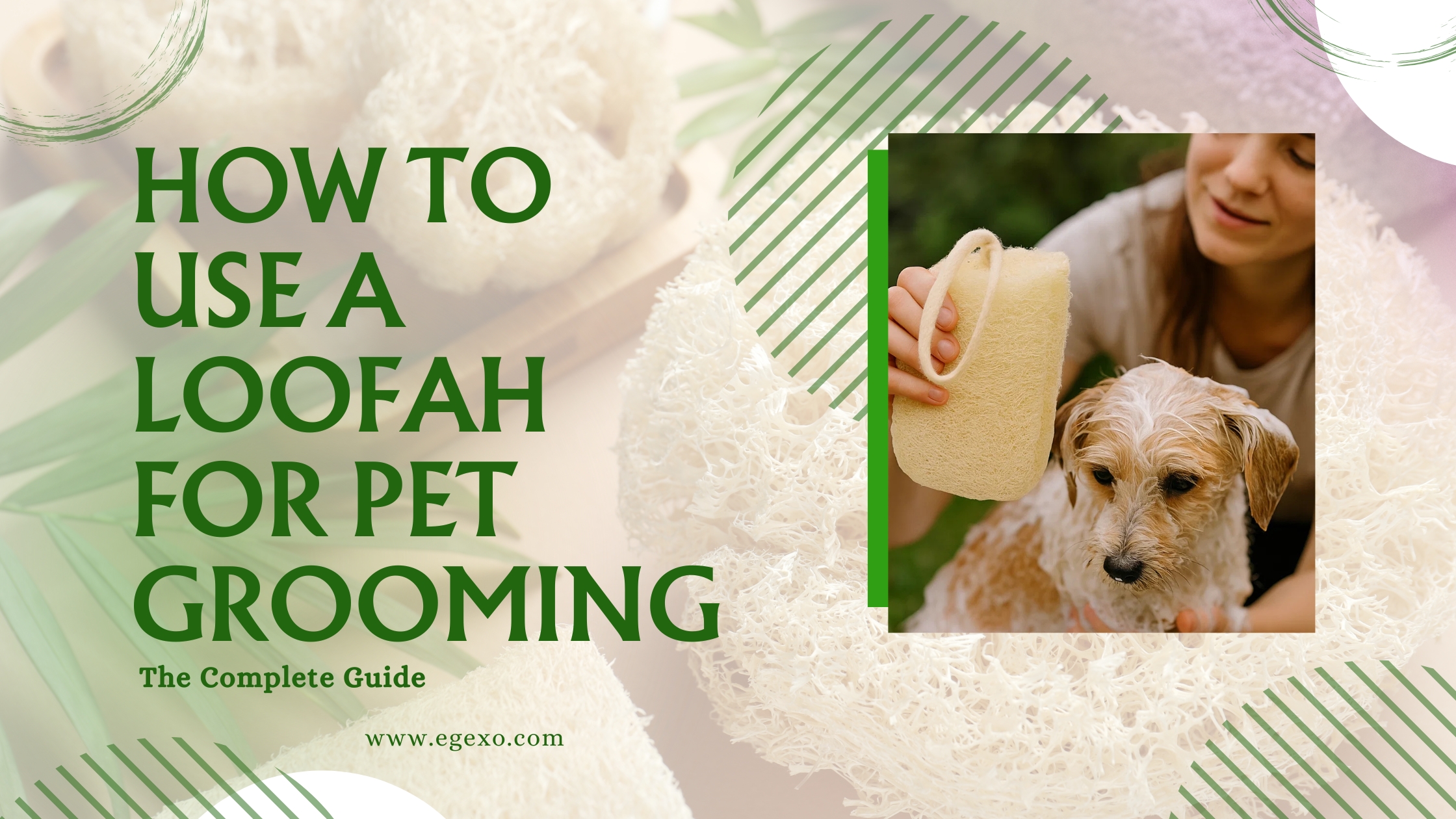
How to Use a Loofah for Pet Grooming: The Complete Guide
Your Pet Deserves Better Than Plastic
Most pet owners spend considerable thought on what their animals eat, where they sleep, and how much exercise they get. But grooming tools often get chosen by convenience rather than quality. If you have ever finished a grooming session and noticed your dog or cat seemed uncomfortable, or if the brush you used left your hands rough and raw, the tool itself may have been the problem.
Learning how to use a loofah for pet grooming is one of the most practical switches an animal owner can make. Natural loofah is gentle enough for sensitive animal skin, firm enough to remove loose fur and surface debris, and it comes from a plant, which means zero synthetic fibers touching your pet. For pet care businesses, groomers, and retailers, the same qualities that make loofah excellent for individual use make it an increasingly sought-after product for professional grooming lines.
At Egexo, we have spent more than 25 years cultivating and exporting Egyptian loofah, and the pet grooming segment is one of the fastest-growing categories in our wholesale operation. Pet owners worldwide are discovering that the same fiber quality that makes Egyptian loofah the gold standard for human bath products translates directly into superior performance for animal grooming.
This guide covers everything: how loofah works on different animals, step-by-step grooming techniques, safety guidelines, product selection criteria, and what wholesale buyers need to know about sourcing pet grooming loofah at volume. Whether you own one dog or run a grooming supply business, the information here is directly applicable.
Why Natural Loofah Works for Pet Grooming
Before walking through the technique, it helps to understand why loofah performs so well as a grooming tool for animals. The answer comes down to the fiber structure itself.
Loofah is the dried interior of a Luffa cylindrica or Luffa aegyptiaca gourd, a vine crop in the cucumber family. When the mature gourd is processed, what remains is a three-dimensional cellulose fiber network. Unlike synthetic mesh or plastic bristle tools, this network is naturally irregular at the microscopic level, which means it creates gentle friction across a curved surface rather than point pressure against skin.
For animals, this matters enormously. Pet skin, particularly in dogs and cats, is thinner and more pH-sensitive than human skin. Tools that create localized pressure or sharp friction can cause micro-abrasions that go unnoticed during grooming but lead to irritation hours later. The distributed, flexible friction of a natural loofah is far less likely to cause this kind of damage.
The Fiber Advantage: Why Not Just Use a Regular Brush
Standard pet brushes concentrate mechanical force through individual bristle tips. For detangling dense fur this is effective, but for surface cleaning, removing loose dander, stimulating circulation, and providing the sensory experience of a gentle massage, a flat or rounded brush cannot replicate what loofah delivers.
A loofah’s fiber network conforms to the animal’s body contour as you move it. This conforming quality means the grooming pressure distributes evenly whether you are moving across a flat back, around a curved leg, or along the contours of a head or neck.
Egyptian premium-grade loofah has an additional quality advantage here. Because Egypt’s climate produces fiber networks with exceptional density and regularity during the growing season, the resulting loofah has a texture that is simultaneously firm and yielding, which is exactly what pet grooming requires. You can explore the pet and spa grooming loofah range at Egexo to see how this quality translates into purpose-designed products.
Comparing Grooming Tools: Loofah Versus Common Alternatives
| Grooming Tool | Skin Contact Quality | Animal Comfort | Drying Time | Environmental Impact | Durability |
|---|---|---|---|---|---|
| Natural Loofah | Distributed, gentle friction | Very high | Moderate | Fully compostable | 30 to 60 uses |
| Plastic Mesh Sponge | Variable, can be harsh | Moderate | Fast | Non-biodegradable | 60 to 90 uses |
| Rubber Bristle Brush | Point pressure on skin | Moderate to high | Instant | Partially recyclable | 12 to 24 months |
| Microfiber Cloth | Very soft, minimal exfoliation | High | Slow | Synthetic, sheds microplastics | 6 to 12 months |
| Natural Bristle Brush | Moderate point pressure | Moderate | Instant | Biodegradable handle varies | 6 to 18 months |
| Silicone Grooming Glove | Distributed pressure | High | Fast | Non-biodegradable | 12 to 24 months |
The table above reflects general performance across a broad range of animal types and grooming scenarios. For wet grooming specifically, loofah outperforms most alternatives because it holds appropriate moisture to help distribute shampoo while maintaining enough structure to move through fur effectively.
How to Use a Loofah for Pet Grooming: Step-by-Step
Knowing how to use a loofah for pet grooming correctly makes a significant difference in both effectiveness and the animal’s experience. Done correctly, it becomes a grooming ritual that most animals genuinely enjoy. Done incorrectly, excessive pressure or a dry loofah on dry fur can cause discomfort.
Step 1: Prepare the Loofah
New loofahs should be soaked in warm water for three to five minutes before first use. This softens the outer fibers and allows the natural structure to fully open. A dry loofah has a firmer, more rigid texture that is appropriate for certain applications but can feel scratchy on sensitive animal skin.
For ongoing use, run the loofah under warm water immediately before each grooming session and squeeze out excess so it is damp but not dripping. The ideal moisture level is enough to carry a small amount of pet shampoo without the loofah becoming waterlogged and heavy.
Step 2: Apply Pet Shampoo Correctly
Work a small amount of your chosen pet shampoo into the damp loofah before applying it to the animal. The fiber network distributes shampoo very effectively, so you will typically need less product than you would with a standard bath sponge. This is one of the practical cost advantages for pet owners.
Never apply shampoo directly to the animal’s skin and then rub with the loofah. Applying shampoo to the loofah first creates a more even lather distribution and reduces the risk of concentrated product sitting on the skin.
Step 3: Groom in the Direction of Fur Growth
This is the most commonly overlooked technique point. Always move the loofah in the direction the fur naturally lies, not against it. Moving against fur growth with a loofah creates excessive friction and can cause tangling in longer-coated breeds.
Use light to moderate pressure and long, sweeping strokes along the back and sides. Use smaller, circular motions around the legs, paws, and face. The circular motion on the extremities is particularly effective at loosening surface debris and dander without pulling on the fur.
Step 4: Pay Attention to Sensitive Areas
Animals have several areas that require particular care during any grooming session. These include the face, ears, groin area, and paws. For these zones, use a smaller loofah piece or a purpose-cut loofah segment and apply very light pressure. Never insert loofah into the ear canal.
The face deserves special mention. Many animals are sensitive around the muzzle and eyes. Use a damp loofah with no shampoo on the face, applying gentle circular motions to remove surface dirt and stimulate the skin. Keep the loofah away from the eyes entirely.
Step 5: Rinse Thoroughly
After grooming with shampoo, thorough rinsing is critical for any grooming tool, but particularly for loofah because its fiber network can hold product residue if not rinsed properly. Rinse the animal’s coat completely until the water runs clear, then rinse the loofah itself under running water until no soap remains.
Squeeze the loofah multiple times during rinsing rather than just running water over it. The internal fiber structure holds product deeper than the surface, and squeezing forces water through the entire network.
Step 6: Dry and Store Correctly
After each use, squeeze the loofah firmly to remove as much water as possible, then hang it in a well-ventilated location to dry completely. A damp loofah stored in an enclosed space will develop mold within two to three days, which makes it unsafe for use on animals.
Natural loofah dries faster than synthetic sponges in most environments because the cellulose fibers do not trap moisture the same way synthetic polymers do. In a bathroom with reasonable airflow, a well-squeezed loofah typically dries within four to eight hours.
Complete Pet Grooming Process Reference
| Step | Action | Key Detail | Common Mistake |
|---|---|---|---|
| 1 | Soak loofah in warm water | 3 to 5 minutes for new loofah, brief for ongoing | Using loofah completely dry |
| 2 | Apply shampoo to loofah | Small amount distributed through fibers | Applying shampoo directly to pet skin |
| 3 | Groom with fur growth direction | Long strokes on body, circular on extremities | Moving against fur direction |
| 4 | Careful on sensitive areas | Light pressure on face, paws, groin | Too much pressure around ears or eyes |
| 5 | Rinse thoroughly | Squeeze repeatedly during rinsing | Surface rinsing without squeezing |
| 6 | Dry in ventilated space | Hang, do not store wet | Storing damp in enclosed container |
Choosing the Right Loofah for Your Pet’s Size and Coat Type
Not every loofah is equally appropriate for every animal. Size, coat density, skin sensitivity, and the animal’s general tolerance for grooming all affect which loofah product will perform best.
Size and Density Guidelines by Animal Type
| Animal Type | Recommended Loofah Size | Fiber Density Preference | Grooming Frequency |
|---|---|---|---|
| Large dog (over 25 kg) | 20 to 30 cm full loofah | Standard to high density | Weekly bath grooming |
| Medium dog (10 to 25 kg) | 15 to 20 cm loofah | Standard density | Weekly bath grooming |
| Small dog (under 10 kg) | 10 to 15 cm loofah or cut piece | Lower density, softer | Weekly to bi-weekly |
| Cat (most breeds) | 10 to 12 cm cut piece | Very low density | Monthly or as needed |
| Rabbit | Small cut piece, 6 to 8 cm | Very low density | Spot cleaning only |
| Guinea pig | Small cut piece, 5 to 7 cm | Very low density | Spot cleaning only |
The fiber density column in the table above corresponds directly to loofah quality grades. Lower density for small or sensitive animals means choosing a softer, slightly lower-grade loofah rather than premium density. This is counterintuitive but important: the firmest, most premium-grade loofah is ideal for human bath use and large animal grooming, but can be too stimulating for small or sensitive pets.
Egexo’s pet and spa loofah range includes options sized and graded specifically for different animal categories. If you are unsure which specification is right for your application, ordering samples allows you to test density and texture before committing to a larger purchase.
Coat Type Considerations
Short-coated animals such as Labrador Retrievers, Boxers, and domestic shorthair cats benefit most from loofah grooming because the fibers can reach the skin more directly to remove dander and stimulate circulation without getting caught in long fur.
Double-coated breeds such as Huskies, Golden Retrievers, and Chow Chows require a pre-brush before loofah grooming to remove significant loose fur from the outer coat. Attempting loofah grooming on an unbrished double coat can result in fur bunching and discomfort. Use loofah on these breeds during bath time specifically, when the coat is wet and separated.
Curly or wavy coats such as those on Poodles and Doodle breeds work very well with loofah grooming during bathing. The loofah distributes shampoo evenly through the curl structure and helps rinse it out without disrupting the natural curl pattern the way vigorous rubbing with a towel might.
Sensitive skin animals, including those with diagnosed skin conditions or allergy histories, should be introduced to loofah grooming very gradually. Start with a very brief, very light application on a small body area and observe the skin response over the following 24 hours before expanding use.
Safety Guidelines Every Pet Owner Should Follow
Using loofah for pet grooming is inherently safe when basic guidelines are followed. The safety issues that occasionally arise come from improper use or from using a product that has degraded past its safe use window, not from the material itself.
Hygiene and Replacement Schedule
| Indicator | What It Means | Action Required |
|---|---|---|
| Gray or brown discoloration | Mold beginning to develop | Replace immediately |
| Musty or sour smell after drying | Bacterial or mold contamination | Replace immediately |
| Fiber shedding significantly | End of useful structural life | Replace promptly |
| Soft or collapsed areas | Fiber structure degraded | Replace for full-body use |
| More than 30 days of use | Standard replacement timeline | Replace as scheduled |
For pet grooming specifically, the replacement timeline should be shorter than for human bath loofahs. Animals transfer more surface bacteria and organic matter during grooming than a post-shower human does, and the loofah’s fiber network accumulates these materials between uses. For weekly grooming use on a single animal, replacing the loofah every three to four weeks is appropriate. For professional grooming environments where one loofah may be used on multiple animals, replacement after every three to five uses is a hygiene best practice.
What to Avoid
Never use a human bath loofah that has been in household bathroom use for grooming animals. Cross-contamination between human and animal grooming tools introduces hygiene risks in both directions. Maintain dedicated grooming tools for your pets.
Avoid using loofah on animals with open wounds, active skin infections, or significant skin irritation. In these cases, consult a veterinarian before using any grooming tool on the affected areas.
Do not soak loofah in cleaning products between uses as a sterilization measure. The chemical residue that remains in the fiber network can be harmful to animal skin. If hygiene is a concern, simply replace the loofah more frequently.
The Business Opportunity: Pet Grooming Loofah for Retailers and Groomers
The pet care industry globally was valued at over USD 280 billion in 2024 and continues growing at approximately 6 percent annually. Within that market, the natural and eco-conscious pet product segment is growing at roughly twice the overall industry rate, driven by the same consumer trends that are expanding the natural personal care market.
Pet grooming loofahs occupy a specific intersection of two high-growth segments: natural pet care and sustainable household products. For retailers, groomers, and pet product brands, this intersection represents a genuine commercial opportunity that remains underdeveloped relative to its market potential.
Product Opportunity Analysis for Wholesale Buyers
| Channel | Key Customer Segment | Product Format | Volume Potential |
|---|---|---|---|
| Pet specialty retail | Natural-oriented pet owners | Individually packaged, branded | High, repeat purchase |
| Professional grooming salons | Groomers seeking natural tools | Bulk unpackaged, multiple sizes | Moderate, consistent |
| Veterinary practices | Owners with skin-sensitive pets | Packaged with usage instructions | Lower volume, premium margin |
| Online pet retail | Eco-conscious buyers nationwide | Private label or white label | High, subscription potential |
| General retail (pharmacy, grocery) | Mainstream pet owners | Standard packaged format | Very high, price-sensitive |
| Subscription box services | Premium pet owner segment | Curated, co-branded format | Moderate, strong brand association |
Wholesale buyers evaluating this opportunity should request a quote from Egexo to discuss available sizes, grades, MOQs, and packaging options for pet grooming applications. The private label manufacturing program allows brands to bring their own identity to Egyptian-quality loofah products, which is particularly valuable in the premium pet care segment where brand story and ingredient transparency matter to buyers.
Download the complete Egexo product catalog to review current specifications, size ranges, and MOQ requirements across the pet grooming product line.
Why Egyptian Loofah Is the Right Source for Pet Products
For brands selling into the premium pet care market, ingredient origin and quality traceability are marketing assets as much as product attributes. Egyptian loofah from a verified Nile Delta source provides both.
The farm-to-export process at Egexo is documentable at every stage, from cultivation zone and planting date through harvest, processing, and export certification. For a pet product brand building a natural and transparent product story, this documentation supports marketing claims in ways that generic or unverifiable loofah sources cannot.
Egyptian premium-grade loofah also has the low pest pressure and minimal chemical intervention history that clean-ingredient pet brands need to credibly communicate. Egypt’s dry growing season naturally suppresses the insect and fungal pressures that require chemical treatments in high-humidity growing regions, resulting in a more naturally cultivated finished product.
DIY Pet Grooming Loofah Preparations
For pet owners who want to customize their loofah grooming experience, several simple preparations can enhance the effectiveness and comfort of loofah grooming sessions.
Gentle Herb-Infused Loofah Soak
Soaking a loofah in a diluted chamomile or calendula tea before use can add mild soothing properties beneficial for animals with sensitive or slightly irritated skin. Use one tea bag per cup of warm water, allow it to cool completely, and soak the loofah for five to ten minutes before grooming. This preparation is particularly suitable for small dogs and cats with reactive skin.
Note that any herbal preparation should be confirmed safe for your specific animal species before use. Certain herbs appropriate for dogs may be unsuitable for cats. When in doubt, use plain water only.
Creating a Custom Size Loofah for Small Pets
Raw loofah scrubbers from natural sources can be cut to custom sizes with a sharp knife or scissors. For small animals like guinea pigs, rabbits, or toy-breed dogs, a standard full-size loofah is much too large for practical use. Cutting a section of 6 to 8 centimeters creates a manageable grooming tool sized appropriately for small animal bodies.
Raw loofah scrubbers available through Egexo are particularly suitable for this kind of customization because they have not been shaped or treated, giving you a clean base to cut and prepare as needed.
Expert Insight from Egexo
One thing we hear consistently from professional groomers who switch to natural loofah tools is that their animals are calmer during grooming sessions. We believe this reflects the sensory difference between natural fiber and synthetic materials.
Plastic and rubber grooming tools create a very specific tactile signal against animal skin that some animals associate with discomfort. A natural loofah creates a different sensation, softer, more variable in texture, and more similar to the gentle stimulation of natural environmental contact.
After more than 25 years working with Egyptian loofah across dozens of product applications, our team has developed specific density and sizing parameters for pet grooming applications that prioritize animal comfort without sacrificing functional effectiveness. The quality standards we apply to our pet grooming line are distinct from bath product standards because the requirements are genuinely different.
For wholesale buyers entering the pet grooming market, we are glad to share our product development knowledge. Visit for additional resources specific to the wholesale natural pet product market.
FAQ Section
Q1: How do I use a loofah for pet grooming without hurting my animal?
A: To use a loofah for pet grooming safely, always soak the loofah in warm water before use so the fibers soften adequately. Apply light to moderate pressure and work in the direction of fur growth, never against it. Use smaller, gentler circular motions on sensitive areas like the face, paws, and belly. Introduce the loofah gradually on animals new to this grooming method, starting with brief sessions of two to three minutes before extending to a full grooming routine.
Q2: What size loofah is best for dog grooming?
A: The right size depends on your dog’s size. Large dogs over 25 kilograms work well with a 20 to 30 centimeter full loofah. Medium dogs between 10 and 25 kilograms suit a 15 to 20 centimeter size. Small dogs under 10 kilograms are better served by a 10 to 15 centimeter piece. For very small breeds and cats, cutting a small section from a raw loofah scrubber is the most practical approach. Matching size to the animal prevents awkward tool handling during grooming.
Q3: How often should I replace the loofah I use for my pet?
A: For regular home use on a single animal with weekly grooming, replace the loofah every three to four weeks. For professional grooming environments where one loofah may be used across multiple animals, replace after every three to five uses. Signs that immediate replacement is needed regardless of age include gray or brown discoloration, a musty smell after drying, significant fiber shedding, or soft collapsed areas in the loofah structure.
Q4: Can I use the same loofah for both my pet and my own bath routine?
A: No. Maintain completely separate loofahs for human and animal use. Cross-using grooming tools introduces bacteria and organic matter in both directions, creating hygiene risks. Animals carry different skin bacteria than humans, and mixing grooming tools creates unnecessary contamination risk. Dedicated, labeled grooming loofahs for each animal, and separate bath loofahs for household members, is the proper hygiene approach.
Q5: What minimum order quantities are available for pet grooming loofahs at wholesale?
A: At Egexo, minimum order quantities for pet grooming loofahs typically start at 300 units per SKU, which is lower than the standard bath loofah MOQ due to the specialized nature of the product category. Custom sizes, packaging configurations, and private label options are available from the custom product design program. Download the product catalog for current specifications and pricing structures for the pet grooming range.
Q6: Is natural loofah better than a silicone grooming glove for dogs?
A: Both tools have merit, but they serve different grooming functions. Silicone grooming gloves are excellent for removing loose shedded fur from short-coated dogs because the nubs catch floating hair effectively. Natural loofah performs better for bath-time grooming because it distributes shampoo evenly, provides gentle skin stimulation to remove dander and improve circulation, and offers a softer, more natural texture against sensitive skin. Many pet owners use both: a silicone glove for dry brushing between baths and loofah during bath sessions.
Q7: Can loofah grooming help with my pet’s shedding?
A: Regular loofah grooming during bath sessions can help manage shedding in two ways. First, the fiber texture loosens dead and ready-to-shed fur from the undercoat during wet grooming, allowing more fur to be removed during the bath than would come out naturally over the following days. Second, the gentle skin stimulation that loofah provides promotes healthy circulation in the skin, which supports coat health over time. It is not a replacement for dedicated deshedding tools on heavy-shedding breeds, but it is a complementary approach that many owners find reduces between-bath shedding.
Q8: How can retailers and groomers evaluate Egyptian loofah quality for pet grooming applications?
A: Physical evaluation is the most reliable approach. Request samples that represent the specific size and grade you intend to stock. Test compression recovery (the loofah should return to shape within one to two seconds), assess fiber density by squeezing and feeling for uniform firmness throughout, check color (light tan indicates optimal growing conditions), and evaluate the scent (fresh and neutral, no mustiness). Order loofah samples from Egexo to conduct a hands-on evaluation before placing a volume order.
Conclusion
Using a loofah for pet grooming is a natural, effective, and genuinely animal-friendly approach that outperforms synthetic alternatives in comfort, shampoo distribution, and skin stimulation. The technique is accessible to any pet owner willing to invest five minutes in learning it correctly, and the results, calmer grooming sessions, cleaner coats, and healthier skin, are consistently worth the minor adjustment from conventional grooming tools.
For businesses, the pet grooming loofah market is growing with the broader natural pet care segment, and Egyptian loofah from a traceable, quality-verified source provides both the product performance and the brand story that premium pet product markets reward.
Key Takeaways:
- Always soak the loofah before use and work in the direction of fur growth
- Match loofah size to your animal’s body size for best results
- Replace grooming loofahs every three to four weeks for hygiene
- Never cross-use pet and human grooming loofahs
- Egyptian premium loofah provides the ideal fiber density for most pet grooming applications
Ready to experience Egyptian loofah quality for pet grooming?
- For Wholesale Buyers: Request a quote or download our catalog
- For Individual Orders: Shop our pet grooming collection or order samples to test first
- For More Guides: Explore loofahguide.com for additional natural grooming resources