
DIY Natural Loofah Soap Scrubber: How to Make a Plastic-Free Bath Accessory at Home
Why Your Bathroom Deserves Better Than Plastic
Every year, over 900 million plastic bath poufs and synthetic scrubbers are discarded globally, adding to a growing mountain of non-biodegradable waste that takes hundreds of years to break down. Meanwhile, one of the most effective, skin-friendly, and fully compostable alternatives has been growing in Egyptian fields for centuries.
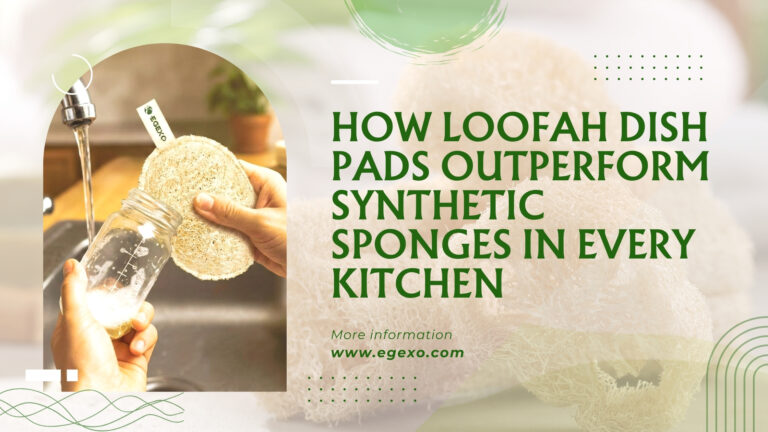
A DIY natural loofah soap scrubber combines two simple elements, a dried loofah gourd and a bar of natural soap, into a zero-waste bath accessory that outperforms plastic on almost every metric. It exfoliates more gently, lasts longer with proper care, and leaves no microplastics behind in your drainwater or the ocean.
For individual consumers and eco-conscious households, making your own loofah soap scrubber at home is both a satisfying project and a meaningful step toward a plastic-free bathroom. For spa owners, wellness retailers, and wholesale buyers, understanding this product from the inside out, how it is made, what quality really looks like, and where the best raw material comes from, is the foundation of building a strong, sustainable product line.
This guide walks through everything: the science behind loofah fibers, a step-by-step DIY process, quality benchmarks that matter in commercial settings, and why Egyptian loofah, particularly from producers like Egexo, continues to set the global standard. Whether you are crafting one scrubber for your own shower or sourcing thousands of units for retail shelves, the information here will help you make smarter, greener decisions.
What Is a Natural Loofah and Why Does It Matter?
The Loofah Plant: A Fiber Factory in Disguise
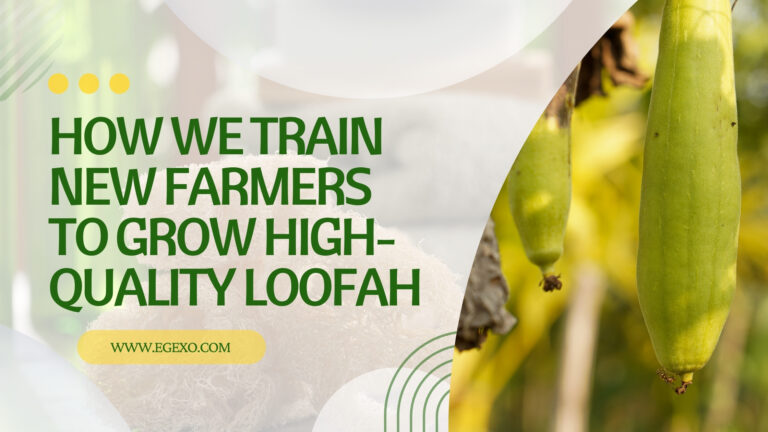
Most people assume loofah is a sea sponge. It is not. Loofah, or Luffa aegyptiaca, is a tropical climbing plant in the cucumber family. The fibrous skeleton inside the mature gourd is what gets harvested, dried, and used as a scrubbing tool. When properly processed, the internal network of interlocking cellulose fibers creates a structure that is simultaneously firm enough to remove dead skin cells and flexible enough to conform to body contours.
Egypt has cultivated luffa for export for well over a century, and the Nile Delta climate, with its rich alluvial soil and long growing season, produces loofah with notably dense, even fiber distribution. Egexo, with 10 years of active loofah export experience, sources exclusively from Egyptian farms where quality control begins at the seed stage, not the packaging stage.
Why Natural Loofah Beats Synthetic Alternatives
| Feature | Natural Loofah | Synthetic Plastic Scrubber |
|---|---|---|
| Biodegradable | Yes, fully within 30-60 days | No, persists 400+ years |
| Microplastic shedding | None | Yes, thousands of particles per use |
| Exfoliation effectiveness | High, multi-layer fiber matrix | Moderate to high initially, degrades fast |
| Skin compatibility | Gentle, suitable for most skin types | Can cause micro-abrasions |
| Average product lifespan | 4-6 weeks with proper drying | 6-12 weeks, but quality degrades |
| Compostable at end of life | Yes | No |
| Customizable for DIY | Highly customizable | Limited |
| Bulk sourcing options | Wide availability, multiple grades | Widely available but non-sustainable |
This comparison makes a strong case not just for individual consumers but for retailers and spa operators looking to align their product offerings with the values of a growing eco-conscious customer base.
The DIY Natural Loofah Soap Scrubber: Step-by-Step Guide
Creating a DIY natural loofah soap scrubber at home requires no special equipment. The process is straightforward, and the result is a bathroom product you made from scratch.
What You Will Need
- One dried loofah slice, cylinder, or whole loofah segment (approximately 10-15 cm in length)
- One bar of natural soap, such as glycerin, castile, or shea butter soap (approximately 100-120 grams)
- A heat-safe container or silicone mold slightly larger than your loofah piece
- A double boiler or microwave-safe bowl
- Optional: dried herbs, essential oils, natural colorants
Step-by-Step Process
| Step | Action | Details and Tips |
|---|---|---|
| 1 | Prepare the loofah | Soak dried loofah in warm water for 5-10 minutes to slightly soften fibers. Squeeze out excess water and let it partially dry for 30 minutes. |
| 2 | Melt the soap base | Cut the soap bar into small chunks. Melt using a double boiler on low heat or in a microwave in 30-second intervals. Stir until completely liquid. |
| 3 | Add optional ingredients | If using essential oils such as tea tree, lavender, or eucalyptus, stir them into the melted soap now. Keep temperature below 60 degrees Celsius to preserve oils. |
| 4 | Position the loofah | Place your prepared loofah piece at the bottom of your mold or container. |
| 5 | Pour the soap | Slowly pour the melted soap over and around the loofah, ensuring it fills the gaps in the fiber matrix. |
| 6 | Allow to set | Let the scrubber cool at room temperature for 2-3 hours, then refrigerate for 30 minutes to fully harden. |
| 7 | Unmold and trim | Remove from the mold. Trim any uneven edges with a knife. Your DIY natural loofah soap scrubber is ready. |
Pro Tips for Better Results
- Thinner loofah slices (2-3 cm) produce a flatter scrubber disc, ideal for facial use.
- Thicker cylinders (8-12 cm) create a full-body scrubber with more lather capacity.
- Using glycerin soap creates a more translucent finished product that showcases the loofah fiber pattern beautifully.
- Adding 1 teaspoon of raw honey to the melted soap increases moisturizing properties.
If you want access to consistently cut, pre-dried loofah slices in bulk for repeated DIY projects or for small-batch soap production, the raw loofah scrubbers category at Egexo offers uniform grades suitable for both home crafters and professional soapmakers.
Quality Indicators: What Separates a Good Loofah From a Great One
Whether you are making a single DIY scrubber or evaluating a wholesale supplier for ongoing retail orders, understanding loofah quality at the fiber level saves time and money.
Key Quality Indicators for Raw Loofah Material
| Quality Factor | What to Look For | Red Flags |
|---|---|---|
| Fiber density | Tight, even network with no gaps or collapsed areas | Sparse fibers, visible holes, irregular texture |
| Color | Consistent light tan to golden brown | Gray, dark, or spotty discoloration (sign of mold or poor drying) |
| Moisture content | Dry to the touch, under 12% moisture | Soft spots, musty odor |
| Fiber elasticity | Returns to shape after compression | Brittle, crumbles under pressure |
| Seed removal | Clean interior, no residual seeds or pith | Seeds present (indicate premature harvest) |
| Length consistency (for wholesale) | Uniform within 5mm per batch | High variation (indicates mixed harvests) |
| Skin safety | No chemical bleaching residue | Strong chemical odor, overly white appearance |
Egexo applies these exact criteria at the farm level before any loofah enters processing. You can review the full standards at the Egexo quality standards page or trace how the product moves from field to export container through the farm to export process overview.
Quality Grades Available in Wholesale
For buyers ordering in volume, Egexo categorizes loofah in three commercial grades:
- Grade A (Export Premium): Uniform fiber density, consistent sizing, minimal blemishes, suitable for branded retail and spa product lines.
- Grade B (Standard Commercial): Slight variation in tone or fiber density, fully functional, ideal for value-tier retail or bulk resale.
- Grade C (Processing Grade): Used in industrial or craft applications, loofah-soap embedding, or cut-piece production.
Buyers considering a new supply relationship are encouraged to order loofah samples before committing to bulk volumes.
Building a Sustainable Product Line Around Loofah
Opportunities for Spa Owners and Wellness Retailers
The global natural and organic personal care market was valued at over USD 14 billion in 2024 and continues to grow at an estimated 8.7% annually through 2030. A significant segment of that growth is driven by consumers replacing synthetic bath products with natural alternatives, and loofah products are among the most accessible entry points.
Spa owners and retailers can build compelling product ranges using Egyptian loofah as the base material. The DIY natural loofah soap scrubber concept translates directly into a retail-ready product when produced consistently with quality raw material.
If you are developing your own branded bath and body line, the private label loofah manufacturing service at Egexo allows you to source finished loofah soap scrubbers, bath sponges, and exfoliating accessories under your own brand name. For completely custom shapes, sizes, or packaging formats, the custom loofah product design service supports new product development from concept through export-ready production.
Minimum Order Quantities and Bulk Pricing Structure
| Product Type | Typical MOQ | Notes |
|---|---|---|
| Raw loofah cylinders (natural dried) | 500 kg per order | Mixed or sorted by diameter |
| Pre-cut loofah slices | 1,000 pieces minimum | Custom thickness available |
| Loofah soap scrubbers (finished) | 500 units | Custom soap formulation available |
| Private label bath loofah products | 300 units per SKU | Packaging design included |
| Loofah pet grooming accessories | 200 units | Growing category |
These figures are indicative. For a firm quotation tailored to your specific product mix and destination, submit a wholesale inquiry here or download the complete Egexo product catalog for the full range.
Caring for Your Loofah Soap Scrubber: Consumer Guide
A well-made loofah soap scrubber, whether DIY or commercially produced, will last four to six weeks with correct maintenance. Improper care is the single biggest reason consumers underestimate loofah lifespan.
Maintenance Checklist
| Frequency | Action |
|---|---|
| After every use | Rinse thoroughly under running water. Squeeze out excess moisture. Hang to dry completely away from closed shower walls. |
| Every 3-4 days | Soak in a dilute solution of white vinegar and water (1:4 ratio) for 5 minutes to prevent bacterial buildup. |
| Weekly | Inspect for any dark spots, unusual odor, or fiber breakdown. These are signs the scrubber has reached end of life. |
| When replacing | Compost your used loofah in a garden compost bin. It breaks down within 30-60 days and enriches soil. |
Skin Type Guidance
- Sensitive skin: Use the loofah soap scrubber no more than 2-3 times per week. Apply with light, circular pressure.
- Normal to oily skin: Daily use is appropriate. Focus scrubbing on rough areas like elbows, knees, and heels.
- Post-shaving or post-waxing: Wait at least 24-48 hours before using any exfoliating tool, including natural loofah.
For a broader range of body loofah products suitable for different skin needs, the bath and body loofah collection at Egexo includes options from gentle facial-grade loofahs to full-body exfoliating pads.
Egyptian Loofah: The World Standard for Natural Fiber Quality
Why Egypt Produces the Best Loofah
Egypt has held a dominant position in global loofah cultivation and export for more than a century. The Nile Delta region offers conditions that are essentially impossible to replicate elsewhere at scale: a combination of rich alluvial soil, predictable seasonal flooding that replenishes nutrients naturally, high sun exposure throughout the growing season, and generations of agricultural expertise passed down through farming communities.
Loofah grown in Egypt consistently demonstrates:
- Fiber tensile strength 15-20% higher than loofah from South American or Southeast Asian sources
- More uniform diameter distribution per harvest
- Lower moisture at harvest due to climatic conditions, reducing drying time and mold risk
- Higher fiber-to-gourd weight ratio, meaning more usable material per plant
These characteristics matter whether you are embedding loofah in handmade soap at home or filling a container order for a European wellness retailer.
Egexo’s Role in the Egyptian Loofah Industry
Egexo is not simply a trading company that purchases loofah from open markets. With 10 years of processing and export experience, Egexo operates as a vertically integrated supplier. That means control at every stage, from seed selection and planting schedules through harvest timing, fiber processing, quality sorting, and export documentation.
This level of integration directly benefits both ends of the supply chain. Wholesale buyers receive consistent quality across repeated orders. End consumers using products made with Egexo-sourced loofah experience the difference in fiber texture and durability from the first use.
For wholesale buyers exploring whether Egexo is the right sourcing partner, the why choose Egexo page provides a detailed breakdown of the company’s capabilities, certifications, and export track record. Additional consumer-focused guides on loofah types and usage are available at Loofah Guide and wholesale-specific resources can be found at Wholesale Loofah.
Expert Insight from Egexo
With 10 years of hands-on loofah export experience, the team at Egexo consistently sees one mistake repeated across both home crafters and first-time wholesale buyers: choosing loofah based on appearance alone.
A loofah that looks clean and white has often been bleached, and bleached fibers lose structural integrity faster. The best loofah for DIY soap scrubbers and commercial applications alike is a natural golden-tan color, which indicates proper sun drying without chemical treatment.
When embedding loofah in soap, always use a loofah with slightly compressed fibers rather than a fully expanded one. This helps the soap penetrate the matrix more evenly and ensures the scrubber holds together through the full life of the soap bar.
For wholesale buyers, we recommend ordering samples across at least two fiber grades before finalizing your SKU selection. The difference between Grade A and Grade B in real usage conditions often determines customer satisfaction and repeat purchase rates. Visit our shop to explore our current range or request samples before placing your first bulk order.
FAQ Section
Q1: How do I make a DIY natural loofah soap scrubber at home?
A: To make a DIY natural loofah soap scrubber, melt a bar of natural soap such as glycerin or castile soap, place a dried loofah piece in a mold, and pour the melted soap over it. Allow the soap to set for 2-3 hours at room temperature, then refrigerate for 30 minutes to fully harden. You can add essential oils or dried herbs to customize the product. The result is a fully functional, plastic-free bath scrubber that exfoliates while it cleanses.
Q2: How long does a natural loofah soap scrubber last?
A: A properly maintained natural loofah soap scrubber lasts 4-6 weeks with daily use. Lifespan depends significantly on drying habits. After each use, rinse thoroughly and hang the scrubber in a ventilated area away from standing water. Soaking it in diluted white vinegar every few days helps prevent bacteria buildup and extends usability. When the fibers begin to break down or an odor develops, it is time to compost the scrubber and replace it.
Q3: Is natural loofah safe for all skin types?
A: Natural loofah is suitable for most skin types, but the frequency and pressure of use should be adjusted based on skin sensitivity. For sensitive skin, using a loofah soap scrubber 2-3 times per week with gentle circular motions is recommended. For normal or oily skin, daily use is generally well tolerated. Those with active skin conditions, open wounds, or post-treatment skin should consult a dermatologist before incorporating exfoliation into their routine.
Q4: What is the minimum order quantity for wholesale loofah soap scrubbers from Egexo?
A: Egexo has no MOQ on standard finished loofah soap scrubbers; customized versions start from 1,000 units. Raw loofah cylinders for manufacturing use are available in quantities starting from 500 kg. No MOQ on standard products, including pre-cut loofah slices. Buyers interested in private label options should note that branded loofah products start at 300 units per SKU. Submit a detailed inquiry at the Egexo quotation page for precise pricing.
Q5: Why is Egyptian loofah considered the best quality globally?
A: Egyptian loofah is widely regarded as the highest quality globally due to the unique growing conditions of the Nile Delta. The combination of rich alluvial soil, optimal sunlight, and long agricultural tradition produces loofah fibers that are 15-20% stronger than equivalent products from other regions. Egyptian loofah also has more uniform diameter distribution and lower moisture content at harvest, both of which reduce processing defects. Egexo, sourcing exclusively from Egyptian farms with over 25 years of cultivation experience, maintains these standards consistently across all export grades.
Q6: Can I use any type of soap for a loofah soap scrubber DIY project?
A: You can use various soap bases for a DIY natural loofah soap scrubber, but certain types work better than others. Glycerin-based melt-and-pour soaps are the easiest for beginners because they melt smoothly and set clearly around the loofah fibers. Castile soap bars work well for a more traditional, olive oil-based product. Avoid heavily fragranced commercial soaps with synthetic additives, as these can interfere with the loofah fiber structure over time. Shea butter or coconut oil soap bases add moisturizing properties that complement the exfoliating function of the loofah.
Q7: What makes Egexo different from other loofah wholesale suppliers?
A: Egexo differentiates itself through vertical integration across the full supply chain. Rather than purchasing loofah from open commodity markets, Egexo manages cultivation, harvesting, processing, quality grading, and export documentation directly. This results in batch-to-batch consistency that trading companies cannot reliably offer. Additionally, Egexo provides private label manufacturing, custom product design, and dedicated export support for international buyers. With more than 25 years of active operation and a product range spanning bath loofahs, kitchen loofahs, raw scrubbers, and specialty items, Egexo serves both retail brands and industrial buyers globally.
Q8: How should I store a homemade loofah soap scrubber?
A: Store your DIY natural loofah soap scrubber in a dry, well-ventilated area of your bathroom. Avoid leaving it sitting in water or in a closed, humid soap dish. A hanging cotton bag, a mesh soap holder, or a small ceramic dish with drainage holes all work well. If you have made multiple scrubbers in advance, store unused ones in a cool, dry location away from direct sunlight, which can cause natural soap to sweat or discolor over time.
Conclusion
The DIY natural loofah soap scrubber is one of the most satisfying sustainable swaps you can make in your bathroom, and it is also one of the most commercially promising products in the growing eco-personal-care segment. Making one at home takes under an hour. Sourcing them at scale for retail or spa use is equally straightforward when you work with a supplier who controls quality from the ground up.
Egyptian loofah remains the world standard for fiber quality, and Egexo’s 25-plus years of cultivation experience means that standard is consistently met across every order, whether you are buying a sample pack or filling a container.
Key Takeaways:
- Natural loofah is fully biodegradable and produces zero microplastics
- Egyptian loofah has 15-20% stronger fibers than alternatives due to Nile Delta growing conditions
- A properly maintained DIY natural loofah soap scrubber lasts 4-6 weeks
- Wholesale buyers can access Grade A, B, and C fiber grades with MOQs starting at 500 kg
- Egexo offers private label and custom design services for retail-ready loofah products
Ready to experience Egyptian loofah quality?
- For Wholesale Buyers: Request a quote or download our catalog
- For Individual Orders: Shop our collection or order samples