

How to Remove Dead Skin with a Loofah Without Irritation
Your skin sheds roughly 30,000 to 40,000 dead skin cells every single hour. Left to accumulate, those cells dull your complexion, clog pores, and reduce the effectiveness of every moisturizer and skincare product you apply. The solution most dermatologists, spa professionals, and everyday skincare enthusiasts keep coming back to is also one of the oldest: the natural loofah.
Learning how to remove dead skin with a loofah without irritation is not complicated, but it does require technique, the right product quality, and an understanding of your skin type. Done correctly, loofah exfoliation improves circulation, promotes cell renewal, and leaves skin genuinely smooth rather than raw or inflamed.
This guide covers everything from the biology of exfoliation to step-by-step technique, loofah quality standards, and what wholesale buyers should look for when sourcing natural loofah products for spas, retail stores, or private label brands. Whether you are a consumer looking for a gentler exfoliation routine or a business owner evaluating loofah suppliers, the information here will help you make smarter decisions.
Egexo has cultivated and exported Egyptian loofah for over 25 years, working with spa brands, distributors, and retailers across more than 40 countries. That depth of experience shapes every insight in this guide.
Why Dead Skin Removal Matters for Skin Health
Dead skin cells form the outermost layer of the epidermis, a natural protective barrier called the stratum corneum. While this barrier serves an important purpose, when it thickens excessively from pollution, sun exposure, dehydration, or age, it traps oil, clogs follicles, and prevents active skincare ingredients from penetrating deeply enough to do their job.
Regular, gentle exfoliation with a high-quality natural loofah helps maintain the right balance: clearing the dead layer without stripping the living skin beneath.
The Science Behind Mechanical Exfoliation
Mechanical exfoliation uses physical friction to dislodge dead cells. Unlike chemical exfoliants such as AHAs or BHAs, a natural loofah gives you direct tactile control over pressure and intensity. The fibrous network of a genuine Egyptian loofah, made from the dried interior of the Luffa aegyptiaca plant, creates hundreds of contact points across the skin surface simultaneously, distributing pressure evenly and reducing the risk of micro-tears that come from abrasive synthetic scrubbers.
Skin Types and Exfoliation Frequency
| Skin Type | Recommended Frequency | Loofah Texture | Notes |
|---|---|---|---|
| Normal | 3-4 times per week | Medium | Morning or evening use |
| Oily / Acne-Prone | 2-3 times per week | Medium-firm | Avoid active breakouts |
| Dry / Sensitive | 1-2 times per week | Soft / fine mesh | Always moisturize after |
| Combination | 2-3 times per week | Medium | Gentle on dry zones |
| Mature Skin | 1-2 times per week | Soft | Focus on circulation |
For spa and retail buyers, stocking multiple loofah grades is a practical way to serve a diverse customer base without requiring consumers to choose incorrectly.
Choosing the Right Loofah to Avoid Skin Irritation
The single most important factor in avoiding irritation when you remove dead skin with a loofah is product quality. Not all loofahs are created equal, and the gap between a low-grade loofah and a premium Egyptian loofah is significant enough to determine whether a customer finishes the product happy or returns it frustrated.
Natural vs Synthetic Loofahs: What Actually Works
| Feature | Natural Egyptian Loofah | Synthetic Mesh Loofah | Plastic Scrubber |
|---|---|---|---|
| Material | Luffa aegyptiaca plant fiber | Polyester mesh | Polypropylene |
| Abrasiveness Control | Adjustable by pressure | Fixed, often uneven | Fixed, often harsh |
| Biodegradable | Yes, 100% | No | No |
| Bacteria Resistance | Good with proper care | Moderate | Low |
| Skin Feel | Smooth fibers, even contact | Scratchy, uneven | Rough patches |
| Eco Impact | Minimal | High (microplastics) | High |
| Lifespan with Care | 3-4 weeks | 2-4 weeks | 2-3 weeks |
| Best For | All skin types | Oily skin only | Not recommended |
The natural loofah wins across every category that matters for gentle, effective dead skin removal. Egyptian loofah in particular is recognized globally for its fine, uniform fiber structure, a result of the climate and soil conditions along the Nile Delta where Egexo operates its farms.
Explore the full range of bath and body loofahs available for both individual purchase and wholesale order.
What Makes Egyptian Loofah the Best Choice
Egypt produces the highest quality loofah fiber in the world, and that is not marketing language. The country’s unique combination of warm climate, long growing season, and mineral-rich Nile soil produces Luffa plants with a denser, more uniform fiber network than loofah grown in Southeast Asia or Latin America.
Egexo’s farm-to-export process controls every stage from seed to shipment, ensuring that fiber density, moisture content, and color consistency meet the standards international buyers require. Those same standards are what make the product gentle enough for sensitive skin and durable enough to last through weeks of daily use.
Step-by-Step: How to Remove Dead Skin with a Loofah Without Irritation
This is where technique separates a beneficial exfoliation session from one that leaves skin red and reactive. Follow these steps for a safe, effective routine.
Step 1: Prepare Your Skin and Loofah
Soak your loofah in warm water for at least 60 seconds before use. Dry loofah fiber is significantly more abrasive than saturated fiber. Hydrated fibers soften and flex, conforming better to body contours and distributing friction more evenly.
At the same time, shower or bathe for at least 5 minutes before you begin exfoliating. Warm water opens pores and softens the dead skin layer, making removal easier and reducing the pressure you need to apply.
Step 2: Apply a Gentle Cleanser
Apply a mild body wash or soap directly to the soaked loofah. The cleanser serves two purposes: it adds slip to reduce drag on the skin surface, and it helps lift and carry away loosened dead cells. Avoid harsh sulfate-heavy soaps during exfoliation, as they can compound any friction-related irritation.
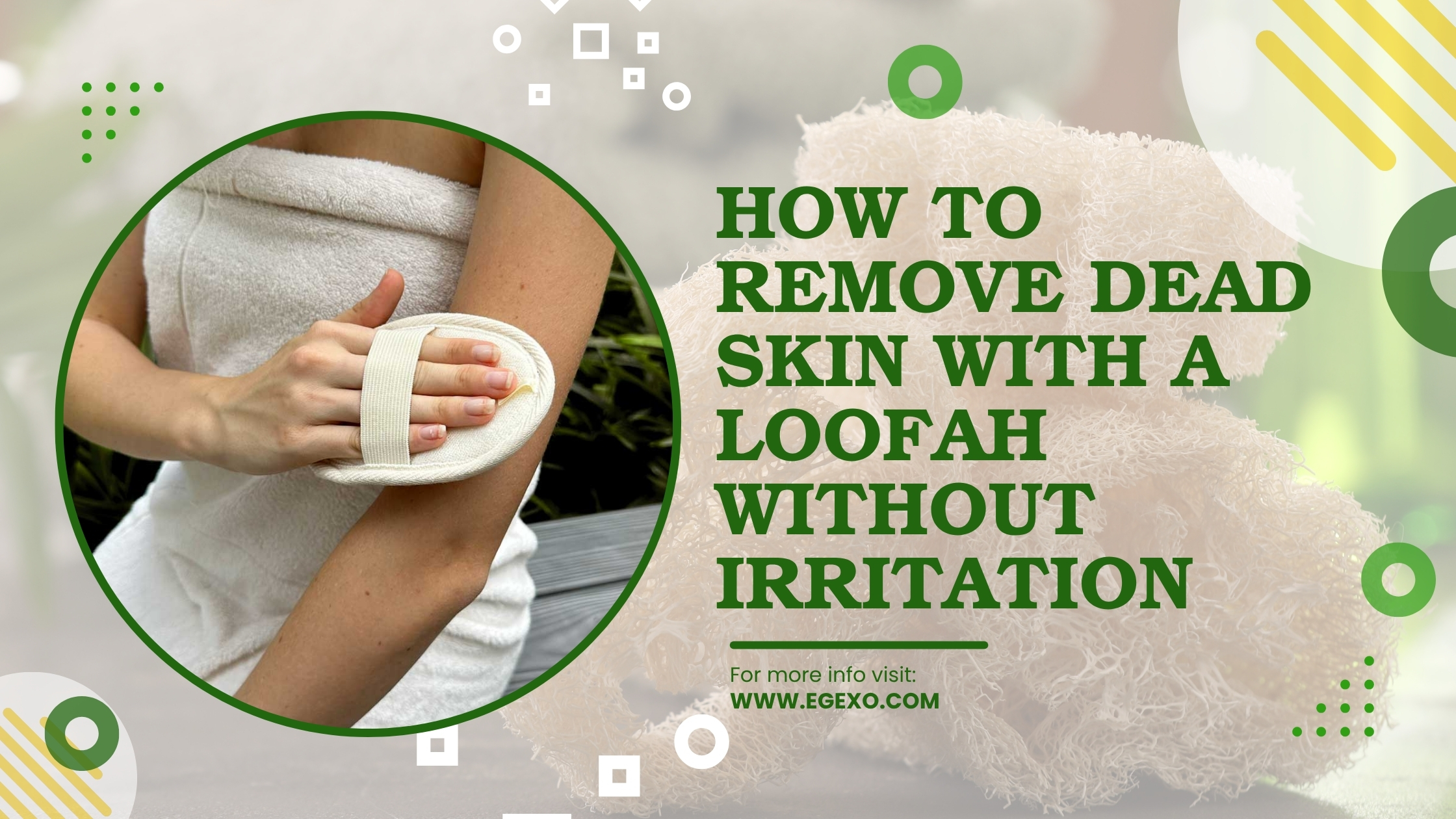
Step 3: Use Circular Motions with Light Pressure
Begin on the lower legs and work upward in slow, circular motions. Use only the weight of your hand, no added pressure. The loofah fiber does the work. If you feel any stinging or discomfort, reduce pressure immediately.
Areas to treat with extra gentleness:
- Inner arms and inner thighs
- Chest and decolletage
- Neck
- Any area with recent sun exposure
Areas to avoid entirely with a loofah:
- Face (use a specialized facial exfoliant instead)
- Open cuts, wounds, or active rashes
- Sunburned skin
- Infected or inflamed skin
Step 4: Rinse Thoroughly with Cool Water
Cool water closes pores after exfoliation and calms any surface warmth in the skin. Rinse your body completely, then rinse the loofah under running water until no cleanser remains.
Step 5: Dry and Moisturize Within 3 Minutes
Pat skin dry with a clean towel. Do not rub. Apply a moisturizer, body oil, or lotion while skin is still slightly damp. Freshly exfoliated skin absorbs hydration significantly more effectively than skin covered by a layer of dead cells, which is one of the most tangible benefits of regular loofah use.
Step 6: Dry and Store Your Loofah Properly
This step prevents the bacterial growth that causes odor and, more importantly, skin infections. After every use:
- Squeeze out all excess water
- Hang the loofah in a well-ventilated area away from the shower floor or corners
- Never store it in a closed bag or sealed container while wet
Replace your loofah every 3 to 4 weeks or immediately if you detect any mold, discoloration, or persistent odor.
Loofah Care and Hygiene: A Maintenance Schedule
| Frequency | Action | Why It Matters |
|---|---|---|
| After every use | Rinse thoroughly, hang to dry | Prevents bacterial buildup |
| Weekly | Soak in diluted white vinegar (1:4 ratio) for 5 minutes | Kills mold spores and odor bacteria |
| Weekly | Allow full air dry in sunlight if possible | UV exposure provides natural sanitization |
| Every 2 weeks | Inspect for discoloration or fiber breakdown | Early replacement prevents skin irritation |
| Every 3-4 weeks | Replace entirely | Fiber degrades; old loofahs harbor bacteria |
For spa operators and retail buyers, sharing this maintenance guide with customers reduces complaints and builds brand trust. Egexo provides branded care instruction cards for businesses ordering through the private label program.
How Loofah Quality Affects Exfoliation Results
Fiber Density and Uniformity
Premium Egyptian loofah has a fiber density of approximately 120 to 150 fibers per square centimeter in the inner mesh. Lower-quality loofah often falls below 80 fibers per square centimeter, resulting in uneven pressure distribution that creates hot spots of excessive friction rather than smooth, even exfoliation.
Egexo’s quality standards specify minimum fiber density, maximum moisture content at export (below 12%), and color grading from Grade A (pale yellow, uniform) to Grade C (darker, irregular).
Loofah Product Specifications for Buyers
| Specification | Grade A | Grade B | Grade C |
|---|---|---|---|
| Color | Pale ivory / yellow | Light tan | Medium brown |
| Fiber Density | 130-150 per cm2 | 100-120 per cm2 | 75-100 per cm2 |
| Moisture at Export | Below 10% | Below 12% | Below 14% |
| Typical Length (Body) | 25-35 cm | 20-30 cm | 15-25 cm |
| Recommended Use | Premium spa / retail | Mid-market retail | Budget / industrial |
| MOQ (Wholesale) | 500 pieces | 1,000 pieces | 2,000 pieces |
Businesses seeking premium positioning in their market consistently choose Grade A Egyptian loofah from Egexo. Request a sample to assess quality before committing to a bulk order.
Loofah Exfoliation for Specific Skin Concerns
Keratosis Pilaris (Chicken Skin)
Keratosis pilaris, those rough, bumpy patches typically found on the upper arms and thighs, responds well to consistent loofah exfoliation. The mechanical action breaks up the keratin plugs blocking hair follicles. Use a medium-grade loofah 2 to 3 times per week, followed immediately by a urea or lactic acid moisturizer to prevent re-plugging.
Ingrown Hairs
Regular exfoliation before and after hair removal significantly reduces ingrown hair frequency. A loofah lifts curled hair ends above the skin surface, allowing them to grow outward rather than back into the follicle. Exfoliate 24 hours before shaving or waxing and 48 hours after (not sooner, to allow the skin barrier to recover).
Dull or Uneven Skin Tone
Accumulated dead skin causes uneven light reflection, which reads visually as dull or gray-toned skin. Consistent exfoliation reveals the fresher cells beneath, which reflect light more evenly. Most users report visible improvement in skin brightness within 2 to 3 weeks of twice-weekly loofah use.
What Wholesale Buyers Need to Know About Sourcing Loofah
For spa owners, wellness retailers, importers, and private label brands, loofah quality directly impacts customer satisfaction ratings, return rates, and repeat purchasing behavior. A spa that uses premium Egyptian loofah creates a noticeably different client experience than one using low-fiber Asian loofah, and clients do notice.
Supplier Evaluation Checklist
| Evaluation Criteria | What to Look For | Egexo Standard |
|---|---|---|
| Farm Origin | Direct farm access, no brokers | Nile Delta, Egypt |
| Quality Certification | ISO, export compliance documentation | Yes |
| Minimum Order Quantity | Flexible MOQs for new buyers | From 500 units |
| Sample Availability | Pre-order samples provided | Yes, available |
| Private Label Support | Custom branding capability | Full service |
| Custom Design | Shape, size, packaging options | Available |
| Lead Time | Confirmed production timelines | 15-25 days |
| Export Experience | Number of countries served | 40+ countries |
Egexo’s position as both a grower and exporter eliminates middlemen from the supply chain, which directly benefits buyers through better pricing, more consistent quality, and direct communication with the production team. Learn more about why to choose Egexo as your loofah supplier.
Businesses ready to explore bulk purchasing can request a wholesale quotation or download the complete product catalog to review available products, sizes, and grades.
Pros and Cons of Loofah Exfoliation vs Alternative Methods
| Method | Pros | Cons | Best For |
|---|---|---|---|
| Natural Loofah | Effective, eco-friendly, gentle when used correctly, affordable | Requires regular replacement and proper drying | All body skin types |
| Chemical Exfoliant | No friction required, precise | Risk of over-exfoliation, sensitivity, cost | Face and sensitive areas |
| Dry Brushing | Stimulates lymphatic drainage | Very rough, not suitable for sensitive skin | Pre-shower body brushing |
| Synthetic Scrubber | Cheap, durable | Traps bacteria, microplastic shedding, harsh | Not recommended |
| Salt or Sugar Scrub | Immediate results | Messy, not suitable for broken skin | Occasional use |
| Exfoliating Gloves | Easy to use | Less precise than loofah, absorbs soap quickly | Travel use |
Natural loofah offers the best combination of effectiveness, gentleness, and environmental responsibility when sourced from a quality producer like Egexo.
Expert Insight from Egexo
After more than 25 years cultivating Luffa aegyptiaca along the Nile Delta, our team has learned that the most common cause of loofah-related skin irritation is not the loofah itself. It is the gap between what a consumer expects from a premium loofah and what they actually receive from a low-grade product sold under misleading packaging.
Genuine Grade A Egyptian loofah has a pale ivory color, a soft but resilient fiber network, and a neutral scent when dry. If a loofah arrives with a dark brown color, a rough scratchy texture, or any chemical smell, it has not been properly processed or stored. At Egexo, every batch is inspected for moisture content, fiber integrity, and color grade before export. Businesses interested in consistent, verified quality can review our quality standards documentation and request samples through our sample order page.
For consumers: when in doubt, softer is better. You can always increase pressure. You cannot undo irritation once it starts.
FAQ Section
Q1: How often should I use a loofah to remove dead skin without causing irritation? A: Most skin types benefit from loofah exfoliation 2 to 3 times per week. Sensitive or dry skin should limit use to once or twice weekly, while normal or oily skin can tolerate up to 4 sessions per week. Always follow exfoliation with moisturizer and allow skin at least one full day of recovery between sessions to avoid cumulative irritation from over-exfoliation.
Q2: Is it safe to use a loofah on sensitive skin? A: Yes, provided you use a high-quality, fine-fiber loofah and apply minimal pressure. Egyptian loofah, particularly Grade A fiber, has a smoother, more uniform structure than coarser alternatives. Soak the loofah for at least 60 seconds before use to further soften the fibers. Limit sessions to once per week and always moisturize afterward to maintain the skin barrier.
Q3: What is the correct technique to remove dead skin with a loofah without irritation? A: Start with warm, damp skin after at least 5 minutes in the shower. Apply soap or body wash to a soaked loofah. Use slow, circular motions with only light pressure, letting the loofah do the work. Move upward from the feet toward the heart. Rinse with cool water and moisturize within 3 minutes. Avoid the face, any broken skin, and areas with active irritation.
Q4: How do I keep my loofah hygienic to prevent skin infections? A: Rinse the loofah thoroughly after every use, squeeze out excess water, and hang it in a ventilated area outside the shower. Soak it in diluted white vinegar once per week to kill bacteria and mold spores. Allow it to fully air dry between uses. Replace your loofah every 3 to 4 weeks or sooner if you notice any discoloration, odor, or fiber breakdown.
Q5: What should wholesale buyers look for when sourcing natural loofahs? A: Wholesale buyers should prioritize verified farm origin, fiber density grade, and export documentation. Grade A Egyptian loofah from a direct-farm supplier like Egexo offers the most consistent quality. Key specifications to confirm include fiber density above 120 per square centimeter, moisture content below 12% at export, and color grading of pale ivory to light yellow. Always request samples before placing bulk orders.
Q6: Why is Egyptian loofah considered better than other types? A: Egyptian Luffa aegyptiaca benefits from the Nile Delta’s warm climate, long growing season, and mineral-rich soil, which produce denser, more uniform fiber than loofah grown in other regions. This results in more even exfoliation pressure, a longer usable lifespan, and a softer feel against skin. Egexo’s 25-plus years of direct cultivation and export experience makes it the most reliable source of premium Egyptian loofah globally.
Q7: Can a loofah help with conditions like keratosis pilaris or ingrown hairs? A: Yes. Regular loofah exfoliation helps break up the keratin plugs responsible for keratosis pilaris and lifts hair ends above the skin surface to reduce ingrown hairs. Use a medium-grade loofah 2 to 3 times per week on affected areas, followed by a moisturizer containing urea or lactic acid. For ingrown hairs, exfoliate 24 hours before hair removal and 48 hours after, not sooner.
Q8: What is the minimum order quantity for wholesale loofah purchases from Egexo? A: Egexo’s minimum order quantity starts at 500 pieces for Grade A body loofah and 1,000 pieces for Grade B. Exact MOQs vary by product type, size, and whether custom branding or private labeling is included. Businesses can request a detailed quote or download the product catalog to review all available options before reaching out.
Conclusion
Knowing how to remove dead skin with a loofah without irritation comes down to three things: the right product, the right technique, and the right maintenance routine. A genuine Egyptian loofah from a verified source, used with light pressure on adequately prepared skin and properly dried between sessions, is one of the most effective and sustainable exfoliation tools available at any price point.
For consumers, the return on a quality loofah is visible within weeks. Smoother skin, better absorption of moisturizers, reduced ingrown hairs, and improved circulation are all consistent outcomes of a properly executed loofah routine.
For wholesale buyers, Egyptian loofah represents a high-demand product category with strong consumer loyalty, broad retail application, and significant margin potential, especially at the premium Grade A level where Egexo specializes.
Key Takeaways:
- Soak your loofah and skin before every session to dramatically reduce irritation risk
- Use circular, low-pressure motions and limit sessions to 2 to 4 times per week based on skin type
- Grade A Egyptian loofah provides the finest fiber network and longest lifespan
- Replace loofahs every 3 to 4 weeks and dry them properly between uses
- Egyptian loofah outperforms synthetic alternatives in gentleness, sustainability, and durability
Ready to experience Egyptian loofah quality?
- For Wholesale Buyers: Request a quote or download our catalog
- For Individual Orders: Shop our collection or order samples