Contents
- What Makes Egyptian Loofahs Ideal for Kitchen Applications
- Step by Step Process to Prepare a Loofah for Kitchen Use
- Essential Maintenance Practices for Kitchen Loofahs
- Benefits of Switching to Natural Kitchen Loofahs
- Wholesale Considerations for Kitchen Loofah Buyers
- Common Mistakes When Preparing Kitchen Loofahs
- Notes from Egexo
- Frequently Asked Questions
- Conclusion
Plastic sponges add to plastic waste in landfills and oceans. Learning how to prepare a loofah for kitchen use is one of the simplest switches you can make toward sustainable living. Natural loofahs, particularly Egyptian loofahs grown in the Nile Delta, offer scrubbing power and 100% biodegradability that plastic sponges do not.
Whether you operate a chain of eco-conscious retail stores seeking the next bestselling product or you are a homeowner tired of constantly replacing worn-out kitchen sponges, understanding proper loofah preparation transforms this humble plant fiber into a powerful cleaning tool.
This guide walks you through every step needed to prepare a loofah for kitchen use, from initial softening to ongoing maintenance. You will learn how to prepare Egyptian loofahs from Egexo, a supplier exporting since 2015. By the end of this guide, you will know how to prepare loofahs for personal use or for resale to customers.
Businesses interested in stocking kitchen loofahs can request samples to evaluate quality before committing to larger orders. The sample cost is credited to your first order of $1,000 or more, placed within 60 days.
What Makes Egyptian Loofahs Ideal for Kitchen Applications
Loofah Fiber Structure
EGEXO loofah is grown on our own farms and partner farms in the Nile Delta. Loofah fibers feature a natural lattice structure containing microscopic channels that trap food particles and grease while allowing water to flow through freely.
The cellular composition of Egyptian loofah fibers provides natural abrasiveness that adjusts based on moisture content. Dry loofahs offer more aggressive scrubbing for baked-on residue, while wet loofahs become gentler for delicate surfaces. This versatility makes kitchen loofahs suitable for many cleaning tasks.
Why Choose Egyptian Loofah
Egyptian loofah is soft and gentle from the first use, with 100% natural fibers.
Every order is checked by hand for colour, holes, defects, size and dryness before packing, as described in Egexo’s quality standards.
Step by Step Process to Prepare a Loofah for Kitchen Use
Step 1: Selecting the Right Loofah
Before you prepare a loofah for kitchen use, choose a loofah that can handle repeated exposure to hot water, dish soap, and food residue.
Egexo offers loofah for kitchen applications through their kitchen loofah collection. Every order is checked by hand for colour, holes, defects, size and dryness before packing.
Step 2: Initial Cleaning and Debris Removal
Raw loofahs arrive with natural plant material, seeds, and surface debris that must be removed before kitchen use. Begin by shaking the loofah vigorously to dislodge loose seeds and dried membrane fragments. Many suppliers, including Egexo, pre-process loofahs to remove most debris, but a thorough inspection remains important.
Examine the loofah interior through both open ends. Use a long brush or compressed air to remove any remaining seeds lodged in the fiber network. Seeds left inside can harbor bacteria and create unpleasant odors during use.
For businesses preparing loofahs for resale, establishing a quality control checkpoint at this stage ensures consistent product quality. The farm to export process at Egexo includes cleaning and a check by hand before packing.
Step 3: Softening the Loofah Fibers
The most critical step when you prepare a loofah for kitchen use involves properly softening the fibers. Dry loofahs are too rigid for effective cleaning and may scratch delicate surfaces. Several softening methods exist, each with specific advantages.
Hot Water Soak Method
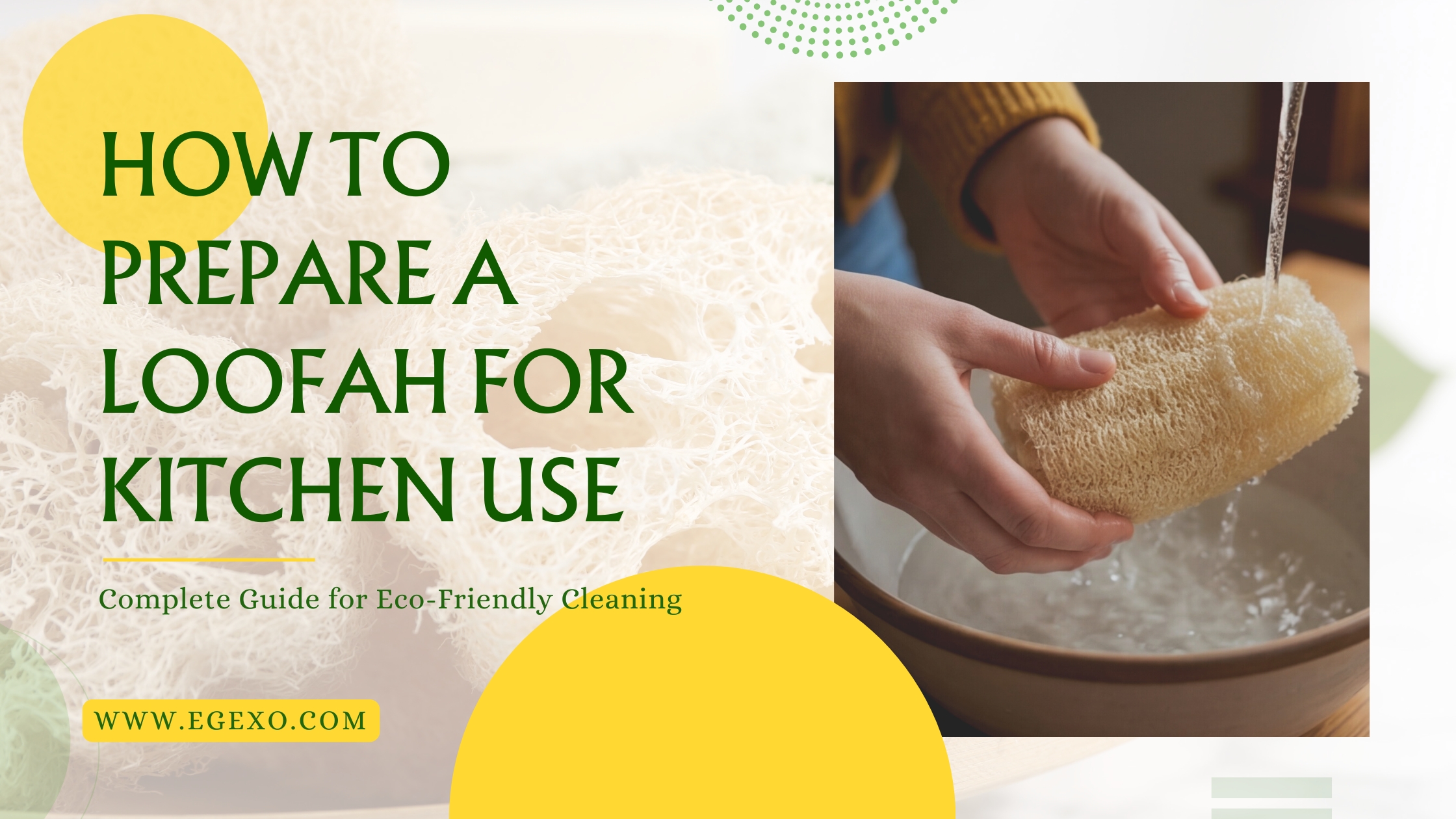
Submerge the loofah in hot water between 60 and 70 degrees Celsius for 15 to 20 minutes. The heat causes fiber expansion and breaks down the rigid pectin bonds that give dry loofahs their stiffness. This method works well for preparing single loofahs for immediate use.
Overnight Cold Soak Method
Place the loofah in room temperature water for 8 to 12 hours. This gentler approach preserves fiber integrity better than hot water and works well when preparing multiple loofahs simultaneously. Add two tablespoons of white vinegar per liter of water to keep the soak fresh during the extended soak.
Boiling Method for Fast Softening
Boil the loofah for 5 to 10 minutes in plain water. This method gives the fastest softening. Reserve this method for loofahs intended for commercial kitchens.
Step 4: Shaping and Sizing for Kitchen Tasks
After softening, the loofah becomes pliable enough to cut and shape for specific kitchen tasks. Many users prefer cutting loofahs into smaller sections that fit comfortably in the hand and dry more quickly between uses.
Use sharp scissors or a serrated knife to cut softened loofahs. A standard 30-centimeter loofah typically yields three to four kitchen-sized pieces of 7 to 10 centimeters each. Cut pieces dry faster and allow different sections to be designated for different cleaning tasks.
Retailers can offer pre-cut kitchen loofahs for the added convenience. Egexo provides custom product design services for businesses wanting unique shapes or sizes that differentiate their product offerings.
Step 5: Initial Conditioning with Dish Soap
Before first use, condition the prepared loofah with dish soap to optimize its cleaning performance. Apply a generous amount of dish soap to the wet loofah and work it through the fiber network by squeezing repeatedly. This process accomplishes several objectives simultaneously.
The soap penetrates deep into the fiber structure where it will later help lift grease and food particles. Conditioning also helps remove any residual plant compounds that might affect the smell of dishes during initial uses. Finally, the mechanical action of squeezing further softens fibers and increases flexibility.
Rinse the loofah thoroughly after conditioning and squeeze out excess water. The loofah is now ready for kitchen use.
Essential Maintenance Practices for Kitchen Loofahs
Daily Care Routine
Proper daily maintenance helps a loofah work well and stay fresh. After each use, rinse the loofah thoroughly under hot running water to remove all food particles and soap residue. Squeeze firmly to expel water from the fiber network.
Store the loofah in a location with good air circulation. Avoid enclosed spaces like under-sink cabinets where moisture accumulates. A loofah hook near a window or above the sink allows rapid drying, which helps prevent mold.
Weekly Deep Cleaning Protocol
Even with proper daily care, kitchen loofahs benefit from weekly deep cleaning to remove accumulated oils and prevent odor development. The following checklist ensures thorough maintenance:
Weekly Kitchen Loofah Maintenance Checklist
| Task | Method | Duration | Purpose |
|---|---|---|---|
| Visual Inspection | Check for damage, discoloration | 2 minutes | Identify replacement needs |
| Hot Water Rinse | Run under hottest tap water | 3 minutes | Loosen embedded particles |
| Sanitization Soak | Diluted bleach or vinegar solution | 10 minutes | Remove buildup |
| Thorough Rinse | Clean running water | 2 minutes | Remove sanitizer residue |
| Complete Drying | Air dry in ventilated area | 4 to 6 hours | Prevent moisture retention |
| Storage Check | Ensure storage area is dry | 1 minute | Maintain between uses |
For the sanitization soak, use either one tablespoon of bleach per liter of water or undiluted white vinegar. Vinegar is the more eco-friendly option.
Knowing When to Replace Your Kitchen Loofah
Replace a kitchen loofah every few weeks, or sooner if you see the signs below. Several indicators signal replacement time has arrived. Persistent odors that survive deep cleaning suggest buildup within the fiber structure. Visible mold or dark spots indicate fungal growth requiring immediate disposal.
Physical degradation also signals replacement needs. When fibers begin separating, creating a stringy texture, the loofah has reached end of life. Similarly, if the loofah no longer springs back to shape after squeezing, the structural integrity has been compromised.
Businesses stocking kitchen loofahs should educate customers on these replacement indicators. Providing this guidance builds trust and ensures positive user experiences that drive repeat purchases. Additional care information is available through resources at EGEXO blog.
Benefits of Switching to Natural Kitchen Loofahs
Environmental Advantages
Natural loofahs are a plant-based alternative to plastic sponges. Retailers offering kitchen loofahs contribute to plastic reduction efforts.
Natural loofahs are 100% biodegradable. The plant fibers break down in compost and enrich soil rather than persisting for centuries like plastic alternatives. This circular lifecycle aligns with growing consumer interest in sustainable products.
Practical Benefits for Households and Businesses
Kitchen loofahs are a plant-based, 100% biodegradable alternative to plastic sponges, and they can be cut into smaller pieces for different tasks.
Wholesale buyers can request a quote to plan their pricing. Wholesale Loofah provides additional resources for businesses exploring this market opportunity.
Plant-Based Material
Natural loofah is a plant fiber. The open fiber structure helps it dry between uses when properly maintained.
Wholesale Considerations for Kitchen Loofah Buyers
How EGEXO Checks Quality
Professional buyers should understand how a supplier checks quality. Egexo does not sell by grade: every order is checked by hand for colour, holes, defects, size and dryness before packing.
Request product specifications from suppliers before ordering. Request a quotation from Egexo to receive product information and pricing.
Minimum Order Quantities and Logistics
Kitchen loofah minimum orders vary between suppliers. Egexo has no minimum order on standard products, so new retailers can test market response before committing to larger quantities.
Shipping costs are a significant factor in landed pricing. EGEXO ships by sea, air or express, and the lead time is 7 to 25 days from payment.
Private Labeling Opportunities
Retailers seeking brand differentiation should explore private labeling options. Private label loofah manufacturing allows businesses to sell kitchen loofahs under their own brand while using Egexo’s own factory and quality checks by hand.
EGEXO’s private label starts from 1,000 units. Options include embroidered logo labels, printed labels, hang tags and custom packaging.
Common Mistakes When Preparing Kitchen Loofahs
Insufficient Softening Time
The most frequent mistake involves inadequate softening before first use. Dry loofah fibers can scratch non-stick coatings, damage delicate dishware, and provide uncomfortable user experience. Always allow minimum recommended softening time based on chosen method.
Poor Storage Practices
Storing wet loofahs in enclosed spaces encourages mold and unpleasant odors. Even a good loofah will deteriorate quickly under poor storage conditions. Invest in proper storage solutions that promote air circulation and rapid drying.
Using Damaged Loofahs Too Long
Economic considerations sometimes lead users to continue using degraded loofahs past their effective lifespan. Damaged loofahs with separated fibers can harbor bacteria in hard-to-clean crevices and actually spread contamination rather than remove it. Replace loofahs promptly when degradation signs appear.
Improper Sanitization Chemical Concentrations
Using overly concentrated bleach solutions for sanitization damages loofah fibers and shortens useful life. Conversely, overly dilute solutions fail to effectively eliminate bacteria. Follow recommended dilution ratios precisely for optimal results.
Notes from Egexo
A Tip from Egexo
Egexo has been exporting Egyptian loofah since 2015. When you prepare a loofah for kitchen use, give it enough softening time and let it dry fully between uses. Every Egexo order is checked by hand for colour, holes, defects, size and dryness before packing.
Browse our complete kitchen loofah selection in the product catalog or on our product pages, then request a quote or samples.
Frequently Asked Questions
Q1: How long does it take to prepare a loofah for kitchen use?
A: Preparing a loofah for kitchen use typically requires 20 minutes to 12 hours depending on the softening method chosen. The hot water soak method takes approximately 20 minutes total including cleaning and conditioning. The overnight cold soak method requires 8 to 12 hours but can be done passively while you sleep. Most users find the hot water method most convenient for immediate needs while the cold soak works well for batch preparation.
Q2: Can I use the same loofah for dishes and countertops?
A: Using separate loofahs for different cleaning tasks is recommended for optimal hygiene. Dish loofahs contact food residue and grease that can transfer to countertops, while counter loofahs may pick up household bacteria that should not contact eating surfaces. Cut a single loofah into multiple pieces and designate each for specific tasks. This approach also extends useful life since different sections receive varying wear.
Q3: What minimum order quantity should retailers expect for kitchen loofahs?
A: No minimum order on standard products. Private label from 1,000 units.
Q4: How do I remove persistent odors from my kitchen loofah?
A: Persistent odors in kitchen loofahs usually indicate buildup requiring a thorough clean. Soak the loofah in undiluted white vinegar for 30 minutes, then rinse thoroughly and allow to dry completely in a well-ventilated area. If odors persist after vinegar treatment, the loofah should be replaced. Prevent future odors by ensuring complete drying between uses and performing weekly sanitization soaks.
Q5: Are Egyptian loofahs safe for non-stick cookware?
A: Properly softened loofahs are gentle enough for non-stick cookware when used correctly. The key is ensuring adequate softening time before use and maintaining gentle pressure while cleaning. Avoid using dry or partially softened loofahs on non-stick surfaces.
Q6: How can retailers get pricing for kitchen loofahs?
A: Request a quote with your product and quantity to receive pricing. Private label programs can help you build your own brand.
Q7: How should I store kitchen loofahs before selling them?
A: Store kitchen loofah inventory in cool, dry conditions away from direct sunlight. Avoid sealed plastic packaging for long-term storage as trapped moisture can promote mold growth.
Conclusion
Learning how to prepare a loofah for kitchen use opens the door to sustainable cleaning practices that benefit both households and the environment. The five-step preparation process of selecting, cleaning, softening, shaping, and conditioning transforms raw Egyptian loofahs into effective kitchen tools and a plant-based alternative to synthetic sponges.
Egyptian loofahs from Egexo are natural cleaning products, backed by exporting since 2015 and a hand check of every order. Whether you seek a single loofah for your home kitchen or thousands of units for your retail operation, proper preparation helps you get good results.
Ready to experience Egyptian loofah quality?
- For Wholesale Buyers: Request a quote or download our catalog
- For Individual Orders: Browse our collection or order samples