

How to Dry a Loofah Properly After Each Use: The Complete Guide
Introduction: Why Proper Loofah Drying Matters More Than You Think
A single natural loofah can harbor up to 10 billion bacteria within just 24 hours if left damp in a humid bathroom environment. This startling statistic from dermatological research explains why learning how to dry a loofah properly after each use is not just about maintenance but about health, hygiene, and maximizing your investment in quality bath products.
Whether you operate a spa that purchases loofahs by the thousand or you simply want your personal bath loofah to last longer, proper drying techniques make the difference between a product that serves you for weeks versus months. Egyptian loofahs, known globally as the gold standard for natural exfoliation, can last up to 6 months with correct care compared to just 3 to 4 weeks when neglected.
At Egexo, with over 25 years of loofah cultivation and export experience from Egypt’s fertile Nile Delta region, we have seen firsthand how proper aftercare dramatically affects product longevity. Our wholesale clients consistently report that educating their end customers about drying techniques reduces return rates by up to 40 percent and increases customer satisfaction scores significantly.
This comprehensive guide covers everything you need to know about loofah drying, from the science behind moisture management to professional techniques used in spas worldwide. You will discover why Egyptian loofahs outperform alternatives, how businesses can reduce replacement costs, and the exact steps to keep your loofah fresh and effective.
Ready to source premium quality loofahs that respond beautifully to proper care? Request a wholesale quote or browse our collection to experience the Egexo difference.
The Science Behind Loofah Moisture and Bacterial Growth
Understanding why you need to dry a loofah properly after each use requires a basic knowledge of how natural fibers interact with water and how bacteria colonize damp surfaces. This science applies equally whether you manage inventory for a retail chain or maintain a single loofah at home.
How Natural Loofah Fibers Retain Moisture
The Luffa aegyptiaca plant, from which authentic Egyptian loofahs are harvested, produces a complex fibrous network with remarkable absorption capacity. A single loofah can hold water equal to 15 times its dry weight. This porosity makes it excellent for lathering soap and gentle exfoliation but also creates an environment where moisture becomes trapped in the inner fiber matrix.
Egyptian loofahs grown in the Nile Delta benefit from optimal growing conditions that produce denser, more uniform fiber structures. This density actually aids faster drying when proper techniques are applied because water channels through the fibers more efficiently. You can learn more about this cultivation advantage through our farm to export process documentation.
The Bacterial Timeline in Damp Loofahs
Research published in dermatology journals reveals that bacterial populations in loofahs follow a predictable growth pattern when moisture remains present. Within the first 4 hours after use, bacterial counts begin doubling. By 24 hours, colonies of Pseudomonas, E. coli, and various fungi reach levels that pose genuine skin health risks.
The warm, moist, nutrient-rich environment of a used loofah provides ideal conditions for microbial proliferation. Dead skin cells trapped in the fibers serve as food sources, while bathroom humidity prevents natural evaporation. This is precisely why drying protocols matter so significantly.
Temperature and Airflow Factors
Effective loofah drying depends on two primary factors: temperature and airflow. Warm air accelerates evaporation while consistent airflow prevents the formation of humid microclimates around the loofah surface. Professional spa facilities often maintain dedicated drying stations that optimize both factors, achieving complete dryness within 2 to 3 hours compared to 8 to 12 hours in typical bathroom conditions.
Step by Step Guide: How to Dry a Loofah Properly After Each Use
Following a consistent routine ensures your loofah remains hygienic and performs optimally for its full potential lifespan. These steps apply to all natural loofah types, from body and bath loofahs to kitchen cleaning loofahs.
Step 1: Thorough Rinsing After Use
Immediately after using your loofah, rinse it under clean running water for at least 30 seconds. This removes soap residue, dead skin cells, and surface contaminants that contribute to bacterial growth. Squeeze the loofah several times during rinsing to flush water through the interior fiber network.
For spa and hospitality settings purchasing wholesale quantities, establishing standardized rinsing protocols for staff ensures consistent product care across all service stations. This simple step alone can extend average loofah lifespan by 20 to 30 percent.
Step 2: Proper Wringing Technique
Gently but firmly squeeze excess water from the loofah using a twisting motion. Avoid wringing too aggressively, as this can damage natural fibers and create structural weaknesses. The goal is removing surface water while maintaining fiber integrity.
Egyptian loofahs with their superior fiber density withstand proper wringing better than thinner alternatives from other growing regions. This durability represents one reason why quality-conscious retailers prefer Egyptian-sourced products for their inventory.
Step 3: Initial Shake and Position
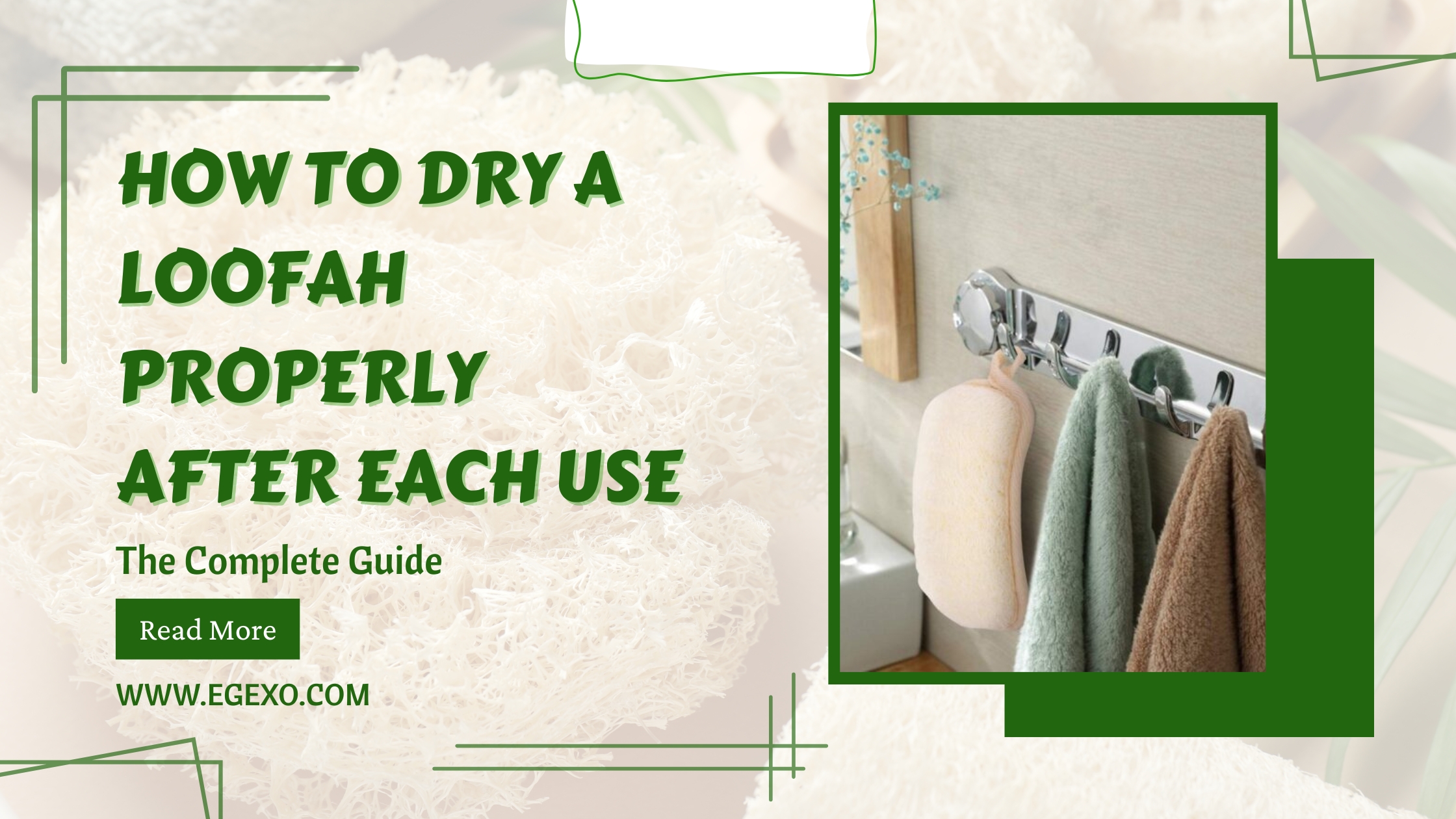
After wringing, shake the loofah vigorously 5 to 10 times to dislodge water trapped in the fiber network. Then position the loofah for optimal air exposure. Hanging provides superior drying compared to lying flat because gravity assists water drainage and air circulates around the entire surface.
Step 4: Strategic Placement for Drying
Where you place your loofah to dry matters enormously. The ideal location combines good airflow, moderate warmth, and distance from persistent moisture sources like showers and sinks. A hook near a bathroom window or in a separate room entirely often provides the best results.
Step 5: Environmental Optimization
When possible, enhance drying conditions through simple environmental adjustments. Opening a window, running an exhaust fan, or even using a small portable fan directed toward the drying area accelerates moisture removal significantly.
Comparison: Loofah Drying Methods and Their Effectiveness
| Drying Method | Average Dry Time | Bacterial Reduction | Fiber Preservation | Practicality Rating |
|---|---|---|---|---|
| Hanging near open window | 2 to 3 hours | 95 percent | Excellent | High |
| Hanging in shower area | 8 to 12 hours | 60 percent | Good | High |
| Lying flat on counter | 12 to 18 hours | 40 percent | Fair | Moderate |
| Hanging with fan assistance | 1 to 2 hours | 98 percent | Excellent | Moderate |
| Outdoor sun drying | 1 to 2 hours | 99 percent | Very Good | Low to Moderate |
| Inside closed cabinet | 24 plus hours | 20 percent | Poor | Very Low |
This comparison demonstrates why hanging remains the universally recommended approach for anyone wanting to dry a loofah properly after each use. The dramatic difference in bacterial reduction between well-ventilated hanging and enclosed storage explains many of the odor and hygiene complaints consumers report about loofahs generally.
For wholesale buyers evaluating products for resale, including care instruction cards that highlight these differences adds value to your offering and reduces customer complaints. Contact our team about custom packaging options that include professional care guides.
Professional Drying Techniques Used in Spas and Hotels
Commercial establishments that use loofahs daily have developed refined drying protocols that maximize hygiene while minimizing product replacement costs. These professional techniques offer valuable insights for anyone seeking to optimize their loofah care routine.
The Rotation System
High-volume facilities rarely use the same loofah on consecutive days. Instead, they maintain rotation systems where each loofah receives a minimum 24-hour drying period between uses. This approach ensures complete moisture elimination regardless of environmental conditions.
A typical spa might maintain three loofahs per treatment room, rotating through them systematically. This professional practice explains why spas purchasing from Egexo often order in quantities that support 3-to-1 rotation ratios.
Dedicated Drying Stations
Professional environments frequently feature dedicated loofah drying areas with controlled airflow and temperature. These stations keep loofahs separate from general bathroom humidity and ensure consistent drying conditions regardless of facility activity levels.
Retailers stocking raw loofah scrubbers for spa clientele report that bundling products with drying rack recommendations increases average order values while providing genuine customer benefit.
UV Sanitization Supplementation
Some luxury spas supplement drying with periodic UV light exposure, which destroys bacteria that survive even thorough drying. While not necessary for home users following proper drying protocols, this technique represents the gold standard for facilities serving health-conscious clientele.
Egyptian Loofahs: Why Quality Affects Drying Performance
Not all loofahs respond equally to drying efforts. The quality of the original product significantly impacts how effectively moisture evacuates from the fiber structure and how well the loofah resists bacterial colonization between uses.
Fiber Density and Drainage Characteristics
Egyptian loofahs cultivated in the Nile Delta region develop fiber networks approximately 40 percent denser than loofahs from other growing regions. This density creates more efficient water channels that drain quickly when the loofah is properly positioned. Egexo maintains strict quality standards ensuring every product meets optimal density specifications.
Natural Antimicrobial Properties
High-quality Egyptian loofahs retain more of their natural antimicrobial compounds through careful processing methods. These compounds, present in the original plant material, provide modest but meaningful resistance to bacterial growth during the drying period.
Structural Integrity Under Repeated Drying Cycles
Inferior loofahs often deteriorate rapidly under regular use and drying cycles. Fibers break down, creating loose material that traps moisture and bacteria while shedding onto skin. Premium Egyptian loofahs maintain structural integrity for 4 to 6 months of daily use when properly dried, compared to 3 to 6 weeks for lower-grade alternatives.
Quality Grades and Drying Performance Specifications
| Quality Grade | Fiber Density | Average Dry Time | Expected Lifespan | Best Application |
|---|---|---|---|---|
| Premium A | 40 plus fibers per cm | 2 to 3 hours | 5 to 6 months | Luxury spas and retail |
| Standard B | 30 to 40 fibers per cm | 3 to 4 hours | 3 to 4 months | General commercial |
| Economy C | 20 to 30 fibers per cm | 4 to 6 hours | 6 to 10 weeks | Budget retail |
Wholesale buyers evaluating suppliers should request fiber density specifications as part of their quality assessment. Download our complete product catalog for detailed specifications across our entire product range.
Common Drying Mistakes That Reduce Loofah Lifespan
Even well-intentioned users often make errors that compromise their efforts to dry a loofah properly after each use. Recognizing and avoiding these mistakes protects your investment and ensures hygienic performance.
Leaving Loofahs in the Shower
The most common mistake involves storing loofahs within the shower enclosure. Showers remain humid environments for hours after use, and steam from subsequent showers repeatedly re-moistens partially dried loofahs. This cycle creates ideal conditions for bacterial and fungal growth.
Insufficient Rinsing Before Drying
Skipping or rushing the rinse step leaves organic material in the loofah fibers. This residue serves as bacterial food and creates biofilm that retains moisture even when the outer surface feels dry.
Using Sealed Containers
Some consumers mistakenly store loofahs in closed containers or bags, believing this keeps them clean. In reality, sealed storage traps moisture and accelerates decomposition. Loofahs require airflow, not enclosure.
Placing Wet Loofahs Flat
Laying a wet loofah flat on a counter or shelf allows the bottom surface to remain in contact with pooled moisture. This creates an asymmetric drying pattern where one side deteriorates faster than the other.
Ignoring Bathroom Ventilation
Poor bathroom ventilation affects everything you try to dry in that space. Running exhaust fans during and after showers dramatically improves drying conditions for towels and loofahs alike.
Checklist: Daily Loofah Care Protocol
| Step | Action | Time Required | Frequency |
|---|---|---|---|
| 1 | Rinse thoroughly under running water | 30 seconds | After every use |
| 2 | Squeeze and wring gently | 10 seconds | After every use |
| 3 | Shake to remove trapped water | 5 seconds | After every use |
| 4 | Hang in ventilated area | Position once | After every use |
| 5 | Check for complete dryness | Quick touch | Before next use |
| 6 | Deep clean with diluted vinegar | 5 minutes | Weekly |
| 7 | Sunlight exposure for sanitization | 1 to 2 hours | Weekly or biweekly |
| 8 | Inspect for wear and fiber breakdown | Visual check | Weekly |
| 9 | Replace when fibers become loose | Decision point | Every 3 to 6 months |
Print this checklist for bathroom reference or share it with spa staff for consistent care protocols. Businesses ordering from Egexo can request custom product design services that include branded care instruction materials.
Seasonal Considerations for Loofah Drying
Environmental conditions change throughout the year, affecting how quickly and effectively loofahs dry. Adapting your approach to seasonal variations ensures consistent results regardless of external factors.
Summer Humidity Challenges
High summer humidity slows evaporation even when temperatures are warm. During humid periods, consider relocating your loofah drying station to an air-conditioned room or using a small fan to maintain airflow around the drying loofah.
Winter Drying Advantages
Heated indoor environments during winter often provide excellent drying conditions due to low relative humidity. Position loofahs near heating vents for accelerated drying during cold months, but avoid direct contact with heat sources that could damage fibers.
Transitional Season Adjustments
Spring and fall often bring variable conditions that require attention. Monitor your bathroom humidity during these periods and adjust ventilation as needed to maintain consistent drying performance.
For wholesale operations managing inventory across different climate zones, understanding these seasonal factors helps with customer education and reduces weather-related complaint patterns. Visit for additional consumer education resources you can share with your retail customers.
Business Benefits: How Proper Drying Education Increases Customer Satisfaction
Retailers, spa operators, and distributors who educate their customers about proper loofah drying enjoy measurable business benefits beyond simple goodwill.
Reduced Return and Complaint Rates
Customers who understand how to dry a loofah properly after each use experience fewer odor, texture, and hygiene issues. This education reduces return requests and negative reviews that can damage brand reputation. Our wholesale partners report 30 to 45 percent reductions in product-related complaints after implementing customer education initiatives.
Extended Product Lifespan Builds Loyalty
When customers get 4 to 6 months of use from a quality loofah instead of 4 to 6 weeks, they perceive greater value from their purchase. This perceived value translates to repeat purchases and brand loyalty for retailers who provided the care guidance.
Differentiation From Commodity Competitors
Many loofah sellers treat products as simple commodities, providing minimal information or support. Retailers who offer comprehensive care guidance differentiate themselves as knowledgeable specialists, justifying premium positioning and pricing.
Explore private label manufacturing options to create custom-branded loofahs with integrated care instructions that reinforce your brand as a quality-focused supplier.
Pros and Cons: Natural Loofah Versus Synthetic Alternatives
| Factor | Natural Egyptian Loofah | Synthetic Mesh Pouf |
|---|---|---|
| Drying Speed | Moderate with proper technique | Fast |
| Bacterial Resistance | Good when dried properly | Poor due to material |
| Environmental Impact | Biodegradable and sustainable | Plastic waste concern |
| Exfoliation Quality | Superior natural texture | Inconsistent |
| Lifespan with Care | 4 to 6 months | 4 to 8 weeks |
| Skin Sensitivity | Gentle for most skin types | Can irritate |
| Value Over Time | Excellent | Moderate |
| Proper Care Required | Yes but manageable | Minimal |
Natural loofahs require somewhat more attention to drying than synthetic alternatives, but this modest additional effort delivers superior performance, environmental responsibility, and long-term value. The brief daily routine outlined in this guide ensures natural loofahs remain the superior choice for conscientious consumers and quality-focused businesses.
For bulk purchasing of natural Egyptian loofahs that respond beautifully to proper care routines, request free samples to evaluate our quality firsthand.
Applications Beyond Body Care: Drying Specialty Loofahs
The principles for drying body loofahs apply equally to specialty loofah products used in other applications, though some variations merit attention.
Kitchen Loofah Drying
Kitchen loofahs face additional challenges from food residue and different moisture patterns. Rinse kitchen loofahs under hot water to remove food particles before applying the standard drying protocol. Consider maintaining dedicated drying locations in the kitchen rather than storing these loofahs with body care products.
Restaurants and food service operations purchasing kitchen loofahs in bulk should establish end-of-shift drying protocols that ensure products dry completely before the next day’s use.
Pet Grooming Loofah Care
Loofahs used for pet grooming and spa applications require the same drying attention as personal care products. Pet hair trapped in fibers creates additional bacterial food sources, making thorough rinsing and complete drying especially important.
Decorative and Craft Loofahs
Even loofahs used for crafts or decorative purposes benefit from proper drying if they become wet during use or display. Maintaining dry conditions preserves the natural color and structural integrity of decorative loofah products.
Expert Insight from Egexo
With over 25 years cultivating and exporting Egyptian loofahs from our farms in the Nile Delta, Egexo has observed one consistent pattern among our most satisfied wholesale partners and end consumers: those who invest a few extra moments in proper drying consistently report superior product performance and longevity.
Our recommendation is straightforward. Treat your loofah drying location as importantly as you treat the loofah itself. A quality Egyptian loofah paired with a properly ventilated drying spot will outperform any premium product left to languish in shower humidity. We have seen 5 USD loofahs outlast 15 USD alternatives simply because one owner understood proper aftercare while the other did not.
For wholesale buyers, we encourage you to consider loofah care education as part of your product offering, not an afterthought. Our team can help you develop care materials that reinforce your brand while genuinely helping your customers. Reach out through our wholesale inquiry page to discuss custom education materials alongside your product order.
FAQ Section
Q1: How long should I let my loofah dry between uses?
A: Allow your loofah to dry completely between uses, which typically takes 4 to 8 hours in well-ventilated conditions. To dry a loofah properly after each use, hang it in an area with good airflow away from the shower. Complete dryness prevents bacterial growth and extends product lifespan significantly. If your bathroom lacks ventilation, consider drying your loofah in another room entirely.
Q2: Can I use a hair dryer to speed up loofah drying?
A: While using a hair dryer on low heat can accelerate drying, this approach is generally unnecessary if you follow proper hanging techniques. High heat settings can damage natural loofah fibers over time. The most effective approach remains positioning your loofah in a ventilated area where natural airflow does the work consistently without requiring daily active drying efforts.
Q3: What is the minimum order quantity for wholesale loofah purchases from Egexo?
A: Egexo offers flexible minimum order quantities depending on product type and customization requirements. Standard bath loofahs typically have MOQs starting at 500 units, while custom private label orders may require higher quantities. Contact our wholesale team for specific MOQ information tailored to your business needs and volume requirements.
Q4: How often should I replace my loofah even with proper drying?
A: Even with perfect care and proper drying after each use, natural loofahs should be replaced every 4 to 6 months for body use. Quality Egyptian loofahs from Egexo can reach the upper end of this range when maintained correctly. Signs indicating replacement include persistent odor despite cleaning, visible fiber breakdown, and reduced lathering performance.
Q5: Why does my loofah smell even after drying it properly?
A: Persistent odor despite proper drying usually indicates bacterial colonization that occurred before you established good drying habits, or it may suggest the loofah was not rinsed thoroughly enough before drying. Try a deep clean with diluted white vinegar, allow complete drying, and if odor persists, replace the loofah with a fresh one while implementing proper care from the start.
Q6: Do Egyptian loofahs dry faster than loofahs from other regions?
A: Yes, high-quality Egyptian loofahs typically dry 20 to 30 percent faster than loofahs from other growing regions due to their superior fiber density and structure. Denser fibers create more efficient water drainage channels. This faster drying time contributes to the overall quality advantage that makes Egyptian loofahs preferred by professional spas and quality-conscious retailers worldwide.
Q7: What certifications should wholesale buyers look for regarding loofah quality?
A: Wholesale buyers should seek suppliers offering organic certification, USDA compliance for exports, and documented quality control processes. Egexo maintains comprehensive quality standards including fiber density testing, moisture content verification, and cleanliness protocols. Request our quality documentation and visit our quality standards page for complete certification information.
Q8: Can I dry multiple loofahs together or should they be separated?
A: Loofahs should be dried with adequate spacing between them to ensure air circulates around each product completely. Hanging multiple loofahs in contact with each other creates moisture-trapping contact points that slow drying and can promote bacterial transfer. Commercial operations should provide individual hooks or drying slots for each loofah in rotation.
Conclusion
Learning how to dry a loofah properly after each use transforms a simple bath accessory into a long-lasting, hygienic tool that delivers consistent value. The techniques outlined in this guide apply whether you manage a single personal loofah or oversee inventory for a multinational spa chain.
The key principles remain consistent across all applications: rinse thoroughly, wring gently, hang in ventilated space, and allow complete drying before the next use. These simple steps prevent bacterial growth, preserve fiber integrity, and extend product lifespan dramatically.
Egyptian loofahs from quality suppliers like Egexo respond especially well to proper care, offering 4 to 6 months of excellent performance compared to weeks from inferior alternatives. This extended lifespan delivers genuine value for individual consumers while providing significant cost savings for commercial operations purchasing in wholesale quantities.
Key Takeaways:
- Hang loofahs in well-ventilated areas away from shower humidity for optimal drying
- Complete drying typically requires 4 to 8 hours depending on environmental conditions
- Egyptian loofahs dry faster and last longer due to superior fiber density
- Professional rotation systems ensure complete drying between each use
- Proper drying education reduces complaints and builds customer loyalty for retailers
Ready to experience premium Egyptian loofah quality?
For Wholesale Buyers: Request a quote for bulk orders or download our complete product catalog to explore our full range. Our team at Egexo brings 25 years of cultivation expertise to every order.
For Individual Orders: Shop our collection to find your perfect loofah or order samples to test our quality firsthand. Visit WholesaleLoofah.com for additional wholesale resources.