Contents
- Where the Loofah Plant Comes From
- Where the Name “Loofah” Comes From
- How European Botanists Learned About Loofah in Egypt
- Loofah in Trade and Industry
- How Loofah Is Used Today
- Loofah in Egypt Today
- The Benefits of Using an Egyptian Loofah Sponge
- How to Care for an Egyptian Loofah Sponge
- Conclusion
- Questions about the history of Egyptian loofah
- Sources
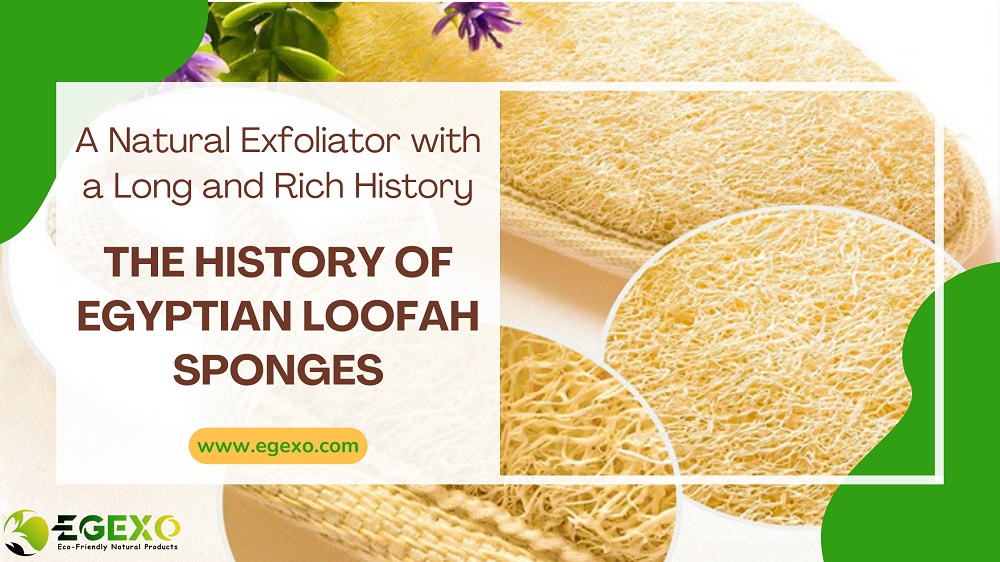
Loofah sponges are a natural exfoliator with a long history. They are made from the dried fibre inside the loofah gourd, Luffa aegyptiaca, a plant in the cucumber family. The skin and seeds are removed and the fibre is dried in the sun. The plant carries the name of Egypt, but botanists still do not know where it was first grown. Below is what named sources say about its history, and how loofah is grown in Egypt today.
Where the Loofah Plant Comes From
The sponge gourd has been grown for so long that it is hard to say whether its native home is Africa or Asia (PROTA, 2011). Wild forms of Luffa aegyptiaca grow from Burma to the Philippines, and south to north-eastern Australia and Tahiti (PROSEA; NParks Singapore). Today the plant is grown in warm regions all over the world. It is not known where it was first domesticated (NParks Singapore).
Where the Name “Loofah” Comes From
The word loofah comes from the Arabic name of the plant, lūf (NParks Singapore). The Latin name aegyptiaca means “from Egypt”. Botanists chose it when they thought the plant was native to Egypt. Scientists now place Egypt outside its native range (NParks Singapore). The name tells us where Europeans first met the plant: in the fields of Egypt, where it has been grown since late medieval times (Wikipedia, “Luffa”).
How European Botanists Learned About Loofah in Egypt
The German botanist Johann Vesling travelled to Egypt in 1628 (Edward Worth Library). He saw the plant grown with irrigation there. In his book De plantis Aegyptiis (Padua, 1638), he described it and used the name “Luffa” (Wikipedia, “Luffa” and “Luffa aegyptiaca”). In 1706 the botanist Joseph Pitton de Tournefort made Luffa a formal genus name. In the early 1760s the botanist Peter Forsskål visited Egypt and noted that the plant was called lūf in Arabic (Wikipedia, “Luffa”, citing E.D. Merrill, 1935).
Loofah in Trade and Industry
Loofah is a traditional product of trade around the whole Mediterranean, known by its Arabic name, luff (PROTA, 2011). The sponges became commercially important before and during the Second World War. They were used as filters in several kinds of engines (PROSEA). When Japan, the main producer, stopped exports because of the war, there was no good substitute (PROSEA). Because the fibre absorbs shock and sound, it was also used in steel helmets and armoured vehicles (PROSEA; NParks Singapore). In Ghana, the dry fibre is used to filter water and palm wine (PROTA, 2011).
How Loofah Is Used Today
The main use of loofah is as a sponge for washing the body and scrubbing kitchen utensils (PROTA, 2011). It is also made into scourers, door and bath mats, insoles, sandals and gloves, and used as insulating material (PROSEA; NParks Singapore). PROTA lists Japan among the main producers and importers of loofah sponges, and notes that sponges from Japan have been sold in the United States as cosmetic sponges (PROTA, 2011). Natural loofah is a plant fibre and is 100% biodegradable.
Loofah in Egypt Today
In Egypt, loofah is grown with Nile water and plenty of sunshine. EGEXO’s loofah comes from its own farms and partner farms in the Nile Delta. There is one season a year: planting in March and harvest in September and October, about 6 to 7 months. After harvest, the loofah is washed with water only. All seeds and the outer skin are removed. The loofah is sun-dried, with fans or heaters in winter. Every piece is checked by hand for colour, holes, size and dryness. EGEXO has exported natural Egyptian loofah since 2015. Read how it works in our loofah farm to export process.
The Benefits of Using an Egyptian Loofah Sponge
Egyptian loofah sponges offer a number of benefits, including:
- Exfoliation: Egyptian loofah sponges are a natural exfoliator that can help to remove dead skin cells and reveal the soft, new skin underneath.
- Removing dirt and oil: Egyptian loofah sponges can help to remove dirt and oil from the skin, leaving it feeling clean and refreshed.
- Affordability: Egyptian loofah sponges are a relatively affordable exfoliator.
How to Care for an Egyptian Loofah Sponge
Egyptian loofah sponges should be cared for properly to prevent the growth of bacteria. Here are some tips for caring for an Egyptian loofah sponge:
- Rinse the sponge thoroughly after each use with soap and water.
- Let the sponge air dry completely before storing it.
- After every 2 or 3 uses, wash it in hot water, or in a mesh laundry bag in the washing machine. A plain loofah may also be boiled.
- Dry it in the sun or in an airy place.
- Replace the sponge every 3 to 4 weeks, or sooner if it starts to break down or get moldy.
Want to buy loofah, not grow it?
EGEXO has exported natural Egyptian loofah since 2015. We supply it ready to sell, with no minimum order on standard products. Order samples first: the sample cost is credited to your first order of $1,000 or more, placed within 60 days.
Conclusion
Egyptian loofah sponges are a natural exfoliator with a long and rich history. They are a sustainable and eco-friendly option that offers a number of benefits for the skin. If you are looking for a natural way to exfoliate your skin, then an Egyptian loofah sponge is a great option.
Where to Buy Loofah?
EGEXO is an Egyptian Luffa sponge wholesale Producer, Manufacturer, Supplier and Exporter. Buying for a business? EGEXO supplies wholesale loofahs with no minimum order on standard products.
You can see our loofah product categories. If you have any questions, contact us, or request a wholesale quote.
Questions about the history of Egyptian loofah
Who invented loofah?
No inventor is named in the sources used on this page. The sponge gourd has been grown for so long that botanists cannot say whether its native home is Africa or Asia, and the German botanist Johann Vesling described the plant from Egypt in 1638.
Who first discovered using natural sponges for bathing or cleaning?
No first user is recorded. The main use of loofah has long been as a sponge for washing the body and scrubbing kitchen utensils, and it is a traditional product of trade around the Mediterranean.
When were modern manufactured loofahs invented?
There is no invention date: the loofah is a plant fibre, and the finished sponge is the dried fibre with its skin and seeds removed. Loofah sponges became commercially important before and during the Second World War, when they were used as filters in several kinds of engines.
When egyptian loofah came to egypt?
It has been grown in the fields of Egypt since late medieval times. When egyptian loofah was created or when egyptian loofah was made has no single date, as the plant grows each year: the plant grows each year, and the sponge is made after the harvest by washing, removing the seeds and the outer skin, and drying in the sun.
Where egyptian loofah originate?
Botanists do not know where it was first grown. The Latin name aegyptiaca means “from Egypt”, given when botanists thought it was native there; EGEXO’s loofah comes from its own farms and partner farms in the Nile Delta.
Sources
History facts on this page come from these public sources (read 15 November 2026):
- E.G. Achigan-Dako, S. N’danikou and R.S. Vodouhê (2011), “Luffa cylindrica”, PROTA (Plant Resources of Tropical Africa), on Pl@ntUse.
- G.J. Jansen, B.H. Gildemacher and L. Phuphathanaphong, “Luffa”, PROSEA (Plant Resources of South-East Asia), on Pl@ntUse.
- National Parks Board Singapore, Flora and Fauna Web, “Luffa aegyptiaca”.
- Edward Worth Library, Dublin, botany collection, “Middle East” (on Johann Vesling).
- Wikipedia, “Luffa” (citing E.D. Merrill, Transactions of the American Philosophical Society, 1935).
- Wikipedia, “Luffa aegyptiaca” (citing J. Vesling, De plantis Aegyptiis, 1638).