Contents
- Why Kitchen Loofah Sponge Is Revolutionizing the Eco-Friendly Cleaning Industry
- Understanding Kitchen Loofah Sponge: What Makes This Natural Cleaning Tool Useful
- The 8 Essential Benefits of Kitchen Loofah Sponge for Your Customers
- How to Use Kitchen Loofah Sponge for Optimal Cleaning Results
- Essential Care and Maintenance for Kitchen Loofah Sponge Longevity
- Kitchen Loofah Sponge vs Synthetic Alternatives: Comprehensive Comparison
- Building Profitable Kitchen Loofah Product Lines: Strategic B2B Considerations
- The Egyptian Kitchen Loofah Quality Advantage for Wholesale Buyers
- Current Market Trends Driving Kitchen Loofah Demand in 2025
- Frequently Asked Questions About Kitchen Loofah Sponge
- Key Takeaways: Essential Kitchen Loofah Insights for Wholesale Buyers
- Transform Your Product Line With Premium Egyptian Kitchen Loofah
Why Kitchen Loofah Sponge Is Revolutionizing the Eco-Friendly Cleaning Industry
The kitchen loofah sponge market keeps growing as consumers look for eco-friendly cleaning products. As consumers and businesses worldwide reject plastic-based cleaning tools and embrace sustainable alternatives, kitchen loofah sponges have emerged as a popular choice for environmentally conscious cleaning.
A kitchen loofah sponge is a natural cleaning tool crafted from the dried fibrous interior of the mature Luffa aegyptiaca gourd. Unlike synthetic kitchen sponges manufactured from petroleum-based polyurethane foam or plastic nylon mesh, natural kitchen loofah sponges offer biodegradable, renewable, and highly effective cleaning performance that appeals to eco-conscious consumers across all market segments.
For wholesale buyers, distributors, and retailers serving the kitchen supplies and eco-friendly products markets, understanding the comprehensive benefits and applications of kitchen loofah sponges enables strategic product positioning, confident customer education, and differentiated offerings in an increasingly competitive marketplace. This professional guide examines the proven advantages of kitchen loofah sponges while providing actionable insights for B2B buyers seeking to build profitable natural product portfolios.
Whether you operate retail stores specializing in kitchen supplies, manage e-commerce platforms selling eco-friendly products, distribute household cleaning solutions, or seek to launch new sustainable product lines, this comprehensive resource delivers the knowledge needed to make informed sourcing decisions and maximize market success with premium Egyptian kitchen loofah products.
Understanding Kitchen Loofah Sponge: What Makes This Natural Cleaning Tool Useful
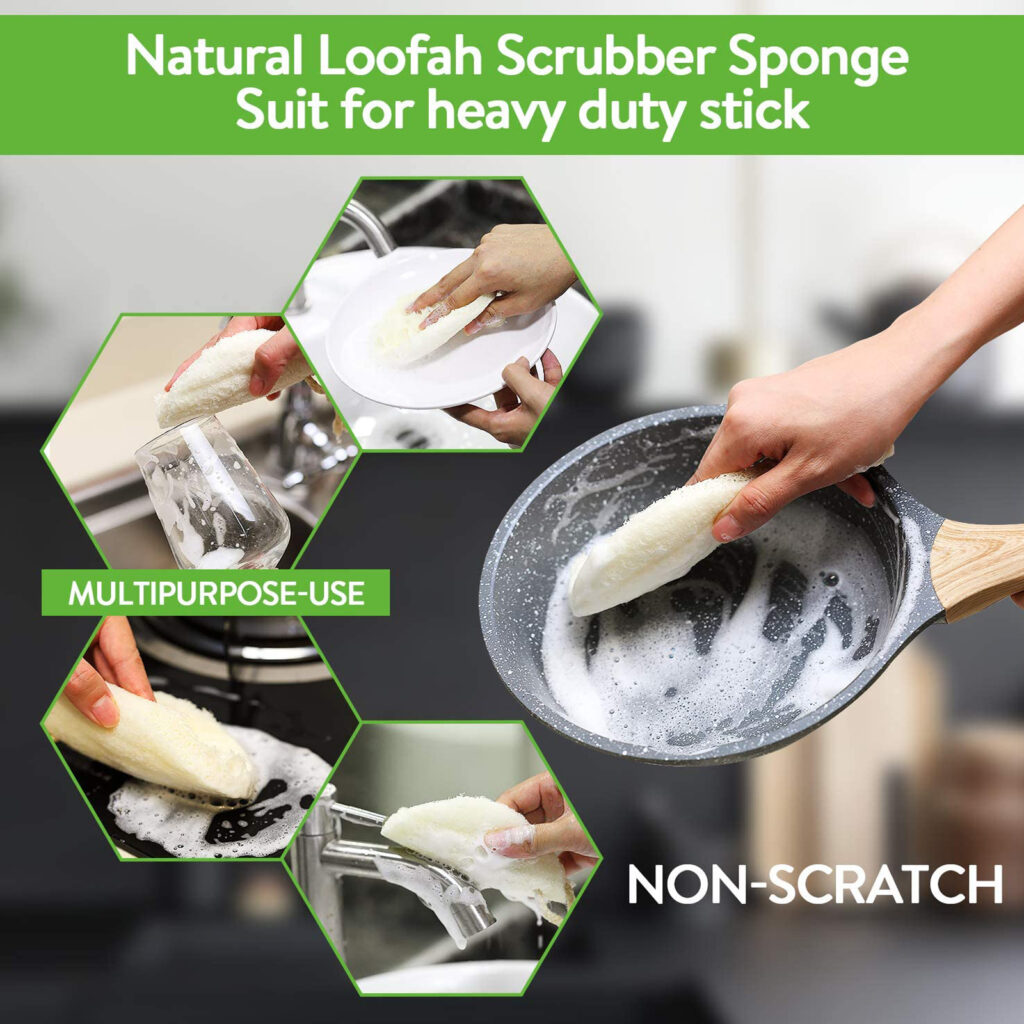
The Natural Origin of Kitchen Loofah Sponge
Kitchen loofah sponge comes from the Luffa aegyptiaca plant, a climbing vine from the cucumber family that produces elongated gourd fruits. When these gourds reach full maturity, their outer skin is removed and the fibrous interior is dried, creating the natural sponge structure that delivers exceptional cleaning performance. Kitchen loofah sponge is a plant fibre with no petroleum-based inputs, and it is 100% biodegradable, which makes it an environmentally friendly cleaning tool.
Egyptian kitchen loofah sponge, particularly products grown in the Nile Delta region, benefits from the region’s climate, soil composition, and water availability. Egyptian loofah is soft and gentle from the first use.
What Sets Kitchen Loofah Apart:
The cellular structure of natural kitchen loofah sponge creates thousands of interconnected fibers that provide effective scrubbing action while remaining gentle on kitchen surfaces. This unique architecture enables kitchen loofah to trap food particles, absorb liquids, and generate cleaning lather more effectively than synthetic alternatives. The natural fibers soften when wet yet maintain sufficient firmness for scrubbing tough residues without scratching delicate surfaces.
The 8 Essential Benefits of Kitchen Loofah Sponge for Your Customers
Benefit 1: Gentle Yet Effective Surface Exfoliation and Cleaning
Natural kitchen loofah sponge provides optimal balance between cleaning effectiveness and surface safety. The fibrous structure creates gentle abrasion that removes stuck-on food, dried spills, and cooking residues without scratching countertops, stovetops, sinks, or cookware. This versatility makes kitchen loofah sponge suitable for cleaning virtually all kitchen surfaces including stainless steel, ceramic, glass, porcelain, enamel, and sealed wood.
The mechanical cleaning action of kitchen loofah sponge works through thousands of tiny fiber contact points that lift and remove debris. Unlike harsh synthetic scrubbers with sharp plastic fibers or abrasive pads that can damage surfaces, natural loofah provides controlled, predictable cleaning that customers can adjust through pressure and technique.
Surface Compatibility:
Kitchen loofah sponge safely cleans countertops made from granite, marble, quartz, laminate, and butcher block without causing scratches or dulling finishes. For stovetop cleaning, loofah effectively removes baked-on food from gas grates, electric coils, and glass ceramic surfaces. Sink cleaning benefits from loofah’s ability to conform to curved surfaces and reach corners that rigid scrubbers miss.
Natural fiber scrubbers like kitchen loofah sponge clean effectively while staying gentle on most surfaces. This combination of effectiveness and safety creates strong value propositions for quality-conscious consumers.
B2B Positioning Strategy: Emphasize the surface-safe cleaning benefits for customers with high-end kitchen finishes, luxury cookware, and premium appliances who need effective cleaning without damage risk.
Benefit 2: Strong Performance on Tough Stains and Grease
Kitchen loofah sponge excels at removing challenging cleaning problems including baked-on grease, dried food residues, burnt cooking spills, and stubborn stains that defeat ordinary cleaning tools. The natural fiber structure combines with cleaning agents to break down grease and lift stuck-on materials through both chemical and mechanical action.
The porous nature of kitchen loofah allows cleaning solutions to penetrate deeply into the fiber network, creating a reservoir of cleaning power that continuously releases during scrubbing. This sustained release mechanism delivers strong cleaning performance compared to smooth-surfaced synthetic sponges that hold minimal cleaning solution.
Grease Cutting Performance:
Kitchen grease represents one of the most challenging cleaning problems due to its adhesive properties and resistance to water-based cleaning. Kitchen loofah sponge addresses this challenge through its natural fiber composition that demonstrates good affinity for both water and oils. When combined with appropriate dish soap or degreasing agents, kitchen loofah effectively emulsifies grease and removes it from surfaces.
Market Opportunity: Position kitchen loofah as a practical cleaning tool suitable for both residential and commercial applications, potentially commanding premium pricing.
Benefit 3: Easy Rinsing and Drying Support Hygiene
The natural fiber structure of kitchen loofah sponge provides inherent advantages for maintaining hygiene in kitchen environments. While all cleaning tools require proper care and regular replacement, the porous structure of natural loofah allows for thorough rinsing and complete drying that helps keep it hygienic when used correctly.
Kitchen loofah should never be considered a substitute for proper sanitization with appropriate cleaning products. It stays hygienic only when combined with correct usage and maintenance practices.
Hygiene Best Practices:
Kitchen loofah sponge maintains optimal hygiene when users rinse thoroughly after each use, squeeze out excess water completely, and allow full air drying between uses. Weekly sanitization through vinegar soaking, bleach solution treatment, or boiling further ensures hygienic conditions. The natural fiber composition of kitchen loofah tolerates these sanitization methods when they are used as directed.
Compared to traditional synthetic kitchen sponges that develop persistent odors and harbor bacteria in closed-cell foam structures, natural kitchen loofah’s open fiber network permits complete cleaning and drying that supports better long-term hygiene.
Customer Education Value: Provide detailed hygiene and care instructions that help customers maximize kitchen loofah lifespan while maintaining sanitary conditions, building confidence and satisfaction.
Benefit 4: Exceptional Water Absorption for Spill Management
Kitchen loofah sponge demonstrates remarkable water absorption capacity, absorbing a lot of water for its weight. This high absorbency makes kitchen loofah exceptionally effective for managing spills, wiping wet surfaces, and handling liquid messes common in kitchen environments.
The capillary action created by kitchen loofah’s interconnected fiber network draws liquids into the sponge interior where they are retained until squeezed out. This mechanism provides faster, more complete spill cleanup compared to synthetic sponges with limited absorption capacity or surface-only liquid retention.
Practical Absorption Advantages:
Kitchen loofah efficiently absorbs spilled water, beverages, cooking oils, and other liquids without requiring multiple passes or leaving residual moisture. The high absorption capacity reduces time spent on cleanup tasks while the excellent squeeze-out characteristics enable thorough removal of absorbed liquids for disposal or reuse of the sponge.
For commercial kitchen applications where efficiency and productivity matter significantly, the high absorption of natural kitchen loofah can save time and improve workflow compared to synthetic alternatives requiring more frequent wringing or replacement during large cleaning tasks.
Benefit 5: Cost-Effective Natural Solution
A kitchen loofah sponge is replaced every 3 to 4 weeks when properly maintained. Request a quote for exact prices for your products and quantities.
Economic Comparison Analysis:
Conventional synthetic kitchen sponges also need regular replacement because of odor development, fiber breakdown, or hygiene concerns. Natural kitchen loofah sponge is replaced every 3 to 4 weeks with proper care and is 100% biodegradable.
For commercial and institutional buyers purchasing in bulk, the economics become even more compelling. Large volume purchases from wholesale suppliers like EGEXO enable per-unit costs that support both attractive retail margins and competitive customer pricing.
Wholesale Pricing Advantages:
B2B buyers working directly with manufacturers eliminate middlemen costs while ensuring consistent product quality and supply reliability. Suppliers offering no minimum order on standard products enable market testing and gradual inventory growth without excessive capital commitment or obsolescence risk.
Retail Strategy: Develop multipack offerings with small discounts that increase transaction values while establishing regular replacement habits that drive recurring revenue.
Benefit 6: Environmental Sustainability and Complete Biodegradability
Kitchen loofah sponge represents one of the most environmentally sustainable cleaning tools available, directly addressing growing consumer demand for eco-friendly products. As a plant-based product that does not require heavy pesticide or fertilizer, natural kitchen loofah aligns perfectly with environmental values driving purchasing decisions across demographic segments.
The sustainability advantages become even more compelling when examining end-of-life disposal. Natural kitchen loofah is 100% biodegradable in compost conditions, returning nutrients to soil without environmental harm. In contrast, synthetic kitchen sponges manufactured from polyurethane foam and nylon mesh persist in landfills for hundreds of years while potentially leaching chemicals into soil and groundwater.
Comprehensive Environmental Impact:
Natural kitchen loofah is made from plant fibre and is 100% biodegradable, while synthetic alternatives are made from petroleum-based materials.
Market Trend Alignment:
Many consumers consider environmental sustainability when making household product purchases, and many actively look for eco-friendly alternatives to conventional products. These trends create market advantages for natural kitchen loofah products positioned appropriately with clear sustainability messaging.
The plastic-free cleaning movement gaining momentum globally positions natural kitchen loofah as a practical solution for consumers seeking to eliminate single-use plastics and synthetic materials from their households. This alignment with major consumer trends supports premium positioning and strong margins.
Marketing Angle: Emphasize plastic-free, zero-waste, and compostable attributes prominently in product descriptions, packaging, and promotional materials to capture environmentally conscious consumers willing to pay premium prices for sustainable alternatives.
Benefit 7: Versatile Applications Beyond Dish Cleaning
While primarily marketed for dish and kitchen surface cleaning, natural kitchen loofah sponge demonstrates remarkable versatility across multiple household and commercial applications. This versatility creates opportunities for expanded market reach and increased per-customer sales through multi-product merchandising strategies.
Extended Kitchen Applications:
Kitchen loofah effectively cleans ovens, microwaves, refrigerators, range hoods, tile backsplashes, cabinet exteriors, and small appliances. The natural fibers safely remove cooked-on foods, grease films, and general soiling from diverse surfaces without requiring multiple specialized cleaning tools. This consolidation simplifies cleaning supply inventories while reducing costs.
Household Cleaning Uses:
Beyond kitchen applications, natural loofah serves effectively for bathroom cleaning including tubs, showers, tile, fixtures, and toilets. The same surface-safe scrubbing that protects kitchen counters translates well to bathroom environments where gentle yet effective cleaning maintains finish quality.
Commercial and Professional Settings:
Restaurant kitchens, food service facilities, hospitality operations, and commercial cleaning services incorporate natural kitchen loofah into cleaning protocols for its combination of effectiveness, safety, and environmental responsibility. Professional users appreciate the consistent performance and reliable supply availability from established manufacturers.
Craft and Specialty Applications:
Creative consumers use natural kitchen loofah for craft projects, garden applications including biodegradable pot scrubbers and seed starting media, pet care including grooming and cage cleaning, and various DIY household projects. These alternative uses create additional market opportunities beyond conventional cleaning applications.
Cross-Selling Strategy: Stock related natural loofah products including body loofahs and pet grooming varieties to capture additional wallet share from customers discovering natural loofah benefits.
Benefit 8: Readily Available With Improving Supply Chain Infrastructure
The natural kitchen loofah supply chain has matured significantly over recent years, with established cultivation regions developing export-oriented production systems featuring professional processing and reliable logistics. This infrastructure maturation benefits wholesale buyers through improved product consistency, supply reliability, and favorable pricing.
Major loofah cultivation regions including Egypt, China, Central America, and Southeast Asia have developed specialized expertise and infrastructure supporting international trade. Among these regions, Egyptian kitchen loofah from the Nile Delta is soft and gentle from the first use, grown with traditional cultivation knowledge passed through generations.
Egyptian Quality Advantage:
Egyptian kitchen loofah suppliers like EGEXO provide consistent supply, export experience, and professional B2B services that wholesale buyers require. EGEXO has been exporting since 2015 and has an ISO 9001 certified quality management system.
EGEXO sources from its own farms and partner farms in the Nile Delta and processes the loofah in its own factory. This transparency supports informed purchasing decisions for professional buyers.
Market Entry Simplification:
New retailers can enter the natural kitchen loofah market with minimal barriers through suppliers like EGEXO that offer no minimum order on standard products and samples for testing. Unlike complex product categories requiring extensive technical knowledge or regulatory compliance, kitchen loofah presents straightforward merchandising and customer education requirements.
How to Use Kitchen Loofah Sponge for Optimal Cleaning Results
Proper usage technique maximizes cleaning effectiveness while ensuring customer satisfaction and extended product life. Providing clear usage instructions differentiates your business and builds customer confidence.
Step-by-Step Usage Guide for Kitchen Loofah Sponge
Initial Preparation: Before first use, rinse new kitchen loofah sponge thoroughly under running water to remove any dust or debris from packaging and storage. Soak in warm water for 3-5 minutes to fully hydrate the fibers and maximize softness and flexibility.
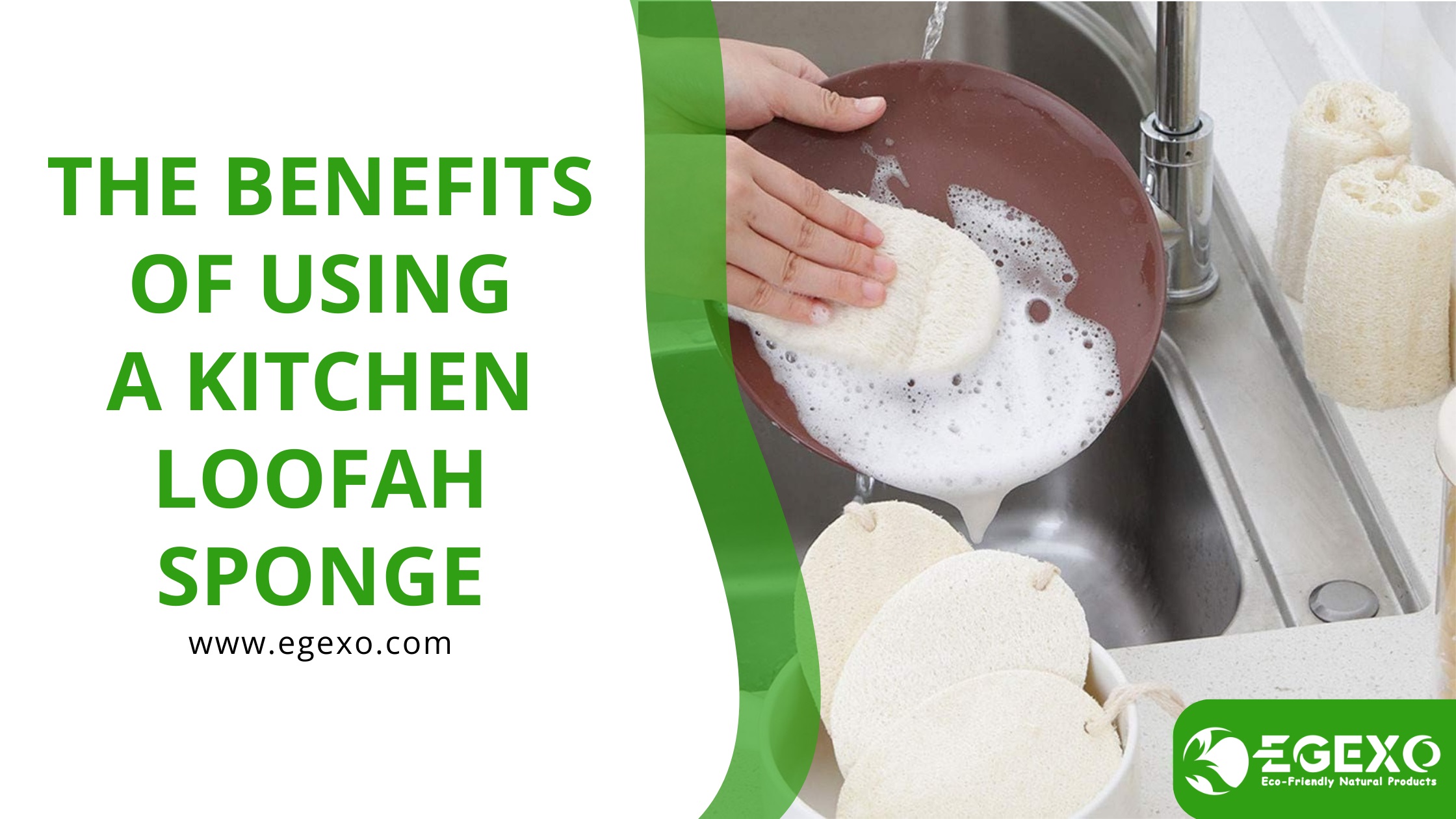
Daily Cleaning Application: Wet kitchen loofah completely with warm water and squeeze to remove excess. Apply dish soap directly to the sponge or to the surface being cleaned. Work into a rich lather by squeezing and manipulating the sponge. The porous structure creates abundant foam that enhances cleaning effectiveness.
Scrubbing Technique: Use circular motions for general cleaning and straight back-and-forth strokes for stubborn residues. Apply moderate pressure for routine cleaning and firmer pressure for tough stains. The natural fibers provide feedback that helps users control intensity. Avoid excessive pressure that wastes effort without improving results.
Specialized Applications: For baked-on foods, pre-soak affected areas with hot water and cleaning solution before scrubbing with kitchen loofah. For grease removal, use degreasing dish soap and hotter water to enhance effectiveness. For delicate surfaces, increase water saturation and decrease pressure to ensure gentle cleaning.
Rinsing Protocol: After cleaning, rinse the kitchen loofah sponge thoroughly under running water while squeezing repeatedly to remove all soap residue, food particles, and cleaning debris. Continue rinsing for 30-45 seconds to ensure complete cleaning. Proper rinsing prevents odor development and extends useful life.
Post-Use Storage: Squeeze kitchen loofah firmly to remove excess water. Hang or place in a location with good air circulation where all surfaces can dry completely. Never store kitchen loofah in enclosed containers, sealed plastic bags, or areas without ventilation. Complete drying between uses prevents bacterial growth and maintains hygiene.
Essential Care and Maintenance for Kitchen Loofah Sponge Longevity
Proper maintenance maximizes kitchen loofah sponge useful life while ensuring optimal hygiene. Share these care instructions with customers to boost satisfaction and prevent common problems.
Daily Maintenance Requirements
After each use, implement thorough rinsing while squeezing the kitchen loofah repeatedly to expel trapped food particles and soap residue. Spend adequate time during this process, as insufficient rinsing causes the most common customer complaints including odor development and premature degradation.
Squeeze firmly to remove as much water as possible before hanging to dry. The more completely water is expelled, the faster drying occurs and the better hygiene is maintained. Position the kitchen loofah where air circulates freely around all surfaces, typically on hooks, drying racks, or dish drainers with open design.
Weekly Deep Cleaning Methods
Implement one of these sanitization methods weekly to maintain optimal hygiene:
Vinegar Soak Method: Submerge kitchen loofah in solution of one part white vinegar to two parts water for 10-15 minutes. The acidic environment kills bacteria while removing mineral deposits and soap scum. Rinse thoroughly and allow to air dry completely.
Bleach Solution Treatment: For maximum sanitization, soak kitchen loofah in solution of one tablespoon bleach per gallon of water for 5 minutes. Never exceed recommended bleach concentration or soaking time as excessive exposure can degrade natural fibers. Rinse extremely thoroughly to remove all bleach residue before next use.
Boiling Sterilization: Place kitchen loofah in pot of boiling water for 5 minutes to kill bacteria and remove accumulated residues. This method provides thorough sanitization without chemicals. Allow to cool before handling and squeeze out water before hanging to dry.
Dishwasher Sanitization: Kitchen loofah can be cleaned in dishwasher top rack during regular cycles. The high temperature water and drying cycle provide effective sanitization. Use this method weekly as a convenient alternative to manual cleaning methods.
Optimal Storage Practices
Never store kitchen loofah in ways that prevent complete drying including enclosed shower caddies, under-sink cabinets without ventilation, plastic storage containers, or sealed bags. These storage methods create moist environments where bacteria and mold thrive, dramatically reducing useful life and creating hygiene concerns.
Optimal storage locations include dedicated hooks positioned near sinks where air circulates freely, drying racks designed for dish storage, or specialized sponge holders with drainage and ventilation features. Position storage away from standing water and direct water spray that can keep the sponge persistently moist.
Replacement Schedule Guidelines
Replace kitchen loofah sponge every 3 to 4 weeks under normal residential use conditions even with proper maintenance. Commercial and heavy-use applications follow the same replacement time of 3 to 4 weeks. Replace immediately if any of these conditions develop:
Persistent odors that remain despite proper cleaning and sanitization indicate bacterial colonization requiring replacement. Visible mold growth showing black, green, pink, or orange spots requires immediate disposal and replacement. Significant fiber breakdown creating thin sections, holes, or separation indicates the sponge has reached end of useful life. Substantial size reduction from original dimensions suggests fiber degradation requiring replacement.
Providing comprehensive care instructions through packaging inserts, website content, and retail signage reduces customer service inquiries while ensuring optimal product experiences that generate positive reviews and repeat purchases.
Kitchen Loofah Sponge vs Synthetic Alternatives: Comprehensive Comparison
Understanding how kitchen loofah sponge compares to synthetic cleaning tools helps B2B buyers position products effectively and respond to customer questions confidently.
| Feature | Kitchen Loofah Sponge | Synthetic Cellulose Sponge | Plastic Scrub Pad | Nylon Dish Brush |
|---|---|---|---|---|
| Material Origin | Plant-based natural fiber | Wood pulp with synthetic binder | Petroleum plastic polymer | Nylon plastic bristles |
| Cleaning Effectiveness | Excellent, adjustable intensity | Good for general cleaning | Excellent but may scratch | Good with liquid retention |
| Surface Safety | Very safe, no scratching | Safe on most surfaces | Risk of scratching delicate surfaces | Generally safe with proper use |
| Environmental Impact | Biodegradable, compostable | Partially biodegradable | Microplastic pollution, non-biodegradable | Non-biodegradable, persistent waste |
| Hygiene Maintenance | Good with proper drying | Poor, harbors bacteria | Moderate, easier to clean | Good, easy to sanitize |
| Cost Per Unit | Moderate, excellent value | Low initial cost | Low to moderate | Moderate to high |
| Absorption Capacity | Excellent | Excellent | Poor, minimal absorption | None, design limitation |
| Consumer Appeal | High and growing rapidly | Declining due to sustainability concerns | Stable but environmental concerns | Moderate, traditional option |
| Market Positioning | Premium natural eco-friendly | Budget commodity | Value utility product | Traditional reliable tool |
This comparison demonstrates kitchen loofah sponge’s competitive advantages in critical areas including environmental sustainability, surface safety, and alignment with consumer trends toward natural products. While synthetic alternatives offer specific benefits like lower initial costs, kitchen loofah’s combination of effectiveness, sustainability, and safety creates compelling value propositions for mainstream and premium market segments.
Building Profitable Kitchen Loofah Product Lines: Strategic B2B Considerations
Product Selection and Market Segmentation
Successful kitchen loofah businesses carefully match product offerings to target customer segments:
Budget-Conscious Consumers: Stock basic raw kitchen loofah scrubbers at competitive price points emphasizing value and sustainability. These products appeal to environmentally conscious consumers seeking affordable natural alternatives to conventional synthetic sponges.
Premium Natural Product Buyers: Offer kitchen loofah products with attractive packaging, comprehensive care instructions, and premium positioning. These customers willingly pay higher prices for quality and an enhanced shopping experiences including appealing presentation and educational materials.
Commercial and Institutional Buyers: Develop bulk offerings for restaurants, hotels, food service operations, and commercial cleaning services requiring consistent quality at competitive pricing. Commercial customers prioritize reliable supply, predictable pricing, and professional service over packaging aesthetics.
Specialty Retail Customers: Create distinctive products through private label manufacturing featuring custom packaging, unique sizing, or specialized treatments. Private label products enable brand differentiation and typically command higher margins than generic offerings.
Pricing Strategy for Optimal Margins and Volume
Kitchen loofah products support flexible pricing strategies across market tiers:
Value Tier: Retail basic kitchen loofah at a low price point to capture price-sensitive customers and establish market presence. Low wholesale costs enable attractive margins even at competitive retail pricing.
Mid-Tier: Position kitchen loofah at a mid-range price emphasizing Egyptian origin, attractive retail packaging, and comprehensive usage instructions. This segment delivers a good balance of sales volume and profit margin for most retailers.
Premium Tier: Offer premium kitchen loofah products at a higher price featuring artisan packaging, included accessories like storage hooks or care tools, or specialty processing. Premium positioning attracts high-value customers and elevates overall brand perception.
Multipack Discounting: Bundle multiple kitchen loofahs with small discounts to increase average transaction values and encourage gift purchases. Multipacks also help establish regular replacement habits that drive recurring revenue. Consider seasonal themed packaging for gift-giving occasions.
Commercial Bulk Pricing: Develop volume pricing structures for commercial buyers purchasing larger quantities. These large-volume customers prioritize competitive per-unit costs over packaging aesthetics and tolerate longer lead times for price advantages.
Profit Margin Expectations
Wholesale cost depends on the product, processing level, and order volume, so request a quote for exact prices.
Factors influencing achievable margins include product quality differentiation, packaging and presentation quality, market positioning and brand strength, competitive landscape and pricing pressure, and sales channel economics. Private label products can command higher prices than generic equivalents.
The Egyptian Kitchen Loofah Quality Advantage for Wholesale Buyers
Why Egyptian Kitchen Loofah Represents the Quality Standard
Egyptian kitchen loofah cultivated in the Nile Delta region benefits from several advantages:
Optimal Growing Conditions: The Nile Delta provides ideal climate with warm temperatures, consistent sunshine, and appropriate humidity for luffa cultivation. Soil composition enriched by thousands of years of Nile flood deposits creates perfect growing medium. Water availability and quality support healthy plant development and good fiber production.
Traditional Cultivation Expertise: Egyptian farmers have cultivated luffa for generations, developing specialized knowledge for variety selection, planting timing, growth management, harvest determination, and post-harvest processing that maximize quality.
Established Export Infrastructure: Egypt’s loofah export industry has professional processing facilities and reliable logistics networks. This infrastructure supports the supply reliability critical for professional wholesale buyers.
Soft, Gentle Fibre: Egyptian kitchen loofah is soft and gentle from the first use, with a consistent texture that provides effective cleaning without excessive harshness.
EGEXO Quality Assurance for Professional Buyers
EGEXO, an Egyptian natural loofah wholesale supplier, maintains quality standards that professional B2B buyers require for building successful businesses:
ISO 9001 Certified Quality Management System: EGEXO’s quality management system is certified to ISO 9001.
Hand Quality Checks: Every order is checked by hand for colour, holes, defects, size and dryness before packing.
Flexible Customization Services: Custom product design capabilities enable buyers to create differentiated offerings tailored to specific market opportunities, consumer preferences, or retail channel requirements. Customization options include sizing variations, shape modifications, packaging design, and private labeling.
No Minimum Order on Standard Products: Unlike traditional wholesalers requiring large purchase commitments, EGEXO accommodates businesses at every scale from startups testing markets to established brands placing container loads. Private label starts from 1,000 units. This flexibility reduces financial risk and enables gradual growth aligned with actual market demand.
Quick B2B Support: EGEXO replies to quote requests within 24 hours and helps buyers with product selection and private label options.
For wholesale buyers serious about building successful kitchen loofah businesses, partnering with established quality suppliers like EGEXO provides the foundation for sustainable growth and customer satisfaction.
Current Market Trends Driving Kitchen Loofah Demand in 2025
Plastic-Free Living Movement Accelerates
The global movement toward eliminating single-use plastics and synthetic materials from households continues accelerating, with kitchen cleaning products representing major target categories. Kitchen loofah sponge aligns perfectly with this trend as a practical, effective, and affordable plastic-free alternative to conventional synthetic sponges.
Synthetic kitchen sponges are widely criticized for microplastic shedding during use, persistent environmental pollution from disposal, and petroleum dependence in manufacturing. This awareness drives purchasing changes that benefit natural alternatives like kitchen loofah.
Zero-Waste Lifestyle Adoption Growing
The zero-waste lifestyle movement emphasizing waste reduction, composting, and circular economy principles creates strong demand for products like kitchen loofah that can be composted at end-of-life. Consumers embracing zero-waste principles actively seek products that eliminate landfill contributions while maintaining functionality and convenience.
Kitchen loofah’s complete biodegradability and compostability make it an ideal product for zero-waste households. Marketing emphasis on composting capability resonates strongly with this influential and growing consumer segment that demonstrates high engagement and brand loyalty.
Natural Product Preference Expands
Consumer preference for natural products continues expanding beyond food categories into household and personal care products. Many consumers prefer natural products when suitable alternatives exist, and some are willing to pay more for them.
Kitchen loofah’s natural plant-based composition and absence of synthetic materials align perfectly with consumer natural product preferences. Positioning kitchen loofah within natural product contexts rather than purely as cleaning tools captures additional market opportunities and supports premium pricing.
Frequently Asked Questions About Kitchen Loofah Sponge
What exactly is a kitchen loofah sponge and how is it made?
A kitchen loofah sponge is a natural cleaning tool made from the dried fibrous interior of the mature Luffa aegyptiaca gourd, a climbing vine plant from the cucumber family. The cultivation process begins with planting luffa seeds in early spring. The vines grow rapidly, producing elongated gourd fruits that mature over about 6 to 7 months. When gourds reach full maturity and the outer skin begins browning and drying naturally, they are harvested and the outer skin is removed through soaking and peeling. The fibrous interior is then thoroughly cleaned and dried to create the natural sponge structure. Egyptian kitchen loofah from the Nile Delta region is soft and gentle from the first use. Unlike synthetic kitchen sponges manufactured from petroleum-based polyurethane foam or plastic nylon mesh, natural kitchen loofah is a plant fibre with no petroleum-based materials, making it 100% biodegradable and environmentally friendly.
How long does a kitchen loofah sponge last compared to synthetic alternatives?
A kitchen loofah sponge should be replaced about every 3 to 4 weeks under normal residential use with proper care. The actual lifespan depends on usage frequency, with daily heavy users needing replacement sooner, on maintenance quality, with thorough rinsing and complete drying extending life, and on usage intensity, with commercial or heavy-duty applications requiring more frequent replacement. Synthetic kitchen sponges also need regular replacement because of persistent odors, fiber breakdown, or hygiene concerns. Unlike synthetic sponges, kitchen loofah is biodegradable with no plastic pollution.
Is kitchen loofah sponge safe for all cookware and kitchen surfaces?
Kitchen loofah sponge is safe for virtually all cookware and kitchen surfaces when used with appropriate technique. The natural fiber structure provides gentle yet effective cleaning that removes stuck-on food and residues without causing scratches, dulling, or finish damage. Kitchen loofah safely cleans stainless steel cookware, cast iron skillets (after seasoning is established), ceramic and porcelain dishes, glass bakeware and storage containers, enamel-coated cookware, countertops made from granite, marble, quartz, laminate, or butcher block, sinks in stainless steel, porcelain, or composite materials, and most appliance surfaces including stovetops and refrigerators. However, extra caution is warranted with nonstick cookware coatings where aggressive scrubbing with any abrasive tool including kitchen loofah may gradually wear coatings, though gentle cleaning with well-saturated loofah is generally safe. For optimal surface safety, ensure kitchen loofah is thoroughly saturated with water before use, apply moderate rather than excessive pressure, and use circular motions that distribute pressure evenly. If concerned about particularly delicate surfaces, test in an inconspicuous area before general use.
How do I properly clean and maintain my kitchen loofah sponge?
Proper cleaning and maintenance extends kitchen loofah sponge useful life while ensuring optimal hygiene and performance. After each use, rinse the kitchen loofah thoroughly under running water while squeezing repeatedly to remove all soap residue, food particles, and debris for at least 30-45 seconds. Squeeze firmly to expel as much water as possible, as thorough water removal accelerates drying and prevents bacterial growth. Hang or place the kitchen loofah where air circulates freely around all surfaces, avoiding enclosed storage that prevents complete drying. Implement weekly deep cleaning using one of these methods: soak in white vinegar solution (one part vinegar to two parts water) for 10-15 minutes then rinse thoroughly; treat with dilute bleach solution (one tablespoon per gallon) for 5 minutes then rinse extensively; boil in water for 5 minutes to sterilize; or clean in dishwasher top rack during regular cycles. Never store kitchen loofah in enclosed containers, sealed plastic bags, or locations without ventilation. Replace kitchen loofah every 3 to 4 weeks even with proper maintenance, or sooner if persistent odors, visible mold, significant fiber breakdown, or substantial size reduction occurs. Following these maintenance protocols ensures kitchen loofah remains hygienic, effective, and pleasant to use throughout its useful life.
Are kitchen loofah sponges really better for the environment than synthetic options?
Kitchen loofah sponges are a better choice for the environment than synthetic alternatives. Kitchen loofah is 100% biodegradable and compostable, returning nutrients to soil, while synthetic polyurethane sponges persist in landfills for hundreds of years and may leach chemicals. Loofah farming does not require heavy pesticide or fertilizer, and synthetic sponge manufacturing relies heavily on petroleum derivatives and energy-intensive chemical processes. Kitchen loofah creates no microplastic pollution during use or disposal, while synthetic nylon scrubbers shed plastic microfibers that contaminate water systems. Many buyers consider environmental impact when purchasing household products, which creates market advantages for businesses emphasizing kitchen loofah’s environmental benefits through clear messaging.
What profit margins can retailers expect selling kitchen loofah products?
Wholesale cost depends on the product, processing level, packaging quality, and order volume, so request a quote for exact prices.
How does Egyptian kitchen loofah compare to alternatives from other regions?
Egyptian kitchen loofah from the Nile Delta region is soft and gentle from the first use. Growing conditions in the Nile Delta provide warm temperatures, consistent sunshine, appropriate humidity levels, and soil enriched by Nile flood deposits that suit luffa cultivation. EGEXO sources from its own farms and partner farms in the Nile Delta, processes the loofah in its own factory, and checks every order by hand for colour, holes, defects, size and dryness before packing. You can request samples to compare quality before you order.
Key Takeaways: Essential Kitchen Loofah Insights for Wholesale Buyers
Kitchen Loofah Sponge Delivers Strong Cleaning Performance With Complete Environmental Sustainability: Natural kitchen loofah provides effective cleaning across all kitchen surfaces and applications while offering complete biodegradability, zero plastic pollution, and minimal environmental impact that aligns with accelerating consumer demand for eco-friendly products.
Egyptian Quality From an Experienced Exporter: Egyptian kitchen loofah from the Nile Delta, grown on EGEXO’s own and partner farms and processed in EGEXO’s own factory under an ISO 9001 certified quality management system, is soft and gentle from the first use and checked by hand for colour, holes, defects, size and dryness before packing.
Market Trends Strongly Favor Natural Cleaning Products: Growing demand for eco-friendly cleaning products combined with plastic-free living movements and zero-waste lifestyle adoption creates powerful tailwinds for kitchen loofah businesses positioned to capitalize on long-term consumer behavior shifts rather than temporary fads.
Flexible Pricing Strategies Support Profitable Business Models: Kitchen loofah’s favorable wholesale economics enable attractive retail margins across value, mid-tier, and premium market segments while maintaining competitive customer pricing that drives volume and market share growth.
Strategic Supplier Partnerships Simplify Operations and Accelerate Growth: Working with suppliers like EGEXO providing hand quality checks, no minimum order on standard products, customization services, and quick B2B support reduces operational complexity and enables businesses to focus resources on marketing and sales activities driving growth.
Transform Your Product Line With Premium Egyptian Kitchen Loofah
The comprehensive benefits of kitchen loofah sponge create exceptional opportunities for retailers, wholesalers, and distributors to build profitable businesses aligned with powerful consumer trends toward sustainable, natural, and effective cleaning products. From strong cleaning performance and surface safety to complete biodegradability and cost-effectiveness, kitchen loofah delivers the multi-dimensional value propositions that drive customer satisfaction and recurring revenue.
However, maximizing these business opportunities requires sourcing premium quality products from established suppliers with export experience, consistent quality checks, comprehensive B2B support services, and reliable supply chains. Product quality differences directly impact customer satisfaction, return rates, brand reputation, and long-term business success.
EGEXO is an Egyptian natural loofah manufacturer and exporter, exporting since 2015, with an ISO 9001 certified quality management system, comprehensive services including private labeling and custom packaging, flexible ordering accommodating businesses at every scale, and quick B2B support for market development and growth.
Ready to launch or expand your kitchen loofah business with natural Egyptian loofah products?
Request kitchen loofah samples today and personally evaluate the soft fibre texture, consistent quality and cleaning performance of Egyptian kitchen loofah. Experience the quality firsthand before you place an order.
Download the complete EGEXO wholesale catalog to explore the full range of natural loofah products including kitchen cleaning varieties, body care options, pet grooming tools, and raw materials suitable for every market segment, application, and price point.
Get your personalized wholesale quotation with transparent pricing, shipping options, and product recommendations tailored to your specific business model, target customers, and growth objectives.
Schedule a call to discuss your market opportunities, product selection, pricing, and packaging for building successful kitchen loofah businesses.
Whether you operate retail stores specializing in kitchen supplies or eco-friendly products, manage e-commerce platforms serving sustainable living markets, distribute natural household products, or seek to launch new cleaning product lines, EGEXO delivers the quality, reliability, and partnership needed for sustainable success. Join the 400+ customers in more than 40 countries who buy natural Egyptian loofah from EGEXO.
For additional industry insights, usage guidance, and comprehensive kitchen loofah information, explore these resources:
Discover EGEXO’s commitment to quality and sustainability and learn why premium Egyptian natural kitchen loofah represents the optimal choice for businesses prioritizing customer satisfaction, environmental responsibility, and profitable growth in the expanding natural cleaning products market.