Contents
- Do Luffas Come from the Ocean?
- For shops, hotels and brands
- What Are Marine Sponges?
- What Are Luffas?
- What Are Luffas Made Out Of?
- Why Choose Egyptian Luffas
- The Luffa’s Journey: From Gourd to Sponge
- EGEXO: Your Partner for Premium Egyptian Luffas
- Benefits of Choosing Luffa Sponges
- Common Myths About Luffas: Debunked
- Conclusion
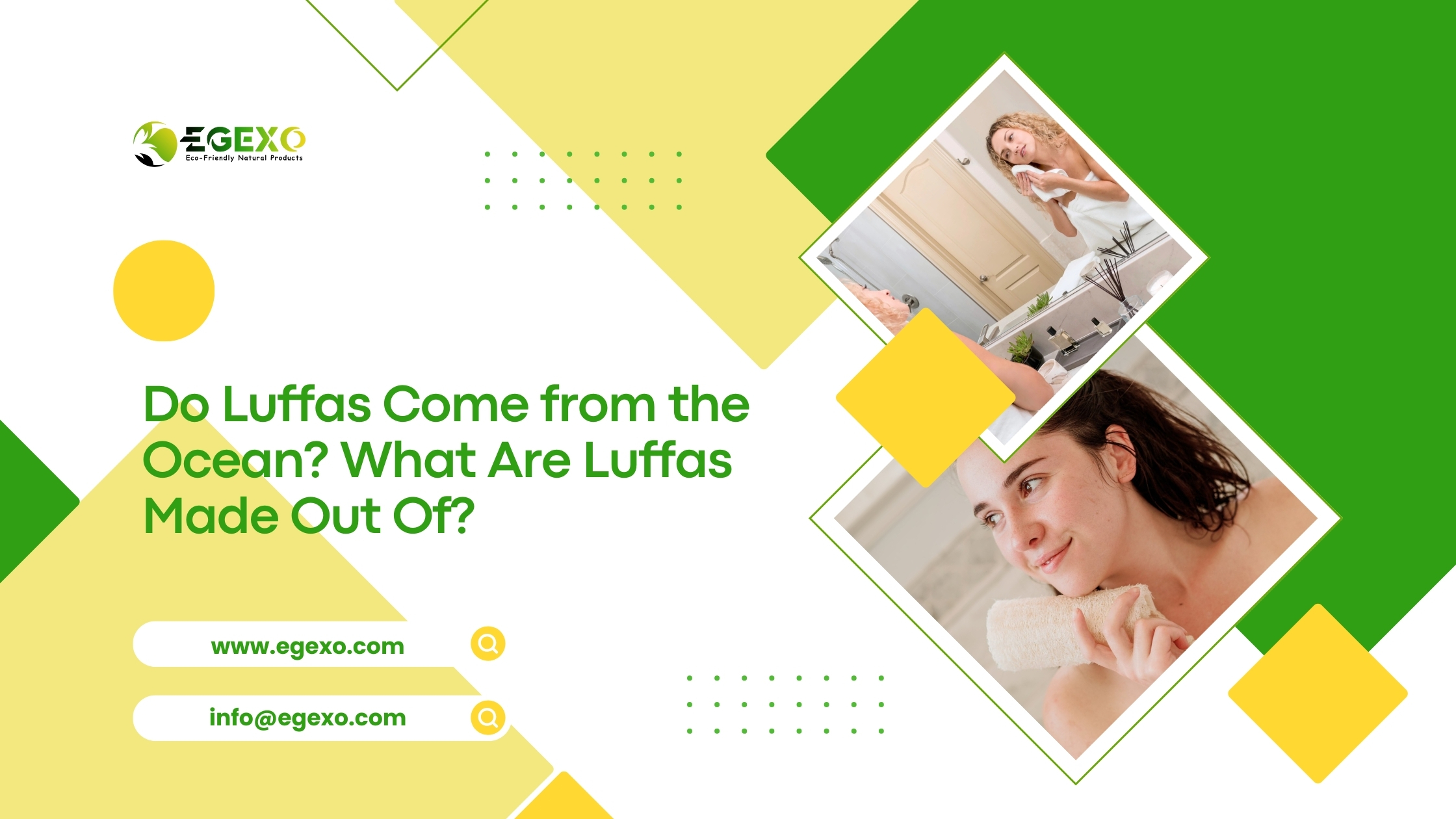
No, luffas do not come from the ocean. A luffa is the dried fibre of a gourd that grows on a climbing vine of the cucumber family. Sea sponges are animals; a luffa is a plant, so it is vegan. Many people mistakenly believe that luffas come from the ocean, associating them with marine sponges. So, do luffas really come from the ocean? And if not, what are luffas made out of?
In this blog, we’ll clarify these common misconceptions, delve into the natural origins of luffas, and explain why Egyptian luffas are soft and gentle from the first use. We’ll also highlight EGEXO, a family-run Egyptian luffa manufacturer and exporter.
Do Luffas Come from the Ocean?
The short answer is no, luffas do not come from the ocean. While their porous, sponge-like appearance may resemble marine sponges, luffas have a completely different origin.
For shops, hotels and brands
EGEXO For Export makes natural loofah products in Egypt for wholesale buyers: no minimum order on standard products, private label from 1,000 units, ready in 7 to 25 days from payment, shipped to more than 40 countries. See natural loofah wholesale.
What Are Marine Sponges?
Marine sponges are living organisms found in the ocean. They belong to the phylum Porifera and are often harvested for use as natural sponges. Unlike luffas, marine sponges are animal-based and come with environmental concerns related to overharvesting.
What Are Luffas?
Luffas, on the other hand, are plant-based. They come from the fruit of the luffa plant, a fast-growing vine in the cucumber family (Cucurbitaceae). The fruits, when fully matured and dried, form the fibrous sponges we commonly use.
The confusion likely arises from their similar textures and shared applications, but luffas are entirely plant-derived, making them a sustainable, vegan-friendly alternative to marine sponges.
What Are Luffas Made Out Of?
Luffas are made from the fibrous interior of the luffa gourd. Luffa sponges come from two species:
- Luffa aegyptiaca (also called Luffa cylindrica): the smooth luffa that EGEXO grows
- Luffa acutangula: the ridged luffa
The Anatomy of a Luffa Gourd
The luffa gourd starts as a soft, green fruit. As it matures, the outer skin hardens and the interior develops a dense network of fibers. These fibers are what give luffas their characteristic sponge-like texture.
Once the gourd is dried, peeled, and cleaned, the inner fibers are transformed into the natural sponges we use for:
- Skincare: Gentle exfoliation for removing dead skin cells.
- Cleaning: Scrubbing dishes, countertops, and more.
- Crafts: Decorative and functional items like soap holders.
Natural Properties of Luffas
Luffas are:
- Biodegradable: They decompose naturally, unlike synthetic sponges.
- Plant-Based: Made from natural plant fibers, luffas are gentle and suited to eco-conscious cleaning.
Why Choose Egyptian Luffas
Egyptian luffas are soft, gentle and versatile. Here’s what to know:
1. Unique Growing Conditions
The long, sunny growing season of the Nile Delta suits luffa: it is planted in March and harvested in September and October. Egyptian luffa sponges are:
- Soft and Flexible: Ideal for skincare and body scrubbing.
2. Light Pesticide and Fertilizer Needs
Egyptian luffas are grown on farms in the Nile Delta. Luffa does not require heavy pesticide or fertilizer.
The Luffa’s Journey: From Gourd to Sponge
Step 1: Growing and Harvesting
Luffa plants are cultivated on trellises to encourage healthy growth and straight fruits. The gourds are harvested when they mature and their outer skin begins to dry and harden.
Step 2: Drying
The harvested gourds are left to dry in the sun, a natural process that preserves the interior fibers.
Step 3: Peeling and Cleaning
Once dried, the outer skin is removed, and the interior is cleaned to remove seeds and debris.
Step 4: Cutting and Packaging
The cleaned luffa fibers are cut into various shapes and sizes depending on their intended use, then packaged for sale.
EGEXO: Your Partner for Premium Egyptian Luffas
If you’re looking for Egyptian luffas, EGEXO is a family-run manufacturer and exporter, exporting since 2015. EGEXO works with its own farms and partner farms in the Nile Delta and processes the luffa in its own factory.
1. Checked by Hand
Every EGEXO order is checked by hand for colour, holes, defects, size and dryness before packing. Egyptian luffa is soft and gentle from the first use.
2. Bulk and Wholesale Supply
By specializing in bulk supply and wholesale distribution, EGEXO has no minimum order on standard products.
3. Private Label and Custom Design Services
EGEXO provides businesses with private-label options, allowing you to customize luffa packaging and branding. They also offer custom sizes and shapes to meet unique market demands.
4. Global Reach
EGEXO exports luffa sponges to more than 40 countries, with a lead time of 7 to 25 days from payment.
Benefits of Choosing Luffa Sponges
Switching to luffa sponges comes with numerous advantages:
1. Eco-Friendly
Luffas are 100% biodegradable, reducing plastic waste and supporting a greener planet.
2. Vegan and Cruelty-Free
Unlike marine sponges, luffas are plant-based and suitable for vegan lifestyles.
3. Multipurpose
From exfoliating skin to scrubbing dishes, luffas are versatile and efficient.
Common Myths About Luffas: Debunked
Are luffas sea sponges?
No. Luffas are derived from plants, not the ocean.
Are luffas hard to process?
No. Once dried, a luffa is peeled, cleaned and cut to size, as described above.
Are all luffas the same?
No. Egyptian luffas are soft and gentle from the first use.
Conclusion
Luffas are a sustainable, plant-based alternative to synthetic and marine sponges. Made from the fibrous interior of the luffa gourd, these versatile sponges are perfect for exfoliation, cleaning, and more. Egyptian luffas, in particular, are soft and gentle from the first use.
Related: What Are Loofahs Made Of? Complete Guide to Natural and Synthetic Loofah Materials
Whether you’re an individual looking to make eco-conscious choices or a business seeking luffa products, EGEXO supplies natural Egyptian luffa to buyers in more than 40 countries. With private-label options and custom designs, EGEXO delivers Egyptian luffas tailored to your needs. Read more: what is a loofah.