

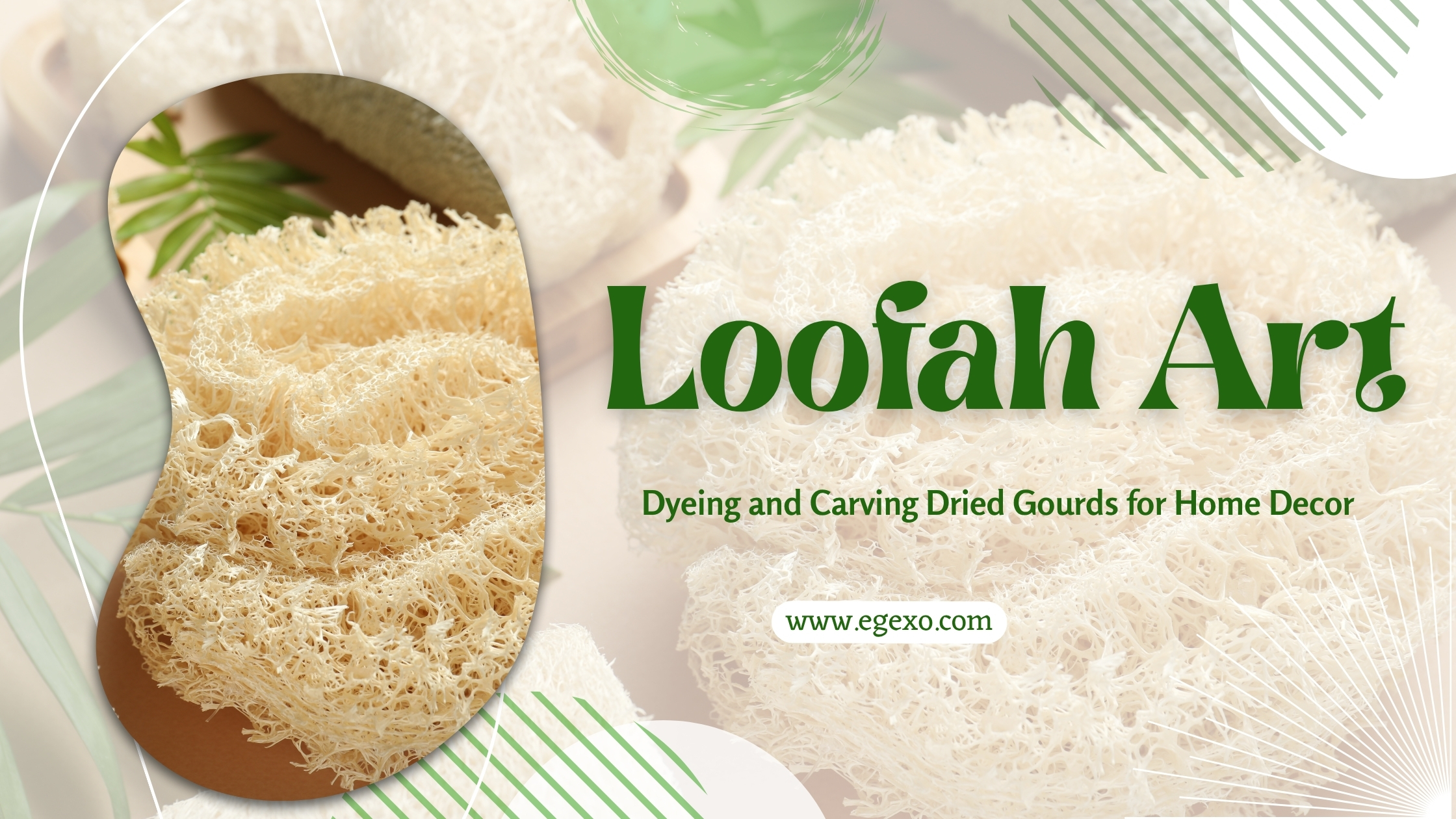
Loofah Art: Dyeing and Carving Dried Gourds for Home Decor
Introduction: When a Humble Gourd Becomes a Work of Art
Most people know the loofah as a bathroom staple. Fewer realize that the same dried fibrous gourd hanging in your shower has been transformed by artisans, eco-designers, and crafters into hand-carved wall pieces, dyed table centerpieces, and sustainable home accessories that retail for several times the price of a plain scrubber.
Loofah art is one of the fastest-growing niches inside the broader natural home decor market, and the numbers support that claim. The global natural and organic home decor market was valued at over 39 billion USD in 2023 and is projected to exceed 67 billion USD by 2030, growing at a compound annual growth rate above 8 percent. Inside that expansion, dried botanical decor — which includes carved and dyed loofah gourds — has carved out a loyal audience among consumers who want beauty without synthetic materials.
This guide serves two groups equally. If you are a spa owner, boutique retailer, gift shop buyer, or wholesale importer looking at loofah art as a product line, you will find supplier criteria, quality specifications, and business opportunity data throughout. If you are a DIY enthusiast, eco-conscious decorator, or crafter exploring how to dye and carve dried gourds at home, you will find step-by-step techniques, material guides, and finishing tips in equal measure.
Egexo, Egypt’s leading loofah wholesale supplier with over 25 years of cultivation and export experience, has worked with artisan brands, spa chains, and home decor retailers worldwide. That knowledge informs every section below.
Ready to explore the craft? Read on — or if you already know what you need, request a bulk quote now.
What Is Loofah Art and Why Is It Having a Moment
Loofah art refers to the creative use of the dried fibrous skeleton of the Luffa cylindrica or Luffa acutangula plant as a medium for artistic expression and functional home decoration. Unlike synthetic foam or plastic decor, the loofah gourd is 100 percent plant-based, biodegradable, and carries a natural texture that no manufactured material can replicate.
The Botanical Foundation of the Craft
The loofah plant belongs to the cucumber family, Cucurbitaceae. When fully mature, the inner fibrous network of the gourd dries into a dense, sponge-like scaffold that holds its three-dimensional structure remarkably well. This structural integrity is precisely what makes it ideal for carving — the fibers resist tearing while still yielding to sharp tools — and for dyeing, because the open cellular network absorbs pigment deeply and evenly.
Egyptian-grown loofah, cultivated in the fertile Nile Delta region, is widely recognized as the gold standard in global trade. The specific combination of alluvial soil composition, Nile water irrigation, and long growing seasons produces gourds with a fiber density of 180 to 220 grams per cubic meter, significantly higher than Southeast Asian equivalents. Higher fiber density means cleaner carving lines, more consistent dye absorption, and longer-lasting decor pieces.
Egexo sources exclusively from Egyptian farms, and you can explore the full farm-to-export process to understand exactly what quality controls govern each batch before it reaches artisan workshops or retail shelves.
Why Consumers and Retailers Are Paying Attention Now
Three converging trends are driving the loofah art market upward simultaneously.
First, sustainability fatigue with plastic and resin decor has pushed a growing segment of home decorators toward natural, biodegradable alternatives. A 2024 consumer survey by NielsenIQ found that 73 percent of global respondents said they would “definitely” or “probably” change their purchasing habits to reduce environmental impact — and home decor was cited as the third most targeted category.
Second, the DIY crafting economy continues to expand. The global craft supplies market surpassed 45 billion USD in 2024, and natural materials like dried gourds, seed pods, and woven fibers are among the fastest-moving subcategories on craft marketplaces.
Third, spa and wellness retail is actively diversifying into lifestyle and home goods. Spa owners who already purchase loofah scrubbers in bulk have discovered that branded loofah art pieces — dyed in house colors and carved with logo motifs — create compelling retail upsells with profit margins well above standard bath products.
Understanding Loofah Gourd Quality Before You Start
Whether you are buying raw gourds to craft at home or sourcing wholesale quantities for a product line, the quality of the base material determines every outcome downstream.
Quality Grading Standards for Dried Loofah Gourds
| Quality Grade | Fiber Density | Gourd Length | Color Uniformity | Recommended Use |
|---|---|---|---|---|
| Grade A Premium | 200 to 220 g/m3 | 35 to 55 cm | 95 percent or higher | Fine carving, premium retail |
| Grade A Standard | 180 to 200 g/m3 | 25 to 40 cm | 90 percent or higher | Dyeing projects, mid-tier retail |
| Grade B | 150 to 180 g/m3 | 20 to 35 cm | 80 percent or higher | Bulk crafting, texture decor |
| Raw Unprocessed | Variable | Variable | Variable | Industrial or artisan blending |
For loofah art applications, Grade A Premium is the professional standard. The higher fiber density supports intricate carving without fiber collapse, and the color uniformity ensures even dye uptake across the entire gourd surface.
Egexo’s quality standards page details the grading criteria applied at every stage of the post-harvest processing chain.
Businesses sourcing for the first time are strongly encouraged to order samples before committing to volume orders. This is industry best practice, and Egexo’s sample program allows buyers to test texture, density, and dye compatibility before finalizing specifications.
Dimensions and Specifications Table for Art-Grade Loofah Gourds
| Specification | Standard Range | Premium Range | Notes |
|---|---|---|---|
| Length | 20 to 40 cm | 35 to 55 cm | Longer gourds suit wall hangings |
| Diameter | 6 to 10 cm | 8 to 14 cm | Wider gourds suit carving |
| Dry Weight | 80 to 140 g | 130 to 200 g | Heavier indicates higher density |
| Moisture Content | Below 12 percent | Below 10 percent | Critical for dye adhesion |
| Fiber Cell Openness | 60 to 70 percent | 70 to 80 percent | Higher openness = better dye absorption |
How to Dye Dried Loofah Gourds: Techniques and Best Practices
Dyeing is the most accessible entry point into loofah art. The fibrous structure of a dried gourd behaves similarly to natural linen or jute — it accepts fiber-reactive dyes, natural botanical dyes, and fabric paints with equal hospitability.
Choosing Your Dye Type
The dye category you select determines the depth of color, the longevity of the finish, and the environmental footprint of your work.
Natural Plant-Based Dyes
Natural dyes derived from turmeric, indigo, madder root, pomegranate rind, and avocado pits produce muted, earthy tones that align perfectly with the organic aesthetic of loofah decor. Color fastness is lower than synthetic alternatives — expect fading of 20 to 30 percent over 12 months with direct light exposure — but the zero-chemical profile makes them the preferred choice for eco-labeling and sustainability marketing.
Fiber-Reactive Synthetic Dyes
Procion MX-type dyes, originally developed for cotton, work exceptionally well on loofah fiber because both materials share a high cellulose content. These dyes bond chemically with the fiber rather than simply coating the surface, producing colors that retain 85 to 90 percent of their original vibrancy after 24 months under indirect indoor light.
Fabric Spray Paints
For beginners or for applications requiring precise pattern control — ombre effects, stenciled motifs, color-blocked sections — fabric spray paints applied in thin, layered coats offer the most forgiving technique. They dry quickly, require no heat setting, and can be layered without muddying.
Step-by-Step Dyeing Process for Dried Loofah Gourds
| Step | Action | Duration | Notes |
|---|---|---|---|
| 1. Pre-soak | Submerge dry gourd in warm water | 20 to 30 minutes | Opens fiber cells for maximum absorption |
| 2. Mordant bath (natural dyes only) | Soak in alum solution (10 g per liter) | 45 to 60 minutes | Fixes natural pigment to cellulose |
| 3. Dye bath | Submerge in prepared dye solution | 30 to 90 minutes depending on intensity desired | Stir every 10 minutes |
| 4. Rinse | Cool water rinse until water runs clear | 5 to 10 minutes | Prevents bleed onto surfaces |
| 5. Drying | Air dry horizontally on mesh rack | 24 to 48 hours | Avoid compression during drying |
| 6. Sealing | Optional clear matte sealant spray | Single coat | Extends color fastness by 30 to 40 percent |
A critical technical note: always dye before carving. Dye penetrates the full fiber mass when the gourd is intact. Carved surfaces expose raw interior fibers that absorb dye at a different rate, producing uneven color patches around carved areas.
How to Carve Dried Loofah Gourds for Decorative Pieces
Carving dried loofah requires tools, patience, and an understanding of how the fibrous structure responds to cutting versus pressing. The results — geometric lanterns, floral wall medallions, carved cylindrical vases — are worth the learning curve.
Tools Required for Loofah Carving
| Tool | Use Case | Skill Level Required |
|---|---|---|
| Fine linoleum cutter | Detail line work and geometric patterns | Beginner to intermediate |
| Small V-gouge woodcarving tool | Relief carving, floral motifs | Intermediate |
| Craft knife with replaceable blades | Clean edge cuts, section removal | Beginner |
| Micro drill bit set | Perforation patterns for light diffusion | Intermediate |
| Heated wire tool | Burning patterns into fiber surface | Intermediate to advanced |
Carving Techniques by Decor Style
Geometric Lanterns
Mark a symmetrical grid on the gourd surface using a water-soluble fabric marker. Use a micro drill bit or craft knife to cut uniform perforations along the grid. When a battery-operated LED candle is placed inside the finished piece, light diffuses through the perforations, casting intricate shadow patterns. This style requires no prior carving experience and produces immediately impressive results.
Floral Relief Medallions
Using a V-gouge, remove fiber around a pre-drawn floral design, leaving the design itself raised. This relief carving technique works best on Grade A Premium gourds because the high fiber density holds raised edges without crumbling. Finished medallions can be mounted on natural rope, driftwood frames, or directly on walls with concealed hooks.
Textured Vase Forms
Carve repeated diagonal or herringbone patterns across the cylinder of the gourd, then seal with a clear matte finish. Insert a waterproof glass tube or test tube inside the gourd cavity to hold water and fresh stems. The combination of carved natural texture and living flowers creates a decor piece with strong visual contrast.
For wholesale buyers developing a loofah art product line, Egexo’s custom product design service supports the development of carving templates, branded motifs, and production-ready specifications that artisan workshops can replicate at scale.
Building a Loofah Art Product Line: A Business Opportunity Analysis
The intersection of sustainable decor, wellness retail, and handcraft aesthetics creates a compelling commercial opportunity for buyers who source raw loofah gourds at wholesale prices and develop finished loofah art products for retail.
Profit Margin Analysis by Product Type
| Product Type | Estimated Material Cost (USD per unit, bulk) | Typical Retail Price Range (USD) | Gross Margin Range |
|---|---|---|---|
| Dyed loofah gourd, plain | 0.80 to 1.40 | 12 to 22 | 82 to 94 percent |
| Carved geometric lantern | 1.20 to 2.00 | 28 to 48 | 92 to 96 percent |
| Floral relief wall medallion | 1.50 to 2.50 | 35 to 65 | 94 to 97 percent |
| Branded spa gift set (3 pieces) | 3.50 to 5.00 | 55 to 90 | 92 to 95 percent |
Note: Material costs reflect Grade A Premium Egyptian loofah gourds sourced in wholesale quantities. Artisan labor, packaging, and shipping costs vary by market and are not included in the above figures.
Supplier Evaluation Checklist for Wholesale Loofah Art Sourcing
| Criterion | What to Verify | Egexo Standard |
|---|---|---|
| Origin verification | Farm location and cultivation records | 100 percent Egyptian Nile Delta origin |
| Fiber density testing | Third-party lab results or in-house grading | Documented per batch, available on request |
| Moisture content control | Post-harvest drying protocols | Below 10 percent for Premium grade |
| Minimum order quantity | MOQ per product type | From 500 units per SKU for raw gourds |
| Lead time | Production to port timeline | 14 to 21 business days standard |
| Private label capability | Packaging, branding, custom dimensions | Full service via private label program |
| Sample availability | Pre-order sample policy | Available via sample request |
For a complete product and pricing overview, download the Egexo wholesale catalog and review the full raw loofah scrubber range at egexo.com/product-category/raw-loofah-scrubbers.
Finishing and Displaying Loofah Art Pieces
The final presentation of a loofah art piece determines whether it reads as a premium handcrafted item or a hobbyist project. Finishing and display techniques matter as much as the carving and dyeing themselves.
Finishing Options Comparison
| Finish Type | Application Method | Effect | Longevity |
|---|---|---|---|
| Clear matte sealant spray | Two light coats, air dry 2 hours between | Protects color, subdued natural look | Extends lifespan by 18 to 24 months |
| Beeswax rub | Applied warm with soft cloth | Deep luster, slight color enrichment | Reapplication every 6 to 12 months |
| Shellac brush coat | Thin brush application | High sheen, significant rigidity increase | 3 to 5 years without reapplication |
| Unfinished natural | None | Pure organic texture, fastest color fade | 12 to 18 months typical interior lifespan |
Display Recommendations by Room
Living Room: Carved loofah medallions grouped in odd numbers on a gallery wall. Use natural jute cord for hanging to maintain the botanical aesthetic. Group three pieces of varying sizes — 30 cm, 20 cm, and 15 cm diameter — for visual balance.
Bathroom: Dyed loofah gourd clusters in coordinated colors placed in open wicker baskets on floating shelves. The humidity of a bathroom environment actually slows drying degradation and may extend piece lifespan slightly.
Dining Table: A trio of short, wide gourds — carved with geometric perforations and housing LED tea lights — creates a striking centerpiece that combines functional lighting with natural texture.
Retail and Spa Environments: Larger carved pieces suspended from ceiling hooks at varying heights create an immersive botanical installation effect. Several boutique spas have used this approach as a signature design element in reception areas.
Loofah Art Versus Other Natural Decor Materials
Shoppers and buyers alike often compare loofah art to competing natural decor materials. The comparison below addresses the most common alternatives.
Comparison: Loofah Art vs Competing Natural Decor Materials
| Material | Biodegradability | Carve-ability | Dye Compatibility | Weight | Relative Cost (retail) | Sustainability Score |
|---|---|---|---|---|---|---|
| Dried loofah gourd | 100 percent in 3 to 5 months | Excellent | Excellent | Very light | Low to medium | 10/10 |
| Dried calabash gourd | 100 percent in 4 to 6 months | Excellent | Good | Light to medium | Medium | 9/10 |
| Driftwood | Decades | Moderate | Limited | Heavy | Medium to high | 7/10 |
| Cork | 100 percent in 5+ years | Poor | Limited | Very light | Low to medium | 8/10 |
| Rattan | Decades | Poor | Moderate | Light | Medium | 7/10 |
| Resin/plastic decor | Never | N/A | N/A | Variable | Low to high | 1/10 |
Loofah wins decisively on biodegradability and carve-ability, and it is competitive on cost, particularly when sourced wholesale from a producer like Egexo whose vertical integration from farm to export eliminates multiple layers of distributor markup. Learn more about why Egexo is the preferred choice for buyers in over 40 countries.
Expert Insight from Egexo
With over 25 years of loofah cultivation and export experience, our team at Egexo has observed a clear pattern: the loofah art pieces that succeed commercially are always built on raw material quality, not just artisan skill. A beautifully carved piece made from a low-density gourd will crack within months of display. The fiber density of Egyptian-grown Luffa cylindrica, cultivated in Nile Delta soil with controlled harvest timing, gives artisans and manufacturers a structural advantage that no other growing region consistently matches.
For businesses developing loofah art product lines, we recommend starting with our Grade A Premium raw gourds, testing dye compatibility with at least three colorways before finalizing a collection, and sealing all finished pieces with a matte sealant before packaging. Our team can advise on batch specifications, custom dimensions, and private label packaging through our custom design service. The natural home decor market is growing fast, and the brands entering it now with quality-driven products will own the category.
FAQ Section
Q1: What is loofah art?
Loofah art is the practice of using dried Luffa cylindrica gourds as a crafting medium for home decor. Artists and crafters dye the fibrous gourd surface with natural or synthetic pigments and carve it with woodcarving, craft knife, or perforation tools to create decorative pieces including wall medallions, lanterns, vases, and table centerpieces. The material is 100 percent plant-based and biodegradable.
Q2: Can you dye a dried loofah gourd at home?
Yes. Pre-soak the dry gourd in warm water for 20 to 30 minutes to open the fiber cells, prepare your chosen dye bath, submerge the gourd for 30 to 90 minutes depending on color intensity desired, rinse thoroughly, and air dry on a mesh rack for 24 to 48 hours. Fiber-reactive Procion MX dyes produce the most durable results, retaining 85 to 90 percent vibrancy for up to 24 months indoors.
Q3: What tools do I need to carve a dried loofah gourd?
For beginners, a craft knife with replaceable blades and a micro drill bit set are sufficient for geometric perforation patterns. Intermediate carvers will benefit from a fine linoleum cutter and a small V-gouge woodcarving tool for relief carving and floral motifs. A heated wire tool is used by advanced crafters for burn-pattern techniques. Always work on a Grade A Premium density gourd for clean, stable carving results.
Q4: How long does a loofah art piece last indoors?
An unfinished loofah art piece displayed indoors under normal conditions has a typical lifespan of 12 to 18 months before color fading and minor fiber degradation become visible. Applying two coats of clear matte sealant spray extends this to 30 to 42 months. Pieces kept away from direct sunlight and high humidity maintain their appearance longest.
Q5: What is the minimum order quantity for wholesale loofah gourds for art production?
Egexo’s standard minimum order quantity for raw loofah gourds suitable for art and decor applications starts at 500 units per SKU. Buyers can choose from Grade A Premium, Grade A Standard, or Grade B depending on the application. Custom dimensions and specific moisture content requirements can be accommodated with advance notice. Request a quote to discuss your specific volume needs.
Q6: Is Egyptian loofah better than other origins for carving?
Egyptian Luffa cylindrica grown in the Nile Delta region consistently produces gourds with fiber density between 180 and 220 grams per cubic meter, higher than Southeast Asian equivalents which typically range from 140 to 170 grams per cubic meter. This higher density produces cleaner carving lines, more uniform dye absorption, and greater structural durability in finished decor pieces. Egyptian loofah is the material of choice for professional loofah art production.
Q7: Can loofah art pieces be used in commercial spa or retail settings?
Yes. Loofah art pieces are used widely in boutique spa reception areas, eco-conscious retail environments, wellness hotels, and natural beauty stores. For commercial settings, carved pieces should be sealed with shellac or clear matte sealant for maximum durability. Custom dimensions and branded motifs can be developed through Egexo’s private label program.
Q8: What is the environmental impact of loofah art compared to synthetic decor?
A dried loofah gourd used as decor biodegrades completely in 3 to 5 months in a composting environment at end of life, compared to plastic or resin decor which persists in landfill for hundreds of years. Natural dyes produce no toxic byproducts. Even synthetic fiber-reactive dyes, when used in small craft quantities and disposed of responsibly, represent a fraction of the environmental footprint of resin casting processes.
Conclusion
Loofah art sits at a remarkable intersection: ancient plant material, contemporary sustainable design, and a commercial market hungry for biodegradable home decor. Whether you are dyeing your first gourd in a kitchen pot or sourcing Grade A Premium Egyptian Luffa cylindrica for a wholesale product line, the craft rewards quality at every level.
The foundational principles are consistent regardless of scale. Start with high-density gourds from a verified Egyptian source. Dye before carving for even color penetration. Match your finishing technique to the intended display environment. And if you are building a product line, understand that the margin potential in loofah art — with gross margins commonly exceeding 90 percent at retail — is among the strongest in the natural decor category.
Key Takeaways:
- Egyptian loofah gourds offer the highest fiber density globally, making them the best raw material for art and carving applications
- Always dye before carving to achieve uniform color distribution across the gourd surface
- Clear matte sealant extends the display lifespan of finished loofah art pieces by 18 to 24 months
- Wholesale loofah art sourcing offers gross retail margins commonly above 90 percent
- Loofah art pieces biodegrade fully within 3 to 5 months, making them the most sustainable home decor material available
Ready to experience Egyptian loofah quality?
- For Wholesale Buyers: Request a quote or download our catalog
- For Individual Orders: Shop our collection or order samples