Contents
- What Really Happens Between Harvest and Your Bathroom Shelf
- From Harvest to Shipment
- Stage One: Drying
- Stage Two: Washing
- Stage Three: Cutting and Shaping
- Quality Checks Before Packing
- Environmental Considerations in Modern Loofah Processing
- What Wholesale Buyers Should Verify During Supplier Evaluation
- Practical Tips for Consumers Evaluating Loofah Quality
- A Note from Egexo
- Frequently Asked Questions
- Conclusion
What Really Happens Between Harvest and Your Bathroom Shelf
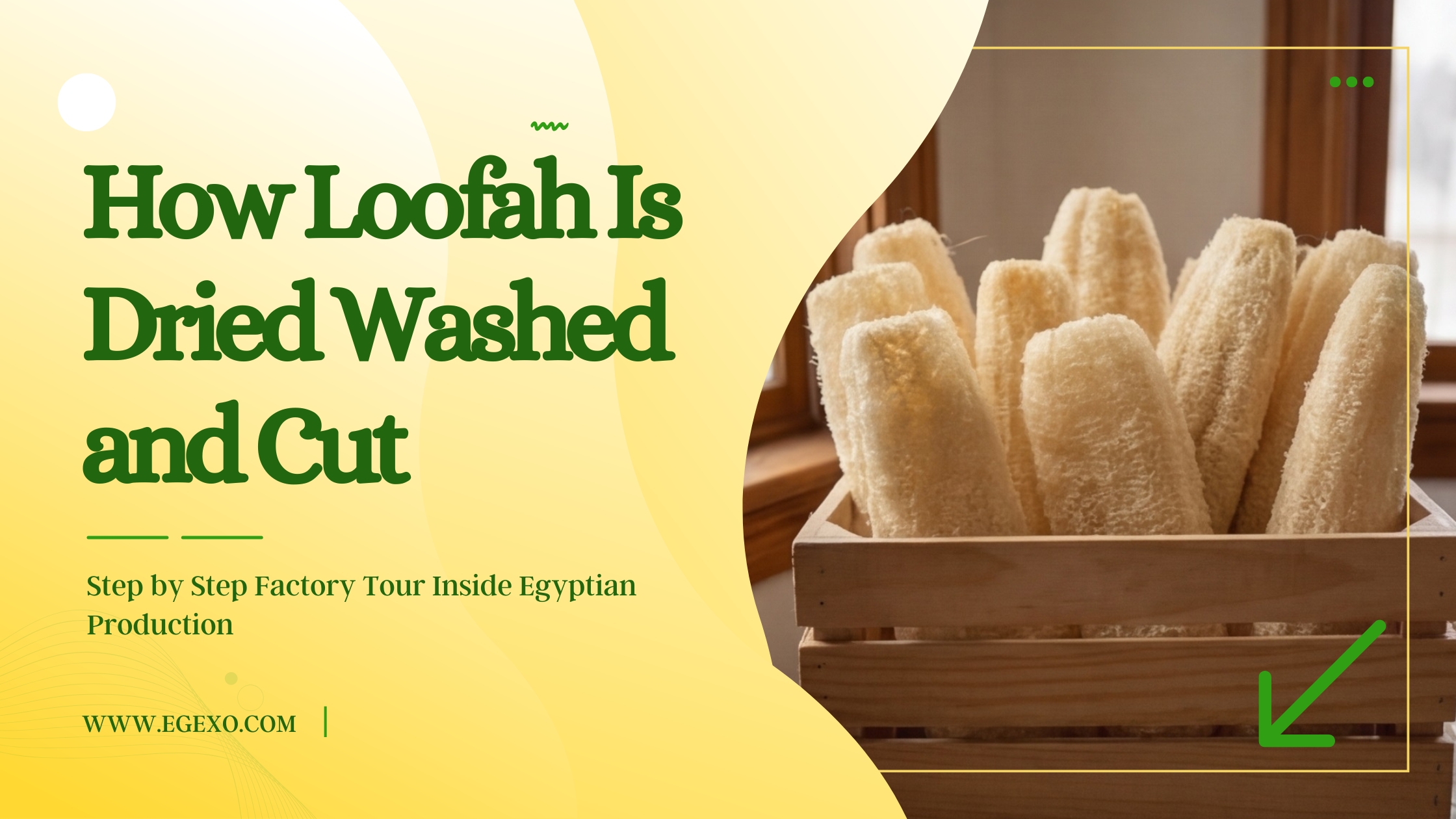
Every natural loofah sponge travels through several steps before it reaches your hands. Understanding how loofah is dried, washed, and cut helps you judge quality. Whether you operate a spa or simply want to choose a good exfoliating tool for your skin, this guide to Egyptian loofah processing shows what to look for.
The journey from vine to finished product involves drying, cutting and checking. Egexo is a family-run manufacturer and exporter, exporting since 2015. It grows loofah on its own farms and partner farms in the Nile Delta and processes it in its own factory.
This guide explains the steps that affect how a loofah feels and how well it dries. You will see what wholesale buyers can ask a supplier and what everyday shoppers can check before purchase.
Ready to explore Egyptian loofah options? Browse our complete bath and body loofah collection or continue reading to learn more about this natural product.
From Harvest to Shipment
Before examining each processing stage individually, an overview helps both business buyers planning inventory and consumers appreciating the craftsmanship behind quality loofahs.
Understanding Harvest Timing and Raw Material Selection
The processing journey begins not in the factory but in the fields, where loofah gourds grow on vines on farmland in the Nile Delta.
Egexo grows loofah on its own farms and partner farms in the Nile Delta and processes it in its own factory. This farm to export approach keeps the whole process in one place.
Stage One: Drying
Proper drying is an important processing stage. How loofah is dried varies between production facilities, with methods ranging from sun drying to machine drying.
Sun Drying
Egexo dries loofah in the sun, using Egypt’s strong sunshine.
Machine Drying
Egexo also uses machine drying alongside sun drying.
Wholesale buyers can ask any supplier about its drying methods. Egexo uses both sun drying and machine drying, and checks the dryness of every order by hand before packing. See our quality standards.
For individual consumers, a properly dried loofah is easier to keep fresh at home.
Stage Two: Washing
Washing turns raw dried fibers into the clean, naturally colored sponges consumers expect. How loofah is washed varies between producers.
Primary Washing and Debris Removal
Following drying, loofahs are washed to flush away remaining plant material. Natural loofah plants produce sap and cellular debris that accumulates within fiber networks during growth. Without thorough removal, these residues decompose during storage, producing unpleasant odors and discoloration that characterize low quality products.
Egexo’s standard loofah is not bleached; bleaching is done only on request, and dyed colours are available on request as a custom order. Explore our complete selection through our shop page or request samples to compare the products directly.
Stage Three: Cutting and Shaping
How loofah is cut turns raw loofah into the product forms found on retail shelves and in spas. Cutting affects both product appearance and how it feels.
Product Forms
Wholesale buyers seeking specific product forms should specify requirements when requesting quotations. Egexo offers custom product design services for buyers needing unique shapes or dimensions beyond standard catalog offerings. For branded products, see private label manufacturing, which starts from 1,000 units.
Consumers interested in DIY cutting should consider purchasing raw loofah scrubbers for customization at home. Whole loofahs provide excellent value for households using multiple product forms or crafters creating handmade gifts.
Quality Checks Before Packing
Understanding quality checks helps wholesale buyers evaluate a supplier and helps consumers recognize a well-made loofah.
Hand Checks Before Packing
Before packing, every order is checked by hand for colour, holes, defects, size and dryness.
Download the complete Egexo product catalog for detailed specifications across the product range.
Environmental Considerations in Modern Loofah Processing
Sustainability increasingly influences purchasing decisions for both wholesale buyers serving eco conscious markets and individual consumers seeking alternatives to plastic bath products. Understanding environmental aspects of how loofah is dried, washed, and cut helps evaluate supplier claims and make informed choices.
Waste Stream Management
Loofah processing generates plant waste including removed skins, seeds and cutting scraps. This plant material can be composted and returned to the soil.
Consumers can extend sustainability thinking beyond initial purchase by composting used loofahs at end of life. Unlike synthetic alternatives that persist in the environment for a very long time, natural loofah is 100% biodegradable.
What Wholesale Buyers Should Verify During Supplier Evaluation
Business buyers investing in loofah inventory benefit from understanding processing details when evaluating potential suppliers. Beyond requesting samples and comparing prices, knowledgeable buyers investigate processing methods that determine product reliability across large orders.
Essential Supplier Verification Questions
When contacting potential suppliers, the following inquiries reveal processing quality beyond surface impressions:
- What drying methods ensure consistent moisture content across shipments
- What water is used for washing
- What washing methods are used
- How is quality checked before packing
- Can processing be customized for specific certifications or requirements
- What export documents accompany orders
- Are factory inspections available for visiting buyers
Red Flags Indicating Processing Shortcuts
Experienced importers recognize warning signs suggesting suppliers compromise processing quality for cost reduction. Prices significantly below market averages often reflect skipped processing stages rather than operational efficiency. Inconsistent moisture content between samples and bulk orders suggests inadequate drying protocols. Strong residual odors indicate insufficient washing. Rapid deterioration during storage signals improper sanitization.
Why Choose Egexo explains more about Egexo and its export business.
Minimum Order Considerations
No minimum order on standard products. Private label from 1,000 units. Lead time is 7 to 25 days from payment, depending on quantity and orders in process. Custom and private label orders take longer; the time is confirmed with the quote.
Practical Tips for Consumers Evaluating Loofah Quality
Individual buyers benefit from understanding processing methods when selecting loofahs at retail or online. Visual and tactile evaluation reveals processing quality without requiring supplier documentation.
Visual Quality Indicators
Hold potential purchases up to light, examining fiber uniformity and density patterns. Good processing produces consistent coloration ranging from cream to light tan, without dark spots suggesting mold exposure or white patches indicating bleach overprocessing. Fiber networks should appear intact without significant broken strands or compressed areas revealing rough handling.
Tactile Assessment Techniques
Quality processing creates fibers that feel even and slightly flexible when dry. Excessive brittleness suggests overdrying that weakens fibers during use. Soft or spongy areas indicate retained moisture creating mold risk. Gently flex the loofah, listening for cracking sounds that reveal fiber damage invisible to visual inspection.
Smell Testing Importance
Fresh processed loofahs carry mild earthy scents reflecting their natural plant origin. Strong musty odors indicate mold development from improper drying. Chemical smells suggest harsh processing. Well-processed loofahs smell essentially neutral, allowing fragrance free use or compatibility with preferred soaps and cleansers.
For more guidance on selecting and maintaining natural loofahs, visit our sister site EGEXO blog featuring consumer resources.
A Note from Egexo
Egexo has been processing and exporting Egyptian loofah since 2015. Proper drying matters, which is why every order is checked by hand for dryness, along with colour, holes, defects and size, before packing.
Our recommendation to wholesale buyers is to request samples before a significant order, so you can check colour, size and dryness yourself.
Frequently Asked Questions
Q: How long does an order take?
A: Lead time is 7 to 25 days from payment, depending on quantity and orders in process. Custom and private label orders take longer; the time is confirmed with the quote.
Q: How can wholesale buyers verify supplier processing quality?
A: Request samples and ask the supplier how it checks quality. Egexo checks every order by hand for colour, holes, defects, size and dryness before packing, and holds ISO certified management systems.
Q: What processing differences explain price variations between loofah products?
A: Price differences can reflect processing, size, quality checks and order quantity. At Egexo, unit prices drop as the quantity grows.
Q: How should consumers store loofahs to maintain processing quality benefits?
A: Store loofahs in well ventilated areas where they can dry completely between uses. Avoid enclosed containers trapping moisture. Hang loofahs rather than leaving them in shower corners where water accumulates. With proper storage, a loofah stays fresh between uses. Replace it every few weeks.
Q: What certifications should wholesale buyers request for processed loofahs?
A: Relevant documents depend on your destination market. Egexo supplies export papers such as a Certificate of Origin and a phytosanitary certificate, and holds ISO 9001, ISO 14001 and ISO 45001 certified management systems and ISO 22716 certified good manufacturing practices. Discuss specific requirements when requesting a quotation.
Conclusion
Understanding how loofah is dried, washed, and cut helps with purchasing decisions and product appreciation. Drying, washing and cutting each affect the quality you receive, whether you order thousands of units for retail distribution or choose a single loofah for personal use.
Egexo is a family-run Egyptian manufacturer and exporter. Every order is checked by hand for colour, holes, defects, size and dryness before packing.
Ready to experience Egyptian loofah quality?
For Wholesale Buyers: Request a bulk quote or download our complete product catalog
For Individual Orders: Browse our collection or request samples to evaluate quality firsthand