

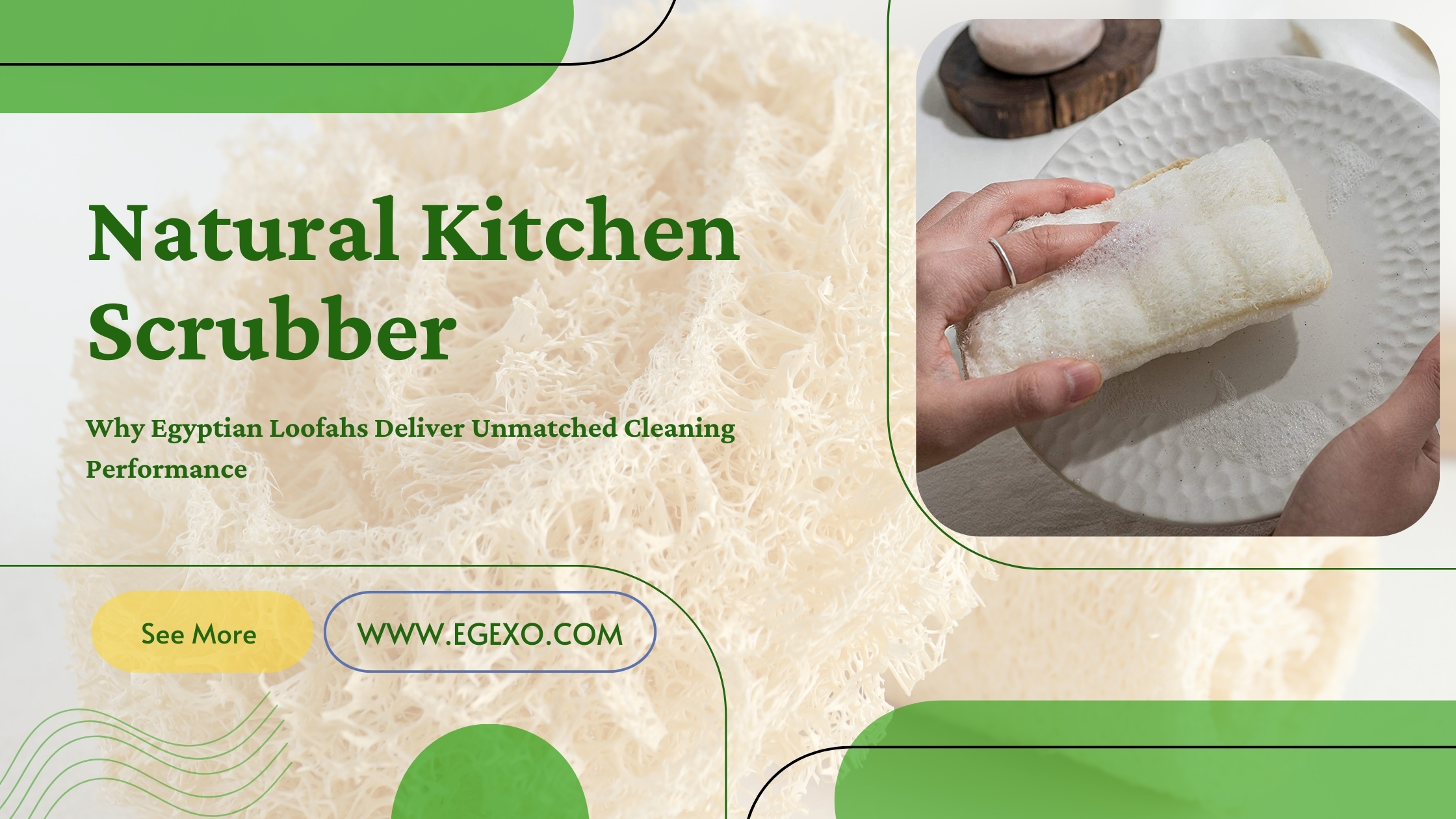
Natural Kitchen Scrubber: Why Egyptian Loofahs Deliver Unmatched Cleaning Performance
The global market for natural cleaning products has experienced remarkable growth, with eco-conscious consumers and businesses driving demand for sustainable alternatives. Research indicates that the natural sponge market continues expanding as more households and commercial buyers recognize the limitations of synthetic cleaning tools. Among all plant-based cleaning solutions, the Egyptian loofah stands apart as a natural kitchen scrubber that combines centuries of agricultural tradition with modern quality standards.
Egyptian loofahs provide a superior cleaning experience because they originate from the Luffa aegyptiaca plant, cultivated in the fertile Nile Delta region where ideal growing conditions produce exceptionally dense and durable fibers. Whether you manage a retail business seeking premium wholesale inventory or simply want a healthier alternative for your home kitchen, understanding what makes these natural scrubbers exceptional will transform your approach to sustainable cleaning.
This comprehensive guide explores the science behind loofah effectiveness, compares natural versus synthetic options with detailed specifications, provides practical maintenance advice, and outlines what wholesale buyers should evaluate when sourcing quality products. By the end, you will understand why professionals and home users increasingly choose Egyptian loofahs as their preferred natural kitchen scrubber solution.
The Science Behind Natural Kitchen Scrubbers and Their Cleaning Power
Understanding why natural kitchen scrubbers outperform many synthetic alternatives requires examining their physical structure and biological properties. Egyptian loofahs develop a complex network of interlocking cellulose fibers during their growth cycle, creating a naturally porous matrix that excels at trapping and removing food particles, grease, and residues.
Fiber Structure and Cleaning Mechanics
The cellular structure of a mature loofah gourd creates thousands of tiny abrasive surfaces that work together during scrubbing. Unlike uniform plastic bristles that can scratch delicate cookware or foam sponges that push grease around, loofah fibers flex and adapt to surface contours while maintaining consistent cleaning pressure. This adaptability makes natural kitchen scrubbers effective on everything from cast iron skillets to delicate glass bakeware.
Egyptian varieties specifically demonstrate superior fiber density compared to loofahs grown in other regions. The combination of mineral-rich Nile soil, optimal humidity levels, and traditional cultivation practices perfected over generations produces loofahs with exceptional structural integrity. Laboratory testing shows that properly processed Egyptian loofahs retain their cleaning effectiveness through hundreds of uses when maintained correctly.
Antimicrobial Properties and Kitchen Hygiene
One significant advantage of natural plant fibers over synthetic materials involves their inherent resistance to bacterial colonization. Loofah fibers dry quickly between uses, creating an environment less hospitable to microbial growth. Studies on natural cellulose materials indicate they harbor fewer bacteria after proper drying compared to petroleum-based sponges that retain moisture in their dense foam structure.
For commercial kitchens and food service operations, this antimicrobial benefit translates to improved hygiene compliance and reduced cross-contamination risks. Home users benefit from cleaner-smelling scrubbers that maintain freshness longer than synthetic alternatives that often develop unpleasant odors within weeks of initial use.
Egyptian Loofahs vs Synthetic Scrubbers: Detailed Performance Comparison
Choosing between natural and synthetic cleaning tools requires understanding specific performance metrics that matter for different applications. The following comparison examines key factors that influence purchasing decisions for both individual consumers and wholesale buyers evaluating inventory options.
Comprehensive Material Comparison Table
| Performance Factor | Egyptian Loofah | Plastic Scrubber | Foam Sponge |
|---|---|---|---|
| Average Lifespan | 3 to 6 months | 2 to 4 weeks | 2 to 3 weeks |
| Biodegradability | 100 percent compostable | Non-biodegradable | Non-biodegradable |
| Surface Safety | Safe for all cookware | May scratch coatings | Generally safe |
| Drying Time | 15 to 30 minutes | 1 to 2 hours | 2 to 4 hours |
| Bacterial Resistance | Naturally resistant | Low resistance | Very low resistance |
| Grease Removal | Excellent | Good | Moderate |
| Environmental Impact | Carbon neutral | High plastic waste | High plastic waste |
| Wholesale Cost Efficiency | High long-term value | Low initial cost | Lowest initial cost |
This comparison demonstrates why natural kitchen scrubbers represent better value despite potentially higher unit costs. For wholesale buyers, the extended lifespan means customers return for replacement purchases less frequently per scrubber, but overall satisfaction and brand loyalty increase significantly.
Why Egyptian Origin Matters for Quality
Not all loofahs perform equally, and geographic origin significantly impacts quality characteristics. Egyptian loofahs benefit from specific environmental conditions that cannot be replicated elsewhere. The Nile Delta provides unique growing conditions including consistent temperatures, optimal humidity levels, and nutrient-dense soil composition that contribute to superior fiber development.
Egexo has cultivated relationships with Egyptian loofah farmers for over 25 years, developing expertise in selecting, processing, and grading loofahs that meet international quality standards. This farm to export process ensures traceability and quality consistency that wholesale buyers require for their inventory planning and customer satisfaction guarantees.
Kitchen Applications: Getting Maximum Value from Your Natural Scrubber
Egyptian loofahs provide a superior cleaning experience across diverse kitchen tasks, but understanding optimal usage techniques ensures you extract maximum value and longevity from each scrubber. Both commercial kitchen managers and home cooks benefit from applying these professional practices.
Best Practices for Different Cookware Types
Different cooking surfaces require adjusted scrubbing techniques to achieve thorough cleaning without damage. The natural flexibility of loofah fibers makes them uniquely versatile, but applying appropriate pressure and motion patterns optimizes results.
For stainless steel pots and pans, use firm circular motions with moderate water temperature to lift baked-on residues. The loofah fibers will not scratch stainless surfaces even with aggressive scrubbing. Cast iron cookware benefits from gentler treatment with minimal soap, allowing the loofah to remove food particles while preserving seasoning layers. Non-stick surfaces require light pressure and cooler water, where the loofah safely removes residues without damaging delicate coatings that plastic scrubbers can scratch.
Glass and ceramic bakeware clean effectively with wet loofah application using standard dish soap. The natural fibers conform to curved surfaces and corners that rigid plastic brushes cannot reach effectively. For countertop cleaning, a slightly damp loofah removes spills and residues while the natural texture provides gentle polishing action that maintains surface appearance.
Cleaning Task Suitability Guide
| Kitchen Task | Loofah Effectiveness | Recommended Technique |
|---|---|---|
| Grease removal from pans | Excellent | Warm water with soap, firm pressure |
| Baked-on food residue | Excellent | Soak briefly, then circular scrubbing |
| Countertop cleaning | Very Good | Damp loofah with household cleaner |
| Glass dish cleaning | Excellent | Gentle pressure to prevent scratches |
| Cutting board sanitizing | Very Good | Thorough scrub with food-safe soap |
| Sink basin cleaning | Excellent | Firm pressure on all surfaces |
| Stovetop maintenance | Good | Careful around burner components |
| Refrigerator shelves | Very Good | Mild solution with gentle scrubbing |
Wholesale Buyer Guide: Evaluating Natural Kitchen Scrubber Suppliers
For retailers, distributors, spa operators, and hospitality businesses, sourcing quality natural kitchen scrubbers requires systematic supplier evaluation. The growing consumer demand for eco-friendly products creates significant business opportunities, but partner selection determines profitability and customer satisfaction outcomes.
Critical Quality Evaluation Criteria
Professional buyers should assess potential suppliers against specific quality markers that indicate reliable product performance. Egexo maintains rigorous quality standards that provide benchmarks for industry best practices.
Fiber density represents the primary quality indicator, with premium Egyptian loofahs demonstrating tight, uniform fiber networks throughout the scrubber body. Inconsistent density suggests immature harvest or inferior cultivation practices. Color uniformity across product batches indicates proper processing and drying procedures that preserve fiber integrity and appearance.
Structural integrity testing involves applying moderate pressure to evaluate flexibility without breakage. Quality loofahs flex and recover their original shape, while inferior products crack or permanently deform. Smell testing reveals processing quality, where properly prepared loofahs have minimal natural plant scent and no chemical odors from treatments.
Supplier Evaluation Checklist for Wholesale Buyers
| Evaluation Criteria | What to Look For | Red Flags |
|---|---|---|
| Experience and Track Record | 10 plus years in loofah industry | New market entrants with no history |
| Quality Certifications | Documented quality control processes | No certification or testing procedures |
| Sample Availability | Willing to provide evaluation samples | Refuses samples or charges excessive fees |
| MOQ Flexibility | Options for different order sizes | Rigid minimums unsuitable for your needs |
| Customization Options | Private labeling and packaging available | Only standard products offered |
| Communication Responsiveness | Quick replies with detailed information | Slow responses or vague answers |
| Pricing Transparency | Clear pricing with volume breakdowns | Hidden fees or unclear terms |
| Shipping Expertise | Experience with international logistics | Limited shipping options or knowledge |
Egexo offers free sample requests for qualified wholesale buyers to evaluate product quality before committing to bulk orders. This transparency demonstrates confidence in product quality and supports informed purchasing decisions.
Business Opportunity Analysis
The natural cleaning products sector presents compelling growth potential for retailers and distributors. Consumer surveys consistently show willingness to pay premium prices for genuinely sustainable products, with natural kitchen scrubbers fitting precisely into this demand profile.
Retailers report that customers purchasing eco-friendly products demonstrate higher brand loyalty and increased basket sizes compared to conventional product buyers. Stocking Egyptian loofahs alongside other natural home products creates cross-selling opportunities that improve store profitability. For distributors, the private label loofah manufacturing options available through Egexo enable brand differentiation and margin optimization.
Proper Care and Maintenance for Extended Loofah Lifespan
Maximizing the value of your natural kitchen scrubber investment requires following proper care protocols. These maintenance practices apply whether you purchased a single loofah for home use or manage inventory for a commercial operation.
Daily and Weekly Care Routine
After each use, rinse your loofah thoroughly under running water to remove all food particles and soap residue. Squeeze gently to remove excess water, then hang or place in a well-ventilated location to dry completely. Proper drying between uses represents the single most important factor in loofah longevity and hygiene maintenance.
Weekly deep cleaning involves soaking the loofah in a diluted white vinegar solution for approximately fifteen minutes. Use one part vinegar to four parts water for this sanitizing treatment. After soaking, rinse thoroughly and dry completely before resuming regular use. This process removes any accumulated residues and refreshes the fiber structure.
Loofah Maintenance Schedule
| Maintenance Task | Frequency | Purpose |
|---|---|---|
| Post-use rinse and squeeze | After every use | Remove debris and soap |
| Complete air drying | Daily | Prevent bacterial growth |
| Vinegar sanitizing soak | Weekly | Deep cleaning and deodorizing |
| Sunlight exposure | Bi-weekly | Natural sanitizing and brightening |
| Condition inspection | Weekly | Monitor for replacement timing |
| Full replacement | Every 3 to 6 months | Maintain cleaning effectiveness |
For commercial operations managing multiple units, establishing a rotation system ensures consistent cleaning performance while allowing proper drying time between uses. Color coding or numbering systems help track individual loofah age and schedule replacements appropriately.
Environmental Impact: Why Natural Kitchen Scrubbers Support Sustainability
The environmental case for switching from synthetic to natural kitchen scrubbers extends beyond simple biodegradability claims. Understanding the full lifecycle impact helps both consumers making personal choices and businesses building sustainability credentials.
Complete Lifecycle Environmental Analysis
Egyptian loofahs begin as seeds planted in agricultural soil, growing with minimal water beyond natural rainfall and requiring no synthetic fertilizers or pesticides in traditional cultivation. The mature gourds are hand-harvested using methods unchanged for generations, then processed using mechanical techniques that consume minimal energy.
Throughout their useful life as kitchen scrubbers, loofahs perform effectively without requiring chemical cleaning agents for their own maintenance. When disposal becomes necessary, the 100 percent plant-based material composts completely within weeks, returning nutrients to soil rather than persisting in landfills for centuries like plastic alternatives.
Comparative lifecycle assessments estimate that replacing a single synthetic scrubber with a loofah alternative eliminates approximately 500 grams of plastic waste annually per household. Multiplied across millions of households, this substitution significantly reduces plastic pollution in landfills and waterways.
Sustainability Metrics Comparison
| Environmental Factor | Egyptian Loofah | Synthetic Scrubber |
|---|---|---|
| Raw Material Source | Renewable plant | Petroleum-based |
| Manufacturing Energy | Low | High |
| Chemical Processing | Minimal | Extensive |
| Carbon Footprint per Unit | Very low | Moderate to high |
| Ocean Pollution Risk | None | Microplastic shedding |
| End-of-Life Disposal | Home composting | Landfill only |
| Biodegradation Time | 4 to 8 weeks | 400 plus years |
For businesses, stocking sustainable loofah products supports corporate sustainability reporting and appeals to environmentally conscious customer segments willing to pay premium prices for genuinely eco-friendly alternatives.
Selecting the Right Loofah Products for Your Needs
Egyptian loofah products come in various forms designed for specific applications. Understanding the options helps both individual consumers select appropriate products and wholesale buyers curate effective inventory assortments.
Product Type Overview
Kitchen-specific loofahs typically feature denser fiber construction optimized for grease removal and aggressive scrubbing tasks. These products undergo processing that enhances their cleaning effectiveness while maintaining the natural fiber structure. The kitchen loofah category at Egexo includes various sizes and shapes suited to different hand sizes and cleaning preferences.
For buyers interested in maximum versatility, raw loofah materials allow customization for specific applications. The raw loofah scrubber collection provides unprocessed material that can be cut, shaped, or incorporated into custom products. Wholesale buyers particularly value raw materials for private label manufacturing and specialty product development.
Beyond kitchen applications, loofah products serve diverse markets including bath and body care, pet grooming, and spa treatments. Understanding these adjacent markets helps retailers identify cross-selling opportunities. The complete product catalog provides comprehensive information on available product lines and specifications.
How to Choose Quality for Personal or Business Use
Individual consumers should examine loofah products for firm but flexible fiber structure, uniform coloring without dark spots or discoloration, and absence of chemical odors. Avoid products that feel brittle or overly soft, as these indicate improper processing or age deterioration.
Wholesale buyers should additionally verify supplier quality certifications, request samples before large orders, and confirm consistent quality across production batches. Egexo provides detailed quality standard documentation and welcomes facility inquiries from serious wholesale partners.
Expert Insight from Egexo
With over 25 years of experience cultivating and exporting Egyptian loofahs, we have observed that the most successful applications combine proper product selection with appropriate maintenance practices. The natural fiber structure of our loofahs provides inherent advantages over synthetic alternatives, but maximizing these benefits requires understanding how to work with natural materials.
For kitchen applications specifically, we recommend selecting loofahs with medium to high fiber density and allowing complete drying between uses. This simple practice extends usable lifespan by 40 to 60 percent compared to loofahs stored while damp. Commercial buyers should factor this maintenance requirement into customer education materials to improve satisfaction and repeat purchase rates.
Our custom product design services help businesses develop kitchen scrubbers optimized for their specific market needs, from size and shape modifications to branded packaging solutions.
Frequently Asked Questions
How long does a natural kitchen scrubber made from Egyptian loofah typically last?
With proper care including thorough rinsing after each use and complete drying between applications, Egyptian loofah kitchen scrubbers typically last three to six months of regular household use. Commercial kitchen applications may require more frequent replacement depending on usage intensity. This lifespan significantly exceeds synthetic scrubbers that typically require replacement every two to four weeks, making natural options more economical over time despite higher initial cost.
What makes Egyptian loofahs better than loofahs grown in other countries?
Egyptian loofahs benefit from unique growing conditions in the Nile Delta region where optimal soil composition, consistent temperatures, and proper humidity levels produce exceptionally dense fiber structures. Generations of cultivation expertise among Egyptian farmers have refined growing and harvesting techniques that maximize quality. These factors combine to create loofahs with superior cleaning performance, longer durability, and better structural integrity compared to alternatives grown elsewhere.
Can loofah scrubbers damage non-stick cookware or delicate surfaces?
Natural loofah fibers flex and adapt to surfaces rather than scratching like rigid plastic bristles can. When used with appropriate pressure, Egyptian loofahs safely clean non-stick coatings, glass cookware, and other delicate surfaces without damage. The key is using moderate pressure and keeping the loofah wet during cleaning. For extremely delicate surfaces, softer loofah varieties designed for body care may provide gentler cleaning action.
What minimum order quantities does Egexo require for wholesale purchases?
Egexo offers flexible minimum order quantities to accommodate businesses of various sizes, from small specialty retailers to large distributors. Specific MOQ requirements vary by product type and customization needs. We encourage potential wholesale partners to request a quotation with their specific requirements, and our team will provide detailed pricing and quantity options suited to their business needs.
How should I store loofah scrubbers to maintain their quality?
Store loofahs in well-ventilated areas away from direct sunlight and moisture when not in use. For active kitchen scrubbers, hang them or place on a drying rack that allows air circulation on all sides. Avoid storing in enclosed containers or drawers where moisture can accumulate. For wholesale inventory, store in cool, dry warehouse conditions in original packaging until ready for retail display or customer shipment.
Are Egyptian loofahs safe for food preparation surfaces?
Yes, Egyptian loofahs are completely food-safe for cleaning food preparation surfaces, cutting boards, countertops, and cooking equipment. The natural plant fibers contain no harmful chemicals and can be sanitized using standard food-safe cleaning solutions or diluted vinegar. Many commercial food service operations prefer natural loofahs specifically because they meet food safety requirements while providing excellent cleaning performance.
Can businesses get private label loofah products with custom branding?
Egexo offers comprehensive private labeling services including custom packaging, branded labels, and product modifications to meet specific business requirements. Our design team works with wholesale partners to develop products that align with brand identity and target market preferences. Minimum quantities apply for private label orders, and our team provides guidance throughout the customization process.
Conclusion
Egyptian loofahs have earned recognition as the superior natural kitchen scrubber option through their combination of effective cleaning performance, environmental sustainability, and exceptional durability. The unique fiber structure developed in Nile Delta growing conditions provides scrubbing power that rivals synthetic alternatives while offering the biodegradability and natural antimicrobial properties that health-conscious consumers increasingly demand.
Key Takeaways:
- Egyptian loofahs provide three to six months of effective cleaning versus two to four weeks for synthetic alternatives
- Natural plant fibers are safer for all cookware types including non-stick surfaces
- Proper drying between uses is essential for maximizing lifespan and hygiene
- Wholesale buyers benefit from growing consumer demand for sustainable cleaning products
- Egexo offers over 25 years of expertise in quality Egyptian loofah products
Ready to experience Egyptian loofah quality?
- For Wholesale Buyers: Request a quote or download our catalog
- For Individual Orders: Shop our collection or order samples
Discover why businesses and consumers worldwide trust Egexo as their preferred loofah supplier for premium Egyptian loofah products.