

The Best Kitchen Loofah Sponges for Every Need: Complete Buying Guide
Kitchen loofah sponges have transformed how professionals and home users approach dishwashing and kitchen cleaning. Unlike synthetic alternatives that harbor bacteria and contribute to microplastic pollution, natural kitchen loofahs offer superior scrubbing power while remaining completely biodegradable. According to recent industry research, the global natural sponge market continues expanding at approximately 5.2 percent annually, driven largely by commercial kitchens and environmentally conscious households seeking sustainable alternatives.
Whether you operate a restaurant chain requiring bulk supplies or simply want cleaner dishes at home, understanding the differences between kitchen loofah varieties helps you make informed purchasing decisions. Egyptian loofahs, renowned worldwide for their density and durability, consistently outperform loofahs grown in other regions due to optimal growing conditions along the Nile Valley. Egexo brings over 25 years of cultivation expertise to every loofah we produce, ensuring both wholesale buyers and individual consumers receive products that meet the highest quality standards.
This comprehensive guide examines everything you need to know about selecting, using, and sourcing kitchen loofah sponges. You will discover which loofah types work best for specific cleaning tasks, learn proper maintenance techniques that extend product lifespan, and understand what separates premium Egyptian loofahs from inferior alternatives flooding the market.
Understanding Kitchen Loofah Sponges and Their Unique Properties
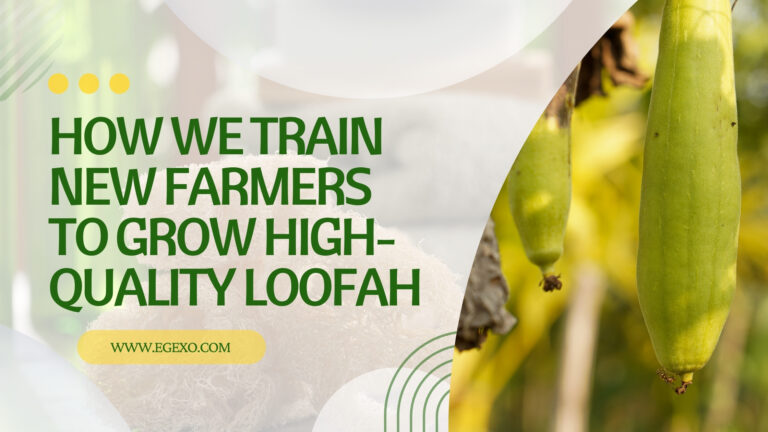
Natural kitchen loofah sponges come from the fibrous interior of mature Luffa aegyptiaca gourds, a plant species cultivated for centuries in Egypt and other warm climates. The intricate fiber network creates thousands of tiny scrubbing surfaces that effectively remove food residue without scratching cookware surfaces. This natural structure provides advantages that synthetic materials simply cannot replicate.
The cellular matrix of quality kitchen loofahs features varying fiber densities throughout each sponge. Denser sections tackle stubborn, baked-on residue while softer areas work gently on delicate surfaces. This inherent versatility makes natural loofahs ideal for diverse kitchen applications, from cast iron skillets to fine glassware.
Egyptian loofahs demonstrate measurably superior characteristics compared to Asian-grown varieties. The combination of Nile Valley soil composition, specific humidity levels, and traditional cultivation methods produces loofahs with tighter fiber structures and greater longevity. Testing conducted across multiple harvests shows Egyptian kitchen loofahs maintain structural integrity 40 to 60 percent longer than comparable products from other growing regions.
How Natural Loofahs Differ from Synthetic Kitchen Sponges
Many consumers confuse natural loofah sponges with synthetic mesh scrubbers marketed under similar names. The differences impact both cleaning performance and environmental sustainability significantly.
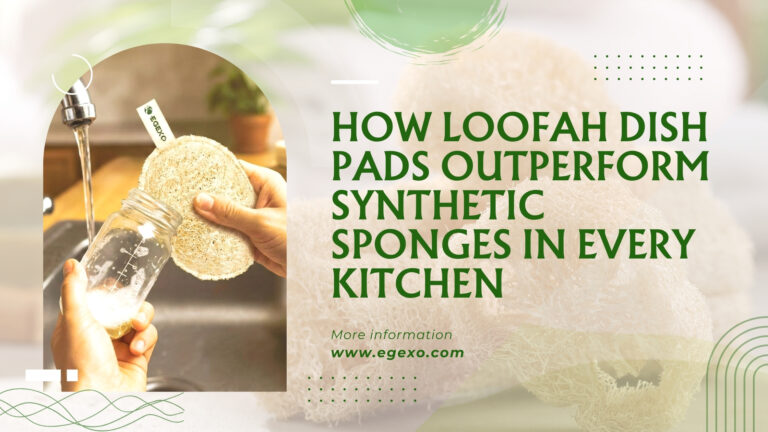
Natural kitchen loofah sponges feature plant-derived fibers that biodegrade completely within weeks after disposal. These fibers contain no plastics, chemical treatments, or artificial additives. When your natural loofah reaches the end of its useful life, composting returns nutrients to soil rather than contributing to landfill accumulation.
Synthetic alternatives, despite effective marketing, shed microplastic particles during every use. Research indicates that plastic-based kitchen sponges release thousands of microplastic fragments monthly, contaminating water systems and potentially entering the food chain. For restaurants and food service operations, this presents both environmental and reputational concerns as consumers increasingly demand sustainable practices.
The scrubbing action also differs substantially between natural and synthetic options. Loofah fibers maintain slight flexibility that conforms to surface contours while providing consistent abrasive action. Synthetic mesh tends toward either excessive harshness or inadequate scrubbing power, with little middle ground.
Kitchen Loofah Sponge Grades and Quality Classifications
Professional buyers and discerning consumers should understand the grading system used for kitchen loofah sponges. Quality classifications reflect fiber density, uniformity, and overall structural integrity.
| Grade | Fiber Density | Best Applications | Typical Lifespan | Buyer Type |
|---|---|---|---|---|
| Premium A | Very High | Professional kitchens, heavy cookware | 8 to 12 weeks | Commercial, Wholesale |
| Standard B | High | General kitchen use, daily dishes | 6 to 8 weeks | Retail, Household |
| Economy C | Moderate | Light cleaning, produce washing | 4 to 6 weeks | Budget-conscious users |
| Industrial | Maximum | Commercial dishwashing, food processing | 10 to 14 weeks | Food service operations |
Egyptian loofahs from established suppliers like Egexo consistently achieve Premium A and Industrial grade classifications. Our quality control process, detailed on our quality standards page at https://egexo.com/loofah-quality-standards, ensures every batch meets strict specifications before reaching wholesale distributors or retail customers.
Selecting Kitchen Loofah Sponges for Specific Cleaning Tasks
Choosing the right kitchen loofah sponge depends on your primary cleaning applications. Different loofah cuts and preparations excel at particular tasks, and understanding these distinctions prevents disappointment while maximizing cleaning efficiency.
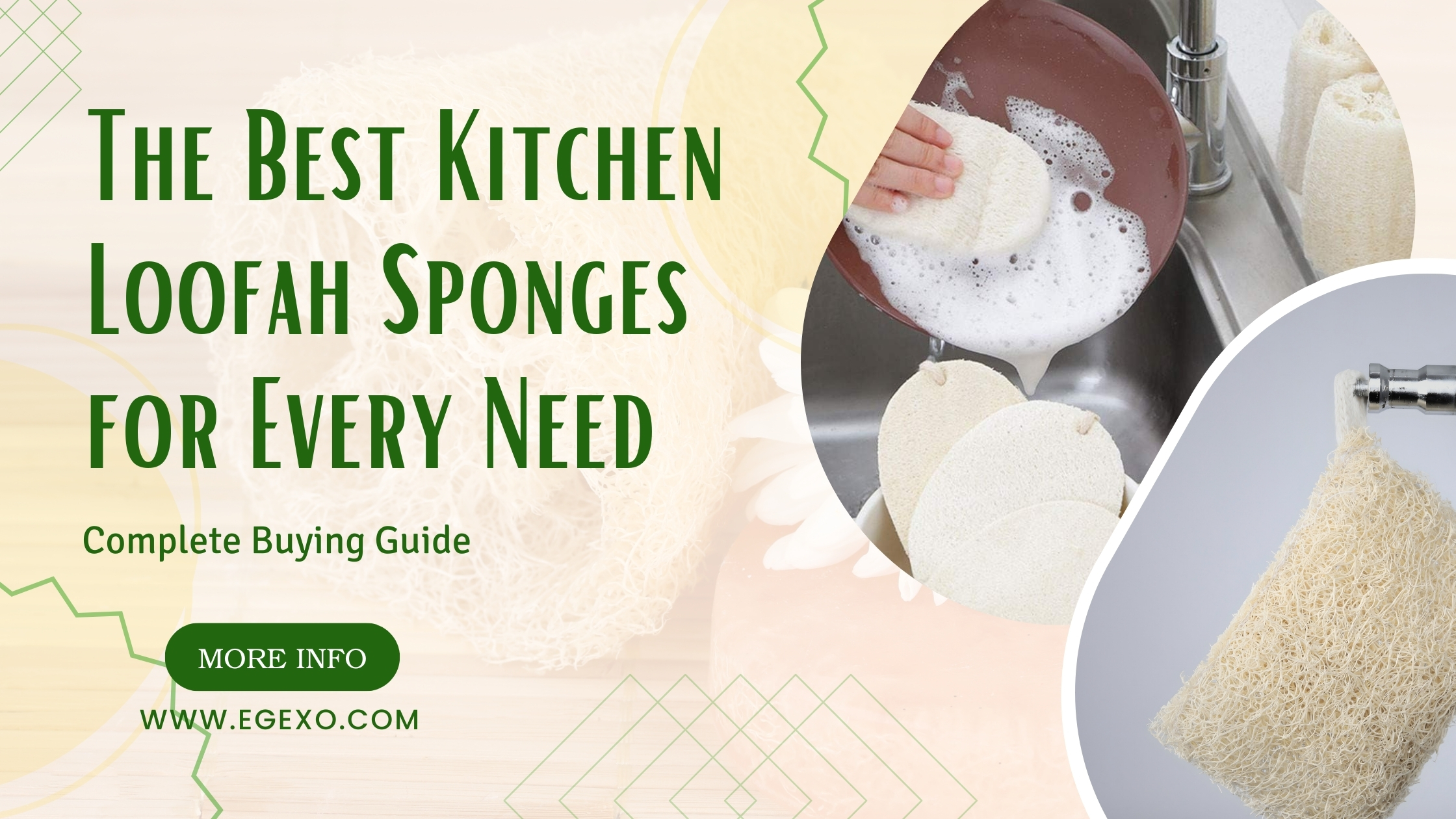
Dish cleaning represents the most common kitchen loofah application. For everyday dishware, plate residue, and light cooking cleanup, medium-density loofah slices approximately 2 to 3 centimeters thick provide optimal performance. These standard cuts offer sufficient scrubbing power for food particles while remaining gentle enough for glazed ceramics and glass.
Heavy cookware demands denser loofah selections. Cast iron, stainless steel pans with baked-on residue, and commercial kitchen equipment benefit from thicker loofah cuts or whole loofah sections. The increased fiber mass provides more aggressive scrubbing without requiring excessive pressure that causes user fatigue.
Delicate surfaces including non-stick coatings, fine china, and crystal glassware require softer loofah preparations. Younger loofahs harvested before full maturity offer gentler fiber structures suitable for these applications. Alternatively, thoroughly soaked premium loofahs soften sufficiently for delicate work while retaining enough texture for effective cleaning.
Kitchen Loofah Size and Shape Selection Guide
The physical dimensions of your kitchen loofah sponge affect both usability and longevity. Proper sizing ensures comfortable grip during extended cleaning sessions while providing adequate surface area for efficient work.
| Loofah Type | Dimensions | Recommended Use | User Preference |
|---|---|---|---|
| Round Slices | 8 to 10 cm diameter, 2 cm thick | General dishes, daily cleaning | Most popular for home use |
| Rectangular Pads | 10 x 15 cm, 2.5 cm thick | Pots, pans, baking sheets | Commercial kitchen standard |
| Whole Sections | 15 to 20 cm length | Heavy-duty scrubbing | Industrial applications |
| Mini Rounds | 5 to 6 cm diameter | Glasses, narrow containers | Specialty cleaning tasks |
| Handled Loofahs | Various with attached grip | Extended reach cleaning | Ergonomic preference |
Wholesale buyers can explore our complete kitchen loofah product range at https://egexo.com/product-category/kitchen-loofah to find configurations matching their specific market demands. Custom sizing and packaging options accommodate private label programs and specialty retail requirements.
Matching Loofah Density to Cookware Materials
Different cookware materials require appropriate loofah density to clean effectively without causing damage. This matching process proves especially important for commercial operations where cookware replacement costs significantly impact operational budgets.
Stainless steel cookware tolerates aggressive scrubbing from high-density loofahs. The inherent durability of quality stainless steel means you can apply firm pressure with dense loofah fibers to remove stubborn residue. Professional kitchens typically standardize on industrial-grade loofahs for stainless steel cleaning stations.
Cast iron requires careful consideration. While cast iron itself withstands vigorous scrubbing, seasoning layers need protection. Medium-density loofahs effectively clean cast iron surfaces without stripping beneficial seasoning when used with minimal soap and proper technique.
Non-stick surfaces demand gentler approaches. Even quality non-stick coatings degrade faster under abrasive treatment. Use softer loofah grades or well-soaked premium loofahs for non-stick cookware, applying light pressure and avoiding circular scrubbing motions that concentrate wear patterns.
Ceramic and glass cookware falls between extremes. Standard kitchen loofah sponges work well for these materials, though extremely dense industrial grades may scratch decorative glazes over time.
Kitchen Loofah Maintenance and Hygiene Best Practices
Proper maintenance dramatically extends kitchen loofah sponge lifespan while preventing bacterial contamination that undermines the hygiene benefits natural loofahs provide. Following established care protocols ensures your kitchen loofahs remain safe and effective throughout their service life.
After each use, rinse your kitchen loofah thoroughly under running water. Squeeze repeatedly to expel food particles and soap residue trapped within the fiber matrix. Incomplete rinsing leaves organic matter that supports bacterial growth, particularly in warm, humid kitchen environments.
Allow kitchen loofahs to dry completely between uses. Moisture retention creates conditions favorable for microbial proliferation. Position your loofah where air circulates freely, avoiding enclosed spaces or contact with wet surfaces. Many users install simple hooks or holders that suspend loofahs away from sink basins.
Weekly sanitization maintains optimal hygiene. Submerge your kitchen loofah in boiling water for two to three minutes, or microwave a thoroughly wet loofah for one to two minutes. These treatments eliminate accumulated bacteria without damaging plant fibers. Commercial kitchens may implement daily sanitization during high-volume periods.
Kitchen Loofah Replacement Schedule
Even properly maintained kitchen loofah sponges eventually require replacement. Recognizing replacement indicators prevents using degraded products that clean ineffectively or harbor excessive bacteria.
| Condition | Action Required | Typical Timeline |
|---|---|---|
| Fibers remain intact, good scrubbing action | Continue use with regular maintenance | Weeks 1 through 6 |
| Slight softening, minor fiber loss | Increase sanitization frequency | Weeks 6 through 8 |
| Noticeable odor despite sanitization | Replace immediately | Variable |
| Significant fiber breakdown, thinning | Replace immediately | Weeks 8 through 12 |
| Discoloration or dark spots | Replace immediately | Variable |
Commercial operations should establish standardized replacement schedules rather than relying on individual assessment. Consistent replacement intervals ensure food safety compliance and maintain cleaning effectiveness across all workstations.
Extending Kitchen Loofah Lifespan
Several practices help maximize the useful life of quality kitchen loofah sponges, reducing replacement frequency and lowering overall costs for both households and commercial buyers.
Rotate between multiple loofahs rather than using a single sponge continuously. This rotation allows complete drying between uses and distributes wear across several products. Many professional kitchens maintain three to four loofahs per cleaning station, rotating daily.
Avoid prolonged exposure to standing water. Kitchen loofahs left soaking in sinks or containers deteriorate faster than those dried promptly after use. The constant moisture weakens fiber bonds and accelerates decomposition processes that eventually occur in all biodegradable products.
Use appropriate cleaning agents. While natural loofahs tolerate most dish soaps and detergents, extremely harsh chemicals or bleach concentrations above recommended levels damage plant fibers. Standard dilution rates for commercial dishwashing chemicals work safely with natural loofah sponges.
The Environmental Advantage of Natural Kitchen Loofahs
Sustainability concerns drive increasing adoption of natural kitchen loofah sponges across both consumer and commercial markets. Understanding the environmental benefits helps justify premium pricing and supports marketing efforts for retailers and distributors serving eco-conscious customers.
Natural loofahs grow from annual plants requiring minimal agricultural inputs. Loofah cultivation uses substantially less water than many agricultural crops, and traditional Egyptian growing methods employed by Egexo avoid synthetic fertilizers and pesticides. Our farm-to-export process, documented at https://egexo.com/loofah-farm-to-export-process, demonstrates sustainable practices from planting through final product shipment.
The complete biodegradability of natural loofahs eliminates end-of-life environmental concerns. Composted kitchen loofahs decompose within 30 to 60 days under typical conditions, returning nutrients to soil rather than persisting in landfills for decades like synthetic alternatives. For environmentally certified restaurants and retailers emphasizing sustainability, natural loofah products support broader corporate responsibility initiatives.
Carbon footprint analysis favors natural loofahs over synthetic sponges. Petroleum-based synthetic sponge production generates substantial greenhouse gas emissions during manufacturing, while loofah cultivation actively sequesters carbon during plant growth. Though transportation from Egypt adds some carbon cost, lifecycle analysis still shows natural loofahs as environmentally superior.
Certifications and Standards for Sustainable Kitchen Products
Commercial buyers increasingly require documentation supporting sustainability claims. Understanding relevant certifications helps procurement managers verify supplier credentials and supports marketing claims to environmentally conscious end consumers.
Organic certification verifies cultivation without synthetic chemicals. While not all natural loofahs carry organic certification, products from certified organic farms command premium pricing and satisfy strict procurement requirements.
Fair trade certification addresses labor practices and community impact. Buyers concerned about ethical sourcing can request documentation regarding worker treatment and community development programs.
Quality certifications including ISO standards demonstrate consistent manufacturing processes. Egexo maintains quality management systems aligned with international standards, supporting buyer confidence in product consistency across shipments.
Sourcing Kitchen Loofah Sponges: Wholesale and Retail Options
Whether you need bulk quantities for commercial distribution or smaller amounts for personal use, understanding sourcing options ensures you receive quality products at appropriate pricing levels.
Wholesale purchasing offers significant advantages for businesses. Volume pricing reduces per-unit costs substantially compared to retail purchasing. Established suppliers like Egexo provide consistent quality across large orders, supporting inventory planning and customer satisfaction.
For wholesale inquiries, visiting https://egexo.com/get-quotation-loofah-wholesale/ connects you with our export team. We accommodate orders from small retailers testing new product lines to major distributors requiring container-load quantities. Minimum order quantities vary by product type, with flexibility for first-time buyers evaluating our products.
Evaluating Kitchen Loofah Suppliers
Not all loofah suppliers deliver equivalent quality or service. Systematic supplier evaluation protects your business from quality issues and supply disruptions.
| Evaluation Criteria | Questions to Ask | Red Flags |
|---|---|---|
| Cultivation Source | Where are loofahs grown? What growing methods used? | Vague answers, multiple changing sources |
| Quality Control | What inspection processes exist? Grading standards? | No documented quality procedures |
| Experience | How long in business? Major customers? | New operations without references |
| Capacity | Can they fulfill your volume requirements consistently? | Frequent stockouts, delayed shipments |
| Communication | Response time? Dedicated account management? | Slow responses, language barriers |
| Samples | Will they provide samples before bulk orders? | Refusal to provide evaluation samples |
Egexo welcomes supplier evaluation inquiries. Request samples through https://egexo.com/request-loofah-samples/ to assess our quality firsthand before committing to larger orders.
Private Label and Custom Kitchen Loofah Products
Many retailers and brands seek private label kitchen loofah products carrying their own branding rather than supplier marks. This approach builds brand identity while leveraging established manufacturing expertise.
Private label programs require finding suppliers with appropriate capabilities. Essential requirements include custom packaging production, consistent product quality, labeling compliance for target markets, and reasonable minimum quantities for branded products.
Our private label services at https://egexo.com/private-label-loofah-manufacturing/ support brands seeking Egyptian loofah products under their own identity. Custom packaging, specific sizing requirements, and compliance labeling for major markets including North America, European Union, and Asia are available through our manufacturing partnerships.
For unique product concepts beyond standard configurations, our custom design services at https://egexo.com/custom-loofah-product-design/ help develop innovative kitchen loofah products matching your vision.
Kitchen Loofah Applications Beyond Basic Dishwashing
While dishwashing represents the primary kitchen loofah application, these versatile natural sponges serve numerous additional purposes that expand their value for both households and commercial operations.
Produce cleaning benefits from gentle loofah scrubbing. Root vegetables, firm fruits, and other produce items clean effectively with natural loofah fibers without chemical treatments. The food-safe nature of unprocessed plant fibers makes this application worry-free, unlike synthetic sponges potentially releasing microplastics onto food surfaces.
Countertop and surface cleaning utilizes loofah texture to remove dried spills and residue. Kitchen loofahs clean tile, laminate, stainless steel appliances, and sealed stone surfaces effectively. The natural fibers provide cleaning action without scratching most common kitchen surface materials.
Grill and barbecue cleaning represents a particularly valuable application. The aggressive scrubbing capability of dense kitchen loofahs removes charred residue from grill grates effectively. Unlike wire brushes that shed dangerous metal bristles, natural loofahs pose no risk of metal contamination in grilled foods.
Commercial operations discover additional applications including cleaning food processing equipment, sanitizing food preparation surfaces, and scrubbing bulk produce in food service settings. The complete biodegradability proves especially valuable in applications where fragments might contact food products.
Frequently Asked Questions About Kitchen Loofah Sponges
Q1: How long do kitchen loofah sponges typically last with regular use?
A: Quality kitchen loofah sponges from Egyptian sources typically last 8 to 12 weeks with daily household use when properly maintained. Commercial kitchen environments may see 6 to 8 week lifespans due to heavier use intensity. Proper drying between uses, weekly sanitization, and avoiding prolonged water submersion extend useful life significantly. Signs indicating replacement need include persistent odor, significant fiber breakdown, and reduced scrubbing effectiveness.
Q2: Are natural kitchen loofahs safe for non-stick cookware?
A: Natural kitchen loofah sponges can safely clean non-stick cookware when used properly. Thoroughly soak the loofah to soften fibers before use, apply light pressure, and avoid aggressive scrubbing motions. Premium grade loofahs with finer fiber structures work best for delicate non-stick surfaces. Harsh scrubbing with dry or dense loofahs may gradually damage non-stick coatings over extended use.
Q3: What minimum order quantities does Egexo require for wholesale kitchen loofah purchases?
A: Egexo accommodates various order sizes from small retailers to large distributors. Minimum order quantities vary by product type and packaging requirements. First-time buyers can request evaluation samples before committing to larger orders. Contact our wholesale team at https://egexo.com/get-quotation-loofah-wholesale/ for specific MOQ information and volume pricing tailored to your business needs.
Q4: How should commercial kitchens sanitize kitchen loofahs to meet food safety standards?
A: Commercial kitchen loofah sanitization involves submerging loofahs in boiling water for 2 to 3 minutes daily during active use periods. Alternatively, chemical sanitizing solutions approved for food contact surfaces work effectively at manufacturer-recommended concentrations. Complete drying between sanitization cycles prevents recontamination. Many operations rotate multiple loofahs to ensure adequate drying time between uses.
Q5: What makes Egyptian kitchen loofahs superior to loofahs from other growing regions?
A: Egyptian loofahs benefit from ideal growing conditions including Nile Valley soil composition, optimal humidity levels, and centuries of refined cultivation expertise. These factors produce loofahs with tighter fiber structures, higher density, and greater durability. Independent testing shows Egyptian kitchen loofahs maintain structural integrity 40 to 60 percent longer than Asian-grown alternatives, providing better value despite higher initial costs.
Q6: Can kitchen loofah sponges be composted after use?
A: Yes, natural kitchen loofah sponges compost completely within 30 to 60 days under typical composting conditions. Cut used loofahs into smaller pieces to accelerate decomposition. The plant-based fibers add beneficial carbon content to compost while fully biodegrading without leaving microplastic residue. This compostability makes natural loofahs environmentally superior to synthetic alternatives for sustainability-focused households and businesses.
Q7: Does Egexo offer private label kitchen loofah products for retailers?
A: Egexo provides comprehensive private label services for retailers and brands seeking Egyptian loofah products under their own branding. Services include custom packaging, specific product sizing, compliance labeling for major international markets, and flexible minimum quantities for branded products. Visit https://egexo.com/private-label-loofah-manufacturing/ for program details and requirements.
Expert Insight from Egexo
With over 25 years cultivating Egyptian loofahs, our team has observed that kitchen loofah performance depends heavily on harvest timing and post-harvest processing. Loofahs harvested at peak maturity develop optimal fiber density for kitchen applications, while premature harvesting produces softer, less durable products. Our quality control process evaluates every batch for fiber structure, density uniformity, and structural integrity before products reach our wholesale partners or retail customers. For best results, we recommend selecting kitchen loofahs specifically graded for your primary application rather than using general-purpose products. Commercial buyers benefit from consulting our team about matching specific product grades to their operational requirements, ensuring optimal cleaning performance and predictable replacement schedules.
Conclusion
Kitchen loofah sponges represent a superior cleaning solution combining effective scrubbing performance with complete environmental sustainability. Understanding quality grades, proper maintenance techniques, and sourcing options empowers both commercial buyers and household consumers to maximize the benefits natural loofahs provide.
Egyptian loofahs consistently deliver premium performance due to ideal growing conditions and centuries of cultivation expertise. For businesses seeking reliable wholesale supply or consumers wanting the best cleaning results, Egyptian-sourced kitchen loofahs from established suppliers offer proven quality and value.
Key Takeaways:
- Natural kitchen loofah sponges outperform synthetic alternatives in scrubbing effectiveness while eliminating microplastic pollution concerns
- Egyptian loofahs demonstrate 40 to 60 percent longer lifespan than loofahs from other growing regions
- Proper maintenance including complete drying and weekly sanitization maximizes kitchen loofah useful life
- Quality grading systems help match loofah products to specific cleaning applications and cookware materials
- Wholesale purchasing provides significant cost advantages for commercial operations and retailers
Ready to experience premium Egyptian loofah quality?
- For Wholesale Buyers: Request a quote at https://egexo.com/get-quotation-loofah-wholesale/ or download our complete catalog at https://egexo.com/wp-content/uploads/2025/08/EGEXO-Loofah-Wholesale-Supplier-Product-Catalog.pdf
- For Individual Orders: Shop our kitchen loofah collection at https://egexo.com/product-category/kitchen-loofah or order samples at https://egexo.com/request-loofah-samples/