Contents
- What Makes a Loofah Natural and Why Does It Matter
- Moisture and Care in Bath Products
- Head-to-Head Comparison: Natural Loofah vs Synthetic Sponge
- Quality Checks at Egexo
- Hygiene Maintenance: How to Keep Your Loofah Clean
- The Environmental Case That Changes the Business Equation
- What Egyptian Loofahs Offer
- Practical Buying Guide: Natural Loofahs for Every Use Case
- Notes from Egexo
- FAQ Section
- Conclusion
Most people grab a shower sponge without thinking twice about how to keep it clean. A damp bath sponge becomes a home for bacteria faster than most people realize.
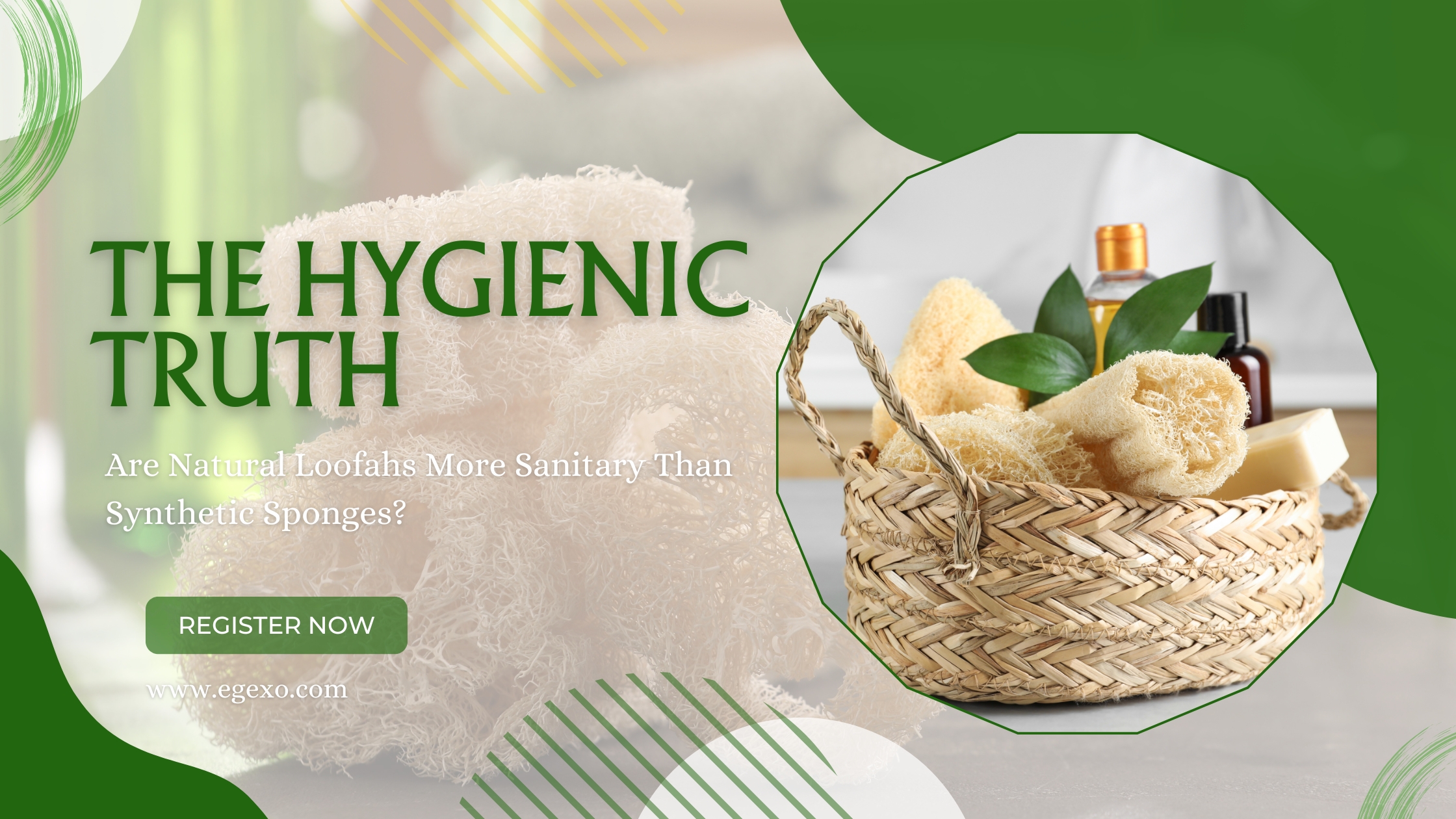
So the question deserves a real answer: are natural loofahs more sanitary than synthetic sponges? The short answer: any sponge or loofah needs proper care to stay clean. A natural loofah has an open fiber structure that helps it dry between uses, and the way you rinse, dry and replace it matters most. This is true for both individual consumers and wholesale buyers.
This guide explains loofah care, compares natural and synthetic sponges, and explains what to look for in a natural loofah. Whether you are a spa owner sourcing bath products in bulk or a consumer deciding what belongs in your shower, it covers the basics.
For wholesale buyers evaluating suppliers, care and quality matter for customer satisfaction and brand reputation. Egexo has been exporting since 2015, and every order is checked by hand for colour, holes, defects, size and dryness before packing.
What Makes a Loofah Natural and Why Does It Matter
The Botanical Origin of Natural Loofahs
Natural loofahs are not sea creatures. They are the dried fibrous skeleton of the Luffa aegyptiaca or Luffa acutangula plant, a member of the cucumber family grown in warm climates. EGEXO loofah is grown on our own farms and partner farms in the Nile Delta, with rich soil and consistent sun exposure.
When a luffa gourd reaches full maturity, it is harvested, dried, and processed into the fibrous sponge used in bathrooms and kitchens globally. The result is a 100 percent plant-based, biodegradable scrubbing tool with a naturally open, porous fiber structure.
Natural loofah fibers are open, so water flows through them more freely than through the foam layers of synthetic sponges.
What Synthetic Sponges Are Actually Made Of
Synthetic bath sponges are manufactured from polyurethane foam, nylon mesh, or a combination of petroleum-based materials. They are designed to create rich lather and feel soft against skin, which makes them commercially appealing.
The closed-cell structure of polyurethane foam can hold moisture, soap residue and body oils inside the material. Synthetic foam can take longer to drain between uses.
Moisture and Care in Bath Products
Why Moisture Matters
Bacteria need warmth and moisture, and a shower provides both. The real question is how long a sponge stays wet after use.
Natural loofah fibers are open, which helps a well-hung loofah dry between uses. Synthetic foam holds water in its closed cells and can stay damp for longer.
A sponge that stays wet gives bacteria more time to grow, so drying between uses matters.
Natural Loofah Fiber and Drying
The open fiber structure of a natural loofah lets air and water pass through, which helps it drain and dry.
This does not mean natural loofahs are sterile or maintenance-free. They still require proper care, regular replacement, and hygienic handling.
Head-to-Head Comparison: Natural Loofah vs Synthetic Sponge
The table below presents a direct comparison across the dimensions that matter most to both consumers and wholesale buyers evaluating products for retail or spa use.
| Feature | Natural Loofah | Synthetic Sponge |
|---|---|---|
| Material Origin | Plant-based (Luffa plant) | Petroleum-based foam or nylon |
| Drying After Use | Open fiber structure helps it dry | Closed-cell foam can stay damp longer |
| Biodegradability | 100% biodegradable | Non-biodegradable |
| Environmental Impact | Plant-based and biodegradable | Plastic-based |
Processing quality, drying methods, and storage conditions all affect any natural loofah product. Egexo dries loofah by sun drying, with fans or heaters in winter, and checks every order by hand before packing.
Wholesale buyers evaluating bath and body product lines can explore the full range of natural bath loofahs at the Bath and Body Loofah product category, where products are checked by hand for size and quality.
Quality Checks at Egexo
How Processing Affects Quality
Processing quality matters. A loofah that is dried improperly or stored in humid conditions before export can develop mold or mildew.
Egexo’s loofah is grown on its own farms and partner farms, cleaned to remove seeds and outer husk material, dried by sun drying, with fans or heaters in winter, and checked by hand for colour, holes, defects, size and dryness before packing. You can review the complete process at the Farm to Export Process page.
Quality Checks for Wholesale Buyers
Egexo’s Quality Standards page explains how every order is checked by hand for colour, holes, defects, size and dryness before packing.
Buyers interested in building their own branded line should review the Private Label Loofah Manufacturing service, which covers labels, packaging and branding.
Hygiene Maintenance: How to Keep Your Loofah Clean
Daily Habits for Loofah Care
Even a good natural loofah needs proper maintenance. The good news is that proper loofah care requires very little effort beyond a few consistent habits.
The single most important habit is adequate drying between uses. A loofah left balled up in a humid shower corner can build up odor and mold regardless of its material. After every use, rinse the loofah thoroughly under clean running water, squeeze out excess moisture completely, and hang it in a location with good air circulation, ideally outside the shower enclosure.
Here is a simple maintenance checklist for consumers and spa operators managing multiple units:
| Maintenance Task | Frequency | Method |
|---|---|---|
| Rinse and squeeze after use | After every use | Clean running water, full compression |
| Deep cleaning soak | Once per week | Diluted white vinegar solution, 5 minutes |
| Inspect for odor or discoloration | Twice per week | Visual and smell check |
| Replace loofah | Every few weeks | Sooner if worn or musty |
| Avoid sharing | Always | Single-user policy for hygiene |
| Store outside shower | Always | Hanging position with air flow |
Spa operators managing loofah inventory for multiple guests have additional considerations. Single-use loofah formats, sealed packaging, and per-guest allocation protocols are common ways to handle this.
Egexo supplies loofahs in bulk for spas and hotels. Businesses can request tailored specifications through the Get a Wholesale Quote form.
When to Replace Your Loofah Without Question
Many consumers hold onto a loofah well past its useful life. A general guideline is to replace a natural loofah every few weeks when used daily. However, certain signs should trigger immediate replacement regardless of how recently you purchased it.
Replace your loofah immediately if you notice any musty or unpleasant odor that persists after rinsing, any visible dark spots or mold growth on the fibers, a significant softening or breakdown of the fiber structure, or if it has been stored wet for more than 24 consecutive hours.
The Environmental Case That Changes the Business Equation
Why Sustainability Is Now a Purchasing Driver
Many eco-conscious consumers choose products that align with their values. Natural loofahs are an alternative to synthetic sponges for environmental reasons.
Synthetic bath sponges are plastic-based and do not biodegrade. They add to landfill and plastic waste.
A natural loofah is 100% biodegradable and returns to the earth. The luffa plant does not require heavy pesticide or fertilizer.
For wholesale buyers, this environmental story is easy to explain to customers: the loofah is a plant fiber and is 100% biodegradable.
The Why Choose Egexo page provides a complete overview of the environmental and quality credentials that support this market positioning.
Wholesale buyers can download the complete Egexo Product Catalog to review current product specifications.
What Egyptian Loofahs Offer
Loofah Growing in the Nile Delta
The alluvial soil of the Nile Delta has a natural mineral composition, and Egypt has warm temperatures and low humidity during the harvest and drying season, which suit loofah growing and drying.
Egexo grows loofah on its own farms and partner farms in the Nile Delta and has been exporting since 2015.
Custom Product Development for Wholesale Buyers
Beyond standard products, Egexo offers custom product development for buyers who want a product for their specific market. Custom loofah dimensions, custom shapes, and fully branded packaging are available on request.
The Custom Loofah Product Design service helps brands create products for their own market.
Buyers who want to evaluate product quality before committing to bulk orders can use the Order Loofah Samples service to receive physical samples for testing and evaluation.
Practical Buying Guide: Natural Loofahs for Every Use Case
Selecting the Right Loofah for Your Application
Whether you are selecting a loofah for personal use or evaluating products for wholesale purchase, the criteria differ by application. This guide covers the primary use cases.
| Use Case | Recommended Type | Key Selection Criteria | Egexo Product Category |
|---|---|---|---|
| Daily body exfoliation | Standard bath loofah | Uniform shape | Bath and Body Loofahs |
| Spa treatments | Spa loofah | Sealed packaging | Pet and Spa Grooming |
| Kitchen use | Kitchen loofah sponge | No fragrance treatment | Kitchen Loofahs |
| Sensitive skin | Bath loofah | Soft and gentle from the first use | Bath and Body Loofahs |
| Pet grooming | Pet loofah | Soft and gentle, untreated | Pet and Spa Grooming |
| Retail resale | Bulk loofah | Consistent size, packaging ready | All wholesale categories |
| Private label | Custom processed | Custom dimensions and packaging | Custom Product Design |
For consumers, the Bath and Body Loofah collection offers the widest selection for personal use. For kitchen applications, the Kitchen Loofah category provides purpose-built options. Specialty applications including pet care and spa treatments are covered in the Pet and Spa Grooming range.
The complete Egexo Shop provides a full overview of all available product categories with detailed specifications.
Notes from Egexo
Egexo has been exporting natural loofahs from the Nile Delta region since 2015. Two things matter for a fresh loofah. The first is that the loofah is fully dry when it is packed, which is why every order is checked by hand for dryness before packing. The second is the buyer’s education about proper use and replacement cycles.
Good care instructions help a loofah work well. The challenge has always been getting accurate care information to the end user.
We encourage wholesale buyers to include care instructions with every loofah product they sell. It helps the consumer get good results.
For businesses exploring sustainable bath product lines, Egexo can discuss product selection and custom development. Reach out through our Why Choose Egexo page to start a conversation.
FAQ Section
Q1: Are natural loofahs more sanitary than synthetic sponges for everyday shower use?
A: Any sponge or loofah needs proper care to stay clean. Natural loofah has an open fiber structure that helps it dry between uses, while synthetic foam holds water in its closed cells. Replacing your natural loofah every few weeks and hanging it outside the shower are the two most important habits to maintain.
Q2: How often should I replace a natural loofah?
A: A natural loofah used daily for body washing should be replaced every few weeks. If you notice any persistent odor, visible dark spots, or a soft breakdown in fiber texture, replace it immediately. Wholesale buyers supplying spa or salon environments should establish single-use or per-session replacement protocols.
Q3: What is the minimum order quantity for natural loofahs from Egexo?
A: No minimum order on standard products. Private label from 1,000 units. Pricing and current availability are provided through the wholesale quotation request process. Buyers can also request physical samples before committing to full orders through the sample request service.
Q4: Can bacteria grow on a natural loofah?
A: Yes, bacteria can grow on a natural loofah if it is not maintained properly. Any damp material can support bacterial growth. The open fiber structure of a natural loofah helps it dry between uses. Regular rinsing, thorough squeezing after each use, hanging in a ventilated location, and replacing every few weeks are the practices that keep a natural loofah fresh.
Q5: Why choose Egyptian loofah?
A: Egyptian loofah is soft and gentle from the first use. EGEXO loofah is grown on our own farms and partner farms in the Nile Delta, where the soil is mineral-rich and the climate is warm and dry during harvest and drying. Egexo has been exporting since 2015 and checks every order by hand before packing.
Q6: Can I use a natural loofah on sensitive skin?
A: Natural loofah is soft and gentle from the first use. Use gentle pressure. Users with sensitive skin, active skin conditions, or recent skin injuries should ask a doctor before using any exfoliating tool.
Q7: What documents should wholesale buyers ask for?
A: Wholesale buyers importing natural loofahs should ask for export documents such as a Certificate of Origin or EUR.1, a phytosanitary certificate and an export license. Egexo holds these, and its management systems are certified to ISO 9001, ISO 14001 and ISO 45001, with certified good manufacturing practices to ISO 22716. Egexo’s quality checks are described at the Quality Standards page.
Q8: How do I clean a natural loofah?
A: A common cleaning method for a natural loofah is a weekly soak in a diluted white vinegar solution. Mix one part white vinegar with four parts water and submerge the loofah for 5 minutes, then rinse thoroughly and allow to dry completely in a ventilated space. Some users prefer a diluted bleach solution (one tablespoon per gallon of water) for a monthly deeper clean, followed by thorough rinsing. Daily habits matter more than occasional deep cleaning. Thorough rinsing and full drying after every single use is the foundation of loofah maintenance.
Conclusion
The question of whether natural loofahs are more sanitary than synthetic sponges comes down to care: any sponge or loofah stays fresher with good drying, regular rinsing and timely replacement. A natural loofah has an open fiber structure that helps it dry between uses.
Natural loofah fibers are open, drain and dry between uses, and return to the environment without leaving permanent waste. Synthetic sponges are plastic-based and contribute to long-term plastic waste.
For wholesale buyers, sourcing matters. Egexo checks every order by hand for colour, holes, defects, size and dryness before packing, so buyers receive consistent products.
Ready to experience Egyptian loofah quality?
- For Wholesale Buyers: Request a wholesale quote or download our complete product catalog
- For Individual Orders: Browse our full collection or order samples to test quality