Contents
- Egyptian vs Asian Loofah: Quick Comparison
- What is a Loofah Sponge and Why Does Origin Matter?
- Egyptian Loofah: Soft and Gentle from the First Use
- Asian Loofah: Understanding the Alternative Option
- Egyptian vs Asian Loofah: Complete Comparison Table
- How to Choose Between Egyptian vs Asian Loofah: Decision Framework
- The EGEXO Advantage: Why Source Egyptian Loofah from EGEXO
- Practical Tips for Choosing and Using Your Loofah
- Environmental and Sustainability Considerations in 2025
- Market Trends and Opportunities in the Natural Loofah Industry
- Frequently Asked Questions About Egyptian vs Asian Loofah
- Key Takeaways: Making the Right Choice Between Egyptian vs Asian Loofah
- Start Your Natural Loofah Journey with EGEXO
- Start Your Journey with EGEXO Today
When it comes to natural exfoliating sponges, the debate between Egyptian vs Asian loofah has been ongoing for years. Whether you are a retailer looking to stock premium bath products, a wholesaler seeking reliable suppliers, or a consumer wanting the best natural sponge for your skincare routine, understanding the key differences between these two loofah types is essential for making the right choice.
Egyptian loofahs and Asian loofahs come from different regions and climates. As the global market shifts toward sustainable and eco-friendly products in 2025, knowing the differences can help with everything from customer satisfaction to profit margins.
This comprehensive guide breaks down everything you need to know about Egyptian vs Asian loofah, helping you make an informed decision based on texture, skin type compatibility, and business needs.
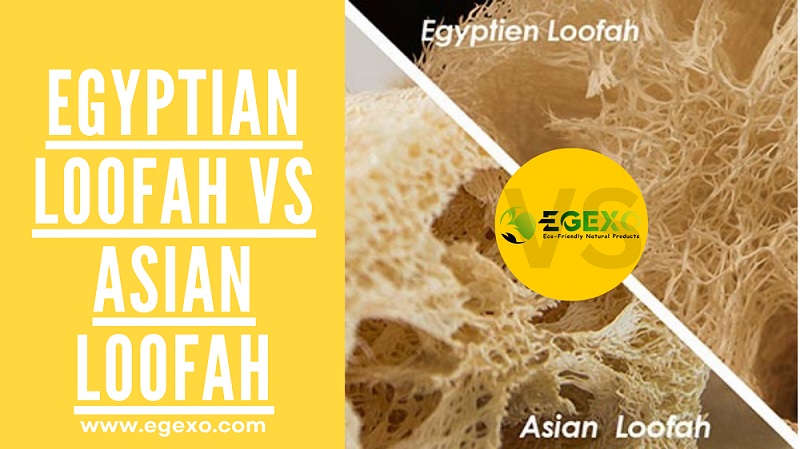
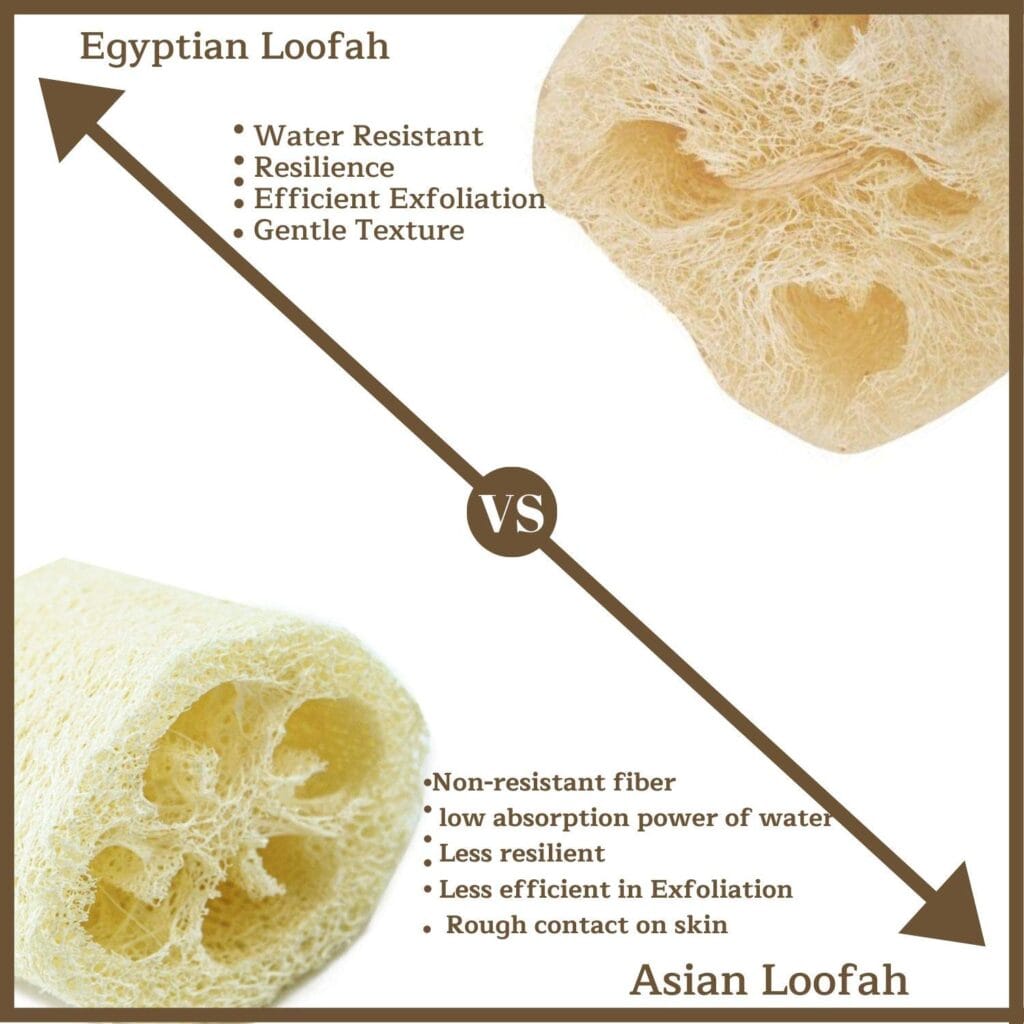
Egyptian vs Asian Loofah: Quick Comparison
Visual Guide to Help You Choose the Right Natural Sponge
Egyptian Loofah
Asian Loofah
Egyptian Loofah
Soft and gentle from the first use, with 100% cotton parts
Source Egyptian Loofah from EGEXO
ISO 9001 certified quality management system, Nile Delta farms, shipping by sea, air or express
What is a Loofah Sponge and Why Does Origin Matter?
A loofah sponge, also spelled luffa or loofa, is not actually a sea sponge but rather a natural exfoliating tool made from the dried fibrous skeleton of the luffa gourd plant. This plant belongs to the cucumber family and grows as a vine that produces elongated cylindrical fruits. When the fruit matures and dries, the outer skin is removed to reveal the fibrous network inside, which becomes the natural loofah sponge we use for bathing, cleaning, and exfoliation.
The origin of a loofah directly impacts its texture and fiber structure. Just as wine quality varies by region, loofah quality depends heavily on climate conditions, soil composition, water sources, and cultivation expertise. Egyptian loofahs benefit from the unique growing conditions of the Nile Delta region, where warm temperatures, mineral-rich soil, and controlled irrigation create good conditions for growing loofah.
Understanding where your loofah comes from is not just about geography. It is about ensuring you receive a product that delivers consistent quality and provides real value whether you are buying for personal use or stocking inventory for retail distribution. For additional information about loofah cultivation and varieties, resources like EGEXO blog provide comprehensive botanical background.
Egyptian Loofah: Soft and Gentle from the First Use
Egyptian loofahs are grown primarily in the fertile Nile Delta region, with its warm climate and mineral-rich soil.
Fiber Structure and Texture
Egyptian loofahs feature a loose weave that creates a soft yet effective exfoliating surface. Egyptian loofah is soft and gentle from the first use.
The texture of Egyptian loofah is a balance between gentle exfoliation and effective cleansing. It gently removes dead skin cells and leaves skin feeling refreshed. Use light pressure on the face and other delicate areas.
Sustainable Cultivation Practices
Egyptian loofah grown in the Nile Delta does not require heavy pesticide or fertilizer. The finished loofah is a natural, 100% biodegradable plant fibre.
For businesses targeting eco-conscious consumers in 2025, Egyptian loofahs offer a compelling sustainability story. Learn more about EGEXO’s farm to export process. They are completely plastic-free and 100% biodegradable, so they are compostable at end of life.
Ideal Applications for Egyptian Loofah
Egyptian loofahs excel in multiple applications including bath and body exfoliation, facial cleansing when cut into smaller pieces, spa treatments, massage therapy, kitchen cleaning for delicate surfaces, and pet grooming for gentle coat care. Explore our complete range of bath and body loofahs and kitchen loofah products. Their versatility makes them a good choice for businesses looking to serve multiple market segments with a single product.
Asian Loofah: Understanding the Alternative Option
Asian loofahs are primarily grown in countries like China, Vietnam, and Thailand, in humid tropical and subtropical climates.
Egyptian vs Asian Loofah: Complete Comparison Table
To help you make an informed decision, here is a detailed comparison of Egyptian and Asian loofahs across all critical factors:
Origin and Cultivation
Egyptian Loofah: Grown in Egypt’s Nile Delta region with a warm, dry climate and mineral-rich soil.
Asian Loofah: Grown across various Asian countries including China, Vietnam, and Thailand in humid, tropical climates.
Texture and Feel
Egyptian Loofah: Soft, gentle texture from the first use, ideal for daily use. Gentle exfoliation.
Sustainability
Egyptian Loofah: Does not require heavy pesticide or fertilizer. 100% biodegradable.
Best Use Cases
Egyptian Loofah: Daily body exfoliation, facial cleansing, spa treatments, retail markets, gift sets, bath products.
Quality Consistency
Egyptian Loofah: Every EGEXO order is checked by hand for colour, holes, defects, size and dryness before packing.
How to Choose Between Egyptian vs Asian Loofah: Decision Framework
Selecting the right loofah type depends on several factors including your skin type, usage frequency, budget considerations, quality expectations, and if you are a business buyer, your target market positioning.
For Sensitive or Dry Skin
If you have sensitive or dry skin, Egyptian loofah is soft and gentle from the first use. The loose weave allows for controlled pressure, letting you adjust the intensity based on your comfort level.
For Oily Skin
Egyptian loofah can be used gently or with slightly firmer pressure, depending on your skin and your preference.
For Daily Use
Egyptian loofah is soft and gentle from the first use, which suits daily use. Rinse it and hang it to dry after each use, and replace it every few weeks.
For Business and Wholesale Buyers
Retailers, distributors, and wholesalers must consider their target market and brand positioning when choosing between Egyptian vs Asian loofah. If you serve eco-conscious or quality-focused customers, Egyptian loofah, which is soft and gentle from the first use, fits their expectations.
Considering wholesale Egyptian loofah for your business? Request samples from EGEXO to check the quality firsthand before placing your first order.
The EGEXO Advantage: Why Source Egyptian Loofah from EGEXO
Where your loofah comes from matters, and so does who supplies it. EGEXO is a family-run Egyptian natural loofah wholesale supplier, exporting since 2015.
Direct Farm to Export Control
EGEXO sources loofah from its own farms and partner farms in the Nile Delta, processes it in its own factory, and handles checking, custom packaging, and international shipping. Discover why businesses choose EGEXO and our commitment to loofah quality standards.
Quality Checks and ISO 9001
EGEXO holds an ISO 9001 certified quality management system. Every order is checked by hand for colour, holes, defects, size and dryness before packing.
Flexible Wholesale Solutions
No minimum order on standard products. Private label from 1,000 units.
Custom Packaging and Private Label Services
EGEXO offers comprehensive private label loofah manufacturing and custom loofah product design services that allow retailers and brands to create unique product offerings. From custom packaging design to specific size cuts, shapes, and bundle configurations, EGEXO transforms generic loofah into branded products that stand out on retail shelves.
Global Export Expertise
With customers in more than 40 countries, including the USA, Canada, Australia, and Europe, EGEXO understands international logistics, customs requirements, and documentation needs. The company prepares the export documents and arranges shipping by sea, air or express.
Sustainability and Social Responsibility
EGEXO’s commitment extends beyond product quality to environmental stewardship and community support. The company works with Egyptian farmers in the Nile Delta and promotes biodegradable alternatives to synthetic sponges. For businesses building sustainable brands in 2025, EGEXO offers 100% biodegradable loofah products.
Ready to partner with an Egyptian natural loofah manufacturer and exporter? Download our complete wholesale product catalog featuring sizes and formats for retailers and distributors worldwide.
Practical Tips for Choosing and Using Your Loofah
Regardless of which loofah type you choose, following these best practices ensures optimal performance, hygiene, and longevity.
Selecting the Right Size and Shape
Loofahs come in various sizes from small facial rounds to large body sponges. Consider your primary use case when selecting size. Full-size body loofahs typically measure 4 to 6 inches in diameter and 10 to 12 inches in length, providing comfortable grip and coverage. Smaller cut pieces work well for targeted exfoliation or facial use. For kitchen and household cleaning, flat or rectangular cuts offer better control and surface contact.
Preparing Your New Loofah
Before first use, soak your new loofah in warm water for 5 to 10 minutes. This softens the fibers and removes any dust or debris from processing and shipping. Squeeze out excess water and your loofah is ready for use. This initial soaking also helps you gauge the texture and adjust your expectations for the exfoliation experience.
Proper Usage Techniques
Use your loofah with your preferred soap, body wash, or natural cleanser. Wet the loofah thoroughly, apply cleanser, and use gentle circular motions across your skin. Avoid excessive pressure or aggressive scrubbing, which can cause irritation even with gentle Egyptian loofah. Pay special attention to rough areas like elbows, knees, and heels where dead skin accumulates.
For facial use, select a softer section of the loofah or use a specifically cut facial round. Use even gentler pressure on facial skin and avoid the delicate eye area entirely.
Essential Care and Maintenance
After each use, rinse your loofah thoroughly under running water to remove all soap residue, dead skin cells, and debris. Squeeze out excess water and hang the loofah in a well-ventilated area where it can dry completely between uses. Avoid leaving loofahs in standing water or enclosed shower caddies where moisture promotes bacterial growth.
Once weekly, deep clean your loofah by soaking it in a solution of equal parts water and white vinegar for 5 minutes, then rinsing thoroughly. This sanitizes the sponge and extends its usable life. Some users also microwave damp loofahs for 30 seconds as an alternative sanitization method, though air drying and regular replacement remain the most important hygiene practices.
Knowing When to Replace
Even a good loofah eventually needs replacement. Signs that it is time for a new loofah include visible tears or holes in the fiber structure, persistent musty odor even after cleaning, discoloration that does not wash away, or loss of texture and structure. As a general rule, replace loofahs every few weeks with regular use, or sooner if any hygiene concerns arise.
Environmental and Sustainability Considerations in 2025
The global shift toward sustainable products has made natural loofahs more relevant than ever. As consumers and businesses alike prioritize environmental responsibility, understanding the sustainability profile of Egyptian vs Asian loofah becomes increasingly important.
The Plastic Problem in Bath Products
Synthetic bath sponges, typically made from plastic-based polyurethane foam, contribute significantly to plastic pollution. These products shed microplastics with each use, do not biodegrade, and eventually end up in landfills or oceans where they persist for hundreds of years.
Natural loofahs offer a truly sustainable alternative. They are 100 percent plant-based, require no plastic in their production, biodegrade completely at end of life, and can even be composted to return nutrients to the soil. For businesses responding to consumer demand for eco-friendly products, natural loofah represents a genuine solution rather than greenwashing.
Comparing the Sustainability of Egyptian vs Asian Loofah
Both Egyptian and Asian loofahs are natural plant fibre products. Egyptian loofah grown in the Nile Delta does not require heavy pesticide or fertilizer.
The Carbon Footprint Question
Transportation distance affects the carbon footprint of any imported product. Asian loofahs may travel shorter distances to some markets, particularly in Asia and the Pacific region, while Egyptian loofahs have an advantage for European and Middle Eastern markets. For North American markets, the difference is relatively minimal as both origins require similar international shipping routes.
Market Trends and Opportunities in the Natural Loofah Industry
The natural loofah market is experiencing significant growth as consumer preferences shift toward sustainable, plastic-free, and natural products. Understanding these trends helps both individual buyers and businesses make informed decisions.
Growing Demand for Natural Bath Products
More shoppers are looking for natural products. Interest in natural bath products is growing, including bath and body accessories made from natural materials. Consumers increasingly view their purchasing decisions as environmental statements, driving demand for products like natural loofahs that offer both functionality and sustainability.
Retail and E-commerce Opportunities
The natural loofah market spans multiple retail channels including health and beauty stores, eco-friendly boutiques, spa and wellness centers, online marketplaces, subscription box services, hotel and hospitality suppliers, and pet supply stores. This diversity creates opportunities for businesses of all sizes to enter the market with differentiated positioning.
E-commerce has particularly expanded access to premium natural products. Small retailers can now source directly from manufacturers like EGEXO and compete effectively with larger players by emphasizing quality, sustainability stories, and customer education.
Premium Positioning and Profit Margins
Natural loofah gives retailers room to build margin, especially through bundling, gift sets, and value-added packaging.
The key to successful premium positioning is customer education. When shoppers understand the difference between natural and synthetic options, many are willing to pay more for the environmental benefits.
Private Label and Brand Development
The private label opportunity in natural loofahs is substantial. Many successful bath and body brands have built entire product lines around natural exfoliation and sustainable skincare, with loofahs serving as core offerings. Working with a supplier like EGEXO that provides custom packaging and product design services makes it possible to create distinctive branded products without the capital investment of building manufacturing capabilities.
Frequently Asked Questions About Egyptian vs Asian Loofah
What is the main difference between Egyptian and Asian loofah?
The main difference is where they are grown. Egyptian loofah is grown in the Nile Delta, in a warm, dry climate, and is soft and gentle from the first use. Asian loofah is grown in humid tropical regions such as China, Vietnam, and Thailand.
Which loofah is better for sensitive skin?
Egyptian loofah is soft and gentle from the first use, with a loose weave that lets you control the pressure. It can be used on the face and other delicate areas with light pressure.
Why choose Egyptian loofah?
Egyptian loofah is soft and gentle from the first use, and EGEXO checks every order by hand for colour, holes, defects, size and dryness. Request a quote or samples to see the quality for yourself.
How often should I replace a loofah?
Replace your loofah every few weeks, or sooner if you notice tears, a musty odor, or discoloration. Rinse it after each use and let it dry completely.
Can I use Egyptian loofah for kitchen cleaning?
Yes, Egyptian loofah works well for kitchen cleaning tasks. The natural fibers are safe for non-stick cookware, delicate surfaces, and everyday dishwashing without scratching. Egyptian loofah is particularly effective for vegetable scrubbing, gentle pot cleaning, and countertop maintenance.
Where can I buy authentic Egyptian loofah in bulk?
EGEXO is an Egyptian natural loofah wholesale manufacturer and exporter, exporting since 2015 to customers in more than 40 countries, including the USA, Canada, Australia, and Europe. The company offers direct farm-to-export supply, an ISO 9001 certified quality management system, custom packaging options, and no minimum order on standard products. You can request a quote or request samples through their website to evaluate quality before placing large orders.
Are natural loofahs more sustainable than synthetic sponges?
Natural loofahs are dramatically more sustainable than synthetic sponges made from plastic-based materials. Natural loofahs are 100 percent biodegradable, compostable, plastic-free, and produced using renewable agricultural resources. Synthetic sponges shed microplastics, do not biodegrade, and contribute to long-term pollution. For businesses and consumers prioritizing environmental responsibility in 2025, natural loofah represents a genuine sustainable alternative.
Key Takeaways: Making the Right Choice Between Egyptian vs Asian Loofah
Egyptian loofah is soft and gentle from the first use, and versatile for bath, body, and kitchen use.
For wholesale buyers and retailers, a supplier like EGEXO offers hand-checked quality, international shipping experience, and custom packaging options.
Natural loofah of either origin represents a sustainable alternative to plastic sponges, supporting environmental goals while meeting consumer demand for eco-friendly products. The choice between Egyptian and Asian depends on quality standards, target market, and long-term value priorities.
Start Your Natural Loofah Journey with EGEXO
Whether you are a consumer seeking the best natural sponge for your personal care routine, a retailer looking to add premium bath products to your inventory, or a distributor building a sustainable product line, EGEXO provides the quality, expertise, and service to support your success.
EGEXO is a family-run Egyptian natural loofah wholesale supplier, exporting since 2015. Every order is checked by hand for colour, holes, defects, size and dryness before packing.
Ready to experience the Egyptian loofah difference?
- Request samples to evaluate quality firsthand
- Download the complete product catalog to explore the full range of sizes and formats
- Schedule a consultation to discuss custom packaging and private label options
- Request a wholesale quote tailored to your specific needs
Start Your Journey with EGEXO Today
Join 400+ retailers, distributors, and wholesalers worldwide who trust EGEXO for Egyptian natural loofah. Experience the difference that quality, expertise, and dedicated service make.
Samples Available
Evaluate our quality firsthand before placing your order
Product Catalog
Browse our complete range of sizes, formats, and custom options
Talk to Us
Discuss your needs with us
Wholesale Pricing
Request a quote. No minimum order on standard products
2 comments
Comments are closed.