


How Loofah Seeds Become Sponges: The Farm-to-Field Story
Every natural loofah sponge you hold in your hands began its journey as a tiny seed planted in fertile Egyptian soil. This transformation from loofah seeds to finished sponge represents one of agriculture’s most fascinating processes, combining traditional farming wisdom with modern quality standards. Understanding the farm to field story behind these remarkable plants reveals why Egyptian loofahs stand apart in quality, durability, and sustainability.
The global natural sponge market has grown by 18 percent annually since 2020, driven by consumers seeking plastic-free alternatives and businesses recognizing the premium value of authentic natural products. Whether you operate a spa sourcing bulk inventory, manage a retail store building an eco-friendly product line, or simply want to understand what makes your natural sponge special, this complete guide traces the remarkable path loofah seeds take to reach your bathroom or kitchen.
Egyptian loofah cultivation represents over 80 percent of the world’s premium-grade natural sponge supply. The unique combination of Nile Delta climate conditions, traditional agricultural expertise passed through generations, and rigorous quality control processes creates products that consistently outperform alternatives from other regions. This article takes you inside the fields, processing facilities, and quality labs where raw seeds become the finished sponges trusted by buyers across more than 40 countries.
For a comprehensive overview of how Egyptian loofahs move from harvest to international shipping, explore our detailed farm to export process documentation.
The Journey Begins: Understanding Loofah Seeds and Plant Biology
The loofah plant, scientifically known as Luffa aegyptiaca, belongs to the cucumber family and produces the fibrous interior we recognize as natural sponges. Each loofah seed contains the genetic blueprint for creating the intricate network of plant fibers that make these sponges so effective for exfoliation and cleaning.
Seed Selection and Quality Standards
Not all loofah seeds produce equal results. Professional cultivators evaluate seeds based on several critical characteristics that determine the eventual quality of harvested sponges. Seed viability rates among premium Egyptian varieties exceed 92 percent, compared to 75 to 80 percent for generic commercial seeds sourced elsewhere.
The selection process examines seed size, weight uniformity, color consistency, and disease resistance markers. Seeds from plants that produced Grade A sponges in previous seasons receive priority for the next planting cycle. This selective breeding approach, refined over Egexo’s 25 plus years of cultivation experience, has progressively improved fiber density and sponge durability.
Understanding seed quality matters for wholesale buyers evaluating supplier capabilities. Cultivators who control their seed stock demonstrate commitment to consistent product quality across seasons and large order volumes.
Germination Requirements and Timing
Loofah seeds require specific conditions to germinate successfully. Soil temperatures between 21 and 35 degrees Celsius provide optimal germination rates, with seeds typically sprouting within 7 to 14 days under proper conditions. Egyptian growing seasons begin with spring plantings in March and April, positioning the longest growth period during peak summer heat.
The germination phase determines much about the eventual harvest. Seeds planted too early face cold soil that delays emergence and weakens seedlings. Late planting reduces the growing season, resulting in smaller, less fibrous sponges. Professional cultivators time plantings precisely based on soil temperature measurements and seasonal weather patterns.
This attention to timing explains why Egyptian loofahs consistently achieve superior quality grades compared to products from regions with shorter growing seasons or less predictable climates.
Cultivation Practices That Define Quality
The months between germination and harvest shape the physical characteristics buyers and consumers ultimately experience. Professional loofah cultivation requires daily attention to plant health, pest management, irrigation, and structural support systems.
Soil Preparation and Nutrient Management
Egyptian loofah farms prepare soil months before planting begins. The alluvial soils of the Nile Delta region contain natural mineral deposits that contribute to fiber strength and sponge resilience. However, continuous cultivation requires careful nutrient replenishment to maintain optimal growing conditions.
Organic cultivation practices increasingly dominate Egyptian loofah production. Natural compost applications, crop rotation schedules, and biological pest control methods reduce chemical inputs while maintaining yield quality. Buyers seeking certified organic products can source from farms following documented sustainable agriculture protocols.
Soil pH levels between 6.0 and 6.8 support healthiest plant growth. Regular testing throughout growing seasons allows cultivators to adjust mineral supplementation as needed. These practices contribute directly to the fiber quality characteristics wholesale buyers specify in their procurement requirements.
Irrigation Systems and Water Management
Loofah plants require consistent moisture during vegetative growth phases, followed by reduced irrigation as fruits mature. This water management approach encourages plants to develop stronger fiber structures within developing gourds.
Modern Egyptian farms employ drip irrigation systems that deliver precise water quantities directly to root zones. This technology reduces water consumption by 40 to 60 percent compared to traditional flood irrigation while improving crop uniformity. For environmentally conscious buyers, water-efficient cultivation represents an important sustainability consideration.
The final weeks before harvest involve deliberate water reduction. This controlled stress triggers the plant to strengthen its fibrous interior structure, creating the firm, resilient texture consumers prefer in quality sponges. Understanding these cultivation nuances helps buyers recognize the expertise required to produce consistently excellent products.
Trellising and Vine Support
Unlike ground-grown loofahs common in casual gardening, commercial operations train vines vertically on trellis systems reaching 2 to 3 meters high. Vertical growing produces straighter, more uniform gourds with better air circulation that reduces disease pressure.
Trellis systems also protect developing fruits from soil contact, which can cause bottom rot and cosmetic blemishes. The labor investment in proper trellising pays returns through higher percentages of marketable sponges per harvest. Commercial farms maintain detailed records showing trellised cultivation produces 25 to 35 percent more Grade A sponges than ground cultivation methods.
For buyers evaluating potential suppliers, questions about cultivation infrastructure reveal commitment to quality production. Visit our why choose Egexo page to understand how cultivation practices translate into reliable product quality.
Loofah Growth Stages: From Seedling to Mature Fruit
The transformation from loofah seeds to harvest-ready gourds follows predictable developmental stages spanning approximately 150 to 200 days depending on variety and growing conditions.
Vegetative Growth Phase
The first 60 to 90 days focus on vine and leaf development. During this phase, plants establish the root systems and photosynthetic capacity needed to support fruit production. Healthy vines grow 15 to 30 centimeters daily during peak vegetative growth, requiring continuous training along trellis structures.
Cultivators monitor leaf color, vine diameter, and growth rate as early indicators of eventual harvest quality. Plants showing nutrient deficiencies or growth abnormalities receive immediate attention to prevent downstream quality issues.
Flowering and Pollination
Loofah plants produce both male and female flowers, with pollination determining fruit set and eventual sponge formation. In Egyptian growing conditions, flowering typically begins 60 to 75 days after planting, continuing for several weeks as new flower clusters emerge along extending vines.
Natural pollination by bees and other insects produces the best fruit development. Commercial farms often maintain beehives nearby or schedule plantings to coincide with peak pollinator activity periods. Inadequate pollination results in misshapen or undersized gourds unsuitable for quality sponge production.
Fruit Development and Maturation
Following successful pollination, loofah gourds develop over 60 to 90 additional days. Young fruits appear similar to cucumbers, with soft flesh surrounding the developing fiber matrix. As gourds mature, the outer skin toughens while interior fibers strengthen and expand.
The critical harvest decision involves identifying optimal maturity. Gourds harvested too early contain underdeveloped fibers lacking durability. Over-mature gourds may have fibers beginning to brown or become brittle. Experienced cultivators evaluate multiple indicators including skin color changes, weight loss as flesh dries, and fiber visibility through the skin.
This expertise in timing harvest decisions represents knowledge accumulated over decades of cultivation experience. For comprehensive information about loofah varieties and their characteristics, visit loofahguide.com.
Loofah Seed to Sponge Transformation: A Comparative Overview
| Growth Stage | Duration | Key Developments | Quality Factors |
|---|---|---|---|
| Germination | 7 to 14 days | Seed sprouts, root emergence | Seed viability, soil temperature |
| Seedling | 14 to 30 days | First leaves, stem establishment | Moisture consistency, spacing |
| Vegetative Growth | 60 to 90 days | Vine extension, leaf canopy | Nutrient availability, trellising |
| Flowering | 14 to 21 days | Male and female flower production | Pollinator activity, plant health |
| Fruit Development | 60 to 75 days | Gourd growth, fiber formation | Water management, pest control |
| Maturation | 14 to 30 days | Fiber strengthening, skin hardening | Harvest timing, weather conditions |
| Total Cycle | 150 to 200 days | Complete seed to harvest | Integrated cultivation expertise |
Harvest and Initial Processing
The transition from growing plant to marketable sponge requires careful harvesting followed by multiple processing steps that preserve fiber quality while preparing products for commercial use.
Harvest Timing and Techniques
Professional harvesters evaluate each gourd individually rather than harvesting entire fields simultaneously. This selective approach ensures every sponge reaches processing facilities at optimal maturity. Harvest teams make multiple passes through fields over 2 to 4 week periods, collecting gourds as they reach ideal conditions.
Cutting techniques protect both the harvested gourd and remaining vines that continue producing. Sharp, clean cuts prevent damage to fiber structures near the stem attachment point. Harvesters handle gourds carefully to avoid compression damage that could weaken finished sponges.
Large scale operations harvest 1,000 to 5,000 gourds daily during peak season, requiring trained teams working efficiently while maintaining quality standards. This harvest volume capacity matters for wholesale buyers placing substantial orders requiring timely fulfillment.
Peeling and Fiber Extraction
Fresh loofah gourds contain a tough outer skin that must be removed to access the fibrous interior. Traditional peeling methods involve soaking gourds in water for 24 to 72 hours until skins soften enough for manual removal. Modern facilities may use mechanical peeling equipment that speeds processing while maintaining fiber integrity.
The peeling stage reveals the internal seed cavity and surrounding fiber matrix. Workers shake and wash gourds to remove seeds and residual organic material. Seeds from quality sponges are set aside for the next planting cycle, completing the sustainable production loop.
Fiber extraction quality directly impacts finished sponge appearance and durability. Rushed or careless processing leaves organic residue that causes odors or discoloration. Thorough extraction combined with subsequent cleaning stages produces the clean, neutral-colored sponges buyers expect.
Washing and Sanitization
Multiple washing cycles remove plant saps, seed remnants, and field debris from extracted fibers. Commercial facilities use both fresh water washing and approved sanitization treatments that eliminate potential pathogens while preserving natural fiber properties.
Sanitization protocols vary based on destination market requirements and buyer specifications. Export shipments to European Union countries, North American markets, and other regulated regions must meet documented food-contact or cosmetic product safety standards. Egexo maintains comprehensive quality standards documentation for buyers requiring regulatory compliance verification.
The washing and sanitization stage also allows quality inspectors to identify sponges with hidden defects or inadequate fiber development. Removing substandard products at this stage prevents quality inconsistencies in finished inventory.
Quality Grading System for Natural Loofahs
| Grade | Fiber Density | Color Uniformity | Structural Integrity | Typical Applications |
|---|---|---|---|---|
| Premium A | Very High | Excellent, cream to light tan | No defects, consistent throughout | Spa treatments, luxury retail |
| Grade A | High | Good uniformity, natural variations | Minor superficial variations | Body care retail, hospitality |
| Grade B | Medium to High | Acceptable, some darker spots | Small imperfections acceptable | Kitchen use, bulk retail |
| Grade C | Medium | Variable coloring allowed | Functional despite visible flaws | Industrial cleaning, crafts |
| Utility | Variable | Not graded for appearance | Structural soundness verified | Pet products, gardening |
Understanding grade specifications helps wholesale buyers communicate exact requirements and helps consumers recognize quality indicators when shopping. Explore our complete body and bath loofah collection to see grade options available for various applications.
Drying and Curing: Developing the Final Texture
Freshly processed loofahs contain significant moisture that must be removed to achieve the firm, resilient texture users expect. The drying phase requires controlled conditions that remove moisture uniformly without causing fiber damage or discoloration.
Sun Drying Methods
Traditional Egyptian processing relies on abundant sunshine for natural drying. Processed sponges spread on clean surfaces receive 3 to 7 days of direct sun exposure, with workers turning them regularly for even drying. This method produces excellent results while minimizing energy inputs and processing costs.
Sun drying naturally bleaches fibers slightly, contributing to the light cream color characteristic of quality Egyptian loofahs. The UV exposure also provides additional sanitization benefits. However, sun drying depends on weather conditions, potentially extending processing times during cloudy periods.
Controlled Environment Drying
Modern facilities supplement sun drying with temperature and humidity controlled drying rooms. These systems ensure consistent results regardless of weather conditions while reducing total processing time. Controlled drying particularly benefits operations needing to meet tight delivery schedules for wholesale orders.
Drying temperature and airflow rates affect final fiber characteristics. Too rapid drying can cause brittleness, while insufficient drying leaves sponges prone to mold development during storage or shipping. Professional facilities monitor moisture content using calibrated instruments, ensuring every sponge reaches the 8 to 12 percent moisture target.
Curing and Fiber Conditioning
Following initial drying, sponges benefit from a curing period allowing fibers to stabilize and achieve final texture characteristics. Curing typically involves storage in controlled humidity environments for 1 to 2 weeks before final processing and packaging.
The curing stage allows internal stresses from rapid moisture loss to equalize throughout the fiber structure. Well-cured sponges maintain consistent texture from surface to center and resist deformation during packaging and shipping. This attention to post-harvest processing distinguishes premium suppliers from operations focused solely on volume throughput.
Manufacturing and Product Development
Raw dried sponges undergo various manufacturing processes to create the diverse product range available to buyers and consumers. From simple cuts to elaborate shapes, manufacturing adds value while maintaining natural fiber benefits.
Cutting and Shaping
Finished whole loofahs range from 30 to 60 centimeters in length, requiring cutting to create convenient sized products for specific uses. Professional cutting equipment produces clean edges without fraying or fiber damage. Common cuts include discs or rounds, half lengths, quarter sections, and custom shapes for specialty applications.
Shape consistency matters significantly for wholesale buyers requiring uniform products for retail packaging or branded product lines. Automated cutting systems achieve tighter dimensional tolerances than manual methods, supporting buyers needing exact specifications across large orders.
Custom loofah product design services enable brands to develop unique products differentiated from standard shapes. Custom capabilities range from simple dimension modifications to complex multi-component products combining loofahs with other materials.
Product Categories and Applications
Natural loofahs serve diverse purposes beyond traditional body scrubbing. Understanding the full application range helps buyers identify product opportunities and helps consumers choose appropriate products for specific needs.
| Product Category | Common Sizes | Primary Uses | Buyer Types |
|---|---|---|---|
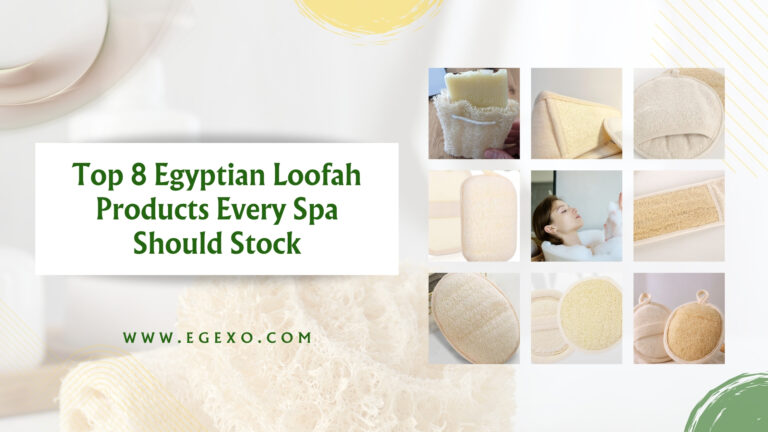
| Bath and Body | 10 to 15 cm rounds or lengths | Personal exfoliation, bathing | Spa, retail, hospitality |
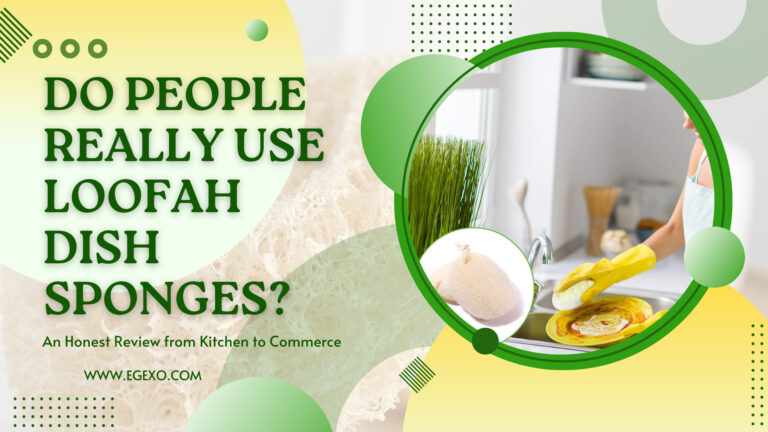
| Kitchen Scrubbers | 8 to 12 cm pieces | Dish washing, surface cleaning | Housewares retail, food service |
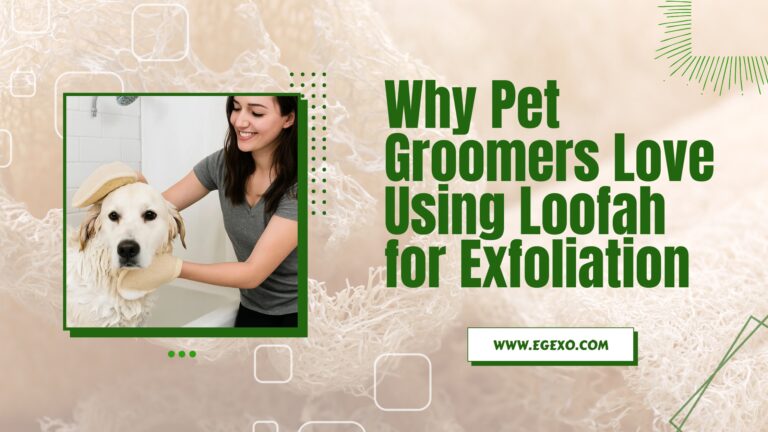
| Pet Grooming | Various shapes | Animal bathing and brushing | Pet supply retailers |
| Craft and Decorative | Whole or sectioned | Soap embedding, displays | Craft suppliers, artisans |
| Industrial | Large sections | Specialty cleaning applications | Industrial supply companies |
Our kitchen loofah collection and pet and spa grooming products demonstrate the range of applications possible from quality Egyptian loofah fibers.
Private Label and Custom Manufacturing
Many wholesale buyers develop branded loofah products for their specific markets. Private label manufacturing allows retailers, spa chains, and distributors to offer exclusive products without establishing their own cultivation and processing operations.
Private label services typically include custom cutting to exact specifications, branded packaging options, certification documentation, and consistent supply agreements. Experienced manufacturers like Egexo work with buyers from initial product concept through production scaling and ongoing supply management. Learn more about private label loofah manufacturing capabilities for your brand development needs.
For wholesale resources and industry insights supporting bulk purchasing decisions, wholesaleloofah.com provides additional guidance.
Quality Control Throughout the Supply Chain
Consistent quality requires systematic inspection and testing at multiple points from seed selection through finished product delivery. Understanding these quality assurance practices helps buyers evaluate supplier capabilities and helps consumers recognize quality indicators in purchased products.
Incoming Material Inspection
Quality control begins before planting with seed testing and verification. Throughout growing seasons, agricultural inspectors monitor plant health and development. At harvest, each gourd receives visual evaluation before entering processing.
Post-harvest inspection removes gourds with inadequate maturity, disease damage, pest injury, or structural abnormalities. Rejection rates at this stage vary by season and growing conditions, typically ranging from 5 to 15 percent of harvested volume.
In-Process Quality Checks
Processing facilities implement quality checkpoints at each manufacturing stage. Inspectors verify proper peeling completion, adequate washing and sanitization, correct drying parameters, and accurate cutting dimensions. Documentation systems track individual batches through processing, supporting traceability requirements.
Statistical sampling verifies consistency across production runs. For large wholesale orders, sampling plans specify inspection quantities and acceptance criteria aligned with buyer quality specifications.
Final Product Verification
Before packaging, finished sponges receive comprehensive final inspection. Trained quality personnel evaluate:
- Fiber density and uniformity
- Color consistency within specified range
- Structural integrity under compression
- Dimensional accuracy against specifications
- Absence of foreign material or contamination
- Appropriate moisture content
Products meeting specifications proceed to packaging while items with defects route to appropriate lower grades or rejection.
Quality Evaluation Checklist for Buyers
| Quality Factor | What to Check | Premium Standard | Acceptable Standard |
|---|---|---|---|
| Fiber Density | Compress sponge, observe resistance | Firm, bounces back immediately | Moderate firmness, recovers within seconds |
| Color | Visual inspection under neutral light | Cream to light tan, uniform | Natural variations acceptable, no dark spots |
| Odor | Smell dry and wet sponge | Neutral or slight plant scent | No musty, sour, or chemical odors |
| Structure | Examine fiber pattern | Even distribution, no thin spots | Minor variations not affecting use |
| Cleanliness | Check for debris or residue | Completely clean throughout | No visible contamination |
| Dimensions | Measure against specifications | Within 3 percent tolerance | Within 5 percent tolerance |
From Processing Facility to Global Markets
The farm to field story continues through packaging, logistics, and delivery systems that connect Egyptian production with buyers worldwide. Export expertise ensures products arrive in optimal condition regardless of destination.
Packaging for Protection and Presentation
Packaging serves dual purposes of protecting sponges during transit while presenting products attractively for retail display. Bulk packaging for wholesale buyers typically involves poly bags within corrugated cartons, with case quantities and configurations customized to order requirements.
Retail-ready packaging options include branded sleeves, hang tags, display cartons, and gift sets. Packaging customization allows buyers to receive products ready for immediate store placement without repackaging operations.
Moisture barrier packaging prevents humidity absorption during shipping and storage. This protection matters particularly for shipments to humid climates or products stored before retail distribution.
Export Documentation and Compliance
International shipments require comprehensive documentation including commercial invoices, packing lists, certificates of origin, and phytosanitary certificates confirming products meet agricultural import requirements. Experienced exporters maintain current knowledge of destination country regulations and documentation requirements.
Quality certifications relevant to specific markets or product applications may include organic production verification, food-contact safety testing, cosmetic product compliance, or environmental sustainability documentation. Buyers should specify required certifications when requesting quotations to ensure suppliers can provide necessary documentation.
Request a quotation with your specific certification and documentation requirements for accurate pricing including all compliance needs.
Logistics and Delivery Options
Sea freight serves most international loofah shipments, offering economical transport for the product volumes typical of wholesale orders. Transit times from Egyptian ports range from 10 to 35 days depending on destination, with established shipping routes serving major markets in North America, Europe, Asia, and Australia.
Air freight provides faster delivery for urgent requirements or sample shipments, though higher costs limit viability for routine bulk orders. Experienced suppliers help buyers evaluate shipping options based on order size, timing requirements, and budget constraints.
Door delivery services, including customs clearance and inland transportation, simplify importing for buyers without established logistics infrastructure. Full service delivery options allow new importers to receive products at their facilities without navigating complex international shipping procedures independently.
Sustainability and Environmental Considerations
The farm to field journey of loofah production offers significant environmental advantages over synthetic alternatives. Understanding these benefits helps eco-conscious consumers make informed choices and helps businesses communicate sustainability value to their customers.
Renewable and Biodegradable
Unlike plastic mesh sponges requiring petroleum inputs and persisting in landfills for centuries, natural loofahs grow from renewable plant materials and biodegrade completely after use. A single loofah plant produces multiple usable sponges during its growing season, with agricultural inputs limited to water, nutrients, and labor.
End-of-life disposal simply involves composting or garden disposal where fibers break down into organic matter within months. This complete biodegradability addresses growing consumer concern about plastic pollution in oceans and landfills.
Carbon Footprint Comparison
Natural loofah production captures atmospheric carbon during plant growth, partially offsetting emissions from processing and transport. Lifecycle analyses comparing natural and synthetic sponges consistently show lower total carbon footprints for plant-based products.
Processing energy requirements remain modest compared to synthetic manufacturing. Sun drying leverages free solar energy, while minimal chemical inputs reduce industrial processing demands. These factors combine to create products with favorable environmental profiles.
Supporting Agricultural Communities
Loofah cultivation provides employment and income for farming communities in production regions. Unlike automated industrial manufacturing, loofah production involves skilled agricultural labor throughout planting, cultivation, harvest, and processing phases.
Fair trade and ethical sourcing considerations increasingly influence buyer decisions. Suppliers demonstrating commitment to worker welfare and community development offer products aligned with corporate responsibility goals and consumer values.
FAQ Section
Q: How long does it take for loofah seeds to become usable sponges?
A: The complete journey from loofah seeds to finished sponges typically requires 150 to 200 days of plant growth plus 2 to 4 weeks of post-harvest processing. Seeds germinate within 7 to 14 days, followed by 60 to 90 days of vegetative growth before flowering. Fruit development adds another 60 to 90 days until harvest maturity. Processing including peeling, washing, drying, and quality inspection requires additional time before products reach market ready condition.
Q: What makes Egyptian loofahs superior to products from other regions?
A: Egyptian loofah cultivation benefits from ideal climate conditions in the Nile Delta region, including consistent high temperatures during the extended growing season and abundant sunshine for natural drying. Generations of cultivation expertise have refined seed selection, growing practices, and processing methods. These factors combine to produce denser, more durable fibers with consistent quality across large production volumes. Over 80 percent of premium grade natural sponges worldwide originate from Egyptian farms.
Q: What minimum order quantities do wholesale loofah suppliers typically require?
A: Minimum order quantities vary by supplier and product type, typically ranging from 500 to 2,000 pieces for standard items. Custom products and private label orders may require higher minimums to justify setup costs. Many suppliers offer sample programs allowing buyers to evaluate quality before committing to larger orders. Egexo provides flexible MOQ options and sample ordering through our request samples page.
Q: How should consumers care for natural loofahs to maximize lifespan?
A: Proper care extends natural loofah lifespan significantly. Rinse thoroughly after each use to remove soap and skin cells. Shake out excess water and hang in a well-ventilated area to dry completely between uses. Avoid leaving loofahs in standing water or humid enclosed spaces. For sanitization, microwave damp loofahs for 30 seconds weekly or soak in diluted vinegar solution. Replace body loofahs every 3 to 4 weeks and kitchen loofahs monthly for optimal hygiene.
Q: Can loofah seeds be saved and replanted from purchased sponges?
A: While loofah seeds inside finished sponges are technically viable, commercial suppliers typically remove seeds during processing. Seeds from processed sponges may have reduced germination rates compared to properly stored agricultural seeds. For serious cultivation, obtaining seeds from reputable agricultural suppliers ensures better germination success and known variety characteristics. Home gardeners can successfully grow decorative loofahs from saved seeds in appropriate climates.
Q: What certifications should wholesale buyers request from loofah suppliers?
A: Certification requirements depend on end use applications and destination markets. Common certifications include organic production verification, phytosanitary certificates for agricultural imports, food contact safety testing for kitchen products, and cosmetic product compliance for personal care applications. Buyers should specify intended product use when requesting quotations so suppliers can confirm available certifications and any additional testing requirements.
Q: How do natural loofahs compare to synthetic alternatives for cleaning effectiveness?
A: Natural loofah fibers provide excellent cleaning and exfoliation through their inherently textured structure. The open fiber matrix creates scrubbing action while allowing adequate water and soap retention. Unlike synthetic alternatives that can harbor bacteria in non-porous plastic fibers, natural loofahs dry more completely and can be sanitized effectively. For personal care, the natural texture offers gentler exfoliation than many plastic mesh products while providing effective dead skin removal.
Expert Insight from Egexo
With over 25 years cultivating and processing Egyptian loofahs, our experience reveals that the farm to field story truly determines final product quality. We have observed how seemingly minor cultivation decisions create significant differences in finished sponges.
Seed selection remains the foundation. Our proprietary seed stock, developed over decades of selective breeding from top-performing plants, consistently produces fiber densities 15 to 20 percent higher than generic commercial varieties. We track harvest quality back to specific seed lots, continuously refining our genetic base.
Harvest timing expertise cannot be rushed. Our harvest teams include third-generation workers who evaluate gourd maturity through subtle indicators that resist documentation. This accumulated knowledge distinguishes premium producers from volume-focused operations. When evaluating suppliers, ask about harvest decision processes to gauge cultivation expertise depth.
For buyers beginning their loofah sourcing journey, we recommend starting with sample orders across multiple grades to understand quality differences firsthand. Our team welcomes detailed questions about cultivation practices, processing methods, and quality specifications.
Conclusion
The transformation of loofah seeds into finished sponges represents a remarkable agricultural journey combining natural plant biology with human expertise refined across generations. From careful seed selection through harvest timing, processing precision, and quality verification, each stage contributes to the products that reach buyers and consumers worldwide.
Egyptian loofah production stands at the forefront of this industry, offering quality advantages rooted in ideal growing conditions and deep cultivation knowledge. Understanding this farm to field story empowers wholesale buyers to evaluate suppliers effectively and helps consumers appreciate the natural products they choose.
The growing demand for sustainable, plastic-free alternatives positions natural loofahs for continued market expansion. Businesses incorporating quality Egyptian loofahs into their product offerings access a category with proven consumer appeal and favorable environmental credentials.
Key Takeaways:
- Loofah seeds require 150 to 200 days to develop into harvest-ready gourds under proper cultivation
- Egyptian growing conditions and expertise produce over 80 percent of premium grade natural sponges globally
- Quality grading systems help buyers specify exact requirements and recognize product value
- Proper care extends natural loofah lifespan while maintaining hygiene benefits over synthetic alternatives
- Sustainable production practices make natural loofahs environmentally superior to plastic options
Ready to experience Egyptian loofah quality firsthand?
- For Wholesale Buyers: Request a detailed quotation for your specific requirements or download our complete product catalog to explore available options
- For Individual Orders: Browse our shop collection or request samples to evaluate quality before larger purchases