

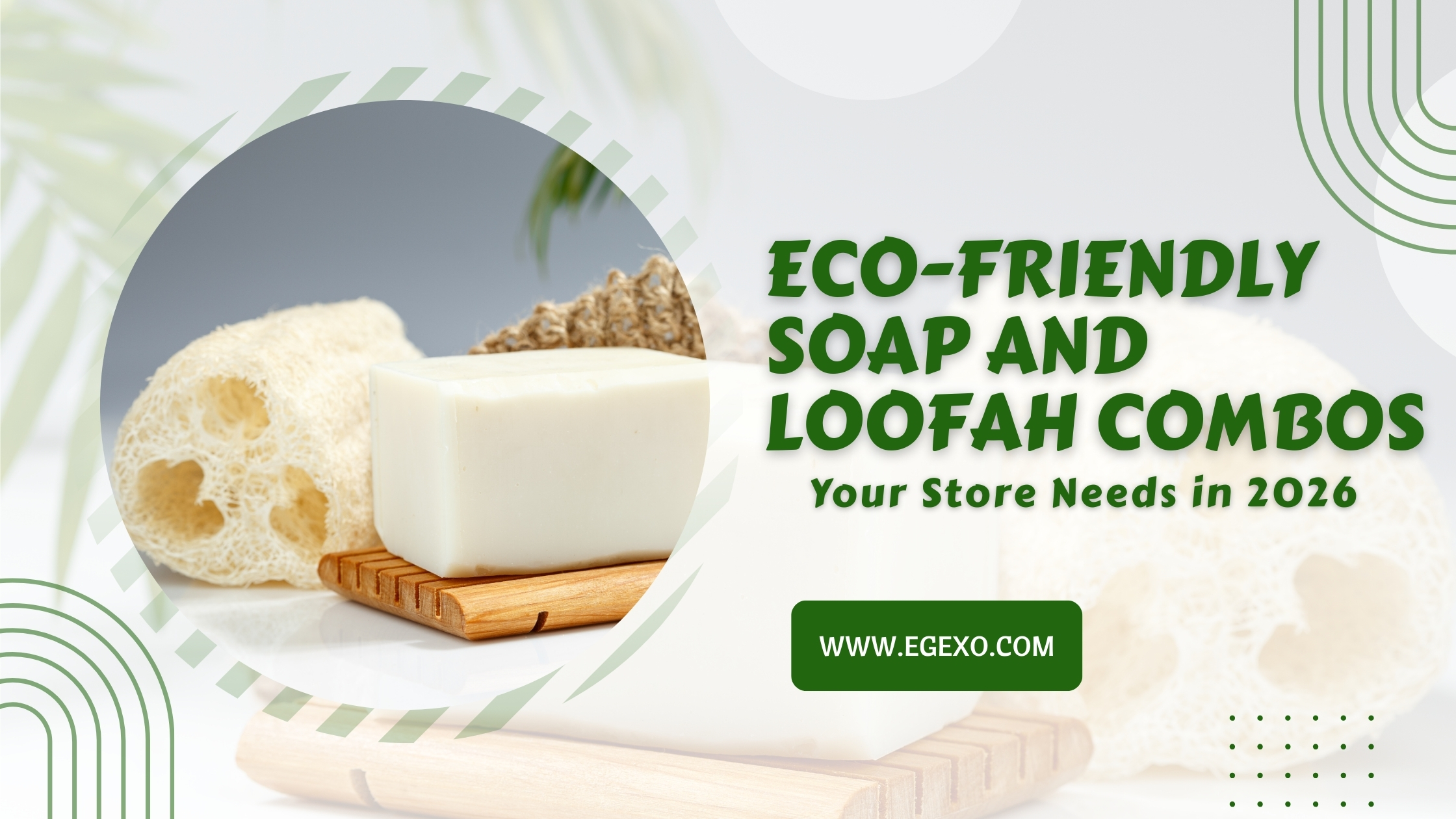
Eco-Friendly Soap and Loofah Combos Your Store Needs in 2026
Why Natural Bath Pairings Are Transforming the Market
The global sustainable personal care market reached 12.3 billion USD in 2024, with eco-friendly soap and loofah combos emerging as one of the fastest-growing product categories. Whether you manage a boutique spa, operate a retail chain, or simply want cleaner bath essentials at home, understanding what makes these pairings exceptional is now essential knowledge.
Natural loofah sponges paired with artisan soaps represent more than a trend. They signal a fundamental shift in how consumers and businesses approach personal care. Research from the Natural Cosmetics Association shows that 73 percent of consumers actively seek plastic-free bath alternatives, creating unprecedented demand for authentic, sustainably sourced combinations.
Egyptian loofahs, cultivated in the nutrient-rich Nile Delta region, have become the gold standard for these pairings. With over 25 years of cultivation expertise, suppliers like Egexo have refined growing and processing techniques that deliver superior fiber density and durability. These qualities make Egyptian loofahs ideal companions for natural soap formulations.
This comprehensive guide examines everything from selecting premium loofah and soap combinations to evaluating wholesale suppliers and maximizing product longevity. Retailers will discover sourcing strategies and profit optimization techniques, while individual consumers will learn practical tips for building an effective, sustainable bathing routine.
Understanding Eco-Friendly Soap and Loofah Combos
What Defines a Truly Sustainable Pairing
Eco-friendly soap and loofah combos combine plant-based exfoliating tools with naturally formulated cleansers. The loofah component comes from the Luffa aegyptiaca or Luffa cylindrica plant, a member of the cucumber family that produces fibrous gourds ideal for skin care applications. When paired with soaps free from synthetic detergents, parabens, and artificial fragrances, these combinations deliver effective cleansing while maintaining environmental responsibility.
The sustainability credentials of authentic pairings extend beyond ingredient lists. True eco-friendly combos consider the entire product lifecycle, from cultivation practices through end-of-life disposal. Natural loofahs biodegrade within 30 days when composted, while quality natural soaps break down without leaving harmful residues in water systems.
For businesses evaluating wholesale loofah options, understanding these fundamentals helps differentiate premium offerings from inferior alternatives flooding the market. Consumers benefit equally from this knowledge, as it empowers informed purchasing decisions.
The Science Behind Effective Natural Exfoliation
Egyptian loofah fibers possess a unique cellular structure that creates microscopic channels throughout the sponge material. These channels trap soap effectively, producing rich lather while providing gentle mechanical exfoliation. Studies conducted by dermatological research institutes confirm that properly cultivated loofahs remove dead skin cells 40 percent more effectively than synthetic alternatives without causing microtears or irritation.
The natural fiber composition also offers antibacterial properties when maintained correctly. Unlike plastic mesh sponges that harbor bacteria in non-porous surfaces, loofah fibers dry quickly and resist microbial colonization when proper care protocols are followed. This scientific advantage explains why spa professionals and discerning consumers increasingly prefer natural loofah pairings.
Types of Eco-Friendly Soap and Loofah Combinations
Body Care Pairings
Body care represents the largest segment of eco-friendly soap and loofah combos, accounting for approximately 68 percent of market demand. These pairings typically feature medium-density loofahs sized for comfortable handheld use, matched with moisturizing bar soaps or liquid body washes formulated for daily cleansing.
The Bath and Body Loofah collection demonstrates the variety available within this category. Options range from whole natural loofahs that buyers can cut to preference, to pre-shaped discs and mitts ready for immediate retail or personal use. Premium Egyptian varieties offer superior flexibility that conforms to body contours while maintaining effective exfoliating texture.
For wholesale buyers, body care combos present excellent profit margins. Bundling costs typically run 15 to 25 percent lower than selling items separately, while perceived value increases for end consumers who appreciate curated combinations.
Facial Care Sets
Facial applications require specialized loofah preparations paired with gentle, pH-balanced soaps. These combos use finely processed loofah material that delivers mild exfoliation appropriate for delicate facial skin. The loofahs undergo additional softening treatments during processing while maintaining enough texture to effectively remove makeup residue and environmental pollutants.
Natural facial soaps in these pairings typically incorporate ingredients like goat milk, honey, activated charcoal, or botanical extracts. The combination approach allows consumers to establish complete facial care routines with harmonized products, while retailers benefit from higher average transaction values.
Kitchen and Household Applications
The sustainability movement extends beyond personal care into household cleaning. Kitchen loofahs paired with natural dish soaps offer chemical-free alternatives for cleaning cookware, countertops, and produce. These utilitarian pairings appeal to eco-conscious households seeking to eliminate plastic sponges and synthetic cleaning products from their kitchens.
Kitchen loofah combos require different specifications than body care versions. Denser fiber structures withstand abrasive cleaning tasks, while firmer compositions maintain shape through extended use cycles. Natural dish soaps in these pairings often feature grease-cutting citrus oils or antibacterial tea tree formulations.
Specialty and Spa Collections
Luxury spa and wellness markets demand premium eco-friendly soap and loofah combos featuring exceptional quality at every level. These offerings include hand-selected loofahs meeting strict grading criteria, paired with artisan soaps created in small batches using traditional cold-process methods.
Spa collections often incorporate complementary items like natural pet grooming loofahs, bamboo accessories, and organic cotton storage bags. For businesses operating spas or wellness centers, these comprehensive collections provide turnkey retail solutions that align with treatment room aesthetics and brand positioning.
Product Comparison: Loofah Types for Soap Pairings
| Loofah Type | Best Soap Pairing | Fiber Density | Durability | Primary Use | Buyer Recommendation |
|---|---|---|---|---|---|
| Whole Egyptian | Artisan Bar Soaps | High | 6 to 8 months | Body exfoliation | Premium retail and spa |
| Cut Slices | Glycerin Soaps | Medium-High | 4 to 6 months | Daily body care | Mass retail and hospitality |
| Processed Discs | Facial Bars | Low-Medium | 3 to 4 months | Gentle facial care | Beauty retail and salons |
| Kitchen Grade | Natural Dish Soap | Very High | 8 to 12 months | Household cleaning | Grocery and home goods |
| Raw Scrubber | Exfoliating Bars | Maximum | 10 to 14 months | Deep exfoliation | Specialty wellness |
| Pet Spa | Organic Pet Shampoo | Medium | 4 to 6 months | Animal grooming | Pet retail and grooming |
This comparison illustrates why sourcing decisions matter significantly. Matching loofah characteristics to appropriate soap types maximizes product performance and customer satisfaction. For detailed specifications on each variety, the Egexo Product Catalog provides comprehensive technical information.
Quality Standards for Premium Combinations
Loofah Grading Criteria
Professional buyers and informed consumers should understand the grading systems applied to natural loofahs. Egyptian suppliers following international export standards classify products based on fiber uniformity, structural integrity, color consistency, and dimensional accuracy. The quality standards documentation explains these criteria in technical detail.
Grade A loofahs exhibit uniform fiber distribution with no thin spots or structural weaknesses. Color ranges from pale cream to light tan without dark spots or discoloration. These premium specimens pair best with luxury soap formulations where appearance matters alongside performance.
Grade B loofahs offer excellent functionality with minor cosmetic variations. These products work well for personal use or retail contexts where value positioning takes priority over absolute visual perfection.
Soap Quality Indicators
Quality soap partners for loofah combinations share several distinguishing characteristics. Cold-processed soaps retain higher glycerin content, providing natural moisturization that complements loofah exfoliation. Cure times of four to six weeks indicate properly developed bar structure that maintains shape during use.
Ingredient lists reveal formulation quality quickly. Premium natural soaps feature saponified oils, essential oils for fragrance, and botanical additives for specific benefits. They avoid sodium lauryl sulfate, artificial colorants, synthetic fragrances, and petroleum-derived ingredients.
Wholesale buyers should request certificates of analysis for soap products, confirming pH levels, microbial testing results, and ingredient verification. This documentation protects business reputations and ensures regulatory compliance across different markets.
Supplier Evaluation Checklist for Wholesale Buyers
| Evaluation Criteria | Questions to Ask | Red Flags | Green Flags |
|---|---|---|---|
| Cultivation Experience | How many years in loofah farming | Less than 5 years experience | 20 plus years with documented history |
| Quality Control | What testing procedures exist | No inspection process described | Multiple quality checkpoints with documentation |
| Processing Facilities | Where does manufacturing occur | Outsourced to unknown locations | Owned facilities with traceability |
| Export Documentation | What certifications provided | Missing phytosanitary certificates | Complete export paperwork including origin certificates |
| Customization Options | Can products be modified | No flexibility in specifications | Full private label and custom design capabilities |
| Sample Availability | Can quality be verified first | No samples offered | Free or low-cost sample programs |
| Communication | How responsive is the team | Delayed replies over 48 hours | Same-day responses with dedicated contacts |
| Minimum Orders | What MOQ requirements apply | Extremely high minimums only | Flexible MOQs for different buyer sizes |
Businesses beginning supplier relationships should request samples before committing to bulk orders. Physical evaluation reveals quality characteristics that photographs cannot capture, including fiber texture, structural integrity, and actual sizing compared to specifications.
Business Opportunities in Eco-Friendly Bath Products
Market Growth Projections
The eco-friendly personal care segment continues expanding at compound annual growth rates exceeding 9 percent globally. Natural bath accessories specifically show even stronger momentum, with market analysts projecting the category will reach 4.2 billion USD by 2028. This growth creates substantial opportunities for retailers, distributors, and spa operators.
European markets demonstrate particular appetite for sustainable bath products, with Germany, France, and the United Kingdom leading demand. North American consumers increasingly prioritize environmental credentials in purchasing decisions, especially among demographics under 45 years old. These trends suggest sustained demand growth for properly positioned eco-friendly soap and loofah combos.
Profit Margin Analysis
Wholesale loofah pricing from Egyptian suppliers typically ranges from 0.30 to 2.50 USD per unit depending on variety, processing level, and order volume. Retail pricing for individual loofahs ranges from 4.99 to 18.99 USD, creating healthy margin potential. When bundled with quality natural soaps into eco-friendly combos, perceived value increases while actual cost additions remain modest.
Retailers report average margins of 55 to 70 percent on combo products versus 40 to 55 percent on individual items. This margin enhancement stems from curated presentation that commands premium positioning and reduced per-unit handling costs through bundle packaging.
Private Label Opportunities
Building proprietary brands around eco-friendly soap and loofah combos offers maximum margin potential and brand equity development. Private label manufacturing services enable businesses to create custom-branded products without manufacturing infrastructure investment.
Private label programs typically include custom packaging design, brand-specific labeling, and exclusive product specifications. Some suppliers offer custom product design services that develop unique loofah shapes or processing methods available exclusively to specific buyers.
Consumer Guide to Selecting Quality Combinations
What to Look For When Shopping
Individual consumers seeking eco-friendly soap and loofah combos should evaluate several quality indicators before purchasing. Authentic natural loofahs feel slightly stiff when dry but become soft and pliable after brief water exposure. The fiber structure should appear consistent without obvious thin spots or holes when held against light.
Quality pairings feature soaps with clear ingredient labeling and recognizable components. Avoid products listing fragrance without specification, as this often indicates synthetic compounds. Reputable sellers provide origin information for loofah components and manufacturing details for soap products.
Price represents an imperfect but useful quality signal. Extremely cheap loofahs often originate from accelerated growing operations that sacrifice fiber quality for volume. Budget soaps frequently contain fillers and synthetic ingredients that undermine the natural benefits consumers seek.
Matching Products to Skin Types
Different skin types benefit from specific loofah and soap combinations. Understanding these relationships helps consumers maximize results while avoiding potential issues.
Sensitive skin requires low-density loofahs with fine fiber structure paired with fragrance-free, oatmeal-based or goat milk soaps. Medium exfoliation levels suit normal skin types, combining standard-density loofahs with moisturizing bar soaps containing shea butter or olive oil. Oily or acne-prone skin benefits from firmer loofahs paired with activated charcoal or tea tree soaps that help control excess sebum production.
The comprehensive guides at provide detailed recommendations for specific skin concerns and product selection criteria.
Care and Maintenance for Maximum Longevity
Daily Care Protocol
Proper maintenance dramatically extends product lifespan while ensuring hygienic use. Following each use, rinse the loofah thoroughly under running water to remove all soap residue. Squeeze excess water without wringing, which can damage fiber structure. Hang the loofah in a well-ventilated area away from direct shower spray where it can dry completely between uses.
Soap bars paired with loofahs benefit from drainage-promoting storage. Soap dishes with raised ridges allow air circulation underneath bars, preventing the soggy bottom layer that shortens soap life. Natural soaps stored properly last 30 to 50 percent longer than those sitting in water residue.
Weekly Deep Cleaning
Weekly sanitization maintains hygienic conditions and extends loofah usability. Submerge the loofah in a solution of one tablespoon white vinegar per cup of warm water for 15 minutes. Alternatively, microwave a damp loofah for 30 seconds to eliminate bacteria, though this method accelerates fiber breakdown over time.
Natural disinfection using sunlight exposure works effectively during warm months. Placing loofahs in direct sunlight for two to three hours provides UV sanitization without chemical exposure. This method suits both personal users and businesses refreshing inventory between guests.
Replacement Timing Guidelines
| Product Type | Average Lifespan | Replacement Indicators | Maintenance Impact |
|---|---|---|---|
| Body Loofah | 4 to 8 weeks | Fiber breakdown, persistent odor | Proper drying adds 2 to 3 weeks |
| Facial Loofah | 3 to 4 weeks | Texture loss, discoloration | Gentle handling extends use |
| Kitchen Loofah | 6 to 12 weeks | Structural weakness, staining | Regular sanitization essential |
| Natural Bar Soap | 3 to 6 weeks | Size reduction to unusable portion | Dry storage maximizes duration |
Composting spent loofahs completes the sustainable lifecycle. Natural loofah fibers break down within 30 days in active compost systems, returning nutrients to soil. This disposal method distinguishes authentic eco-friendly soap and loofah combos from synthetic alternatives that persist in landfills for decades.
Sourcing Eco-Friendly Combos: Where to Buy
Wholesale Sourcing for Businesses
Business buyers require reliable supply chains delivering consistent quality at competitive pricing. Egyptian suppliers dominate the premium loofah market due to ideal growing conditions and established cultivation expertise. The farm to export process documentation explains how quality suppliers maintain traceability from field to finished product.
Evaluating wholesale sources involves comparing several factors beyond price. Minimum order quantities should align with business scale, with quality suppliers offering flexibility for both small retailers and large distributors. Payment terms, shipping arrangements, and communication responsiveness indicate operational professionalism that predicts reliable long-term partnerships.
For businesses ready to explore wholesale options, requesting a detailed quotation provides specific pricing based on volume requirements and product specifications.
Retail Options for Individual Consumers
Individual consumers seeking quality eco-friendly soap and loofah combos have expanding options across retail channels. Natural food stores, specialty bath shops, and wellness boutiques typically carry curated selections. Online marketplaces offer broader variety, though quality verification becomes more challenging without physical inspection.
Direct-from-manufacturer online shops provide access to wholesale-quality products in consumer quantities. This purchasing approach often delivers better quality than mass-market alternatives at competitive prices, as products move directly from source to consumer without multiple distribution markups.
Creating Custom Eco-Friendly Combo Products
Design Considerations for Businesses
Developing signature eco-friendly soap and loofah combos differentiates retail offerings and builds brand recognition. Successful combo design considers target customer preferences, price point positioning, and complementary product selection.
Color coordination between loofah presentation and soap appearance creates visually appealing combinations. Scent profiles should complement rather than compete, with unscented or lightly scented loofahs pairing best with aromatic artisan soaps. Packaging materials should maintain sustainability credentials, using recyclable or compostable components.
Custom design consultations help businesses develop unique product combinations tailored to specific market positioning. These services transform generic products into branded offerings that command premium pricing and customer loyalty.
DIY Approaches for Home Users
Creative consumers can assemble personalized eco-friendly combos using quality components purchased separately. This approach allows experimentation with different loofah textures and soap formulations to discover optimal personal combinations.
Raw loofah scrubbers provide material for custom cutting and shaping. Home crafters can create uniquely sized pieces, decorative shapes, or specialized applications from whole loofah gourds. Pairing these custom-cut pieces with handmade or carefully selected natural soaps produces truly personalized bath experiences.
FAQ Section
Q1: How long do eco-friendly soap and loofah combos typically last?
A: Natural loofah sponges in eco-friendly soap and loofah combos generally last four to eight weeks with proper care, while paired natural soap bars typically last three to six weeks depending on usage frequency. Egyptian loofahs from quality suppliers like Egexo often exceed these averages due to superior fiber density. Extending product life requires proper drying between uses and avoiding storage in constantly wet environments.
Q2: What minimum order quantities apply for wholesale eco-friendly combo purchases?
A: Wholesale minimum order quantities for eco-friendly soap and loofah combos vary significantly between suppliers and product types. Quality Egyptian loofah suppliers typically offer MOQs starting from 100 to 500 pieces for standard products, with flexibility for mixed orders across different loofah varieties. Requesting a quotation provides specific MOQ information based on desired products and customization requirements.
Q3: Are natural loofahs more hygienic than synthetic alternatives?
A: Natural loofahs offer hygienic advantages when properly maintained because their porous fiber structure dries quickly, reducing bacterial growth conditions. Unlike non-porous synthetic sponges that trap moisture and bacteria in surface irregularities, natural loofah fibers allow complete air circulation. Weekly sanitization and replacement every four to eight weeks maintains optimal hygiene for eco-friendly soap and loofah combos.
Q4: Can eco-friendly soap and loofah combos be customized for private label brands?
A: Yes, reputable suppliers offer extensive customization for private label eco-friendly soap and loofah combos. Options include custom loofah shapes, specific fiber density requirements, branded packaging, and exclusive product designs. Egyptian suppliers with manufacturing facilities can develop proprietary products unavailable to competitors, creating genuine market differentiation for brand owners.
Q5: What makes Egyptian loofahs superior for soap pairings?
A: Egyptian loofahs benefit from ideal growing conditions in the Nile Delta region, producing fibers with exceptional density, flexibility, and durability. Over 25 years of refined cultivation techniques ensure consistent quality across harvests. The superior fiber structure creates better soap lather retention and more effective exfoliation compared to loofahs grown in less optimal climates or with accelerated cultivation methods.
Q6: How should consumers store eco-friendly soap and loofah combos?
A: Store eco-friendly soap and loofah combos in well-ventilated areas away from direct water contact between uses. Hang loofahs to dry completely, preventing bacterial growth in damp conditions. Place soap bars on draining dishes that prevent water pooling underneath. Avoid enclosed containers or plastic bags that trap moisture. Proper storage extends product lifespan by 30 to 50 percent.
Q7: What certifications should wholesale buyers verify for eco-friendly products?
A: Wholesale buyers should verify phytosanitary certificates confirming products meet import regulations, certificates of origin documenting Egyptian sourcing, and any organic or sustainability certifications claimed by suppliers. Quality suppliers provide complete export documentation and can furnish certificates of analysis for processing and manufacturing procedures upon request.
Q8: Are eco-friendly soap and loofah combos suitable for sensitive skin?
A: Eco-friendly soap and loofah combos suit sensitive skin when properly selected. Choose low-density loofahs with fine fiber structures and pair them with fragrance-free, hypoallergenic soaps containing soothing ingredients like oatmeal, goat milk, or aloe vera. Test new combinations on small skin areas before full use. Natural products generally cause fewer reactions than synthetic alternatives for most users.
Expert Insight from Egexo
With over 25 years cultivating premium Egyptian loofahs in the Nile Delta region, our experience confirms that successful eco-friendly soap and loofah combos depend equally on component quality and proper pairing. We recommend selecting loofahs harvested at peak maturity, typically 180 to 200 days after planting, when fiber density reaches optimal levels for soap retention. Younger harvests produce softer fibers that deteriorate quickly, while over-mature loofahs become too rigid for comfortable use. For wholesale buyers, we suggest starting with sample orders across different loofah grades to identify which quality level matches your market positioning. Premium Grade A specimens suit luxury retail and spa applications, while Grade B products offer excellent value for hospitality and high-volume retail contexts. The right pairing transforms an ordinary bath product into a memorable experience that generates repeat customers and brand loyalty.
Conclusion
Eco-friendly soap and loofah combos represent a significant opportunity for businesses seeking profitable, sustainable product lines and consumers pursuing healthier bath routines. The market continues expanding as environmental awareness drives purchasing decisions across demographics, creating demand that quality suppliers struggle to meet.
Understanding product varieties, quality indicators, and proper maintenance ensures maximum value from these natural pairings. Egyptian loofahs remain the premium choice due to superior cultivation conditions and decades of refined growing expertise, while carefully selected natural soaps complete combinations that deliver genuine benefits.
Key Takeaways:
- The sustainable personal care market exceeds 12 billion USD with continued strong growth projections through 2028
- Egyptian loofahs offer superior fiber density and durability compared to alternatives grown elsewhere
- Proper pairing of loofah type to soap formulation maximizes product performance and customer satisfaction
- Wholesale margins of 55 to 70 percent make combo products attractive for retailers and distributors
- Correct maintenance extends product lifespan by 30 to 50 percent while ensuring hygienic use
Ready to experience Egyptian loofah quality?
For Wholesale Buyers: Request a bulk quote for your business needs or download our complete product catalog to explore available options.
For Individual Orders: Shop our collection to find quality eco-friendly soap and loofah combos, or request samples to evaluate products before larger purchases.