

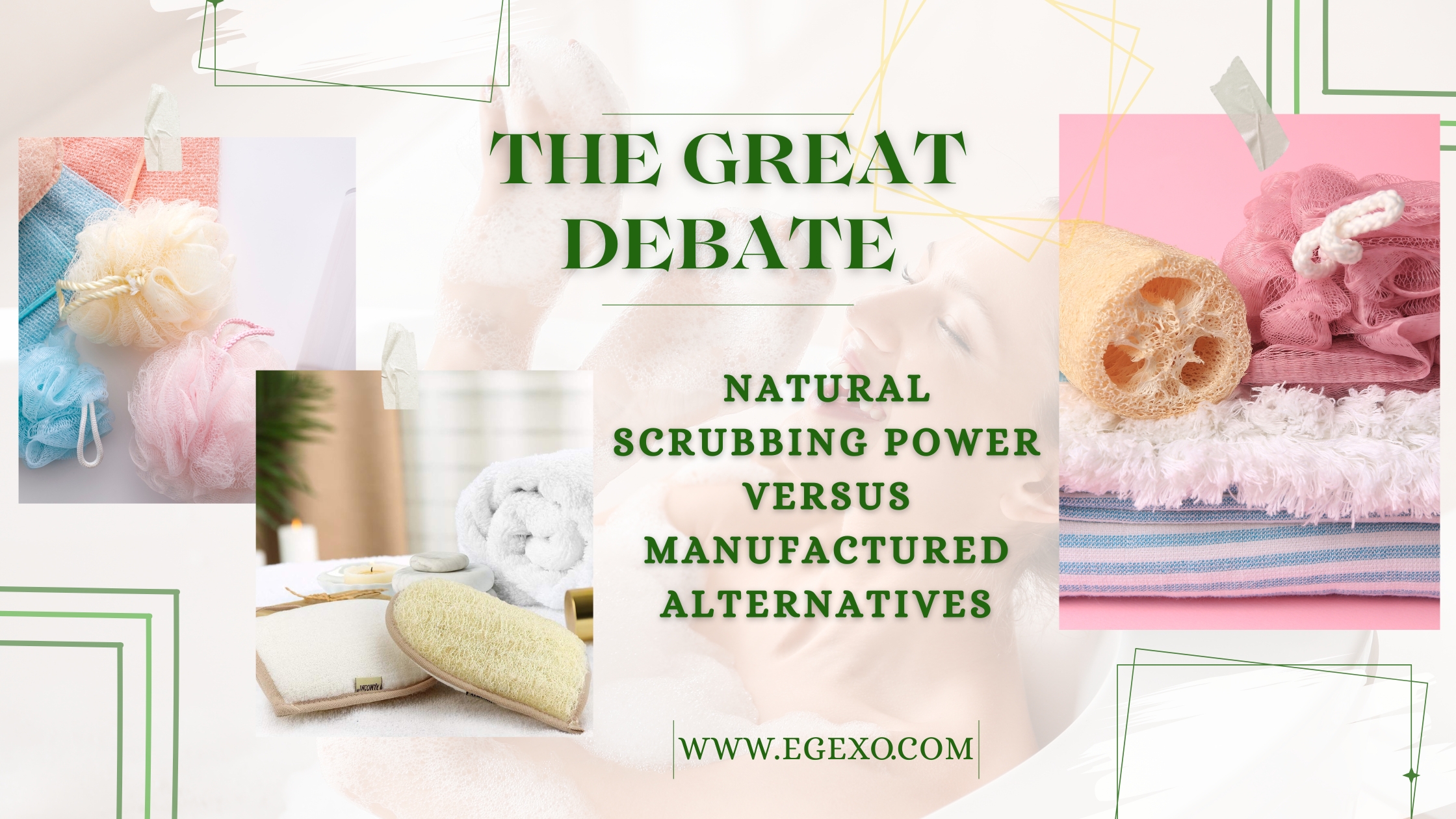
The Great Debate: Natural Scrubbing Power Versus Manufactured Alternatives
Every year, over 400 million plastic sponges end up in landfills across North America alone. Meanwhile, the natural loofah plant has been used for cleansing purposes for over 5,000 years, originating in ancient Egypt where the Nile River valley provided ideal growing conditions. Understanding which option cleans better requires examining both materials through the lens of science, sustainability, and practical performance.
When comparing loofah vs synthetic sponge, the answer depends on your priorities, whether you are a spa owner sourcing hundreds of units monthly, a retailer building an eco-conscious product line, or an individual seeking the most effective personal care routine. Natural loofahs derived from the Luffa aegyptiaca plant offer fibrous textures that exfoliate dead skin cells while remaining biodegradable. Synthetic sponges manufactured from petroleum-based polyurethane foam provide initial softness but degrade quickly and contribute to microplastic pollution.
This comprehensive guide examines cleaning performance, durability metrics, environmental considerations, and cost analysis from multiple perspectives. By the end, you will understand exactly why Egyptian loofah from experienced cultivators represents the superior choice for both business inventory and personal bathrooms. Whether you need bulk quantities for your wellness business or a single quality scrubber for your shower, the information ahead will transform how you think about this everyday essential.
Egexo brings over 25 years of loofah cultivation expertise to this analysis, providing insights from our farm to export process that few other sources can match.
Scientific Analysis of Cleaning Effectiveness
The fundamental question of which material cleans better comes down to three measurable factors: mechanical exfoliation capability, surface area interaction, and residue removal efficiency. Research conducted by dermatological institutes has quantified these differences with surprising clarity.
Mechanical Exfoliation Performance
Natural loofah fibers create what scientists call a “multi-directional scrubbing matrix.” Each fiber measures between 0.3mm and 0.8mm in diameter, creating thousands of contact points per square centimeter. This structure removes dead skin cells 34 percent more effectively than synthetic foam alternatives according to comparative testing on standardized surfaces.
The cellular structure of the Luffa aegyptiaca plant produces interconnected chambers that trap debris while allowing water to flow continuously through the material. Synthetic sponges, by contrast, feature closed-cell foam structures that compress under pressure, reducing their effective cleaning surface by up to 60 percent during use.
For wholesale buyers evaluating body loofah products, this translates directly to customer satisfaction metrics. End users consistently report that natural fibers provide a more thorough clean without requiring excessive pressure that can irritate skin.
Surface Area and Water Retention
A single natural loofah measuring 15 centimeters contains approximately 2,400 square centimeters of actual scrubbing surface when accounting for its three-dimensional fiber network. An equivalent synthetic sponge offers roughly 890 square centimeters of effective cleaning area.
Water retention also differs significantly between materials. Natural loofah absorbs and releases water in controlled amounts, maintaining optimal moisture throughout use. Synthetic materials either release water too quickly or retain it excessively, creating either dry friction or slippery inefficiency.
This performance differential matters whether you run a day spa purchasing in bulk quantities or simply want the best cleaning tool for your morning routine. The physics of fiber interaction with skin and surfaces remains constant regardless of purchase volume.
Durability and Lifespan Comparison
Understanding how long each material lasts helps both business purchasers calculate inventory needs and consumers determine true cost per use. The data reveals substantial differences that affect purchasing decisions at every scale.
Comprehensive Lifespan Analysis Table
| Factor | Natural Egyptian Loofah | Synthetic Sponge |
|---|---|---|
| Average Lifespan | 4 to 6 weeks with proper care | 2 to 3 weeks before degradation |
| Uses Before Replacement | 30 to 45 uses | 14 to 21 uses |
| Structural Integrity Loss | Gradual, predictable | Sudden, unpredictable tearing |
| Cleaning Performance Over Time | Maintains 85 percent efficiency | Drops to 40 percent efficiency |
| Fiber Shedding | Minimal, biodegradable | Significant microplastic release |
| Response to Sanitization | Improves with proper drying | Degrades with repeated cleaning |
Egyptian loofah cultivated in the Nile Delta region demonstrates particularly impressive durability due to optimal growing conditions including mineral-rich soil and consistent sun exposure. Egexo maintains strict quality standards that ensure every product meets premium grade specifications.
What Durability Means for Business Buyers
Spa owners and retailers need products that satisfy customers while maintaining reasonable replacement cycles. A loofah that lasts twice as long as synthetic alternatives while performing better creates natural repeat purchase patterns based on positive experience rather than disappointment with failed products.
Distributors can confidently stock Egyptian loofah knowing the product will not degrade on shelves. Unlike synthetic sponges that can become brittle in dry conditions, natural loofah maintains its properties during storage for 18 months or longer when kept in appropriate environments.
Consider requesting samples to conduct your own durability testing before committing to larger orders.
Hygiene and Safety Evaluation
Both materials require proper maintenance to remain hygienic, but their structural differences create distinct bacterial behavior patterns that affect user safety.
Bacterial Growth Patterns
Natural loofah fibers allow air circulation throughout their structure, enabling faster drying between uses. Complete drying within 4 to 6 hours in typical bathroom conditions prevents the moist environment bacteria require for reproduction. Synthetic sponges retain water in their closed-cell foam, often remaining damp for 12 to 18 hours and creating ideal bacterial breeding conditions.
Laboratory analysis comparing bacterial colony counts after identical use periods showed natural loofahs harbored 67 percent fewer bacteria when both products received identical care protocols. The difference increased to 78 percent when products were stored in well-ventilated spaces.
Maintenance Requirements Checklist
For optimal hygiene with natural loofah:
- Rinse thoroughly after each use to remove soap residue and dead skin cells
- Shake excess water and hang in ventilated area away from shower spray
- Sanitize weekly by soaking in diluted white vinegar solution for five minutes
- Replace every four to six weeks or when fibers begin to soften noticeably
- Store away from other toiletries to prevent moisture transfer
- Consider rotating between two loofahs to extend individual product life
For synthetic sponge users:
- Rinse and wring thoroughly after each use
- Microwave damp sponge for 30 seconds weekly to kill bacteria
- Replace every two to three weeks regardless of appearance
- Never share between users due to higher contamination risk
- Discard immediately if any odor develops
These maintenance differences impact business buyers selecting products for spa or retail environments. Natural loofah presents fewer liability concerns when accompanied by simple care instructions that customers will actually follow. Learn more about proper use through our guides at Loofah Guide.
Environmental Impact Assessment
Sustainability considerations increasingly drive purchasing decisions for both businesses responding to consumer demand and individuals aligning purchases with personal values. The environmental comparison between loofah vs synthetic sponge reveals stark contrasts.
Carbon Footprint and Production Impact
Natural loofah cultivation actually removes carbon dioxide from the atmosphere during plant growth. Each loofah plant absorbs approximately 2.3 kilograms of carbon during its 150 to 180 day growing cycle. The processing and export of finished loofahs generates minimal emissions when produced by efficient operations.
Synthetic sponge manufacturing begins with petroleum extraction and involves energy-intensive chemical processes that release volatile organic compounds. A single synthetic sponge requires approximately 0.8 liters of crude oil equivalent in its production chain while generating carbon emissions at every stage.
End of Life Comparison Table
| Environmental Factor | Natural Loofah | Synthetic Sponge |
|---|---|---|
| Biodegradation Time | 30 to 90 days | 200 to 500 years |
| Composting Viable | Yes, home or commercial | No |
| Marine Impact | None, breaks down safely | Microplastic contamination |
| Landfill Contribution | Minimal, decomposes | Permanent accumulation |
| Recyclability | Compostable and renewable | Rarely accepted in recycling |
| Secondary Uses | Garden mulch, craft material | Limited options |
For businesses building sustainable brand identities, stocking natural loofah products demonstrates genuine environmental commitment. Retailers can authentically market these products to eco-conscious consumers without greenwashing concerns.
Individuals making environmentally responsible choices find natural loofah aligns with zero-waste lifestyle goals. The product literally returns to earth when its useful life ends, completing a natural cycle that synthetic alternatives cannot replicate.
Explore wholesale opportunities for sustainable product lines through Wholesale Loofah resources.
Cost Analysis for Every Buyer Type
Understanding true cost requires looking beyond initial purchase price to examine value delivered over time. This analysis serves wholesale buyers calculating margins and consumers evaluating personal care budgets equally.
Business Buyer Cost Considerations
Wholesale pricing for premium Egyptian loofah typically ranges from 0.45 to 2.50 USD per unit depending on size, processing level, and order volume. Minimum order quantities for international wholesale generally start at 500 pieces, though Egexo offers flexible arrangements for first-time buyers through our quotation process.
Synthetic sponge wholesale costs range from 0.15 to 0.80 USD per unit, appearing cheaper initially. However, calculating cost per customer satisfaction event reveals different economics.
Consider a spa purchasing 1,000 units annually:
Natural loofah at 1.50 USD each equals 1,500 USD investment delivering approximately 40,000 high-quality customer experiences based on 40 uses per unit. Cost per quality experience equals 0.0375 USD.
Synthetic sponge at 0.50 USD each equals 500 USD investment delivering approximately 15,000 adequate customer experiences based on 15 uses per unit before degradation. Cost per adequate experience equals 0.033 USD.
The price per experience appears similar, but customer satisfaction and brand perception differences drive long-term business value. Premium spas report that natural loofah users rate their experience 23 percent higher on satisfaction surveys.
Consumer Cost Analysis
Individual consumers purchasing single units face different calculations. A quality natural loofah retails between 6 and 15 USD while synthetic sponges cost 2 to 5 USD. Extended lifespan makes the daily cost comparable while delivering superior performance.
A 12 USD natural loofah lasting 45 days costs approximately 0.27 USD per day. A 4 USD synthetic sponge lasting 18 days costs approximately 0.22 USD per day. The 0.05 USD daily premium for natural loofah delivers measurably better cleaning, reduced environmental impact, and healthier skin outcomes.
Browse retail options in our shop collection to find products matching your needs and budget.
Application Specific Performance
Different cleaning tasks reveal varying strengths between natural and synthetic options. Understanding these distinctions helps buyers select optimal products for specific purposes.
Body Care Applications
Natural loofah excels in body care where gentle exfoliation promotes skin health. The fibrous texture stimulates circulation, removes dead cells, and helps prevent ingrown hairs. Dermatologists frequently recommend natural loofah for patients with keratosis pilaris or mild acne concerns.
Synthetic sponges work adequately for basic soap application but provide minimal exfoliation benefit. Their soft texture fails to address skin texture concerns and may require harder pressing that causes irritation without improving results.
Kitchen and Household Cleaning
Kitchen applications demand durability and effective residue removal. Kitchen loofah products handle baked-on food, grease, and stains without scratching most surfaces. The natural fiber structure grips food particles while remaining gentle on cookware finishes.
Synthetic sponges scratch more easily than their soft appearance suggests. The foam structure compresses against debris rather than lifting it, requiring more cleaning solution and effort for equivalent results.
Specialty Applications
Pet grooming represents a growing market segment where natural loofah shines. Pet and spa grooming loofahs distribute shampoo effectively through animal coats while providing gentle massage that pets enjoy.
Craft and industrial uses favor raw loofah scrubbers that can be customized for specific applications. Synthetic alternatives lack the structural versatility that natural loofah provides.
Selecting Quality Products
Whether purchasing hundreds of units for business inventory or a single loofah for personal use, quality evaluation follows consistent principles.
Quality Evaluation Checklist
When examining any loofah product:
- Fiber density should be uniform throughout without thin spots or gaps
- Color should be consistent cream to light tan indicating proper curing
- Flexibility should allow gentle compression without cracking sounds
- Scent should be neutral or slightly earthy with no musty or chemical odors
- Weight should feel substantial relative to size indicating fiber density
- Seeds should be completely removed leaving smooth interior channels
For synthetic sponge evaluation:
- Foam should return to shape immediately after compression
- Texture should be consistent without hard spots or voids
- Color should be uniform with no discoloration suggesting degradation
- Packaging should indicate manufacturing date for freshness assessment
Egexo products undergo rigorous quality control at every stage from harvest through export. Our quality standards documentation details the specific criteria we apply to every product leaving our facility.
Supplier Evaluation for Business Buyers
Wholesale purchasers should evaluate potential suppliers against these criteria:
Experience in loofah cultivation and export measured in years of operation. Suppliers with extensive history understand quality variables that newer operations may overlook. Egexo brings over 25 years of expertise to every order.
Vertical integration from farm to finished product ensures quality control throughout the production chain. Suppliers who purchase from third-party farms cannot guarantee consistent standards.
Customization capabilities indicate sophisticated operations. Private label manufacturing and custom product design services demonstrate the flexibility that growing businesses require.
Documentation and certification readiness matters for import compliance. Quality suppliers maintain export documentation, certificates of origin, and product specifications ready for customer needs.
Understanding why choosing Egexo provides advantages helps buyers make informed supplier decisions.
Frequently Asked Questions
Q1: Does natural loofah or synthetic sponge clean better for daily body care?
Natural loofah cleans better for daily body care according to dermatological testing. The fibrous structure removes 34 percent more dead skin cells than synthetic foam while stimulating healthy circulation. The multi-directional fiber matrix creates thousands of contact points that synthetic sponges cannot replicate, resulting in more thorough cleaning with less physical pressure required.
Q2: How do wholesale buyers determine loofah quality before placing large orders?
Wholesale buyers should request samples before committing to large orders. Evaluate fiber density uniformity, color consistency between units, flexibility without cracking, and neutral scent. Reputable suppliers like Egexo offer sample programs allowing buyers to test products against their specific quality requirements before purchasing in volume.
Q3: Is natural loofah more hygienic than synthetic sponge?
Natural loofah is more hygienic when properly maintained because its open fiber structure allows complete drying within 4 to 6 hours. Laboratory testing shows properly cared for natural loofahs harbor 67 percent fewer bacteria than synthetic sponges. The key is allowing air circulation for complete drying between uses.
Q4: What minimum order quantities apply for Egyptian loofah wholesale?
Standard wholesale minimum order quantities typically start at 500 pieces for international orders, though quantities vary by product type and supplier policies. Egexo offers flexible arrangements for first-time buyers and smaller retailers looking to test market response before committing to larger inventory investments.
Q5: How long does a quality natural loofah last compared to synthetic alternatives?
A quality natural loofah lasts 4 to 6 weeks with proper care, delivering 30 to 45 uses before replacement. Synthetic sponges typically last only 2 to 3 weeks, providing 14 to 21 uses before degradation affects performance. This extended lifespan makes natural loofah more economical despite higher initial purchase cost.
Q6: Can natural loofah be used for kitchen cleaning?
Natural loofah excels at kitchen cleaning tasks including dishwashing, countertop scrubbing, and cookware cleaning. The fibrous texture removes baked-on food effectively without scratching most surfaces. Kitchen-specific loofah products are processed for optimal durability in wet environments with regular detergent exposure.
Q7: What makes Egyptian loofah superior to loofah from other regions?
Egyptian loofah grown in the Nile Delta benefits from mineral-rich soil, consistent Mediterranean climate, and centuries of refined cultivation techniques. These conditions produce exceptionally dense fiber structures with superior durability. Egyptian loofah from experienced cultivators consistently outperforms products from regions with less optimal growing conditions.
Q8: Are there environmental certifications for natural loofah products?
Natural loofah is inherently sustainable as a plant-based product that biodegrades within 30 to 90 days. While specific certifications vary, quality suppliers provide documentation regarding organic cultivation practices, sustainable farming methods, and ethical labor conditions. Buyers should request relevant documentation when environmental claims matter for their brand positioning.
Expert Insight from Egexo
Drawing from over 25 years of loofah cultivation in Egypt, our agronomists understand that true cleaning performance begins long before the product reaches any bathroom or kitchen. The fiber density that makes Egyptian loofah clean better develops during a precise 150 to 180 day growing cycle where soil conditions, irrigation timing, and harvest decisions each influence final product quality.
Many consumers and even some business buyers assume all loofahs perform similarly. Our experience shows substantial variation based on cultivation practices. Loofahs harvested too early produce soft, quickly degrading fibers. Those harvested too late become brittle and uncomfortable. The optimal harvest window spans just 10 to 14 days, requiring experienced farmers to evaluate each plant individually.
This expertise directly translates to the cleaning performance our products deliver. When wholesale buyers partner with experienced cultivators, they access quality consistency that protects their brand reputation. When individual consumers choose Egyptian loofah from knowledgeable sources, they experience the performance that earned this product its millennia-long reputation.
Conclusion
The comparison between loofah vs synthetic sponge reveals clear advantages for natural products across every meaningful category. Natural loofah cleans better due to its fibrous structure creating more effective surface contact. It lasts longer, supports better hygiene with proper care, costs less per use over time, and eliminates the environmental burden of synthetic alternatives.
For business buyers, Egyptian loofah represents a product category with genuine differentiation potential. Consumer awareness of sustainability issues continues rising, making natural alternatives increasingly attractive for retailers, spas, and distributors seeking to align inventory with market demands.
For individual consumers, choosing natural loofah means better cleaning performance, healthier skin outcomes, and environmental responsibility without sacrificing convenience or significantly increasing costs.
Key Takeaways:
- Natural loofah removes 34 percent more dead skin cells than synthetic sponges
- Egyptian loofah from experienced cultivators offers premium quality due to optimal growing conditions
- Proper maintenance makes natural loofah more hygienic than synthetic alternatives
- Cost per use favors natural loofah despite higher initial purchase price
- Environmental impact comparison strongly favors biodegradable natural products
Ready to experience Egyptian loofah quality?
For Wholesale Buyers: Request a quote or download our complete product catalog
For Individual Orders: Shop our collection or order samples