

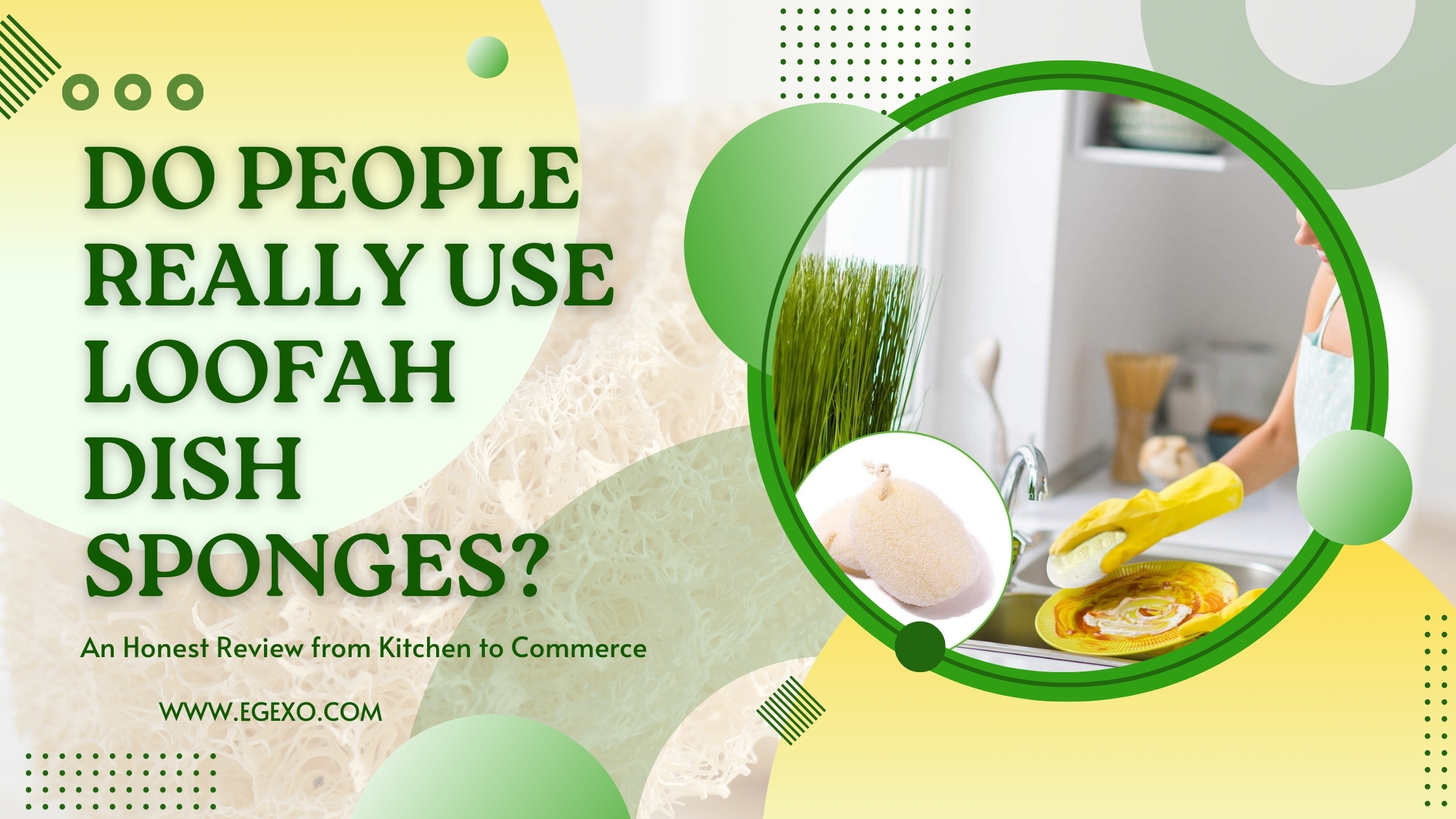
Do People Really Use Loofah Dish Sponges? An Honest Review from Kitchen to Commerce
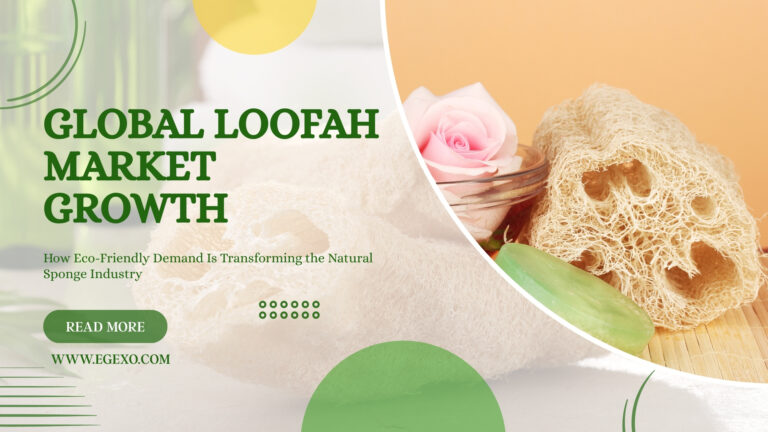
Approximately 7.8 billion plastic sponges end up in landfills every single year in the United States alone. This staggering figure has prompted households, restaurants, and commercial buyers to seek sustainable alternatives. Loofah dish sponges have emerged as a compelling solution, but the question remains: do people actually use them, and more importantly, do they work?
The short answer is yes. Natural loofah dish sponges have gained significant traction among eco-conscious consumers and forward-thinking businesses alike. These plant-derived scrubbers offer genuine cleaning power without contributing to microplastic pollution. Egyptian loofah, in particular, has become the gold standard for kitchen applications due to its superior fiber density and durability.
Whether you are a spa owner exploring sustainable product lines, a retailer seeking differentiated inventory, or a home cook tired of replacing plastic sponges monthly, this comprehensive guide delivers actionable insights. You will discover real user experiences, understand quality distinctions that separate premium loofah from inferior products, and learn exactly how to evaluate suppliers or select the perfect kitchen scrubber for your needs.
Egexo brings over 25 years of loofah cultivation experience to this discussion, offering perspectives that span from agricultural techniques in Egypt’s fertile Nile region to final product performance in commercial kitchens worldwide. For those ready to explore sourcing options, our kitchen loofah collection showcases the variety available for both bulk and individual orders.
What Makes Loofah Dish Sponges Different from Synthetic Alternatives
Natural loofah dish sponges come from the Luffa aegyptiaca plant, a member of the cucumber family that produces fibrous gourds when fully matured. Unlike petroleum-based synthetic sponges, these natural scrubbers decompose completely within 30 days when composted. This biodegradability represents more than an environmental talking point; it reflects a fundamental difference in material composition that affects cleaning performance, hygiene, and long-term cost.
The cellular structure of loofah fibers creates thousands of tiny pockets that trap and lift grease, food particles, and residue without requiring harsh chemicals. This natural texture proves gentle enough for non-stick cookware yet abrasive enough to tackle baked-on food from cast iron or stainless steel. Many users report switching from synthetic sponges after experiencing scratched cookware surfaces, finding that loofah provides comparable cleaning action without the damage.
The Science Behind Loofah Cleaning Power
Research published in agricultural science journals confirms that mature loofah fibers contain approximately 60 percent cellulose, 30 percent hemicellulose, and 10 percent lignin. This composition creates a naturally rigid yet flexible structure that maintains its integrity through hundreds of uses. The lignin content, in particular, provides resistance to water degradation while allowing the fibers to soften slightly when wet for safer contact with delicate surfaces.
Egyptian loofah consistently demonstrates superior fiber density compared to varieties grown in other regions. The combination of Nile River valley climate conditions, mineral-rich soil, and traditional cultivation methods passed through generations results in loofahs with tighter fiber networks. For wholesale buyers evaluating suppliers, fiber density serves as a primary quality indicator that directly impacts end-user satisfaction and repeat purchase rates.
Understanding the loofah farm to export process reveals why sourcing origin matters so significantly for product quality.
Real User Experiences with Kitchen Loofah Sponges
Online communities and product reviews consistently highlight several themes when discussing loofah dish sponge performance. Gathering insights from thousands of verified purchasers across multiple platforms reveals patterns that inform both consumer purchasing decisions and business stocking strategies.
Users who successfully transition to loofah dish sponges typically cite three primary satisfactions: reduced odor compared to synthetic sponges, visible grease removal without excessive soap usage, and the psychological satisfaction of eliminating single-use plastics from their kitchens. Critics, meanwhile, often report issues traceable to product quality rather than loofah as a material. Thin, loosely woven loofahs from unknown sources tend to fall apart quickly and leave fibers on dishes.
Common Praise from Regular Users
The most frequently mentioned positive attributes include exceptional longevity when properly maintained. Premium quality loofah dish sponges typically last between 4 to 8 weeks with daily use, compared to 2 to 3 weeks for synthetic alternatives. This extended lifespan partially offsets the higher initial cost of natural products.
Many users specifically praise how loofah handles greasy dishes. The natural fibers seem to cut through cooking oils more effectively than plastic mesh sponges, requiring less dish soap per wash. Households report reducing their dish soap consumption by 20 to 40 percent after switching, which represents meaningful savings over time.
Addressing Common Concerns
New users sometimes express concern about loofah feeling too rough initially. This texture softens considerably after the first few uses as the fibers hydrate and flex. Soaking a new loofah in warm water for 10 to 15 minutes before first use accelerates this softening process.
Bacterial growth concerns arise frequently in discussions, though research indicates that loofah actually harbors fewer bacteria than synthetic sponges when maintained properly. The natural fibers dry more quickly between uses, creating less hospitable conditions for microbial growth. Regular sanitization through microwave heating or vinegar soaks further mitigates any hygiene concerns.
For retailers and spa owners considering adding loofah kitchen products to their inventory, these real-world user insights help craft effective marketing messages. Explore our private label manufacturing options to create branded loofah products that address these consumer priorities.
Quality Comparison: Egyptian Loofah Versus Other Origins
Not all loofah dish sponges deliver equal performance. Geographic origin, cultivation practices, and processing methods create substantial quality variations that impact both consumer satisfaction and wholesale profitability. Understanding these distinctions helps buyers at every level make informed decisions.
| Quality Factor | Egyptian Loofah | Asian Origin Loofah | Central American Loofah |
|---|---|---|---|
| Fiber Density | 85 to 95 fibers per square centimeter | 50 to 70 fibers per square centimeter | 60 to 75 fibers per square centimeter |
| Average Lifespan | 6 to 8 weeks kitchen use | 2 to 4 weeks kitchen use | 3 to 5 weeks kitchen use |
| Fiber Uniformity | Highly consistent | Variable | Moderately consistent |
| Natural Color | Cream to light tan | Often bleached white | Yellow to tan |
| Texture When Wet | Firm yet flexible | Often too soft | Moderately firm |
| Biodegradation Time | 25 to 30 days | 30 to 45 days if untreated | 30 to 40 days |
Egyptian loofah commands premium positioning due to documented superiority across multiple performance metrics. The Nile Delta region provides an optimal combination of climate, soil composition, and water quality that produces exceptionally dense fiber structures. Farmers in this region have refined cultivation techniques over centuries, understanding precisely when to harvest for maximum fiber maturity without brittleness.
Why Fiber Density Matters for Kitchen Applications
Dense fiber networks directly translate to better grease cutting, longer product life, and more consistent user experiences. When fibers are packed tightly, they create more friction points against dish surfaces, lifting residue more effectively with each stroke. Sparse fibers require users to apply more pressure and make more passes, accelerating wear and frustrating users.
For wholesale buyers building sustainable product lines, fiber density serves as an objective quality metric that justifies premium pricing to end consumers. Products sourced from regions with lower fiber density often compete on price alone, leading to razor-thin margins and frequent customer complaints.
Review our comprehensive quality standards documentation to understand how premium loofah is evaluated and graded.
How to Select the Best Loofah Dish Sponges
Whether purchasing a single sponge for home use or negotiating a container-load wholesale order, selection criteria follow similar principles. The difference lies in verification methods and risk mitigation strategies appropriate to purchase scale.
Consumer Selection Checklist
When shopping for personal use, examine these characteristics before purchase:
| Criterion | What to Look For | Red Flags |
|---|---|---|
| Weight | Dense and substantial feel | Lightweight and airy |
| Color | Natural cream to tan | Bright white indicating bleaching |
| Fiber Visibility | Tight, uniform pattern | Loose, separated strands |
| Flexibility | Slight give without crumbling | Brittle or overly soft |
| Smell | Neutral, slightly earthy | Chemical or musty odor |
| Thickness | Minimum 1 inch for scrubbers | Paper thin or inconsistent |
Purchasing from established suppliers with transparent sourcing provides assurance that products meet these criteria. Our shop offers individual quantities for consumers wanting to experience premium Egyptian loofah quality firsthand.
Wholesale Buyer Evaluation Process
Business purchasers require additional verification layers beyond physical inspection. Evaluating potential suppliers involves assessing production capacity, quality consistency across batches, export documentation capabilities, and communication responsiveness.
| Evaluation Area | Key Questions | Acceptable Standards |
|---|---|---|
| Production Capacity | Annual volume capabilities | Minimum 50,000 units for serious suppliers |
| Quality Control | Grading and inspection processes | Documented sorting by size and density |
| Export Experience | Markets currently served | Active shipments to multiple continents |
| Sample Policy | Pre-order testing options | Free or low-cost samples available |
| MOQ Flexibility | Minimum order requirements | Willingness to negotiate trial orders |
| Lead Times | Order to shipment duration | 2 to 4 weeks for standard orders |
| Certifications | Quality and organic credentials | Third-party verification available |
Egexo welcomes prospective wholesale partners to request samples before committing to larger orders. This approach allows quality verification without significant upfront investment.
Proper Care and Maintenance for Maximum Longevity
Loofah dish sponges require slightly different care than synthetic alternatives, but proper maintenance significantly extends useful life and ensures hygienic performance. These practices apply whether using loofah at home or advising retail customers on product care.
Daily Maintenance Routine
After each dishwashing session, rinse the loofah thoroughly under running water to remove all soap residue and food particles. Squeeze firmly to extract excess water, then place in a well-ventilated area to dry completely between uses. Avoid leaving loofah sitting in pooled water or enclosed spaces where air circulation is limited.
The drying step proves most critical for longevity and hygiene. Synthetic sponges retain moisture in their plastic matrix for extended periods, creating bacterial breeding grounds. Loofah fibers, by contrast, release moisture quickly when properly ventilated, naturally inhibiting microbial growth.
Weekly Deep Cleaning Protocol
Once weekly, sanitize loofah dish sponges using one of these proven methods:
Microwave sanitization works effectively for small to medium loofahs. Saturate the loofah completely with water, place in a microwave-safe dish, and heat on high for 60 to 90 seconds. Allow cooling before handling. This method kills 99 percent of bacteria and refreshes fiber texture.
Vinegar soaking provides a chemical-free alternative. Submerge the loofah in a solution of one part white vinegar to two parts water for 15 to 20 minutes. Rinse thoroughly and dry completely. The acidic environment neutralizes odor-causing bacteria while remaining gentle on natural fibers.
For commercial kitchens processing high volumes, dishwasher sanitization cycles effectively clean multiple loofahs simultaneously. Place loofahs on the top rack and run a hot water sanitize cycle without detergent.
Business Opportunities in the Natural Kitchen Products Market
The sustainable household products market continues expanding at approximately 8.5 percent annually, with kitchen cleaning products representing a particularly dynamic segment. Retailers, distributors, and hospitality businesses increasingly recognize loofah dish sponges as profitable inventory additions that align with consumer values.
Market Growth Indicators
| Market Metric | Current Value | Projected 2028 Value |
|---|---|---|
| Global Eco-Friendly Cleaning Products | 24.5 billion USD | 38.2 billion USD |
| Natural Sponge Segment Growth Rate | 9.2 percent annually | Continued acceleration |
| Consumer Willingness to Pay Premium | 62 percent of shoppers | Increasing with awareness |
| Repeat Purchase Rate for Quality Loofah | 73 percent | Stable with quality |
These figures suggest substantial opportunity for businesses entering or expanding within this space. The key differentiator remains product quality. Retailers stocking inferior loofah products experience high return rates and negative reviews, while those sourcing premium Egyptian loofah build loyal customer bases.
Retail Positioning Strategies
Successful retailers position loofah dish sponges as premium sustainable alternatives rather than commodity cleaning supplies. This positioning justifies higher price points while attracting customers who prioritize quality and environmental responsibility over lowest cost.
Effective merchandising pairs loofah products with complementary sustainable items like bamboo brushes, refillable soap dispensers, and reusable food storage. This cross-merchandising encourages larger basket sizes while reinforcing the eco-conscious brand identity.
For businesses ready to develop branded product lines, our custom product design services enable creation of unique loofah offerings tailored to specific market positioning.
Environmental Impact and Sustainability Benefits
Beyond personal satisfaction and business profitability, loofah dish sponges deliver measurable environmental benefits that resonate with increasingly eco-aware consumers and support corporate sustainability goals.
Lifecycle Comparison with Synthetic Sponges
| Environmental Factor | Natural Loofah | Synthetic Sponge |
|---|---|---|
| Raw Material Source | Renewable plant crop | Petroleum extraction |
| Manufacturing Energy | Solar drying, minimal processing | Chemical foaming, high energy |
| Transportation Weight | Lightweight, compact | Similar weight |
| Usage Microplastics | Zero shedding | 1,000+ particles per wash |
| End of Life | Fully compostable | 200+ years decomposition |
| Carbon Footprint | Net negative when composted | Positive throughout lifecycle |
The microplastic issue deserves particular attention. Every time a synthetic sponge is used, it sheds microscopic plastic particles that flow down drains into waterways. These particles accumulate in marine environments and enter food chains. Natural loofah produces only biodegradable plant fibers that decompose harmlessly.
Supporting Sustainable Agriculture
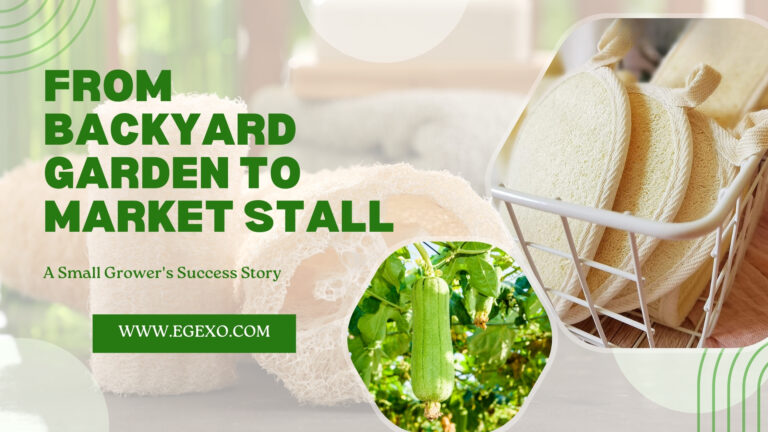
Loofah cultivation represents genuinely sustainable agriculture. The plants require minimal water compared to many crops, thrive without synthetic pesticides when properly managed, and improve soil quality through natural composting of agricultural waste. Egyptian farming communities have maintained these practices for generations, creating economic opportunity without environmental degradation.
Purchasing Egyptian loofah supports these agricultural communities while ensuring the highest quality products. Learn more about why choosing Egexo means supporting sustainable practices from cultivation through export.
Frequently Asked Questions About Loofah Dish Sponges
Q1: How long do loofah dish sponges typically last compared to regular sponges?
High-quality loofah dish sponges last 4 to 8 weeks with daily kitchen use, roughly double the lifespan of synthetic alternatives. Longevity depends primarily on fiber density and proper maintenance including thorough rinsing and complete drying between uses. Egyptian loofah consistently demonstrates the longest useful life due to superior fiber structure resulting from optimal growing conditions and traditional cultivation expertise developed over centuries in the Nile Delta region.
Q2: Are loofah dish sponges sanitary for kitchen use?
Natural loofah proves more hygienic than synthetic sponges when maintained properly. The fiber structure dries quickly between uses, creating less hospitable conditions for bacterial growth compared to moisture-retaining plastic foams. Weekly sanitization through microwave heating or vinegar soaking maintains optimal hygiene. Studies indicate well-maintained loofah harbors significantly fewer bacteria than synthetic alternatives tested under identical usage conditions.
Q3: Can loofah scratch non-stick cookware?
Quality loofah dish sponges are safe for non-stick surfaces when used with normal pressure. The natural fibers soften when wet, providing effective cleaning without the abrasiveness of plastic scrub pads. Users should allow new loofah to hydrate fully before first use on delicate surfaces. Those with particularly sensitive cookware should test on a small area initially, though scratching complaints are rare with properly processed premium loofah.
Q4: What is the minimum order quantity for wholesale loofah purchases?
Minimum order quantities vary by supplier and product type. Egexo offers flexible MOQs starting from small trial orders that allow quality verification before larger commitments. Standard wholesale orders typically begin at 500 to 1,000 units, with volume pricing improving significantly at higher quantities. Contact our export team through the quotation request form for specific pricing based on your requirements.
Q5: Why is Egyptian loofah considered superior for kitchen applications?
Egyptian loofah demonstrates measurably higher fiber density, typically 85 to 95 fibers per square centimeter compared to 50 to 75 for other origins. This density results from unique Nile Delta growing conditions including optimal climate, mineral-rich soil, and traditional cultivation knowledge refined over generations. Denser fibers translate directly to better cleaning performance, longer product life, and more consistent quality that justifies premium positioning in retail markets.
Q6: How should I store loofah dish sponges between uses?
Store loofah in a well-ventilated location where air circulates freely around all surfaces. Avoid enclosed spaces, pooled water, or humid environments that prevent complete drying. Many users find suction-mounted holders near sinks ideal, keeping loofah accessible while ensuring airflow. Proper storage represents the single most important factor in extending loofah lifespan and maintaining hygienic condition throughout use.
Q7: Can retailers get private label loofah products with custom branding?
Yes, reputable suppliers offer private label and custom branding options for wholesale partners. This includes custom shapes, packaging design, and brand labeling that differentiates your product line. Egexo provides comprehensive private label manufacturing services that enable retailers to build unique sustainable product offerings without managing direct agricultural relationships.
Expert Insight from Egexo
With over 25 years cultivating loofah in Egypt’s Nile Delta region, we have observed one consistent truth: the difference between disappointing and exceptional loofah dish sponges comes down to harvest timing. Loofah harvested too early lacks fiber density and falls apart quickly. Loofah left too long on the vine becomes brittle and scratches surfaces. Our farmers monitor each plant individually, harvesting at the precise moment when fibers reach maximum density while retaining optimal flexibility. This attention to agricultural timing, combined with careful processing that preserves natural fiber integrity, produces kitchen loofahs that perform consistently and satisfy demanding users. For wholesale buyers, this cultivation expertise translates into products that generate positive reviews and repeat purchases rather than returns and complaints.
Conclusion
Loofah dish sponges have earned genuine appreciation from users seeking sustainable, effective kitchen cleaning tools. The transition from synthetic to natural sponges requires quality product selection and minor habit adjustments, but rewards users with superior cleaning performance, reduced environmental impact, and long-term cost savings.
For consumers, the key lies in sourcing loofah from reputable suppliers who prioritize fiber density and proper processing. For businesses, the growing sustainable products market presents profitable opportunities for those who differentiate through quality rather than competing solely on price.
Key Takeaways:
- Premium loofah dish sponges last 4 to 8 weeks, outperforming synthetic alternatives in durability and cleaning effectiveness
- Egyptian loofah demonstrates measurably superior fiber density due to optimal growing conditions and traditional cultivation expertise
- Proper maintenance including thorough drying between uses maximizes loofah lifespan and ensures hygienic performance
- The sustainable household products market continues growing at 8.5 percent annually, creating significant business opportunities
- Quality sourcing determines success for both consumer satisfaction and wholesale profitability
Ready to experience Egyptian loofah quality?
- For Wholesale Buyers: Request a quote or download our complete catalog
- For Individual Orders: Shop our kitchen loofah collection or order samples