

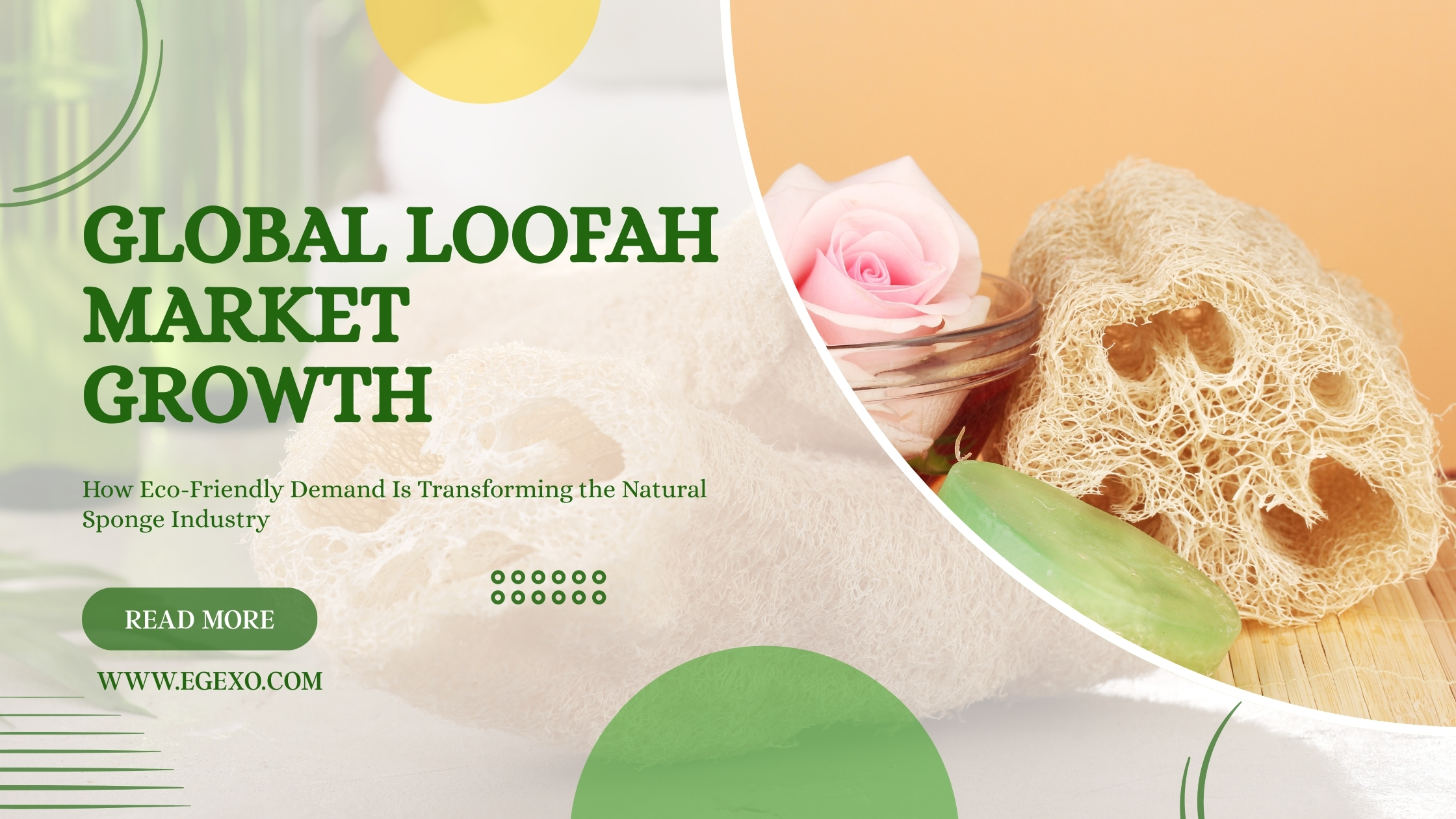
Global Loofah Market Growth: How Eco-Friendly Demand Is Transforming the Natural Sponge Industry
The global loofah market growth rate has accelerated beyond industry projections, reaching an estimated valuation of 300 million USD in 2024 with compound annual growth rates exceeding 5.8 percent through 2030. This remarkable expansion reflects a fundamental shift in how both businesses and individual consumers approach personal care, household cleaning, and environmental responsibility. Whether you operate a spa chain seeking premium wholesale supplies or simply want to replace plastic scrubbers in your bathroom, understanding these market dynamics helps you make informed decisions.
Natural loofah sponges have emerged as the sustainable alternative of choice for millions worldwide. The plant-based scrubber derived from the Luffa aegyptiaca gourd offers exceptional exfoliation properties while decomposing completely within weeks after disposal. This combination of performance and environmental responsibility has captured attention from retail giants, boutique wellness brands, and eco-conscious households alike.
Egyptian loofah stands at the forefront of this market transformation. With ideal growing conditions along the Nile Delta and generations of cultivation expertise, Egypt produces approximately 60 percent of the premium-grade loofahs entering international trade. Companies like Egexo, with over 25 years of loofah cultivation experience, have become essential partners for businesses seeking consistent quality and reliable supply chains.
This comprehensive analysis examines the forces driving global loofah market growth, explores opportunities for wholesale buyers and individual consumers, and provides practical guidance for sourcing the finest natural sponges available today.
Understanding the Forces Behind Global Loofah Market Growth
The natural personal care products sector has witnessed unprecedented expansion as environmental awareness becomes mainstream. Global loofah market growth reflects broader consumer behavior changes that favor biodegradable, plant-based alternatives over synthetic materials derived from petroleum.
Consumer Behavior Shifts Toward Sustainability
Research indicates that 73 percent of global consumers have modified purchasing habits to reduce environmental impact since 2020. This behavioral transformation extends beyond food and transportation into everyday personal care items. Plastic bath poufs and synthetic kitchen sponges, once household staples, face increasing scrutiny due to microplastic pollution concerns.
Natural loofahs address these concerns directly. A single loofah sponge replaces multiple synthetic alternatives over its usable lifespan while contributing zero microplastics to waterways. The plant fiber structure provides effective cleaning and exfoliation without the environmental burden associated with plastic production and disposal.
For wholesale buyers, these shifts create substantial business opportunities. Retailers report that sustainable product categories now command premium shelf placement, while spas and wellness centers use natural materials as competitive differentiators. The body loofah product category has seen particular growth among hospitality businesses seeking to align with guest expectations.
Regulatory Pressures Accelerating Market Expansion
Government policies worldwide increasingly restrict single-use plastics and synthetic materials in consumer goods. The European Union’s Single-Use Plastics Directive, implemented across member states, has prompted retailers to seek natural alternatives for bath and kitchen applications. Similar regulations in Canada, several US states, and Asian markets create favorable conditions for natural loofah products.
These regulatory environments benefit established suppliers with proven quality standards and consistent production capabilities. Import businesses and distributors increasingly prioritize suppliers who can document sustainable practices from cultivation through export.
Market Size Data and Growth Projections
Understanding precise market metrics helps both wholesale buyers and individual consumers appreciate the scale of industry transformation underway.
Global Loofah Market Overview Table
| Market Metric | 2023 Value | 2024 Value | 2030 Projection |
|---|---|---|---|
| Total Market Value | 268 million USD | 300 million USD | 425 million USD |
| Annual Growth Rate | 5.2 percent | 5.8 percent | 5.5 percent average |
| Natural Loofah Share | 42 percent | 47 percent | 58 percent |
| Egyptian Origin Share | 58 percent | 60 percent | 62 percent |
| B2B Channel Growth | 6.1 percent | 7.2 percent | 6.8 percent average |
| Direct Consumer Growth | 4.8 percent | 5.1 percent | 5.2 percent average |
The data reveals several important trends. Natural loofah products are gaining market share against synthetic alternatives at an accelerating pace. Egyptian-origin loofahs continue expanding their dominant position in premium market segments. Business-to-business channels show stronger growth rates than direct consumer sales, indicating substantial wholesale opportunities.
Regional Market Distribution
North America and Europe collectively represent 52 percent of global loofah consumption by value, though volume leadership belongs to Asian markets where loofahs serve both cosmetic and culinary purposes. The Middle East and African regions show the fastest growth rates, exceeding 8 percent annually, driven by traditional usage patterns combining with modern retail development.
For importers and distributors, these regional variations suggest targeted business strategies. Understanding local preferences, from scrubber texture to product sizing, enables better inventory decisions and marketing approaches.
Why Egyptian Loofah Dominates Premium Market Segments
Not all loofahs offer equivalent quality. Growing conditions, cultivation practices, and processing methods dramatically affect the final product characteristics that matter to both professional buyers and individual users.
Geographic and Climatic Advantages
The Nile Delta region provides optimal conditions for Luffa aegyptiaca cultivation. Consistent temperatures between 25 and 35 degrees Celsius during the growing season, combined with rich alluvial soils and controlled irrigation, produce loofah gourds with superior fiber density and uniformity.
Egyptian loofahs typically demonstrate 40 percent higher fiber count per square centimeter compared to loofahs grown in tropical regions with excessive rainfall. This density translates directly into longer product lifespan and more effective exfoliation performance, qualities that professional buyers and consumers both value.
Quality Comparison by Origin
| Quality Factor | Egyptian Loofah | Chinese Loofah | Central American Loofah |
|---|---|---|---|
| Fiber Density | High to Very High | Medium | Medium to High |
| Color Consistency | Excellent | Variable | Good |
| Structural Integrity | Excellent | Good | Good |
| Average Lifespan | 4 to 6 months | 2 to 3 months | 3 to 4 months |
| Seed Cavity Clarity | Clean | Often Residual | Usually Clean |
| Processing Standards | Premium Grade | Variable | Good |
| Certification Availability | Common | Limited | Limited |
The farm to export process employed by premium Egyptian suppliers ensures quality control at every stage. From seed selection through harvesting, processing, and packaging, systematic oversight produces consistent results that wholesale buyers depend upon for their own quality guarantees.
Cultivation Expertise Across Generations
Egyptian loofah farming traditions span over a century, with knowledge passing through family lineages. This accumulated expertise manifests in cultivation techniques that optimize fiber quality, harvest timing that maximizes structural integrity, and processing methods that preserve natural properties.
Egexo represents this heritage through over 25 years of dedicated loofah cultivation and export experience. The company maintains direct relationships with farming communities, ensuring traditional knowledge combines with modern quality management systems.
Product Categories Driving Market Growth
Global loofah market growth distributes unevenly across product categories. Understanding which segments show strongest performance helps buyers focus investment and helps consumers identify trending products.
Bath and Body Segment Analysis
The personal care application remains the largest market segment, representing approximately 65 percent of total loofah consumption. Within this category, several product types show distinctive growth patterns.
Whole natural loofahs continue strong performance among consumers seeking unprocessed, authentic products. These intact loofah segments offer maximum versatility, serving as body scrubbers, facial buffs, or decorative bathroom accessories.
Shaped and processed body loofahs show even faster growth. Products featuring sewn edges, attached straps, or combination materials appeal to consumers transitioning from synthetic alternatives who expect familiar form factors. The raw loofah scrubbers category addresses this market with various processing levels.
Kitchen and Household Applications
Kitchen loofah sponges represent the fastest-growing segment, with annual growth rates exceeding 9 percent in North American and European markets. This acceleration directly correlates with plastic reduction initiatives and growing awareness of microplastic contamination in household environments.
Natural loofah provides effective dishwashing and surface cleaning without scratching most cookware finishes. The porous fiber structure holds soap efficiently while remaining easy to rinse clean. After typical usage periods of four to eight weeks, kitchen loofahs can be composted rather than contributing to landfill waste.
The kitchen loofah product category has attracted particular attention from zero-waste retailers and subscription box services seeking sustainable alternatives.
Specialty and Emerging Applications
Pet grooming represents an emerging application gaining substantial traction. Natural loofah texture provides gentle coat stimulation and effective dirt removal without the static issues associated with synthetic brushes. The pet and spa grooming category serves both professional groomers and pet owners seeking natural care products.
Spa and wellness facilities increasingly incorporate loofah products into treatment menus. Body scrub services using natural loofah command premium pricing while aligning with wellness-focused brand positioning.
Wholesale Buying Guide for Maximum Value
Professional buyers navigating global loofah market growth need systematic approaches to supplier evaluation, quality assessment, and order planning.
Supplier Evaluation Checklist
| Evaluation Criteria | Essential Requirements | Preferred Qualifications |
|---|---|---|
| Production Capacity | Minimum 20 tons monthly | 50 plus tons monthly |
| Quality Certifications | Basic export documentation | ISO or equivalent standards |
| Sample Availability | Paid samples available | Free samples for qualified buyers |
| Minimum Order Quantity | Negotiable MOQ | Flexible MOQ options |
| Lead Time | Consistent delivery schedules | Expedited options available |
| Communication | Responsive within 48 hours | Dedicated account management |
| Customization | Basic size selections | Full custom product development |
| Documentation | Standard export paperwork | Detailed quality reports |
Egexo addresses these criteria through comprehensive service offerings. The quotation request process provides detailed pricing for specific requirements, while the sample ordering system allows quality verification before bulk commitment.
Understanding Quality Grades
Premium loofah suppliers maintain grading systems that standardize product characteristics. Understanding these grades helps buyers specify requirements accurately and avoid quality mismatches.
Grade A or Premium loofahs exhibit uniform coloration, consistent fiber density throughout, complete seed cavity cleaning, and no visible defects. These products serve luxury retail, high-end spas, and markets demanding flawless presentation.
Grade B or Standard loofahs show minor color variation or slight structural imperfections that do not affect performance. These products suit most retail applications and offer favorable cost-to-value ratios for price-conscious markets.
Grade C or Economy loofahs may include noticeable variations but remain fully functional. These products work well for bulk hospitality applications, promotional uses, or markets prioritizing price over presentation.
Order Planning and Inventory Strategies
Successful wholesale loofah purchasing requires understanding seasonal factors and supply chain dynamics. Egyptian loofah harvest occurs primarily between September and November, with processing and export continuing through early spring. Buyers placing orders aligned with this cycle often secure better pricing and priority allocation.
Minimum order quantities typically range from 500 to 2000 pieces for standard products, though private label manufacturing may require higher commitments. Egexo offers flexibility for qualified buyers establishing new market positions.
Consumer Guide to Selecting Quality Loofahs
Individual consumers benefit equally from understanding quality indicators and selection criteria. Global loofah market growth has brought more products to retail shelves, but quality varies significantly.
What to Look for When Shopping
Color provides the first quality indicator. Premium natural loofahs display consistent cream to light tan coloration. Dark spots may indicate improper drying or mold exposure during processing. Greenish tints suggest inadequate curing. Bleached white loofahs have undergone chemical processing that may reduce fiber integrity.
Texture reveals fiber quality. Gently squeeze the loofah to assess density. Quality products feel uniformly dense without soft spots or hollow sections. The surface should show consistent fiber distribution without large gaps or clumps.
Structure indicates durability. Examine the seed cavity interior, which should be clean and free of plant material residue. The outer surface should resist gentle pulling without shedding excessive fibers.
Product Selection by Use Case
| Usage Type | Recommended Product | Key Features | Expected Lifespan |
|---|---|---|---|
| Body Exfoliation | Medium density loofah | Firm but flexible fiber | 3 to 4 months |
| Facial Use | Soft small loofah | Fine fiber structure | 2 to 3 months |
| Dishwashing | Dense scrubber pad | Rigid structure | 4 to 8 weeks |
| Surface Cleaning | Medium scrubber | Balanced flexibility | 6 to 10 weeks |
| Gentle Bathing | Soft processed loofah | Refined texture | 2 to 3 months |
The Egexo shop offers products across these categories with quality guarantees backed by direct manufacturing oversight.
Proper Care for Maximum Lifespan
Loofah maintenance dramatically affects both hygiene and durability. After each use, rinse the loofah thoroughly to remove soap residue and dead skin cells. Squeeze out excess water and hang the loofah in a ventilated location, preferably outside the humid shower area.
Weekly disinfection extends safe usage periods. Soak the loofah in diluted white vinegar for five minutes, then rinse thoroughly and allow complete drying. Alternatively, microwave a damp loofah for 20 seconds to eliminate bacteria.
Replace bath loofahs every three to four months regardless of apparent condition. Fiber degradation creates microscopic harboring spaces for bacteria even when the loofah appears intact.
Business Opportunities in the Growing Market
Global loofah market growth creates opportunities for entrepreneurs, existing retailers, and service businesses to capture emerging demand.
Retail Business Potential
Natural product retailers report loofah category sales increases averaging 15 to 20 percent annually over the past three years. The combination of reasonable price points, strong margins, and repeat purchase patterns makes loofahs attractive inventory items.
Successful retailers often develop curated loofah selections rather than stocking single products. Offering various sizes, densities, and form factors addresses diverse customer preferences while encouraging larger basket sizes.
Private labeling represents advanced opportunity. Custom loofah product design allows retailers to develop branded products with specific characteristics, packaging, and positioning. Egexo supports these initiatives from concept through production.
Spa and Wellness Integration
Wellness businesses incorporate loofahs into service offerings and retail operations simultaneously. Body scrub treatments using natural loofah command premium service pricing, while retail loofah sales enable clients to continue practices at home.
The product catalog includes products specifically suited for professional spa applications, including large format loofahs for body treatments and gentle varieties for facial services.
Distribution and Import Opportunities
Market growth has created gaps in distribution coverage, particularly in secondary markets and emerging retail channels. Entrepreneurs with import capabilities can establish regional distribution operations serving local retailers unable to meet direct import minimums.
Wholesale Loofah resources provide additional guidance for businesses exploring distribution models.
Sustainability Impact and Environmental Benefits
Environmental considerations increasingly influence both business purchasing decisions and consumer choices. Understanding the full sustainability picture supports informed decisions.
Carbon Footprint Comparison
Natural loofah production generates approximately 80 percent less carbon dioxide equivalent emissions compared to synthetic sponge manufacturing. This calculation includes cultivation, processing, transportation, and end-of-life considerations.
Loofah plants actually sequester carbon during growth phases, partially offsetting processing and transportation emissions. Synthetic alternatives require petroleum extraction, chemical processing, and generate emissions throughout their lifecycle while persisting in landfills for centuries.
Biodegradability and Waste Reduction
Natural loofahs decompose within four to six weeks in composting conditions. This rapid biodegradation contrasts sharply with synthetic alternatives requiring 200 to 500 years for complete breakdown.
For consumers replacing synthetic bath sponges with natural loofahs, annual plastic waste reduction averages 150 to 200 grams per household. Scaled across market growth projections, this represents thousands of tons of plastic eliminated from waste streams.
More information about sustainable practices and environmental considerations appears at Loofah Guide, offering detailed consumer education resources.
Future Market Projections and Emerging Trends
Global loofah market growth shows no signs of slowing. Several emerging trends suggest continued expansion and evolution.
Technology Integration
Smart manufacturing techniques are entering loofah processing. Automated quality sorting using computer vision ensures more consistent grading while reducing processing costs. These efficiencies benefit buyers through improved quality consistency and competitive pricing.
Product Innovation
Combination products incorporating natural loofah with other sustainable materials are gaining market traction. Loofah integrated with coconut fiber, sisal, or bamboo components creates specialized cleaning tools addressing specific applications.
Market Channel Evolution
Direct-to-consumer sales channels continue gaining share from traditional retail distribution. Subscription models for regular loofah replacement have emerged in several markets, providing convenience for consumers and predictable revenue for suppliers.
Expert Insight from Egexo
With over 25 years cultivating, processing, and exporting premium Egyptian loofahs, Egexo has observed market transformations firsthand. The current global loofah market growth represents more than a trend. It reflects fundamental consumer recognition that personal care and environmental responsibility need not conflict.
Egyptian loofah quality advantages stem from geography, climate, and generations of accumulated expertise. The Nile Delta environment produces fiber characteristics that simply cannot be replicated elsewhere. When buyers select Egyptian-origin loofahs from established suppliers, they invest in products developed through centuries of refinement.
For wholesale buyers, the key recommendation is establishing supplier relationships before demand peaks strain supply chains. Early market movers secure allocation priority and favorable pricing structures. For individual consumers, the guidance is simpler: try authentic Egyptian loofah once, and synthetic alternatives immediately become obsolete.
Frequently Asked Questions
What is driving global loofah market growth in 2025?
Global loofah market growth stems from three primary factors: increasing consumer environmental awareness driving demand for plastic alternatives, regulatory pressures restricting synthetic materials in personal care products, and growing recognition of natural loofah performance benefits. The market reached approximately 300 million USD in 2024 and projects continued expansion exceeding 5.5 percent annually through 2030.
Why are Egyptian loofahs considered the best quality available?
Egyptian loofahs benefit from optimal growing conditions in the Nile Delta region, including consistent temperatures, rich alluvial soils, and controlled irrigation. These conditions produce loofahs with 40 percent higher fiber density than tropical alternatives. Combined with over a century of cultivation expertise passed through generations, Egyptian loofahs demonstrate superior durability, texture consistency, and structural integrity.
What minimum order quantities should wholesale buyers expect?
Minimum order quantities vary by supplier and product type. Standard MOQs typically range from 500 to 2000 pieces for processed loofah products. Raw loofah materials may have different requirements based on weight or volume. Egexo offers flexible MOQ arrangements for qualified buyers establishing new market positions, with detailed requirements available through the quotation request process.
How long does a natural loofah last compared to synthetic alternatives?
Premium natural loofahs typically last three to six months with proper care, compared to one to two months for synthetic alternatives before they begin harboring excessive bacteria. However, synthetic sponges may appear intact longer despite hygiene concerns. Natural loofahs should be replaced based on time rather than apparent condition, with three to four months representing the recommended maximum for body use.
Can natural loofahs be customized for private label brands?
Yes, established loofah suppliers offer comprehensive private labeling services including custom sizing, specialized processing, branded packaging, and unique product configurations. Egexo provides full custom loofah product design services from concept development through production, enabling retailers and brands to create differentiated offerings for their markets.
What certifications should wholesale buyers require from loofah suppliers?
Essential documentation includes standard export certifications for the origin country, phytosanitary certificates confirming pest-free status, and quality grade specifications. Preferred suppliers also provide ISO certification or equivalent quality management documentation, detailed processing documentation, and third-party testing results for specific applications like food contact use.
How should consumers care for natural loofahs to maximize lifespan?
Proper loofah care involves rinsing thoroughly after each use, squeezing out excess water, and hanging in a ventilated location outside the humid shower area. Weekly disinfection using diluted white vinegar or brief microwave treatment eliminates bacterial buildup. Following these practices extends usable lifespan while maintaining hygiene standards.
What profit margins can retailers expect from natural loofah products?
Natural loofah products typically support retail margins between 50 and 70 percent depending on product type, sourcing efficiency, and market positioning. Premium positioned products with private labeling can achieve higher margins. The combination of favorable margins, strong consumer demand growth, and repeat purchase patterns makes loofahs attractive inventory for natural product retailers.
Conclusion
Global loofah market growth represents one of the most significant shifts in the natural personal care products sector. With market valuations exceeding 300 million USD and annual growth rates surpassing 5.5 percent, both wholesale buyers and individual consumers have compelling reasons to engage with this expanding category.
Egyptian loofah maintains its position as the premier quality choice, offering fiber density, durability, and consistency that alternatives cannot match. Suppliers like Egexo, with 25 years of cultivation and export expertise, provide the quality assurance and supply reliability that professional buyers require while delivering the authentic natural products individual consumers seek.
The environmental benefits alone justify the transition from synthetic to natural loofahs. Add superior performance, competitive pricing, and growing consumer preference, and the business case becomes overwhelming for retailers, spas, and distributors evaluating product category investments.
Key Takeaways:
- Global loofah market growth exceeds 5.5 percent annually with strong projections through 2030
- Egyptian loofahs offer 40 percent higher fiber density than tropical alternatives
- Natural loofahs decompose in weeks versus centuries for synthetic alternatives
- Wholesale buyers should establish supplier relationships before peak demand periods
- Proper care extends loofah lifespan to four to six months for premium products
Ready to experience Egyptian loofah quality?
- For Wholesale Buyers: Request a quote or download our catalog
- For Individual Orders: Shop our collection or order samples