

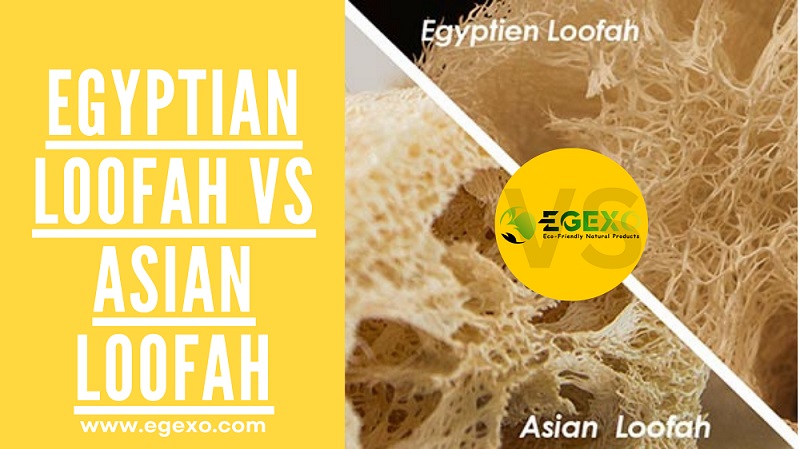
Egyptian vs Asian Loofah: The Complete 2025 Guide to Choosing the Best Natural Sponge for Your Business or Home
When it comes to natural exfoliating sponges, the debate between Egyptian vs Asian loofah has been ongoing for years. Whether you are a retailer looking to stock premium bath products, a wholesaler seeking reliable suppliers, or a consumer wanting the best natural sponge for your skincare routine, understanding the key differences between these two loofah types is essential for making the right choice.
Egyptian loofahs and Asian loofahs differ significantly in quality, texture, durability, and cultivation methods. As the global market shifts toward sustainable and eco-friendly products in 2025, knowing which natural loofah delivers superior performance can impact everything from customer satisfaction to profit margins.
This comprehensive guide breaks down everything you need to know about Egyptian vs Asian loofah, helping you make an informed decision based on quality, skin type compatibility, business needs, and long-term value.
Egyptian vs Asian Loofah: Quick Comparison
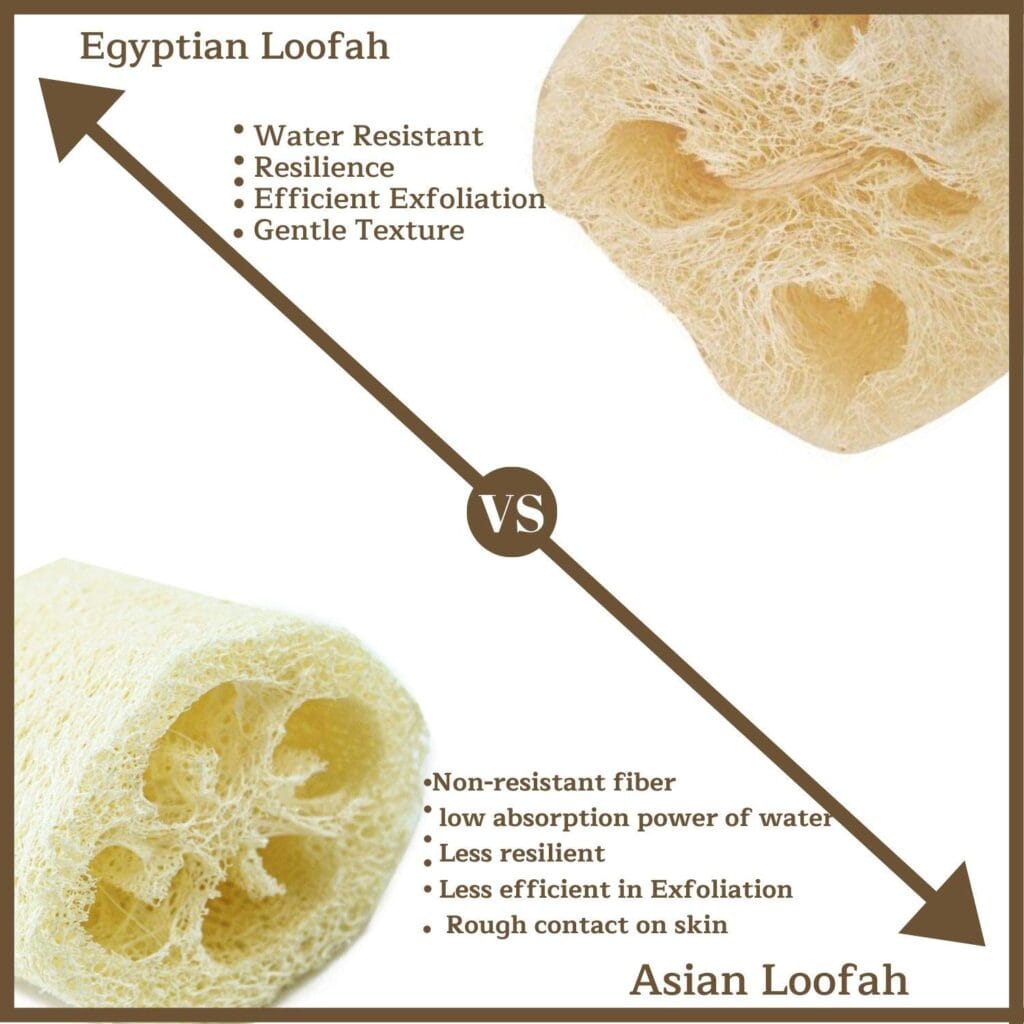
Visual Guide to Help You Choose the Right Natural Sponge
Egyptian Loofah
Asian Loofah
Winner: Egyptian Loofah
Superior Quality, Durability, and Value for Both Consumers and Wholesale Buyers
Source Premium Egyptian Loofah from EGEXO
ISO Certified, Direct Farm to Export, Ships Worldwide
What is a Loofah Sponge and Why Does Origin Matter?
A loofah sponge, also spelled luffa or loofa, is not actually a sea sponge but rather a natural exfoliating tool made from the dried fibrous skeleton of the luffa gourd plant. This plant belongs to the cucumber family and grows as a vine that produces elongated cylindrical fruits. When the fruit matures and dries, the outer skin is removed to reveal the fibrous network inside, which becomes the natural loofah sponge we use for bathing, cleaning, and exfoliation.
The origin of a loofah directly impacts its quality, texture, fiber structure, and durability. Just as wine quality varies by region, loofah quality depends heavily on climate conditions, soil composition, water sources, and cultivation expertise. Egyptian loofahs benefit from the unique growing conditions of the Nile Delta region, where warm temperatures, mineral-rich soil, and controlled irrigation create ideal conditions for producing premium-grade natural sponges.
Understanding where your loofah comes from is not just about geography. It is about ensuring you receive a product that delivers consistent quality, meets international standards, and provides real value whether you are buying for personal use or stocking inventory for retail distribution. For additional information about loofah cultivation and varieties, resources like Loofah Guide provide comprehensive botanical background.
Egyptian Loofah: The Premium Choice for Quality and Durability
Egyptian loofahs have earned their reputation as the gold standard in natural exfoliating sponges. Cultivated primarily in the fertile Nile Delta region, these loofahs benefit from centuries of agricultural expertise combined with ideal growing conditions that cannot be replicated elsewhere.
Superior Fiber Structure and Texture
Egyptian loofahs feature a distinctive long, loose weave that creates a soft yet effective exfoliating surface. This fiber structure results from slower, more controlled growth cycles in Egypt’s warm and dry climate. The extended maturation period allows the loofah gourd to develop stronger, more resilient fibers that maintain their integrity even with regular use.
The texture of Egyptian loofah strikes the perfect balance between gentle exfoliation and effective cleansing. It is soft enough for sensitive skin but structured enough to remove dead skin cells, promote circulation, and leave skin feeling refreshed without irritation. This makes Egyptian loofah suitable for face, body, and even delicate areas where harsh scrubbing would cause damage.
Exceptional Durability and Longevity
One of the most significant advantages of Egyptian loofah over Asian alternatives is durability. A high-quality Egyptian loofah can last three to six months with proper care, compared to just four to eight weeks for typical Asian loofahs. This extended lifespan translates to better value for consumers and lower replacement costs for businesses.
The durability stems from the dense yet flexible fiber composition. Egyptian loofahs resist breaking down, tearing, or becoming mushy even with daily use and repeated wet-dry cycles. For wholesale buyers and retailers, this durability means fewer customer complaints and higher satisfaction rates.
Sustainable Cultivation Practices
Egyptian loofah farming follows traditional and sustainable agricultural methods that have been refined over generations. Farmers in the Nile Delta region use natural irrigation from the Nile River, minimal chemical inputs, and crop rotation practices that maintain soil health. This approach produces loofahs that are truly natural, biodegradable, and environmentally responsible.
For businesses targeting eco-conscious consumers in 2025, Egyptian loofahs offer a compelling sustainability story. Learn more about EGEXO’s farm to export process and how traditional cultivation methods produce superior quality. They are completely plastic-free, compostable at end of life, and produced using methods that support local farming communities while minimizing environmental impact.
Ideal Applications for Egyptian Loofah
Egyptian loofahs excel in multiple applications including bath and body exfoliation, facial cleansing when cut into smaller pieces, spa treatments, massage therapy, kitchen cleaning for delicate surfaces, and pet grooming for gentle coat care. Explore our complete range of bath and body loofahs and kitchen loofah products. Their versatility makes them an excellent choice for businesses looking to serve multiple market segments with a single premium product.
Asian Loofah: Understanding the Alternative Option
Asian loofahs, primarily grown in countries like China, Vietnam, and Thailand, represent a more budget-friendly option in the natural sponge market. These loofahs are cultivated in humid tropical and subtropical climates that produce faster-growing plants with different fiber characteristics.
Fiber Characteristics and Texture
Asian loofahs typically feature a shorter, tighter weave that creates a coarser, more abrasive texture. This structure results from the rapid growth cycles common in humid climates where the loofah gourd matures quickly. The faster maturation leaves less time for fiber development, resulting in a denser but less flexible structure.
The coarser texture of Asian loofah makes it more suitable for deep exfoliation needs, particularly for individuals with oily or acne-prone skin who want more aggressive scrubbing action. However, this same characteristic can be too harsh for sensitive skin, facial use, or daily exfoliation routines.
Durability and Lifespan Considerations
Asian loofahs generally have a shorter usable lifespan than their Egyptian counterparts. The tighter weave and less flexible fibers tend to break down more quickly with regular use, often showing signs of deterioration within four to eight weeks. The sponge may start to tear, develop holes, or lose its structural integrity more rapidly.
For personal consumers, this means more frequent replacements. For businesses, it can translate to higher customer service inquiries and potential dissatisfaction if customers expect longer-lasting performance. However, the lower price point of Asian loofahs can offset this concern for budget-conscious buyers.
Price Point and Market Position
The primary advantage of Asian loofahs is their affordability. They are generally 30 to 50 percent less expensive than Egyptian loofahs, making them accessible to price-sensitive markets and budget retail channels. For businesses operating on thin margins or targeting value-focused consumers, Asian loofahs can provide an entry-level natural sponge option.
However, when calculating true value, the shorter lifespan must be factored into the total cost of ownership. A less expensive loofah that needs replacement twice as often may not deliver actual savings compared to a premium option with extended durability.
Egyptian vs Asian Loofah: Complete Comparison Table
To help you make an informed decision, here is a detailed comparison of Egyptian and Asian loofahs across all critical factors:
Origin and Cultivation
Egyptian Loofah: Cultivated in Egypt’s Nile Delta region with warm, dry climate and mineral-rich soil. Benefits from centuries of agricultural expertise and sustainable farming practices.
Asian Loofah: Grown across various Asian countries including China, Vietnam, and Thailand in humid, tropical climates with faster growth cycles.
Fiber Structure
Egyptian Loofah: Long, loose weave with flexible, well-developed fibers. Extended maturation period creates superior fiber quality.
Asian Loofah: Short, tight weave with denser fiber structure. Rapid growth produces less flexible fibers.
Texture and Feel
Egyptian Loofah: Soft, gentle texture ideal for daily use and sensitive skin. Effective exfoliation without harshness.
Asian Loofah: Coarse, abrasive texture suitable for deep exfoliation and oily skin. Can be too harsh for sensitive areas.
Durability and Lifespan
Egyptian Loofah: Highly durable, lasting 3 to 6 months with proper care. Maintains structural integrity throughout lifespan.
Asian Loofah: Less durable, typically lasting 4 to 8 weeks. More prone to tearing and breakdown with regular use.
Skin Type Compatibility
Egyptian Loofah: Suitable for all skin types including sensitive, dry, normal, combination, and mature skin. Gentle enough for facial use.
Asian Loofah: Best for normal to oily skin types. May be too abrasive for sensitive or dry skin conditions.
Price Point
Egyptian Loofah: Premium pricing reflecting superior quality. Higher upfront cost but better long-term value.
Asian Loofah: Budget-friendly pricing. Lower initial investment but requires more frequent replacement.
Sustainability
Egyptian Loofah: Sustainable cultivation using traditional methods, natural irrigation, and minimal chemical inputs. Fully biodegradable.
Asian Loofah: Variable sustainability depending on specific farm practices. Generally biodegradable but may involve more intensive farming methods.
Best Use Cases
Egyptian Loofah: Daily body exfoliation, facial cleansing, spa treatments, sensitive skin care, premium retail markets, gift sets, luxury bath products.
Asian Loofah: Deep exfoliation, oily skin management, budget retail channels, high-turnover commercial settings, rough cleaning tasks.
Quality Consistency
Egyptian Loofah: High consistency due to established quality standards and experienced suppliers. Premium suppliers like EGEXO maintain strict quality control.
Asian Loofah: Variable quality depending on source and supplier. Wide range from low-grade to acceptable quality products.
Market Positioning
Egyptian Loofah: Premium, luxury, and quality-focused market segments. Preferred by high-end retailers and eco-conscious brands.
Asian Loofah: Budget, value, and mass-market segments. Common in discount retailers and price-competitive channels.
How to Choose Between Egyptian vs Asian Loofah: Decision Framework
Selecting the right loofah type depends on several factors including your skin type, usage frequency, budget considerations, quality expectations, and if you are a business buyer, your target market positioning.
For Sensitive or Dry Skin
If you have sensitive skin, dry skin, eczema-prone skin, or any condition that causes irritation, Egyptian loofah is the clear choice. The soft, gentle texture provides effective exfoliation without causing micro-tears, redness, or inflammation. The long, loose weave allows for controlled pressure, letting you adjust the intensity based on your comfort level.
For Oily or Acne-Prone Skin
Those with oily skin or acne concerns may find Asian loofah’s coarser texture helpful for deep pore cleansing and removing excess sebum. However, Egyptian loofah can also serve these skin types effectively with slightly firmer pressure during use. The advantage of Egyptian loofah is versatility, as it can be used gently or more vigorously depending on need without risking skin damage.
For Daily Use and Long-Term Value
When considering daily or frequent use, Egyptian loofah delivers superior value despite the higher initial cost. The extended lifespan means fewer replacements, less waste, and consistent performance over months rather than weeks. For consumers who exfoliate regularly as part of their skincare routine, the investment in Egyptian loofah pays off quickly.
For Budget-Conscious Buyers
If immediate cost is the primary concern and quality is less critical, Asian loofah offers an accessible entry point into natural exfoliation. However, consider that buying two or three Asian loofahs to equal the lifespan of one Egyptian loofah may actually cost more in the long run while creating more waste.
For Business and Wholesale Buyers
Retailers, distributors, and wholesalers must consider their target market and brand positioning when choosing between Egyptian vs Asian loofah. If you serve premium, eco-conscious, or quality-focused customers, Egyptian loofah aligns with their expectations and reduces return rates. The higher perceived value supports better profit margins and brand reputation.
For businesses targeting budget-conscious consumers or operating in highly price-competitive markets, Asian loofah can provide adequate quality at a price point that moves volume. However, be prepared for potentially higher customer service demands and replacement requests.
Considering wholesale Egyptian loofah for your business? Request free samples from EGEXO to experience the quality difference firsthand before placing your first order.
The EGEXO Advantage: Why Source Egyptian Loofah from a Trusted Supplier
Not all Egyptian loofahs are created equal. The quality, consistency, and reliability of your loofah supply depend heavily on your supplier’s expertise, quality control processes, and commitment to excellence. EGEXO stands out as a premium Egyptian natural loofah wholesale supplier with over 10 years of experience in cultivation, manufacturing, and international export.
Direct Farm to Export Control
EGEXO maintains complete control over the entire supply chain from cultivation in carefully selected Nile Delta farms through processing, quality inspection, custom packaging, and international shipping. Discover why businesses choose EGEXO and our commitment to loofah quality standards. This vertical integration ensures consistent quality, eliminates middlemen markups, and provides traceability that meets international standards.
ISO Certified Quality Standards
Quality control is not just a buzzword at EGEXO. The company operates under ISO certified processes that govern every stage of production. Each loofah batch undergoes rigorous inspection for fiber quality, structural integrity, cleanliness, and appearance before being approved for export. This commitment to quality means wholesale buyers receive products that meet or exceed their specifications every time.
Flexible Wholesale Solutions
Whether you need 100 pieces for a boutique retail launch or 10,000 units for national distribution, EGEXO accommodates orders of all sizes without imposing restrictive minimum order quantities. This flexibility makes it possible for businesses at any stage to access premium Egyptian loofah without overcommitting capital to inventory.
Custom Packaging and Private Label Services
EGEXO offers comprehensive private label loofah manufacturing and custom loofah product design services that allow retailers and brands to create unique product offerings. From custom packaging design to specific size cuts, shapes, and bundle configurations, EGEXO transforms generic loofah into branded products that stand out on retail shelves.
Global Export Expertise
With extensive experience shipping to the USA, Canada, Brazil, Australia, New Zealand, and throughout the European Union, EGEXO understands international logistics, customs requirements, and documentation needs. The company handles all export complexities, ensuring your loofah shipment arrives on time, properly documented, and in perfect condition.
Sustainability and Social Responsibility
EGEXO’s commitment extends beyond product quality to environmental stewardship and community support. The company works directly with Egyptian farmers using sustainable cultivation methods, provides fair compensation that supports rural communities, and promotes biodegradable alternatives to synthetic sponges. For businesses building sustainable brands in 2025, EGEXO provides both premium products and a compelling sustainability story.
Ready to partner with Egypt’s leading natural loofah supplier? Download our complete wholesale product catalog featuring sizes, formats, and pricing tiers for retailers and distributors worldwide.
Practical Tips for Choosing and Using Your Loofah
Regardless of which loofah type you choose, following these best practices ensures optimal performance, hygiene, and longevity.
Selecting the Right Size and Shape
Loofahs come in various sizes from small facial rounds to large body sponges. Consider your primary use case when selecting size. Full-size body loofahs typically measure 4 to 6 inches in diameter and 10 to 12 inches in length, providing comfortable grip and coverage. Smaller cut pieces work well for targeted exfoliation or facial use. For kitchen and household cleaning, flat or rectangular cuts offer better control and surface contact.
Preparing Your New Loofah
Before first use, soak your new loofah in warm water for 5 to 10 minutes. This softens the fibers and removes any dust or debris from processing and shipping. Squeeze out excess water and your loofah is ready for use. This initial soaking also helps you gauge the texture and adjust your expectations for the exfoliation experience.
Proper Usage Techniques
Use your loofah with your preferred soap, body wash, or natural cleanser. Wet the loofah thoroughly, apply cleanser, and use gentle circular motions across your skin. Avoid excessive pressure or aggressive scrubbing, which can cause irritation even with gentle Egyptian loofah. Pay special attention to rough areas like elbows, knees, and heels where dead skin accumulates.
For facial use, select a softer section of the loofah or use a specifically cut facial round. Use even gentler pressure on facial skin and avoid the delicate eye area entirely.
Essential Care and Maintenance
After each use, rinse your loofah thoroughly under running water to remove all soap residue, dead skin cells, and debris. Squeeze out excess water and hang the loofah in a well-ventilated area where it can dry completely between uses. Avoid leaving loofahs in standing water or enclosed shower caddies where moisture promotes bacterial growth.
Once weekly, deep clean your loofah by soaking it in a solution of equal parts water and white vinegar for 5 minutes, then rinsing thoroughly. This sanitizes the sponge and extends its usable life. Some users also microwave damp loofahs for 30 seconds as an alternative sanitization method, though air drying and regular replacement remain the most important hygiene practices.
Knowing When to Replace
Even the highest quality Egyptian loofah eventually needs replacement. Signs that it is time for a new loofah include visible tears or holes in the fiber structure, persistent musty odor even after cleaning, discoloration that does not wash away, or loss of texture and structure. As a general rule, replace loofahs every 3 to 4 months with regular use, or sooner if any hygiene concerns arise.
Environmental and Sustainability Considerations in 2025
The global shift toward sustainable products has made natural loofahs more relevant than ever. As consumers and businesses alike prioritize environmental responsibility, understanding the sustainability profile of Egyptian vs Asian loofah becomes increasingly important.
The Plastic Problem in Bath Products
Synthetic bath sponges, typically made from plastic-based polyurethane foam, contribute significantly to plastic pollution. These products shed microplastics with each use, do not biodegrade, and eventually end up in landfills or oceans where they persist for hundreds of years. An estimated 5 billion synthetic sponges are sold globally each year, representing a massive environmental burden.
Natural loofahs offer a truly sustainable alternative. They are 100 percent plant-based, require no plastic in their production, biodegrade completely at end of life, and can even be composted to return nutrients to the soil. For businesses responding to consumer demand for eco-friendly products, natural loofah represents a genuine solution rather than greenwashing.
Comparing the Sustainability of Egyptian vs Asian Loofah
While both Egyptian and Asian loofahs are natural products, their sustainability profiles differ based on cultivation methods and agricultural practices. Egyptian loofah farming typically employs traditional, low-impact methods that have been refined over centuries. The use of Nile River irrigation, crop rotation, minimal chemical inputs, and integration with other agricultural activities creates a relatively low environmental footprint.
Asian loofah cultivation varies more widely depending on the specific country and farm. Some operations follow similar sustainable practices, while others may employ more intensive farming methods including higher chemical use, monoculture farming, or practices that degrade soil health over time. For businesses making specific sustainability claims, sourcing from suppliers with verified sustainable practices becomes essential.
The Carbon Footprint Question
Transportation distance affects the carbon footprint of any imported product. Asian loofahs may travel shorter distances to some markets, particularly in Asia and the Pacific region, while Egyptian loofahs have an advantage for European and Middle Eastern markets. For North American markets, the difference is relatively minimal as both origins require similar international shipping routes.
However, the longer lifespan of Egyptian loofah means fewer replacements over time, which reduces the total number of units produced, shipped, and eventually disposed of. When calculating the true environmental impact, durability matters as much as transportation distance.
Market Trends and Opportunities in the Natural Loofah Industry
The natural loofah market is experiencing significant growth as consumer preferences shift toward sustainable, plastic-free, and natural products. Understanding these trends helps both individual buyers and businesses make informed decisions.
Growing Demand for Natural Bath Products
Market research indicates the global natural and organic personal care market is growing at approximately 9 to 12 percent annually, significantly outpacing conventional products. Industry data from wholesale loofah market analysis confirms the accelerating shift toward natural bath products across all demographic segments. Within this segment, bath and body accessories made from natural materials are seeing particularly strong growth. Consumers increasingly view their purchasing decisions as environmental statements, driving demand for products like natural loofahs that offer both functionality and sustainability.
Retail and E-commerce Opportunities
The natural loofah market spans multiple retail channels including health and beauty stores, eco-friendly boutiques, spa and wellness centers, online marketplaces, subscription box services, hotel and hospitality suppliers, and pet supply stores. This diversity creates opportunities for businesses of all sizes to enter the market with differentiated positioning.
E-commerce has particularly expanded access to premium natural products. Small retailers can now source directly from manufacturers like EGEXO and compete effectively with larger players by emphasizing quality, sustainability stories, and customer education.
Premium Positioning and Profit Margins
Egyptian loofah’s superior quality supports premium pricing strategies that deliver better profit margins than commodity bath products. Retailers typically mark up Egyptian loofah 100 to 200 percent from wholesale cost, with some specialty and spa retailers achieving even higher margins through bundling, gift sets, and value-added packaging.
The key to successful premium positioning is customer education. When shoppers understand the difference between Egyptian and Asian loofah, and between natural and synthetic options, they readily pay more for superior quality and environmental benefits.
Private Label and Brand Development
The private label opportunity in natural loofahs is substantial. Many successful bath and body brands have built entire product lines around natural exfoliation and sustainable skincare, with loofahs serving as core offerings. Working with a supplier like EGEXO that provides custom packaging and product design services makes it possible to create distinctive branded products without the capital investment of building manufacturing capabilities.
Frequently Asked Questions About Egyptian vs Asian Loofah
What is the main difference between Egyptian and Asian loofah?
The main difference between Egyptian and Asian loofah lies in fiber structure, texture, and durability. Egyptian loofahs feature a long, loose weave with soft, gentle texture that lasts 3 to 6 months. Asian loofahs have a shorter, tighter weave with coarser texture that typically lasts 4 to 8 weeks. Egyptian loofahs are grown in warm, dry climates that produce superior fiber quality, while Asian loofahs come from humid tropical regions with faster growth cycles.
Which loofah is better for sensitive skin?
Egyptian loofah is significantly better for sensitive skin due to its soft, gentle texture and flexible fiber structure. The long, loose weave provides effective exfoliation without causing irritation, redness, or micro-tears that can occur with coarser Asian loofahs. Egyptian loofah is also suitable for facial use and delicate skin areas where harsh scrubbing would cause damage.
Is Egyptian loofah worth the higher price?
Yes, Egyptian loofah delivers better value despite higher upfront cost. The superior durability means one Egyptian loofah lasts as long as two or three Asian loofahs, making the total cost of ownership actually lower. Additionally, the better texture, consistent quality, and reduced need for replacements provide a superior user experience that justifies the premium price for both consumers and businesses.
How long does an Egyptian loofah last compared to an Asian loofah?
With proper care, Egyptian loofah typically lasts 3 to 6 months of regular use, while Asian loofah generally lasts 4 to 8 weeks. The difference stems from Egyptian loofah’s superior fiber development and structural integrity. This extended lifespan makes Egyptian loofah more economical over time and creates less waste, which is important for environmentally conscious consumers.
Can I use Egyptian loofah for kitchen cleaning?
Yes, Egyptian loofah works excellently for kitchen cleaning tasks. The natural fibers are safe for non-stick cookware, delicate surfaces, and everyday dishwashing without scratching. Many commercial kitchen supply companies now offer natural loofah products specifically for foodservice applications. Egyptian loofah is particularly effective for vegetable scrubbing, gentle pot cleaning, and countertop maintenance.
Where can I buy authentic Egyptian loofah in bulk?
EGEXO is a leading Egyptian natural loofah wholesale supplier that ships internationally to the USA, Canada, Brazil, Australia, New Zealand, and throughout Europe. The company offers direct farm-to-export supply, ISO certified quality standards, custom packaging options, and flexible order quantities for retailers, distributors, and wholesalers. You can request a quote or order samples directly through their website to evaluate quality before placing large orders.
Are natural loofahs more sustainable than synthetic sponges?
Natural loofahs are dramatically more sustainable than synthetic sponges made from plastic-based materials. Natural loofahs are 100 percent biodegradable, compostable, plastic-free, and produced using renewable agricultural resources. Synthetic sponges shed microplastics, do not biodegrade, and contribute to long-term pollution. For businesses and consumers prioritizing environmental responsibility in 2025, natural loofah represents a genuine sustainable alternative.
Key Takeaways: Making the Right Choice Between Egyptian vs Asian Loofah
Egyptian loofah offers superior quality, durability, and versatility making it the best choice for most users and businesses. The soft, gentle texture works for all skin types including sensitive skin while lasting 3 to 6 months. Though priced higher initially, the extended lifespan provides better long-term value.
Asian loofah serves budget-conscious buyers who need basic exfoliation and can accept shorter product lifespan. The coarser texture suits oily skin and deep exfoliation needs but may be too harsh for sensitive skin or daily use.
For wholesale buyers and retailers, Egyptian loofah supports premium positioning, higher profit margins, and better customer satisfaction. Partnering with a reliable supplier like EGEXO ensures consistent quality, international shipping expertise, and custom packaging options.
Natural loofah of either origin represents a sustainable alternative to plastic sponges, supporting environmental goals while meeting consumer demand for eco-friendly products. The choice between Egyptian and Asian depends on quality standards, target market, and long-term value priorities.
Start Your Natural Loofah Journey with EGEXO
Whether you are a consumer seeking the best natural sponge for your personal care routine, a retailer looking to add premium bath products to your inventory, or a distributor building a sustainable product line, EGEXO provides the quality, expertise, and service to support your success.
As Egypt’s premier natural loofah wholesale supplier with over 10 years of experience, EGEXO combines traditional cultivation methods with modern quality standards and international export capabilities. Every loofah is carefully selected, processed, and inspected to ensure you receive products that meet the highest standards.
Ready to experience the Egyptian loofah difference?
- Request free samples to evaluate quality firsthand
- Download the complete product catalog to explore the full range of sizes and formats
- Schedule a consultation to discuss custom packaging and private label options
- Request a wholesale quote tailored to your specific needs
Start Your Journey with EGEXO Today
Join hundreds of successful retailers, distributors, and wholesalers worldwide who trust EGEXO for premium Egyptian natural loofah. Experience the difference that quality, expertise, and dedicated service make.
Free Samples
Evaluate our premium quality firsthand before placing your order
Product Catalog
Browse our complete range of sizes, formats, and custom options
Expert Consultation
Discuss your needs with our loofah specialists
Wholesale Pricing
Get competitive quotes with no hidden fees or restrictive minimums