

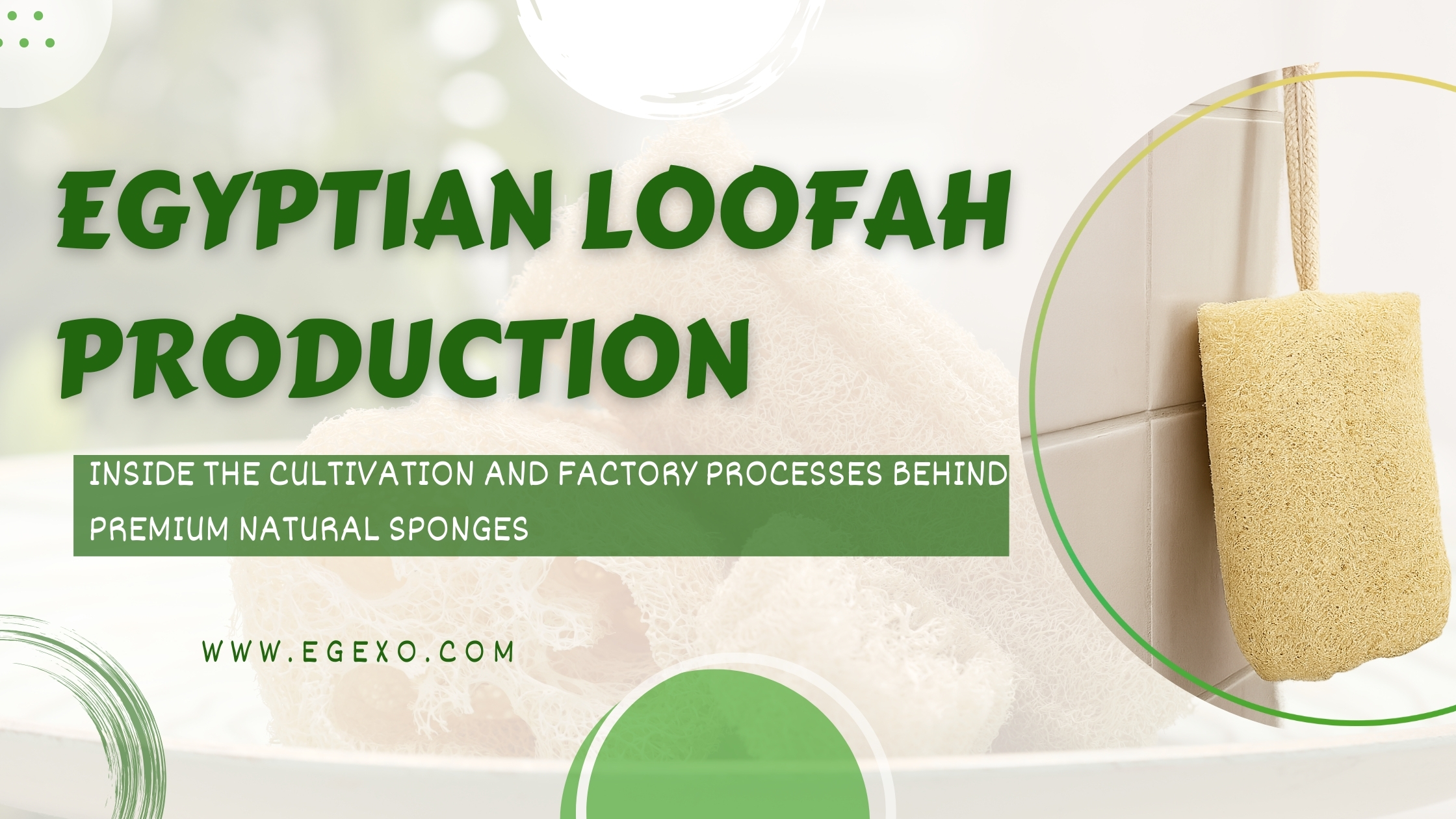
Egyptian Loofah Production: Inside the Cultivation and Factory Processes Behind Premium Natural Sponges
Egypt produces over 60 percent of the global natural loofah supply, making Egyptian loofah production the gold standard for wholesale buyers and quality-conscious consumers worldwide. The Nile Delta region offers an unmatched combination of mineral-rich alluvial soil, consistent sunshine, and traditional cultivation expertise that has been refined across generations. Whether you operate a spa chain seeking reliable bulk suppliers or you simply want the best natural exfoliation for your bathroom, understanding how Egyptian-grown loofahs achieve their exceptional water-holding capacity reveals why discerning buyers consistently choose products from this North African nation.
Egyptian loofah production combines agricultural science with manufacturing precision. The Luffa aegyptiaca plant thrives in conditions found almost nowhere else on Earth with such consistency. Factories in regions like Fayoum, Minya, and Qena process millions of gourds annually, transforming raw agricultural output into bath accessories, kitchen scrubbers, and specialty spa products. Egexo has spent over 25 years perfecting this farm to export process, developing relationships with farming cooperatives and investing in processing technology that maintains fiber integrity from harvest to shipment.
This comprehensive guide covers the complete journey of Egyptian loofah production. You will learn what makes Egyptian soil uniquely suited for loofah cultivation, how large-scale factories operate, what quality grades exist, and how to evaluate suppliers effectively. Consumers will discover why Egyptian loofahs outperform alternatives and how to select products that deliver genuine benefits. Wholesale buyers will find specifications, quality benchmarks, and sourcing strategies that protect their investments.
Why Egyptian Soil Creates Superior Loofah Fiber Quality
The Nile River has deposited nutrient-dense sediment across Egyptian agricultural regions for thousands of years. This geological gift creates growing conditions that directly influence loofah fiber density, water retention capacity, and overall durability. Egyptian loofah production benefits from soil containing elevated levels of potassium, phosphorus, and trace minerals that plants absorb during their four to six month growing cycle.
The Science Behind Water-Holding Capacity
Loofah fiber structure determines water-holding capacity. Egyptian-grown gourds develop thicker cell walls and more uniform vascular networks compared to loofahs cultivated in other regions. Laboratory testing reveals that premium Egyptian loofahs retain 15 to 20 percent more water than comparable Chinese or Indian products. This increased retention translates directly into better lathering performance for bath applications and extended moisture release for agricultural and industrial uses.
The fiber density in Egyptian loofahs averages 0.28 grams per cubic centimeter, compared to 0.21 grams in most Asian-grown alternatives. Higher density means more scrubbing surface area contacts skin during each use, improving exfoliation effectiveness without requiring aggressive pressure. For wholesale buyers sourcing body loofah products, this performance advantage justifies premium positioning and supports higher retail margins.
Climate Advantages in the Nile Delta
Egyptian growing regions experience 300 or more sunny days annually with minimal humidity fluctuation. Loofah plants require consistent conditions to develop uniform fiber patterns. Sudden weather changes cause cellular irregularities that weaken finished products. The predictable Egyptian climate produces harvest after harvest of consistent quality, reducing rejection rates for wholesale buyers and ensuring consumers receive reliable products.
Temperature ranges between 25 and 35 degrees Celsius during the primary growing season optimize photosynthesis and fiber development. Egyptian farmers have adapted traditional cultivation methods to maximize these natural advantages, spacing plants for optimal airflow and timing irrigation to prevent stress during critical growth phases.
Key Insight: Egyptian loofah fiber achieves 15 to 20 percent greater water retention than competing origins due to mineral-rich Nile soil and optimal growing conditions.
Inside Egyptian Loofah Factory Operations
Large-scale Egyptian loofah factories process between 50,000 and 500,000 gourds monthly during peak season. These facilities combine mechanized efficiency with hand-finishing techniques that preserve fiber quality. Understanding factory operations helps wholesale buyers evaluate suppliers and shows consumers the craftsmanship behind their products.
Harvest Collection and Initial Processing
Factory operations begin at agricultural collection points where farmers deliver freshly harvested gourds. Quality inspectors examine each delivery, rejecting gourds with mold, pest damage, or insufficient maturity. Accepted gourds enter a retting process where controlled moisture exposure softens outer shells for removal.
Traditional retting uses water immersion for 7 to 14 days, while modern facilities employ enzymatic treatments that reduce processing time to 3 to 5 days without compromising fiber integrity. After shell removal, raw loofahs undergo seed extraction and initial cleaning. This stage determines whether gourds become whole sponges, cut pieces, or raw material for custom product manufacturing.
Cleaning, Bleaching, and Quality Grading
Cleaned loofahs require treatment to achieve the light coloration consumers expect. Natural loofahs range from tan to dark brown depending on growing conditions. Most commercial applications require hydrogen peroxide bleaching that lightens fibers to cream or white tones without chemical residues that could irritate skin.
Quality grading occurs after bleaching when fiber characteristics become fully visible. Inspectors evaluate density, uniformity, flexibility, and structural integrity. Egexo maintains rigorous quality standards that exceed industry norms, ensuring wholesale buyers receive products matching specified grades consistently.
Loofah Quality Grade Specifications
| Grade | Fiber Density | Uniformity | Color Consistency | Typical Applications | Wholesale MOQ |
|---|---|---|---|---|---|
| Premium A | 0.30+ g/cm3 | 95%+ uniform | No visible variation | Luxury spas, premium retail | 500 units |
| Standard B | 0.26-0.29 g/cm3 | 85-94% uniform | Minor variation acceptable | General retail, hospitality | 1,000 units |
| Economy C | 0.22-0.25 g/cm3 | 75-84% uniform | Moderate variation | Bulk industrial, promotional | 2,500 units |
| Industrial D | Below 0.22 g/cm3 | Below 75% uniform | Variable | Manufacturing raw material | 5,000 units |
The Complete Egyptian Loofah Production Process
Understanding the full production timeline helps buyers plan inventory and shows consumers the effort behind quality natural sponges. Egyptian loofah production follows seasonal patterns aligned with agricultural cycles.
Stage-by-Stage Manufacturing Timeline
| Stage | Duration | Key Activities | Quality Checkpoints |
|---|---|---|---|
| Planting | February to March | Seed selection, soil preparation, initial irrigation | Seed germination rate above 85% |
| Growing | April to August | Vine training, pest management, nutrient supplementation | Leaf health, flower production |
| Harvesting | September to November | Mature gourd collection, field sorting | Size uniformity, shell integrity |
| Retting | 3 to 14 days | Shell softening, outer layer removal | Fiber preservation, no over-retting |
| Cleaning | 1 to 3 days | Seed removal, debris extraction, initial washing | Complete seed removal, no damage |
| Bleaching | 12 to 48 hours | Hydrogen peroxide treatment, color standardization | Even coloration, no chemical residue |
| Grading | Same day | Quality assessment, size sorting, defect removal | Grade accuracy, documentation |
| Finishing | 1 to 5 days | Cutting, shaping, accessory attachment, packaging | Dimensional accuracy, presentation |
| Export Prep | 2 to 7 days | Container loading, documentation, customs clearance | Moisture content below 12% |
Capacity Planning for Wholesale Buyers
Egyptian factories operate at maximum capacity from October through January when harvest processing peaks. Buyers seeking specific grades or custom specifications should place orders 8 to 12 weeks before required delivery dates during this period. Off-season orders from February through August benefit from shorter lead times and potential volume discounts as factories maintain steady production using stored inventory.
Egexo coordinates with multiple factory partners to ensure consistent supply regardless of season. Our wholesale quotation process accounts for current inventory positions and production schedules, providing accurate lead time estimates with every quote.
Production Insight: Peak season orders require 8 to 12 weeks lead time, while off-season orders typically ship within 4 to 6 weeks.
Water-Holding Capacity: The Technical Advantage
Water-holding capacity distinguishes premium Egyptian loofahs from commodity alternatives. This characteristic affects performance across applications from personal bathing to industrial cleaning.
Measuring and Comparing Absorption Performance
Laboratory testing measures water-holding capacity by weighing dry loofahs, saturating them completely, allowing excess water to drain for 60 seconds, then weighing again. The percentage increase represents absorption capacity. Premium Egyptian loofahs consistently achieve 900 to 1,100 percent absorption rates, meaning a 50 gram dry loofah holds 450 to 550 grams of water.
Absorption Comparison by Origin
| Origin | Average Absorption Rate | Fiber Density | Lather Production | Durability Rating |
|---|---|---|---|---|
| Egyptian Premium | 1,000-1,100% | 0.28-0.32 g/cm3 | Excellent | 8-12 months |
| Egyptian Standard | 850-950% | 0.24-0.27 g/cm3 | Very Good | 6-9 months |
| Chinese Commercial | 650-750% | 0.18-0.22 g/cm3 | Moderate | 3-5 months |
| Indian Budget | 550-650% | 0.15-0.19 g/cm3 | Fair | 2-4 months |
| Synthetic Alternative | 400-500% | N/A | Variable | 1-3 months |
Why Absorption Matters for Different Users
For consumers, higher water retention means soap and body wash products last longer because loofahs distribute them more efficiently. A premium Egyptian loofah requires 30 to 40 percent less product per use compared to low-quality alternatives. Over a typical product lifespan, this efficiency saves money despite the higher initial purchase price.
Wholesale buyers serving spa and hospitality clients benefit from absorption advantages differently. Luxury spas report that clients perceive higher quality during treatments using premium Egyptian loofahs. This perception supports premium service pricing and improves customer satisfaction scores. Hotels find that higher-quality amenity loofahs generate fewer complaints and replacement requests.
Browse the complete Egexo product catalog to compare absorption specifications across our full product range.
Evaluating Egyptian Loofah Suppliers: A Complete Checklist
Selecting reliable suppliers protects business investments and ensures consumers receive authentic products. This evaluation framework applies whether purchasing thousands of units for retail distribution or selecting a single loofah for personal use.
Supplier Evaluation Checklist
| Criteria | What to Verify | Red Flags to Avoid |
|---|---|---|
| Farm Relationships | Direct farmer partnerships, cooperative agreements | Vague sourcing claims, multiple middlemen |
| Quality Certification | ISO compliance, export licenses, health certificates | Missing documentation, expired certifications |
| Production Capacity | Monthly output figures, equipment specifications | Unrealistic volume claims, no facility photos |
| Sample Availability | Free or low-cost samples before bulk orders | Refusal to provide samples, excessive fees |
| Communication | Responsive English support, detailed quotations | Delayed responses, vague pricing |
| Shipping Experience | Container loading expertise, customs familiarity | Limited export history, unclear logistics |
| References | Verifiable client testimonials, repeat customers | No references available, new company |
Questions to Ask Potential Suppliers
Before committing to any Egyptian loofah supplier, request specific information that reveals operational capability. Ask about harvest timing and how raw material freshness is maintained. Inquire about quality control rejection rates, which should range between 5 and 15 percent for reputable operations. Request photos of production facilities and packaging areas.
Egexo welcomes such inquiries because transparency demonstrates commitment to quality. Learn more about why experienced buyers choose Egexo for their Egyptian loofah supply needs.
Product Categories in Egyptian Loofah Production
Egyptian factories produce diverse product types serving different market segments. Understanding category distinctions helps buyers select appropriate products and helps consumers find items matching their specific needs.
Body and Bath Loofah Products
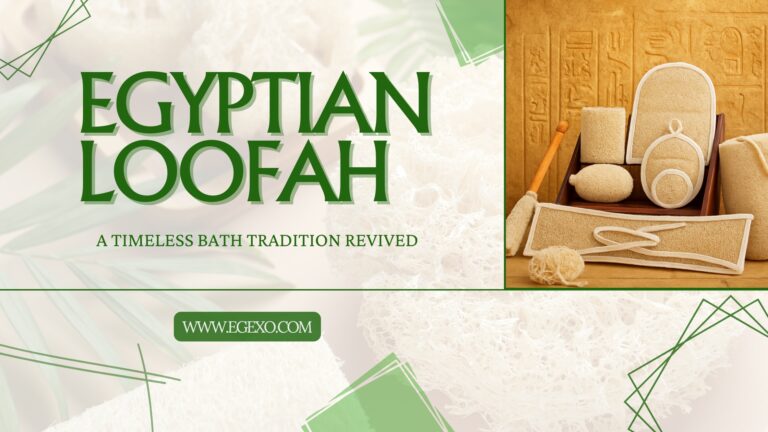
The largest product category serves personal care applications. Whole loofah sponges, cut pieces, back scrubbers, and mounted handles account for approximately 70 percent of Egyptian loofah exports. Premium bath loofahs undergo additional finishing to ensure smooth edges and consistent density throughout.
Spa operators and retailers can explore body loofah options ranging from economy grades suitable for hotel amenities to luxury grades commanding premium retail prices.
Kitchen and Household Cleaning Products
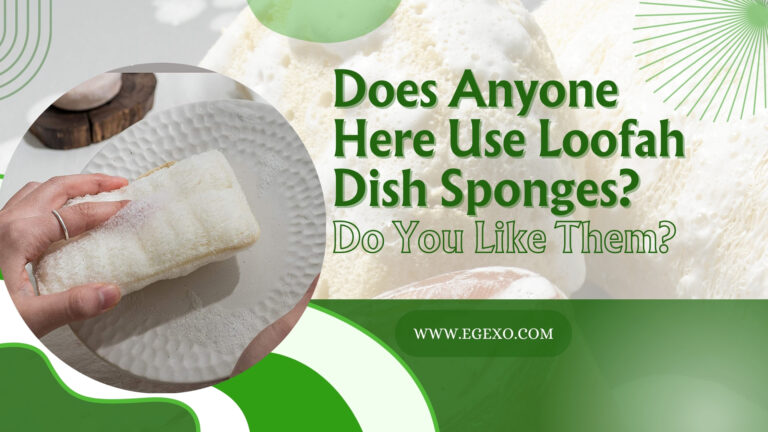
Natural loofah provides excellent performance for dishwashing and surface cleaning without scratching delicate cookware. Egyptian factories produce kitchen-specific products with denser fiber structures that resist breakdown during wet and dry cycling. These products appeal to eco-conscious consumers seeking plastic-free alternatives.
The kitchen loofah category includes dish sponges, pot scrubbers, and multi-purpose cleaning pads in various sizes and densities.
Specialty and Industrial Applications
Beyond consumer products, Egyptian loofah production serves agricultural, industrial, and artistic markets. Raw loofah material becomes seedling planters, acoustic panels, composite materials, and craft supplies. Pet grooming tools represent a growing specialty segment.
Wholesale buyers interested in niche applications should explore raw loofah scrubbers and pet and spa grooming products for differentiated inventory opportunities.
Sustainability and Environmental Benefits
Egyptian loofah production exemplifies sustainable agriculture. The Luffa plant requires minimal chemical inputs, grows using traditional irrigation methods, and produces fully biodegradable products that replace synthetic alternatives with significant environmental footprints.
Environmental Impact Comparison
| Factor | Natural Egyptian Loofah | Synthetic Plastic Sponge |
|---|---|---|
| Production Energy | Low (solar-powered growth) | High (petroleum processing) |
| Chemical Inputs | Minimal fertilizers only | Extensive industrial chemicals |
| Biodegradability | 100% within 30 days | Never (500+ year persistence) |
| Ocean Impact | None | Microplastic contamination |
| Carbon Footprint | Carbon negative (plant absorption) | Carbon positive |
| End of Life | Compostable | Landfill only |
Supporting Rural Egyptian Communities
Loofah cultivation provides income for thousands of Egyptian farming families. Unlike commodity crops requiring expensive equipment and inputs, loofah farming suits smallholder operations using traditional methods. Wholesale buyers supporting Egyptian loofah production contribute to rural economic development while securing quality products.
Egexo maintains direct relationships with farming cooperatives, ensuring fair pricing that supports agricultural communities. This commitment to ethical sourcing appeals to consumers and retailers prioritizing social responsibility alongside product quality.
Private Label and Custom Manufacturing Options
Many wholesale buyers seek branded products that differentiate their offerings. Egyptian loofah production facilities accommodate custom requirements ranging from simple label attachment to completely bespoke product development.
Custom Manufacturing Capabilities
Egexo offers comprehensive private label loofah manufacturing services including custom cutting dimensions, branded packaging, logo attachment, and exclusive product designs. Minimum order quantities for custom work typically start at 1,000 units, with pricing that becomes increasingly competitive at higher volumes.
Businesses developing unique loofah-based products can access custom product design services that transform concepts into market-ready items. Our design team collaborates on shape development, accessory integration, and packaging solutions that meet specific brand requirements.
Expert Insight from Egexo
With over 25 years cultivating and exporting Egyptian loofahs, our team has observed what separates adequate products from exceptional ones. The single most important factor is harvest timing. Loofahs harvested too early lack fiber density, while over-mature gourds become brittle and prone to breakage during processing.
Our agricultural partners use visual indicators and touch testing refined over generations to identify optimal harvest windows. This expertise cannot be replicated by industrial operations focused solely on volume. We encourage wholesale buyers to request samples before committing to large orders because quality differences become immediately apparent when comparing products side by side.
For consumers selecting individual products, fiber resilience indicates quality. Gently compress a dry loofah and observe how quickly it returns to original shape. Premium Egyptian loofahs spring back within seconds. Inferior products remain compressed or recover slowly, indicating weak fiber structure that will deteriorate rapidly during use.
Visit Loofahguide.com for detailed consumer guidance on product selection and care, or explore Wholesaleloofah.com for business-focused resources on building profitable loofah retail operations.
FAQ Section
Q1: What makes Egyptian loofah production different from other countries?
A: Egyptian loofah production benefits from unique Nile Delta soil containing mineral deposits that enhance fiber density and water-holding capacity. Combined with consistent climate conditions and generations of cultivation expertise, Egyptian loofahs achieve 15 to 20 percent greater absorption and significantly longer durability than alternatives from China, India, or other producing regions.
Q2: What minimum order quantities should wholesale buyers expect?
A: Minimum order quantities for Egyptian loofah wholesale typically range from 500 to 2,500 units depending on product type and quality grade. Premium Grade A products often have lower MOQs starting at 500 units, while economy grades require larger orders to maintain cost efficiency. Custom private label orders usually require 1,000 unit minimums.
Q3: How long do Egyptian loofahs last with regular use?
A: Premium Egyptian loofahs last 8 to 12 months with proper care when used daily for bathing purposes. Standard grade products provide 6 to 9 months of service. Longevity depends on allowing complete drying between uses, replacing products when fiber breakdown becomes visible, and following recommended cleaning practices.
Q4: Are Egyptian loofahs safe for sensitive skin?
A: Egyptian loofahs are plant-derived and free from synthetic chemicals when properly processed. However, exfoliation intensity varies by fiber density. Individuals with sensitive skin should select softer standard grades rather than high-density premium products. Patch testing on forearm skin before facial use is recommended for all new loofah products.
Q5: How do factories ensure quality consistency for large orders?
A: Reputable Egyptian loofah factories implement multi-stage quality control including incoming raw material inspection, post-processing grading, and pre-shipment verification. Egexo maintains documented quality standards with specific acceptance criteria for each grade. Buyers can request quality certificates and inspection reports with every shipment.
Q6: What certifications should Egyptian loofah suppliers have?
A: Legitimate exporters should hold valid export licenses from Egyptian authorities, comply with ISO quality management standards, and provide health certificates confirming products meet import requirements for destination countries. Additional certifications like organic or fair trade designations may apply to specific product lines.
Q7: Can Egyptian loofahs be composted after use?
A: Yes, natural Egyptian loofahs are 100 percent biodegradable and compost completely within 30 days under typical composting conditions. Used loofahs can be cut into smaller pieces to accelerate decomposition. This end-of-life advantage makes Egyptian loofahs environmentally superior to synthetic alternatives that persist in landfills indefinitely.
Q8: How should buyers verify Egyptian loofah authenticity?
A: Authentic Egyptian loofahs display characteristic fiber patterns with visible vascular networks running lengthwise. Fiber density should feel substantial when compressed. Request country of origin certificates and verify supplier export documentation. Reputable suppliers like Egexo provide full traceability and welcome facility inspections or virtual tours.
Conclusion
Egyptian loofah production represents the intersection of agricultural tradition, manufacturing excellence, and sustainable practices. The unique growing conditions of the Nile Delta create loofahs with superior water-holding capacity, fiber density, and durability that alternatives simply cannot match. Understanding factory operations, quality grades, and supplier evaluation criteria empowers wholesale buyers to make informed sourcing decisions while helping consumers appreciate the craftsmanship behind their products.
The Egyptian loofah industry continues evolving with improved processing technology and expanded product offerings, but core quality advantages remain rooted in natural advantages no other region can replicate. Whether building inventory for retail distribution or selecting personal care products for your home, Egyptian origin ensures performance that justifies investment.
Key Takeaways:
- Egyptian loofahs achieve 900 to 1,100 percent water absorption rates compared to 550 to 750 percent for alternatives
- Quality grades range from Premium A to Industrial D with specifications for every application
- Large-scale factories process 50,000 to 500,000 gourds monthly with strict quality controls
- Supplier evaluation requires verifying certifications, production capacity, and sample quality
- Natural loofahs provide 100 percent biodegradability versus permanent environmental impact from synthetics
Ready to experience Egyptian loofah quality?
- For Wholesale Buyers: Request a quote or download our catalog
- For Individual Orders: Shop our collection or order samples