

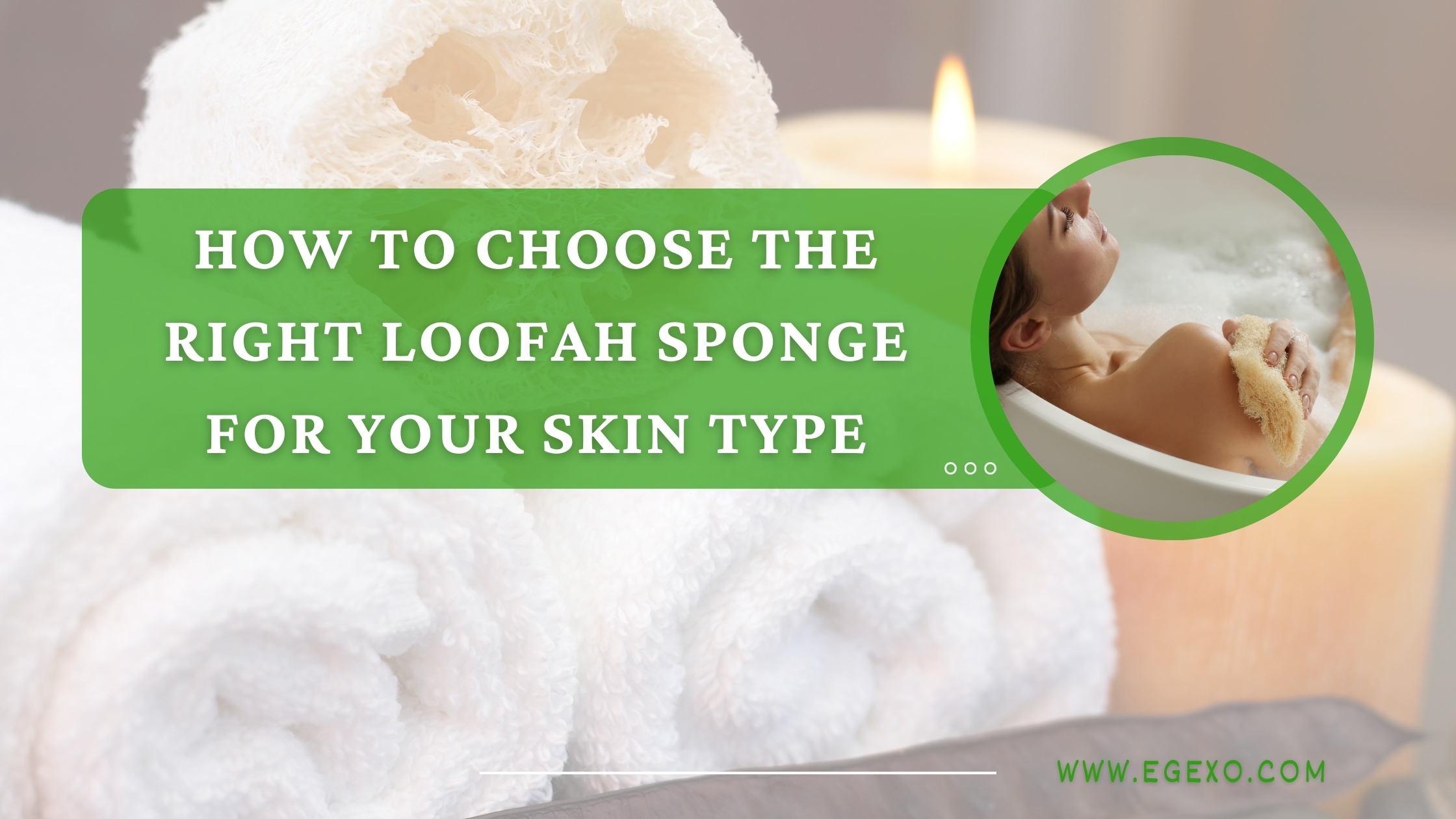
How to Choose the Right Loofah Sponge for Your Skin Type
Selecting the right loofah sponge can transform your daily skincare routine from ordinary to exceptional. With over 68 percent of consumers reporting improved skin texture after switching to a properly matched exfoliating tool, understanding how to choose the right loofah sponge for your specific skin needs has never been more important. Whether you operate a spa seeking premium wholesale loofah supplies or you are an individual searching for the perfect personal care product, this comprehensive guide will help you make an informed decision.
Egyptian loofahs have earned global recognition for their superior fiber quality and gentle yet effective exfoliation properties. At Egexo, our 25 years of loofah cultivation experience has taught us that the connection between skin type and loofah selection determines the difference between achieving radiant skin and experiencing irritation. The natural fibers grown in the Nile Delta region offer unique characteristics that synthetic alternatives simply cannot replicate.
This guide explores everything you need to know about matching loofah types to skin conditions, evaluating quality standards for bulk purchases, understanding the science behind natural exfoliation, and maintaining your loofah for maximum hygiene and longevity. By the end of this article, you will possess the knowledge to select loofahs that deliver results for yourself or your customers.
Understanding Loofah Sponge Fundamentals
Before diving into skin type matching, understanding what makes a quality loofah sponge helps both individual buyers and wholesale purchasers make better decisions. Natural loofah sponges come from the Luffa aegyptiaca plant, a member of the cucumber family cultivated primarily in Egypt, China, and Central America. The fibrous interior of the mature fruit creates the network of natural exfoliating material prized in skincare.
Egyptian loofahs distinguish themselves through their fiber density and texture consistency. The growing conditions along the Nile River produce loofahs with tighter fiber weaves and more uniform texture compared to those grown in other regions. These characteristics directly impact how the loofah interacts with different skin types, making origin an important consideration for quality-conscious buyers.
The structure of natural loofah fibers creates microscopic channels that lift dead skin cells while stimulating blood circulation beneath the surface. This dual action promotes cell turnover and helps skincare products penetrate more effectively. Understanding these mechanisms helps explain why certain loofah textures work better for specific skin conditions.
For wholesale buyers sourcing products for spas, hotels, or retail distribution, fiber quality assessment becomes critical. Premium Egyptian loofahs maintain consistent performance throughout their lifespan, which typically ranges from three to four weeks with proper care. This reliability matters when your business reputation depends on customer satisfaction.
Skin Type Analysis and Loofah Matching
Sensitive Skin Requirements
Sensitive skin demands the gentlest approach to exfoliation. Individuals with this skin type often experience redness, irritation, or discomfort from aggressive scrubbing. Choosing the right loofah sponge for sensitive skin means selecting softer, more pliable options that provide effective cleansing without triggering reactions.
Natural Egyptian loofahs offer an ideal solution for sensitive skin when properly prepared. Soaking a natural loofah in warm water for five to ten minutes before use softens the fibers significantly, creating a gentle exfoliating surface. The plant-based fibers conform to skin contours better than rigid synthetic alternatives, reducing the friction that causes irritation.
Look for loofahs labeled as soft grade or cosmetic grade when shopping for sensitive skin needs. These products undergo additional processing to remove any rough outer fibers while preserving the beneficial inner network. Egexo offers bath and body loofahs specifically processed for sensitive skin applications.
Spa owners and retailers serving clients with sensitive skin should stock multiple softness grades to accommodate varying tolerance levels. Providing options demonstrates expertise and builds customer trust. Consider requesting sample orders to test different grades before committing to bulk purchases.
Normal Skin Optimization
Those blessed with normal skin enjoy the widest range of loofah options. Normal skin maintains balanced oil production and shows minimal sensitivity to most exfoliating tools. This skin type benefits most from medium-textured natural loofahs that provide thorough cleansing without over-stimulation.
Medium grade Egyptian loofahs deliver the perfect balance of effectiveness and comfort for normal skin. The fiber density removes dead skin cells efficiently while the natural structure prevents over-exfoliation. Using a medium grade loofah three to four times per week maintains healthy skin turnover without causing dryness or irritation.
For normal skin users, the shape and size of the loofah become primary selection factors. Oval or rectangular body loofahs cover more surface area during bathing, while smaller round options work well for facial cleansing when used gently. Long handled loofahs help reach back areas without straining.
Retailers stocking loofahs for general consumer markets should emphasize medium grade products as their core inventory. These versatile options satisfy the largest customer segment while introducing buyers to the benefits of natural exfoliation. Cross-selling opportunities exist with skincare products that complement regular loofah use.
Oily and Acne-Prone Skin Solutions
Oily skin produces excess sebum that can clog pores and contribute to acne development. Choosing the right loofah sponge for oily skin involves selecting products that effectively remove oil buildup without stripping the skin entirely, which can trigger even more oil production as a compensatory response.
Firmer textured natural loofahs work effectively for oily skin by providing deeper cleansing action. The slightly more abrasive surface lifts oil and debris from pores more thoroughly than softer alternatives. However, even oily skin requires balance, so limiting use to once daily prevents the irritation that can worsen acne.
Natural loofahs hold an advantage over synthetic options for oily skin because plant fibers do not harbor bacteria as readily when properly dried between uses. Synthetic mesh poufs retain moisture in their dense construction, creating environments where acne-causing bacteria thrive. This distinction matters significantly for those managing breakout-prone skin.
Spa professionals treating clients with oily skin should consider single-use loofah options or implement strict sanitation protocols. Egexo offers raw loofah scrubbers in bulk quantities suitable for facilities requiring fresh loofahs for each client treatment.
Dry Skin Considerations
Dry skin lacks adequate natural oil production, often resulting in flaking, tightness, and premature aging signs. Exfoliation helps dry skin by removing the dead cell buildup that prevents moisturizers from penetrating effectively. However, aggressive exfoliation worsens dryness, making loofah selection critical.
Soft to medium grade natural loofahs used sparingly benefit dry skin most effectively. Limiting loofah use to two to three times weekly allows skin to maintain its protective barrier while still enjoying exfoliation benefits. Always follow loofah use with rich moisturizers to lock in hydration.
The natural fibers in Egyptian loofahs work with dry skin rather than against it. Unlike synthetic materials that can create static friction and further disrupt the skin barrier, plant-based fibers glide more smoothly across the skin surface. This difference becomes noticeable with regular use.
For wholesale buyers serving markets with predominantly dry skin concerns, often those in cold climates or arid regions, softer loofah grades should comprise a larger percentage of inventory. Educational materials explaining proper use frequency help customers achieve best results and encourages repeat purchases.
Combination Skin Strategies
Combination skin presents unique challenges because different facial and body zones require different approaches. Typically, the T-zone area of the face produces excess oil while cheeks remain normal or dry. Body combination skin usually shows oilier conditions on the chest and back with drier extremities.
Managing combination skin with loofahs requires either multiple products or strategic use of a single medium-grade option. Using firmer pressure on oily areas while lightening touch on drier zones allows one loofah to serve multiple needs. Alternatively, keeping separate loofahs for different body areas ensures optimal treatment.
Natural loofahs adapt well to combination skin needs because their texture softens in direct proportion to soaking time and water temperature. A quick rinse produces firmer exfoliation for oily zones, while thorough soaking creates gentler action for sensitive or dry areas. This adaptability surpasses what synthetic alternatives offer.
Retailers and spa operators should educate customers about these techniques to maximize satisfaction with natural loofah products. Providing usage guides with purchases adds value and positions your business as a knowledgeable resource. Consider downloading the Egexo product catalog for comprehensive product information to share with customers.
Comprehensive Loofah Type Comparison
Understanding the differences between loofah types helps buyers at all levels make informed decisions. The following comparison examines key characteristics across the most common options available in the market.
Natural Loofah versus Synthetic Loofah Comparison Table
| Feature | Natural Egyptian Loofah | Synthetic Nylon Loofah | Silicone Loofah |
|---|---|---|---|
| Material Source | Luffa aegyptiaca plant fiber | Petroleum-based nylon mesh | Medical grade silicone |
| Biodegradability | Fully biodegradable in 30 days | Non-biodegradable, 200+ years | Non-biodegradable |
| Exfoliation Level | Adjustable soft to firm | Consistently medium | Consistently gentle |
| Bacterial Resistance | Good when dried properly | Poor moisture retention | Excellent non-porous surface |
| Average Lifespan | 3 to 4 weeks | 6 to 8 weeks | 3 to 6 months |
| Environmental Impact | Carbon neutral, sustainable | High carbon footprint | Moderate carbon footprint |
| Skin Compatibility | All skin types with proper grade | Best for normal to oily skin | Best for sensitive skin |
| Lather Production | Moderate | High | Low |
| Wholesale Cost Efficiency | Excellent for premium positioning | Good for budget positioning | Moderate |
This comparison reveals why natural Egyptian loofahs remain the preferred choice for quality-focused consumers and businesses. The environmental benefits alone drive significant purchasing decisions in today’s eco-conscious marketplace. Learn more about sustainable sourcing through Egexo’s farm to export process.
Loofah Quality Grades and Applications
Professional buyers need standardized quality information to make purchasing decisions. The following table outlines common quality grades and their appropriate applications.
Quality Grade Specification Table
| Grade Level | Fiber Density | Texture | Best Applications | Recommended Skin Types | Typical MOQ Range |
|---|---|---|---|---|---|
| Premium Cosmetic | Very tight weave | Soft and uniform | Facial products, luxury spas | Sensitive, dry | 500 to 1000 units |
| Standard Body Grade | Tight weave | Medium softness | Body scrubbing, general retail | Normal, combination | 1000 to 2500 units |
| Exfoliating Grade | Medium weave | Medium to firm | Deep cleansing, athletic use | Oily, normal | 1000 to 2500 units |
| Kitchen and Utility | Open weave | Firm | Dish cleaning, surface scrubbing | Not for skin use | 2500 to 5000 units |
| Raw Unprocessed | Variable | Varies by section | Craft projects, custom processing | Varies after processing | 500 to 1000 units |
Wholesale buyers should request grade specifications when evaluating suppliers. Consistent grading indicates professional quality control processes. Egexo maintains strict quality standards throughout production to ensure grade accuracy.
Size and Shape Selection Guide
Physical loofah dimensions significantly impact user experience and application effectiveness. Selecting appropriate sizes involves understanding both practical usage needs and market preferences.
Body Loofah Dimensions
Full body loofahs typically measure between 15 and 30 centimeters in length. Larger sizes cover more surface area, speeding bathing routines for consumers while reducing product consumption for spa facilities. Smaller sizes offer more precise control for targeted exfoliation needs.
Thickness varies from 5 to 12 centimeters in diameter for body-grade products. Thicker loofahs hold more water and produce richer lather, enhancing the bathing experience. Thinner options dry faster between uses, potentially extending product lifespan through reduced moisture exposure.
For retail buyers, stocking multiple size options accommodates varying customer preferences and body sizes. Consumer research indicates that most purchasers select medium-sized options between 18 and 22 centimeters when given choices. However, larger sizes often command premium pricing and appeal to luxury-focused shoppers.
Facial Loofah Specifications
Facial loofahs require smaller dimensions and softer textures than body products. Round facial loofahs typically measure 7 to 10 centimeters in diameter. This compact size allows precise control around facial contours including the nose, chin, and forehead areas.
Premium cosmetic grade fibers are essential for facial applications. The delicate skin on the face responds poorly to aggressive exfoliation, potentially causing micro-tears or irritation. Softer grades accomplish dead skin removal without this damage risk.
Spa facilities offering facial treatments should source dedicated facial loofah products rather than cutting down body-grade items. Purpose-manufactured facial loofahs undergo specific processing that cutting cannot replicate. Explore private label manufacturing options to create branded facial loofah lines for your business.
Specialty Shapes and Handles
Beyond traditional oval shapes, loofahs come in numerous configurations designed for specific uses. Long-handled back scrubbers extend reach for solo bathing. Mitt-style loofahs wrap around the hand for secure grip during vigorous scrubbing. Novelty shapes appeal to children or gift markets.
Handle materials range from natural wood to plastic or bamboo. Wooden handles complement the natural aesthetic of Egyptian loofahs while offering durability. Plastic handles reduce costs but may conflict with eco-conscious brand positioning. Bamboo represents a middle ground with sustainability credentials and moderate pricing.
Custom shape development allows retailers and brands to differentiate their product lines. Custom loofah product design services enable businesses to create unique offerings that stand out in competitive markets. From ergonomic shapes to branded configurations, customization adds value and customer appeal.
Proper Loofah Care and Maintenance
Maximizing loofah lifespan while maintaining hygiene requires consistent care practices. Proper maintenance matters equally for individual users protecting their investment and businesses ensuring customer safety.
Daily Care Protocol
After each use, rinse your loofah thoroughly under running water to remove soap residue and skin cells. Squeeze firmly but avoid wringing, which can damage fiber structure. Shake vigorously to release excess water before hanging to dry.
Storage location significantly impacts loofah hygiene. Hang your loofah outside the shower area where it can dry completely between uses. Bathrooms remain humid even when not in active use, slowing the drying process. A hook near a window or in a bedroom allows faster drying in lower humidity conditions.
For spas and hotels, establishing standardized care protocols ensures consistent hygiene across all staff members. Written procedures posted in cleaning areas remind employees of proper loofah handling. Regular training reinforces the importance of these practices for customer safety and product longevity.
Weekly Deep Cleaning
Weekly sanitization extends loofah life and eliminates bacterial buildup that daily rinsing may miss. Soak your loofah in a diluted vinegar solution, using one part white vinegar to four parts water, for 15 to 20 minutes. Alternatively, microwave a damp loofah for 30 seconds to kill bacteria through heat exposure.
Some users prefer hydrogen peroxide solutions for weekly cleaning. Mix equal parts three percent hydrogen peroxide and water, soaking the loofah for 10 minutes before thorough rinsing. This method bleaches slight discoloration while sanitizing effectively.
Commercial facilities should implement documented cleaning schedules with verification systems. Tracking sheets ensure accountability and provide documentation for health inspections. Date marking loofahs at deployment helps enforce replacement schedules regardless of visible wear.
Replacement Timing Guidelines
Natural loofahs require replacement every three to four weeks under normal use. Signs indicating replacement need include persistent odor despite cleaning, visible discoloration that does not respond to sanitization, fiber breakdown creating loose strands, and decreased exfoliation effectiveness.
Extending loofah use beyond recommended timeframes risks bacterial or fungal contamination. The moist environment and organic debris trapped in fibers create ideal growth conditions for harmful microorganisms. Skin infections traced to contaminated loofahs, while uncommon, do occur with neglected products.
For retailers, educating customers about replacement timing drives repeat purchases while genuinely serving customer health interests. Including care instruction cards with loofah purchases demonstrates expertise and concern for customer wellbeing. This added value justifies premium pricing and builds brand loyalty.
Loofah Maintenance Schedule Table
| Task | Frequency | Method | Purpose |
|---|---|---|---|
| Rinse and squeeze | After every use | Running water, firm squeeze | Remove soap and debris |
| Complete air drying | Daily | Hang outside shower area | Prevent bacterial growth |
| Deep sanitization | Weekly | Vinegar soak or microwave | Eliminate accumulated bacteria |
| Condition inspection | Weekly | Visual and smell check | Identify replacement needs |
| Full replacement | Every 3 to 4 weeks | Discard and replace | Ensure hygiene and effectiveness |
Sustainable and Environmental Considerations
Environmental consciousness increasingly drives purchasing decisions across consumer and commercial markets. Natural Egyptian loofahs align perfectly with sustainability goals while offering performance advantages.
Biodegradability Benefits
Natural loofahs decompose completely within 30 days when composted. This rapid biodegradation contrasts sharply with synthetic alternatives that persist in landfills for centuries. For eco-conscious consumers, choosing natural loofahs represents tangible environmental action in daily routines.
The cultivation process itself carries minimal environmental impact. Loofah plants require relatively little water compared to other crops and grow without significant pesticide or fertilizer inputs. Egyptian growing conditions naturally support healthy plant development, reducing chemical intervention needs.
Businesses positioning themselves as environmentally responsible find natural loofahs align with brand values. Marketing sustainability benefits attracts growing consumer segments prioritizing environmental impact in purchasing decisions. Wholesale buyers can explore these positioning opportunities through Egexo partnership discussions.
Carbon Footprint Analysis
Life cycle assessment of natural versus synthetic loofahs reveals significant carbon footprint differences. Natural loofah production and transportation generates approximately 0.3 kilograms of CO2 equivalent per unit. Synthetic alternatives produce 1.2 to 1.8 kilograms CO2 equivalent per unit due to petroleum extraction and manufacturing processes.
Even accounting for potentially shorter lifespans requiring more frequent replacement, natural loofahs maintain environmental advantages. Four natural loofahs over a year period produce less total carbon impact than two synthetic loofahs over the same timeframe.
For businesses tracking and reporting environmental metrics, transitioning to natural loofah products demonstrates measurable sustainability improvement. These metrics support corporate social responsibility reporting and environmental certification requirements increasingly demanded by stakeholders.
Wholesale Buyer Evaluation Checklist
Professional buyers assessing loofah suppliers should systematically evaluate several factors beyond basic product quality. This checklist ensures comprehensive supplier evaluation.
Supplier Assessment Criteria Table
| Evaluation Area | Key Questions | Importance Rating |
|---|---|---|
| Product Quality | Consistent grading, fiber density, processing standards | Critical |
| Production Capacity | Can supplier meet volume needs, lead time reliability | Critical |
| Quality Certifications | ISO standards, organic certifications, export licenses | High |
| Customization Capability | Private labeling, custom shapes, packaging options | High |
| Communication | Response time, language capabilities, dedicated contacts | High |
| Pricing Structure | Volume discounts, payment terms, currency flexibility | Medium |
| Sample Availability | Free or paid samples, variety of grades available | Medium |
| References | Existing client testimonials, years in business | Medium |
Egexo welcomes evaluation against these criteria and provides documentation supporting each area. Request a quotation to begin the evaluation process with detailed pricing and specification information.
Making Your Final Selection
Armed with knowledge about skin types, loofah grades, sizes, and care requirements, making your final selection becomes straightforward. For individual consumers, match your skin type to the appropriate grade, select a comfortable size, and commit to proper care practices.
Wholesale buyers should consider their target market demographics when building inventory. Analyze whether your customers primarily have sensitive, normal, or oily skin tendencies. Stock grade varieties proportionally to expected demand while maintaining enough diversity to serve outlier needs.
Testing before major commitments protects both individual and commercial buyers. Order sample products to evaluate quality firsthand before larger purchases. Physical inspection reveals texture and quality characteristics that photographs cannot convey.
For additional guidance navigating loofah selection, visit LoofahGuide.com for consumer-focused information or WholesaleLoofah.com for business-oriented resources. These companion sites offer specialized content addressing specific audience needs in greater depth.
FAQ Section
Q1: How do I know which loofah texture is right for my sensitive skin?
A: Choosing the right loofah sponge for sensitive skin requires selecting soft grade or cosmetic grade natural loofahs specifically processed to remove rough outer fibers. Egyptian loofahs become even gentler when soaked in warm water for five to ten minutes before use. Start with light pressure and short exfoliation sessions, gradually increasing as your skin adapts. Natural plant fibers work more harmoniously with sensitive skin than synthetic alternatives, reducing irritation risk while still providing effective dead skin cell removal.
Q2: What minimum order quantities should wholesale buyers expect for premium Egyptian loofahs?
A: Premium Egyptian loofah wholesale orders typically start at 500 to 1000 units for cosmetic grade products and 1000 to 2500 units for standard body grade items. Exact minimums vary by supplier and product specifications. Egexo offers flexible MOQ arrangements for new wholesale partners, allowing smaller initial orders while relationships develop. Volume discounts apply to larger orders, with significant price breaks often available at 5000 unit thresholds. Requesting samples before committing to bulk orders ensures product quality meets your standards.
Q3: How often should I replace my natural loofah sponge for optimal hygiene?
A: Natural loofahs require replacement every three to four weeks under normal daily use conditions. This timeline ensures effective exfoliation performance while preventing bacterial or fungal contamination that can develop in older products. Signs indicating immediate replacement need include persistent odor despite cleaning, visible discoloration that does not respond to sanitization, fiber breakdown with loose strands, or noticeably reduced scrubbing effectiveness. Proper care including thorough drying between uses may slightly extend usable lifespan.
Q4: Can natural loofahs effectively clean oily and acne-prone skin without worsening breakouts?
A: Natural loofahs work excellently for oily and acne-prone skin when used correctly. Choose firmer textured grades that provide deeper pore cleansing to remove excess sebum and debris. Limit use to once daily to avoid irritation that can worsen acne conditions. Natural plant fibers resist bacterial buildup better than synthetic mesh alternatives when dried properly between uses, reducing acne-causing bacteria exposure. The key is consistent but moderate exfoliation rather than aggressive scrubbing that triggers increased oil production.
Q5: What quality certifications should wholesale buyers verify when evaluating loofah suppliers?
A: Professional wholesale buyers should verify ISO quality management certifications, organic growing certifications if relevant to their market positioning, and proper export licensing documentation. Established suppliers like Egexo maintain transparent quality control processes with standardized grading systems ensuring consistent product quality across orders. Request quality specification documentation and consider facility information when evaluating suppliers. Client references and years of operational history also indicate supplier reliability and product consistency.
Q6: Are natural loofahs actually better for the environment than synthetic alternatives?
A: Natural loofahs offer significant environmental advantages over synthetic options. Egyptian loofahs biodegrade completely within 30 days when composted, while synthetic nylon alternatives persist in landfills for over 200 years. Carbon footprint analysis shows natural loofah production generates approximately 0.3 kilograms CO2 equivalent per unit compared to 1.2 to 1.8 kilograms for synthetics. Even accounting for more frequent replacement needs, annual environmental impact remains substantially lower with natural products. Loofah cultivation also requires minimal water and chemical inputs.
Q7: What size loofah should I choose for full body exfoliation?
A: Full body exfoliation works best with loofahs measuring 18 to 22 centimeters in length for most users. This medium size range provides adequate surface coverage for efficient bathing while remaining easy to handle and control. Larger individuals may prefer sizes up to 30 centimeters, while smaller frames benefit from 15 to 18 centimeter options. Thickness between 7 and 10 centimeters offers good water retention and lather production. Consider long-handled options for reaching back areas without straining.
Expert Insight from Egexo
With over 25 years cultivating premium loofahs in Egypt’s Nile Delta region, we have observed that the most common mistake both consumers and wholesale buyers make is prioritizing firmness over appropriateness. Many assume firmer loofahs deliver better cleaning, but matching loofah grade to actual skin needs produces far superior results. Our recommendation is to always err toward softer grades initially. A slightly gentler loofah used consistently outperforms an overly aggressive product that causes irritation and gets abandoned. For wholesale buyers, stocking predominantly medium grades with smaller quantities of soft and firm options serves the broadest customer base effectively while demonstrating product expertise that builds customer trust and loyalty.
Conclusion
Selecting the right loofah sponge for your skin type transforms exfoliation from a routine task into an effective skincare practice with visible results. Understanding the relationship between skin conditions and loofah grades empowers both individual consumers and professional buyers to make choices that deliver satisfaction and results.
Natural Egyptian loofahs stand apart from synthetic alternatives through their adjustable texture, environmental sustainability, and superior compatibility with all skin types when properly matched. The quality variations available, from soft cosmetic grades to firm exfoliating options, ensure every skin type finds an appropriate solution within natural product offerings.
Key Takeaways:
- Match loofah grade to your skin type with sensitive skin requiring soft grades, normal skin using medium grades, and oily skin benefiting from firmer textures
- Replace natural loofahs every three to four weeks and follow proper care protocols including complete drying between uses
- Natural Egyptian loofahs offer environmental benefits including full biodegradability and lower carbon footprint compared to synthetic alternatives
- Wholesale buyers should evaluate suppliers on quality consistency, certifications, customization capabilities, and sample availability before committing to bulk orders
- Proper loofah selection and care practices maximize both skin health benefits and product investment value
Ready to experience premium Egyptian loofah quality?
- For Wholesale Buyers: Request a quote or download our complete product catalog
- For Individual Orders: Shop our collection or order samples