

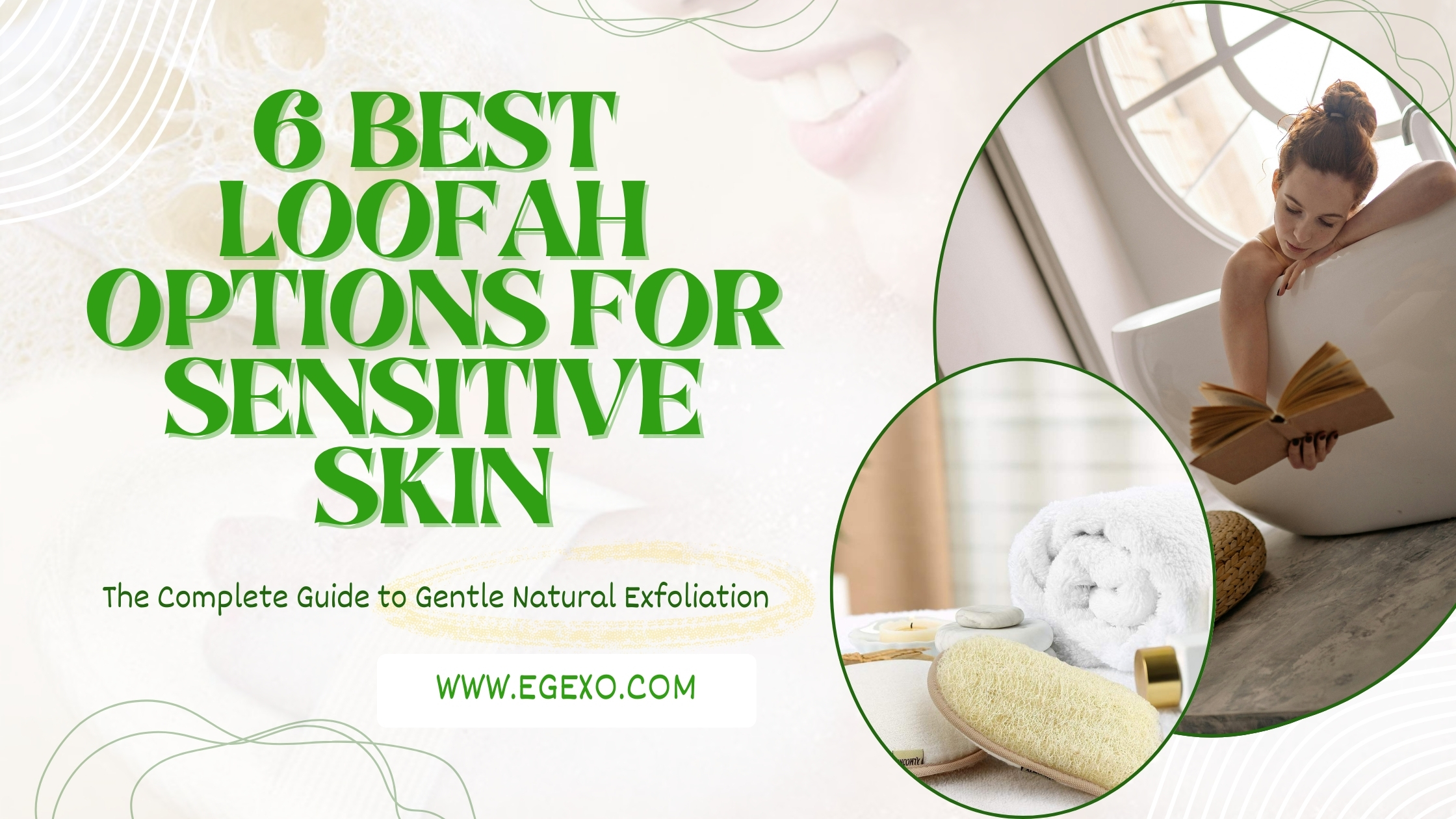
6 Best Loofah Options for Sensitive Skin: The Complete Guide to Gentle Natural Exfoliation
Finding the best loofah options for sensitive skin can feel overwhelming when shelves display dozens of products promising gentle care. Research from dermatological studies indicates that approximately 60 percent of adults report some degree of skin sensitivity, making the choice of exfoliation tools critically important. For those with reactive skin, selecting the wrong product leads to irritation, redness, and discomfort rather than the healthy glow everyone seeks.
This comprehensive guide examines the six best loofah options for sensitive skin, drawing on over 25 years of Egyptian loofah cultivation expertise from Egexo. Whether you operate a spa seeking wholesale body care products, manage a retail store expanding your natural goods selection, or simply want the gentlest exfoliation for your own bathroom routine, this resource delivers the information you need to make confident decisions.
Natural Egyptian loofahs stand apart in the sensitive skin category because their plant fiber structure offers adjustable texture based on moisture levels and processing methods. Unlike synthetic alternatives that maintain constant abrasiveness, authentic loofahs from the Luffa aegyptiaca plant provide customizable gentleness. By the end of this article, you will understand exactly which loofah types suit reactive skin, how to evaluate quality for purchasing decisions, and proper techniques that maximize benefits while minimizing irritation.
Businesses sourcing products for sensitive skin clientele and individuals seeking personal care solutions will find actionable guidance throughout these sections. The key lies in understanding that not all loofahs are created equal, and Egyptian varieties processed to specific standards consistently outperform alternatives in dermatological gentleness.
Why Sensitive Skin Requires Special Loofah Consideration
Sensitive skin reacts to friction, pressure, and certain materials in ways that normal skin tolerates without issue. This reactivity stems from a compromised skin barrier, where the outermost layer fails to provide adequate protection against environmental factors and physical contact. When selecting exfoliation tools, people with sensitive skin must balance the need for dead cell removal with protection against triggering inflammatory responses.
Natural plant loofahs offer advantages that synthetic mesh poufs cannot match for reactive skin types. The cellular structure of the Luffa aegyptiaca gourd creates fibers that soften significantly when wet, reducing abrasiveness during use. This moisture responsiveness allows users to control texture intensity simply by adjusting water saturation levels.
Egyptian loofahs from established suppliers like Egexo undergo processing that removes harsh outer layers while preserving the gentle inner fiber matrix. This farm to export process determines final texture more than any other factor. Loofahs harvested at optimal maturity and processed using traditional sun-drying methods develop the soft yet effective texture sensitive skin demands.
For wholesale buyers supplying spas, hotels, or retail environments, understanding these processing differences enables better product selection for sensitive skin clientele. End consumers benefit from recognizing quality markers that indicate appropriate gentleness for their skin type.
The Science Behind Loofah Fiber and Skin Interaction
Loofah fibers consist of cellulose arranged in a network pattern that creates millions of tiny contact points rather than flat abrasive surfaces. This distributed pressure means less concentrated friction on any single area of skin. Studies examining natural versus synthetic exfoliators found that plant-based options produced less transepidermal water loss, indicating reduced barrier disruption.
The porosity of natural loofah fibers also affects sensitive skin compatibility. Each fiber absorbs cleansing products and water, creating a cushioning effect that synthetic materials cannot replicate. This absorption capacity means the skin contacts a gel-like surface rather than direct fiber material during use.
Egyptian loofahs specifically contain fiber densities that testing indicates as optimal for sensitive applications. The climate conditions along the Nile River Valley, where premium loofahs grow, produce plants with finer fiber structures compared to varieties from other regions. Egexo cultivates these varieties using methods refined across more than two decades of agricultural expertise.
The 6 Best Loofah Options for Sensitive Skin
Selecting appropriate loofahs for reactive skin requires understanding how different preparations and formats affect gentleness. The following six options represent the best choices available, ranked by suitability for sensitive skin applications.
Option 1: Soft Grade Egyptian Body Loofah
The soft grade Egyptian body loofah represents the gold standard for sensitive skin exfoliation. These loofahs undergo extended soaking and processing that breaks down the coarser outer fibers while preserving structural integrity. The result is a product that feels almost cloth-like when wet yet still provides meaningful exfoliation.
Soft grade loofahs earn their designation through strict quality standards that measure fiber pliability, surface texture, and moisture absorption rates. Products meeting these specifications deliver consistent gentleness across batches, an essential consideration for businesses building reliable sensitive skin product lines.
For personal use, soft grade loofahs work best when thoroughly soaked for three to five minutes before application. This saturation period allows maximum fiber softening. Apply gentle circular motions rather than aggressive scrubbing to achieve dead skin removal without triggering sensitivity responses.
Wholesale buyers can explore body loofah options in various sizes and formats suitable for retail display or spa service packages. Minimum order quantities for soft grade products accommodate both large distributors and smaller boutique operations.
Option 2: Young Harvest Loofah Slices
Young harvest loofahs come from gourds picked before full maturity, producing fibers with noticeably finer texture than standard varieties. These immature loofahs contain higher moisture content during growth, resulting in cellular structures that remain softer even after processing.
The cross-cut slices from young harvest loofahs provide ideal facial exfoliation for sensitive skin. Their smaller size offers better control during delicate area treatment, and the uniform thickness ensures consistent pressure application. Many spas incorporate these slices into facial treatment protocols for clients who cannot tolerate standard exfoliation methods.
From a business perspective, young harvest products command premium positioning due to limited availability. Only a portion of each growing season can be dedicated to early harvesting without compromising overall yield. This scarcity makes young harvest loofahs attractive for upscale retail environments and luxury spa settings.
Individual consumers seeking the gentlest possible exfoliation should consider young harvest slices for facial use while reserving soft grade full loofahs for body application. This two-product approach addresses different sensitivity levels across body regions.
Option 3: Processed Inner Core Loofah
The inner core of mature loofahs provides the softest natural texture available from standard harvest products. When manufacturers remove the outer and middle fiber layers, the remaining core material offers cloud-like softness that even highly reactive skin tolerates well.
Processing inner core products requires additional labor and material, as significant portions of each loofah become byproducts. However, the resulting gentleness justifies this approach for dedicated sensitive skin lines. Custom loofah product design services allow businesses to develop inner core products tailored to specific market positioning.
These products excel in settings where clients present with conditions like eczema, psoriasis, or post-procedure sensitivity. Dermatologists sometimes recommend inner core loofahs as the sole mechanical exfoliation suitable for certain skin conditions.
For home users managing chronic skin sensitivity, inner core loofahs provide reliable gentleness that eliminates guesswork. The consistent texture from quality suppliers means replacement products perform identically to previous purchases.
Option 4: Compressed Loofah Pads
Compressed loofah pads begin as thin sheets of loofah material pressed under controlled conditions. This compression creates density variations that produce softer and firmer zones within the same product. Sensitive skin users gravitate toward the softer sections while those with normal skin use firmer areas.
The flat pad format provides ergonomic advantages over cylindrical loofahs for certain applications. The increased surface contact area distributes pressure more evenly, reducing concentrated friction points that trigger sensitivity. Many users find pads easier to control during shower use than traditional shapes.
Retailers appreciate compressed pads for their packaging efficiency and shelf appeal. The flat format stacks easily, requires less display space, and presents an accessible entry point for customers new to natural loofahs. Private label loofah manufacturing services allow stores to brand these accessible products under their own labels.
Spa operations incorporate compressed pads into body treatment menus where clients lie prone on treatment tables. The flat profile maintains consistent contact without requiring hand manipulation, freeing therapists to focus on technique rather than tool management.
Option 5: Loofah and Natural Fiber Blends
Hybrid products combining loofah with other natural fibers offer tunable gentleness through material ratios. Common blending partners include cotton, sisal, and bamboo fiber, each contributing different texture characteristics to the final product.
Cotton-loofah blends deliver the gentlest hybrid option, with cotton providing cushioning between loofah fibers and skin. These products suit users who find even soft grade pure loofahs slightly too intense. The blending process creates a material that cleanses effectively while adding minimal friction.
For wholesale markets, blended products appeal to retailers seeking differentiation beyond pure loofah offerings. The unique material combinations allow positioning around specific benefits like enhanced lathering from cotton content or antimicrobial properties from bamboo inclusion.
Individual shoppers exploring natural exfoliation for the first time often find blended products less intimidating than pure loofahs. The familiar texture of cotton or other recognizable fibers eases the transition from synthetic products while introducing loofah benefits gradually.
Discover various configurations through the Egexo shop to evaluate which blends align with your requirements.
Option 6: Mini Loofah Formats for Targeted Application
Smaller loofah formats including rounds, ovals, and finger-sized pieces provide precision exfoliation for sensitive areas. These mini formats allow users to apply gentle pressure to specific zones without affecting surrounding skin unnecessarily.
Facial applications benefit most from mini formats, particularly around delicate eye and lip areas. The reduced size enables control that full-sized loofahs cannot match. Users with sensitivity concentrated in certain facial zones can target those areas while avoiding contact with non-problematic skin.
Professional aestheticians stock mini loofah formats for treatment customization. When clients present with mixed skin sensitivity across different facial regions, practitioners reach for appropriately sized tools that address each zone according to its specific needs.
For business buyers, mini formats often sell in value packs that consumers perceive as good deals. The multiple-piece packaging encourages trial of different applications and builds purchase frequency as customers replace used pieces. Sample requests allow evaluation of various mini formats before committing to inventory purchases.
Comparison Table: Best Loofah Options for Sensitive Skin
| Loofah Type | Gentleness Rating | Best Application | Durability | Ideal User |
|---|---|---|---|---|
| Soft Grade Egyptian | 9 out of 10 | Full body | 8 to 12 weeks | Moderate sensitivity |
| Young Harvest Slices | 10 out of 10 | Face and neck | 4 to 6 weeks | High sensitivity |
| Inner Core Processed | 10 out of 10 | Problem areas | 6 to 8 weeks | Skin conditions |
| Compressed Pads | 8 out of 10 | Body and back | 10 to 14 weeks | Beginners |
| Natural Fiber Blends | 9 out of 10 | General use | 6 to 10 weeks | Transitioning users |
| Mini Formats | 9 out of 10 | Targeted zones | 3 to 5 weeks | Precision needs |
Quality Evaluation Criteria for Sensitive Skin Loofahs
Understanding quality markers helps both business buyers and individual consumers select products that deliver promised gentleness. The following criteria separate superior sensitive skin loofahs from inadequate alternatives.
Fiber Density and Uniformity Assessment
High-quality sensitive skin loofahs display even fiber distribution without dense clumps or thin gaps. Hold products up to light and examine for consistency throughout the structure. Uneven areas create friction variations that sensitive skin cannot accommodate predictably.
The fiber network should appear interconnected rather than showing loose strands that might separate during use. Loose fibers detach and create sharp contact points that irritate reactive skin. Quality suppliers like Egexo implement inspection processes that remove products with structural inconsistencies before shipping.
Wholesale buyers should request multiple samples from each potential supplier to verify batch consistency. Single samples may not represent typical quality, and volume purchases require confidence in ongoing reliability. The quotation request process at Egexo includes quality specification discussions that establish expectations clearly.
Color and Appearance Indicators
Natural loofah color ranges from cream to light tan, with sensitive skin varieties typically showing lighter coloration indicating gentler processing. Very dark or discolored products may have undergone harsh treatments or improper storage that affects fiber integrity.
Uniform coloration across the product suggests consistent processing, while blotchy appearance indicates uneven treatment. Some suppliers bleach loofahs to achieve uniform whiteness, but these chemical processes can leave residues problematic for sensitive skin. Egexo avoids bleaching, relying instead on natural sun processing that preserves fiber softness.
Visible seed remnants or dark spots within the fiber network indicate incomplete cleaning. While not necessarily harmful, these inclusions suggest processing shortcuts that may affect overall quality consistency.
Flexibility and Softness Testing
Before purchasing or stocking sensitive skin loofahs, perform simple flexibility tests. Quality products bend easily without cracking or showing stress marks. Rigid loofahs that resist gentle bending will not soften adequately when wet.
Press the loofah surface against your forearm using light pressure. Superior sensitive skin products compress noticeably under minimal force. Products requiring significant pressure to compress will feel abrasive during actual use regardless of water saturation.
For business buyers evaluating potential suppliers, request both dry and pre-moistened samples to assess transformation characteristics. The difference between dry and wet softness indicates moisture responsiveness crucial for sensitive skin suitability.
Sensitive Skin Loofah Quality Checklist
| Quality Factor | What to Check | Pass Criteria |
|---|---|---|
| Fiber Uniformity | Light test for even distribution | No clumps or thin spots |
| Structural Integrity | Check for loose fibers | Fibers firmly interconnected |
| Color Consistency | Examine full surface | Even cream to light tan |
| Chemical Treatment | Inquire about processing | No bleaching or harsh chemicals |
| Flexibility Dry | Gentle bend test | Bends without cracking |
| Flexibility Wet | Soak and compress | Significant softening |
| Residue Check | Rinse and smell | No chemical odor |
| Batch Consistency | Compare multiple samples | Identical characteristics |
Proper Usage Techniques for Sensitive Skin
Even the gentlest loofah can cause irritation when used incorrectly. Proper technique maximizes exfoliation benefits while protecting reactive skin from damage.
Preparation Steps Before Use
Always soak your loofah for minimum three minutes before skin contact. This soaking period allows fiber saturation that dramatically reduces surface abrasiveness. Warm water accelerates softening compared to cold water applications.
Apply cleanser to the loofah rather than directly to skin. The loofah fibers distribute product evenly and create lather that provides additional cushioning between fibers and skin surface. This approach uses less product while achieving better coverage.
Wet skin thoroughly before loofah contact. Dry or partially wet skin experiences greater friction than fully saturated skin. The water layer between loofah and skin provides essential lubrication for sensitive applications.
Application Technique Guidelines
Use light pressure that barely compresses the loofah against your skin. Effective exfoliation does not require force. The fiber texture performs mechanical removal even with gentle contact. Excessive pressure damages the skin barrier that sensitive skin already struggles to maintain.
Employ slow circular motions rather than rapid back-and-forth scrubbing. Circular patterns distribute friction evenly and allow you to feel skin response during use. If any area begins tingling or feeling irritated, move immediately to another zone.
Limit exfoliation sessions to two or three times weekly maximum for sensitive skin. Daily loofah use overwhelms the skin repair capacity even with the gentlest products. Allow minimum 48 hours between sessions for barrier recovery.
Post-Use Care and Storage
Rinse your loofah thoroughly after each use to remove all cleanser residue and dead skin cells. Residue buildup creates bacterial growth opportunities and can irritate skin during subsequent uses. Squeeze out excess water by pressing rather than wringing, which damages fiber structure.
Hang or position your loofah where air circulates freely for complete drying between uses. Persistent moisture promotes mold and bacteria growth that creates skin irritation risk. Avoid enclosed shower caddies or other spaces that trap humidity.
Replace sensitive skin loofahs every four to eight weeks depending on frequency of use. Even with proper care, fiber breakdown reduces gentleness over time. Wholesale buyers should factor replacement cycles into usage calculations when planning inventory for spa or hotel settings.
Business Considerations for Sensitive Skin Loofah Products
Retailers, spas, and distributors entering the sensitive skin natural products market benefit from understanding customer needs and supplier evaluation approaches specific to this category.
Market Opportunity Analysis
The sensitive skin care market continues expanding as environmental factors and lifestyle choices increase skin reactivity across populations. Research indicates this segment grows at rates exceeding general skin care categories, presenting opportunities for businesses positioning appropriate products.
Natural exfoliation products for sensitive skin command premium pricing that supports healthy margins. Customers with reactive skin invest in products they trust and demonstrate strong brand loyalty once they find effective solutions. This loyalty translates to repeat purchases and word-of-mouth referrals valuable for business growth.
Positioning Egyptian loofahs as superior sensitive skin options leverages established quality perceptions. Buyers associate Egyptian origin with premium natural products across multiple categories. Egexo helps partners communicate this origin advantage through informational resources that educate end consumers.
Supplier Selection Criteria
Evaluate potential suppliers based on processing transparency, quality consistency, and sensitive skin category experience. Request documentation of handling procedures that affect final product gentleness. Suppliers unwilling to share processing details may have practices incompatible with sensitive skin requirements.
Assess minimum order quantities against your market size realistically. Some suppliers require volumes impractical for smaller operations, while others accommodate emerging businesses building their sensitive skin lines. Egexo structures MOQ options across business sizes to support partners at various growth stages.
Verify supplier capacity for custom formulations or packaging if your business strategy requires differentiation. Private labeling capabilities, custom sizing, and branded packaging transform commodity loofahs into distinctive products that build customer loyalty to your business specifically.
Review the complete product catalog to understand available options and identify products aligning with your sensitive skin market focus.
Specifications Table: Sensitive Skin Loofah Options
| Specification | Soft Grade | Young Harvest | Inner Core | Compressed Pad |
|---|---|---|---|---|
| Typical Length | 10 to 15 cm | 5 to 8 cm | 8 to 12 cm | 12 x 8 cm |
| Fiber Density | Medium low | Low | Very low | Variable |
| Wet Softness | High | Very high | Highest | High |
| Water Absorption | 300 percent | 350 percent | 400 percent | 280 percent |
| Processing Time | Extended | Standard | Extended plus | Compressed |
| Minimum Order | 500 units | 300 units | 200 units | 500 units |
| Lead Time | 2 to 3 weeks | 3 to 4 weeks | 3 to 4 weeks | 2 to 3 weeks |
Understanding Egyptian Loofah Superiority for Sensitive Skin
Egyptian loofahs consistently outperform alternatives from other growing regions in sensitive skin applications. This superiority stems from climate conditions, agricultural practices, and processing expertise concentrated in Egypt.
Climate and Growing Conditions Impact
The Nile River Valley provides unique growing conditions that affect loofah fiber development. Consistent warm temperatures, controlled irrigation, and mineral-rich soil produce plants with optimal fiber characteristics for sensitive skin products. Varieties grown elsewhere under different conditions develop coarser fiber structures unsuitable for reactive skin.
Egyptian farmers have cultivated loofahs for generations, developing variety selection and agricultural techniques that prioritize quality over simple yield maximization. This generational knowledge produces harvests with fiber characteristics unmatched by newer production regions.
The dry climate during post-harvest processing allows natural sun drying that gently reduces moisture without damaging fiber structure. Artificial drying methods used in more humid regions often produce harsher textures through rapid moisture removal.
Processing Excellence and Quality Control
Egyptian loofah processors understand that sensitive skin suitability depends on post-harvest handling as much as growing conditions. The extended soaking, careful cleaning, and gradual drying that create gentle textures require patience and expertise that mass-production approaches sacrifice.
Egexo implements quality control at multiple processing stages rather than relying on end-product inspection alone. This approach catches issues before they affect large batches, ensuring the consistency that sensitive skin product lines require. Learn more about why Egexo stands apart in quality commitment.
Third-party testing validates claims about gentleness rather than relying solely on manufacturer assessments. Reputable suppliers provide test results demonstrating fiber characteristics aligned with sensitive skin requirements. Request this documentation when evaluating suppliers for your business needs.
Frequently Asked Questions
Q: What makes Egyptian loofahs the best option for sensitive skin?
A: Egyptian loofahs from the Nile River Valley develop finer fiber structures due to ideal climate conditions, mineral-rich soil, and generations of cultivation expertise. The natural sun-drying process preserves fiber softness that artificial drying methods destroy. When processed correctly by experienced suppliers like Egexo, these loofahs offer gentleness ratings that synthetic alternatives and loofahs from other regions cannot match, making them the premier choice for sensitive skin exfoliation.
Q: How often should someone with sensitive skin use a loofah?
A: Sensitive skin responds best to loofah exfoliation two to three times per week maximum, with at least 48 hours between sessions. This frequency allows adequate time for skin barrier repair while still removing dead cells effectively. Some individuals with highly reactive skin may need to limit use to once weekly until their skin adjusts to natural exfoliation.
Q: What minimum order quantities apply for wholesale sensitive skin loofah purchases?
A: Minimum order quantities for sensitive skin loofah varieties typically range from 200 to 500 units depending on product type and processing requirements. Egexo accommodates both large distributors and smaller boutique operations with flexible MOQ structures. Specialized products like inner core processed loofahs often have lower minimums due to their premium positioning, while standard soft grade products require larger quantities for efficient production runs.
Q: Can loofahs cause skin irritation even for people without sensitive skin?
A: Yes, improper loofah use causes irritation regardless of skin type. Using loofahs dry, applying excessive pressure, exfoliating too frequently, or using products past their replacement date all create irritation risk. Following proper preparation, technique, and care guidelines prevents these problems and allows everyone to enjoy natural exfoliation benefits safely.
Q: How do I evaluate loofah quality before making a bulk purchase?
A: Request samples and perform physical assessments including light tests for fiber uniformity, flexibility tests both dry and wet, color consistency examination, and structural integrity checks for loose fibers. Compare multiple samples to verify batch consistency. Reputable suppliers like Egexo welcome sample requests and provide quality documentation supporting sensitive skin suitability claims.
Q: What is the typical lifespan of a sensitive skin loofah?
A: Sensitive skin loofahs require replacement every four to eight weeks with regular use. More frequent use shortens lifespan, while proper care including thorough rinsing and complete drying between uses extends usability. Business buyers should factor these replacement cycles into customer usage calculations when planning inventory and pricing for spa or retail environments.
Q: Are there certifications indicating loofah suitability for sensitive skin?
A: While no universal sensitive skin certification exists specifically for loofahs, quality indicators include organic cultivation certification, documentation of chemical-free processing, and third-party fiber testing results. Egexo maintains quality standards documentation and provides transparency about processing methods that buyers can evaluate against their sensitive skin requirements.
Expert Insight from Egexo
Drawing on more than 25 years cultivating Egyptian loofahs, our experience confirms that sensitive skin success depends on matching harvest timing, processing methods, and final product selection to user needs. We have observed that customers who struggle with synthetic exfoliators or mass-market loofahs often thrive with properly selected Egyptian varieties.
The single most important factor for sensitive skin suitability is fiber softening during processing. Rushing this stage to increase production volume creates products that never reach appropriate gentleness regardless of how long users soak them before use. At Egexo, we maintain processing timelines that prioritize quality over speed, ensuring every loofah we ship meets sensitive skin standards.
For business buyers, we recommend starting with sample orders across multiple grades to understand how different processing levels affect your customer base. For individual users, invest in the highest quality you can afford because your skin deserves products processed with care rather than shortcuts.
Conclusion
Selecting the best loofah options for sensitive skin requires understanding how fiber characteristics, processing methods, and usage techniques combine to create gentle exfoliation experiences. The six options detailed in this guide represent the most suitable choices available, with Egyptian varieties from quality suppliers like Egexo consistently delivering superior results.
Natural loofahs offer sensitive skin advantages that synthetic alternatives cannot replicate, including moisture-responsive softening, distributed pressure through fiber networks, and customizable intensity through proper preparation. These benefits make transitioning to natural exfoliation worthwhile for anyone managing skin reactivity.
Key Takeaways:
- Egyptian loofahs processed to sensitive skin standards outperform synthetic and other natural alternatives for reactive skin
- Soft grade, young harvest, and inner core processed loofahs offer the highest gentleness ratings
- Proper preparation including three to five minute soaking dramatically reduces abrasiveness
- Limit exfoliation to two to three times weekly maximum for sensitive skin
- Quality evaluation through sample assessment prevents disappointing bulk purchases
- Replacement every four to eight weeks maintains optimal gentleness
Ready to experience Egyptian loofah quality for sensitive skin?
For Wholesale Buyers: Request a quote for bulk sensitive skin loofah options or download our complete catalog to explore available varieties.
For Individual Orders: Shop our collection of sensitive skin appropriate loofahs or order samples to test quality before committing.
Explore additional resources at Loofah Guide for consumer education and Wholesale Loofah for business purchasing guidance.